
Hokkaido · From Tokyo · Train, flight or ferry
From Tokyo, the fastest train reaches Hakodate in 4 h 29 min for ¥24,530 and Sapporo in 7 h 45 min for ¥30,120, and a Haneda–New Chitose flight takes 1 h 30–40 min (regular-season fares, October 2026 timetables). If you’re sleeping in Sapporo and time matters, fly; if you’re sleeping in Hakodate, or going to Sapporo and back within six days on JR’s East-South Hokkaido Rail Pass, price the train. And don’t count on the Sapporo train as a bad-weather backup: in 2026 the January snow stopped trains around Sapporo, and a washout left no Hokuto running through between Hakodate and Sapporo from 28 August to 9 September.
Start with where you’ll sleep on the first night; the answer changes with it. Each row below ends with the catch, so on a phone swipe across to the third column.
| Sleeping in | How to get there from Tokyo | The catch |
|---|---|---|
| Sapporo | Fly: 1 h 30–40 min (October timetables) from Haneda to New Chitose, then 33–44 min on JR’s Airport train | The train takes 7 h 45 min at best, and in 2026 the rail route into Sapporo had long disruptions in January and from late August into September |
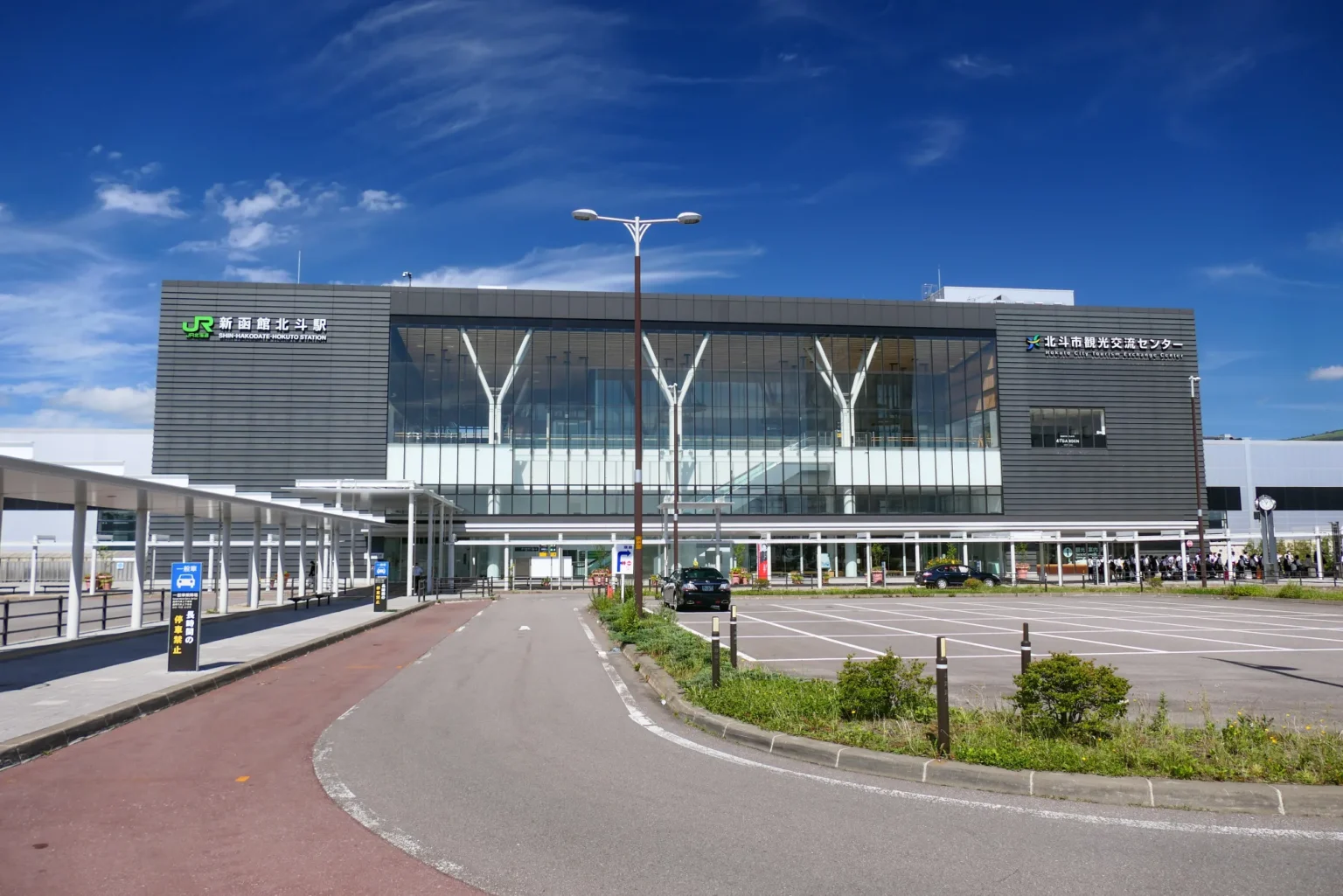
| Hakodate | Flying is about an hour quicker on paper; the train takes 4 h 29 min, city station to city station | The shinkansen stops at Shin-Hakodate-Hokuto, 17.9 km out; change to the Hakodate Liner |
| Anywhere, with your car | Ferry: Oarai to Tomakomai, or drive north and cross from Aomori to Hakodate in 3 h 40 min | From Oarai, some dates in October–December 2026 have no sailing |
Where the shinkansen stops: Shin-Hakodate-Hokuto is not Hakodate, and it is not Sapporo
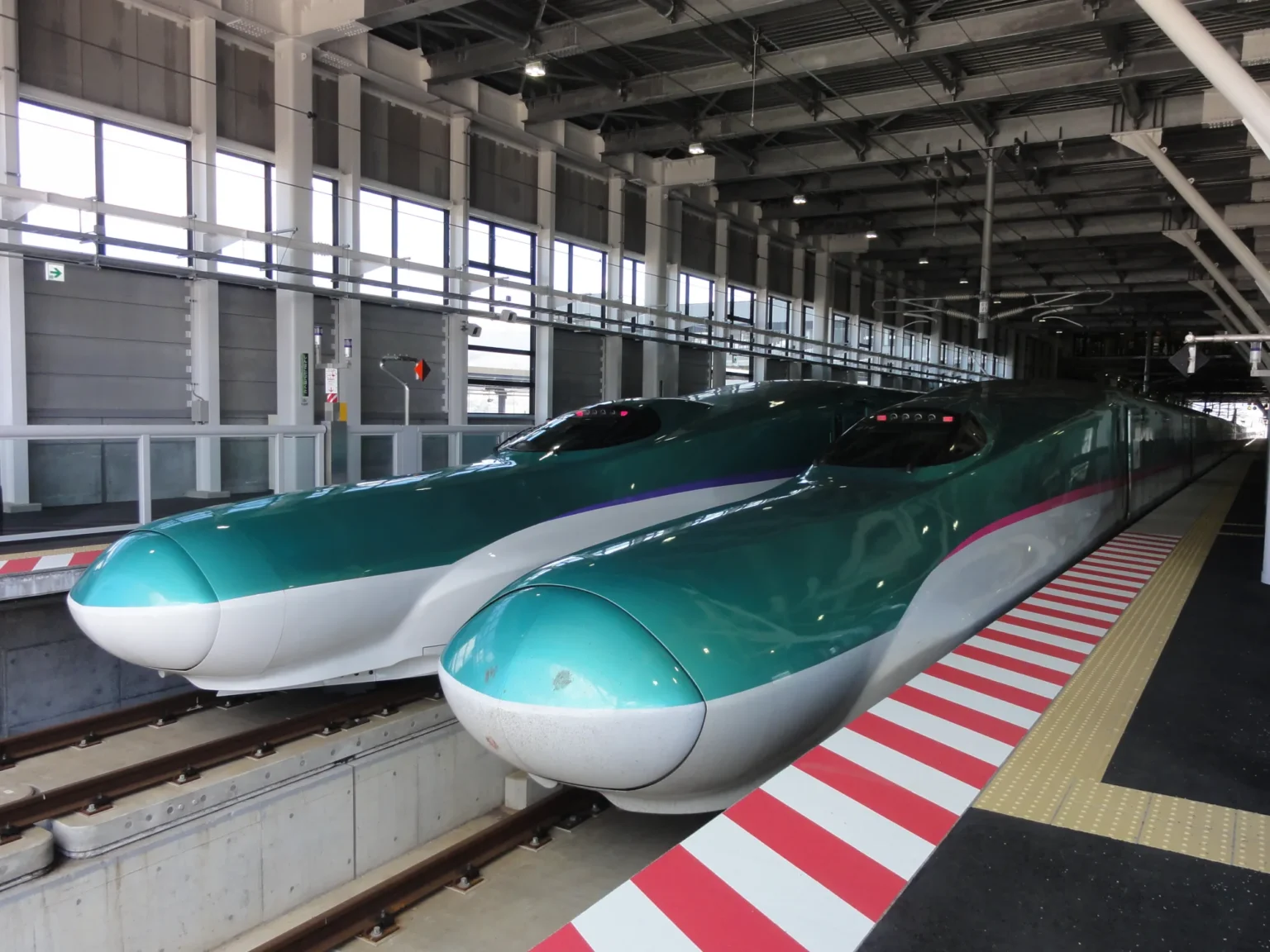
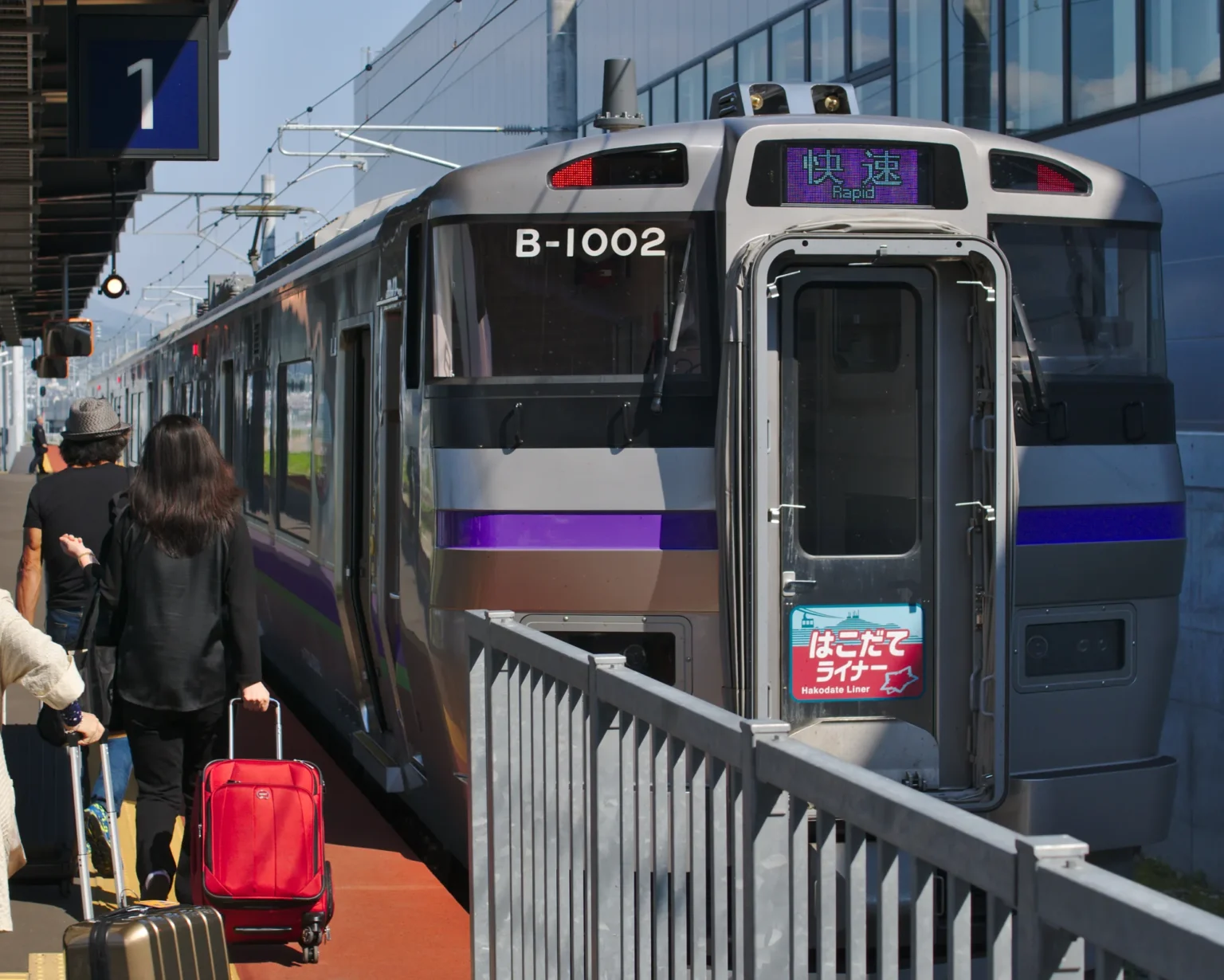
The Hokkaido Shinkansen ends at Shin-Hakodate-Hokuto. It doesn’t continue to Sapporo, and it doesn’t reach Hakodate Station either: Shin-Hakodate-Hokuto is its own station, 17.9 km from Hakodate on JR Hokkaido’s route planner. Every trip beyond it starts with a change: the Hakodate Liner into Hakodate, or a Hokuto limited express to Sapporo.
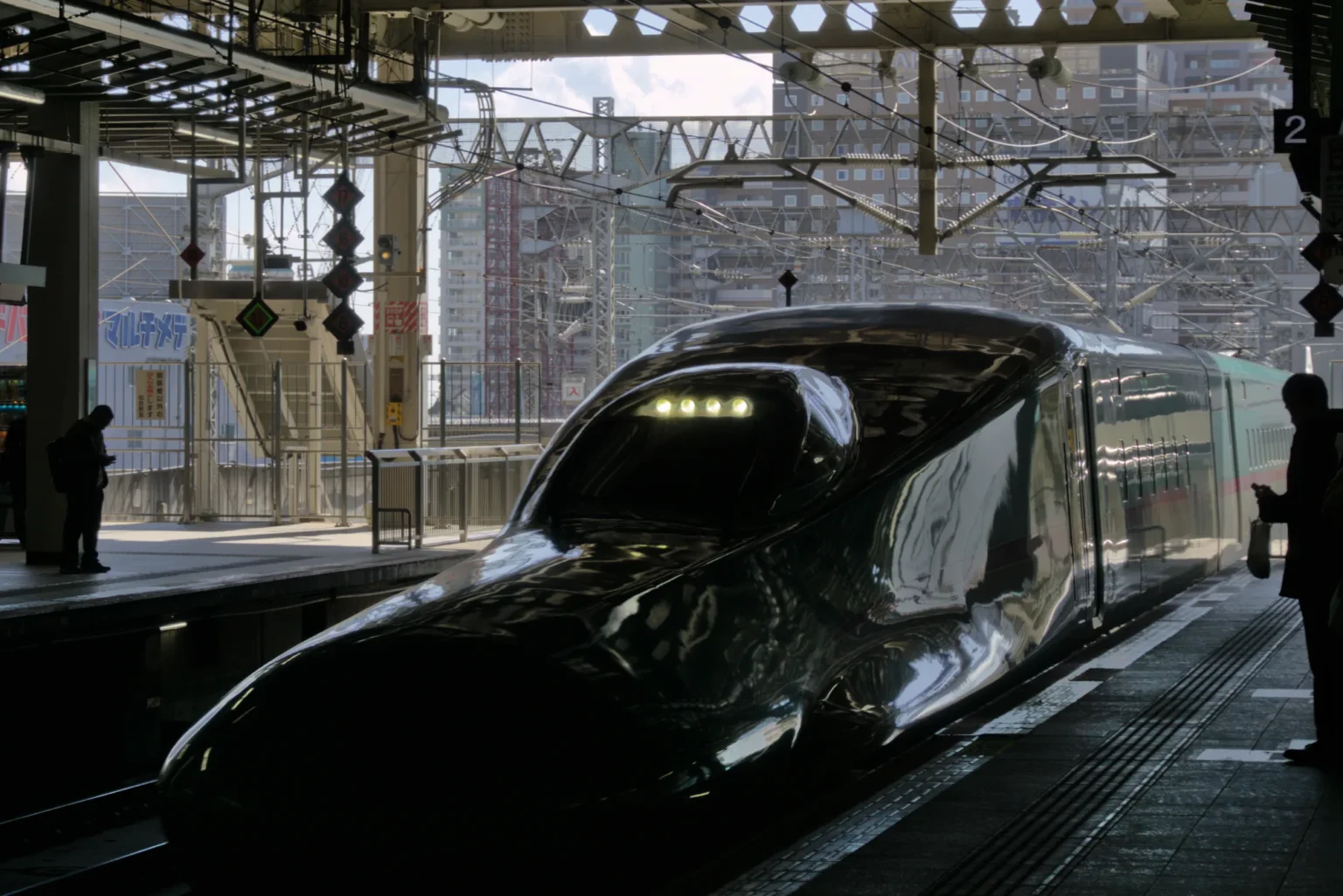
The Hayabusa runs straight through from Tokyo, so the first 3 h 57 min need no change; that’s the regular fastest time to Shin-Hakodate-Hokuto. JR East’s timetable for Thursday 15 October 2026 shows ten direct Hayabusa, leaving Tokyo at 6:32, 8:18, 9:36, 10:45, 12:20, 13:20, 14:20, 15:20, 17:20 and 19:20, and all of them pull into track 12. In autumn 2026 JR Hokkaido also runs extra Hayabusa: northbound from Tokyo on 10 and 31 October and 21 and 23 November, southbound on 12 October and 23 November (nine trains in all).
The last column has the regular-season fare from Tokyo to each station.
| Station | Fastest from Tokyo (15 Oct 2026) | Regular-season fare |
|---|---|---|
| Shin-Hakodate-Hokuto | 3 h 57 min on a direct Hayabusa | ¥24,200 paper ticket; ¥24,000 Shinkansen e-ticket (Eki-net) |
| Hakodate | 4 h 29 min, changing to the Hakodate Liner | ¥24,530 through ticket |
| Sapporo | 7 h 45 min, changing to a Hokuto (3 h 26–40 min) | ¥30,120 through ticket |
JR Hokkaido’s timetable for 15 October 2026 has 16 Hakodate Liner runs toward Hakodate, taking about 15–20 minutes and costing ¥470 if you buy that leg on its own. You can also ride a Hokuto for the short hop into Hakodate; that adds an ¥850 reserved-seat limited express fee.
English route guides don’t agree on it. Of the pages I read on 27 September 2026, three, two of them updated in 2026, still give 2030. The others that give a timeframe say “late 2030s”, “around 2039”, “around March 2039” or “around the end of fiscal 2038”, all in line with the official outlook; only the last uses its wording.
If you travel over the New Year, check JR Hokkaido’s news list for 260 km/h running through the Seikan Tunnel. The New Year 2025–26 run was announced on 17 October 2025 and cut the best Tokyo–Shin-Hakodate-Hokuto time to 3 h 52 min at set hours from 30 December 2025 to 5 January 2026; nothing for New Year 2026–27 was on the FY2026 news list when I checked on 28 September 2026.
Tokyo to Hakodate or Sapporo: how close the train comes to the plane
For Sapporo, fly. For Hakodate, the plane is still about an hour quicker on paper. The side-by-side below uses JR timetables and airline and airport timetables for 15 October 2026; Hakodate’s figures sit in the right-hand column.
| From Tokyo | Sapporo | Hakodate |
|---|---|---|
| Fastest train from Tokyo | 7 h 45 min | 4 h 29 min |
| Regular-season train fare | ¥30,120 | ¥24,530 |
| Trains or flights a day | 7 same-day Hayabusa–Hokuto connections from Tokyo; about 56–57 flights from Haneda | 10 direct Hayabusa; 9 flights from Haneda |
| Flight time from Haneda (October timetables) | 1 h 30–40 min | about 1 h 15–25 min |
| Airport to city | Airport train, 33–44 min, ¥1,230 | Shuttle bus, about 20 min, ¥700 |
| Tokyo Station to city centre by air (my estimate) | 3 h 48 min – 4 h 19 min | 3 h 15 min – 3 h 30 min |
The last row is my estimate, built up step by step below. The Tokyo Station–Haneda time is the Haneda terminal operator’s guide time; the two allowances are my own. Sapporo is in the middle column and Hakodate on the right.
| Step (Tokyo Station to the city centre) | Sapporo | Hakodate |
|---|---|---|
| Tokyo Station to Haneda | about 30 min | about 30 min |
| At the airport before take-off (my allowance) | 60 min | 60 min |
| Flight | 1 h 30–40 min | about 1 h 15–25 min |
| Plane to train or bus (my allowance) | 15–25 min | 10–15 min |
| Into town | 33–44 min by Airport train | about 20 min by shuttle |
| Total | 3 h 48 min – 4 h 19 min | 3 h 15 min – 3 h 30 min |
By my allowances the Tokyo to Sapporo train loses to the plane even if you give yourself two hours at the airport instead of one: the slow end of the flight then comes to 5 h 19 min from Tokyo Station, against 7 h 45 min for the fastest train.
For Hakodate, allow two hours at the airport instead of one and flying takes about 4 h 15–30 min from Tokyo Station (my arithmetic: the 3 h 15–30 min above plus an hour), about level with the 4 h 29 min train.
Which Tokyo airport to fly from, Haneda or Narita, is compared in the flying section below. If you haven’t booked your flight to Japan yet, my flight and airport guide covers flying straight into New Chitose instead of Tokyo.
Is the train from Tokyo to Hokkaido really the safe bet when the weather turns?
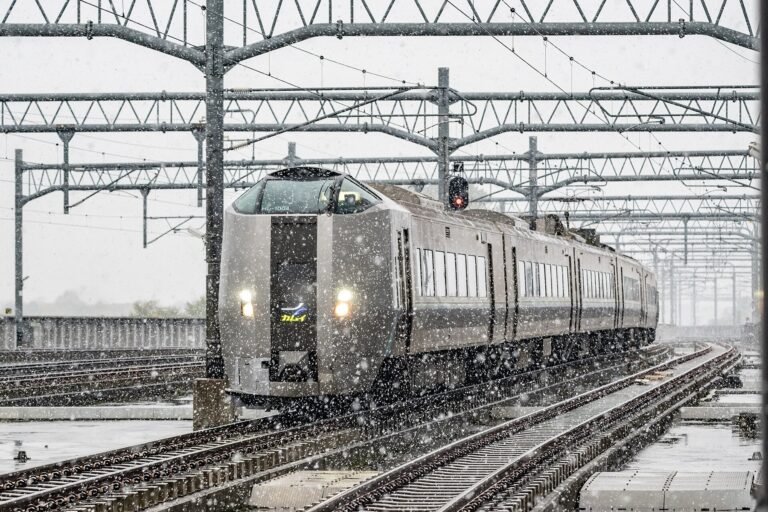
Not reliably, if you’re heading to Sapporo. From Shin-Hakodate-Hokuto the Hokuto runs on the Hakodate Main Line, then the Muroran Main Line, including the section between Shizukari and Koboro on the coast of Funka (Uchiura) Bay, and then the Chitose Line toward Sapporo. From Minami-Chitose into Sapporo it runs on the same tracks as the Airport train from New Chitose. So the rail route you’d switch to when snow shuts the airport shares its last stretch with the airport’s own train, and in 2026 both the coastal section and the Sapporo end had long disruptions.
Every row below comes from JR Hokkaido’s own reports except the first, flight cancellations at New Chitose reported in the news; read across each row for what happened.
| When | What happened |
|---|---|
| 13 Jan 2026 | 126 flights cancelled at New Chitose in heavy snow and wind, a figure reported from the airport operator; about 900 people spent the night in the airport (UHB and The Japan Times, 14 January). |
| 25 Jan | Record snowfall stops trains around Sapporo. At 23:10 JR decides to run six rescue trains for about 7,000 people stranded at New Chitose. |
| 26 Jan | The six rescue trains leave New Chitose between 4:29 and 8:23 with about 6,800 passengers; the last reaches Sapporo at 9:34. Trains gradually restart after 13:00, except on some lines, and service stays disrupted almost all day on the 26th and 27th. |
| Night of 26–27 Jan | Cancellations and delays to Airport and other trains leave more than 2,000 people stranded again; four rescue trains leave between 0:32 and 2:21 with about 2,300. |
| 25–27 Jan, total | 1,407 trains cancelled (175 limited expresses, 345 Rapid Airport), about 414,000 people affected. Another 262 were cancelled on 28–30 January as last trains ran earlier. |
| 27 Aug | Heavy rain washes out the Muroran Line between Shizukari and Koboro, found at about 20:33; JR counts ten damaged spots. |
| 28 Aug – 2 Sep | Every Hokuto cancelled; replacement buses from 30 August. |
| 3 – 9 Sep | Still no Hokuto between Hakodate and Sapporo; six run only between Sapporo and Toya. |
| 10 Sep | The Hokuto returns from the first train. JR said on 9 September that slow running on parts of the Muroran Line would delay trains by about 10 minutes for the time being; I couldn’t confirm whether that has ended. |
| To 9 Sep, total | 479 Muroran Line trains cancelled (286 limited expresses, 193 local), about 58,000 people affected. That is the whole line’s figure, not the Hokuto’s alone, and was announced on 4 September including planned cancellations. |
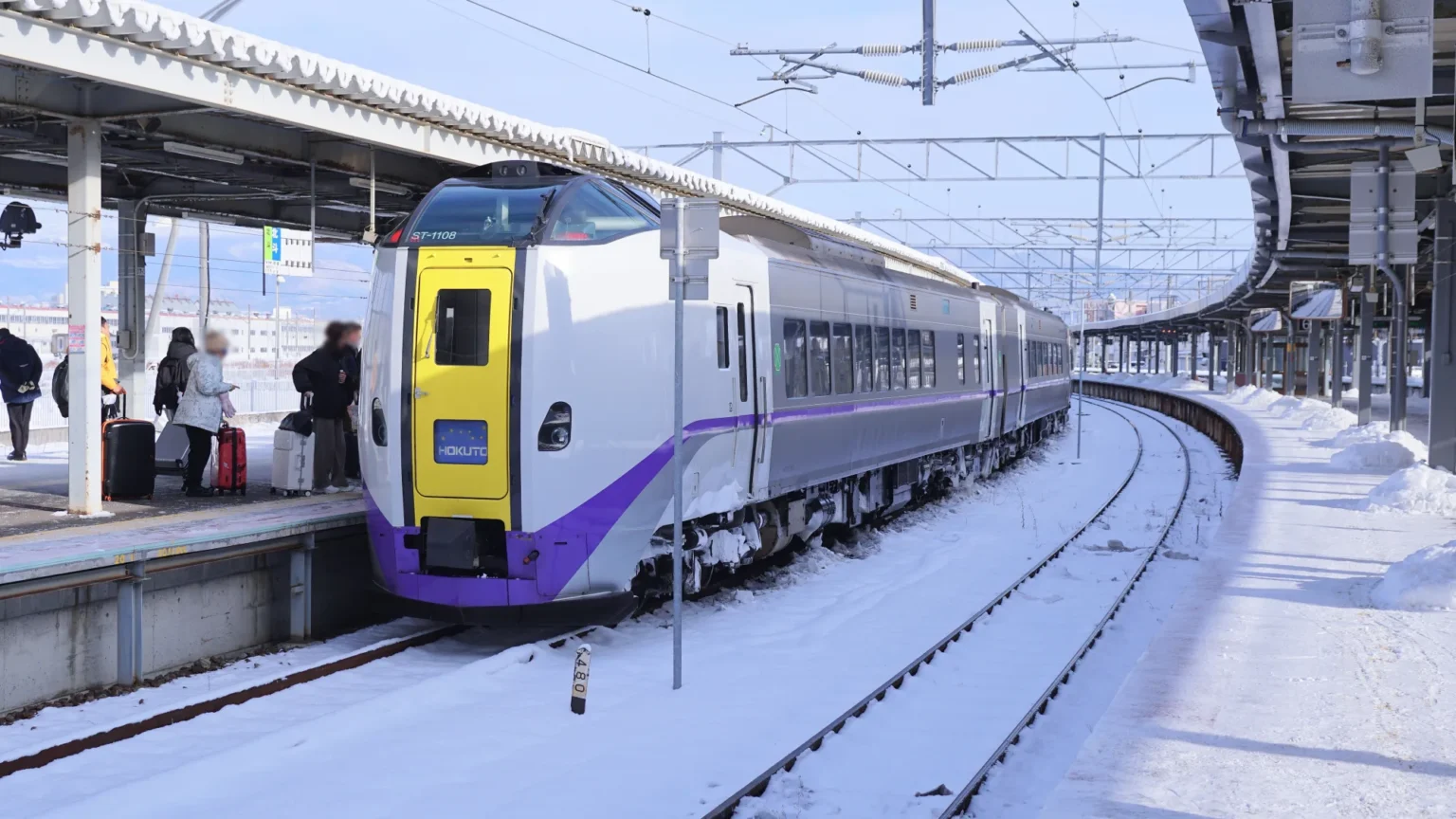
For Sapporo, don’t count on the train as a way round a grounded flight. Its last stretch runs on the same tracks as the Airport train.
At least one English route comparison says otherwise. Of five English route pages I checked on this point on 27–28 September 2026, three call the train the reliable choice in bad or winter weather, and one of them, on getting to Sapporo, says that when blizzards ground flights at New Chitose “the trains are absolute beasts in the snow”. The other two of those three are about the shinkansen, one of them for the trip to Hakodate, and the 2026 stoppages recorded here were on the conventional lines beyond Shin-Hakodate-Hokuto. All five were last updated before the August washout; none of them mentions the January disruption, and none says that the Hokuto and the Airport train share tracks into Sapporo.
The Hakodate trip doesn’t use the sections cut in the two 2026 stoppages above: it ends with the Hakodate Liner and never touches the Muroran or Chitose lines.
JR Hokkaido’s final report on the January disruption, published in Japanese on 31 July 2026, names overseas visitors and passengers stranded at the airport among the problems its 2022 improvement plan hadn’t covered. It says it will carry out its fixes by winter 2026–27. Among them are an airport rescue timetable that aims to keep some Airport trains running as far as Sapporo in heavy snow and, where that can’t be done, emergency trains from New Chitose only as far as Shin-Sapporo. Both are measures for the Airport train, not the Hokuto.
What the train costs from October 2026
A regular-season ticket from Tokyo costs ¥30,120 to Sapporo and ¥24,530 to Hakodate. The prices below are JR’s for travel on Thursday 15 October 2026, and the right-hand column shows how each is built.
| Ticket from Tokyo | Price | Made up of |
|---|---|---|
| Shin-Hakodate-Hokuto, paper ticket | ¥24,200 | fare ¥12,870 + reserved seat ¥11,330 |
| Shin-Hakodate-Hokuto, Shinkansen e-ticket (Eki-net) | ¥24,000 | fare ¥12,870 + ¥11,130 (purchases from 14 March 2026) |
| Hakodate | ¥24,530 | fare ¥13,200 + ¥11,330 |
| Sapporo, one through ticket | ¥30,120 | fare ¥15,620 + ¥11,330 shinkansen + ¥3,170 Hokuto |
| Sapporo, bought in two pieces | ¥33,970 | ¥24,200 + ¥9,770 Sapporo–Shin-Hakodate-Hokuto (my sum) |
| Shin-Hakodate-Hokuto, Green Car | ¥33,070 | fare ¥12,870 + ¥20,200 |
At regular prices, buy Tokyo to Sapporo as a through ticket. Split it and you pay ¥3,850 more, all of it in base fare: ¥15,620 on the through ticket, against ¥12,870 + ¥6,600 = ¥19,470 in two pieces (my arithmetic). Eki-net, JR East’s booking site, advertises a flat ¥200 off reserved seats on its Shinkansen e-ticket, but a split with the e-ticket still comes to ¥33,770, and Eki-net itself warns that pairing a Shinkansen e-ticket with a conventional line can cost more than paper tickets for the whole trip. Its FAQ also says the service is for people living in Japan and points overseas residents to JR-EAST Train Reservation; I couldn’t confirm which of these e-tickets that English site sells.
Only the shinkansen’s seat fees move with the season, and reserved, Green and Gran Class seats move by the same amounts: ¥400 more at the busiest times, ¥200 more at busy times and ¥200 less off-peak. JR Hokkaido’s conventional lines, the Hokuto included, charge the regular-season price every day. For Tokyo to Sapporo that means ¥29,920 on an off-peak day such as 18 November and ¥30,520 on 29 December. The ¥200 off-peak price applies Mondays to Thursdays, except public holidays and the day before one, from 1 to 10 October and from 1 November to 27 December 2026, and from 7 January to the end of February 2027. You pay ¥200 more on three-day-or-longer weekends made by a public holiday in October and November, and on the day before them. The ¥400 surcharge runs from 28 December 2026 to 6 January 2027.
Gran Class to Shin-Hakodate-Hokuto is ¥44,070 on a paper ticket for trains with attendant service; as e-tickets it’s ¥43,870, or ¥37,070 on Hayabusa that run it without food and drink.
To see where the fare sits in a whole trip’s spending, try my Japan budget guide for 2026.
Some English route guides, including pages updated in 2026, still say things the 2026 sources don’t support. I’ve left the sites unnamed and put what the 2026 sources show next to each claim.
| What some English guides say | What the 2026 sources show |
|---|---|
| Save money with a non-reserved seat on the Hokuto. | Since 14 March 2026 every limited express in Hokkaido is all-reserved. |
| Reserve an oversized-luggage seat on the Hokkaido Shinkansen. | JR East says no luggage reservation is needed on the Tohoku and Hokkaido Shinkansen. |
| The JR Pass is cheaper bought abroad. | For purchases from 1 October 2026, overseas agents charge ¥53,000 for seven days; JR’s own site charges ¥50,000 for now. |
| Tokyo to Shin-Hakodate-Hokuto costs ¥23,230–23,430. | ¥24,200 on a regular-season paper ticket, ¥24,000 as an e-ticket. |
| Both Oarai–Tomakomai ferries have a restaurant. | The night sailings have no restaurant; vending machines and a shop instead. |
| You can drive to Hokkaido through the Seikan Tunnel. | It’s a railway tunnel; cars cross the strait by ferry. |
Is the JR East-South Hokkaido Rail Pass worth it from Tokyo?
Against regular train fares, yes, if you’re going there and back within six days and hold a non-Japanese passport: the JR East-South Hokkaido Rail Pass costs ¥40,000, and a Tokyo–Sapporo return at regular fares costs ¥60,240. One way, it doesn’t pay; the single fare to Sapporo is ¥30,120. Against flying, it depends on the fare you find: Skymark’s winter Ima-toku fares, which move with demand, start at ¥7,800 one way between Haneda and New Chitose, but that’s the floor of a range that runs to ¥33,300 on its lower-priced dates.
At regular-season fares (one-way price × 2, my calculation; return discounts no longer exist), the pass wins on every return below and loses one way; it’s in the third column.
| Trip from Tokyo | Regular fares | East-South pass (6 days) |
|---|---|---|
| Sapporo and back | ¥60,240 | ¥40,000 |
| Hakodate and back | ¥49,060 | ¥40,000 |
| Shin-Hakodate-Hokuto and back | ¥48,400 | ¥40,000 |
| Sapporo, one way | ¥30,120 | ¥40,000 |
JR East’s own pass page makes the same point with a smaller example: about ¥48,000 for a reserved-seat return to Shin-Hakodate-Hokuto against ¥40,000 for the pass. If you live in Japan, can book on Eki-net and can fit both legs into weekdays from 7 to 17 December 2026, two Special 28 e-tickets to Shin-Hakodate-Hokuto come to ¥23,980, well under the pass. To Sapporo, adding the Hokuto at its regular ¥9,770 each way brings the return to ¥43,520, above the pass; with the Hokuto’s Tokudane 1 fares instead it comes to ¥37,640–41,560, either side of the pass’s ¥40,000 (my sums).
Price and days
¥40,000 for adults and ¥20,000 for children aged 6–11, for six consecutive days, on passes used from 14 March 2026. It was ¥35,370 before that.
Who can use it
JR East’s terms say the pass “is valid only for visitors holding a non-Japanese passport”. You need the original passport to buy or collect it; a photocopy won’t do.
Where it works
JR East lines inside the area on JR East’s map (Karuizawa, Atami and Otsuki are outside), the Hokkaido Shinkansen, JR Hokkaido around Hakodate, Sapporo and Otaru including New Chitose Airport, plus the Tokyo Monorail, Aoimori Railway and IGR within the area. Toya and Noboribetsu stations are in; Asahikawa, Furano and Biei are out. It isn’t valid on the South Hokkaido Railway.
The Japan Rail Pass instead
A 7-day ordinary pass is ¥50,000 on JR’s official site, a price JR says it is holding for a limited period (no end date announced as of 28 September 2026), and ¥53,000 from overseas agents for purchases from 1 October 2026, local time where you buy. It covers reserved seats on the Hokkaido Shinkansen and the Hokuto at no extra charge. At ¥50,000 it beats the ¥60,240 Sapporo return by ¥10,240; the East-South pass is ¥10,000 less again if your trip fits its area and six days.
For the nationwide pass on other routes, see JR Pass vs individual tickets in 2026.
Changing trains at Shin-Hakodate-Hokuto: seats, timing, food
Both the Hayabusa and the Hokuto are all-reserved, and you change once, at Shin-Hakodate-Hokuto.
- Buy a through ticket from Tokyo to Sapporo with reserved-seat tickets for both trains: a Hayabusa to Shin-Hakodate-Hokuto and a Hokuto onward. If you haven’t used JR’s machines or counters before, see how to buy JR train tickets.
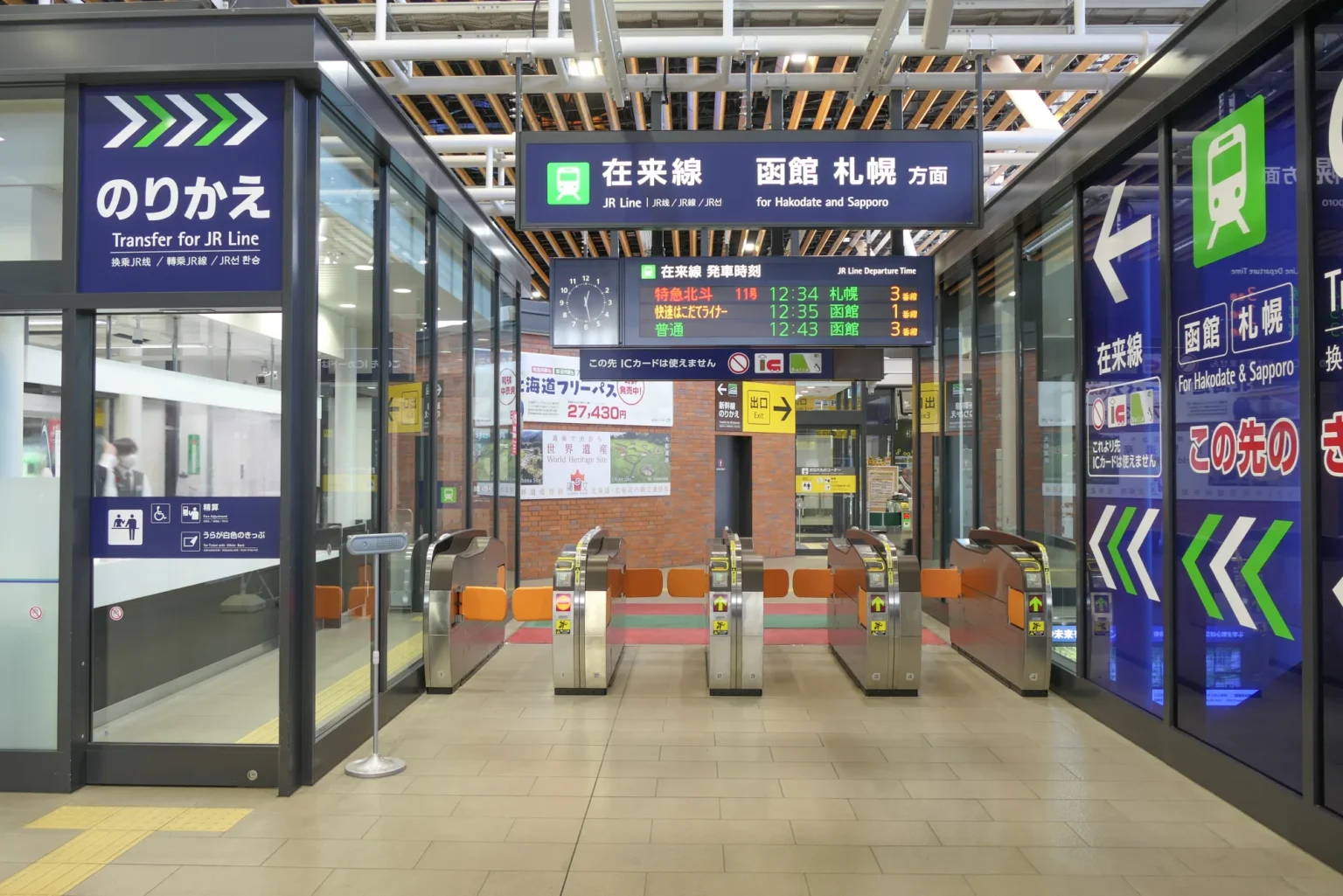
- The Hayabusa from Tokyo arrives at Shin-Hakodate-Hokuto on track 12.
- Go through the shinkansen-to-JR-line transfer gates.
- Read the Hokuto’s track off the departure board. JR’s route planner shows the shinkansen’s arrival track but not the Hokuto’s departure track, and some travellers reported on Reddit in 2025 that Google Maps sent them to the wrong platform here.
How long you wait depends on which Hayabusa you take. These are the seven same-day connections on the timetable for 15 October 2026, with the wait in the last column.
| Hayabusa arrives | Hokuto leaves | Wait |
|---|---|---|
| 10:53 | 11:04 | 11 min |
| 12:15 | 12:33 | 18 min |
| 13:33 | 13:50 | 17 min |
| 15:01 | 15:20 | 19 min |
| 16:30 | 16:58 | 28 min |
| 17:47 | 18:14 | 27 min |
| 18:29 | 19:01 | 32 min |
The first of the day, at 11 minutes, is the tightest; the 8:18 from Tokyo gives you 18 minutes and the fastest trip overall.
Food: buy it in Tokyo
The Hayabusa’s trolley service runs only between Tokyo and Shin-Aomori, not on every train, and sells no bento or sandwiches. JR Hokkaido has no on-board sales on the Hokkaido Shinkansen section or on any of its conventional limited expresses, the Hokuto included, and asks passengers to buy what they need before boarding (JR East and JR Hokkaido pages, checked 28 September 2026).
Big bags: no booking needed
JR East says luggage space on the Tohoku and Hokkaido Shinkansen needs no reservation. Its limits are 250 cm in total dimensions, 2 m in length, 30 kg and two pieces. The Tokaido, Sanyo and Kyushu Shinkansen have their own rules.
With a Japan Rail Pass
The pass covers ordinary reserved seats on both trains at no extra charge. Gran Class costs extra, and the Hokkaido Shinkansen’s TRAIN DESK cars aren’t open to pass holders.
Flying: Haneda or Narita, and the ride into Sapporo or Hakodate
Fly from Haneda if you can. It has about 56–57 flights a day to New Chitose and nine to Hakodate, against 17–19 a day from Narita to New Chitose. Those counts come from the airlines’ and airports’ summer timetables, which run to 24 October 2026; the winter timetable starts on 25 October and changes some times and frequencies.
Haneda
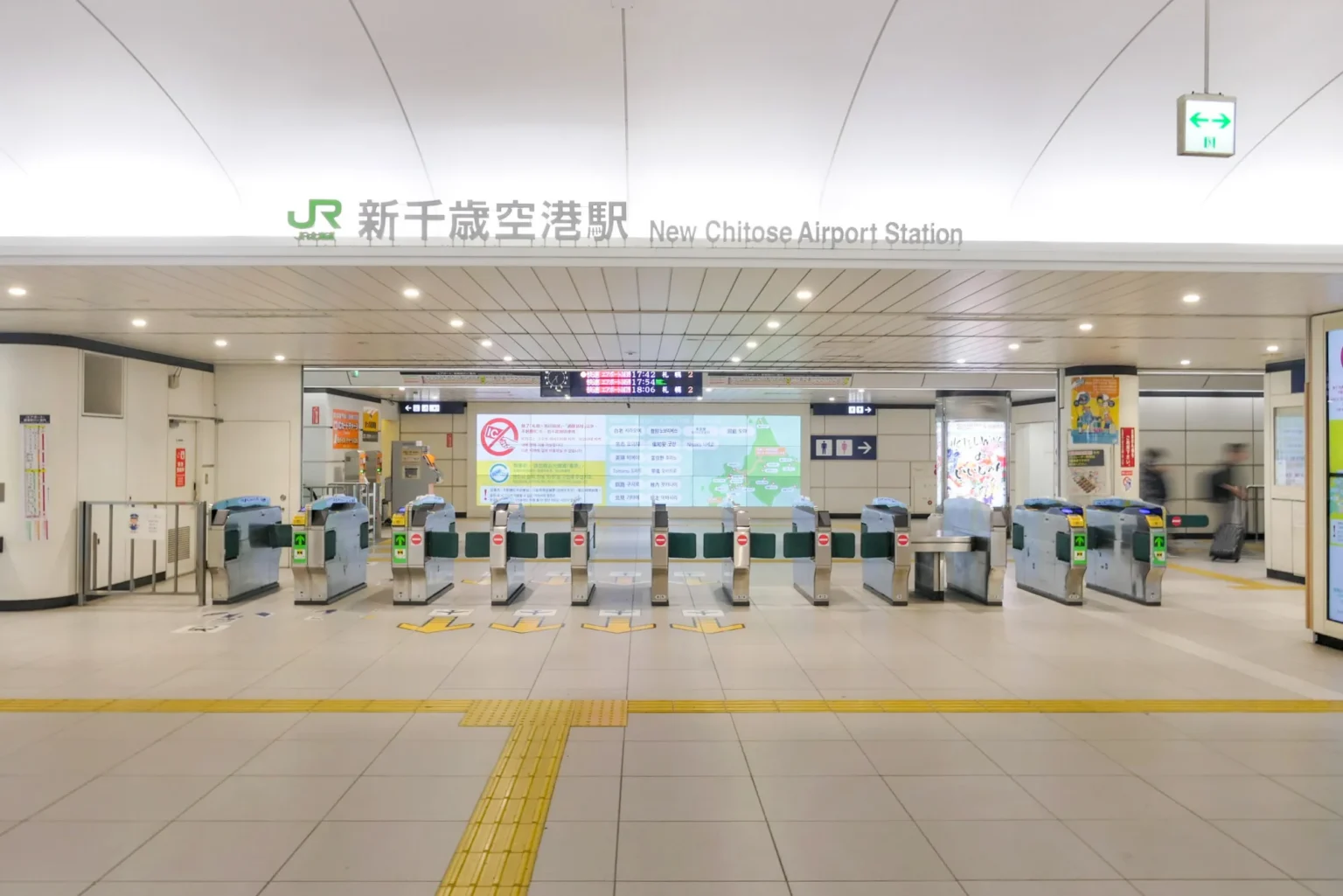
About 56–57 flights a day to New Chitose (ANA 18–19, JAL 17, AIRDO 12, Skymark 9, codeshares counted once), 1 h 30–40 min in October, first at 6:20 and last at 21:30. Nine a day to Hakodate (ANA 4, JAL 3, AIRDO 2), about 1 h 15–25 min in October. Tokyo Station to Haneda is about 30 minutes by rail in the airport’s guide times, and the monorail from Hamamatsucho costs ¥520.
Narita
17–19 flights a day to New Chitose depending on the day (Peach 8, Jetstar 7–8, Spring Japan 1–2, ANA 1), the last at 18:15. One Spring Japan flight a day to Hakodate.
Ibaraki
Skymark flies three times a day to New Chitose, taking 1 h 20–25 min.
From the airport into town, times are in the middle column and fares on the right.
| From the airport | Time | Fare |
|---|---|---|
| New Chitose → Sapporo, Airport train | 33–44 min | ¥1,230; reserved u-seat ¥1,000 extra |
| New Chitose → Sapporo Station, airport bus | last 22:55, arriving 00:12 | ¥1,500 |
| Hakodate Airport → Hakodate Station, shuttle bus | about 20 min | ¥700 |
| Hakodate Airport → Shin-Hakodate-Hokuto, direct bus | once a day, 12:40 → 13:20 | ¥1,000 |
JR Hokkaido’s Airport-train page gives best times of 37 minutes for the Rapid and 33 for the Special Rapid; on its timetable for 15 October 2026, every Airport train takes 33–44 minutes. The ¥1,230 fare dates from JR Hokkaido’s 1 April 2025 fare revision (it was ¥1,150), and the u-seat went to ¥1,000 on 14 March 2026, or ¥800 booked ticketless on Eki-net. The Hakodate bus company says it times a shuttle for every arriving flight; its once-daily Shin-Hakodate-Hokuto bus, on its timetable for 1 October–30 November 2026, leaves at its set time regardless of flights. The airport bus to Sapporo Station is ¥1,500; at Hakodate the shuttle into town is ¥700 and the once-daily bus to Shin-Hakodate-Hokuto ¥1,000.
Plan This Trip
Skymark publishes its winter fares ahead and prices the route in two sets of dates: a standard adult fare of ¥36,800 on the lower-priced dates and ¥42,300 on the higher-priced ones. Its Ima-toku fares move with demand within the ranges in the middle column.
| Flights 25 Oct 2026 – 27 Mar 2027 | Ima-toku, one way | Standard adult |
|---|---|---|
| Lower-priced dates | ¥7,800–33,300 | ¥36,800 |
| Higher-priced dates | ¥8,800–38,800 | ¥42,300 |
The lower-priced dates are 25–29 October, 4–19 November, 25 November–24 December, 5–7 January, 13 January–9 February, 15–18 February and 24–28 February; the higher-priced ones are 30 October–3 November, 20–24 November, 25 December–4 January, 8–12 January, 10–14 February, 19–23 February and 1–27 March.
Skymark’s fares include tax; the airport facility charge is added when you book. At Haneda, Skymark has closed check-in and bag drop 30 minutes before departure since 1 September 2026 and asks you to be at the gate 15 minutes before, and it warns that its gates in the North Satellite, which its 26 August 2026 notice said would open on 1 September, are a longer walk.
For how domestic flights fit with trains and buses in the rest of the country, see my guide to getting around Japan by train, bus and JR Pass.
How late can you leave Tokyo for Hokkaido, and what if you land late?
To reach Sapporo tonight by train, leave Tokyo by 14:20. By plane from Haneda, AIRDO’s 20:50 flight lands at 22:25 on its summer timetable to 24 October 2026, 56 minutes before the last Airport train leaves at 23:21; AIRDO’s winter timetable, which starts on 25 October, has that flight leaving at 21:00 and landing at 22:35, 46 minutes before. On the summer timetable, the last flight of the day, at 21:30, lands too late for that train; from 25 October it flies on listed dates only (see the note below the table). The cut-offs below are from the rail timetable for 15 October 2026 and the summer flight timetables; arrival times are on the right.
| Last way in tonight | Leaves | Arrives |
|---|---|---|
| Train to Sapporo (Hayabusa 27, then Hokuto 21) | Tokyo 14:20 | Sapporo 22:41 |
| Train to Hakodate (Hayabusa 39, then Hakodate Liner) | Tokyo 19:20 | Hakodate 23:57 |
| Flight, Haneda → New Chitose (AIRDO), 56 minutes before the last Airport train | 20:50 | 22:25 |
| Flight, Haneda → New Chitose (AIRDO; too late for the last Airport train) | 21:30 | 23:05 |
| Flight, Narita → New Chitose (Jetstar) | 18:15 | 20:10 |
| Airport train, New Chitose → Sapporo (Special Rapid) | 23:21 | 23:54 |
| Airport bus, New Chitose → Sapporo Station | 22:55 from the ANA side of the domestic terminal (22:59 international terminal; the JAL-side stop’s last bus is 22:37) | 00:12 |
Leave Tokyo by train at 15:20 or later and there’s no Hokuto left to connect with that night. For an evening departure, JR Hokkaido’s planner gives the 19:20 from Tokyo, arriving at Shin-Hakodate-Hokuto at 23:29, and Hokuto 1 from there at 6:21 the next morning, reaching Sapporo at 9:47 (timetable for 15 October 2026). To spend those hours in a hotel, one option is to ride on to Hakodate (23:57) and catch Hokuto 1 from Hakodate at 6:02; check that the hotel takes late check-ins and that your tickets cover the side trip into Hakodate.
If you land late, the fallbacks are a car booked ahead or a bed at the airport. New Chitose’s own list of hotels and hot springs includes the Air Terminal Hotel (domestic terminal, 3rd–5th floors), New Chitose Airport Onsen (domestic terminal, 4th floor, open from 10:00 to 9:00 the next morning) and Porthom International Hokkaido (international terminal, 4th–8th floors). The last airport bus is less certain than its timetable: Hokuto Kotsu said on 23 September 2026 that some services may be cancelled while it steps up vehicle maintenance. In winter, check JR’s service information as well; a Hokkaido government note on late-night access (updated November 2025) says some last trains may be brought forward.
Landing after the last train into Sapporo?
Before you pay for a transfer, read the booking page for how long the driver waits after landing, how far ahead you must book and the cancellation terms. The button opens Kiwitaxi’s home page: search New Chitose Airport to your Sapporo hotel.
The overnight ferry from Oarai: which sailing, and the days it doesn’t run
MOL Sunflower sails from Oarai in Ibaraki to Tomakomai in Hokkaido twice a day on many dates: an evening sailing that arrives the next afternoon, and a night sailing that leaves after midnight and arrives that evening. It suits anyone bringing a car, but it isn’t a daily service in October–December 2026; in November both sailings leave Oarai on only 9 days. The evening sailing is in the middle column, the night sailing on the right.
| Oarai–Tomakomai | Evening sailing | Night sailing |
|---|---|---|
| Leaves Oarai | 19:45 | 1:45 |
| Arrives Tomakomai | 13:30 next day (17 h 45 min) | 19:45 same day (18 h) |
| Back from Tomakomai | 18:45, arriving Oarai 14:00 next day | 1:30, arriving Oarai 19:30 |
| Ships, Oct–Dec 2026 | Sunflower Sapporo and Sunflower Furano | Sunflower Kamui and Sunflower Pirka, in service since 2025 |
| Cheapest class | Tourist, a shared cabin with curtained berths: ¥11,550–23,100 | Comfort S, a windowless lockable cabin: ¥17,600–31,900 |
| Food | Restaurant | No restaurant; vending machines with a microwave, and a shop; you can bring your own |
| Be at the terminal by | about 18:00 on foot, 17:30 with a car | about 22:30 the evening before; the timetable lists this sailing under its 1:45 departure date |
On the night sailing, MOL Sunflower warns that disembarkation can take about an hour to begin after arrival, because the car decks sit high in the hull. The restaurant detail comes from its Japanese vending-machine page, checked on 28 September 2026.
The timetable for October–December 2026 shows no sailing from Oarai on the dates below. Dates are departure dates, so a night-sailing gap on the 5th means nothing leaves at 1:45 that morning. November has the most gaps, most of them on the evening sailing; the night-sailing gaps are in the last column.
| Month | No evening sailing (19:45) | No night sailing (1:45) |
|---|---|---|
| October | 12, 18, 25, 30 | 5, 12, 13, 19, 26 |
| November | 1, 3, 5, 7, 8, 10, 12, 14, 15, 17, 19, 21, 22, 29 | 2, 4, 9, 16, 23, 24, 30 |
| December | 6, 13, 20, 31 | 7, 14, 21, 28–31 |
At least one English page says two sailings leave each port every day; trust the operator’s dated timetable, which shows the gaps in English and Japanese alike. Sailings from Tomakomai have their own gaps; check the rows for Tomakomai departures in the operator’s schedule before you book the way back. When I checked on 28 September, the posted schedule ran to December 2026. On a phone, swipe the fare table below for each ticket’s one-way price.
| Ticket (fare table for 1 Oct 2026 – 31 Mar 2027) | One way |
|---|---|
| Tourist, evening sailing | ¥11,550 (period A) – ¥23,100 (period E) |
| Comfort S, night sailing | ¥17,600 – ¥31,900 |
| Car under 6 m, including the driver’s Tourist fare | ¥38,500 – ¥55,000 |
| Pacific Story: bus + evening sailing + bus, Tokyo to Sapporo | ¥9,990 – ¥24,500 (listed for sailings 1 April – 30 November 2026) |
From Oarai, period A, the cheapest, runs from 16 November to 18 December; B covers 1–8 October, 13 October–15 November and 19–22 December; C is 9–12 October and 23–24 December; E, the dearest, is 25–31 December; no October–December date falls in period D. Periods for January–March 2027 are due at the end of October. For sailings from 1 October to 30 November 2026, MOL Sunflower’s web-only autumn discount takes 10% off passenger fares (not primary-school children’s) and 5% off car fares on both sailings, booked online. Outside that campaign, booking online takes 5% off passenger and car fares except in periods D and E; students get 10% off Tourist and Comfort but not Comfort S, and discounts don’t combine. A car under 6 m costs ¥38,500–55,000 one way, which includes the driver’s Tourist fare; a driver who takes the night sailing pays ¥6,050–8,800 on top for a Comfort S cabin. The Pacific Story bus-ferry-bus ticket from Tokyo to Sapporo is listed at ¥9,990–24,500 for sailings from 1 April to 30 November 2026. Bookings open at 9:00 two months before the sailing date, or the next business day if the booking centre is closed.
Reaching Oarai without a car takes a train and a bus:
- Tokyo to Mito on a Hitachi limited express, 72–77 minutes on most trains on JR East’s weekday timetable (Tokiwa trains take 81–91), ¥4,000 with a reserved seat bought in advance.
- At Mito Station, take the Ibaraki Kotsu bus from stop 3 at the north exit to the Oarai ferry terminal, ¥650.
- For the evening sailing, the 17:10 bus reaches the terminal at 17:45, inside the operator’s “by about 18:00” for foot passengers; on weekdays the Hitachi leaving Tokyo at 14:53 (Mito 16:06) connects. The next bus, 18:05 on weekdays, arrives too late.
- For the night sailing, take the 21:20 bus on the evening before your sailing date; it arrives at 21:43. On weekdays the 19:53 Hitachi (Mito 21:08) or the 19:24 Tokiwa (Mito 20:53) connects; I haven’t checked the weekend train times.
Bus times are Ibaraki Kotsu’s as of 28 September 2026.
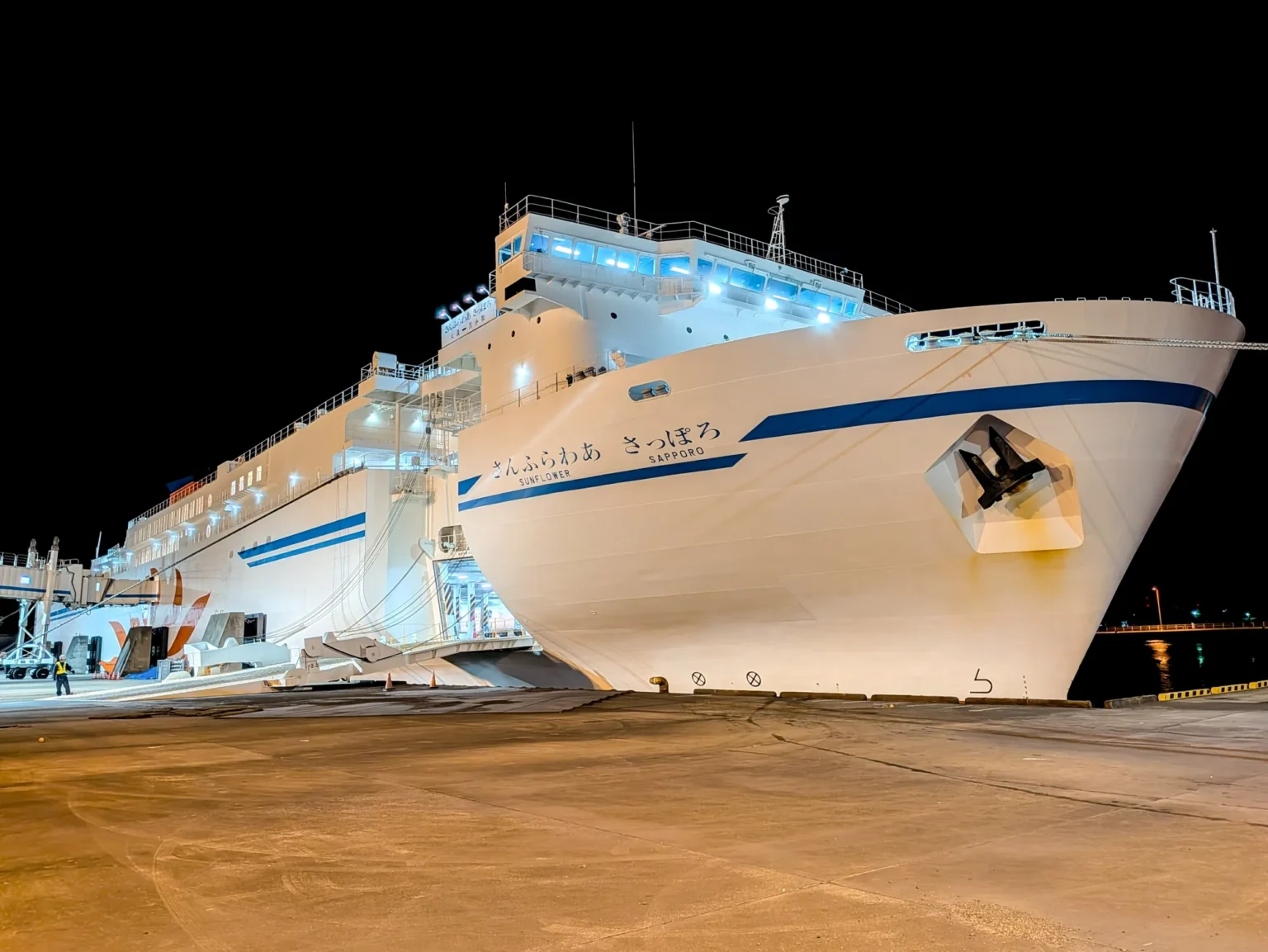
At Tomakomai, Hokkaido Chuo Bus’s Highway Tomakomai goes from the ferry terminal to Sapporo Station in about 1 h 51 min for ¥1,580, leaving the terminal at 6:46, 11:46, 13:56 and 16:46 on its summer timetable (updated 1 July 2026; I haven’t seen the winter one). Off the evening sailing, which arrives at 13:30, the 13:56 bus reaches Sapporo Station at 15:47 if you’re off the ship in time; MOL Sunflower notes that getting ready to disembark can take time after berthing. Off the night sailing there’s no direct bus to Sapporo: Donan Bus route 24 goes to Tomakomai Station, on the JR line to Sapporo, in about 16 minutes for ¥280, but its last departure from the terminal is 17:05 on weekdays and 20:35 on weekends and holidays, and with disembarkation from the night ships sometimes taking about an hour to begin, don’t count on the 20:35. Otherwise it’s a taxi or a bed in Tomakomai.
Shorter crossings from Hachinohe, Aomori and Niigata
If you’re driving north, three other ferries shorten the sea leg. The tunnel under the strait isn’t a road: JRTT describes the Seikan Tunnel as a 53.85 km undersea railway tunnel.
Hachinohe → Tomakomai
Silver Ferry: four sailings a day, at 8:45, 13:00, 17:30 and 22:00, taking 7¼–8 hours. Second class costs ¥6,000, rising to ¥6,500 for sailings from 1 January 2027.
Aomori → Hakodate
Tsugaru Kaikyo Ferry: six sailings a day, 3 h 40 min (one takes 3 h 35 min), on the regular timetable for 17 September–29 December 2026 and from 5 January 2027, with fewer around New Year. Standard class is ¥3,160–4,150 (¥3,160 from 1 October to 26 December 2026); a car under 6 m with its driver is ¥21,260–28,600.
Niigata → Otaru
Shin Nihonkai Ferry: leaves at 12:00 and arrives at 4:30 the next morning (16 h 30 min), Tuesdays to Sundays. In October–December 2026 there are no Monday sailings and none on 31 December; check the monthly schedule.
Once you land: where to sleep first and how to get around
Book the first night where your route ends: in Hakodate if you arrive there by train or plane, in Sapporo if you take the Hokuto or fly into New Chitose.
For getting around afterwards, JR Hokkaido’s Hokkaido Rail Pass costs ¥22,000 for five days bought in advance (¥23,000 at stations in Japan) and covers all JR Hokkaido lines except the Hokkaido Shinkansen. My Hokkaido Rail Pass guide works out when it pays. If you came on the East-South pass, Sapporo, Otaru and New Chitose Airport are already inside its area.
Fly in, ride back
Fly Haneda to New Chitose and take the Airport train into Sapporo. Going home, take a Hokuto south for a night in Hakodate (¥9,770 from Sapporo), then the shinkansen to Tokyo. JR Hokkaido points to Mount Komagatake and Funka Bay from the Hokuto’s windows, and since the JR Group ended its return discount in March 2026, riding the train in only one direction no longer costs you a discount.
Six days on the East-South pass
Day 1, Tokyo to Hakodate (4 h 29 min at best). Day 3, a Hokuto to Sapporo. Day 4, Otaru. Day 6, the long train ride back to Tokyo.
February
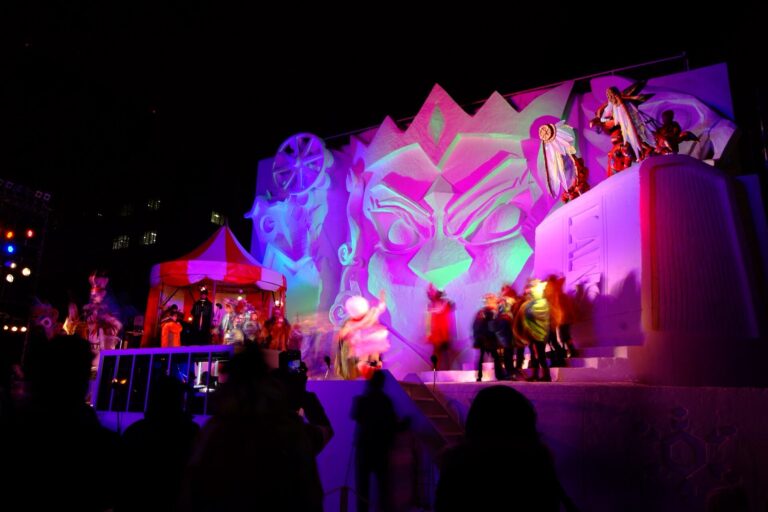
The Sapporo Snow Festival 2027 runs from 4 to 11 February. Book the first night early, and see the Lake Shikotsu Ice Festival guide for another February event.
Breaking the train ride
If you’re taking the train north anyway, the Tokyo to Tohoku 5-day itinerary stops in Sendai, Yamadera, Ginzan Onsen and Hirosaki.
Where in Sapporo or Hakodate to sleep
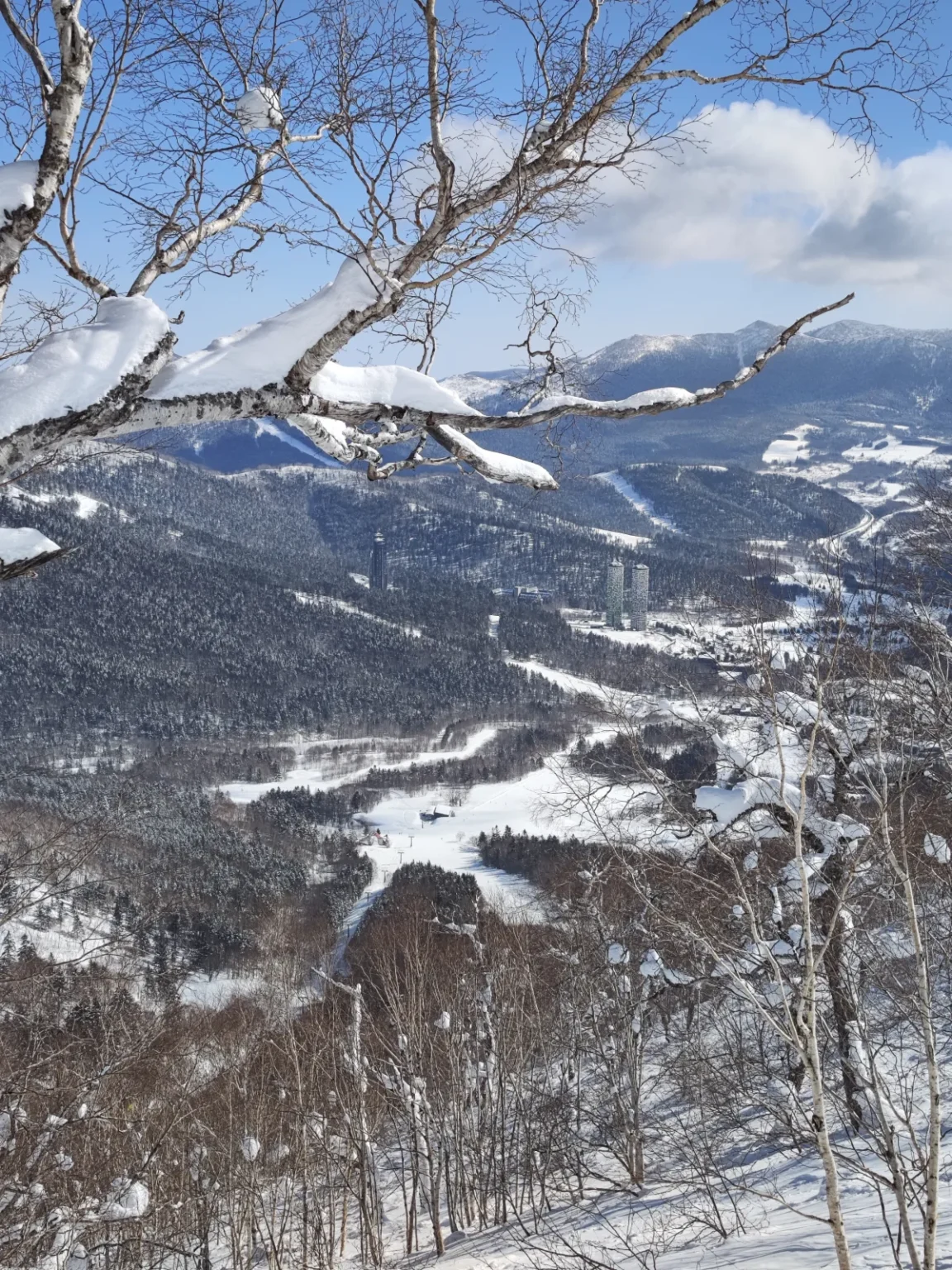
Flying into New Chitose, stay near Sapporo Station so the last leg is a single Airport train, as long as you land in time to catch one. Coming by train to Hakodate, sleep in Hakodate itself, not at Shin-Hakodate-Hokuto.
Frequently asked questions
Is there a bullet train from Tokyo to Sapporo?
Not all the way. The Hokkaido Shinkansen ends at Shin-Hakodate-Hokuto and a Hokuto limited express covers the rest, 7 h 45 min in all at best on the timetable for 15 October 2026. The extension to Sapporo is expected around the end of fiscal 2038, with no opening date set.
Can you drive from Tokyo to Hokkaido through the Seikan Tunnel?
No, it’s a railway tunnel: JRTT calls it a 53.85 km undersea railway tunnel, and JR Hokkaido puts it 240 m below sea level at its deepest. Drivers cross by ferry; Tsugaru Kaikyo Ferry charges ¥21,260–28,600 between Aomori and Hakodate for a car under 6 m, including the driver’s Standard fare (fares from 1 April 2026).
Is there an overnight train from Tokyo to Hokkaido?
Not a scheduled one. The Hokutosei’s scheduled runs ended in March 2015 and the Cassiopeia’s in March 2016, and the Cassiopeia’s tour-only trips ended on 30 June 2025. For an evening departure, JR Hokkaido’s planner pairs the 19:20 shinkansen, into Shin-Hakodate-Hokuto at 23:29, with Hokuto 1 from there at 6:21 the next morning; to sleep in a hotel instead, one option is to ride on to Hakodate and take Hokuto 1 from Hakodate at 6:02. From the Tokyo area, the overnight option at sea is the ferry from Oarai.
How far is Hokkaido from Tokyo by train?
JR Hokkaido’s route planner gives 1,163.3 km from Tokyo to Sapporo and 880.4 km to Hakodate. The fastest trains cover them in 7 h 45 min and 4 h 29 min.
Does the Japan Rail Pass cover the Hokuto to Sapporo?
Yes. It covers ordinary reserved seats on both the Hokkaido Shinkansen and the Hokuto, with no extra charge for reservations. A 7-day ordinary pass costs ¥50,000 on JR’s official site for now (JR says that price is held for a limited period, with no end date announced as of 28 September 2026), or ¥53,000 from overseas agents for purchases from 1 October 2026.
Do I need to reserve luggage space on the Hayabusa?
No. JR East says no luggage reservation is needed on the Tohoku and Hokkaido Shinkansen. Its limits are 250 cm in total dimensions, 2 m in length, 30 kg and two pieces.
Can I buy the JR East South Hokkaido Rail Pass in Hokkaido?
Yes. From 20 October 2026, JR Hokkaido says its passport-reading ticket machines at Sapporo Station and New Chitose Airport Station will sell it, and the information desks for overseas visitors at both stations keep handling rail passes. It costs ¥40,000 for six consecutive days and needs a non-Japanese passport.
If you’re sleeping in Hakodate, compare the 4 h 29 min train with the whole trip by air from Tokyo Station. If you’re heading to Sapporo in winter, give yourself a spare day rather than counting on the train as a fallback for a cancelled flight, and if six days on the East-South pass fit your trip, price that before the flights.
Sources
Primary sources behind the figures above, checked 27–28 September 2026
- JR Hokkaido — route, fare and timetable planner (searches for 15 October 2026) and its timetables for the Hokuto, the shinkansen and the Hakodate Liner
- JR East — Tohoku and Hokkaido Shinkansen timetable for October 2026 (Hayabusa departures, track 12)
- JR Hokkaido press releases — March 2026 timetable change, March 2024 timetable change, 260 km/h running for New Year 2025–26, the regular fastest time (15 May 2026 notice), the FY2026 news list, extra autumn Hayabusa
- JR Hokkaido disruption reports — January snow (30 January 2026), final report (31 July 2026), Shizukari–Koboro washout (28 August), replacement buses, Sapporo–Toya trains, cancellation totals (4 September), reopening (9 September)
- JR Hokkaido — train guide, Hokuto, Airport trains, April 2025 fares, reserved-seat fee change, passport-reading ticket machines, Hokkaido Rail Pass, Seikan Tunnel, train operation information
- JR East — oversized luggage guide, on-board sales FAQ, seasonal limited express fees, end of the return e-ticket (28 January 2026), East-South pass, terms and area map, English FAQ, fare search (Tokyo–Mito); Hokutosei and Cassiopeia withdrawals, Cassiopeia history
- JR Group — end of return and consecutive-journey tickets, Japan Rail Pass price change; JAPAN RAIL PASS prices and cars covered
- Eki-net — Shinkansen e-ticket fares, e-ticket service, Tokudane price examples, end of Tokudane 1 and 14, Hokuto Tokudane 1 fares, FAQ 4131 on overseas residents; JR East and JR Hokkaido, Special 28 (7 August 2026)
- JRTT — Hokkaido Shinkansen, to Sapporo, Seikan Tunnel; transport ministry, expert panel conclusion (14 March 2025)
- Airlines and airports — ANA Hokkaido timetable, AIRDO timetable, AIRDO late-arrival notice, Skymark summer timetable, Skymark winter fares, Skymark Haneda check-in change, Jetstar Japan domestic schedule, New Chitose Airport schedules, Hakodate Airport schedules, Hakodate Airport buses, ANA domestic fares, AIRDO Welcome to HOKKAIDO Fare, JAL Japan Explorer Pass routes, Haneda Airport rail access, Hokkaido government late-night access
- Buses — Hokuto Kotsu airport bus, Hakodate Teisan Bus, Ibaraki Kotsu, Hokkaido Chuo Bus, and Donan Bus’s route 24 timetable
- MOL Sunflower — October–December 2026 schedule, timetable page, 2026–27 fare table, fare-period calendar, discounts, autumn web discount, Pacific Story, boarding times, night-ferry vending machines
- Other ferries — Silver Ferry timetable and 2027 fare change, Tsugaru Kaikyo Ferry timetable and fares, Shin Nihonkai Ferry timetable
- Sapporo Snow Festival 2027
Join travelers discovering Japan's hidden side
Weekly dispatches from off-the-beaten-path Japan — spots and stories you won't find in guidebooks.
No spam. Unsubscribe anytime.
Welcome aboard!
You're in. See you in your inbox soon.