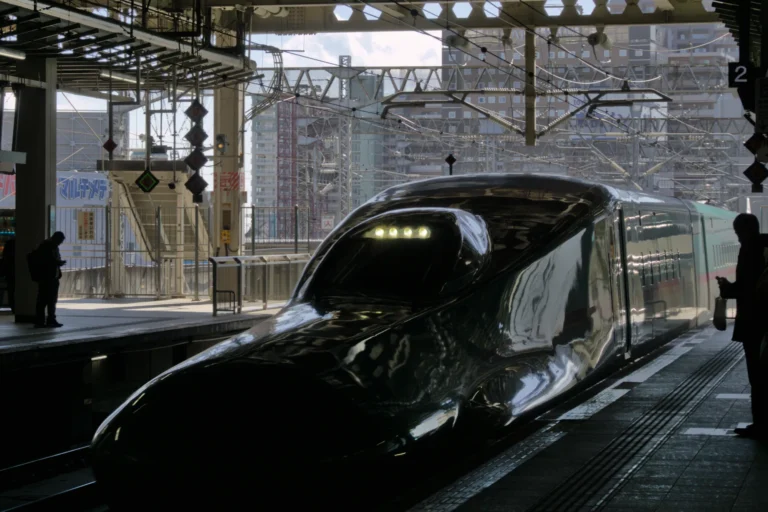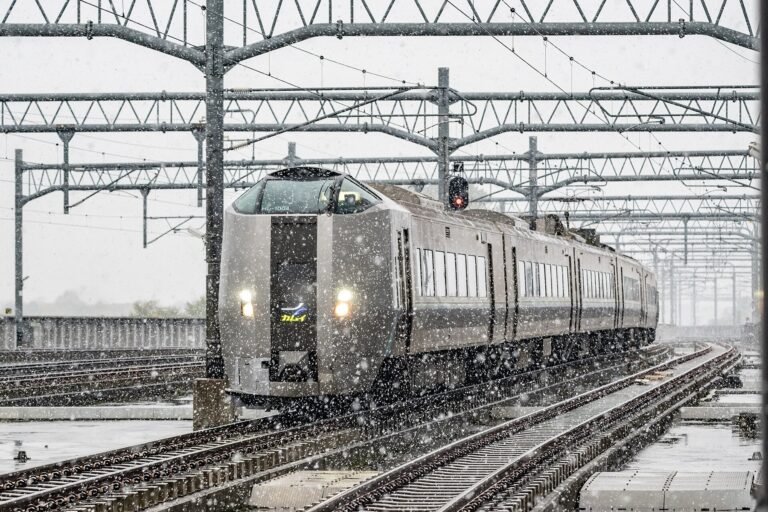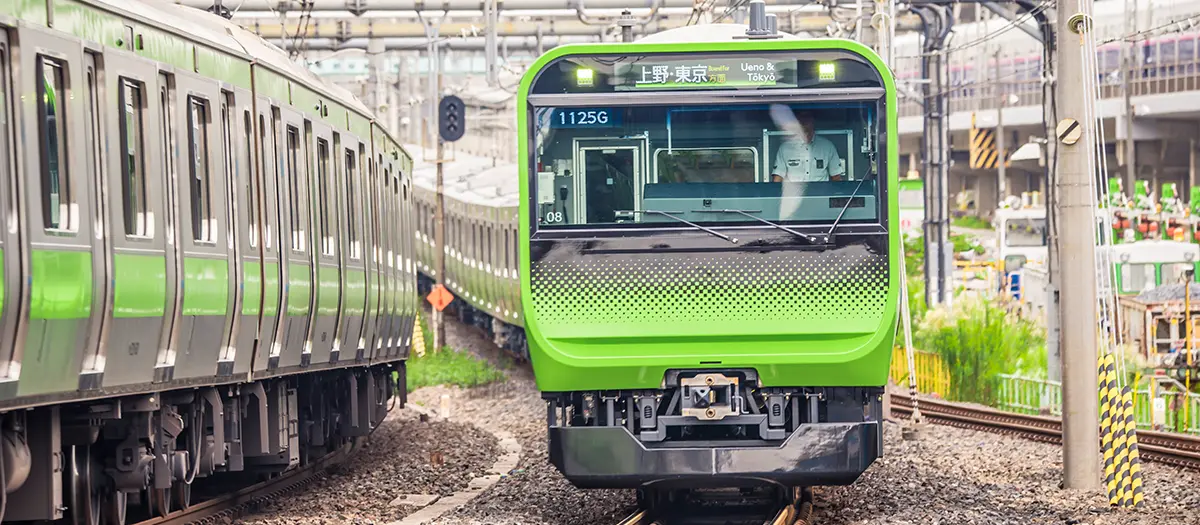

Riding a Shinkansen or limited express train in Japan requires two separate tickets — a Basic Fare Ticket (乗車券) for distance and a Limited Express Ticket (特急券) for speed and seat. Local trains and subways use one ticket or an IC card. Confusing this rule is the single most common Japan train mistake foreign travelers make. Below: how the system works, where to buy, when reserved seats are worth it, and the assumptions that catch first-timers.
I’ve watched dozens of tourists at Tokyo Station’s shinkansen gates pull out one ticket, jam it into the slot, and stare in confusion when the gate beeps and rejects them. The two-ticket rule is not communicated well in English. The good news: once you understand it, the whole system clicks. The Basic Fare ticket pays for the distance you’re covering. The Limited Express ticket pays for the speed (and reserves the seat, if you opted in). You feed them both into the gate together. The machine reads them both, swallows nothing, returns them, and lets you through.
The two-ticket system: why you often need both
The most common point of confusion for travelers is the two-ticket system. For long-distance travel on a Shinkansen or limited express train, you need both tickets to form a complete valid fare. Think of it as paying for the distance and then paying for the speed and seat quality.
Pays for distance Point A → Point B. Required for any JR train, from local commuter to Shinkansen. Price scales with kilometers.
Surcharge for faster trains (Shinkansen / limited express). Indicates reserved or non-reserved seat.
When you pass through the ticket gates, insert both tickets into the slot simultaneously. The gate validates them and returns them to you. Do not lose them — you’ll need them again to exit at your destination.
| Train type | Required tickets |
|---|---|
| Local / Rapid | Basic Fare Ticket only (or IC card) |
| Shinkansen | Basic Fare + Limited Express |
| Limited Express | Basic Fare + Limited Express |
Reserved vs non-reserved seats
Your Limited Express Ticket indicates whether the seat is reserved or non-reserved. This choice affects both cost and travel experience.
Reserved Seat
指定席 / shitei-seki- Guaranteed seat in a specific car
- ~¥500 more than non-reserved (varies by route)
- Tied to a specific train and time — late = re-issue at counter
- Best for: peak travel, groups, long journeys, anyone with luggage
Non-Reserved Seat
自由席 / jiyū-seki- Any seat in the designated non-reserved cars (usually the first few)
- If full, you stand
- Any train on the same route and day
- Best for: off-peak travel, solo travelers, flexible schedules
Some Shinkansen — the Hayabusa (Tohoku/Hokkaido) and Kagayaki (Hokuriku) — are fully reserved with no non-reserved cars. You cannot board them without a reservation. During peak holidays (New Year, Golden Week, Obon), all seats on Nozomi trains may also become reserved-only.
Where to buy tickets: 4 main options
Before you buy — two things I sort first
Ticket Vending Machines
券売機
In every JR station. Modern machines have an English language option. Buy basic fare + limited express + make seat reservations. Accept cash, credit card, IC card.
JR Ticket Offices
Midori no Madoguchi / みどりの窓口
Green-signed counters with JR staff. Best for complex itineraries or if you prefer human help. Bring destination, date, and time written down.
Online (in advance)
eki-net.com / smart-ex.jp
Tokaido Sanyo Kyushu Online Reservation (smart-ex) for Tokyo–Osaka–Hakata corridor. JR-East’s Eki-Net for Tohoku/Hokkaido routes. Receive a QR code, scan at any station machine to print tickets.
Travel Service Centers
JR EAST Travel Service Center, etc.
At major airports (Haneda, Narita, Kansai) and central stations (Tokyo, Shinjuku, Kyoto). Designed for foreign tourists. Pass redemption, ticket purchases, multilingual support.
The IC card option: Suica, ICOCA, TOICA
For local travel on subways, buses, and non-express JR trains, an IC card is the cleanest option. These rechargeable prepaid cards work by tapping the gate reader — fare deducts automatically. No paper ticket per trip.
- AWhat they are: Suica (greater Tokyo / JR East), ICOCA (Kansai / JR West), TOICA (Nagoya / JR Central). All three are functionally interchangeable across most of Japan’s metro and JR network.
- BHow to use: Load with cash at a ticket machine (¥1,000 minimum). Tap at the gate on entry and exit. Reload anywhere when balance drops.
- CThe limitation: An IC card only covers the Basic Fare portion. You cannot use it to pay the Limited Express surcharge on a Shinkansen — that still requires a separate Limited Express Ticket.
- DWelcome Suica / ICOCA for tourists: No ¥500 deposit, but doesn’t allow reload extensions beyond 28 days. Trade-off worth knowing.
Common assumptions (and why they’re wrong)
| What travelers assume | What’s actually true |
|---|---|
| “One ticket is enough for the Shinkansen.” | You need two: Basic Fare Ticket + Limited Express Ticket. |
| “I’ll buy a second seat for my big suitcase.” | Prohibited. Oversized luggage requires a pre-booked luggage space (special reservation; some trains charge ¥1,000 extra). |
| “Non-reserved is always the best value.” | For ~¥500 more, a reserved seat guarantees you won’t stand 3 hours from Tokyo to Hiroshima. Almost always worth it. |
| “My Suica works for everything.” | Only covers basic fare. Limited Express surcharge still required separately for Shinkansen. |
| “All Shinkansen have non-reserved cars.” | Hayabusa and Kagayaki are fully reserved. Some Nozomi services become fully reserved during peak holiday weeks. |
Practical takeaways
- 1For Shinkansen, always two tickets: Basic Fare + Limited Express. Insert both at the gate together.
- 2Reserved seats are worth the small extra cost on any train over 90 minutes. Guaranteed seating, no scramble.
- 3Use the English menu on vending machines — the touchscreen flow is straightforward once you switch language.
- 4Book online ahead of peak periods (Golden Week, Obon, year-end) and any time you have oversized luggage.
- 5An IC card (Suica/ICOCA/TOICA) is for local travel. Don’t expect it to cover Shinkansen express fees.
- 6Keep both tickets until you exit. The gate at your destination needs both. Lost ticket = pay the full fare again.
Plan the Trip
Three doors into Japan rail travel. If you’re moving multi-city, the JR Pass math is worth checking before you buy individual tickets.
Related reading
- JR Pass vs Individual Tickets in 2026 — Honest Math
- How to Get and Use IC Cards in Japan: Suica, PASMO, ICOCA
- Getting Around Japan 2026: Trains, Buses, JR Pass
Related: Beyond ordinary tickets: 20 JR sightseeing trains verified for 2026 — and how to book each one
Join travelers discovering Japan's hidden side
Weekly dispatches from off-the-beaten-path Japan — spots and stories you won't find in guidebooks.
No spam. Unsubscribe anytime.
Welcome aboard!
You're in. See you in your inbox soon.