
Ise Jingu is rebuilt from scratch every 20 years — the last rebuild was 2013 and the next is 2033 — and the primeval hinoki/cedar forest surrounding the Naiku has been protected by imperial decree since the 7th century. The full pilgrimage is two shrines (Geku then Naiku) plus the Edo-period merchant street Oharaimachi where Akafuku Honten has sold the same red-bean mochi recipe since 1707. Late November — just before peak koyo — gives you blue skies, no crowds, and the first maples beginning to turn.
Last updated: 2026-05-29 · Visited late November 2024 · Author: Nobutoshi (Kyoto-based)
Quick facts
- Formal name
- 神宮 (Jingu)
- Two main shrines
- Naiku (内宮) + Geku (外宮)
- Enshrines
- Amaterasu Omikami (Naiku), Toyouke Omikami (Geku)
- Forest area
- Vast hinoki/cedar forest, protected by imperial decree since the 7th century
- Sengu cycle
- Every 20 years; last 2013, next 2033
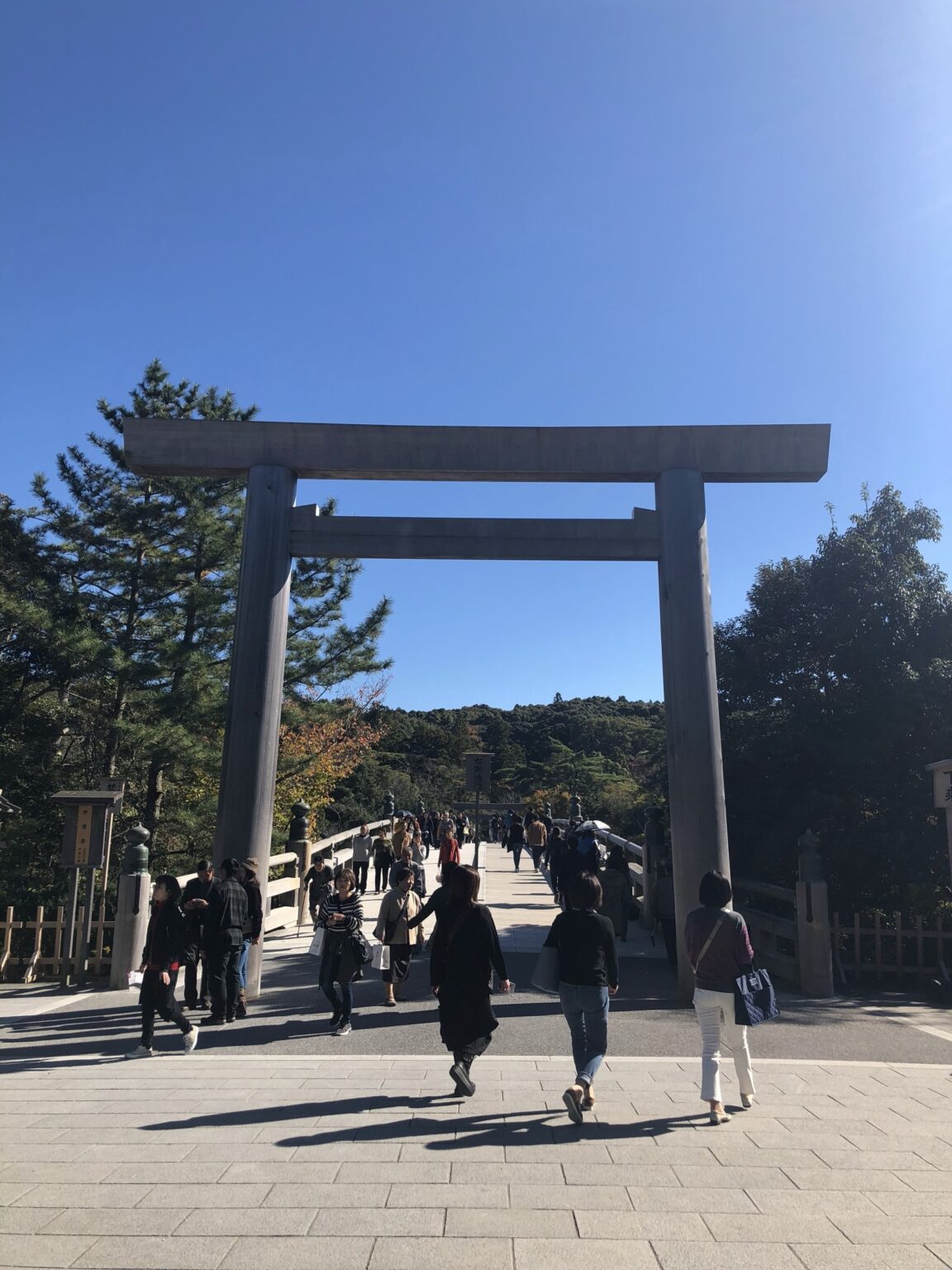
- Uji Bridge
- 101.8 m hinoki cypress, rebuilt 4 yrs before each sengu
- Open
- Free; 05:00 daily, closes 17:00 (Oct–Dec) / 18:00 (Jan–Apr, Sep) / 19:00 (May–Aug)
- Best visit
- Late November — pre-koyo, blue skies
The November visit — why I came back to Ise
Late November is the right window for Ise because the typhoon season has fully closed, the sky in Mie turns crystal blue, and the first maples begin to turn while the bus crowds arriving for full koyo peak are still two weeks away.
I’d been to Ise twice before. The first time was a New Year hatsumode in my twenties, which is when most Japanese visit and which I do not recommend for first-time visitors — the Uji Bridge becomes a one-way human conveyor belt and the shrine grounds turn into a slow shuffle. The second time was mid-summer, hot enough that the forest felt less sacred and more like a sauna.
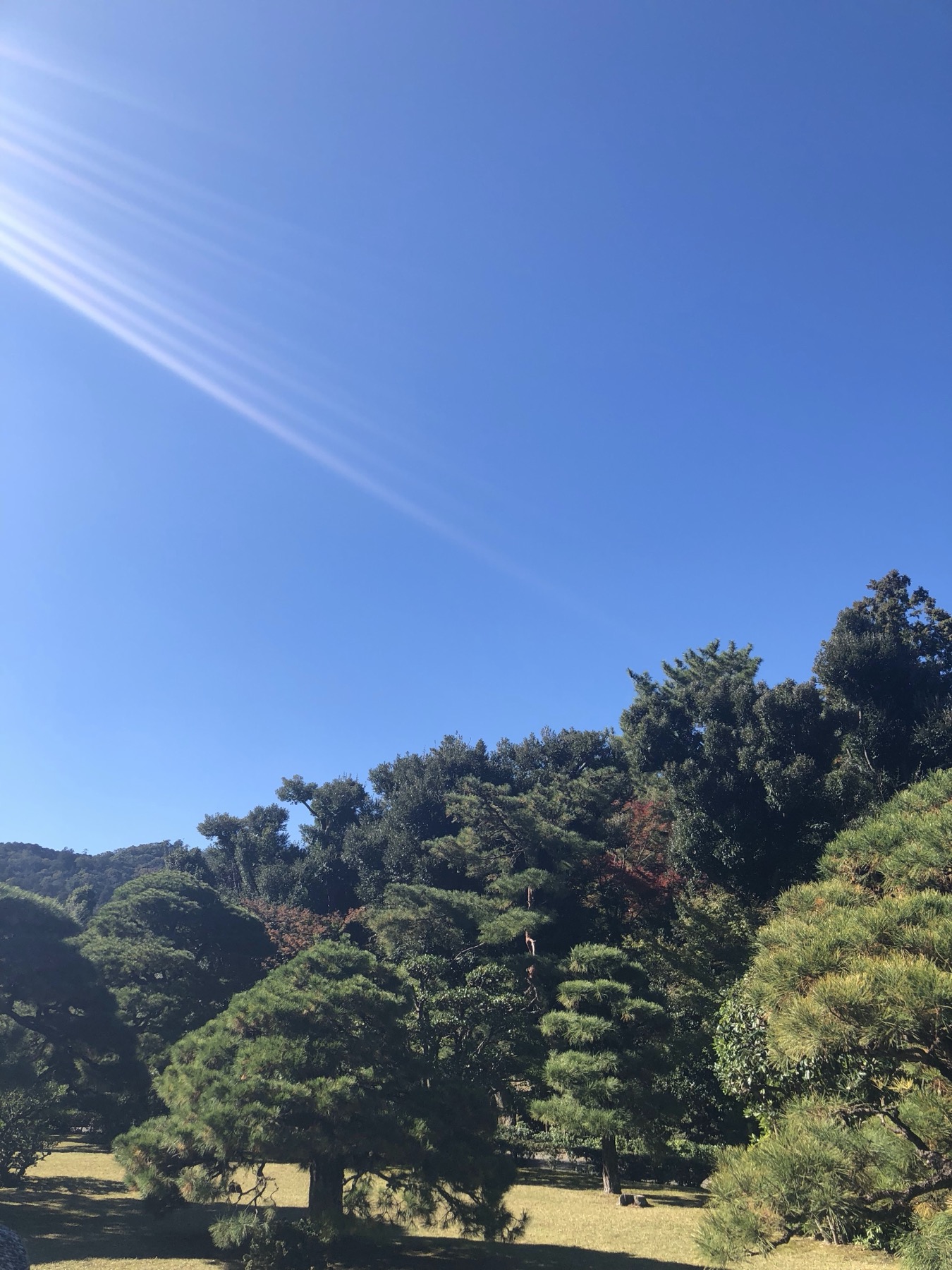
This time I went on a weekday in late November, two weeks before the official koyo peak. The sky in Mie at that time of year is the kind of crystal blue that you only get when humidity drops and the typhoon season has fully closed out. The leaves at the shrine had just started turning — most still green, a few maples burning red at the top. There were no school groups. There were no tour buses. The taxi from Ise-shi station to the Geku took six minutes.
Why late November, not the peak
At Ise the actual koyo peak runs roughly the first week of December — about 10-14 days behind Kyoto’s because Mie is milder. Late November means about 30% colour, ample blue sky, half the crowd of December, and the shrine grounds still mostly green which is closer to how Ise was meant to be experienced. The forest itself is not famous as a koyo spot. It is famous as a forest.
Geku first, then Naiku — the order matters
Visit Geku before Naiku. This has been the rule since the 7th century — Toyouke Omikami at the Geku is the deity who serves Amaterasu at the Naiku, so practically Geku is the support shrine and Naiku is the climax. Skip Geku only if you are on a strict half-day.
One thing every Japanese person knows and most foreign visitors don’t: you visit Geku first and Naiku second. This is not flexible. It’s been the rule since the shrines were laid out in the 7th century. Toyouke Omikami at the Geku is the deity of food and welfare and serves Amaterasu at the Naiku — practically, this means Geku is the support shrine and Naiku is the main shrine, and you build to the main one.
If you only have a half day, skip Geku. If you have a full day, do them in order — Geku in the morning, lunch on Oharaimachi, Naiku in the afternoon when the light comes sideways through the forest.
Geku vs Naiku — what’s actually different
5 min walk from Ise-shi station. Much less visited. Toyouke Omikami enshrined. Smaller forest, more compact grounds, about 60 minutes to walk through. Same shrine architecture, same sengu cycle. Free admission.
15 minutes by bus south of Geku. The main destination. Amaterasu enshrined. 90-120 minutes to walk through unhurried. Uji Bridge, Mitarashi at Isuzu River, ancient cedars, the inner sanctum. Oharaimachi is right outside the gate.
Inside the Naiku — the forest first
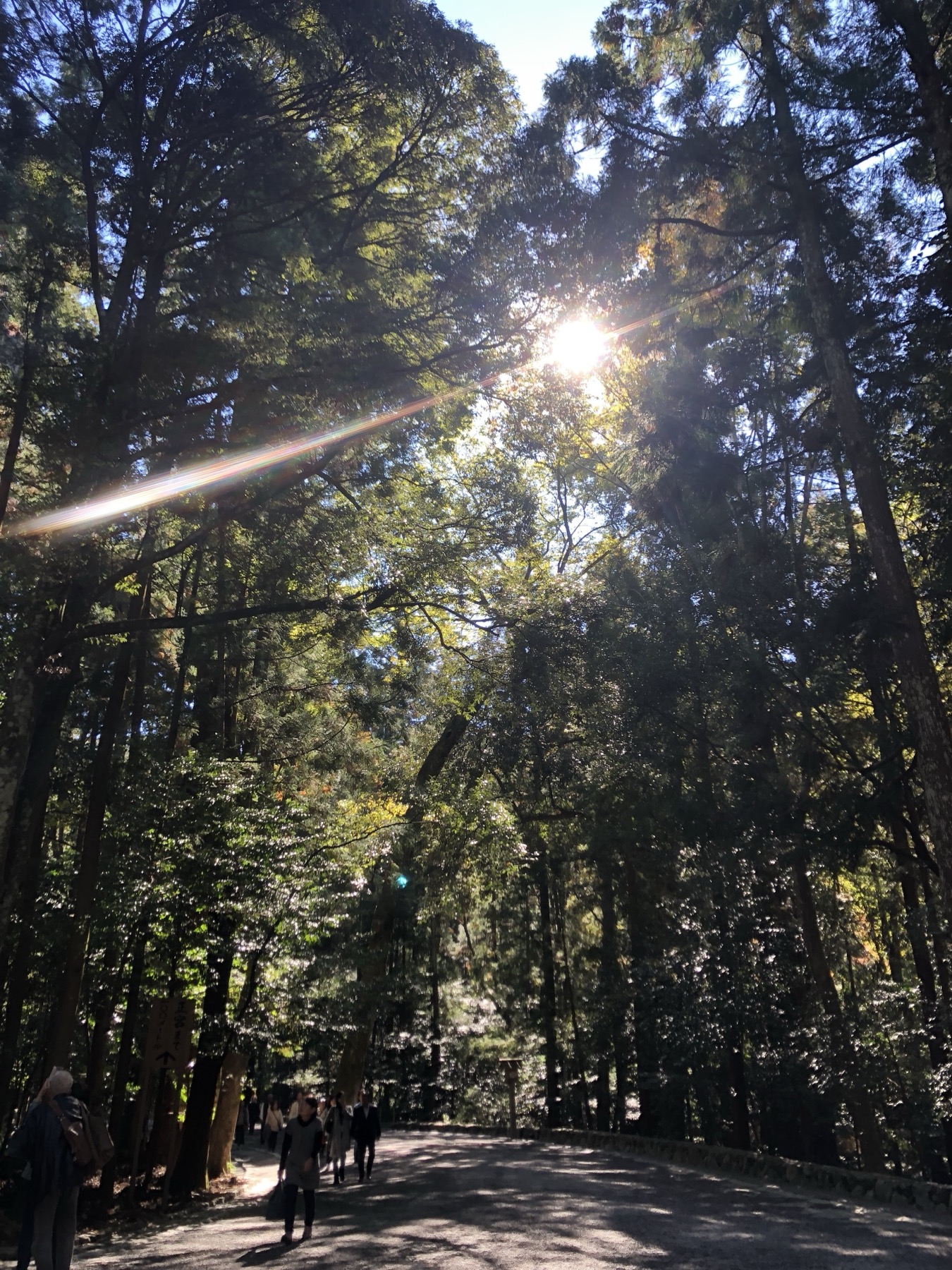
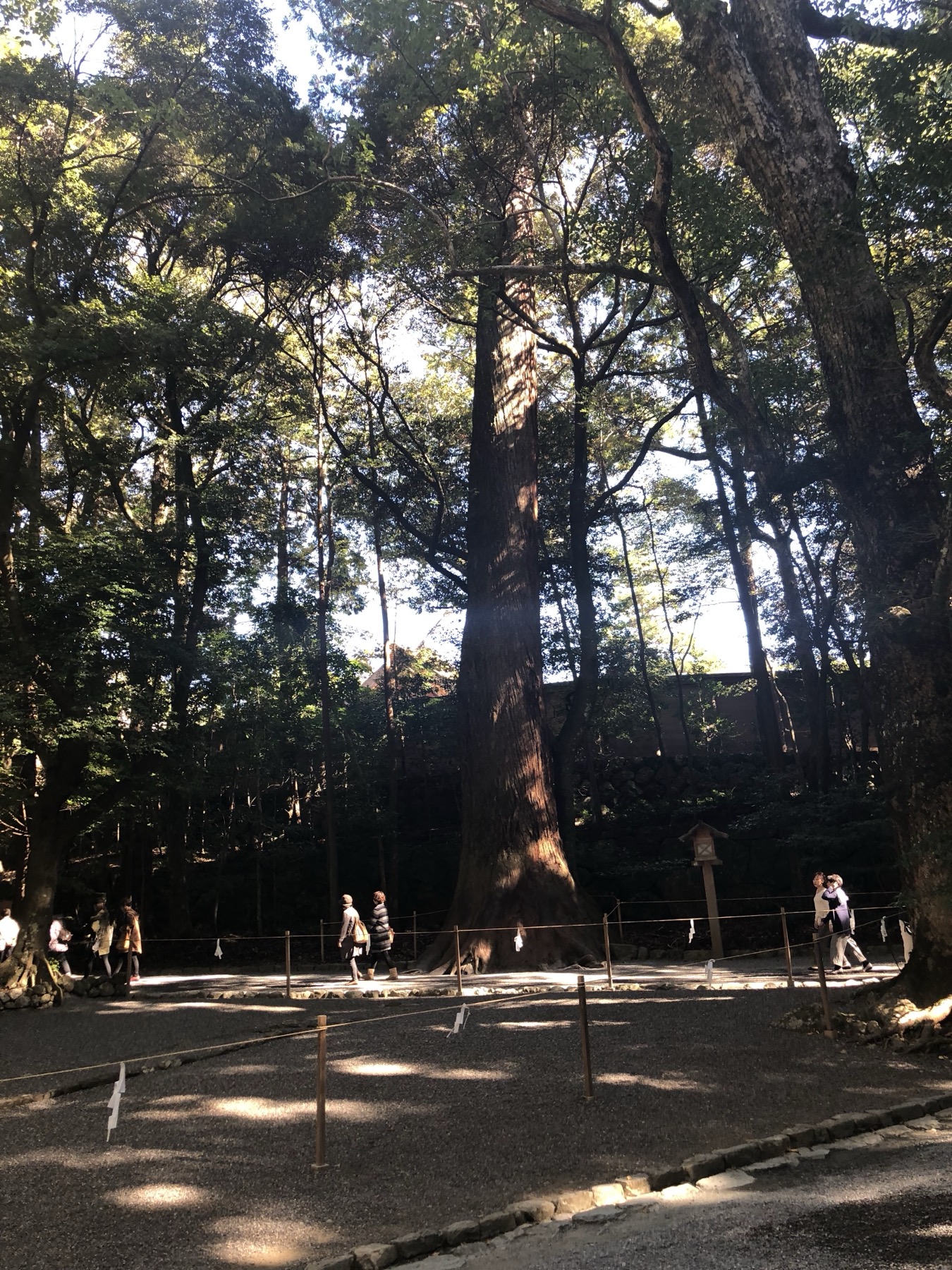
The vast Naiku forest, protected by imperial decree since the 7th century, is what most pilgrims actually remember. Cedar and hinoki resin, no exhaust, no perfume; the largest trees are several hundred years old with trunks the width of small cars.
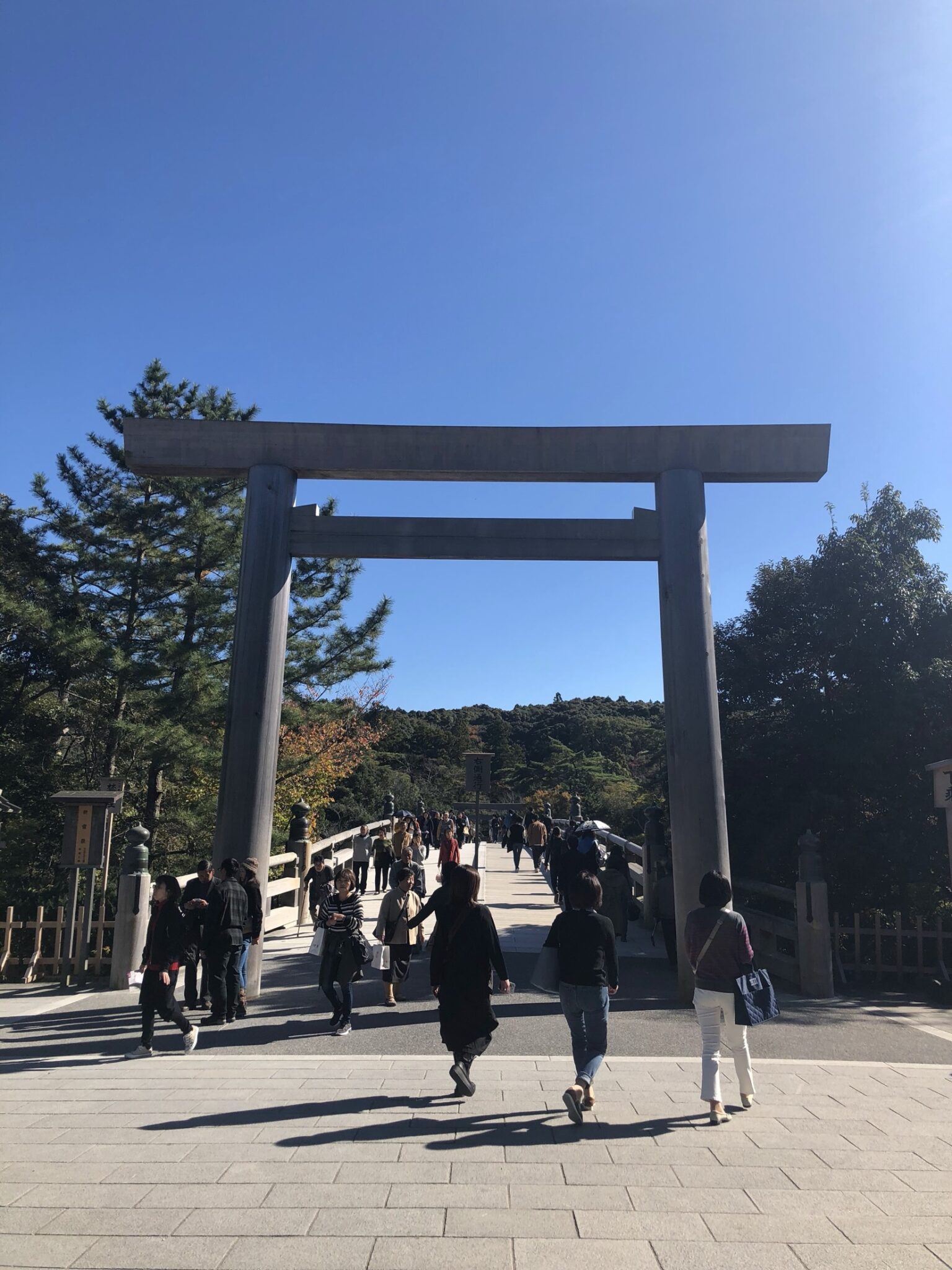
Cross the Uji Bridge (101.8 m of hinoki cypress, rebuilt 2009 ahead of the 2013 sengu) from west to east — the bridge always returns you to “kami territory” on the eastern side — and the path opens into the Isuzu River basin and the forest. The first thing that hits you is the smell. Cedar resin, slightly damp moss, no exhaust, no perfume. The forest is vast — historically protected by imperial decree since the shrine was laid out in the 7th century — and a number of the trees along the path are several hundred years old, with the largest having trunks the width of a small car.
The Mitarashi (purification spot) at the Isuzu River is the next stop. You crouch at the stone bank, scoop water with your right hand, rinse your left, then switch, then rinse your mouth from your left palm. No need for the ladle-and-bowl version — the river is the original.
The Shogu — the moment photography stops
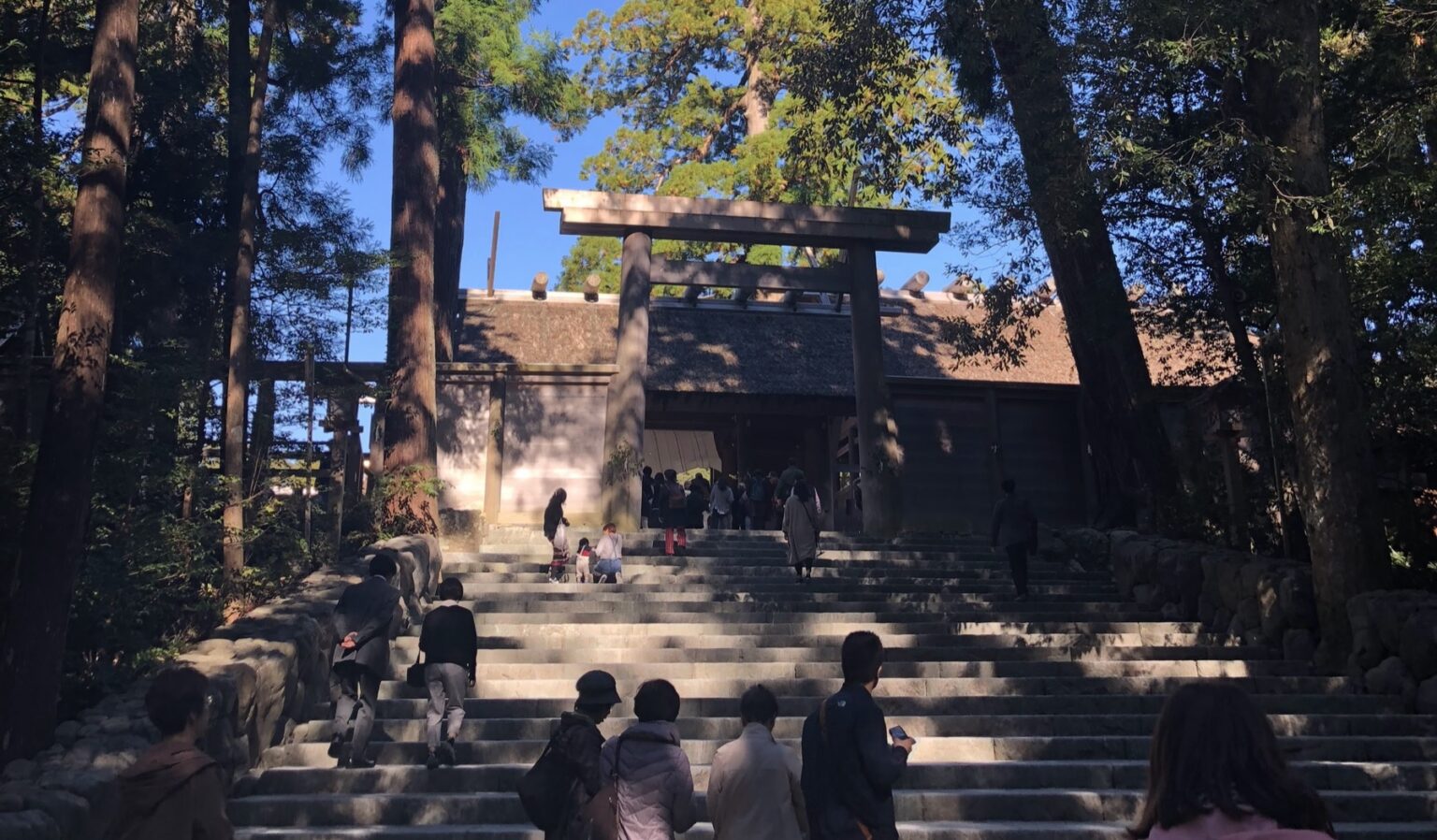
The stairs to the Shogu — the inner sanctum where Amaterasu is enshrined — are wide stone steps in a small bowl of trees. There is a sign in Japanese and English at the bottom step explaining that you may not photograph from beyond it. Most visitors stop, put away their phones, walk up, throw a five-yen coin onto the white cloth at the offering hall, bow twice, clap twice, bow once.
You cannot see the Honden behind the offering hall. The Honden is hidden behind four layers of fences. Only the chief priest, the imperial messenger, and members of the imperial family enter. This restraint is part of the experience — at most other major shrines you can at least see the building you are praying to. At Ise the experience is deliberately incomplete, and that incompleteness is the point.
The Sengu — what’s actually being rebuilt
The Shikinen Sengu is the practice of tearing down and rebuilding the entire Naiku and Geku on adjacent plots every 20 years. It has happened 62 times since 690 CE. Visit before 2033 to see the 62nd cycle; after 2033 you see the 63rd, freshly built.
Every 20 years, the entire Naiku and Geku are torn down and rebuilt on adjacent empty plots — the wood, the thatching, the bronze fittings, the Uji Bridge, everything. The shrine moves to its new building, the old building is dismantled, the empty plot waits 20 years for the next sengu, and the cycle continues. This has happened 62 times since 690 CE.
- Last sengu: 2013 — the 62nd Shikinen Sengu
- Next sengu: 2033 — preparations are already in progress
- Funding: private donations and shrine reserves; exact costs not publicly disclosed
- Wood: thousands of hinoki cypress logs, sourced from forests grown specifically for the sengu cycle over generations
- Uji Bridge: rebuilt 4 years before each main sengu (so the next bridge rebuild lands ahead of 2033)
- What you actually see: a shrine that is at most 20 years old in physical material but has been the same shrine in continuity for over 1,300 years
If you visit between now and 2032 you are seeing the 62nd cycle building. If you visit after 2033 you are seeing the 63rd. The plot next to the Shogu is always empty — that is where the next building will go.
Oharaimachi & Akafuku Honten
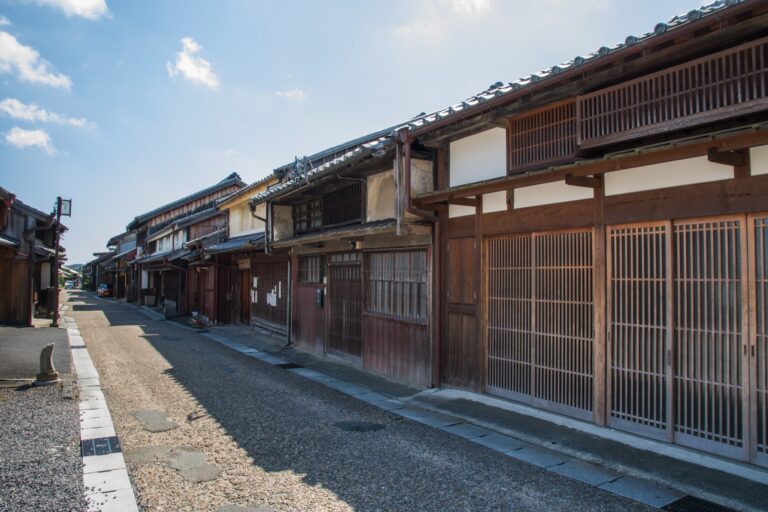
Oharaimachi is the 800 m Edo-style merchant street from the Uji Bridge to the bus stop. The shop most visitors come for is Akafuku Honten, founded 1707, where the same red-bean mochi recipe is made by hand on the spot and served for ¥330 with hot hojicha.
The 800 metre street between the Uji Bridge and the bus stop, Oharaimachi, is one of the most photographed pre-modern townscapes in Japan. It is essentially an Edo-period shopping street preserved (and partly reconstructed) for pilgrims who have just visited the Naiku and want food before heading home. The architecture is regulated — the wooden eaves, the tile roofs, the sign script.
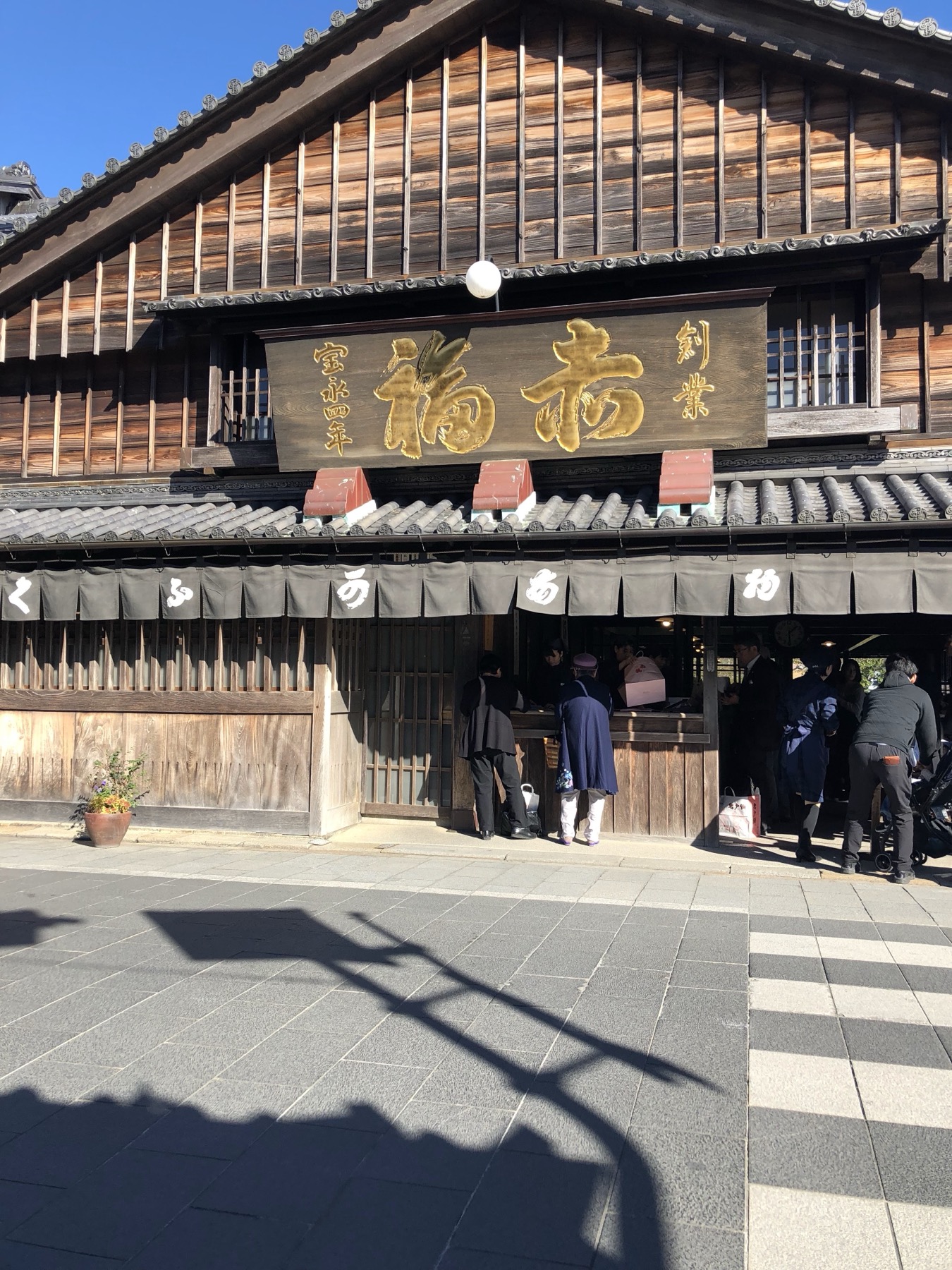
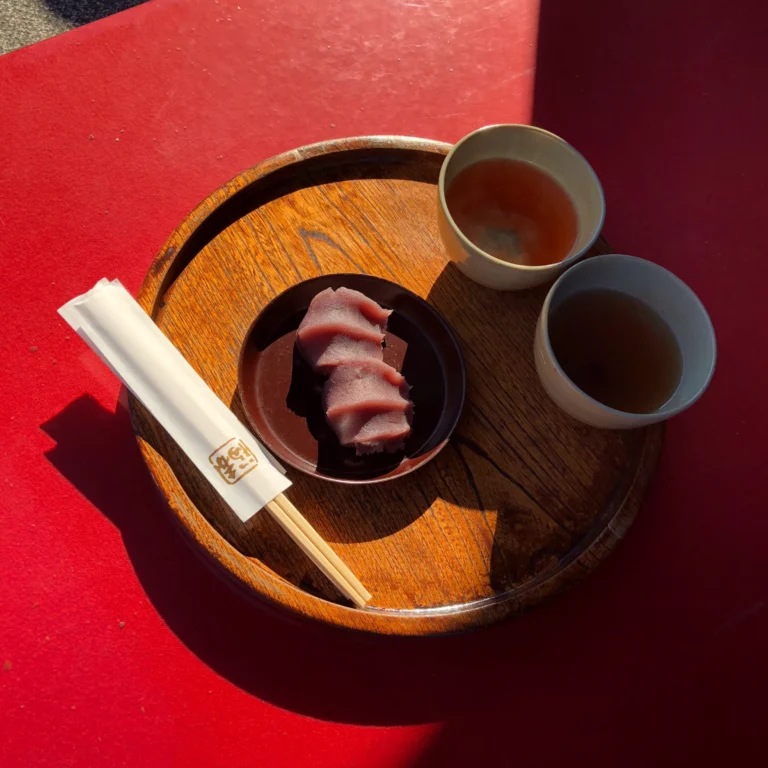
Most visitors come to Oharaimachi for one shop: Akafuku Honten. Founded in 1707 (Hoei 4), the recipe is unchanged — smooth sweetened azuki paste shaped by hand over soft mochi, sold by the box across Japan but made fresh on the spot only at the Honten. The shop opens at 05:00 to serve pilgrims arriving for dawn at the Naiku.
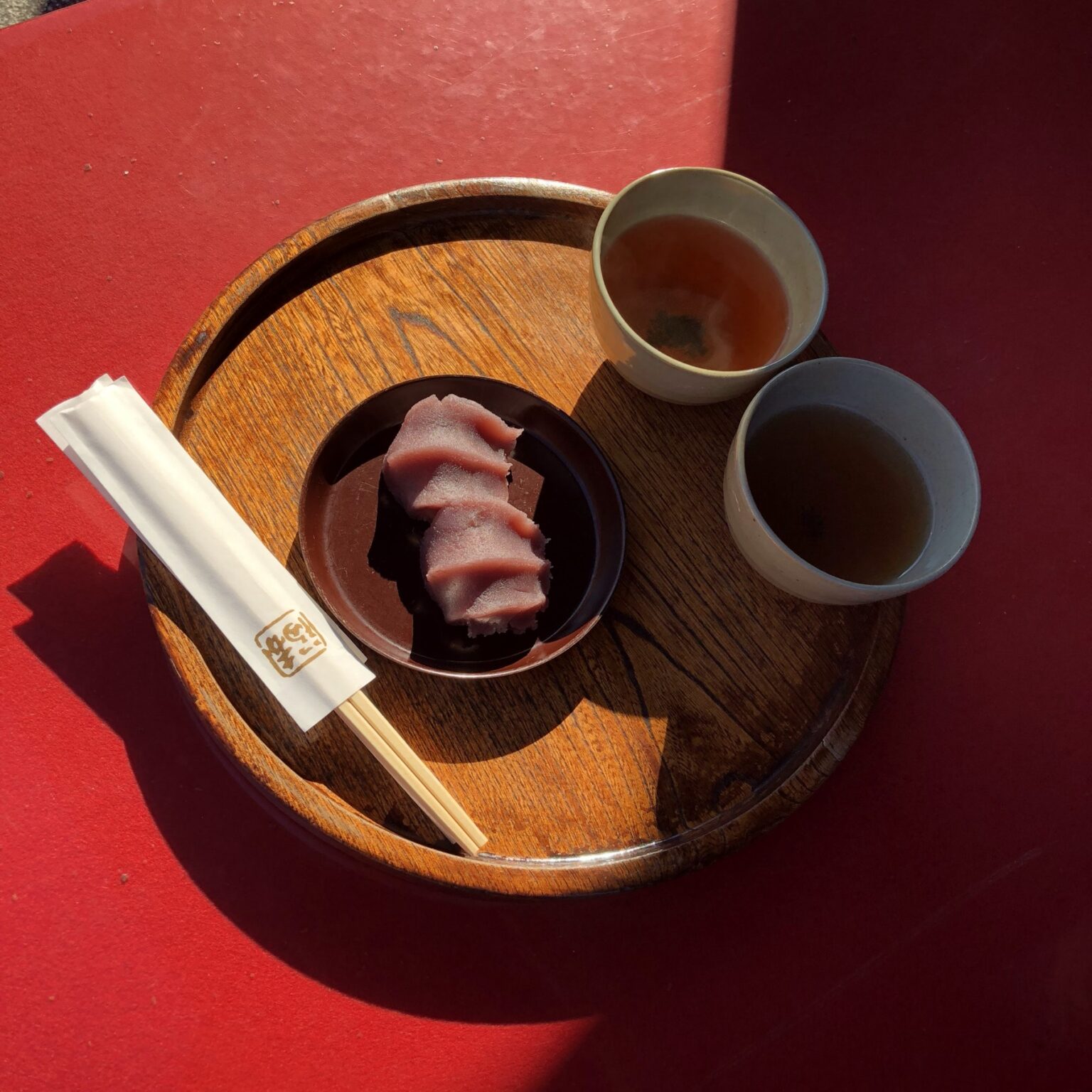
What you taste at the Honten is different from the boxed version. The mochi is softer because it has not been refrigerated; the azuki is still warm from the morning batch; the hojicha is roasted at the shop. ¥330 for two pieces plus tea. Eat them and walk back out — no photographs of the plate from above are needed, but most people take one anyway.
A clean half-day plan
Half-day pilgrimage — Geku to Akafuku
- 08:30 — Arrive Ise-shi stationTake the JR Sangu line from Nagoya (90 min) or the Kintetsu Limited Express from Osaka (1h 45min). The Geku is a 5 minute walk from the north exit.
- 08:45 – 09:45 — GekuWalk in slowly, do the temizu, visit the main shrine. Add 10 minutes for the smaller Taka-no-Miya and Tsuchi-no-Miya at the back if you have time.
- 10:00 – 10:15 — Bus to NaikuBus 51 or 55 from Geku-mae, ¥460, about 15 minutes. Or a taxi for ¥1,400.
- 10:15 – 12:15 — NaikuUji Bridge, Mitarashi, the path through the cedars, the Shogu, and back. Plan to take your time — this is the part you came for.
- 12:30 — Lunch on OharaimachiTekone-zushi (local raw bonito over vinegared rice, ¥1,200-1,800) is the regional dish. Multiple shops on Oharaimachi serve it.
- 13:30 — Akafuku HontenTwo pieces and tea at the counter, ¥330. Optionally a box to take home (¥800 for 8 pieces).
- 14:15 — Bus back to Ise-shi stationCatch the next limited express to Nagoya or Osaka. Total trip including travel: about 8 hours from a Nagoya base.
When to visit Ise — seasonal table
| Month | What’s happening | Crowd level | Verdict |
|---|---|---|---|
| Jan 1-3 | Hatsumode — millions visit | Extreme | Avoid unless hatsumode is the reason |
| Mid Jan – Feb | Quiet, cold, plum blossoms toward end | Light | Underrated for solitude |
| Mar – Apr | Cherry blossoms in shrine garden | Moderate | Excellent — sakura at a major shrine without Kyoto density |
| May | Fresh leaf — cedar forest at its greenest | Light | Great alternative to summer crowds |
| Jun | Rainy season; mossy forest atmospheric in mist | Light | Atmospheric but bring waterproofs |
| Jul – Aug | Heat + humidity, summer matsuri at Ise port | Moderate | Skip the shrine, see the port festivals |
| Sep – Oct | Typhoon season; mild between storms | Light | Risky for travel planning |
| Late Nov | Pre-koyo, blue skies, first maples turning | Light | Best — what this article is about |
| Early Dec | Full koyo peak | Heavy on weekends | Stunning but bus tours arrive |
| Late Dec | Bare trees, cold; New Year prep begins Dec 28 | Light then extreme | Last quiet window before hatsumode |
How to get to Ise
Ise Jingu Naiku (Kotai Jingu — inner shrine). Geku is 5 km north near Ise-shi station; the bus or taxi from here covers the gap in 15 minutes.
| From | Route | Time | Cost |
|---|---|---|---|
| Nagoya | JR Rapid Mie or Kintetsu Limited Express to Ise-shi | ~95 min | JR ¥2,000 / Kintetsu ¥2,990 |
| Osaka (Namba) | Kintetsu Limited Express to Ise-shi | ~1h 45 min | ¥3,290 (Shimakaze higher) |
| Kyoto | Kintetsu Limited Express to Ise-shi | ~2h 5 min | ¥3,810 |
| Tokyo | Tokaido Shinkansen to Nagoya → Kintetsu/JR to Ise-shi | ~3h 15 min | ~¥13,500 |
If you’re routing via Kyoto, the 15 destinations under 90 minutes from Kyoto Station covers the lateral pairing with Lake Biwa or Nara on the same trip. On the way back from Ise, the floating torii of Shirahige Shrine at Lake Biwa makes a clean second-day shrine pairing for a Kyoto base. And if you want a longer-form thematic frame for an Ise pilgrimage — quiet, no rush, no hit-list — the calmcation guide covers the slow-Japan approach.
Etiquette inside the Jingu
Six things to know before going in
- Bow at the torii. A small bow before walking through, both entering and leaving. The Uji Bridge counts as the threshold.
- Walk on the side of the bridge and the path, not the centre. The centre is reserved for the kami.
- No photographs from the top step of either Shogu. Signs are in English and Japanese. Stewards will gently stop you.
- Two bows, two claps, one bow is the prayer sequence at the Shogu. Throw the coin first, then ring the bell if one exists (Naiku has none), then the sequence.
- Mitarashi at the river is the original. If the temizuya is crowded, head to the riverbank instead — that’s where Heian-period pilgrims purified.
- No drone, tripod, or flash. No food or drink in the grounds. No smoking anywhere.
Tips for visitors from Singapore, Bangkok, KL & Jakarta
Practical notes for SEA travellers
Ise pairs cleanly with a Nagoya or Osaka base. Both have direct SEA flights and put you 95 min – 2 h from the shrine. Plan Ise as a half-day from those bases, not a hotel stop in itself.
- From SIN/KUL/BKK/CGK: Direct flights to NGO (Chubu Centrair) via Scoot, AirAsia X, Cebu Pacific — NGO → Ise-shi by Kintetsu Limited Express in 90 min (¥2,990). KIX → Ise-shi via Osaka Namba in 1h 45.
- Halal & vegetarian: Akafuku mochi is vegetarian (red bean + mochi, no animal products). Tekone-zushi contains raw bonito — skip if vegetarian. Oharaimachi has bean-based snacks (kashiwa-mochi, dorayaki) that work for both halal and vegetarian.
- Climate vs SEA: Late November in Mie averages 10-16°C and dry — light jacket weather. Much cooler than Singapore (28°C). Summer Ise (July-August) hits 30°C+ at high humidity, similar to SEA.
- Cash: Shrine grounds free. Akafuku Honten takes cards but Oharaimachi small shops are cash-only. Carry ¥10,000.
- Prayer / wudu: No facilities at the shrine. Use Nagoya or Osaka station prayer rooms before/after the trip.
FAQ
How long does an Ise Jingu visit take?
For both shrines plus Oharaimachi, plan a full day — about 6 hours on the ground, plus travel. For just Naiku and Oharaimachi (the most-recommended half-day), allow 3.5 to 4 hours including the Akafuku stop. The shrines themselves are walking, so wear comfortable shoes.
Is Ise Jingu free?
Yes. Entry to both Geku and Naiku is free. The Sengu Museum near the Naiku entrance is a paid attraction (¥700) and worth it if you want to understand the rebuild cycle and see scaled models of the construction process.
What’s the difference between Geku and Naiku?
Both are part of the same Jingu. Geku enshrines Toyouke Omikami (deity of food and welfare) and is visited first by custom. Naiku enshrines Amaterasu Omikami (the imperial ancestor, the sun deity) and is the main destination. Geku is smaller, less crowded, near the train station. Naiku is the larger, more famous shrine, 15 minutes south by bus, with Oharaimachi and Akafuku at its gate.
When is the next Shikinen Sengu?
2033. The 63rd cycle. The wood is already being grown — cypress logs sourced from forests planted specifically for the sengu, some seedlings now over 200 years old. Visit before 2033 and you see the 62nd cycle building; visit after and you see the 63rd, freshly built.
Can I see the Honden of the Naiku?
No. The Honden is hidden behind four layers of fences and only the chief priest, the imperial messenger, and members of the imperial family enter. This is deliberate — the inaccessibility is part of the design. You pray at the offering hall at the bottom of the inner fence; that is as close as anyone except the imperial party gets.
What’s the best season to visit Ise?
Late November — pre-koyo. The sky is clear, the air is dry, the first maples are turning, and the bus tours arriving for full koyo peak in early December haven’t arrived yet. Second-best is May (fresh leaf), third-best is late January / early February (genuine solitude, but cold).
What should I eat near Ise Jingu?
Two things. Tekone-zushi — local raw bonito over vinegared rice, ¥1,200-1,800 — is the regional dish, served at multiple shops on Oharaimachi. Akafuku — soft mochi with sweetened azuki paste — at the Honten, ¥330 for two pieces with tea, eaten at the counter. Both are essential. The Akafuku is sweeter and warmer than the boxed take-home version.
Sources used for this article
- Ise Jingu official site — isejingu.or.jp
- Sengukan (Sengu Museum) — sengukan.jp
- Akafuku official — akafuku.co.jp
- Oharaimachi / Okage-yokocho merchants association
- Personal observation, late November 2024 visit (photographs in this article)
Plan an Ise trip — three paths
Most travellers base in Nagoya and day-trip. If you want to stay in Ise itself:
For a closer look at the confection itself, here is what it’s like eating Akafuku mochi at the flagship store in Ise — anko on top, mochi below.
Join travelers discovering Japan's hidden side
Weekly dispatches from off-the-beaten-path Japan — spots and stories you won't find in guidebooks.
No spam. Unsubscribe anytime.
Welcome aboard!
You're in. See you in your inbox soon.