
An omikuji is a paper fortune you draw at a Japanese shrine or temple. You pay a small offering, draw a slip, read the overall luck grade (or, at a few shrines, a poem with no grade at all), and take in the short advice underneath. Anyone can do it, foreign visitors included. And the written advice matters more than whether you drew “great luck” or “bad luck.”
That last part surprises a lot of first-timers. Draw a kyō (bad luck) and it can feel like the trip is cursed. It isn’t. As a resident, here is how I would treat it: read the advice, take the hint, and get on with the day. This guide covers how to draw one, how to read it, what the grades and the little life-sections mean, and the question everyone asks: what to do if you get bad luck.
Omikuji at a glance
How to draw an omikuji
There is no single national procedure, but you will usually meet one of three set-ups. Visit and pay your respects at the main hall first, then look for the omikuji desk or box. It is often near where charms are sold.
- Numbered sticks. You shake a box of long thin sticks (a mikuji-bako) until one slides out, read its number, and receive the matching printed slip. An attendant may hand it over, or you pull it from the small numbered drawer that matches your stick.
- Folded slips. At some places you simply pay into a box and take a folded slip directly, no stick involved.
- Self-service and novelty machines. Some sites use a coin box, and a few have vending-style dispensers, including a mechanical lion that hands over your slip when you drop in a coin.
Keep the slip either way. It is yours to read.
What it costs
The offering is usually around ¥100 to ¥200, with ¥100 often the lowest you’ll see. Special or novelty omikuji can cost more. Many self-service boxes are coin-only, so keep a few ¥100 pieces on you. Prices differ by site, so treat any figure as a guide, not a fixed rule.
How to read your fortune
Two things sit on the slip: the overall luck grade at the top, and short lines of advice for different parts of life below it.
The luck grades
People fixate on the grade, but there is no official national ladder. The Association of Shinto Shrines (Jinja Honcho) says plainly that the types of fortune and their order vary from shrine to shrine. One example order it gives, from best down, is:
| Grade | Reading | Rough meaning |
|---|---|---|
| 大吉 | dai-kichi | great luck |
| 吉 | kichi | good luck |
| 中吉 | chū-kichi | middle luck |
| 小吉 | shō-kichi | small luck |
| 末吉 | sue-kichi | modest luck |
| 凶 | kyō | bad luck |
Read that as one shrine’s example, not the rule. Even authoritative sources differ: Japan’s national tourism body lists just five grades and stops at kyō, leaving out sue-kichi and dai-kyō entirely. The point that trips people up most is where kichi (吉) and chū-kichi (中吉) sit relative to each other. Some shrines rank plain kichi above chū-kichi, others the reverse. And a few go their own way: travel guides often note that Fushimi Inari Taisha in Kyoto uses an unusually wide range of grades, said to include rare labels like dai-dai-kichi (大大吉). Read your own slip rather than assume a universal ranking.
Two kanji carry most of the meaning. 吉 means good fortune; 凶 means bad. Everything else is a shade in between.
The life-sections
Below the grade, the slip comments on specific parts of your life. Jinja Honcho names these as the typical ones:
- 金運: money and fortune
- 恋愛: love and romance
- 健康: health
- 旅行: travel
- 待ち人: the person you are waiting for
- 失物: a lost item, and whether it will turn up
Many slips add more: wishes (願事), business (商売), studies (学問), marriage prospects (縁談), disputes (争事), moving house (転居), childbirth (出産). Which sections appear, and how many, isn’t fixed; it depends on the shrine and the template. The advice is usually the part worth reading most carefully. Jinja Honcho frames the written guidance as more important than the grade itself, and some slips carry a short waka poem meant as a note on how to live. A kyō with sensible advice can be more useful than a dai-kichi you glance at and pocket.
A kyō with good advice beats a dai-kichi you never read.
Bad luck? Tie it or take it home
This is the question many first-time visitors worry about, and the answer is calmer than the internet suggests: both are fine. Jinja Honcho makes no distinction between good and bad fortune here. You may take any omikuji home, and you may leave any at the shrine.
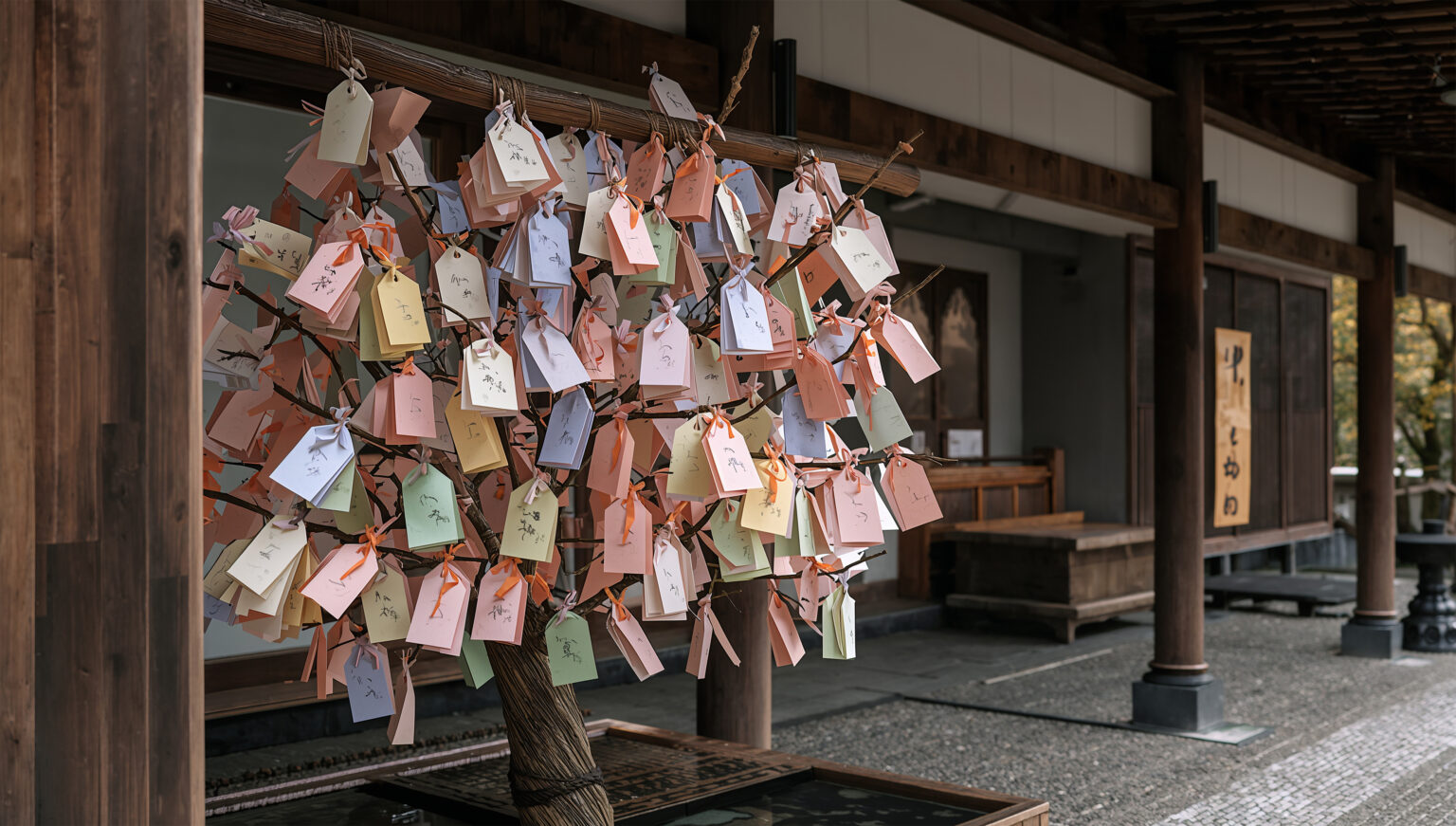
The custom you’ll see is tying the slip at a designated spot: a rack or frame of strings set up for exactly this (a musubidokoro). Convention leans toward taking good luck home and tying bad luck at the shrine, as a way of leaving the bad fortune behind. But there is nothing wrong with taking a kyō home to re-read; reflecting on its advice is a perfectly proper thing to do. If you do tie one, use the place the shrine or temple provides, not the trees or fences. Where a site gives its own instruction, follow that.
Omikuji, ema, omamori: what’s the difference?
Three things at a shrine get mixed up constantly. Here is the clean split.
| What it is | What you do with it | |
|---|---|---|
| Omikuji おみくじ | A paper fortune you draw by chance | Read it; take it home or tie it |
| Ema 絵馬 | A small wooden plaque | Write a wish on it and hang it up as an offering |
| Omamori お守り | A protective amulet or charm | Buy it and carry it: bag, purse, phone, car |
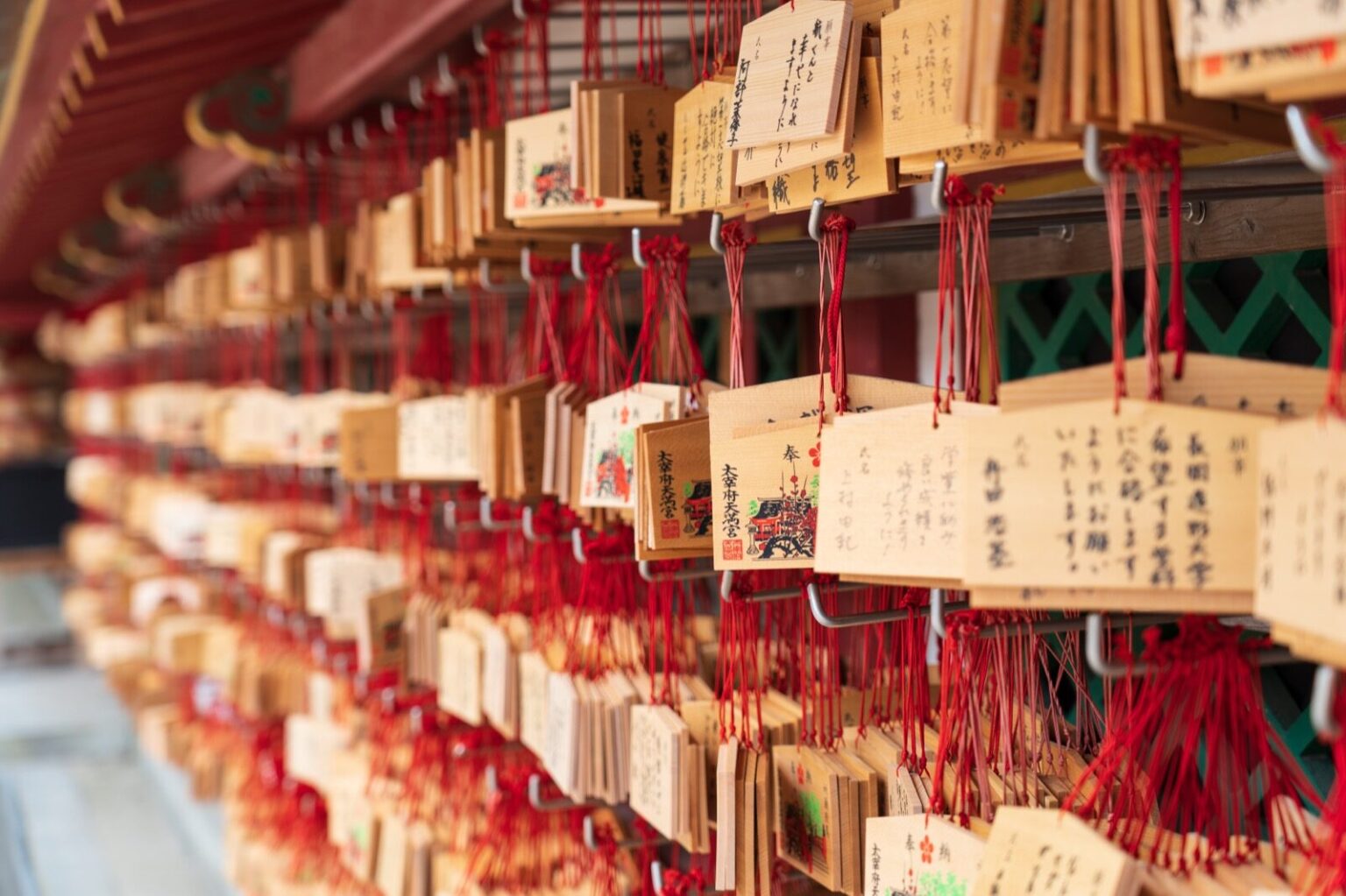
In short: you draw an omikuji, you write and leave an ema, and you buy and carry an omamori. The word ema literally means “picture horse”; the plaques stand in for the real horses once offered to shrines. Omamori are usually carried for about a year, then returned to a shrine or temple for replacement.
Common first-timer mistakes
- Reading kyō as a curse. It means “bad luck” or “caution,” not doom. Take the advice and move on.
- Drawing again until you like the result. Treat one draw as enough; drawing again for a better grade turns it into a game rather than guidance.
- Assuming English is guaranteed. Some major shrines and temples offer an English or bilingual slip, and Meiji Jingu is one. Elsewhere, expect Japanese; a translation app helps, though older or poetic wording can translate roughly.
- Tying it just anywhere. Use the rack the shrine sets out, not a random branch.
- Turning up without coins. Many boxes are self-service and coin-only.
Where to try one on your trip
You can draw omikuji almost anywhere with a shrine or temple, so let the place you’re already visiting decide. A couple are worth knowing about specifically:
- Meiji Jingu, Tokyo. Its slips are unusual. Called Ōmikokoro (大御心), they carry no luck grade at all. Instead you receive one of thirty waka poems composed by Emperor Meiji and Empress Shōken, with an English translation, for ¥100. A good first choice if you’d rather avoid a blunt “bad luck” result.
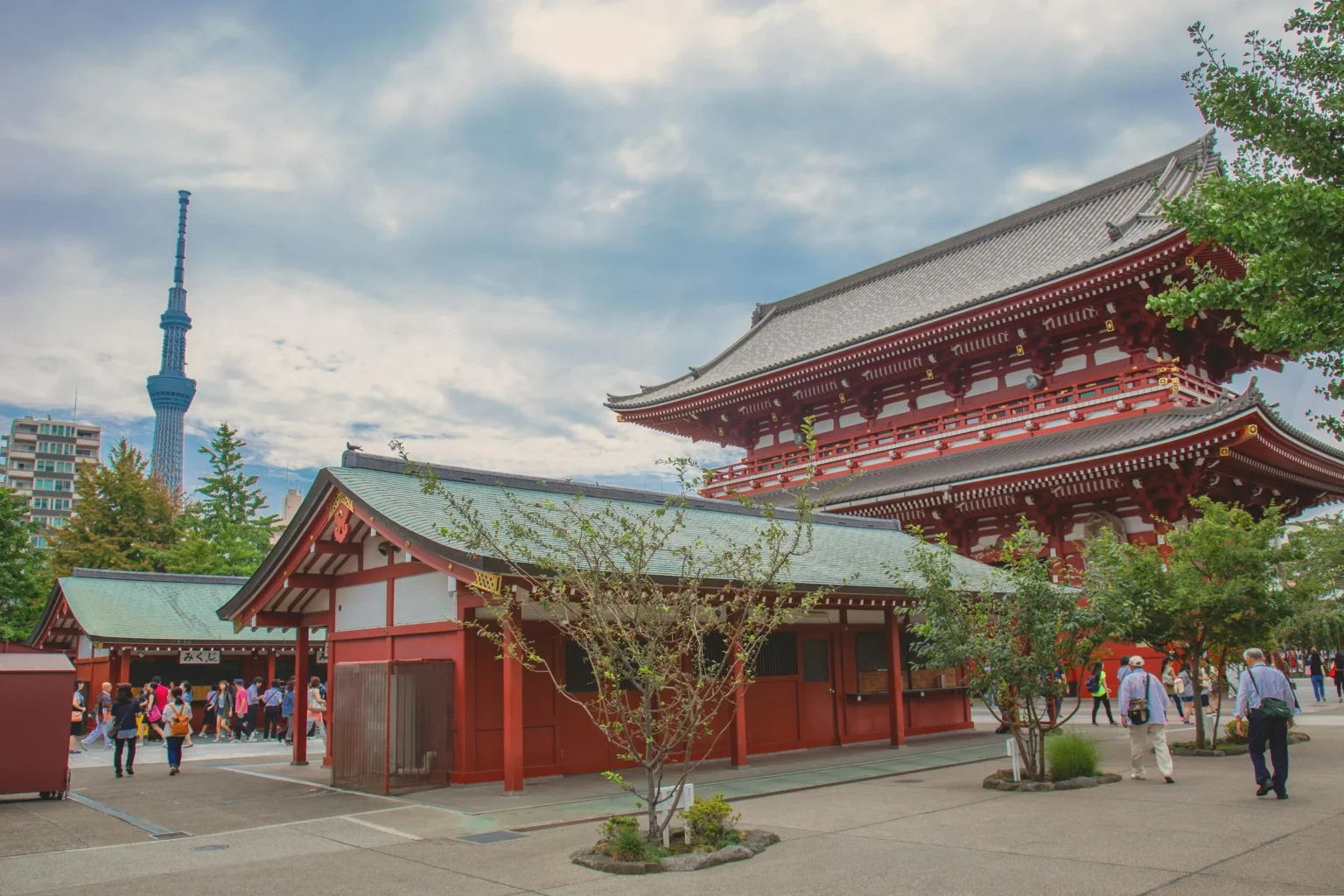
- Sensō-ji, Asakusa. Tokyo’s busy Asakusa temple keeps the older, traditional fortune format, which is why it genuinely does hand out more kyō than many places that have softened their odds. Don’t panic, though: when one Japanese news team drew 100 slips there, 26 came back kyō — higher than average, but far from the “everyone gets bad luck” the rumour suggests. If you do, follow the temple’s own guidance and tie it at the designated place.
- Around Mt. Fuji. The Sengen shrines at the foot of the mountain are a fitting place to draw one. Read our guide to Arakurayama Sengen Shrine before you go, and see where to stay near Mt. Fuji without a car.
- Kawagoe Kumano Shrine, Saitama. An easy half-day from Tokyo: this small shrine in Kawagoe’s old town is known for hands-on rituals you can actually try — our Kawagoe Kumano guide walks through them, omikuji included.
A shrine morning pairs well with a base nearby: compare hotels in Tokyo for the Asakusa and Harajuku shrines, or lodging around Lake Kawaguchiko for the Fuji Sengen shrines. If you would rather have the etiquette explained in person, a small-group Tokyo shrine and temple walk is an easy way in. These are affiliate links; if you book through them we may earn a small commission, at no extra cost to you.
Drawing a fortune is also part of the New Year shrine visit. If you’re here in early January, see our guide to hatsumode, and check what closes over New Year when you plan the rest of the day. Planning another shrine day? Jōnangū in Kyoto makes a good outing.
Two more places where the custom shines: Zenkōji in Nagano, where the pre-dawn ritual rewards an early start, and any summer festival evening — our bon odori guide covers the dance you may walk into on the same grounds.
A little background
Omikuji turn up at both Shinto shrines and Buddhist temples, and the practice is old, often described as going back the best part of a thousand years, though no single founding date is settled. The hundred-verse temple fortunes are attributed by legend to the Heian-period Tendai monk Ryōgen, remembered as Ganzan Daishi. Scholars, meanwhile, think the Japanese system was modelled on older Chinese lot-drawing oracles. Today a large share of Japan’s omikuji is said to be printed by Joshidōsha, tied to Nishō-Yamada Shrine in Yamaguchi Prefecture; its exact national share is not publicly confirmed.
Frequently asked questions
Can foreign tourists draw omikuji?
Yes. Anyone can draw one at a shrine or temple that offers them. Pay your respects at the main hall first, then draw your slip at the omikuji desk or box.
What should I do if I get bad luck (kyō)?
Either take it home and re-read the advice, or tie it at the shrine’s designated place. Both are acceptable; Jinja Honcho draws no distinction between good and bad fortune here.
Is kyō a curse?
No. Read it as “bad luck” or “caution,” not a literal curse. The written advice matters more than the grade.
How much does an omikuji cost?
Usually around ¥100–200, though it varies by site and novelty slips can cost more. There is no fixed national price, so bring coins and check the box.
Can I get an omikuji in English?
Some major shrines and temples offer English or bilingual slips — Meiji Jingu in Tokyo is one confirmed example. Many other places offer Japanese only, so a translation app helps.
What is the difference between omikuji, ema, and omamori?
An omikuji is a fortune you draw and read. An ema is a wooden plaque you write a wish on and hang up. An omamori is a protective amulet you buy and carry.
Should I pray before drawing one?
Yes. The usual order is to visit and pay your respects at the main hall first, then draw your omikuji.
Sources & last verified. Written from the Association of Shinto Shrines (Jinja Honcho) pages on omikuji, ema and omamori; the Japan National Tourism Organization omikuji guide; Meiji Jingu’s official English page for the Ōmikokoro; Sensō-ji’s official guidance on drawing fortunes; and public reporting on the Nishō-Yamada Shrine printing operation (Joshidōsha) in Yamaguchi. Fortune grades, life-sections and the take-home-or-tie custom follow Jinja Honcho; grade orders and section lists vary by shrine and are shown as examples. Sensō-ji keeps a traditional fortune format with a higher share of kyō; the 100-slip figure cited is one news outlet’s informal test, not an official ratio. Prices and English-slip availability change; confirm the current figure at each shrine before you rely on it. Last verified: August 2026.
Join travelers discovering Japan's hidden side
Weekly dispatches from off-the-beaten-path Japan — spots and stories you won't find in guidebooks.
No spam. Unsubscribe anytime.
Welcome aboard!
You're in. See you in your inbox soon.