
Wakayama · Koya Town · Okunoin · Danjo Garan · Kongobu-ji · Temple stays
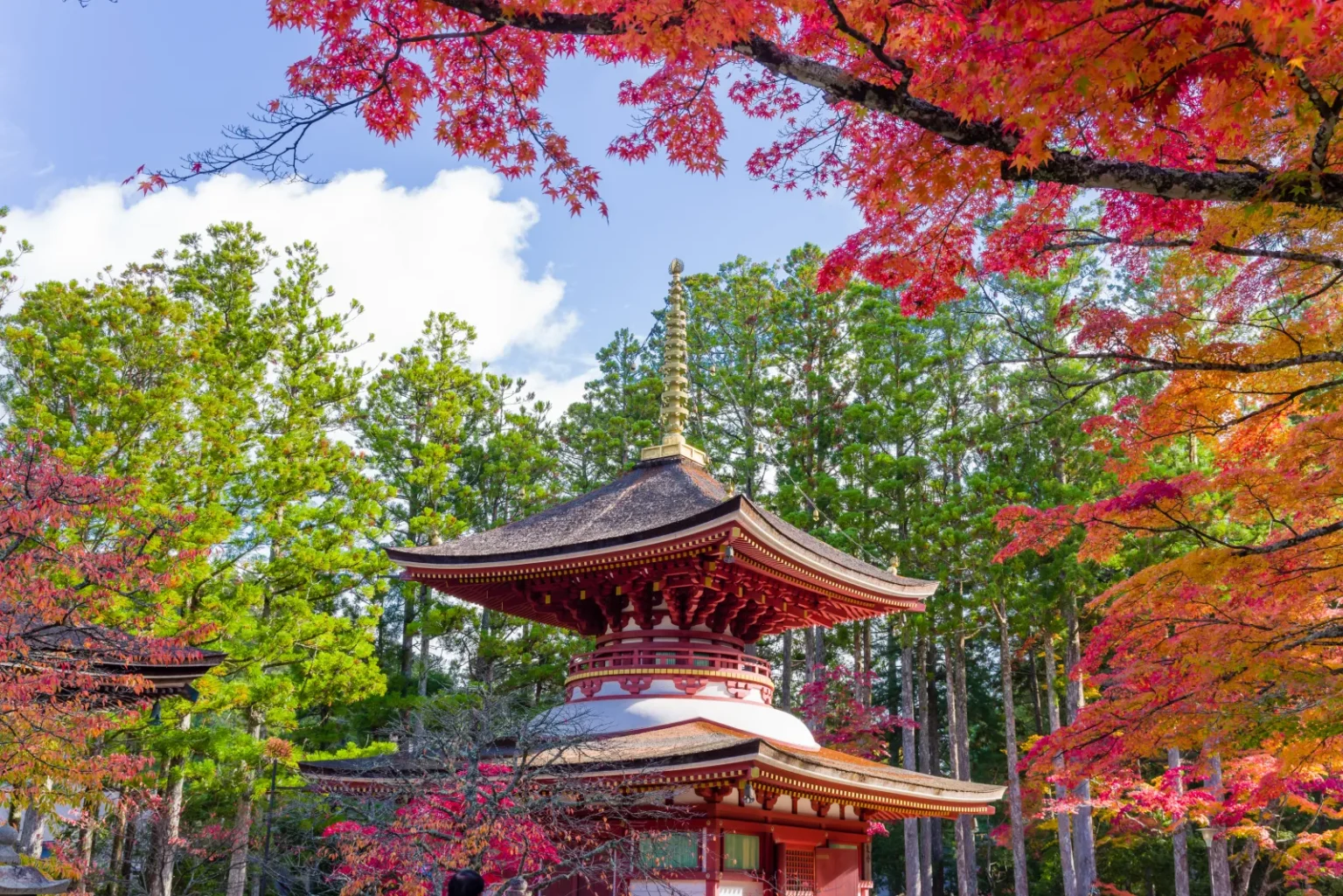
Mount Koya, or Koyasan, is a town of 117 temples in the mountains of Wakayama, about two hours from Osaka. Kukai, the monk known as Kobo Daishi, was granted the land in 816 to found a centre for Shingon Buddhism, and since 2004 Koyasan’s main sites have been part of the UNESCO World Heritage site “Sacred Sites and Pilgrimage Routes in the Kii Mountain Range”. Its two holiest places are Okunoin, a 2 km path through old cedars and more than 200,000 graves and memorials that ends at Kukai’s mausoleum, and Danjo Garan, the temple complex around the red Konpon Daito pagoda. The autumn colour usually comes from late October to early November.
Day trip or a night in a temple? Both work; both plans, with times, are near the end.
How do you get to Mount Koya from Osaka?
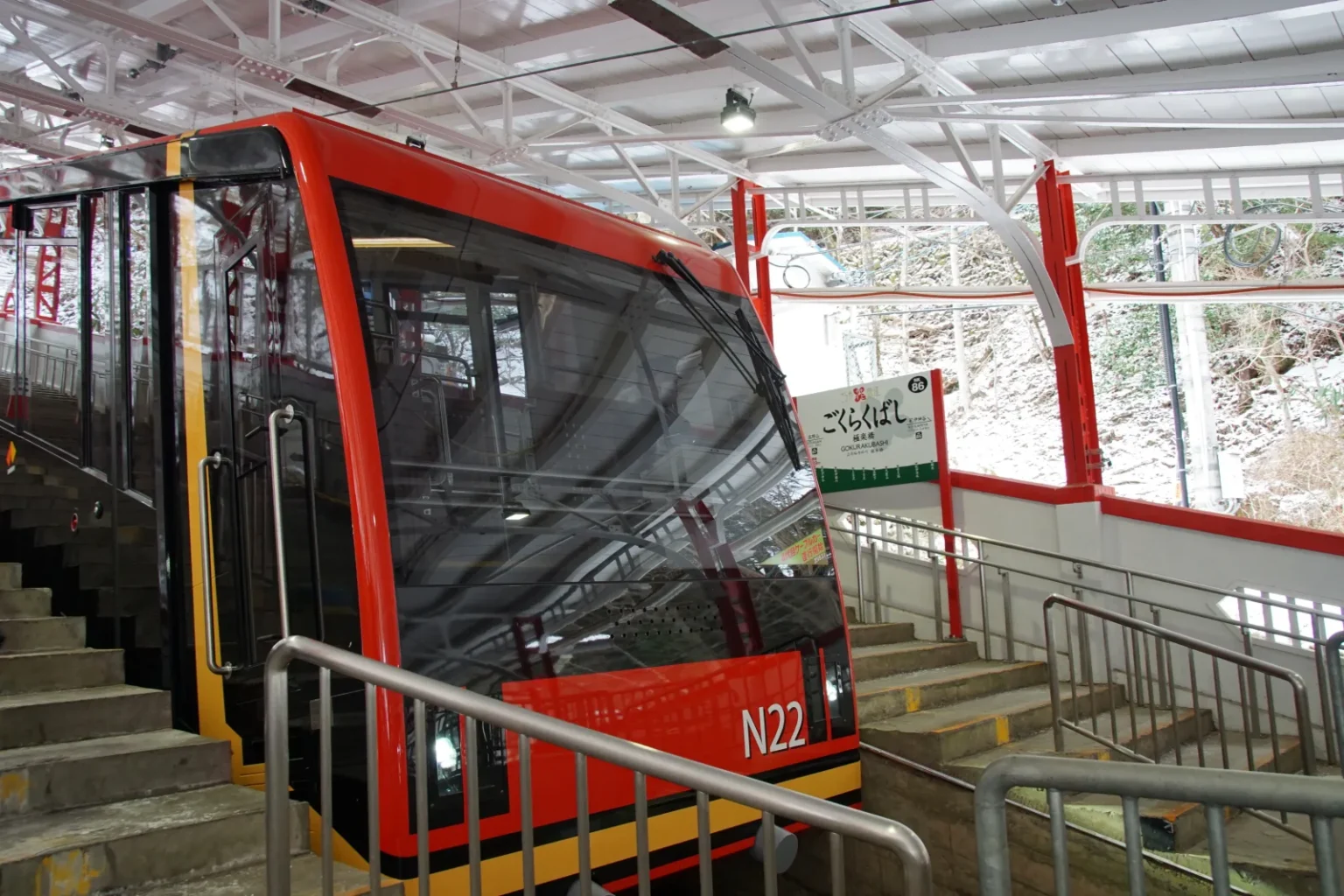
Every rail route ends the same way: Nankai’s Koya Line from Namba to Gokurakubashi, the Koyasan cable car up to Koyasan Station (867 m), and a Nankai Rinkan bus into town, ¥460 to Senjuin-bashi or Kongobuji-mae, ¥500 to Ichinohashi-guchi, ¥610 to Okunoin-mae. The first cable car up leaves Gokurakubashi at 5:33; the last down leaves Koyasan at 21:40 on weekdays and 21:39 at weekends. Times are from Nankai’s timetable of 28 March 2026, in force on 16 October 2026.
The limited express “Koya” and the “Rinkan”: where each one runs
Nankai has two limited expresses on the line, the “Koya” and the “Rinkan”, and only the Koya goes through to Gokurakubashi; the Rinkan stops at Hashimoto, where it connects with a local train up the mountain. The Koya limited-express supplement is ¥1,100 from Namba, Shin-Imamiya, Tengachaya or Sakaihigashi, ¥150 less through Nankai’s ticketless service and ¥300 more on board. All seats are reserved.
Going up. Times include the cable car from Gokurakubashi.
| Koya leaves Namba | Arrives Koyasan Station |
|---|---|
| Weekdays | |
| 10:00 | 11:47 |
| 13:30 | 15:10 |
| Weekends and holidays | |
| 7:00 (seasonal) | 8:32 |
| 8:00 (seasonal) | 9:41 |
| 10:00 | 11:51 |
| 11:15 (seasonal) | 12:53 |
| 13:30 | 15:08 |
| 14:30 (seasonal) | 16:07 |
Coming down. Nankai’s timetable gives the time the cable car leaves Koyasan Station; you change to the train at Gokurakubashi.
| Departs Koyasan Station | Arrives Namba |
|---|---|
| Weekdays | |
| 11:30 Koya | 13:13 |
| 16:34 Koya | 18:10 |
| 20:45 last Rinkan connection | 22:26 |
| 21:40 last cable car | 23:18 |
| Weekends and holidays | |
| 8:15 Koya (seasonal) | 9:50 |
| 9:20 Koya (seasonal) | 11:02 |
| 11:30 Koya | 13:13 |
| 12:33 Koya (seasonal) | 14:13 |
| 16:12 Koya | 17:51 |
| 16:46 Koya (seasonal) | 18:26 |
| 20:44 last Rinkan connection | 22:27 |
| 21:39 last cable car | 23:18 |
The last Rinkan connection is a local train to Hashimoto, then the Rinkan. After the last cable car, the 21:47 local from Gokurakubashi meets a 22:30 express at Hashimoto, a 2–3 minute change. It is the last through train from Hashimoto to Namba that night. If you miss it, the 22:46 local to Kawachinagano (23:07) connects with a 23:13 section express to Namba (23:43 on weekdays, 23:44 at weekends). Seasonal trains run on weekends and holidays from 1 March to 30 November (in the March–November 2026 period the last run is Sunday 29 November) and from 30 December to 3 January. Timetable dated 28 March 2026; Nankai’s service status page shows delays and suspensions.
Any closures? No notice about winter 2026–27 work was listed on Nankai’s or Nankai Rinkan Bus’s notice pages when checked on 16 October 2026. Check Nankai’s service status page and Nankai Rinkan Bus’s notices before you travel for suspensions and replacement buses.
GRAN TENKU. Since 24 April 2026 a Nankai sightseeing train also runs Namba–Gokurakubashi (about 90 minutes), except Wednesdays and the 2nd and 4th Thursdays; fare plus a seat charge.
Which ticket?
| Ticket (prices on 16 October 2026) | What it covers |
|---|---|
| Koyasan World Heritage Digital Ticket, ¥3,980 from Namba (¥4,910 with an outward Koya seat) | Return train including the cable car, 2 days of buses on the mountain (not the Kyoto bus or the Tateri and Ryujin lines), coupons for Kongobu-ji, the Kondo, the Daito, the Reihokan and some shops |
| Digital ticket conditions | Valid two days; needs a smartphone and a credit card; same-day sales until 15:00 |
| Plain fares | ¥1,430 each way Namba to Koyasan Station; buses ¥160–¥610 a ride between the stops in this guide |
| Nankai Rinkan 1-day bus pass, ¥1,500 | Koyasan buses for one day (not the Tateri and Ryujin express buses) and 20% off at Kongobu-ji, the Kondo and the Daito. Sold only at the Koyasan Station bus office |
| KANSAI RAILWAY PASS LITE, ¥5,200 (2 days) or ¥6,500 (3 days) | Private railways and subways across Kansai. Its official 2026 area map includes Nankai’s Koya Line and the cable car to Koyasan. Not JR, not buses; Nankai limited-express seats extra. Sold online by SURUTTO KANSAI, 1 October 2026 to 31 March 2027 |
| Japan Rail Pass | Not valid on Nankai: the pass site says you pay the fare on private railways |
For the day trip below, two plain fares (¥2,860) and its four bus rides (¥610 + ¥160 + ¥210 + ¥360 = ¥1,340) come to ¥4,200, against ¥3,980 for the World Heritage ticket with its coupons. With an outward Koya seat it is ¥5,300 in plain fares against ¥4,910 for the ticket.
Seeing more of Kansai than Koyasan? Compare Kansai rail passes, and check which lines each one covers before you buy.
Browse Kansai rail passes on KlookFrom Kyoto, or by car
Direct bus. Keihan Bus and Nankai Rinkan Bus run one bus a day until Sunday 29 November 2026: Kyoto Station Hachijo Exit 8:10, Okunoin-mae 10:55, Kongobuji-mae 11:08; back from Kongobuji-mae 15:27, Kyoto Station 18:35. ¥3,200 one way in October and November (¥5,600 return, valid for 10 days from the outbound trip); seats open a month ahead.
By train. Go to Osaka and change to Nankai. Koya Town’s tourism association times the trip from Shin-Osaka at 1 hour 50 minutes to 2 hours 30 minutes via the Midosuji subway to Namba, or 2 hours to 2 hours 40 minutes via JR to Shin-Imamiya. Add your time from Kyoto to Shin-Osaka.
By car. The Koyasan Shukubo Association gives about 2 hours from central Osaka and 3 hours from Kyoto, ending on National Route 480 up the mountain.
Okunoin: the walk to Kukai’s mausoleum
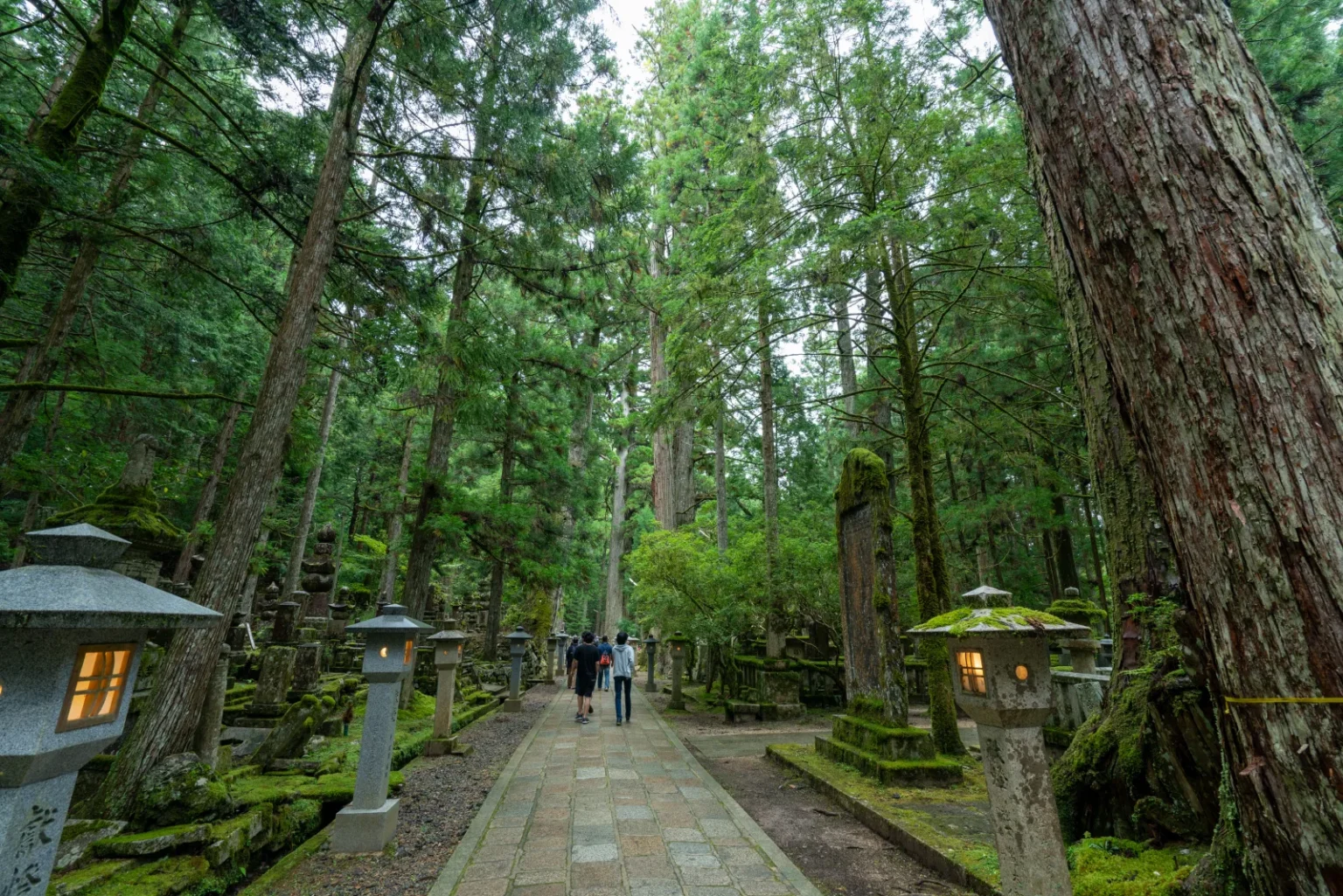
Okunoin is the heart of Koyasan. Kukai entered eternal meditation here on 21 March 835, and believers hold that he is still there. For the full traditional approach, start at Ichinohashi, the first bridge: about 2 km, Kongobu-ji says, past more than 200,000 graves and memorials under cedars up to a thousand years old. Takeda Shingen, Oda Nobunaga and the Toyotomi family are among them.
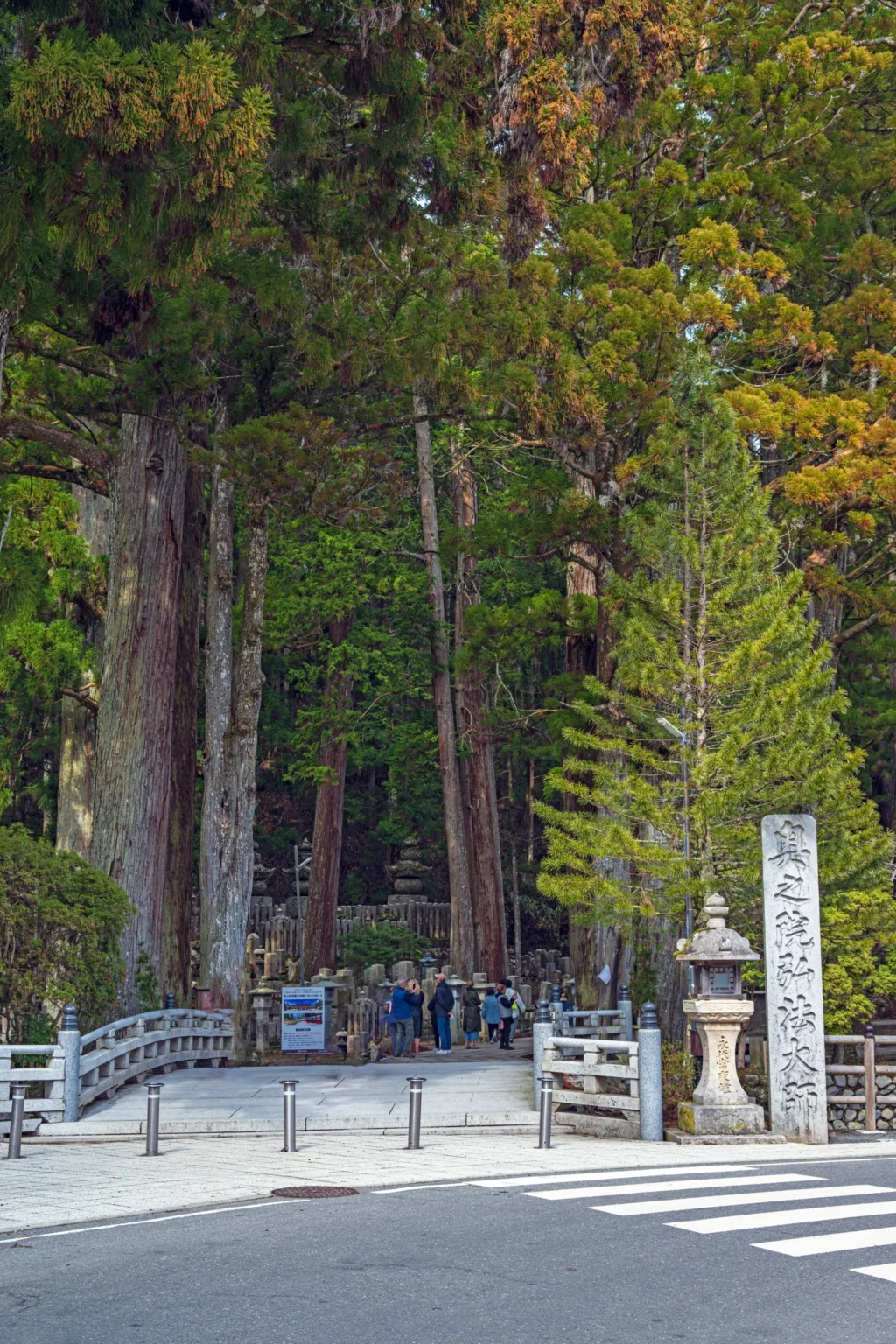
Ichinohashi
The first bridge. Tradition says Kukai meets and sees off visitors here, so people bow before crossing. Bus stop Ichinohashi-guchi, ¥500 from the station. No bus from the station stops there between 8:57 (a seasonal bus; 8:46 outside the season) and 12:51 at weekends, or between 9:05 and 13:21 on weekdays (Nankai Rinkan’s Ichinohashi-guchi timetable): ride to Okunoin-mae and walk out to Ichinohashi, as in the day trip below.
Nakanohashi and Mizumuke Jizo
The middle bridge, where Heian-period pilgrims purified themselves; then a row of statues by the Tamagawa stream that visitors pour water over for their dead.
Gobyobashi
The last bridge: 36 planks plus the bridge itself make 37, for the 37 deities of the Diamond Realm. Beyond it is the sacred precinct, and photography stops.
Torodo and the mausoleum
The worship hall in front of Kukai’s mausoleum, hung with more than ten thousand lanterns. Two of its lamps are said to have burned for nearly a thousand years.
Twice a day monks carry a meal to the mausoleum. Wakayama Prefecture’s magazine nagomi (2022) gives this ritual, shojingu, at 6:00 and 10:30; the food is cooked at the Gokusho hall just before Gobyobashi. If you want to see it, confirm the current time locally and allow for the walk of about 2 km from Ichinohashi. The Gokusho counter is open 8:00–17:00 from May to October and 8:30–16:30 from November to April.
Okunoin after dark
Okunoin Night Tour
Running since 2011, with separate English and Japanese tours led by Koyasan residents who are licensed Kongobu-ji precinct guides. Ekoin temple says it often books out from March to November: reserve on the tour’s official site.
Meeting: check in at TAIRA in town, where you are given the meeting time and place. The tour page says guests of some temples cannot join because of their meal and bath times.
Afterwards: walk back, or the guide takes you to the regular bus at Okunoin-mae (20:43 weekdays, 20:35 weekends). The tour page says no bus fare is required and times the bus to Senjuin-bashi (20:49 weekdays, 20:41 weekends) for getting back to your temple. The bus goes on to Koyasan Station, but it is too late for the last Rinkan connection, and the tour page says nothing about riding it that far. Book the tour for a night on the mountain.
Oyata Night Walk
On the 20th of every month except July, Koya Town’s tourism association leads a lantern walk from Ichinohashi to the mausoleum at 19:00, with a sutra reading and a short talk. Free, no booking; lantern ¥100. The next one is Friday 20 November 2026. Check your temple’s dinner time and gate first.
Danjo Garan and Kongobu-ji: the temple centre
Danjo Garan is the first ground Kukai prepared, and with Okunoin one of Koyasan’s two holiest places. Kongobu-ji, linked to it by the Jabaramichi path, is the head temple of Koyasan Shingon Buddhism. The fees below are the usual ones from Kongobu-ji’s table on 16 October 2026 (New Year exceptions: see ‘Who might skip it’). Last entry is 16:30 at Kongobu-ji, the Kondo and the Daito, and 16:10 at the Tokugawa Mausoleum.
| Place | Hours and adult fee |
|---|---|
| Kongobu-ji | 8:30–17:00; ¥1,000 |
| Kondo (main hall) and Konpon Daito (pagoda) | 8:30–17:00; ¥500 each |
| Tokugawa Mausoleum | 9:00–16:30, last entry 16:10; ¥200 |
| Reihokan Museum | 9:00–17:00; ¥1,300 |
| Nyonindo | 9:00–16:30; free |
| Shared ticket | ¥2,500; see below |
Kongobu-ji’s own fee table prices the shared ticket for “the five above”, and the five rows above it are Kongobu-ji, the Kondo, the Daito, the Tokugawa Mausoleum and the jukai precept ceremony (¥1,000) at Daishi Kyokai. The Reihokan is not among them. The first three alone come to ¥2,000; confirm at the window what the ticket includes before you buy.
Konpon Daito and the Kondo
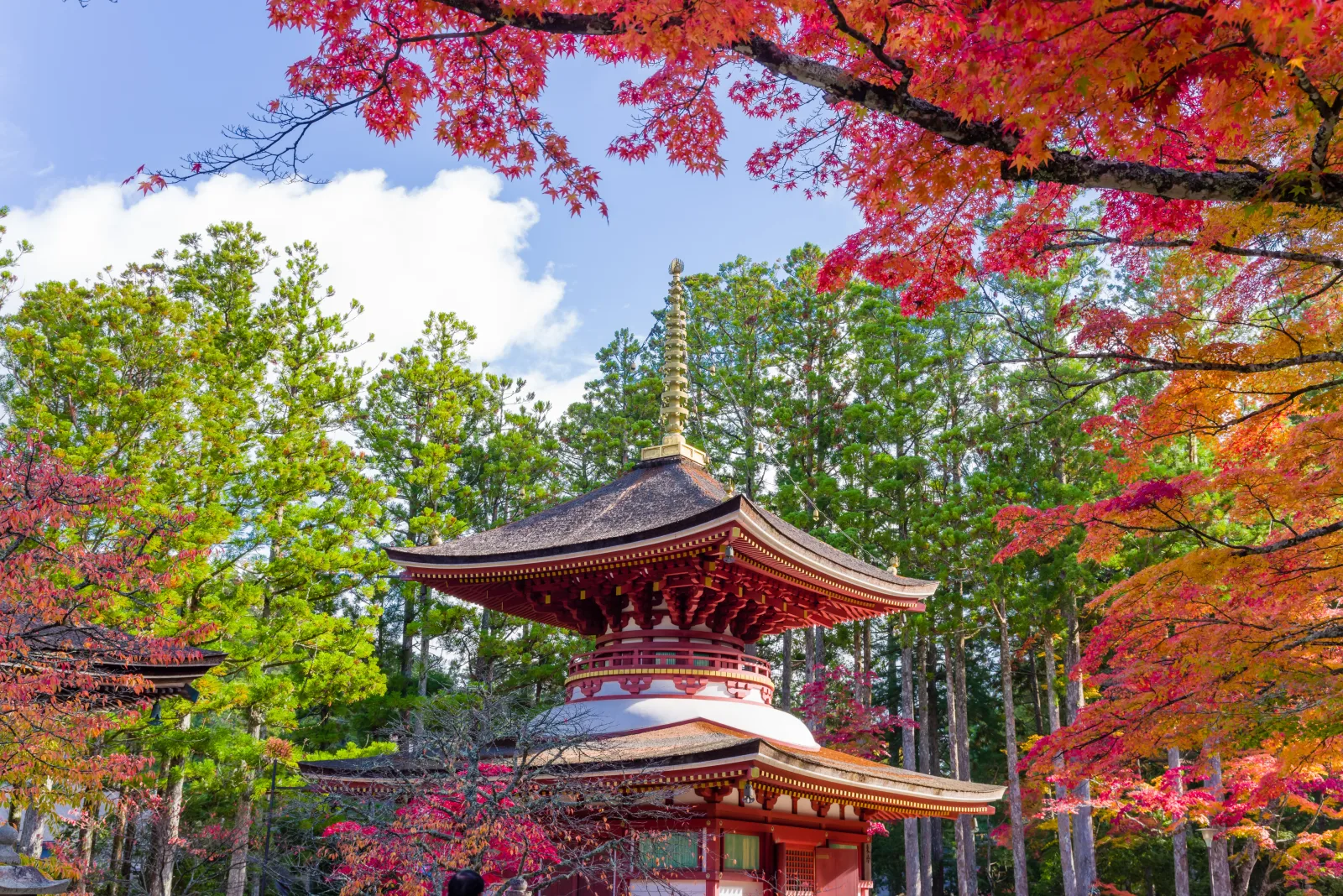
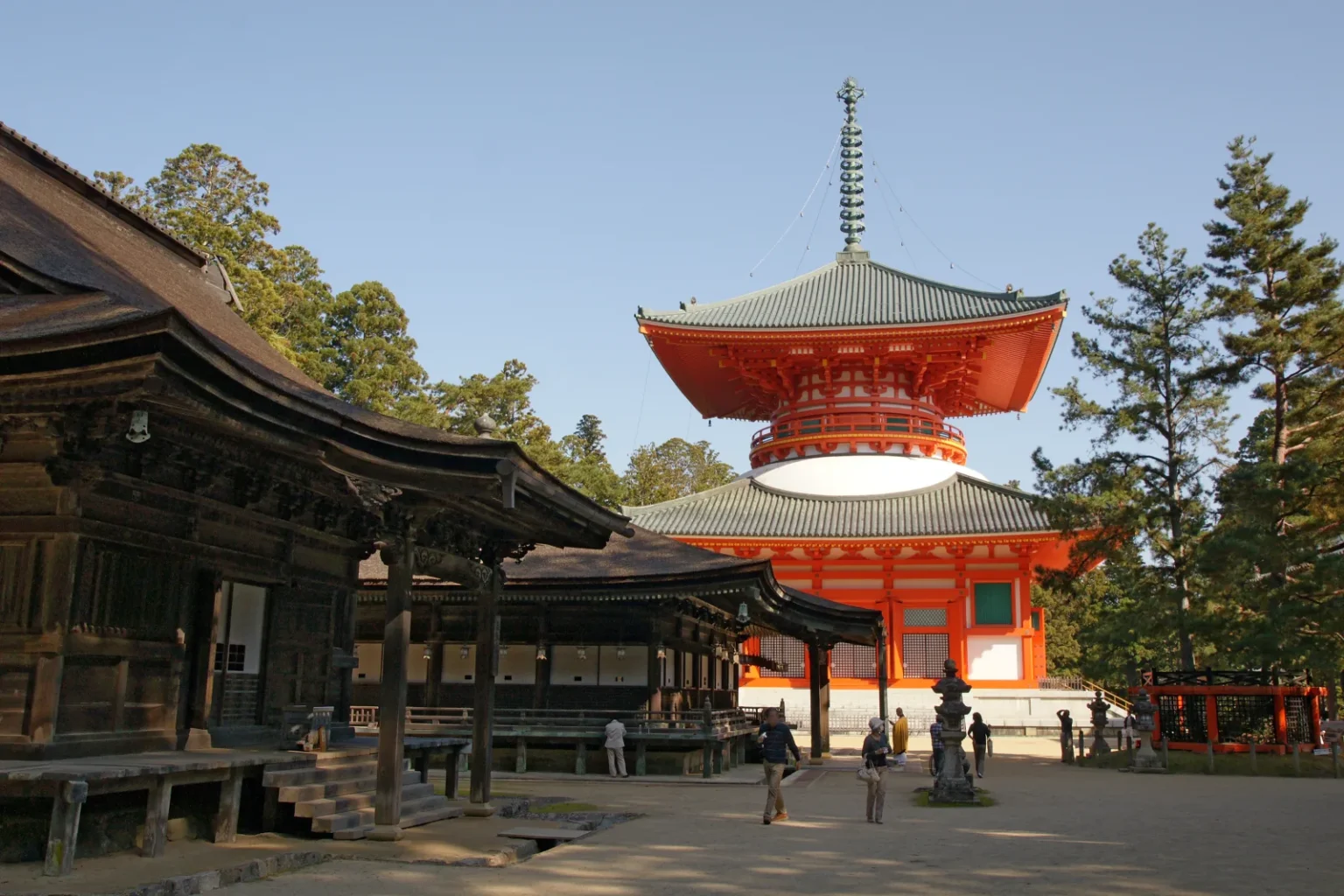
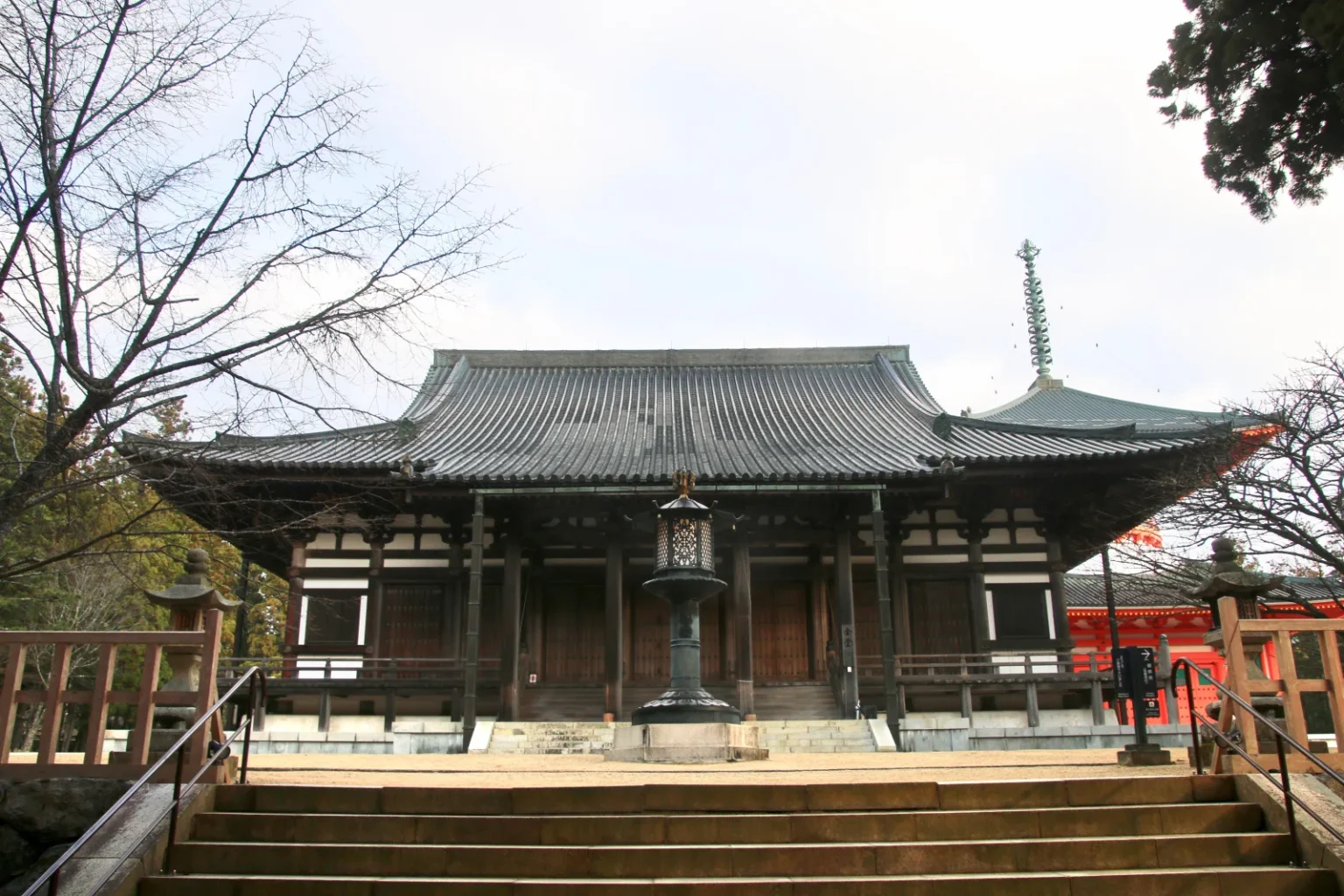
The Daito was begun by Kukai in 816 and finished by his successor Shinzen around 887; Kongobu-ji says it is held to be the first pagoda of its two-storey tahoto type in Japan. Fire destroyed it several times, and the present one, about 48.5 m tall, dates from 1937. Inside, painted pillars and Buddhas form a three-dimensional mandala. The Kondo is the main hall for the whole mountain, rebuilt for the seventh time in 1932. Both became Important Cultural Properties on 9 December 2024. Koya Town’s tourism association says that, apart from the Fudodo (a National Treasure), the Garan’s halls have all been lost to forest fires or lightning and rebuilt.
Kongobu-ji and the Banryutei garden
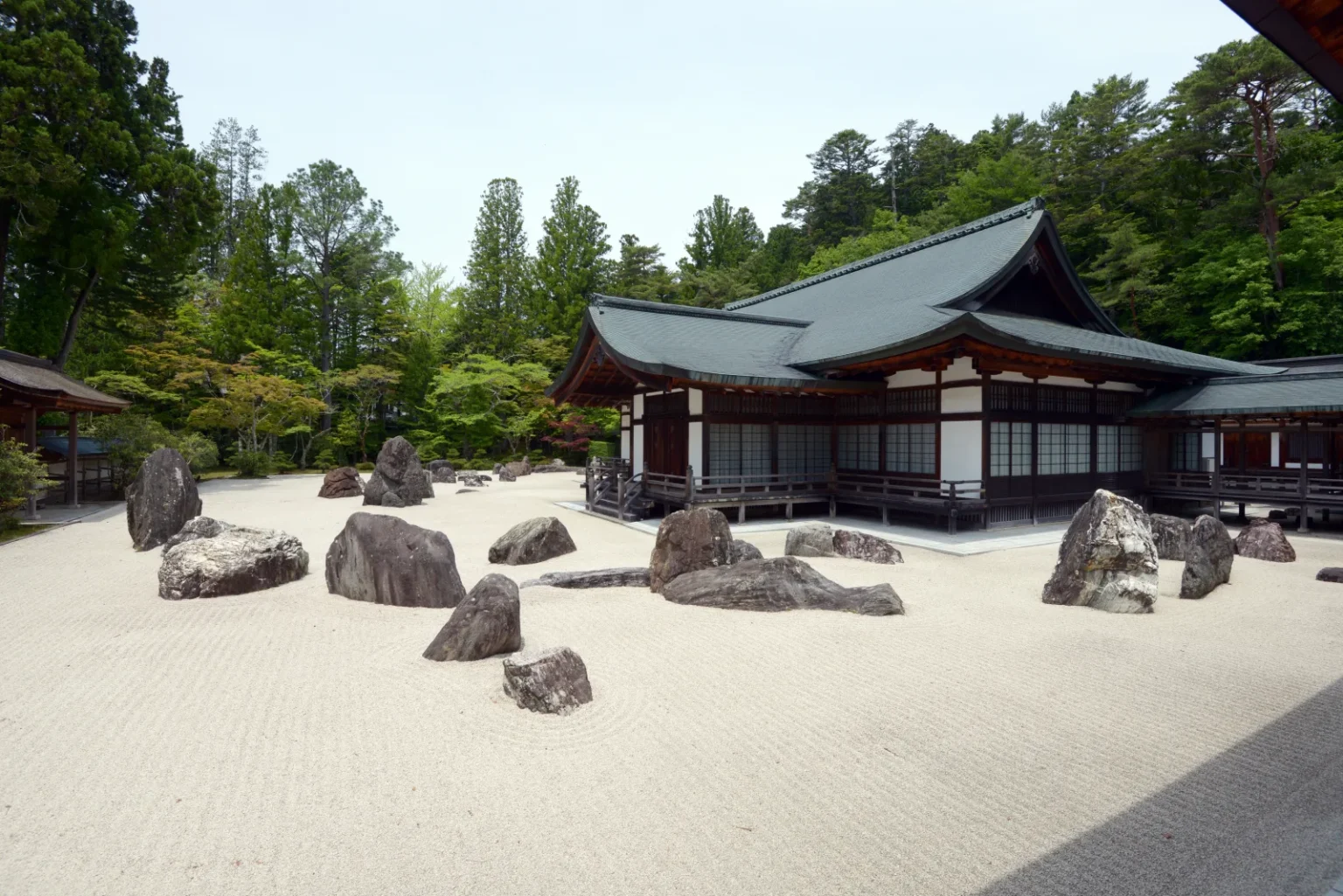
Kongobu-ji grew from a temple Toyotomi Hideyoshi built in 1593 for his late mother; the present main hall dates from 1863. Its Willow Room is where Hideyoshi’s nephew Hidetsugu took his own life in 1595. The Banryutei rock garden, made in 1984, covers 2,340 square metres: 140 granite stones from Shikoku, where Kukai was born, set as a pair of dragons in white Kyoto sand.
Daimon, the Tokugawa Mausoleum and Nyonindo
Daimon gate
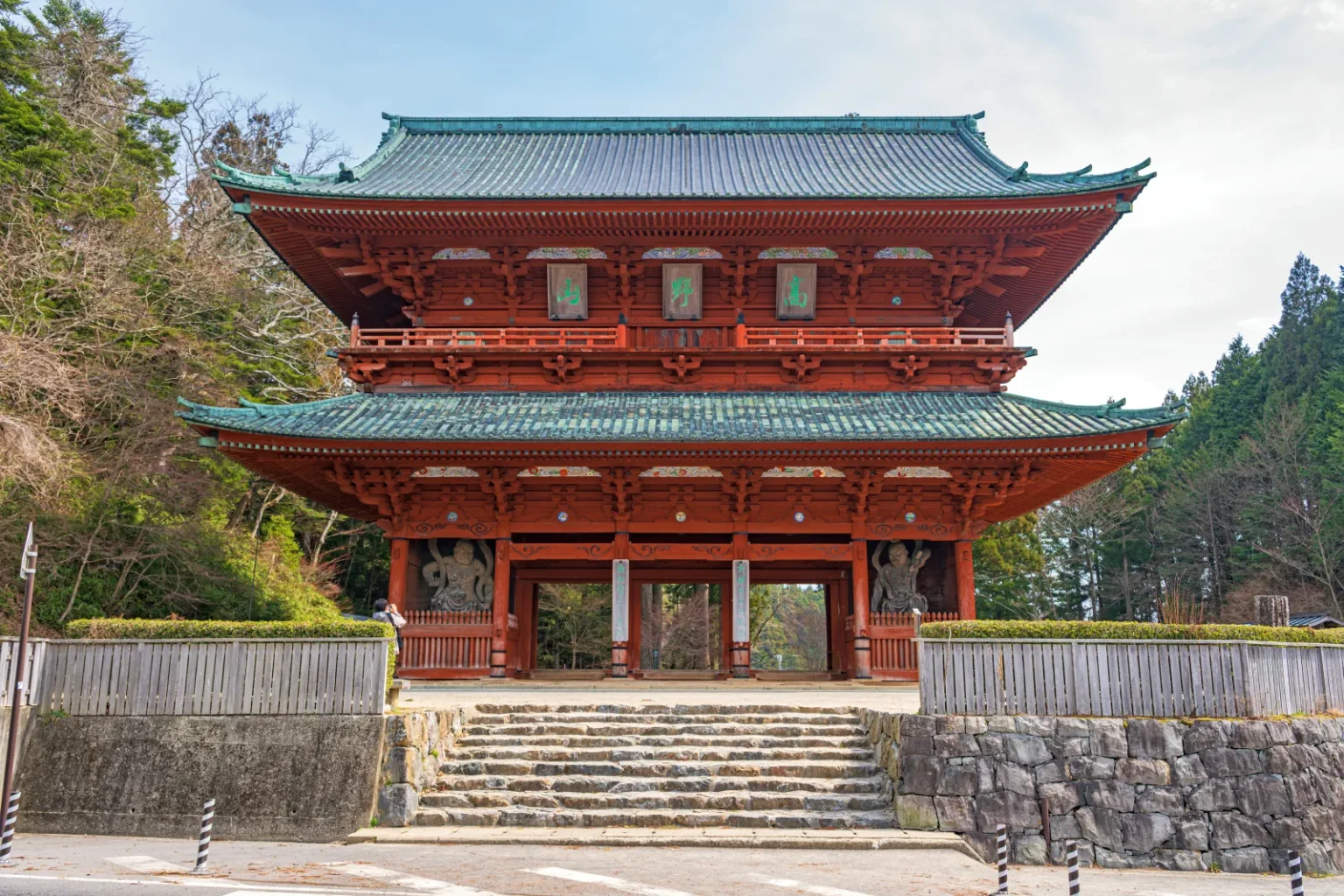
The main gate of the whole mountain, 25.1 m tall, rebuilt in 1705. The Shukubo Association says you can see Awaji Island on a clear day and lists its sunset among Japan’s 100 best. Bus stop Daimon, ¥360 from the station.
Tokugawa Mausoleum
Two decorated halls built in 1643 by the third shogun, Iemitsu, for Tokugawa Ieyasu and Hidetada.
Nyonindo
Until 1872 women could not enter Koyasan and prayed in halls at its seven entrances. This is the only one left.
Reihokan Museum
Opened in 1921; around 28,000 designated cultural properties, shown in rotating exhibitions. Bus stop Reihokan-mae.
When is the autumn colour at Koyasan?
Usually from late October to early November, according to Wakayama Prefecture’s official tourism site; the timing varies from year to year. The Shukubo Association’s English site adds that the first frosts come by early November. For this year’s progress, follow the reports, not a fixed date; our Japan koyo tracker links the official ones.
| Week (2026) | What is happening |
|---|---|
| From Tuesday 20 October | Kongobu-ji lights its main gate and Jabaramichi at night until the colour is over |
| Tuesday 3 November (holiday) | Koya Town’s autumn event: a procession of monks 13:00–14:00, prayer lights and lantern offerings 16:00–19:30, and projection mapping on the Daikodo (Great Lecture Hall) of Daishi Kyokai, 18:00–19:00 |
| Friday 20 November | The next Oyata Night Walk |
| Sunday 29 November | Last weekend run of the seasonal Koya trains (7:00, 8:00, 11:15, 14:30 from Namba); the next seasonal period starts on 30 December. Also the last day of the Kyoto–Koyasan direct bus |
Where to see the leaves
Jabaramichi
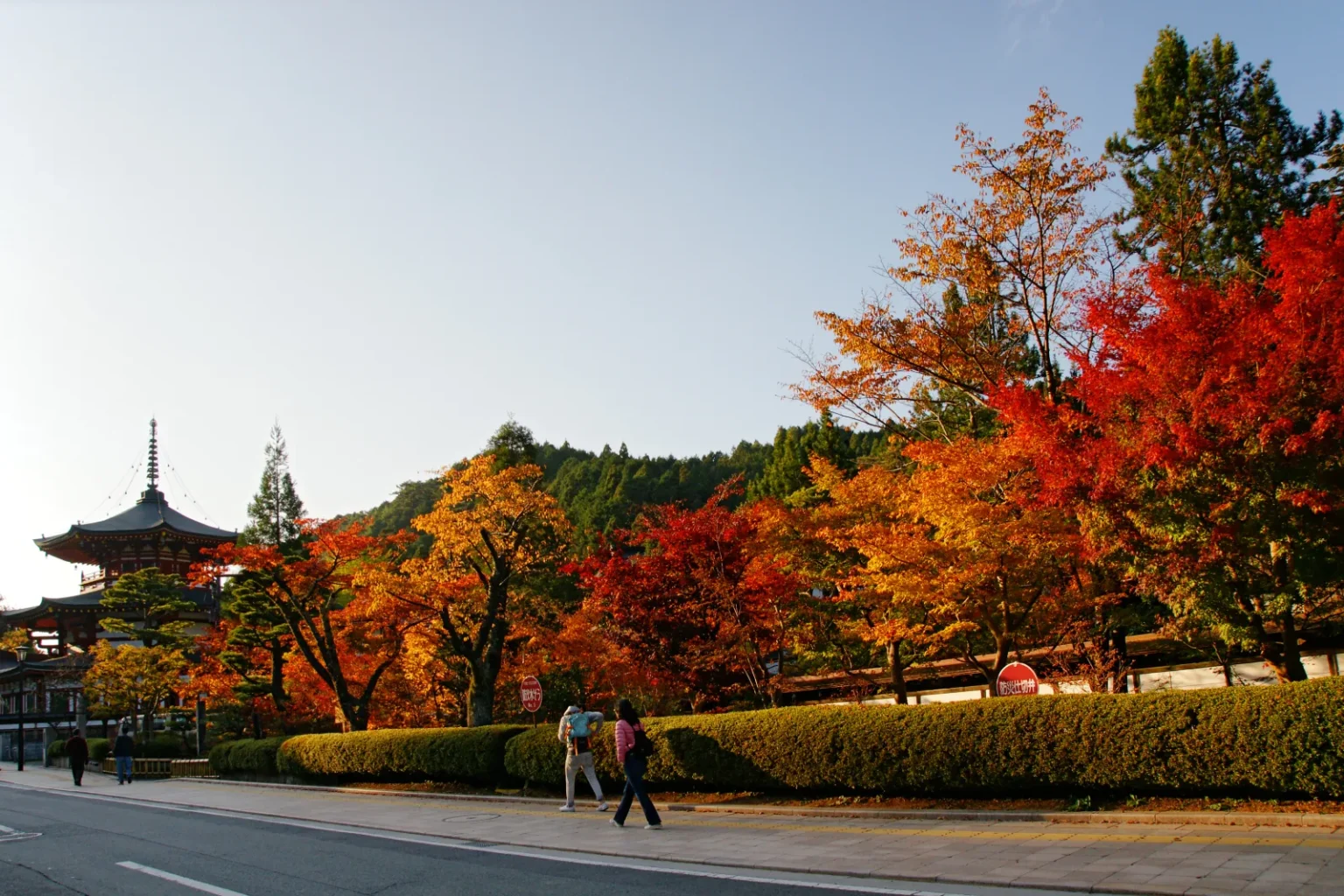
The short path from the Garan entrance to just past the East Pagoda (Toto), towards Kongobu-ji. Koya Town calls it a famous koyo spot, and Nankai’s 2012 autumn release pictured it as a tunnel of red leaves. Lit at night this autumn (see the table). Bus stop Kongobuji-mae.
Danjo Garan
Maples around the Daito and Kondo, with the red pagoda behind. Bus stop Kondo-mae, ¥410 from the station.
Kongobu-ji main gate
The approach and gate of the head temple, lit at night with Jabaramichi. Bus stop Kongobuji-mae, ¥460.
Okunoin
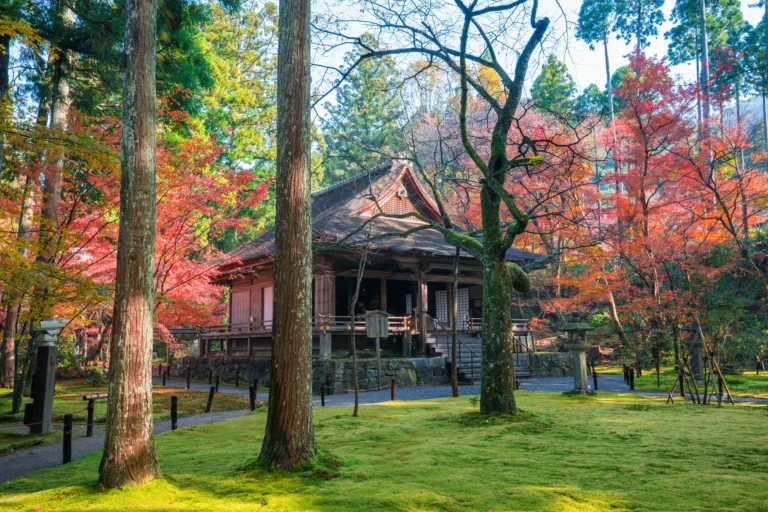
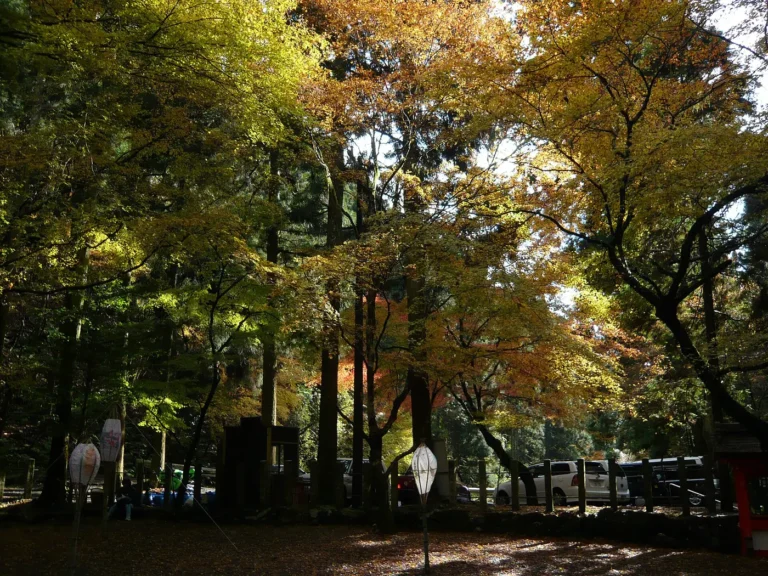
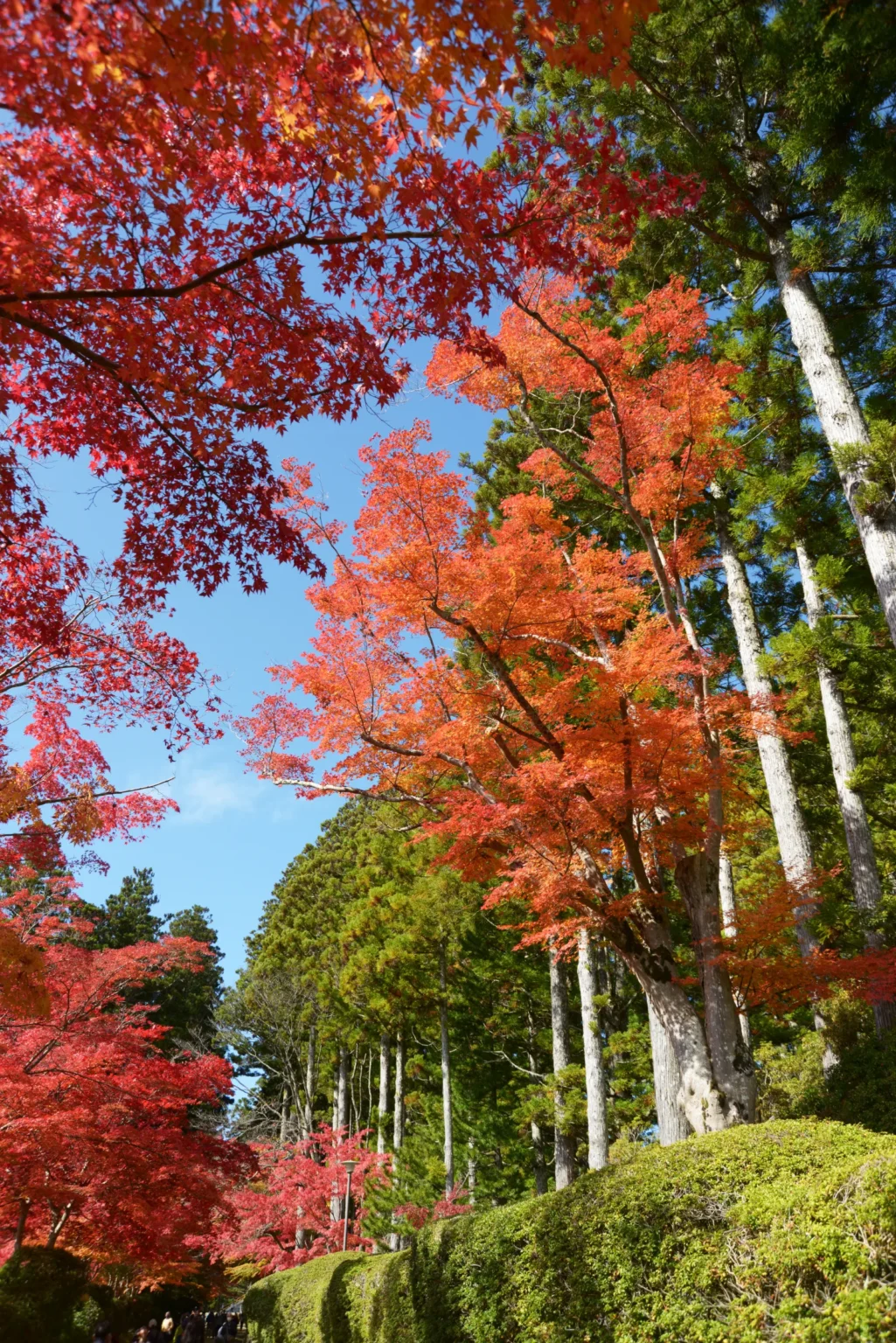
The cedar-lined approach; Nankai’s 2012 autumn release included it among the mountain’s autumn spots. Bus stop Ichinohashi-guchi or Okunoin-mae.
How cold is it, and what should you wear?
On Japan Meteorological Agency averages for 1991–2020, Koyasan is about 6°C colder than Osaka by day and about 7°C colder at night in October and November:
| Month | Average high / low |
|---|---|
| October | Koyasan (801 m) 17.8°C / 9.1°C; Osaka 23.7°C / 16.0°C |
| November | Koyasan 12.2°C / 3.0°C; Osaka 17.8°C / 10.2°C |
| December | Koyasan 6.3°C / −1.6°C |
In November, pack a warm jacket over a layer, gloves for an early walk at Okunoin, and shoes with grip for wet stone paths. October rainfall at Koyasan averages 203 mm, so carry an umbrella. Our guide to what to wear in Japan in November has the full list.
Staying in a temple: how a Koyasan shukubo works
Of Koyasan’s 117 temples, 52 take overnight guests, say the Koyasan Shukubo Association and Kongobu-ji; Koya Town’s tourism association gives 51. For temple stays across Japan, see our guide to shukubo and minshuku, and for manners at the temples themselves, shrine and temple etiquette.
How to book. The Association runs the official booking site, koyasan-shukubo.net, in English. Bookings open about six months ahead. Three ways in:
- Request booking: your request goes to the Association, which suggests a temple, including ones not bookable online.
- Instant booking: confirms at once with live prices; a June 2026 notice lists Hojo-in, Kodai-in, Fugen-in, Daien-in, Fudo-in and Eko-in.
- Phone: the Association on 0736-56-2616 (8:30–17:00, March to December). Some temples also take bookings directly.
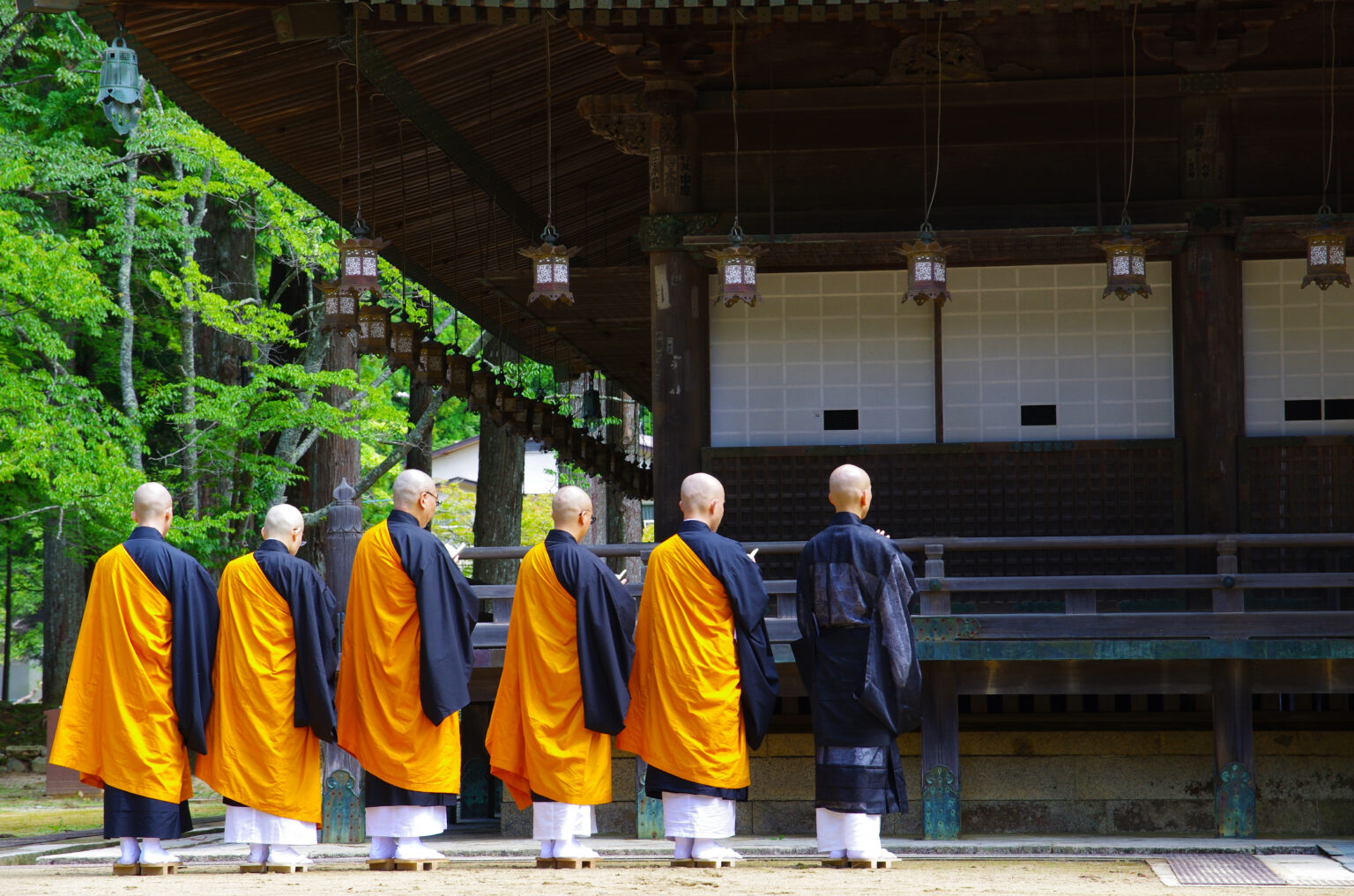
A typical evening and morning. Koya Town’s tourism association gives this sample, and says times differ by temple: check in around 15:00, dinner 18:30, bath, bed by 22:00; the morning service at 6:30 is optional, then breakfast at 7:30. Ekoin, for one, holds its service at 7:00 and a fire ritual at 7:30.
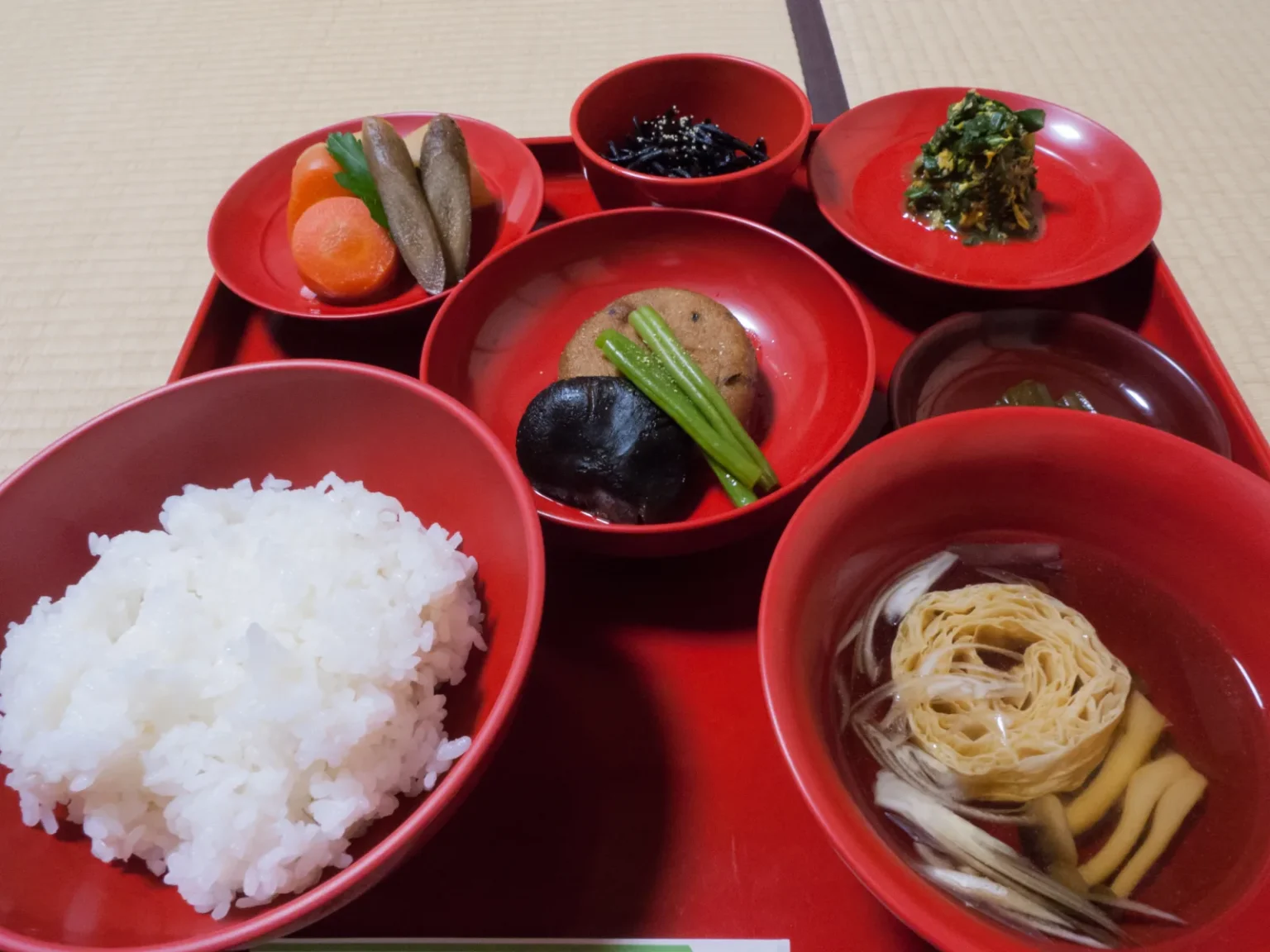
- Food and drink. Meals are shojin ryori, made without meat or fish. The Association says you are free to drink sake and beer, which temples call hannyato.
- Gates and curfews vary. The night tour’s page mentions a temple whose gate closes around 19:00 and others with a 22:00 curfew, and asks guests not to ask temples to move dinner, baths or curfew.
- The yukata is nightwear. Kongobu-ji asks you to change into your clothes before going to the main hall.
- Cash. The Association’s English site warns that card acceptance is limited at shops and lodgings and that many shops close on Mondays. Its booking site takes card prepayment, but extras on the day are paid in cash, its FAQ says.
Want to compare temple lodgings and the few hotels near Koyasan side by side?
Search Koyasan on Booking.comWho actually stays on the mountain?
Wakayama Prefecture’s 2025 tourism survey (preliminary, 23 April 2026): most visitors come for the day, but about six in ten overnight stays are by foreign guests, and most of those are from Europe, North America and Australia. Full country figures are in the survey linked under Sources.
| Koya Town, 2025 | Count |
|---|---|
| Day visitors | 1,262,635 |
| Guest-nights, all guests | 198,211 (98.3% of 2024) |
| Of which foreign guest-nights | 117,512 (up 10.2% on 2024) |
| From Europe, North America and Australia | 102,919, almost 88% of foreign guest-nights |
Day trip or overnight? Two plans that fit the timetables
A day trip from Namba (weekends and holidays, until 29 November 2026)
| Time | Where and how |
|---|---|
| 8:00 | Koya 3 from Namba (reserved seat); cable car from Gokurakubashi 9:36; Koyasan Station 9:41 |
| 9:47 | Bus to Okunoin-mae (¥610). It runs via Okunoin-guchi and does not stop at Ichinohashi-guchi |
| Morning | Walk from Okunoin-mae to the Torodo and the mausoleum, then out along the old approach to Ichinohashi (about 2 km) |
| 12:32 or 12:46 | Bus from Ichinohashi-guchi to Senjuin-bashi (¥160); lunch in town |
| 13:00–16:30 | Kongobu-ji and Banryutei, Jabaramichi, the Daito and Kondo (last entry 16:30 at all three) |
| 16:59 or 17:27 | Station-bound bus from Kongobuji-mae; it runs via Daimon, so get off there (¥210). Buses on to the station leave Daimon at 17:32 and 17:50 (¥360) |
| 18:42 | Cable car and local train from Koyasan Station, changing at Hashimoto to the Rinkan 12; Namba 20:27 |
Bus times are from Nankai Rinkan Bus’s Koyasan timetables of 28 March 2026 (weekends and holidays).
If a leg fails. If the Koya 3 is full, take an ordinary train and change at Hashimoto; at weekends the cable car leaves Gokurakubashi two to four times an hour through the morning, and the next buses to Okunoin-mae leave the station at 10:13, 10:20 and 10:41. If you run late, drop Daimon: station-bound buses leave Kongobuji-mae until 21:10. Nankai Rinkan Bus does not print the ride time from Daimon to the station (its timetables show 10 minutes for the outbound ride), so do not cut the last bus fine. The Rinkan home has its own seat charge; ordinary trains also run from Hashimoto.
Weekday version (bus times for weekdays from 1 September to 24 December 2026). Take the 10:00 Koya (Koyasan Station 11:47), then the 11:53 or 12:03 bus to Kongobuji-mae (¥460). Do Kongobu-ji, Jabaramichi and the Garan first. Take the 15:07 or 15:30 bus from Kongobuji-mae to Ichinohashi-guchi (¥160) and walk the 2 km to the Torodo, which closes at 17:00. The safe plan is the 17:58 or 18:20 bus from Okunoin-mae (¥610), which leaves time for the 20:07 cable car and Rinkan 20 connection (Namba 21:51). Only if you leave the Torodo well before closing, try for the 17:11 bus, which reaches the station in time for the 18:16 cable car and Rinkan 14 connection (Namba 19:50). Allow time for the walk back from the Torodo to the stop; if you miss the 17:11, the safe plan above still works.
The digital ticket lives on your phone at the gates and on the bus. Need mobile data for the day?
See Japan eSIM plansOne night in a temple
- Day 1: Koya from Namba at 10:00 (Koyasan 11:47 on weekdays, 11:51 at weekends). Danjo Garan, Jabaramichi and Kongobu-ji, then check in around 15:00. In the evening, the Night Tour, or on the 20th the Oyata Night Walk, which starts at 19:00 at Ichinohashi. Dinner in the tourism association’s sample day is at 18:30, so ask your temple about its dinner time and gate before you plan either.
- Day 2: the morning service, breakfast, then Okunoin (the Torodo opens at 6:00; for the meal offering, confirm the current time). Then Daimon or the Reihokan, and an afternoon Koya home: take the cable car from Koyasan Station at 16:34 on weekdays or 16:12 at weekends (16:46 in season) and change to the Koya at Gokurakubashi. The 11:30 connection leaves too little time after Okunoin.
Choose a night on the mountain if the temple dinner and the morning service matter to you; a day trip misses both.
Starting from Osaka? A hotel near Namba puts you a short walk from the Nankai trains.
Search Osaka hotels on AgodaWho might skip it, or plan around it
- If you rely on cards, or your only free day is a Monday: see the cash note above.
- At New Year: from 26 December 2026 to 4 January 2027 the Reihokan, the Tokugawa Mausoleum and Nyonindo are closed and Daishi Kyokai holds no jukai ceremony, per Kongobu-ji’s year-end table, which asks shared-ticket buyers to take care because some places cannot be visited then. The Kondo and Daito are open free, and Kongobu-ji charges as usual.
- If you planned to hike up the Kurokochi trail: notices of 2 and 5 October 2026 closed it for the time being because of bears. Check the latest Koya Town and Shukubo Association notices before you go.
Questions travellers ask
How do I get to Mount Koya from Osaka or Kyoto?
Nankai from Namba to Gokurakubashi, the cable car to Koyasan Station, then a bus: ¥1,430 each way, plus ¥1,100 for the through limited express “Koya” (about 1 hour 45 minutes). From Kyoto, go via Osaka or take the direct bus, once a day until Sunday 29 November 2026.
Is Koyasan worth a day trip, or should I stay overnight?
A day trip from Osaka fits Okunoin, Kongobu-ji, Danjo Garan and Daimon. A night in a shukubo adds the temple dinner, the morning service and a quiet Okunoin.
When is the autumn colour at Koyasan?
Usually from late October to early November, according to Wakayama Prefecture’s tourism site. In 2026 Kongobu-ji lights its main gate and the Jabaramichi path at night from 20 October until the colour ends.
How do I book a temple stay at Koyasan?
On the Koyasan Shukubo Association’s official site, koyasan-shukubo.net, by request or instant booking, up to about six months ahead, or by phone on 0736-56-2616.
Is the Japan Rail Pass or a Kansai pass valid to Koyasan?
Not the Japan Rail Pass: Nankai is a private railway. The KANSAI RAILWAY PASS LITE (¥5,200 for 2 days) is valid on Nankai’s Koya Line and the cable car to Koyasan, according to its official 2026 area map, but not on buses, and limited-express seats cost extra. For Koyasan alone, Nankai’s ¥3,980 World Heritage Digital Ticket is cheaper.
What is Okunoin?
The precinct of Kukai’s mausoleum: about 2 km of path lined with more than 200,000 graves and memorials under old cedars. No photos from Gobyobashi bridge onwards.
What should I wear to Koyasan?
Warm layers: November averages 12.2°C by day and 3.0°C at night. Since April 2026 Okunoin visitors are asked to dress neatly, without tank tops, miniskirts or shorts.
Kyoto in November
Autumn colour, crowds and timing in Kyoto.
Kyoto’s Quieter Autumn Temples
Maples without the biggest crowds.
Minoo Falls Walking Guide
Autumn leaves and a waterfall on Osaka’s edge.
One Day in Osaka
A walk from Namba, where the Koyasan trains start.
Sources
- Checked 16 October 2026 — Nankai Electric Railway: Koya and Rinkan timetable, to Koyasan and to Namba (dated 28 March 2026); limited express Koya charges; cable car timetable, Gokurakubashi and Koyasan; fare search; Koyasan Station; service notices; Koyasan World Heritage Digital Ticket and 2026 prices; GRAN TENKU; autumn release, 23 October 2012
- Checked 16 October 2026 — Nankai Rinkan Bus: Koyasan buses, fares, timetables for Koyasan Station, Okunoin-mae and Daimon; passes; Kyoto Koyasan Line: Keihan Bus and Nankai Rinkan Bus notice, 9 March 2026 (PDF, Japanese) (checked 20 October 2026) and the booking page on kosokubus.com
- Checked 16 October 2026 — Kongobu-ji: fees and hours; sights; etiquette, dress and photography; autumn light-up 2026; year-end 2026–27 opening table; about Kongobu-ji
- Checked 16 October 2026 — Koyasan Shukubo Association: history, sights, reservations, access, notices on dress at Okunoin and the Kurokochi closure; English site: home, seasons, guidance; official booking site koyasan-shukubo.net and FAQ
- Checked 16 October 2026 — Koya Town Tourism Association: notices (3 November event, bears), sights, temple stays, events, access, photo spots; Okunoin Night Tour; Ekoin
- Checked 16 October 2026 — Wakayama Prefecture: Visit Wakayama, Autumn Leaves (Koyasan); 2025 tourism survey, preliminary (23 April 2026); nagomi magazine on shojingu
- Checked 16 October 2026 — Japan Meteorological Agency normals, 1991–2020: Koyasan, Osaka
- Checked 16 October 2026 — Passes: KANSAI RAILWAY PASS LITE and area map; Japan Rail Pass scope
Join travelers discovering Japan's hidden side
Weekly dispatches from off-the-beaten-path Japan — spots and stories you won't find in guidebooks.
No spam. Unsubscribe anytime.
Welcome aboard!
You're in. See you in your inbox soon.