Osaka · Walking Route · One Day
Osaka is not pretty. It’s the loud, crooked, soup-stained younger brother of Kyoto. I mean that kindly. If you only have one day, don’t spend it on a bus — walk through it. Here’s the route I take when a friend is in town and we have from breakfast until midnight.
Walking distance
6–8 km
flat, covered for most of it
Time needed
7–9 hours
lunch + coffee + dinner included
Food budget
¥3,500–6,000
per person, 3 meals + snacks
Best day to go
Weekday
weekends are a crush in Dotonbori
Rather have a local lead the way through Dotonbori and Shinsekai? You can join a small-group Osaka street-food and bar tour instead of walking it solo.
Here in August? The Koshien high-school baseball championship runs just outside the city (from Aug 5) — worth building a day around if you love a crowd with heart.
Why you should walk Osaka, not bus it
Osaka is built for people in a hurry. Every station empties into a shopping street. Every shopping street empties into a restaurant alley. You can see more of it in one afternoon on foot than you can in three days of bus tours, and you will eat twice as well. If you want the opposite of all that, Minoo Falls is a forest gorge half an hour north of Umeda.
The city rewards the walker in a specific way that our 7-day itinerary can’t quite capture on its own — Osaka requires you to pause, follow an alley because you can smell something, double back for a photograph, eat standing up. This article is the detail version of the Day 6 of that itinerary.
The route in one sentence
Arrive at Shin-Osaka via Shinkansen or land at Kansai, take the Midosuji Line south to Namba, walk Namba Sennichimae, cross to Dotonbori, then Shinsaibashi shotengai, then back down to Shinsekai for kushikatsu and the Tsutenkaku tower at dusk. That’s the whole thing. Six stops, roughly a V-shape across central Osaka, all walkable between your feet and one subway ride.
Getting to the start line
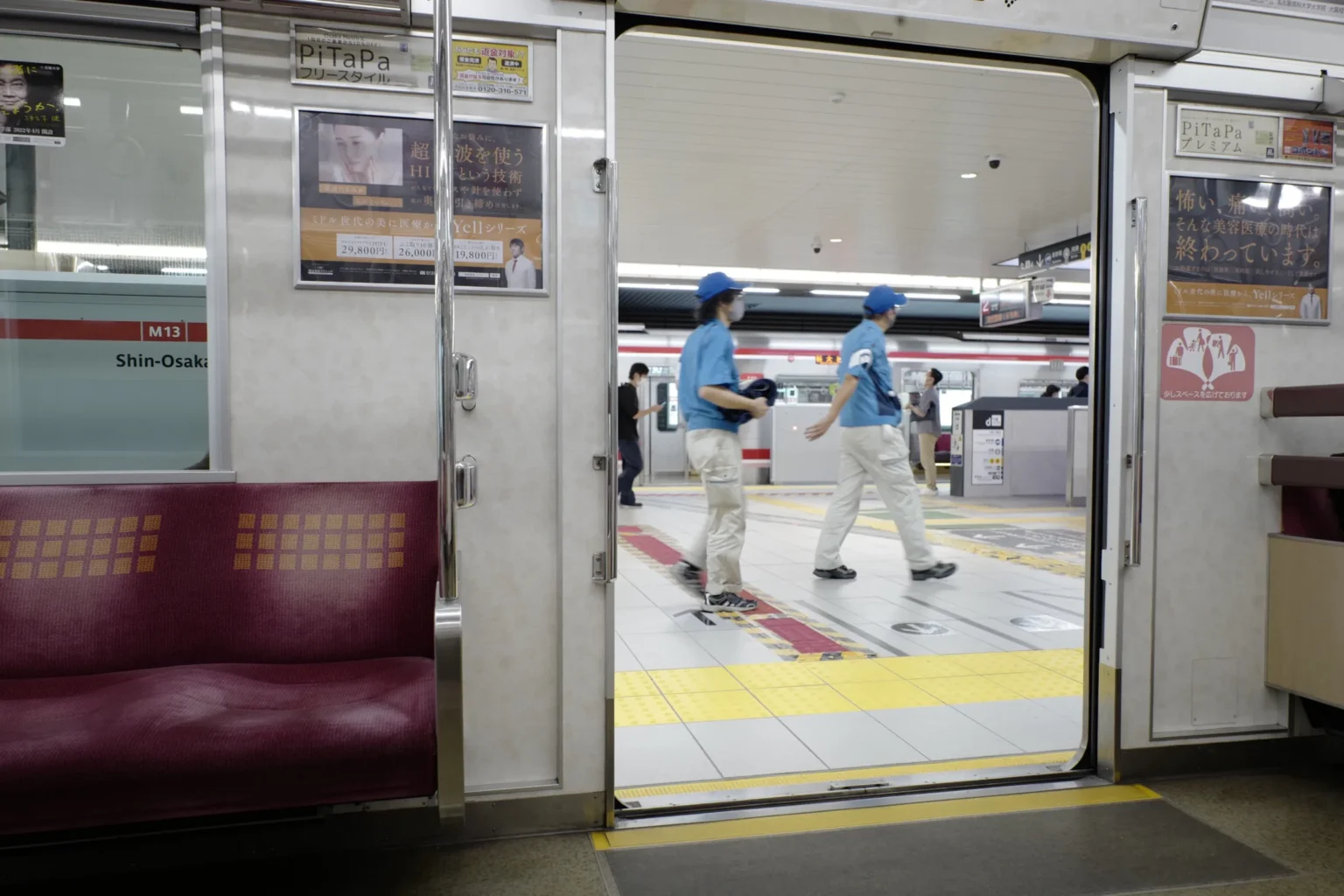
If you’re coming in from Tokyo or Kyoto by Shinkansen, you’ll arrive at Shin-Osaka Station, which is not downtown — it’s a transfer station in the north of the city. From here, take the Midosuji Line (red) southbound straight to Namba Station. Eight minutes, ¥240. Buy a single ticket from the machine, or tap your Suica / ICOCA IC card through the gate. This is the only subway ride you need for the whole day.
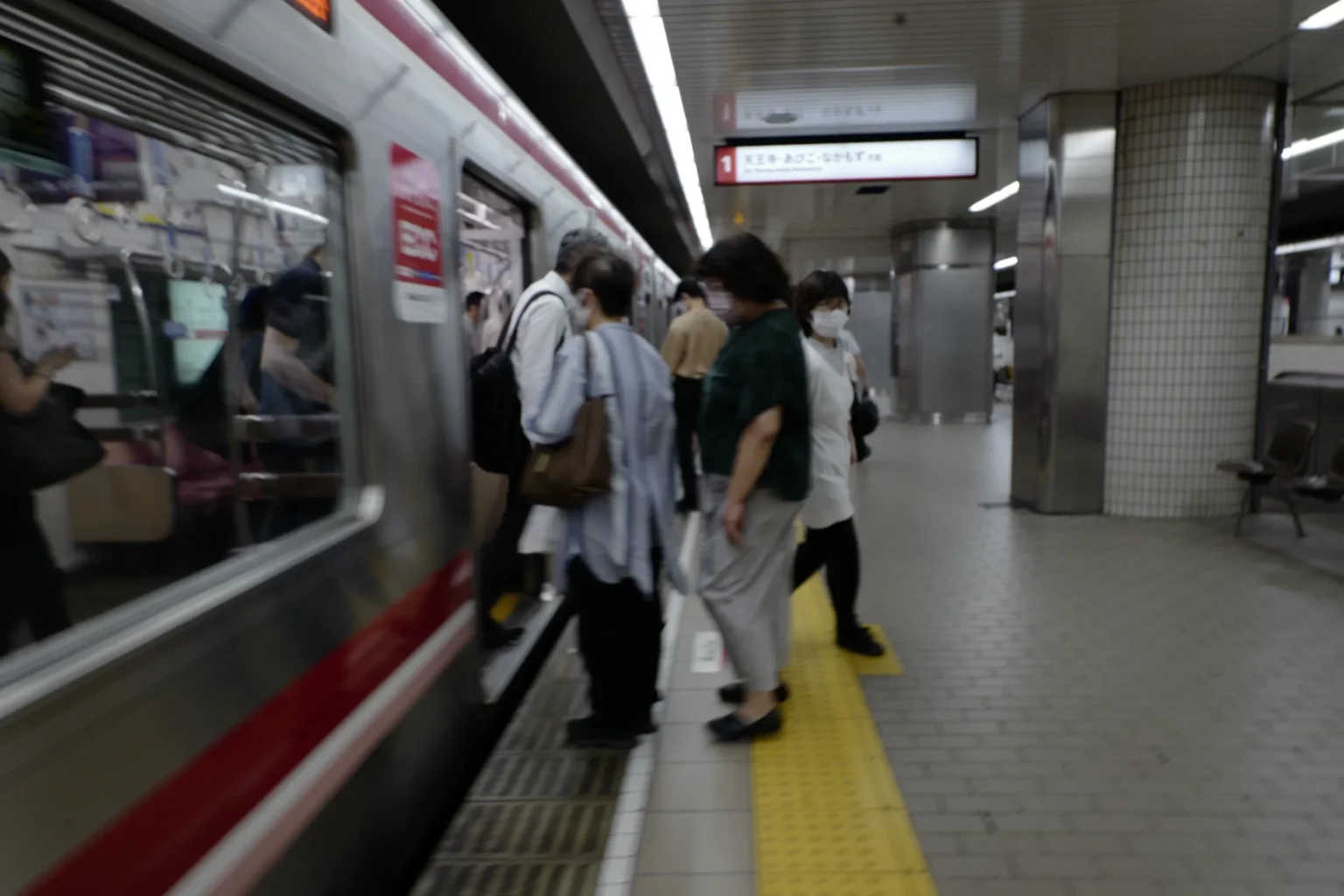
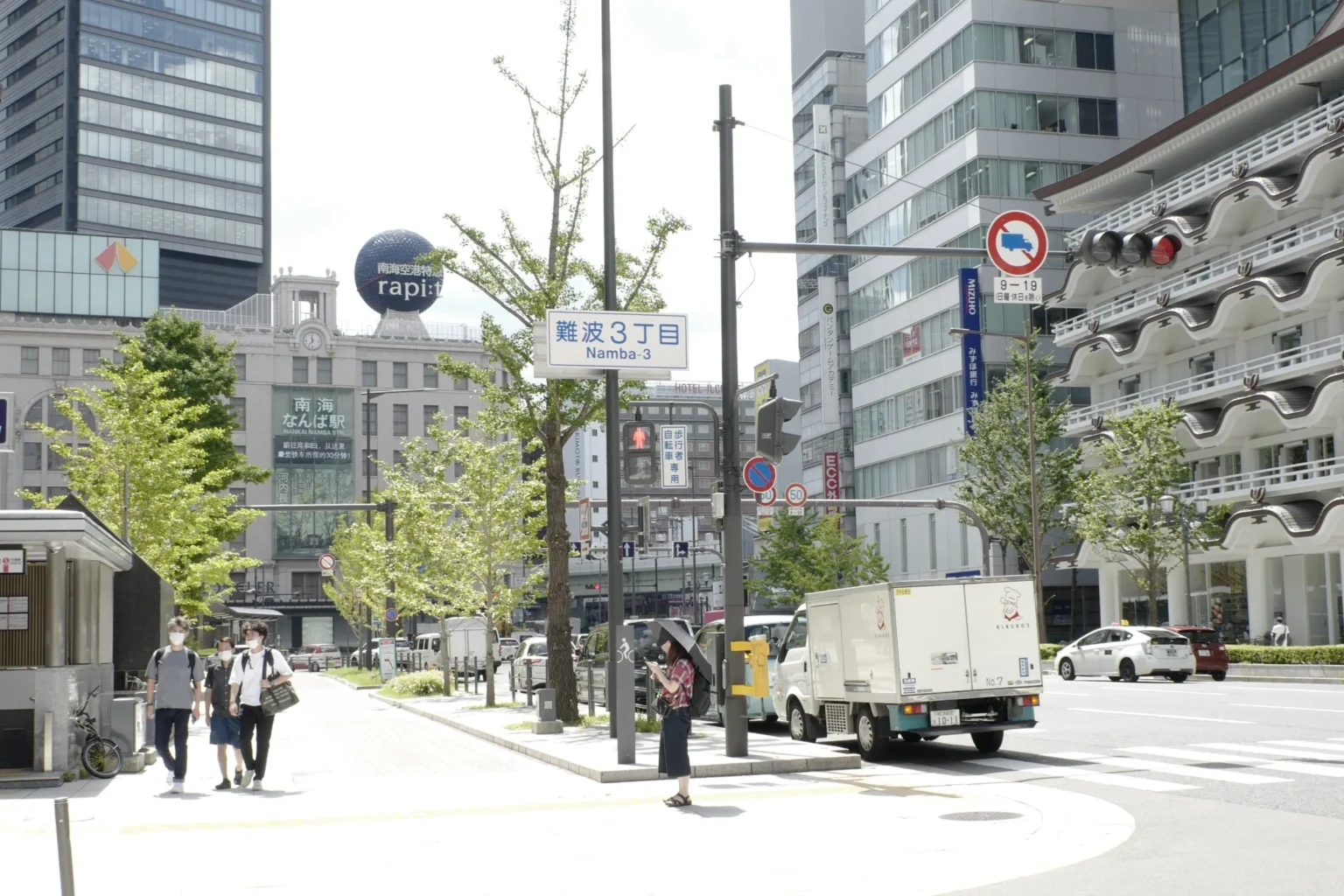
If you’re flying into Kansai International (KIX), skip the Metro entirely at this stage and take the Nankai Rapi:t airport express directly to Namba. About 40 minutes, ¥1,490 ordinary class. Pre-book the Rapi:t ticket on Klook — it saves you the counter queue at the airport, which can genuinely eat 30 minutes after a long-haul flight.
Stop 1 · Namba Grand Kagetsu — the Osakan temple of laughter
Stand outside the theatre, watch the city switch on
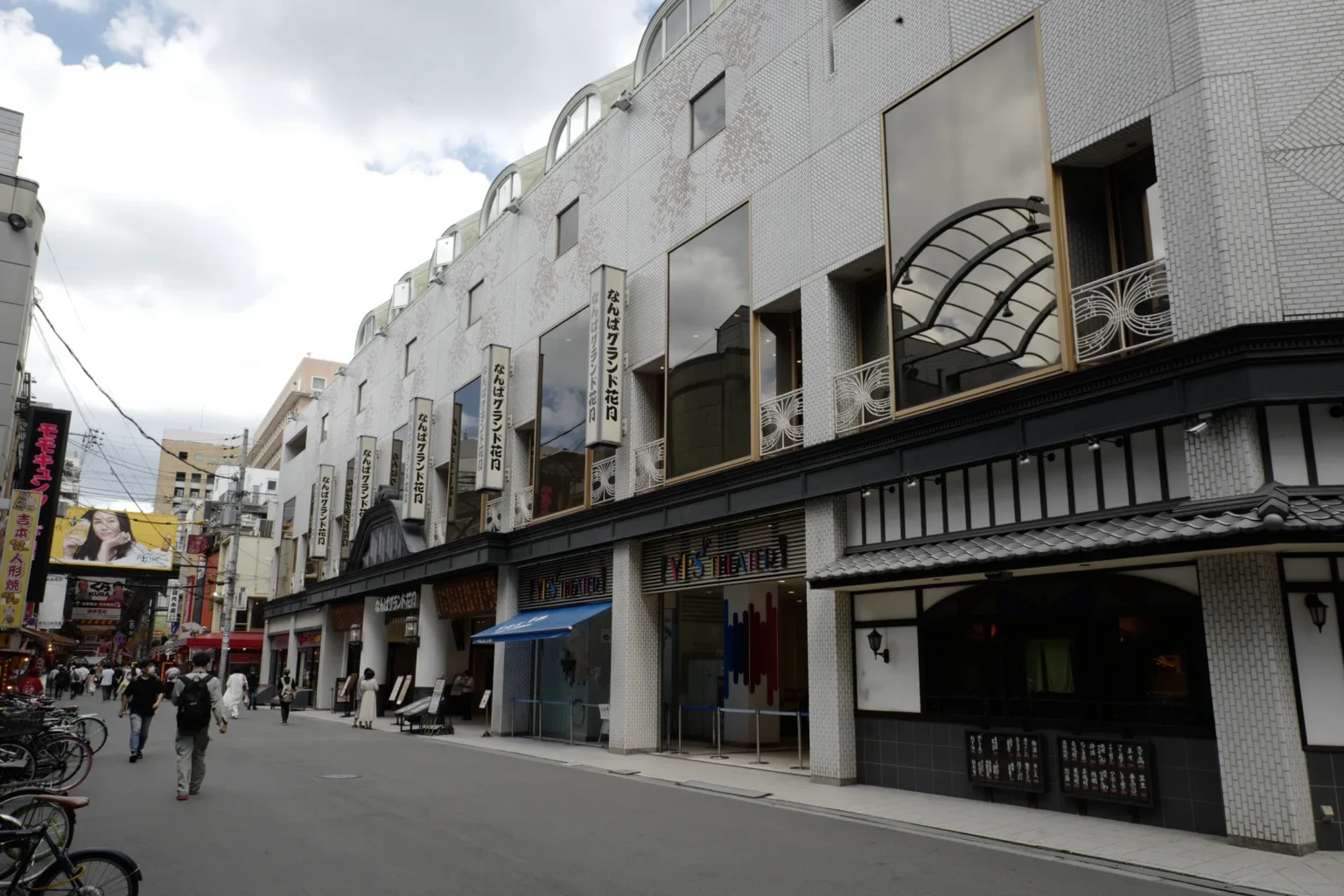
Walk out of Namba Station’s east exit and follow the signs for Namba Grand Kagetsu (NGK). Even if you don’t speak a word of Japanese and can’t catch a show, stand outside this building for ten minutes. NGK opened in 1987 as the flagship theatre of Yoshimoto Kogyo, the entertainment company that has been running Osakan manzai — the fast-talking, two-person stand-up comedy tradition the city is famous for — since 1912.
The building itself is unremarkable. What matters is that you’re now standing in the spiritual centre of the Osakan sense of humour. It explains why the waiters joke with you, why the okonomiyaki chef will test out broken English on you and get away with it, why the whole city feels like it’s waiting for a punchline.
Stop 2 · Namba Sennichimae — and an early lunch at Menya Jouroku
Take the first right into the quiet grid of Sennichimae
Leave NGK and walk two blocks northwest. You’ll cross a wide boulevard and drop into the backstreets of Namba Sennichimae. The shopfronts here are noren-curtained, weather-worn, and old. This is where the locals actually eat.
My reliable stop for an early lunch here is Menya Jouroku Namba (麺屋 丈六 なんば店) — a ramen counter on Sennichimae 6-16 that opened in 2007 as the sister shop of the original Jouroku in East Osaka. Eight counter seats. No booking. Put your name on the clipboard outside if there’s a line — there usually is one by 11:30.
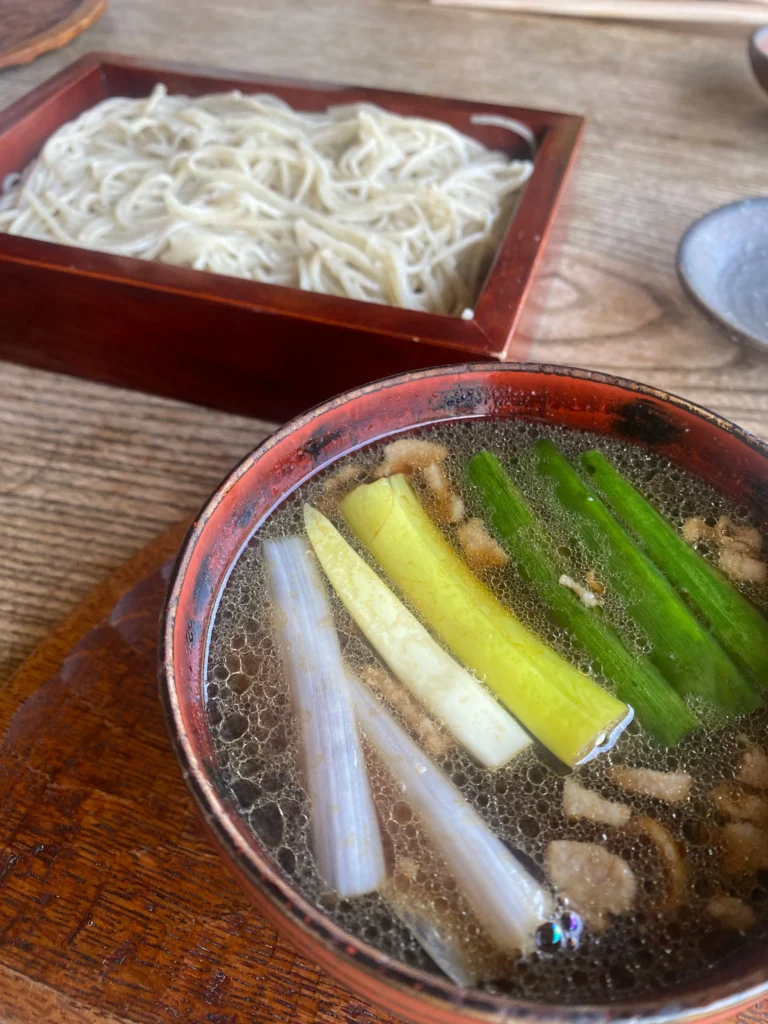
What you order is the Takaida-style chuka soba (高井田系中華そば, around ¥900) — a bowl specific to eastern Osaka that looks like it cannot possibly taste light. The broth is a jet-black shoyu that reads as soy sauce on first inspection, but the flavour is surprisingly clean — smoky, dashi-forward, almost drinkable at the end. The noodles are house-made, thick, chewy, and satisfying in a way that the thin noodles used by most Tokyo ramen shops aren’t. A thick chashu slice, menma, and aggressive shredded white negi sit on top.
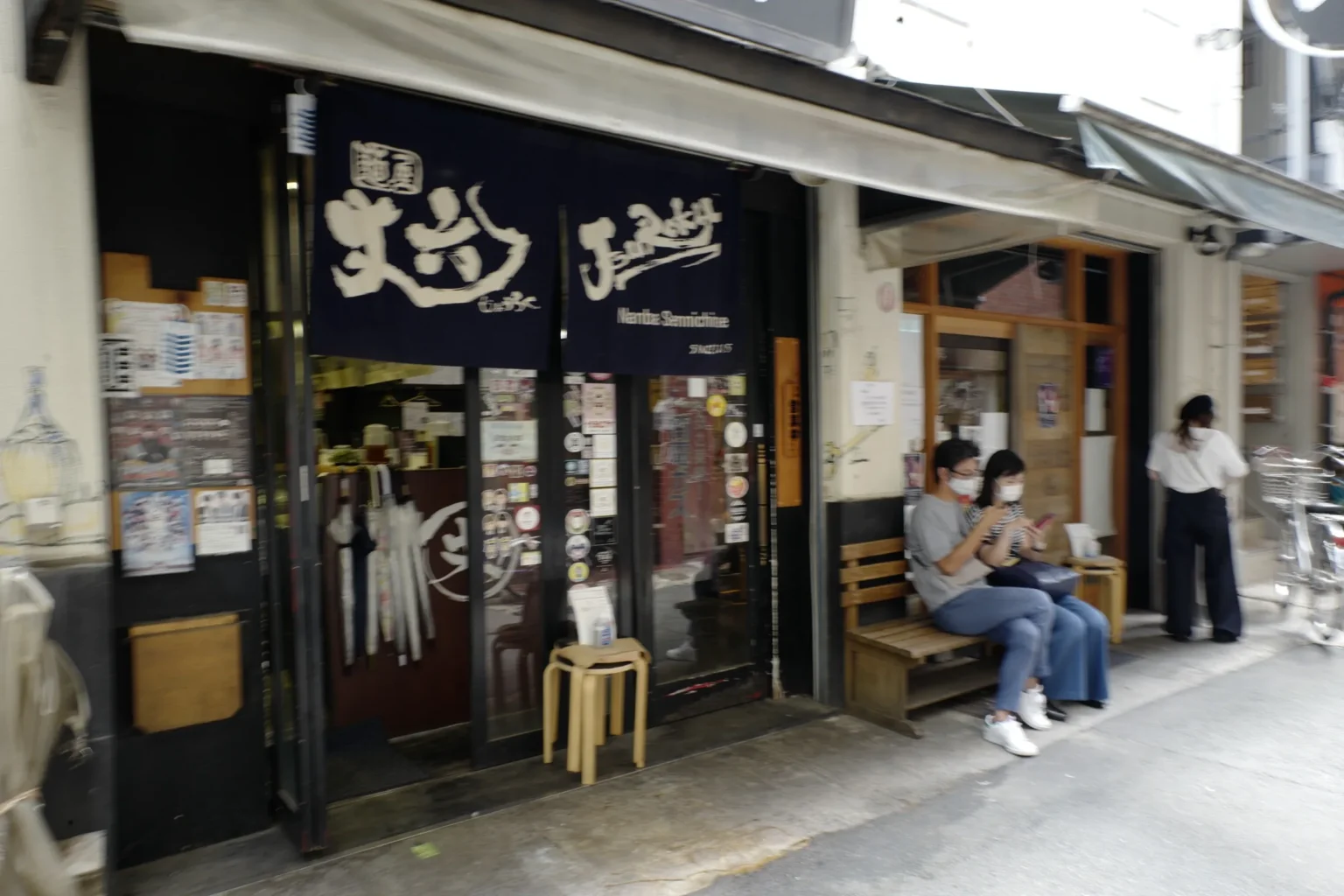
If Jouroku is full or closed, the entire alley around it is full of small counters — soba, tachi-nomi (standing bars), kissaten (old-school coffee shops). Pick the one with the most locals leaving with satisfied faces. Cash is safer than cards in this particular block.
Stop 3 · Dotonbori — yes it’s a tourist trap, go anyway
Follow the lanterns north to the canal
Walk ten minutes northeast out of Sennichimae and you arrive at the pedestrian crossing at Ebisubashi bridge — the one with the running Glico man sign. This is Dotonbori. It is absolutely a tourist trap. Go anyway. It takes thirty minutes to walk end-to-end and you need the photos.
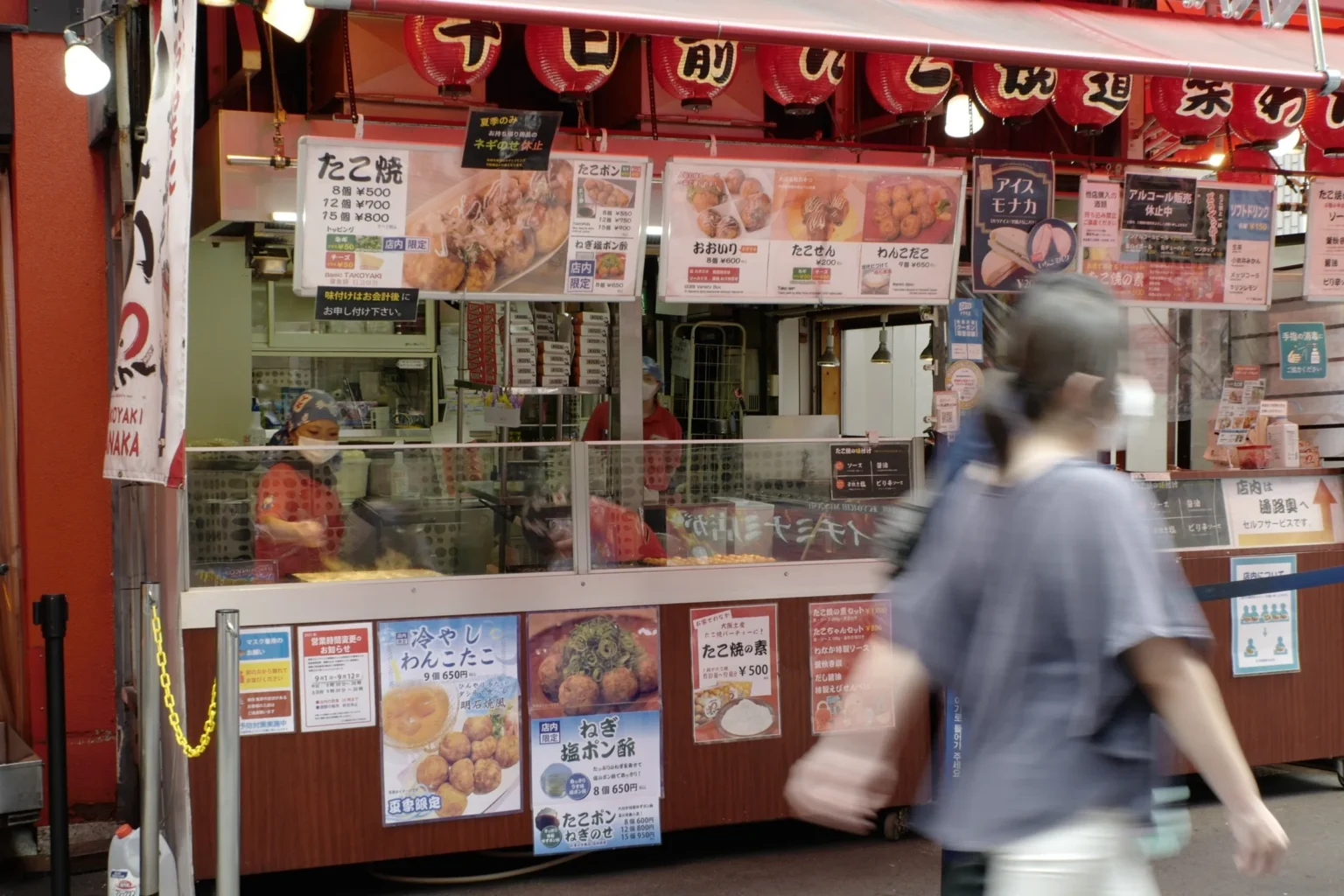
What you’re looking for aren’t the giant mechanical crab signs (though of course, take the photo). You’re looking for the takoyaki stalls. Pick one with a visible queue and a Japanese crowd. I paid ¥500 for eight pieces last time, which is a fair tourist price. The best ones are crisp outside, molten inside, and will burn your mouth for forty-five seconds if you don’t let them cool.
Stop 4 · Shinsaibashi-suji shotengai — the covered mile
Walk the longest covered shopping street in the Kansai region
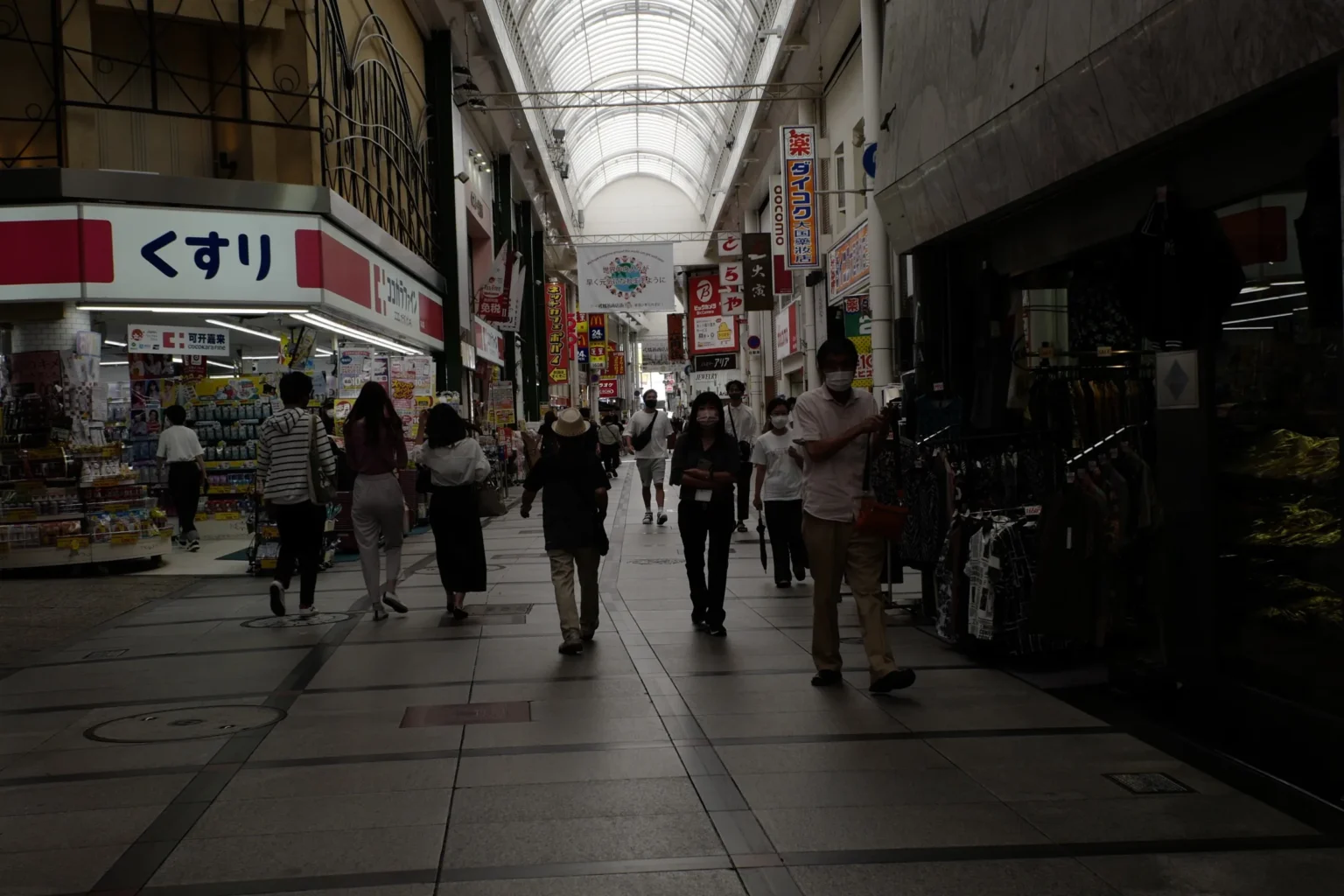
From Dotonbori, cross the canal and walk north into the mouth of Shinsaibashi-suji. This is a 600-metre covered shopping arcade that starts at Dotonbori and ends at Nagahori-dori. It has everything — H&M flagship stores, century-old kimono shops, drugstores selling Japanese-brand cosmetics at half the Tokyo price, and cafes that take their matcha very seriously.
Shopping tip: the big Daikoku Drug and Matsumoto Kiyoshi branches here are the cheapest for tax-free Japanese cosmetics (SK-II, Shiseido, Hada Labo) in the city. Bring your passport; they’ll knock off the 10% consumption tax on the spot. Weekdays before lunch have the shortest tax-refund counter lines.
Stop 5 · Back to Dotonbori for okonomiyaki (properly)
Find an okonomiyaki counter without a queue of selfie sticks
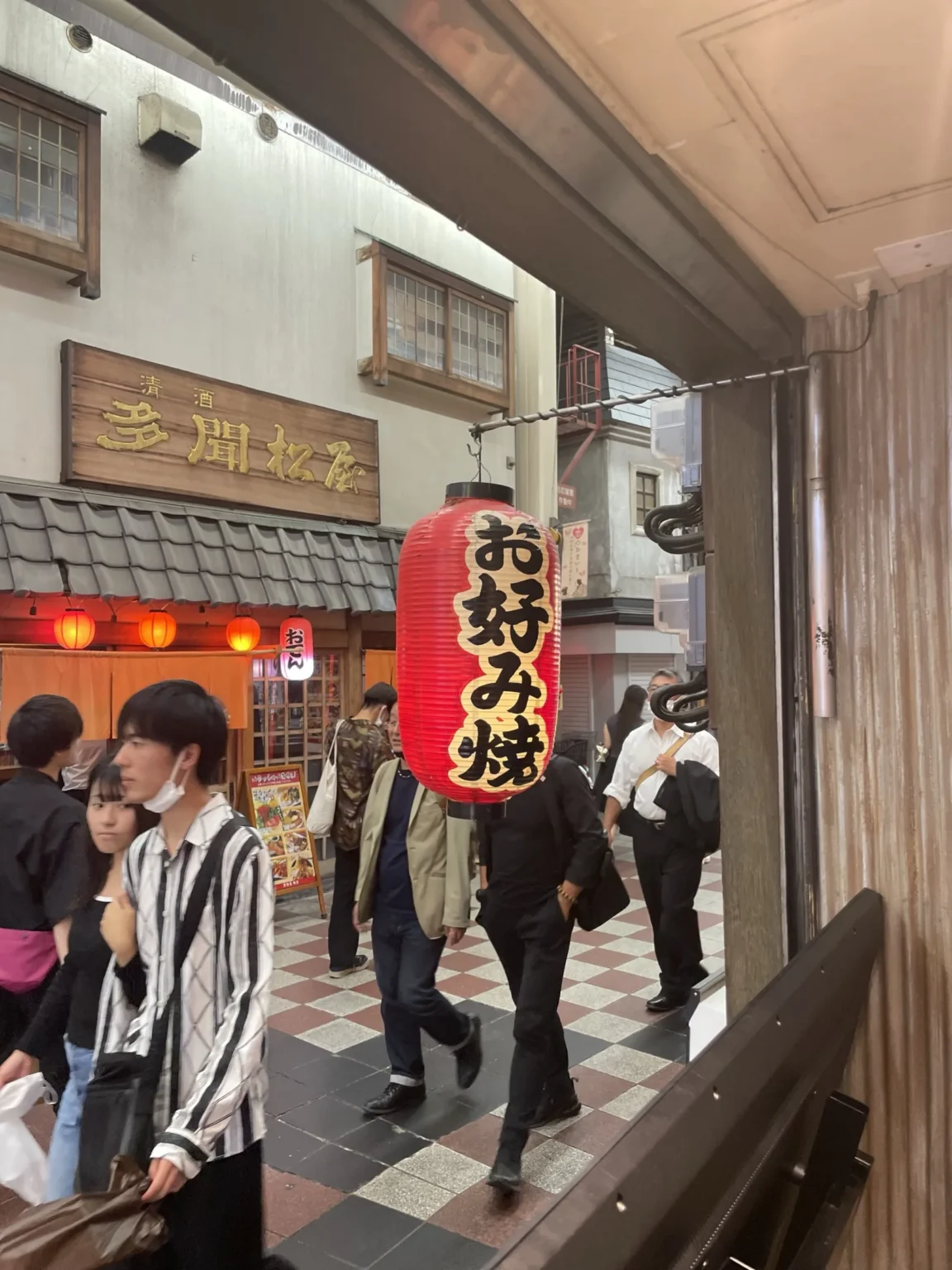
Double back south from Shinsaibashi to the south bank of Dotonbori canal, then turn into any of the smaller alleys branching east. You want an okonomiyaki place with a teppan counter (iron griddle) rather than a tourist-facing one with English-only menus. Chibo, Mizuno, and Kiji all have branches in this area and are genuinely good — Kiji is in a basement food court in Umeda Sky Building if you want it quieter.
Cost target: ¥1,000–1,400 for a pork-and-egg okonomiyaki, cooked at your table, served with the classic mayo-lattice on top. Add ¥400 for a “modan-yaki” which adds yakisoba noodles inside the pancake.
Stop 6 · Shinsekai — the retro neighbourhood at the south end
Take the Midosuji Line south to Dobutsuen-mae, walk into 1960s Osaka
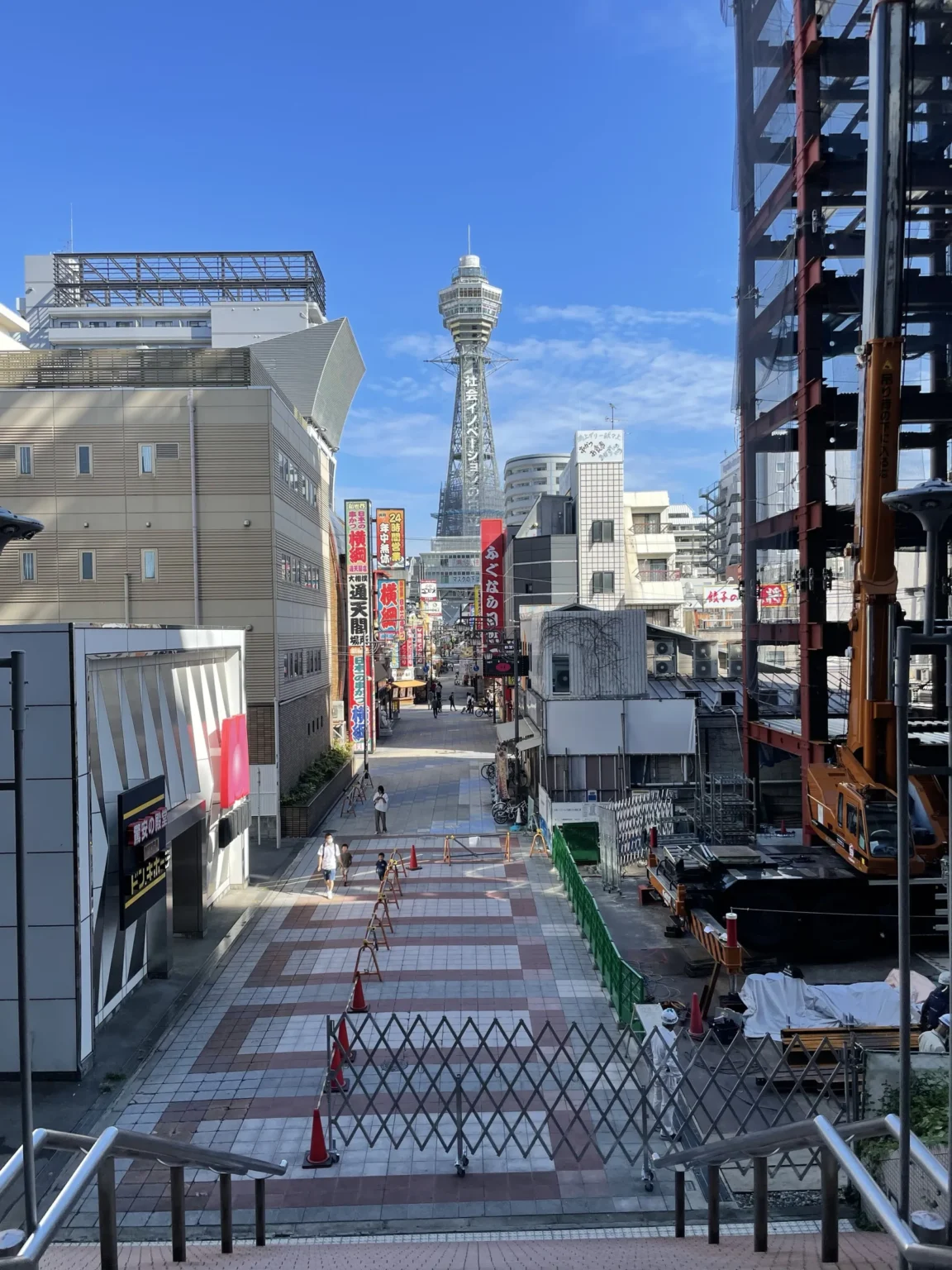
From Dotonbori, hop back on the Midosuji Line at Namba station, three stops south to Dobutsuen-mae. Come out and walk northeast two blocks. You are now in Shinsekai, which translates to “new world.” The district was built in 1912 for Osaka’s Fifth National Industrial Exhibition — modelled on Paris in its northern half and Coney Island in its southern half, which is still the easiest way to describe what it feels like today.
At the centre is Tsutenkaku, a 103-metre tower modelled loosely on the Eiffel. The current tower is the second version — the original was dismantled during WWII, and the one you see today was rebuilt in 1956. It lights up in a different colour each night to forecast the next day’s weather.
Shinsekai has a slightly rough reputation in older Japanese guidebooks because it bordered a historically poor district. Walk sensibly after dark and it’s fine; I’ve never had an uncomfortable moment here in half a dozen evenings.
Stop 7 · Kushikatsu dinner — the only way to finish the day
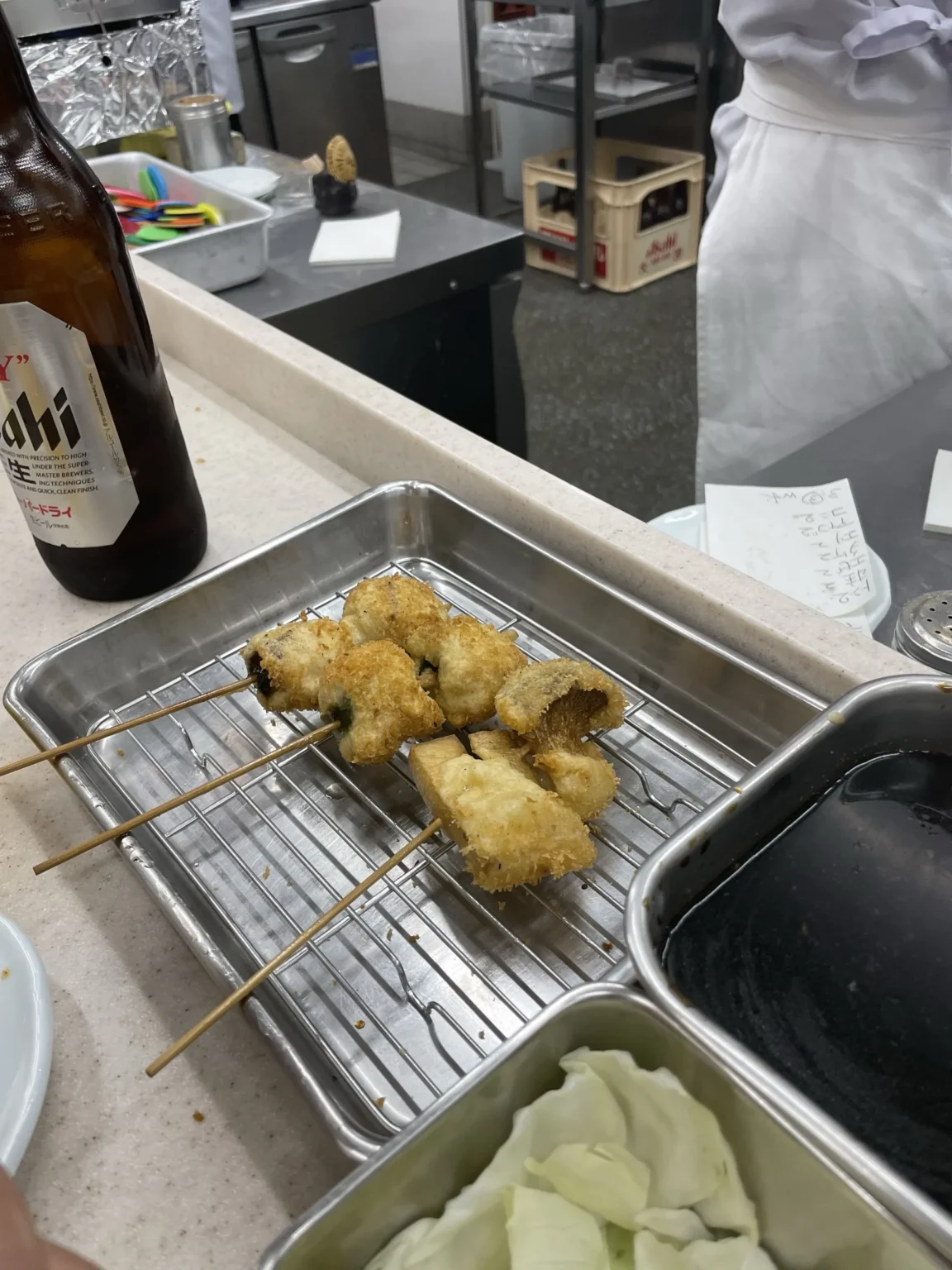
Sit at a kushikatsu counter in Shinsekai, drink a cold Asahi, break the rule once
Shinsekai is the birthplace of kushikatsu — bite-sized pieces of meat, fish, cheese and vegetables skewered, breaded, and deep-fried to order. Every shop here sells it. The rule is famous and iron-clad: no double-dipping the communal sauce pot. Use the raw cabbage to scoop extra sauce if you want more. (There will be a sign. Read the sign. Nod at the sign. Obey the sign.)
My counter of choice is Daruma, which has multiple branches in Shinsekai and invented the modern kushikatsu recipe in 1929. A full belly of 10 skewers plus one Asahi draft costs about ¥2,200. Individual skewers start at ¥130.
Getting back to your hotel
From Shinsekai, walk back to Dobutsuen-mae station and take the Midosuji Line northbound back to Namba, Shinsaibashi, or Umeda. Your last trains run until around midnight. If you miss them, taxis from Shinsekai to Namba are about ¥1,500 and drivers speak enough English to get you there.
Smart alternatives — three ways to flex this route
The full route works on a weekday with good weather. If any of those are missing, here are the adjustments I make:
- Raining? Start at Shinsaibashi-suji instead of Namba Grand Kagetsu — the arcade is covered for the full length. Skip the outdoor Dotonbori photos; eat takoyaki at one of the stalls under the shopping arcade roof instead. Shinsekai at night reads fine in rain.
- With kids or not-huge-eaters? Add the Osaka Aquarium Kaiyukan as a morning swap for the Kagetsu theatre. It’s ten minutes away on the Chuo Line from Namba. Dinner should be at Dotonbori’s Chibo okonomiyaki chain — they have a kids’ menu.
- Only have an evening? Do stops 3, 6 and 7 only. Arrive at Namba by 17:00, walk Dotonbori until sundown, Midosuji Line south to Shinsekai, kushikatsu dinner, last train back. Tight but doable as a half-day from Kyoto.
Practical — payments, passes, language, feet
- Transport card: Suica or ICOCA works on every subway, bus, and most shops. Add ¥2,000 on arrival and you’ll have leftover credit at the end of the trip. Apple Pay Suica/ICOCA is the cleanest option if you have a recent iPhone — no physical card to lose.
- Unlimited subway pass: if you know you’ll take more than 3 subway rides, the Osaka Amazing Pass (1-day ¥2,800 / 2-day ¥3,600) also gets you into 30 attractions including Tsutenkaku, Umeda Sky, and Osaka Castle. Buy on Klook in advance to skip the station-counter queue.
- English signage: station signs, subway announcements, and most restaurant menus in Namba/Dotonbori/Shinsaibashi are English-OK. Shinsekai is slightly less tourist-friendly; Google Translate camera mode handles everything.
- Payment: major credit cards accepted at chain restaurants and all drugstores. Small counter shops and street stalls are cash-only — keep ¥5,000–8,000 in cash on you.
- Shoes: wear actual walking shoes. You’re doing 6–8 km on concrete with five long food stops. I wore Nike trail runners last time; a friend wore Birkenstocks and regretted it by Shinsaibashi.
Where to sleep
For this route, the winning move is to stay in the Namba or Shinsaibashi area so you can start and end the day within walking distance of your hotel.
- Mid-range (¥12,000–18,000): Cross Hotel Osaka, Hotel Monterey La Soeur, Hotel Hankyu Respire. All within a 6-minute walk of Namba.
- Budget (¥5,000–9,000): Fraser Residence Nankai (serviced apartments), First Cabin Midosuji Namba (upmarket capsule hotel).
- Splurge (¥35,000+): The St. Regis Osaka (Honmachi), Conrad Osaka (Nakanoshima, 10 min by cab from Namba).
Compare all Osaka hotels on Agoda — filter for Namba / Shinsaibashi neighbourhood to stay close to this route.
FAQ
Is one day in Osaka enough?
Enough to scratch it, not enough to know it. This route covers the six neighbourhoods most first-time visitors want to see and eats three of the city’s signature dishes. If you have two days, add a morning at Osaka Castle (metro five stops from Namba) and a trip up Umeda Sky Building for the panorama.
Is Osaka safe at night?
Yes. Osaka’s street crime rate is slightly higher than Kyoto’s but extremely low by any global standard. The route in this article keeps you in well-lit commercial areas at all times. The only edge case is Shinsekai after 22:00 — stay on the main streets and it’s fine.
When does this route not work?
Sundays and Japanese public holidays double the crowds in Dotonbori and Shinsaibashi-suji. If you have a choice, go Tuesday, Wednesday or Thursday. Rain is manageable but cold winter rain in January can cut Shinsekai short — that last segment is outdoors.
Is it walkable with a suitcase?
Not comfortably. Most hotels in Namba/Shinsaibashi have early check-in from 11:00 or a bag-drop at the front desk from 09:00. Drop your suitcase first, then walk the route. If you’re day-tripping from Kyoto, use the coin lockers at Namba Station (¥600 for a large locker, accepts ICOCA).
Can I combine this with Kyoto in the same day?
Yes. Shinkansen Kyoto↔Shin-Osaka is about 15 minutes and ¥1,480 reserved. Start in Kyoto at 08:00, arrive Namba by 10:00, do the route until 19:00, back to Kyoto by 20:30. For the Kyoto side of that pairing, see our 7-day Tokyo–Kyoto–Osaka itinerary.
Is a JR Pass useful for Osaka?
Not for this route. The Osaka subway is not JR. The JR Pass covers the Shinkansen into Shin-Osaka and the JR loop line (Osaka-Kanjo), but most of this walk is on Osaka Metro, which you pay for separately with Suica/ICOCA. See our breakdown: JR Pass vs individual tickets 2026.
Walk it. Don’t tour it.
Osaka is not a city for double-decker sightseeing buses. It’s a city for sore feet, soup on your shirt, and half a litre of Asahi at the kushikatsu counter. If you can only spend one day here, this is the day.
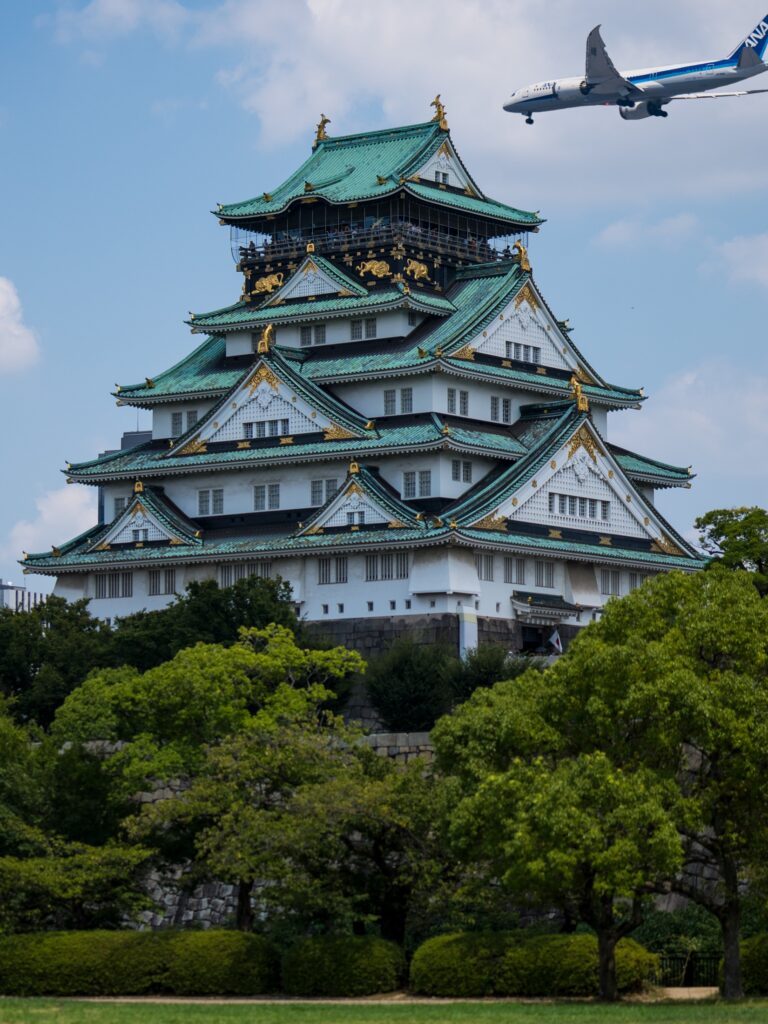
Add this to the 7-day itinerary → Search Osaka hotels →Osaka Castle
The other half-day in Osaka: the castle, its stones and turrets.
Join travelers discovering Japan's hidden side
Weekly dispatches from off-the-beaten-path Japan — spots and stories you won't find in guidebooks.
No spam. Unsubscribe anytime.
Welcome aboard!
You're in. See you in your inbox soon.