Nagano · Naraijuku · Off-Season
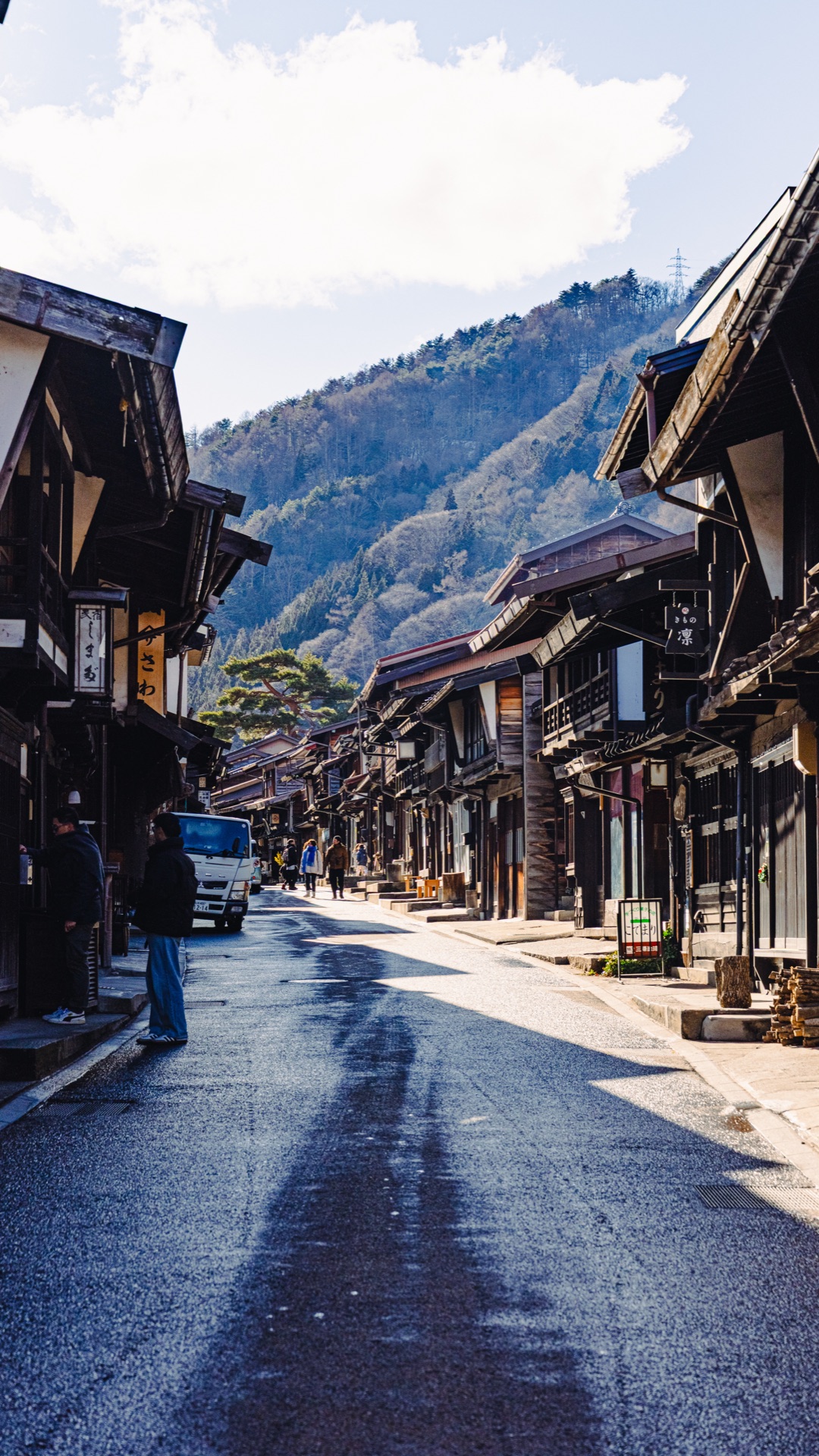
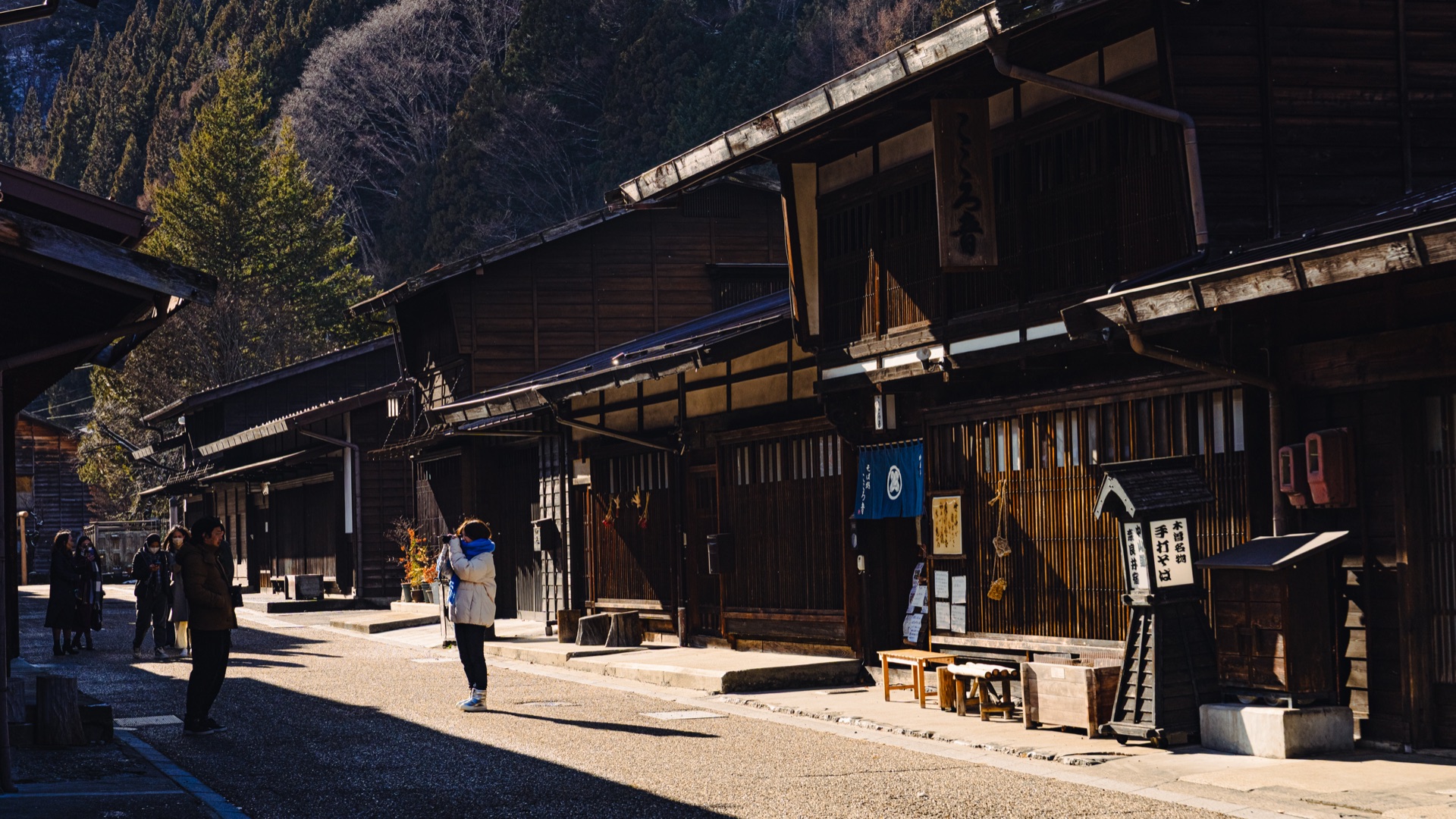
I came to Naraijuku on December 27. The streets were near-empty, the lacquerware shops half-closed, and the Kiso mountains had their first real coat of the season. The post town in summer is a guidebook page — wooden inns, lanterns, crowds, the same photo everyone takes from the same spot. In winter it’s a different town. Still wooden, still here, but quieter, colder, lit completely differently. This is what off-season Naraijuku actually looks like, and the trade-offs that come with it.
Part of my Calmcation in Japan guide to the country’s quietest escapes.
Quick Facts
Why Visit in Winter
Naraijuku is a kilometer of preserved Edo-period post town — wooden eaves, lattice windows, dark cedar facades — and it’s one of the most photographed places in central Japan. The problem with photographing it in summer is that everyone else is also photographing it in summer. The streets fill with day-trip buses from Matsumoto and Nagoya, the lanterns get crowded shots from below, the famous mountain backdrop has thirty people standing in front of it.
In winter, that disappears. The buses stop running heavy schedules, the day-trippers move on to ski resorts, and the post town goes back to being what it was originally: a small mountain settlement on a long road through the Kiso valley.
What You Lose, What You Gain
Trade-offs of off-season
- Many lacquerware and craft shops are closed or running short hours
- Some restaurants close 1–2 days a week without warning
- Cherry blossoms (April) and autumn leaves (October) are obviously not happening
- The yatai-style food stalls along the street are gone
- Cold mornings — sub-zero is common before 9 AM
The off-season payoff
- The street is yours — clean shots without people in the frame
- Snow-dusted mountains as backdrop on most days
- Locals have time to talk; the shops that are open are not rushed
- Hotel and ryokan rates drop 20–35 %
- The light is sharper, lower, and runs warm-cool faster — better for photography
The Walk in Winter
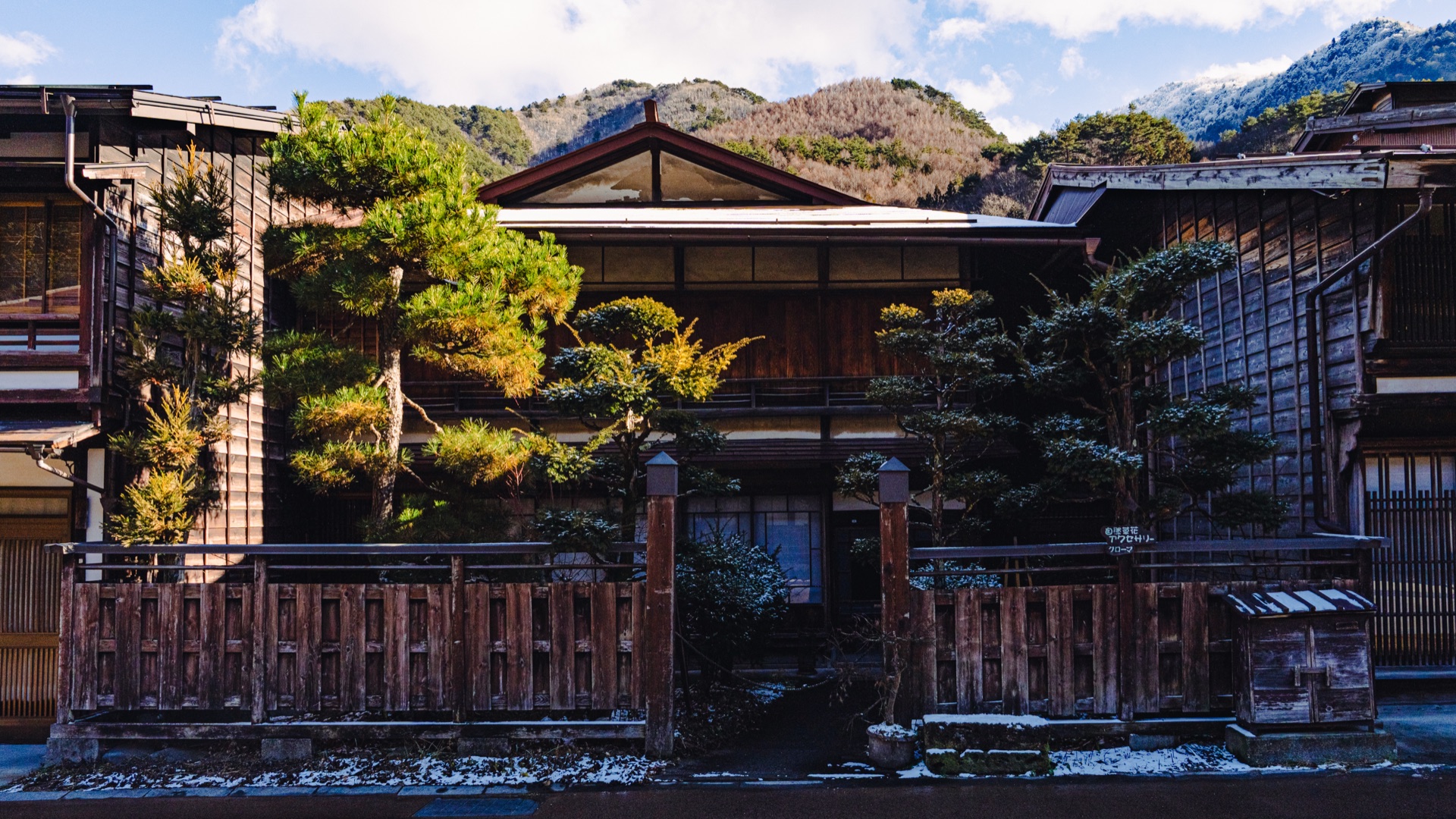
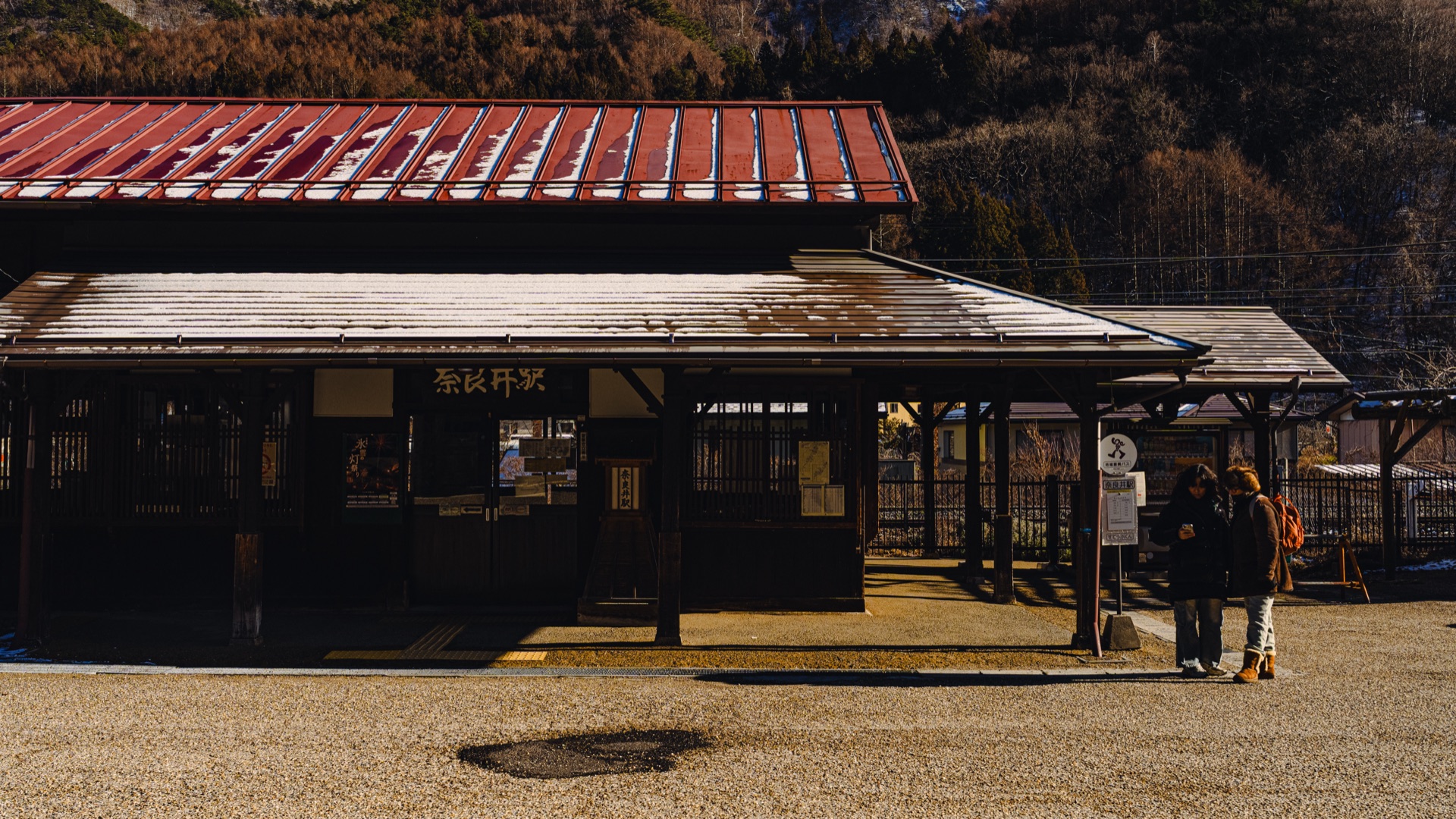
The standard Naraijuku walk runs about a kilometer from the JR station at the south end down through the main post-town street and out toward Shizume Shrine. In summer, plan two hours with crowds. In winter, you can do it in an hour and a half if you walk straight, three or more if you actually look at things.
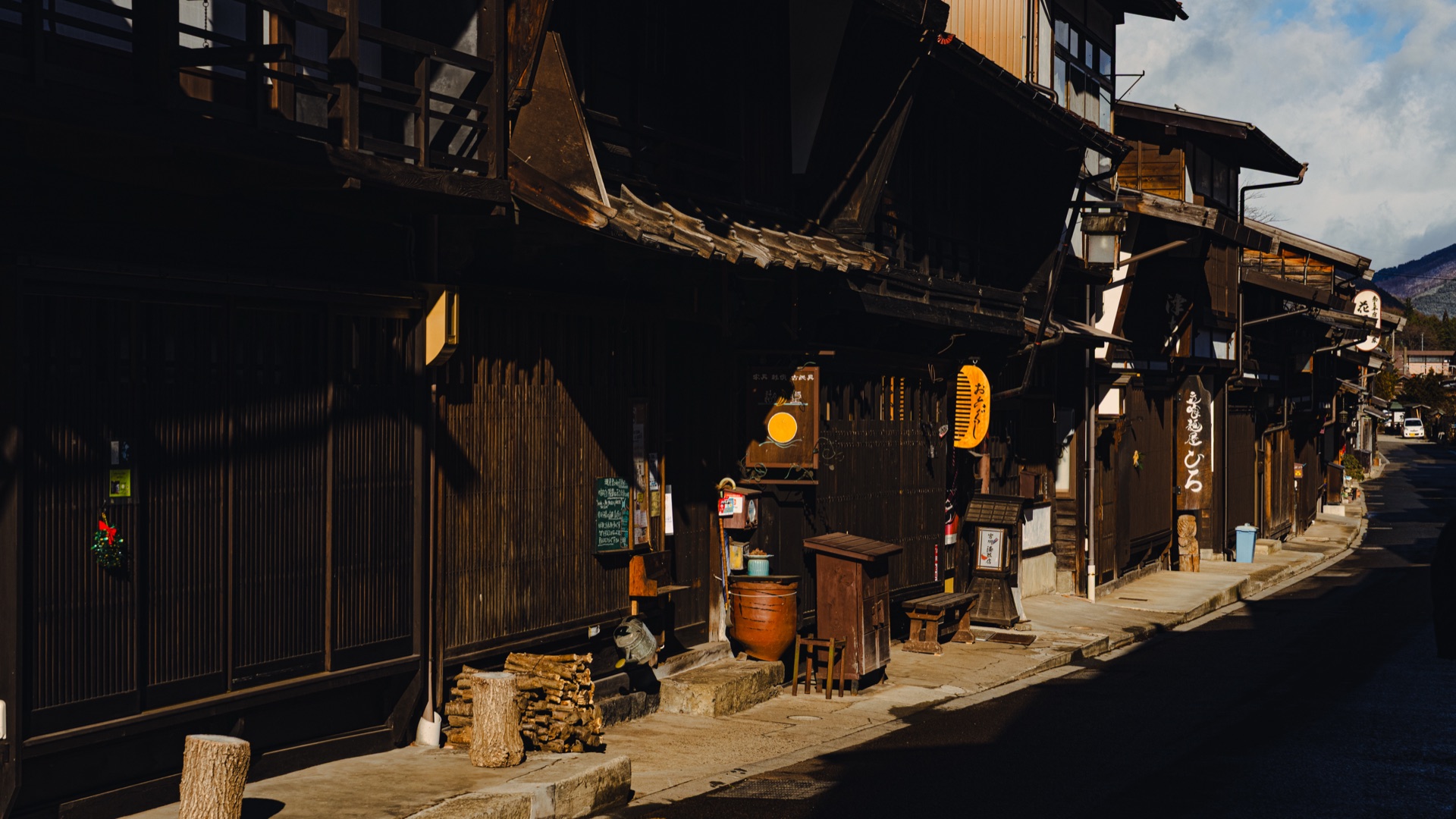
What I noticed: the buildings show more in winter. In peak season the eye is constantly pulled to people in front of the architecture. In December I could stop and actually look at the lattice work, the way the wooden boards have weathered, the small details — the carved post-tops, the iron lanterns, the slate roof tiles.
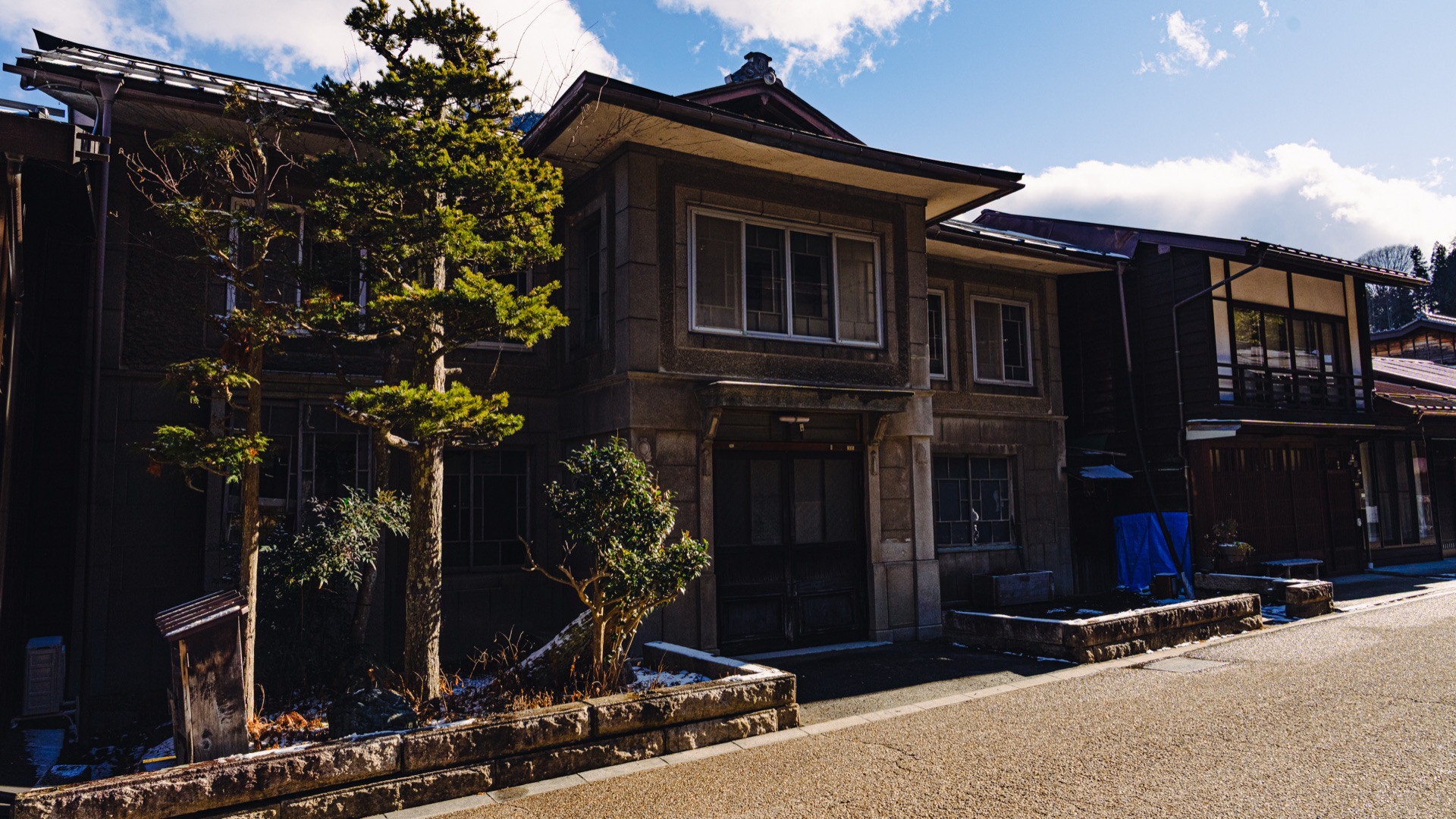
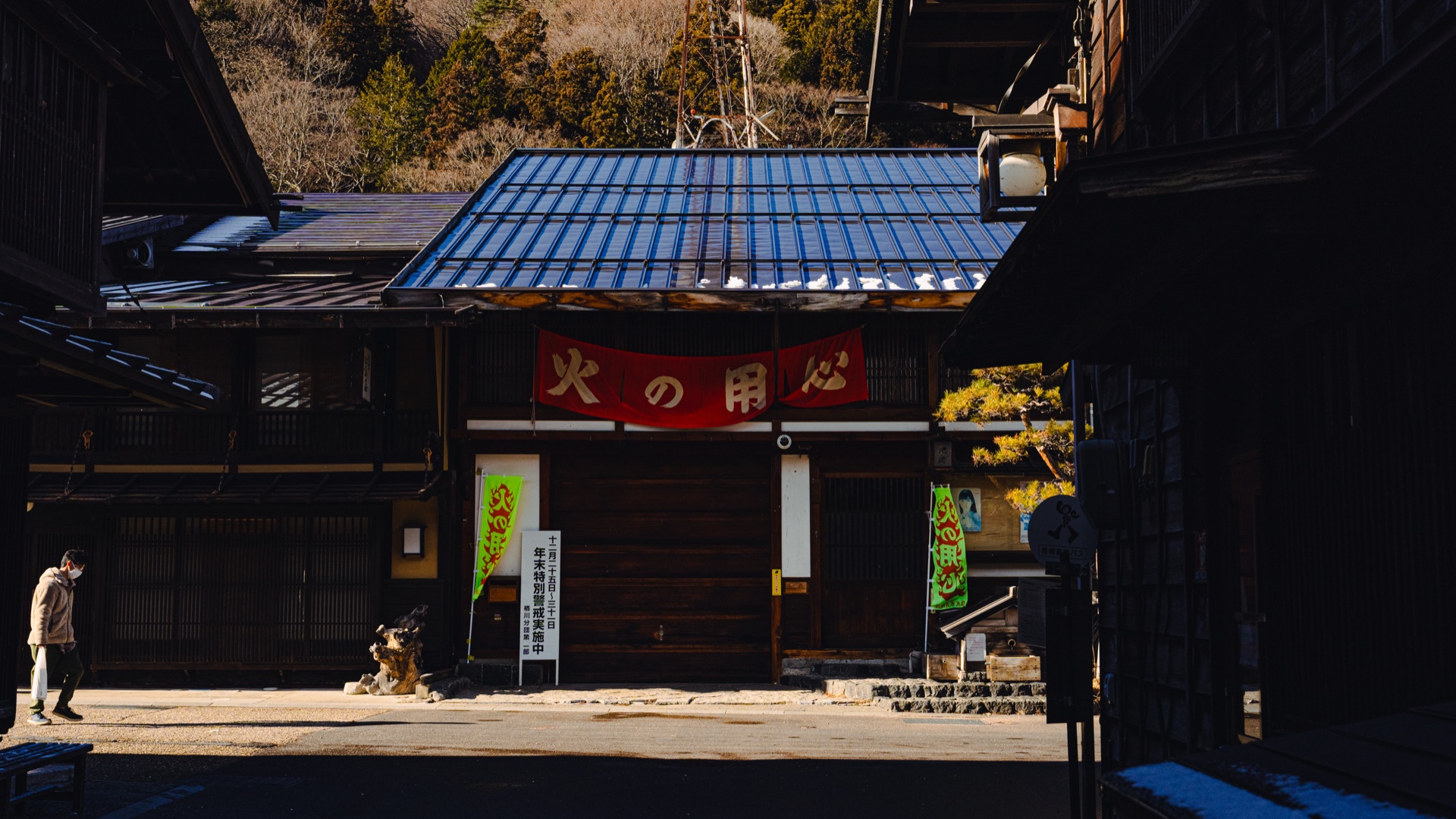
The stone-faced building above is one of the more unusual structures in town — a Taisho-era house that doesn’t fit the wooden Edo-period mould. The red banner on the right is hi no yōjin, a fire-prevention reminder that’s been hung at the entrance of homes through the colder months for centuries. Wood houses and dry winter air are a bad combination, and people here remember.
The Light Hours
When the light works
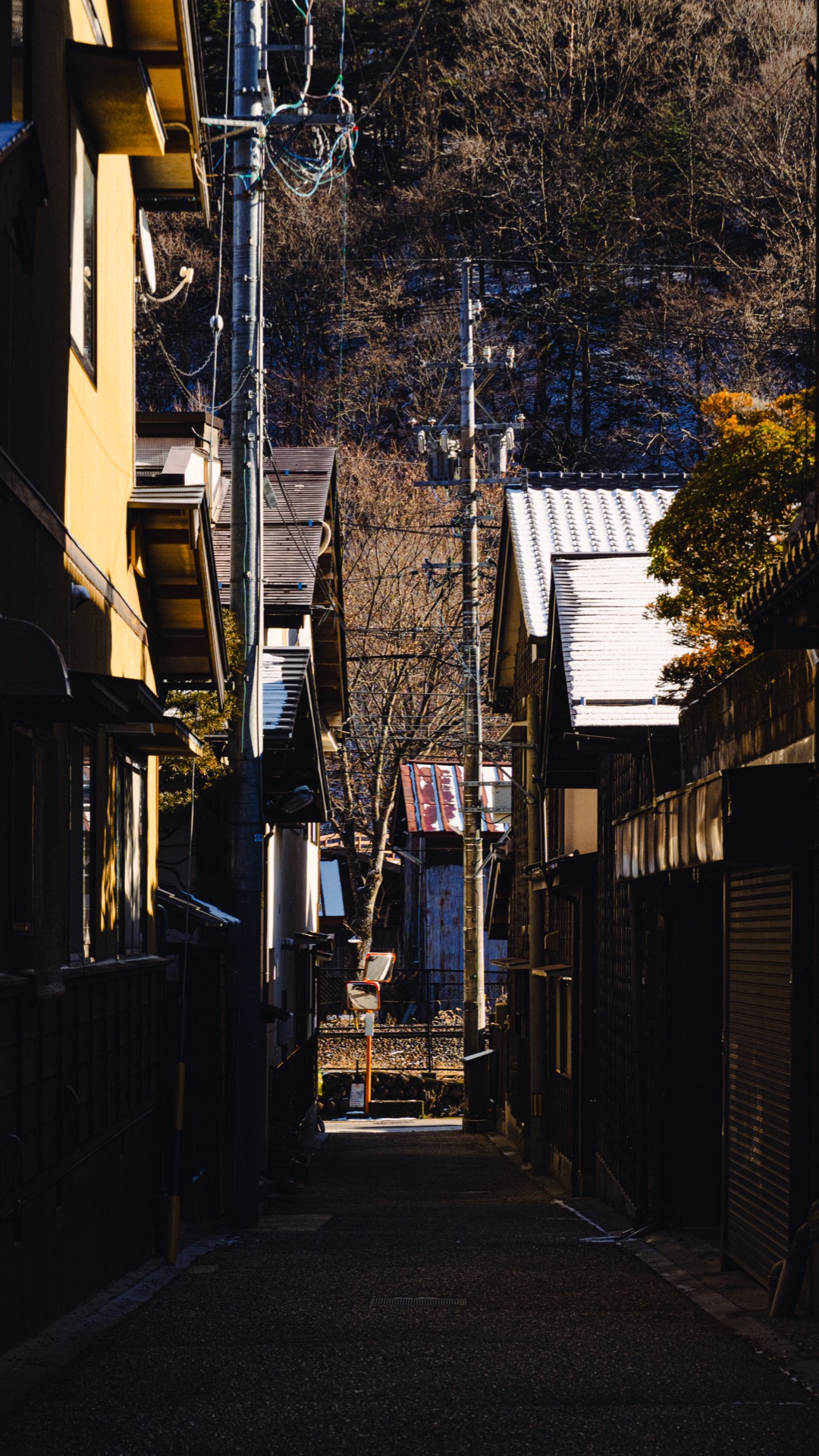
Winter daylight in the Kiso valley is short and angled
7:30 – 9:00 AM
Sun clears the eastern ridge. Side-light, cold blue tones, deep shadows. Best window for the wooden facades.
9:00 – 11:00 AM
Half the street still in shadow. Light contrast across the road creates depth other seasons don’t get.
11:00 AM – 1:00 PM
Top-down sun. Flatter, warmer. Best window for shrine grounds, where cedar shade dominates the rest of the day.
1:00 – 3:00 PM
Sun starts dropping behind the western ridge. Long shadows return. The post town turns golden against the mountains.
3:00 – 4:30 PM
Magic-hour winter light. The street empties almost completely. Shoot fast — the sun drops behind the ridge by 4:30.
After 4:30 PM
Lanterns come on at some shops. Blue-hour cold tones with warm interior lights. Coldest time of the day too.
What’s Open Off-Season
Most of the post town stays open in winter, but inconsistently. Some shops are open daily, some only on weekends, some closed entirely until April. There’s no single schedule.
Larger lacquerware shops
The main craft shops near the central street stay open most days. They run shorter hours (typically 10–17:00) and may close one weekday.
JR Narai Station
Year-round. The Chuo Honsen line runs the full schedule even in winter. Vending machines and waiting room are heated.
Shizume Shrine
Always open. No staff most days, but you can pray and explore the grounds freely. The cedar grove keeps the temperature steady.
Restaurants and soba shops
Most are open Friday–Sunday. Some weekday closures. Lunch service often ends by 14:00 and there are very few dinner options in the post town itself.
Smaller craft and souvenir shops
Hit-or-miss. Many family-run shops close for personal time in winter. If a specific shop matters, check ahead.
Outdoor stalls / yatai
All closed. The food-stall culture along the street is a peak-season feature only.
December 31 – January 3
Almost everything in the post town shuts for New Year. Plan around it the same way you would plan around it in any small Japanese town.
What to Wear
It’s a flat walk through a small town, so this is not a hiking outfit — but the cold is real and there are no heated shopping arcades to duck into. Plan accordingly.
Getting There in Winter
Train (recommended)
The JR Chuo Honsen line runs through the Kiso valley year-round. From Matsumoto Station, it’s roughly an hour to JR Narai. From Nagoya, about two hours via Nakatsugawa. Trains are diesel in this section, so they’re not affected by overhead-wire snow issues — they run reliably even on heavy snow days.
From Tokyo: take the Chuo line to Matsumoto (~2.5 hours via Hakuba route), then transfer to the Chuo Honsen south. Total: ~3.5 hours.
Car
Possible, but Route 19 through the Kiso valley can have icy patches in mid-winter and there are stretches without service stations. Snow tires are needed January through mid-March on most years. Parking near the post town is limited and turnover is low in winter.
For the full year-round access breakdown, see the dedicated Narai-juku Access Guide 2026.
Where to Stay in Winter
Sleeping inside the post town is the single biggest reason to stay overnight. The day-trippers — what few there are in winter — leave by 4 PM. After that, the street belongs to the residents and the handful of overnight guests.
Echigoya / Iseya / Tsukino
Three of the surviving working ryokans inside the post town. Old wooden buildings, futon bedding, kaiseki dinner. Confirm winter operating dates before booking — some close mid-January through February.
Minshuku-style guesthouses
Smaller, cheaper, family-run. Often only have a few rooms. Limited English. Book through their direct phone line or via a Japanese-language site.
Kiso-Hirasawa side
The neighboring town has a few options that stay open all winter and have parking. About 5 minutes by train from Narai.
The night I stayed in Naraijuku, the street outside was so quiet that I could hear the river under the post town. I haven’t heard it once during a daytime visit.
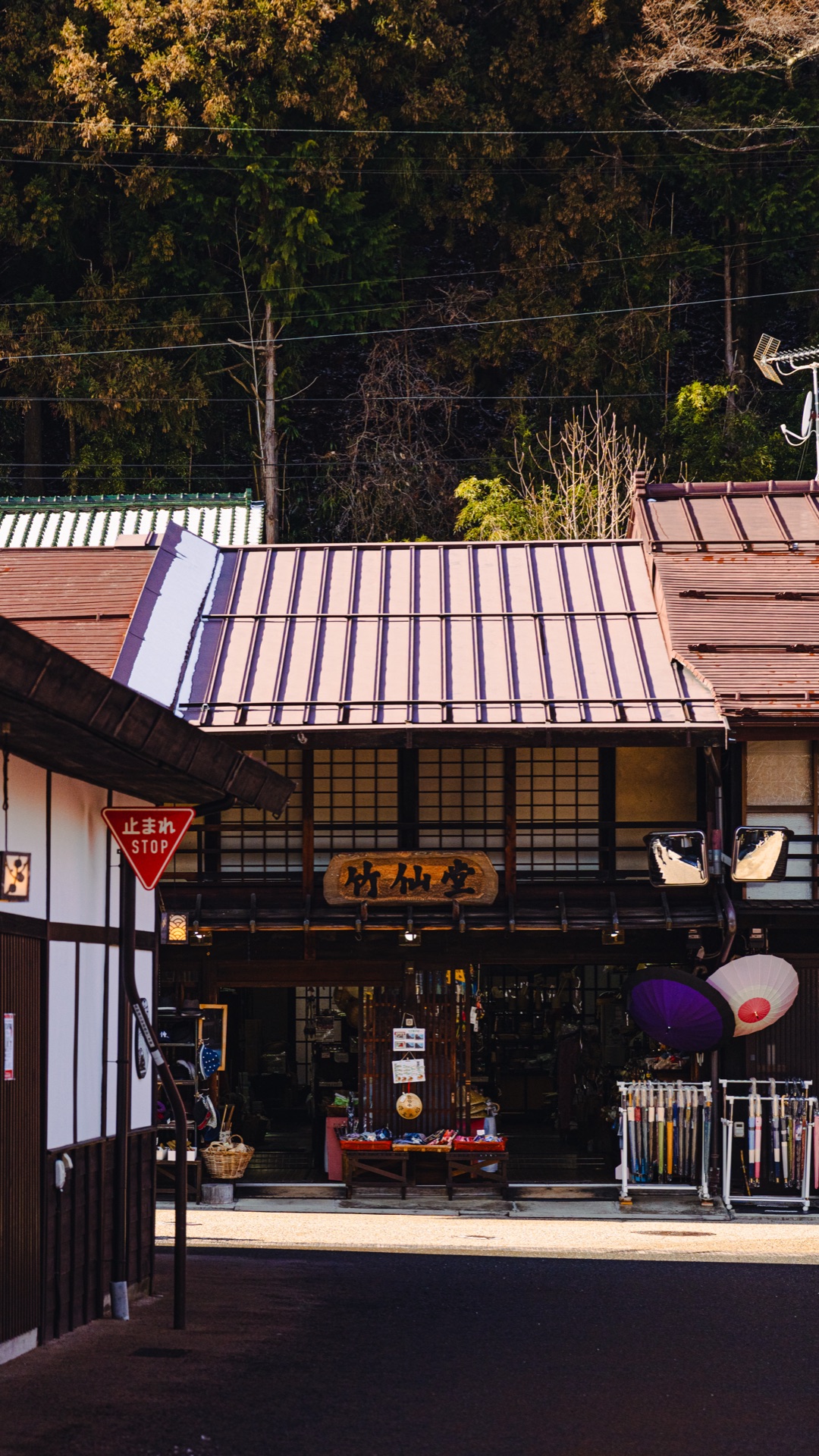
The pitch for off-season Naraijuku is straightforward: you trade some access — closed shops, missing food stalls — for the thing that’s hardest to buy in any famous place, which is space. The architecture is unchanged. The mountains are improved. The shrine is identical. What’s gone is the line of people between you and any of it.
Spring will bring the cherry blossoms back. Autumn will deliver the maple shots that fill every guidebook. Winter just gives you the post town as a place that exists for itself — not for visitors. That’s a different kind of trip, and worth taking once.
Join travelers discovering Japan's hidden side
Weekly dispatches from off-the-beaten-path Japan — spots and stories you won't find in guidebooks.
No spam. Unsubscribe anytime.
Welcome aboard!
You're in. See you in your inbox soon.