Kiso Valley · Gifu
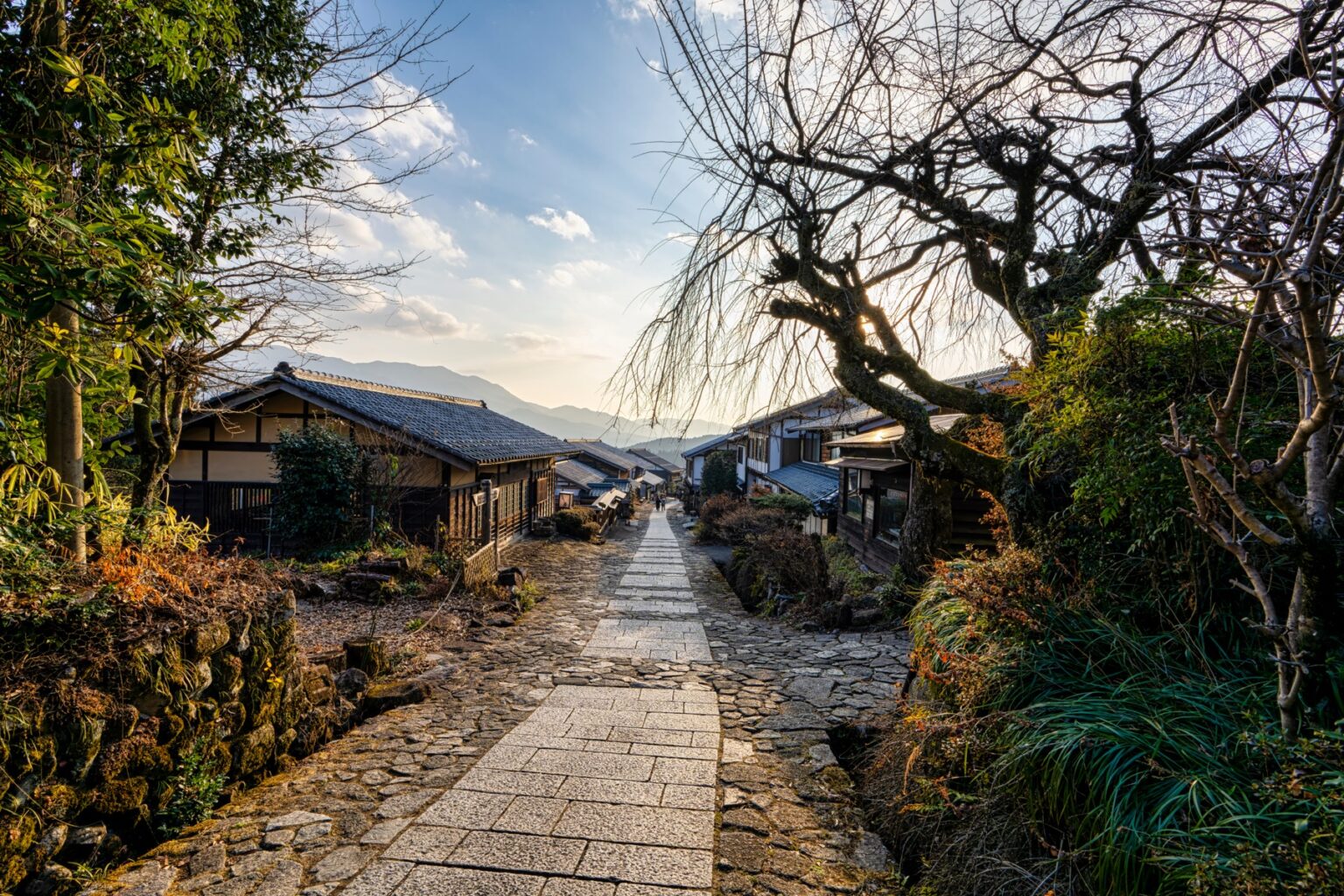
Magome-juku is a 600-metre stone-paved slope of dark timber houses in the Kiso Valley — the 43rd of 69 post stations on the old Nakasendō highway, and the trailhead for one of the clearest, easiest-to-follow stretches of the old Nakasendō: a roughly 9 km, three-hour crossing of the 790 m Magome Pass to its quieter sister town, Tsumago.
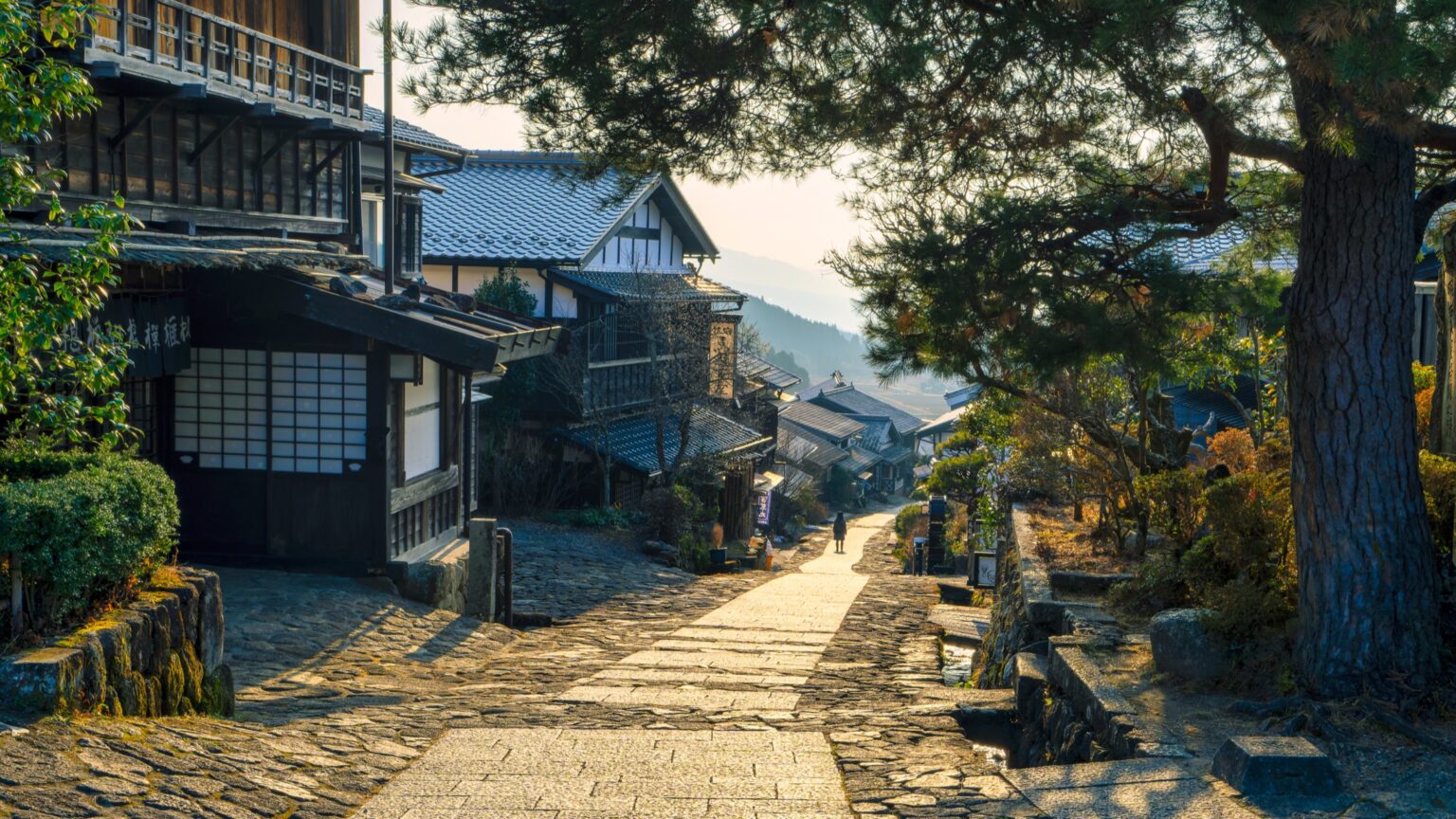
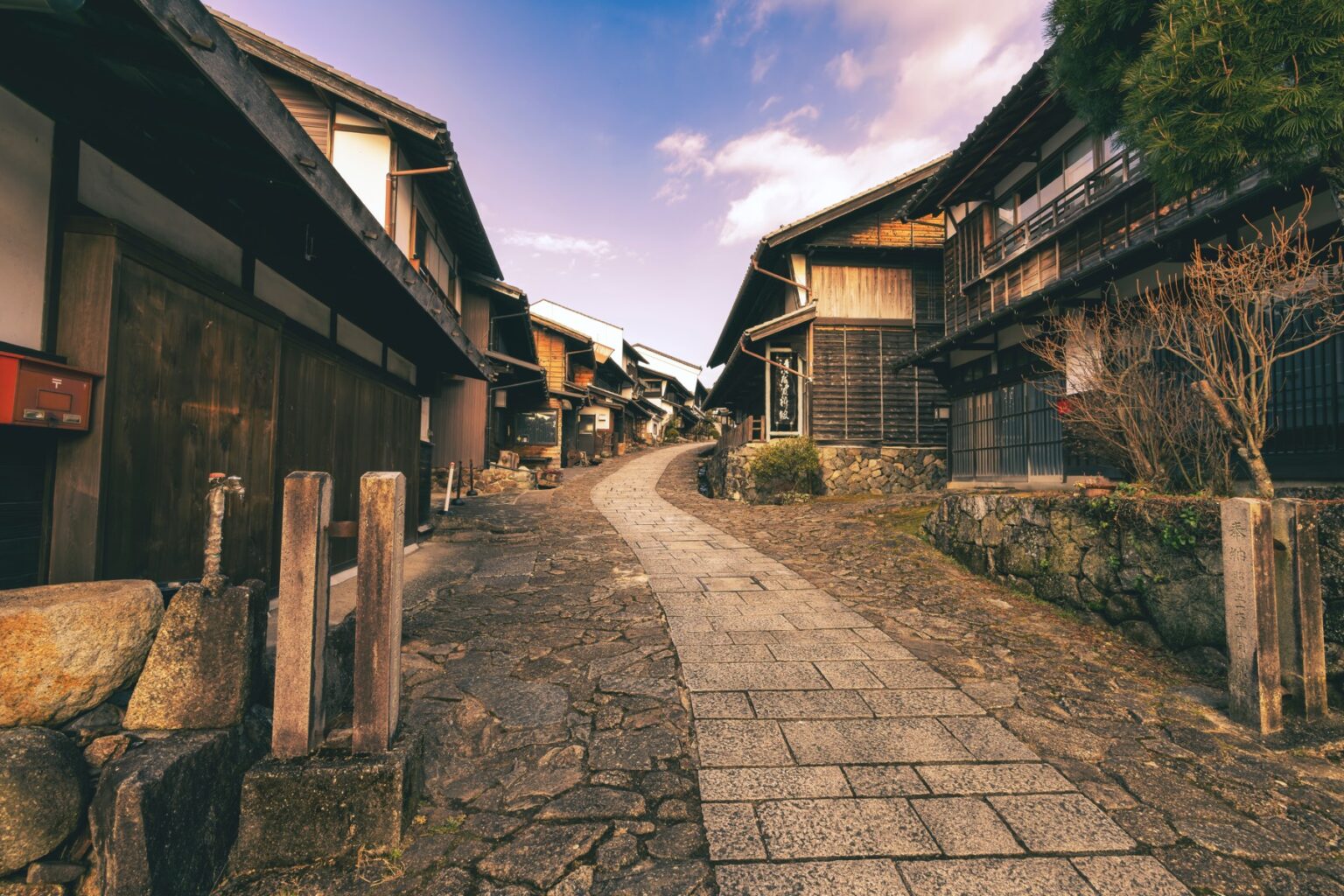
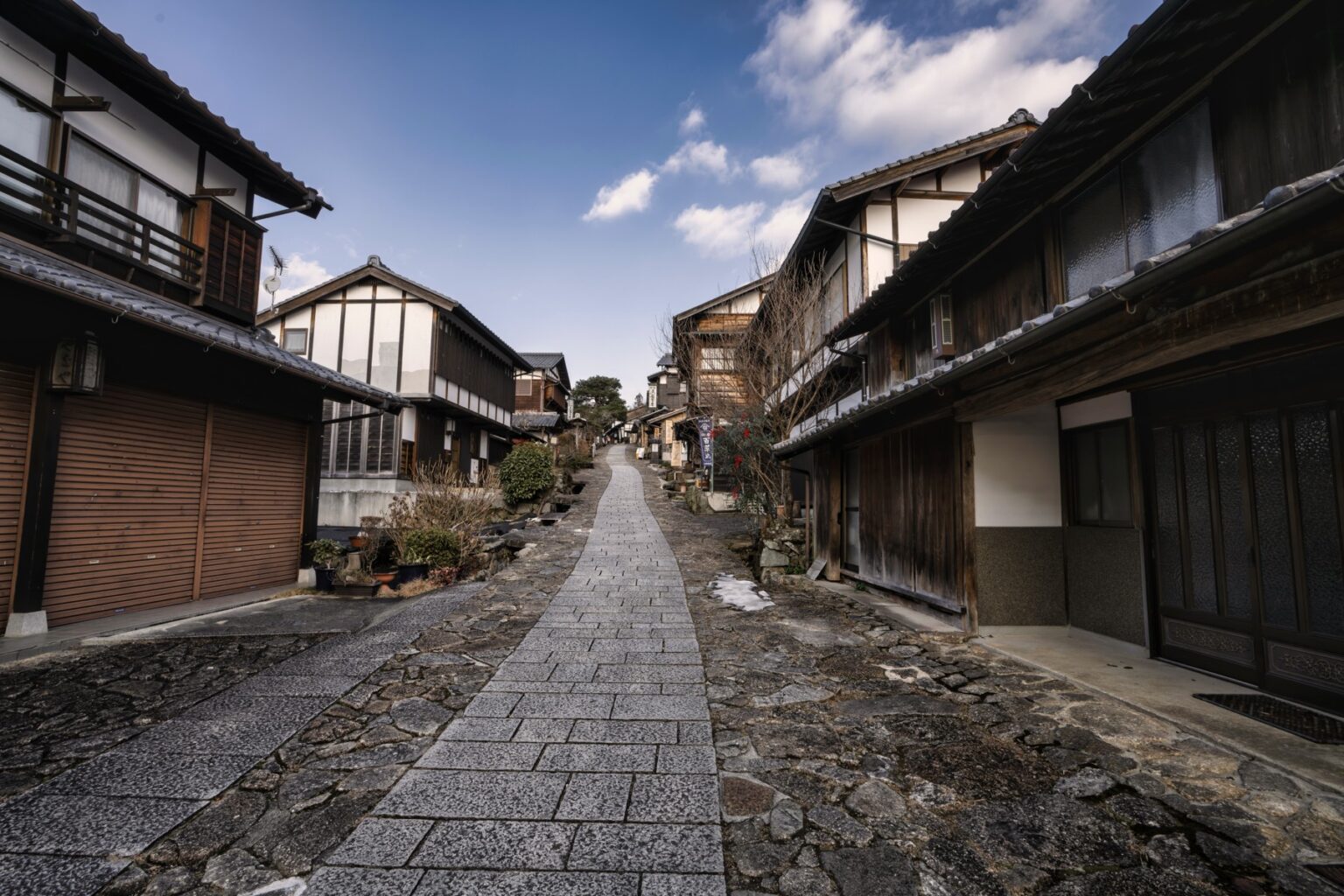
Unlike the flat streets many visitors picture, Magome is built along a steep stone-paved slope, so you climb it — past water channels, a wooden waterwheel, soba shops and a novelist’s old family home — and at the top the valley opens onto the Kiso mountains and the bulk of Mt Ena. I’m Nobu, and of all the “old Japan” streets I send people to, this is the one I tell them to walk through rather than just photograph: the half-day from Magome over the pass to Tsumago is one of the simplest ways to get a feel for walking the old Nakasendō.
What Magome-juku actually is
The Nakasendō was one of the two great Edo-period highways linking Edo (Tokyo) and Kyoto — the inland “mountain route,” with 69 post towns where travellers, porters and feudal processions rested, ate and changed horses. Magome was number 43, sitting right where the road climbs out of the Kiso Valley toward the Gifu–Nagano border. Today it’s officially in Nakatsugawa City, Gifu Prefecture, even though the Kiso Valley itself straddles the prefectural line — the Magome Pass above town is the Gifu–Nagano border.
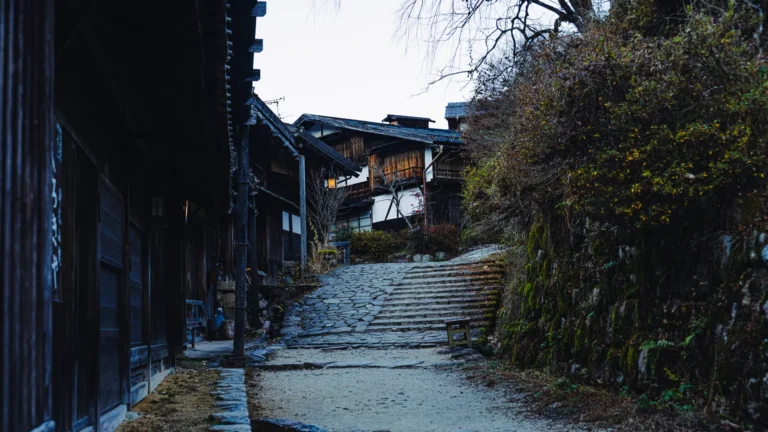
What makes it instantly recognisable is the surface under your feet: about 600 metres of stone-paved slope, lined on both sides with two-storey wooden houses, their dark cedar boards and white plaster largely rebuilt in the old style after fires. There’s no gate and no ticket — the street is a public road. To keep it pedestrian-friendly and protect the stone, vehicles are kept out daily from 10:00 to 16:00, which is exactly when you want to be wandering it.
Southeast Asia traveler tip: Magome sits at around 600 m and the pass at 790 m, so even in summer the mornings are cool and the winters genuinely cold (January averages below freezing). If you’re coming from a tropical climate, bring a real layer — a light fleece in summer, a proper warm jacket from November to March.
The writer who put Magome on the map
Magome was the birthplace of Shimazaki Tōson (1872–1943), one of modern Japan’s major novelists. His family were the town’s honjin (official inn for travelling lords), and his sweeping historical novel Before the Dawn (Yoake Mae) is set right here, on this road, as the Nakasendō and the old order it served slid into the modern era. The family site is now the Tōson Memorial Museum (藤村記念館), halfway up the slope.
Tōson Memorial Museum
Open 9:00–17:00 (to 16:00 December–March). Closed Wednesdays in December–February. Admission ¥500 for adults, less for students and children.
The waterwheel
The big wooden water wheel near the lower town is Magome’s signature photo, still turning on the channel that runs beside the street.
Jimba-ue viewpoint
At the top of the slope, the lookout opens onto rows of mountains and Mt Ena — the best wide view in town, and a natural turnaround if you’re not doing the full walk.
The Magome–Tsumago walk: the real reason to come
Magome’s sister post town, Tsumago-juku, sits about 9 km away over the Magome Pass, and the old Nakasendō between them survives as a clear, signposted trail. It’s the classic Kiso Valley walk for a reason: it’s short enough for anyone reasonably fit, genuinely beautiful, and you finish in another preserved Edo town rather than a car park.
| The walk, in plain numbers | Detail |
|---|---|
| Distance | ≈ 9 km, Magome → Tsumago |
| Time | ~2.5–3 hours at a steady pace |
| High point | Magome Pass, 790 m (the Gifu–Nagano border) |
| Profile | A short steep up from Magome to the pass, then a long gentle down (~1.5 hrs) to Tsumago |
| Direction | Most people walk Magome → Tsumago (more downhill that way) |
| Latest sensible start | 15:00 in summer, 14:00 in winter — there are no streetlights on the trail |
Two things make this walk genuinely easy to organise:
Send your bag ahead
A luggage-forwarding service runs between the Magome and Tsumago tourist offices in 2026 from March 20 to November 30. Drop bags 8:30–11:30, collect them 13:00–17:00 at the other end, ¥1,000 per piece. Walk with just a daypack.
Ring as you go
Black bears live in these hills. The tourist offices sell or rent bear bells (Tsumago rents them for about ¥100 with a refundable deposit) — clip one on and make noise on the quiet forest stretches.
One-way is fine
You don’t have to walk back. Local buses connect Magome, the pass and Tsumago/Nagiso, so you can walk one direction and ride back — or carry on to Nagiso Station and the train.
If you’d rather build it into a fuller day with Narai, the third great Kiso town, I’ve mapped that out in the Kiso Valley one-day itinerary.
Trekking poles
The descent to Tsumago is long and stony; poles save your knees. On Amazon Japan, deliverable to your hotel before you travel.
A light daypack
All you need once your main bag is forwarded — water, a layer, a camera.
How to get to Magome
Magome has no train station — you reach it by bus from the valley floor.
From JR Nakatsugawa Station
The Kitaena Kotsu Magome-line bus (from stand 3) reaches Magome in about 25 minutes (fare around ¥800; timetable last revised October 2025). Nakatsugawa is on the JR Chūō Line.
From Nagoya / Tokyo / Kyoto
Take the Shinkansen or limited express to Nagoya, then the JR Chūō Line limited express to Nakatsugawa, then the bus. From Nagoya it’s the quickest mainline approach; confirm current JR times before you go.
Between Magome & Tsumago
Buses link Magome, Magome Pass and Tsumago/Nagiso for walkers doing the trail one way (the Nagiso-side fare to the pass was ¥1,000 from April 2026).
Because the last bus connections matter, treat Magome as a planned half-day, not a late-afternoon add-on. Start the walk before early afternoon so you reach Tsumago with time for a bus or train out.
When to go
Magome is a four-season town. Late October to mid-November brings the Kiso autumn colour and is the busiest, best-looking time. April adds cherry blossom and fresh green; summer is cool and leafy at this altitude but humid by afternoon. Winter turns the slope quiet and white — magical, but January averages below 0 °C, so it’s for travellers happy in the cold. Whatever the season, the street is busiest mid-morning to mid-afternoon when the tour buses come; arrive early or stay late and you’ll have it nearly to yourself.
A simple plan
Half-day (street only)
Arrive late morning, climb the slope, see the waterwheel and the Tōson museum, eat soba or gohei-mochi (sweet skewered rice cake), finish at the Jimba-ue viewpoint, bus back.
The classic (the walk)
Forward your bag by 11:30, walk Magome → Tsumago over the pass (~3 hrs), explore Tsumago, then bus or train onward. A classic Kiso Valley day.
Slow version
Stay a night in a Kiso minshuku so you can have the streets at dawn and dusk, when both towns become much quieter.
Where to stay near the Kiso Valley
Most travellers base in Nakatsugawa (convenient for trains) or stay in a traditional minshuku in Magome, Tsumago or Nagiso for the early-morning quiet. Small family inns here often include dinner and breakfast and book up fast in autumn.
Kiso Valley stays on Booking
Nakatsugawa hotels and Magome / Tsumago guesthouses — compare and reserve the night before the walk.
Compare on Agoda
A second price check for the same area, useful in peak autumn.
Tours & transport via Klook
Guided Nakasendō walks and day trips if you’d rather not piece the buses together yourself.
Some links above are affiliate links — they cost you nothing extra and help keep this site going.
Is there an entry fee for Magome-juku?
No. The stone-paved street is a public road and free to walk. You only pay for things you choose to enter or buy — for example, the Tōson Memorial Museum (¥500 for adults) or a bowl of soba.
How long is the Magome to Tsumago walk, and is it hard?
It’s about 9 km and takes most people 2.5–3 hours. The only real climb is the first stretch from Magome up to the 790 m Magome Pass; after that it’s a long, gentle downhill to Tsumago. Normal fitness and decent shoes are enough.
Which direction should I walk?
Magome → Tsumago is the popular choice because more of it is downhill. If you start in Tsumago you’ll climb more, but it’s equally doable.
Can I send my luggage so I walk with a light bag?
Yes. In 2026 a luggage-forwarding service runs between the Magome and Tsumago tourist offices from March 20 to November 30: drop bags 8:30–11:30, collect 13:00–17:00 at the far end, ¥1,000 per piece.
How do I get to Magome without a car?
Take a train to JR Nakatsugawa (via Nagoya on the Chūō Line), then the Kitaena Kotsu bus to Magome, about 25 minutes. Buses also link Magome, the pass and Tsumago/Nagiso for one-way walkers.
Are there bears on the trail?
Black bears do live in the Kiso hills, so the tourist offices sell and rent bear bells. Clip one on, make noise on the quiet forest sections, and you’ll almost certainly never see one.
When is the best time to visit?
Late October to mid-November for autumn colour (busiest), April for blossom, summer for cool green, and winter for snow and solitude — though January sits below freezing. Early morning and late afternoon are quietest year-round.
Tsumago-juku
The town at the other end of the walk — flatter, lantern-lit, and even more strictly preserved.
Kiso Valley in one day
How to string Narai, Tsumago and Magome into a single, doable day.
Narai-juku
The longest of the Kiso post towns, and the quietest of the three.
Asuka village, Nara
Japan’s ancient-capital village and its preserved old townscape.
Japan’s best-preserved post towns
A guide to the seven finest surviving post towns — Magome, Tsumago, Narai, Unno, Seki, Kumagawa and Ouchi — with how they compare and which to choose.
Join travelers discovering Japan's hidden side
Weekly dispatches from off-the-beaten-path Japan — spots and stories you won't find in guidebooks.
No spam. Unsubscribe anytime.
Welcome aboard!
You're in. See you in your inbox soon.