
Japan · Ishikawa · Kaga
Yamanaka Onsen is a hot-spring town in Kaga, Ishikawa. Its Kikunoyu-mae stop is 34 minutes by bus from Kagaonsen Station on the Hokuriku Shinkansen. Adult admission to its public bath, Kikunoyu, is ¥500, and the 1.3 km Kakusenkei Gorge path runs between two of its bridges. If you also want Natadera temple, the CANBUS timetable valid from 20 April 2026 has only one Yamanaka departure that arrives before the temple closes: the 10:31.
A name check first, because I live by Lake Yamanaka: this guide is about Yamanaka Onsen in Kaga, Ishikawa, not Lake Yamanaka (Yamanakako), one of the Fuji Five Lakes in Yamanashi. That lake’s autumn festival is in our Lake Yamanaka autumn leaves festival guide.
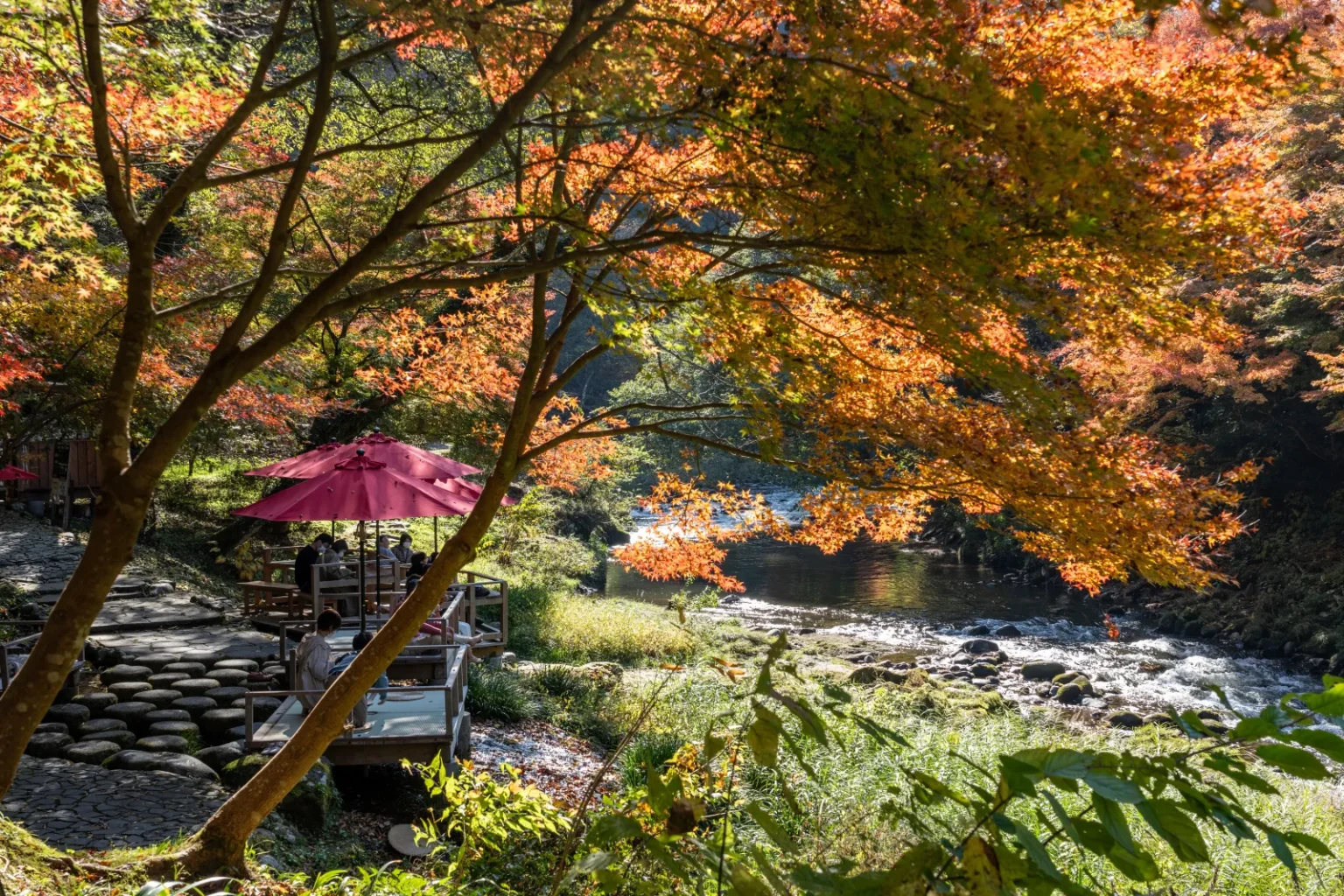
Kikunoyu: the public bath in two separate buildings
Kikunoyu is Yamanaka’s sōyu, the town’s shared bath. The tourist association says it stands on the site where a shared bathhouse, called a yuzaya, was built after the spring was found, and that having the men’s and women’s baths in separate buildings is unusual in Japan. The men’s bath is in a substantial Tenpyō-style building with a deep tub that comes up to your waist. The women’s bath has shallow and deep parts. Next to the women’s bath is Yamanakaza, a venue for performances of Yamanaka-bushi, the town’s folk song.
The association classifies it as a simple hot spring, with hypotonic, weakly alkaline water at a high temperature. Admission is ¥500 for adults, ¥150 for the listed chūnin category and ¥70 for shōnin; the association does not specify the age ranges. Guests at inns that belong to the Yamanaka Onsen ryokan association pay half. Hours are 7:00–22:00, and it closes on the second and fourth Tuesdays, with extra closures for maintenance.
The association’s page does not say whether towels or soap are provided, or what the policy on tattoos is. I could not confirm any of the three, so call before you go if they matter to you: 0761-78-4026. If you have not used a Japanese public bath before, see our onsen etiquette guide.
Yamanakaza. The association says Yamanakaza opened in 2002 at Yamanaka’s original hot-spring site. It describes lacquered pillars and a coffered ceiling decorated with maki-e, and describes the building as bringing together the essence of Yamanaka lacquer craft. On Saturdays, Sundays and holidays the geiko association performs Yamanaka-bushi Shiki no Mai. The CANBUS site lists the viewing fee as ¥700 for adults.
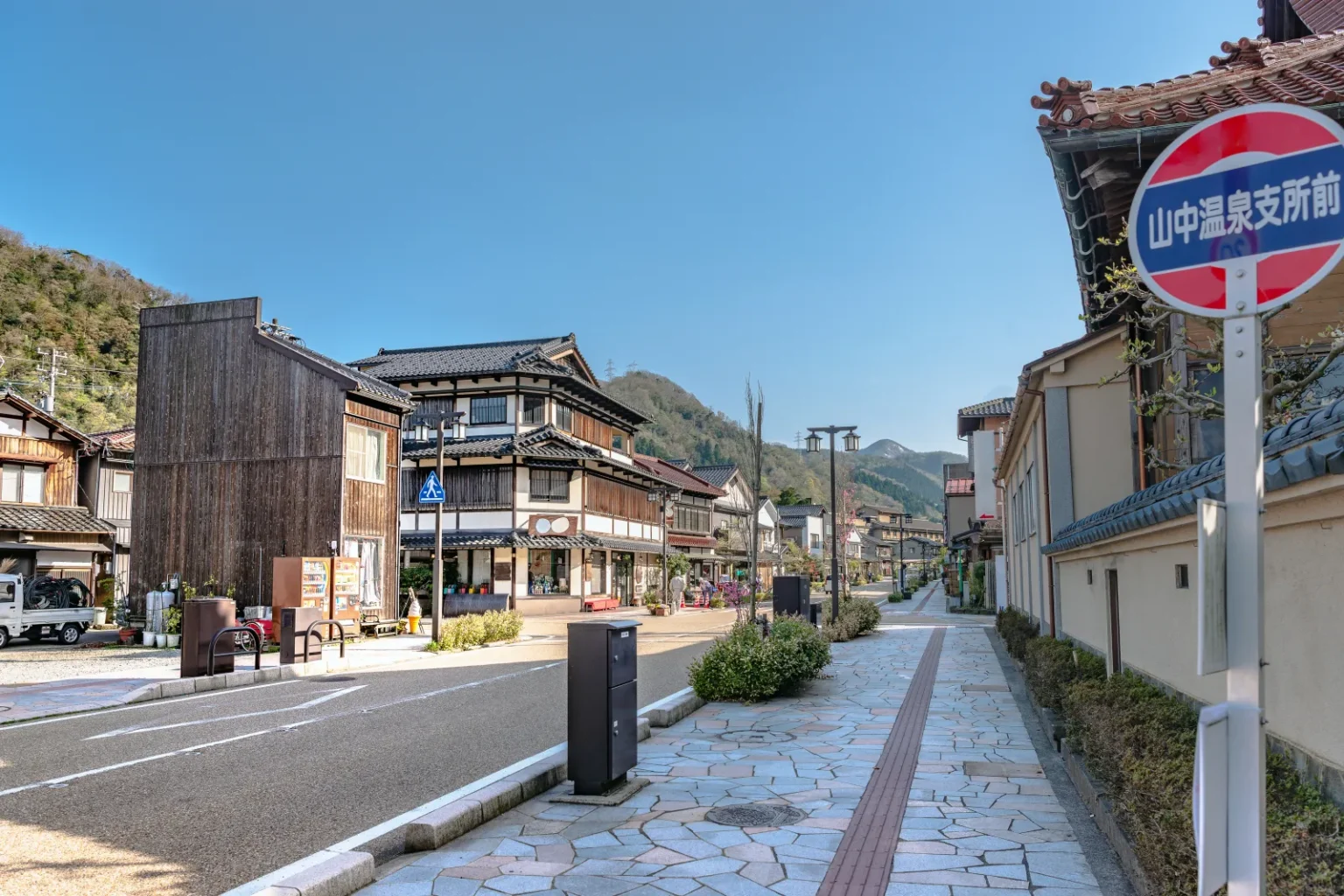
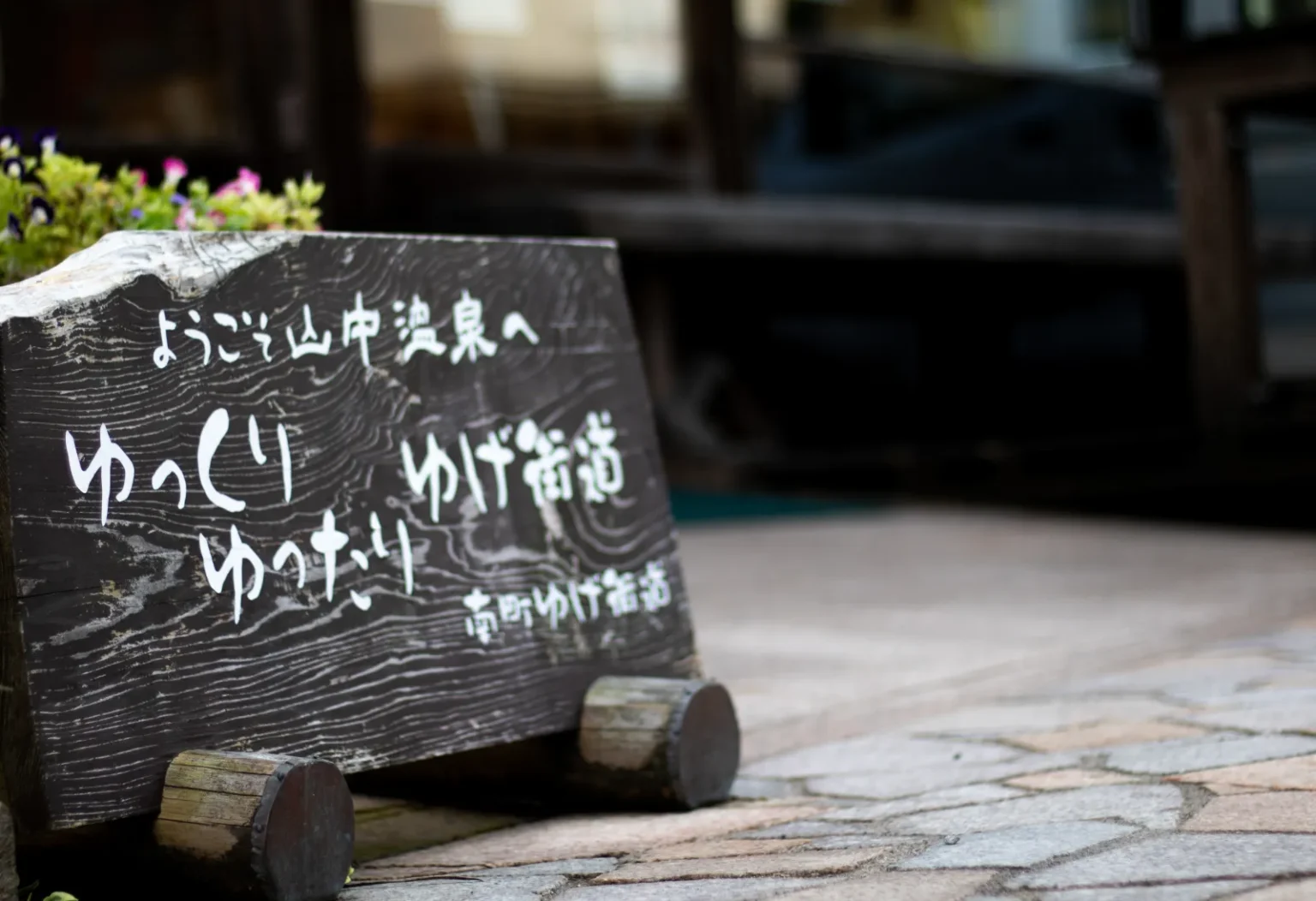
Kaga City puts the town’s history at 1,300 years. It says the spring is said to have been found by the Nara-period monk Gyōki, and that Matsuo Bashō, author of Oku no Hosomichi, stayed for eight nights and nine days. The city says he composed this haiku during that stay: Yamanaka ya / kiku wa taoraji / yu no nioi.
Walking Kakusenkei Gorge: three bridges in 1.3 km
Kakusenkei is the gorge beside the town. The tourist association describes a 1.3 km walking path from Korogi Bridge to Kurotani Bridge, passing Ayatori Bridge on the way, with oddly shaped rocks along it.
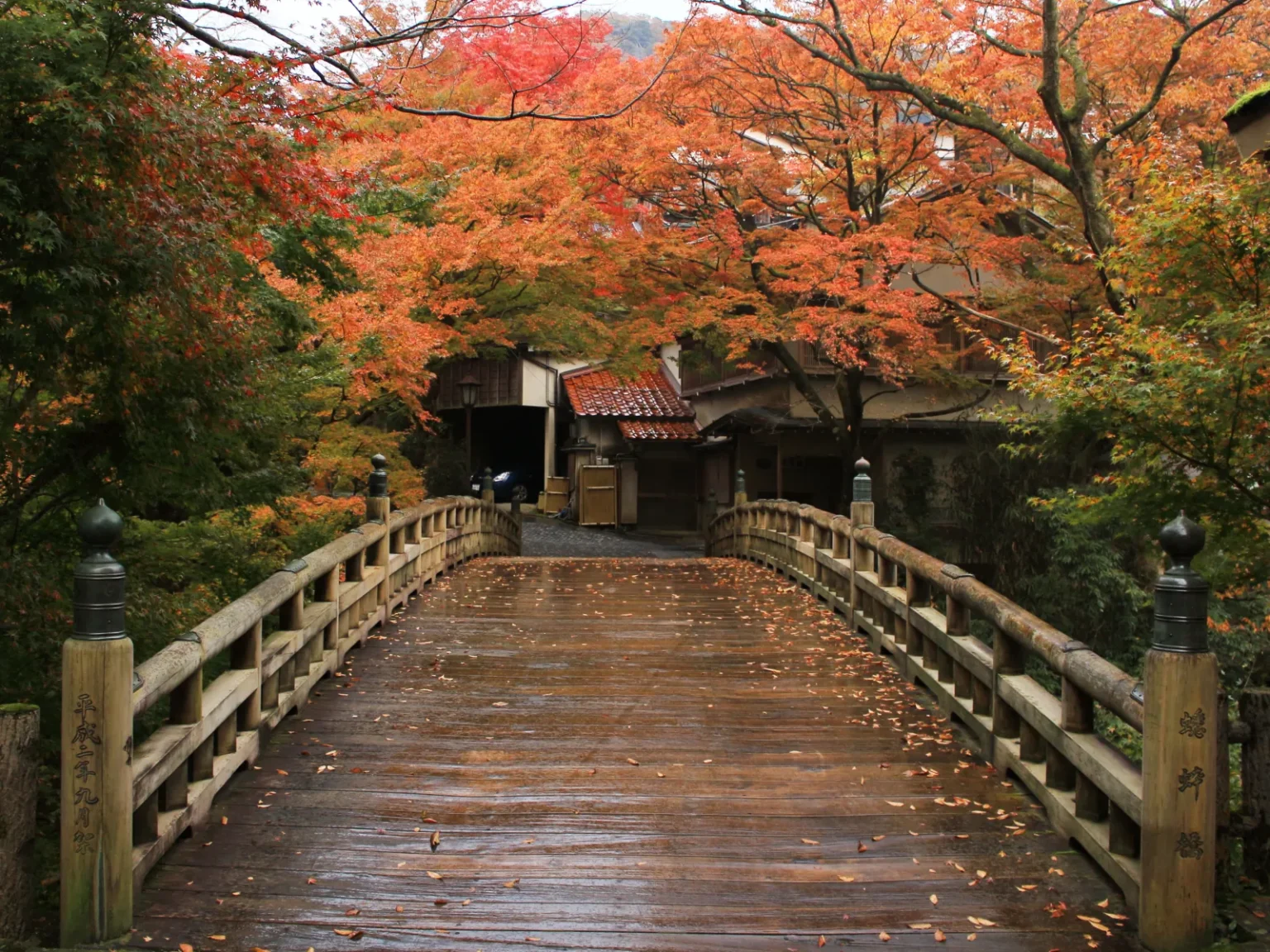
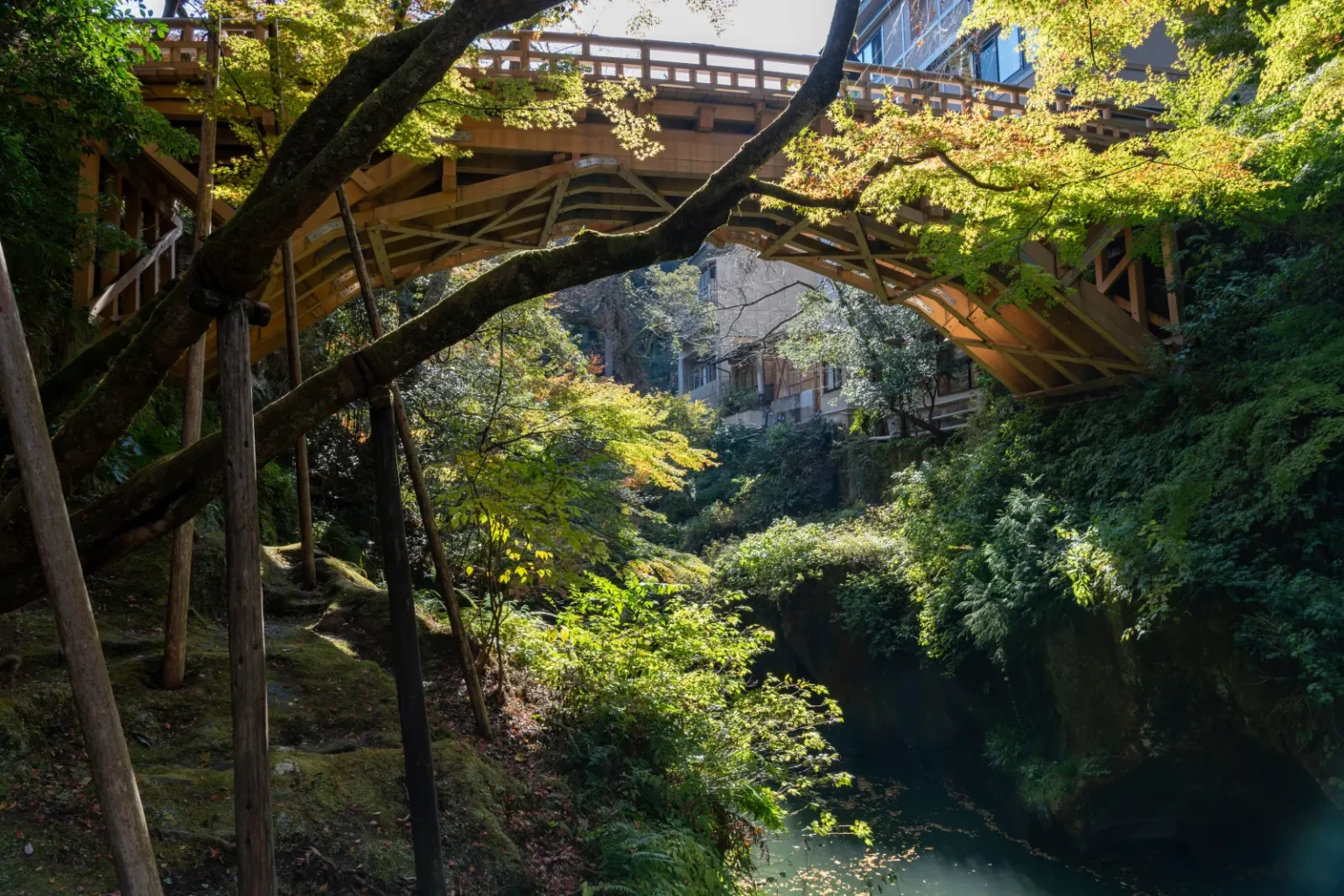
Korogi Bridge is built entirely of hinoki cypress. The fourth bridge on the site was finished on 12 October 2019. The association gives two explanations for the name. One is that the old path here was so dangerous it was called kōrogi, written with characters for “the road is dangerous”. The other links it to the sound of crickets (kōrogi) at night in autumn.
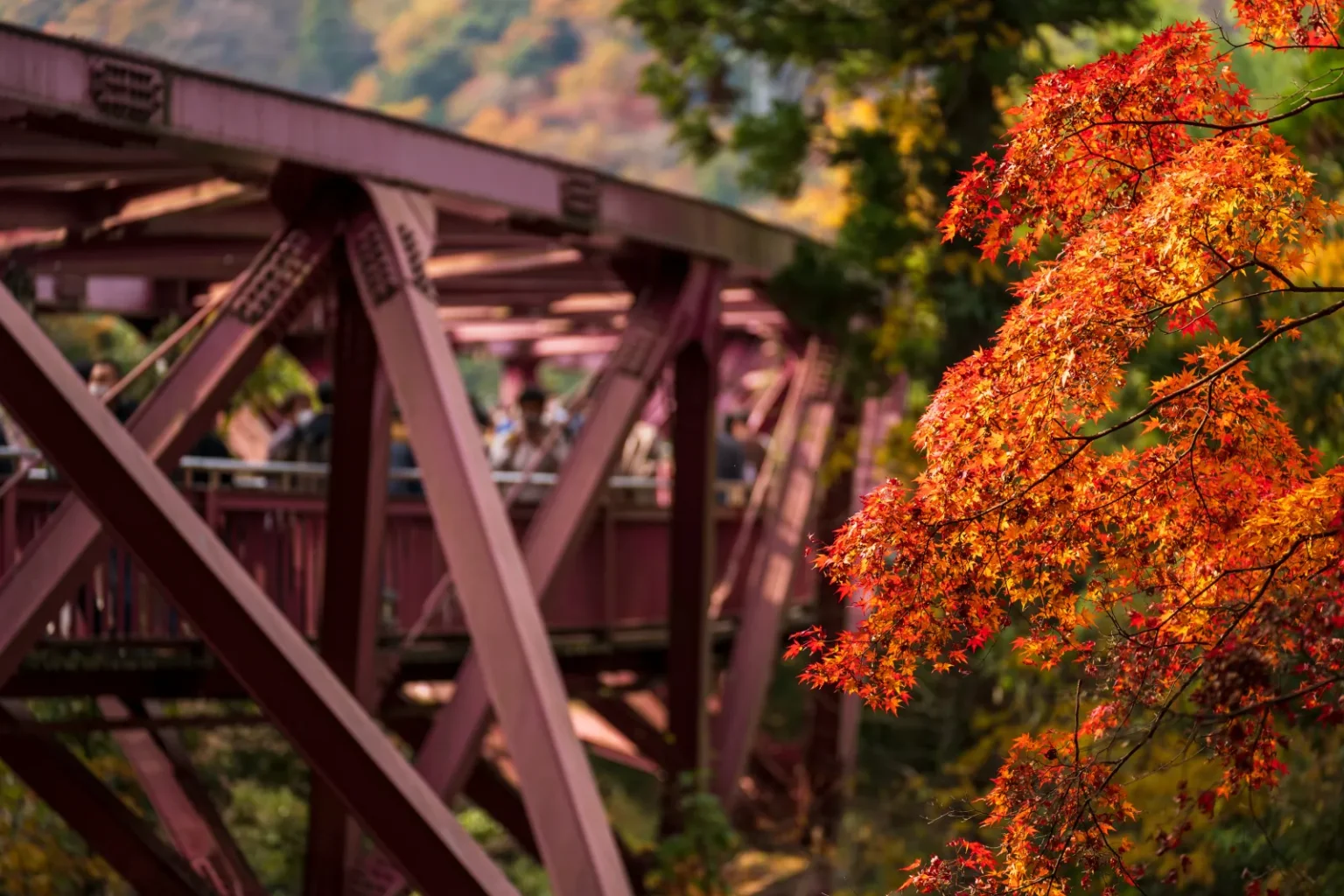
Ayatori Bridge, on the path between Korogi Bridge and Kurotani Bridge, is a 94.7 m footbridge. It was designed by Teshigahara Hiroshi, head of the Sōgetsu school of ikebana, on the idea of “arranging” Kakusenkei like flowers, and it is an S-shaped bridge in a reddish purple. The association says it is lit every night in colours based on the five colours of Kutani porcelain. The association closed Ayatori Bridge all day from 9 to 11 June 2026 for repairs, with Dōmyō Bridge as the detour. As of 28 October I found no other 2026 association notice about a rockfall or continuing closure of the path.
Kurotani Bridge, at the far end of the path, is a stone arch built in 1935. There was a wooden bridge before it, and the association says people long crossed it on their way to Komatsu and Natadera.
Kakusenkei Kawadoko: the riverside seats
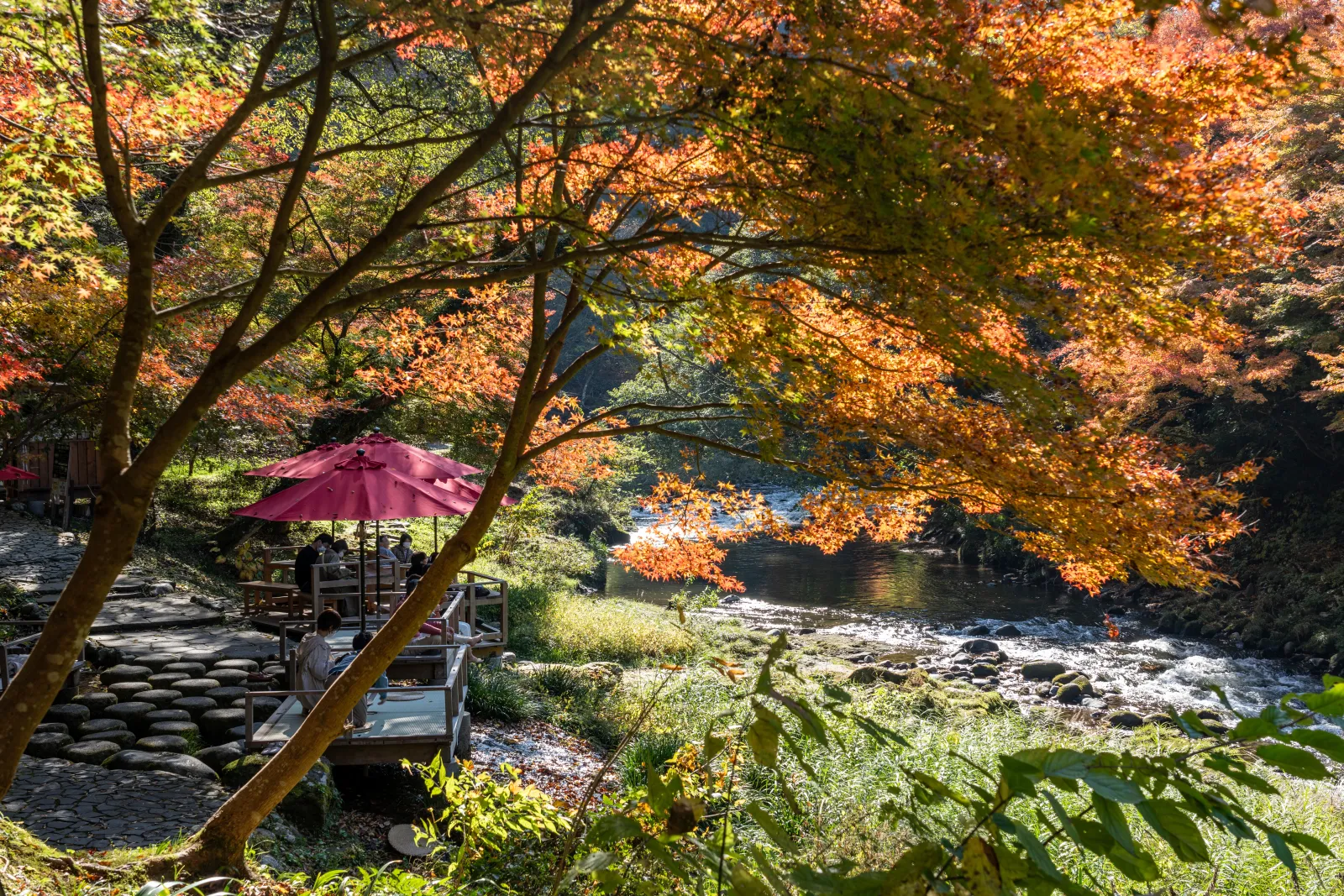
Beside Ayatori Bridge, by Fudō Falls, the Kakusenkei Kawadoko serves sweets based on recipes by Michiba Rokusaburō, a chef from Yamanaka. The 2026 season runs from 1 April to 30 November. In November the hours are 10:00–15:00, with irregular closures depending on the weather. They close in rain or when the river is high, and you cannot book a seat.
A seat with bōcha tea costs ¥700 for adults and ¥600 for primary-school children. A sweets set is ¥1,000 for adults and ¥900 for primary-school children, with a choice of chilled matcha shiruko or a Kawadoko roll cake.
Autumn colour and bears
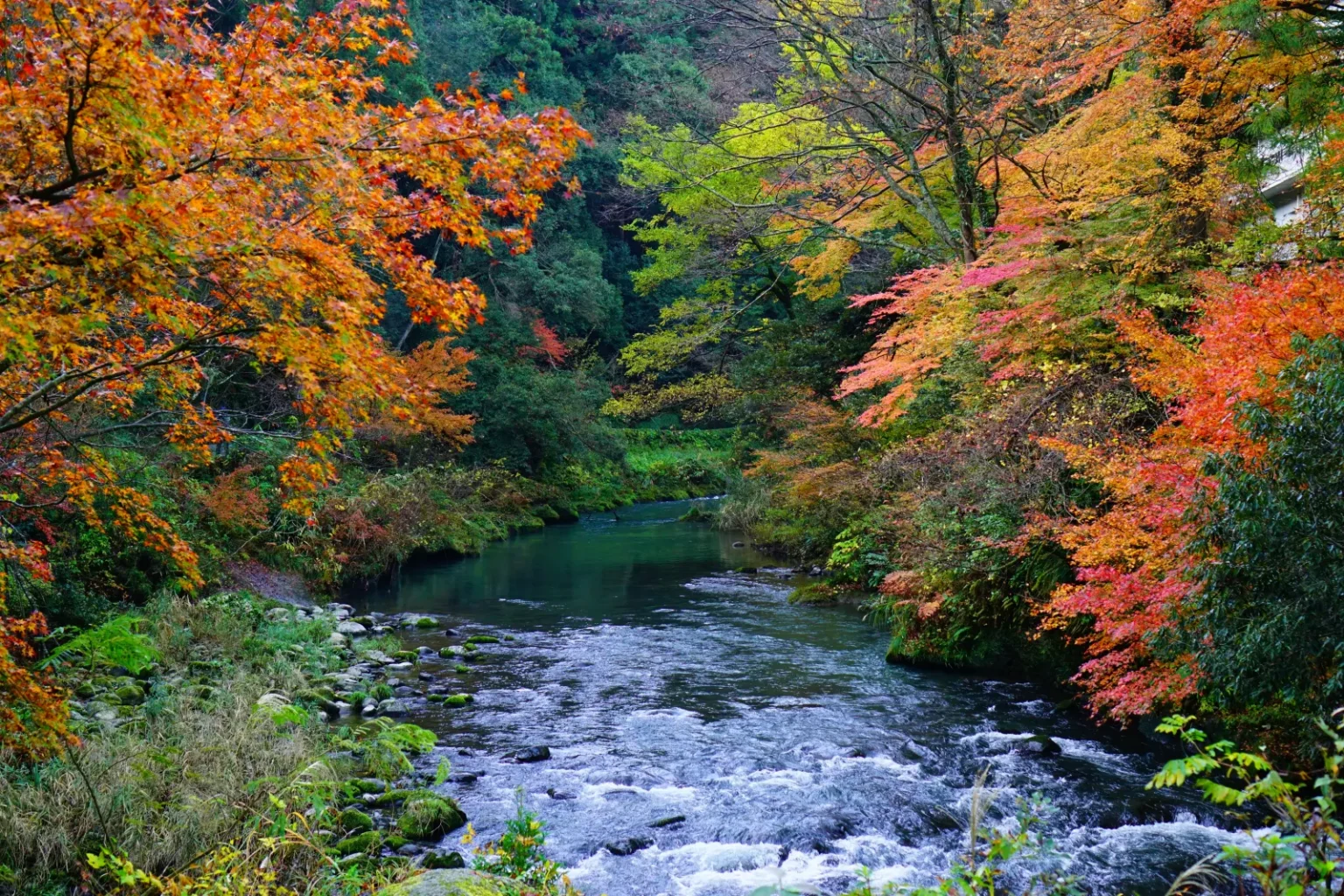
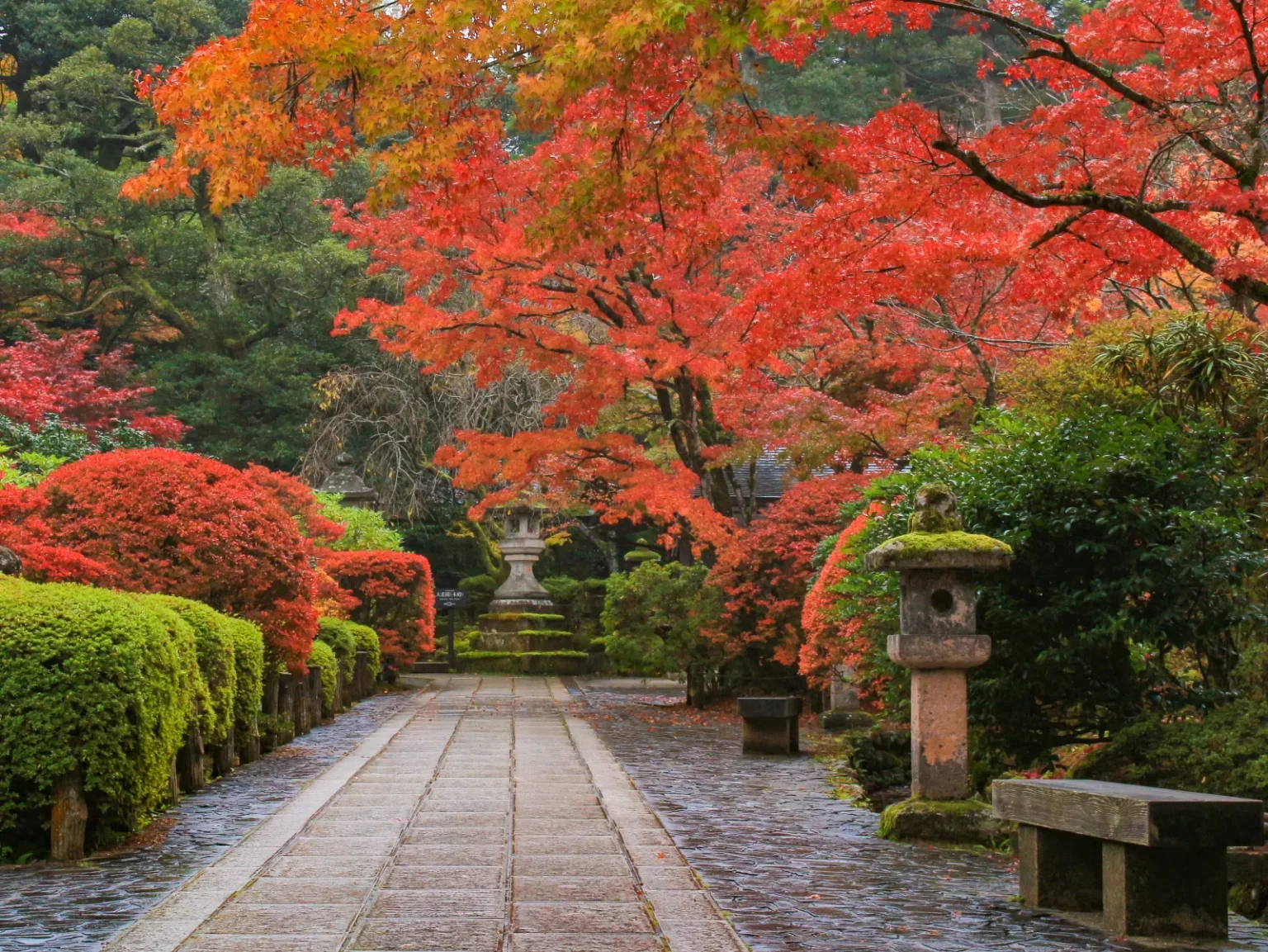
Neither Kaga City nor the tourist association publishes a usual peak date for Kakusenkei’s autumn leaves, so I will not give one. Komatsu City says the leaves at Natadera are best in November, and the 10:31 CANBUS from Kikunoyu gets you there in 26 minutes. See our autumn forecast explainer, and for the rest of the month, Japan in November 2026.
Why Yamanaka makes lacquerware
Yamanaka’s other trade is lacquerware, and Kaga City’s explanation ties it to the baths. Kaga City says a group of woodturners (kijishi) from Echizen came looking for good timber, settled at Masago, upstream of Yamanaka Onsen, and began turning wood there. It says the pieces were first made as souvenirs for people who came to the hot spring.
The two CANBUS runs that go into Yamanaka stop at Yamanaka Urushiza, the lacquerware hall, just before Kikunoyu, and the CANBUS site lists entry there as free.
Natadera, Komatsu: rocks, maples and a Bashō haiku
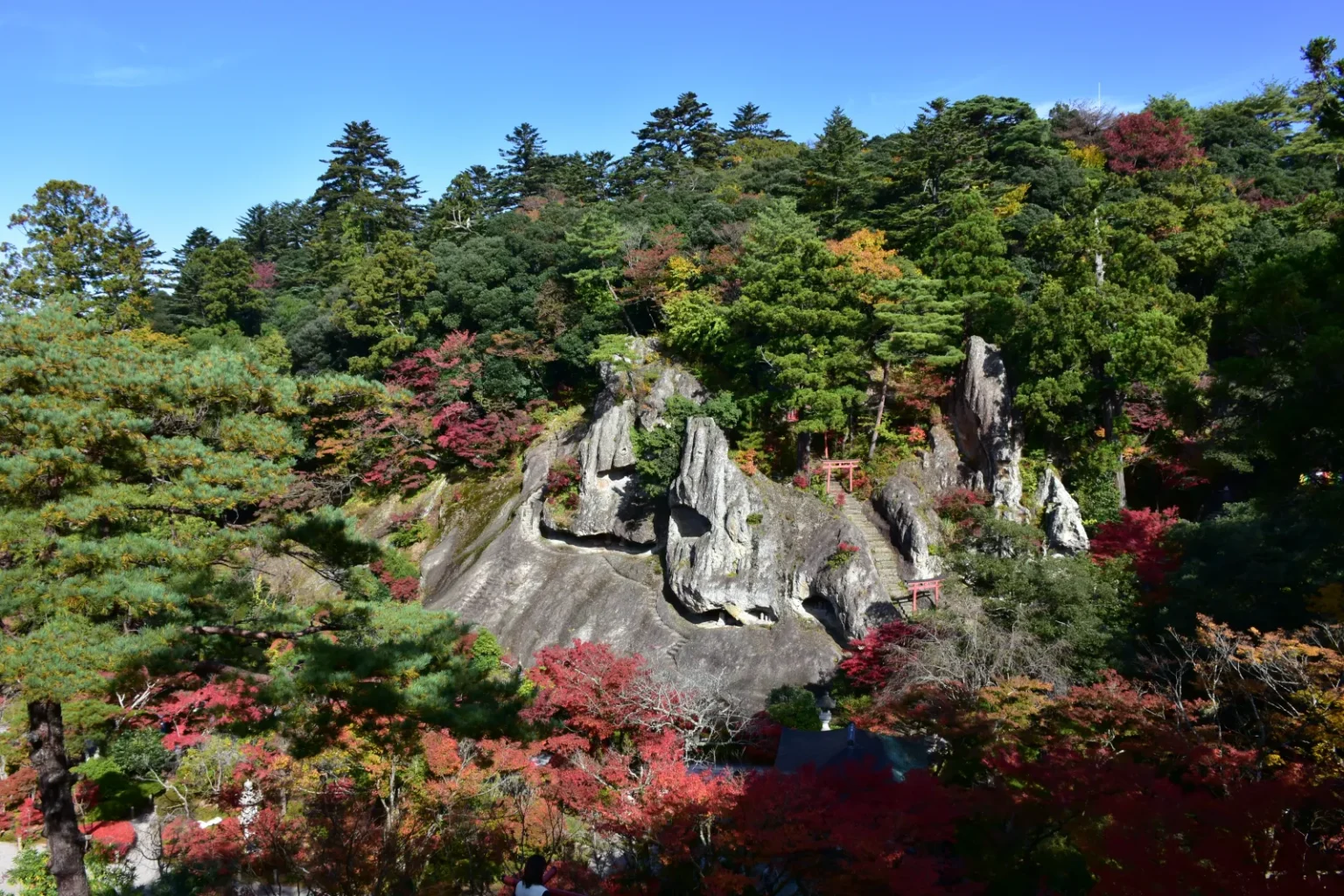
Natadera is in Komatsu City. The CANBUS site says Natadera was founded in 717 by the monk Taichō. The temple’s own pages point to two things: Kigan Yūsenkyō, a landscape of unusual rock formations, and a monument bearing Bashō’s haiku from the same journey, Ishiyama no / ishi yori shiroshi / aki no kaze.
General entry is ¥1,000 for adults (junior-high age and up) and ¥300 for primary-school children; preschool children are free. From 1 March to 30 November the temple is open 9:15–16:00. The special viewing, an extra ¥1,000, reopened on 1 September 2026. As of 28 October 2026 I found no 2026 announcement from Natadera or Komatsu City of an autumn evening light-up.
How to get to Yamanaka Onsen, and on to Natadera
To Kagaonsen Station. The Hokuriku Shinkansen stops at Kagaonsen. The Yamashiro Onsen tourist association gives the fastest journeys as 2 hours 43 minutes from Tokyo and 16 minutes from Kanazawa. If you are coming from Kanazawa in autumn, see our Kenrokuen in autumn guide.
Station to Yamanaka by route bus (34 minutes). Hokutetsu Kaga Bus runs the Onsen Yamanaka line from Kagaonsen Station. Its timetable revised on 15 March 2026 lists 20 departures from the station, from 7:10 to 19:55; the 8:35 does not run on Saturdays, Sundays or public holidays. Departures that go via Kikunoyu-mae reach it 34 minutes later; the 8:00, for example, arrives at 8:34. Check the times on the day.
CANBUS. CANBUS is a sightseeing bus service run by Nihonkai Kanko Bus from Kagaonsen Station. A single ride costs ¥500 for adults. The one-day ticket is a ¥1,300 digital ticket and is not sold on the bus.
The Yama-mawari (mountain) loop runs five times a day, but only two of those runs go into Yamanaka: M2, which leaves Kagaonsen Station at 10:05, and M5, which leaves at 15:25. Both then go on to Natadera:
| Leaves Kikunoyu & Yamanakaza | Reaches Natadera |
|---|---|
| 10:31 (M2) | 10:57 |
| 15:51 (M5) | 16:17 |
Natadera closes at 16:00, so the 15:51 from Yamanaka gets there too late. If you are staying in Yamanaka and want to visit Natadera, take the 10:31. After the 10:57 arrival, the next CANBUS times at Natadera are 12:54, 14:24 and 16:17, reaching Kagaonsen Station at 13:33, 15:03 and 16:56. None of them goes back to Yamanaka, so from the station take the Hokutetsu route bus. Times are from the CANBUS timetable valid from 20 April 2026.
Where to stay in Yamanaka Onsen
Staying the night halves the Kikunoyu fee if your inn belongs to the ryokan association, and you can board the 10:31 CANBUS to Natadera at Kikunoyu & Yamanakaza; the bus itself starts from Kagaonsen Station at 10:05. If you have not stayed in one, see our ryokan stay guide.
Two inns publish some of the details guests ask about before booking. Kisshō Yamanaka lists a room with its own open-air bath, called Miyabi. On tattoos, it says it has no blanket restriction but asks guests to refrain if their tattoos could make other guests feel intimidated or uncomfortable. Premium Yamanaka Grand Hotel offers day bathing, and says guests with tattoos cannot use its large baths. I could not verify three to five Yamanaka inns whose own pages state all three: a room with an open-air bath, day bathing and a tattoo policy.
A night in Yamanaka puts you on the 10:31 to Natadera.
Search Yamanaka Onsen inns on Booking.comIf Yamanaka is full, Yamashiro Onsen is also on the CANBUS mountain loop, with stops at its public baths. You can compare stays across Kaga on Agoda, or base yourself in Kanazawa and search Kanazawa hotels on Booking.com; the fastest train from Kanazawa to Kagaonsen takes 16 minutes.
For older hot-spring towns elsewhere, see our Showa-retro onsen towns in eastern Japan.
More places to see in Ishikawa
If you are planning a wider autumn trip around Ishikawa, these are worth a look. For each, I checked the latest notices I could find from the city, prefecture or operator.
Hakusan Shirakawa-go White Road. The mountain toll road between Ishikawa and Shirakawa-go in Gifu is open from 12 June to 10 November 2026 (planned), at ¥1,700 one way for an ordinary car. Gifu’s tourism site gives the usual autumn peak as mid-October to early November. It closes for winter from 11 November. For the village at the other end, see our Shirakawa-go guide.
Kutani Pottery Village, Nomi. Nomi City says the village’s hands-on workshop reopened after renovation on 28 September 2024. It offers Kutani painting, wheel throwing and hand-building, and a climbing kiln remains behind it.
Shirayama Hime Shrine, Hakusan. The shrine calls itself the head shrine of more than 3,000 Hakusan shrines across Japan.
Tedori Gorge, Hakusan. Hakusan City describes about 8 km of gorge, with Watagataki falls dropping 32 m. I found no 2026 closure notice.
Shiroyone Senmaida rice terraces, Wajima. The terraces were badly damaged by the 2024 earthquake and heavy rain. Wajima City says rice was planted in 480 paddies in 2026. The Aze no Kirameki light-up was not held in fiscal year 2025, and as of 28 October 2026 I found no announcement for fiscal year 2026.
Notojima Aquarium. It was temporarily closed after the 2024 earthquake because of a water outage. As of 28 October 2026 its own site lists regular hours, 9:00–17:00 from 20 March to 30 November.
Amagozen Misaki. I could not find a current official notice for this cape, so check locally before you go.
For another gorge in the region, see our Kurobe Gorge Railway in autumn guide.
Yamanaka Onsen: FAQ
Is Yamanaka Onsen the same as Lake Yamanaka?
No. Yamanaka Onsen is a hot-spring town in Kaga, Ishikawa. Lake Yamanaka (Yamanakako) is one of the Fuji Five Lakes, in Yamanashi.
How much is Kikunoyu, and when is it open?
¥500 for adults. Regular hours are 7:00–22:00; it closes on the second and fourth Tuesdays and may also close for maintenance. Guests at inns in the Yamanaka Onsen ryokan association pay half.
Are tattoos allowed at Kikunoyu?
The tourist association’s page does not say. Call Kikunoyu on 0761-78-4026 to check. Policies at inns differ: Premium Yamanaka Grand Hotel does not allow tattoos in its large baths.
Can I book the Kakusenkei Kawadoko seats?
No. Seats cannot be booked, and the Kawadoko closes in rain or when the river is high. In 2026 it runs until 30 November; in November the hours are 10:00–15:00.
How do I get from Yamanaka Onsen to Natadera?
Take the CANBUS mountain loop that leaves Kikunoyu & Yamanakaza at 10:31 and reaches Natadera at 10:57. The only other run, at 15:51, arrives at 16:17, after the temple closes at 16:00.
When are the autumn leaves best?
No official usual peak is published for Kakusenkei. Komatsu City says Natadera’s leaves are best in November.
How long is the Kakusenkei walk?
The path from Korogi Bridge to Kurotani Bridge is 1.3 km.
Sources (checked 28 October 2026)
- Yamanaka Onsen Tourist Association: Landmarks (Kikunoyu, Yamanakaza, Kakusenkei and its bridges); Kakusenkei Kawadoko 2026; Ayatori Bridge repair closure (Japanese)
- Kaga City: Yamanaka Onsen; Dōmyōgafuchi and the spring’s history; Yamanaka lacquerware; Bear sightings 2026 (Japanese)
- Natadera: Visiting hours and fees; Special viewing reopened; Grounds; Bear notice (Japanese)
- Komatsu City: Natadera autumn leaves FAQ; Natadera access (Japanese)
- CANBUS (Nihonkai Kanko Bus): Fares, tickets and stops; Timetable from 20 April 2026 (Japanese)
- Hokutetsu Kaga Bus: Onsen Yamanaka line timetable, 15 March 2026 (Japanese)
- Yamashiro Onsen Tourist Association: Access times to Kagaonsen (Japanese)
- Ishikawa Prefecture: Bear warning (Japanese)
- Inns: Kisshō Yamanaka rooms, baths and tattoo note; Premium Yamanaka Grand Hotel day bathing, baths and tattoo note (Japanese)
- Other places: Hakusan Shirakawa-go White Road 2026; Gifu tourism, White Road; Nomi City, Kutani Pottery Village; Shirayama Hime Shrine; Hakusan City, Tedori Gorge; Wajima City, Senmaida planting; Shiroyone Senmaida events; Notojima Aquarium (Japanese)
Some links above are affiliate links — they cost you nothing extra and help keep this site going.
Join travelers discovering Japan's hidden side
Weekly dispatches from off-the-beaten-path Japan — spots and stories you won't find in guidebooks.
No spam. Unsubscribe anytime.
Welcome aboard!
You're in. See you in your inbox soon.