Eastern Japan · Onsen Towns · Showa Retro
Showa-retro onsen towns are hot-spring villages in Japan known for older wooden inns and communal bathhouses; in eastern Japan, five of them are Shima, Nuruyu, Kakuma, Iwase Yumoto and Dai. For a published day-bathing option, start with Shima, Nuruyu or Dai. For Kakuma and Iwase Yumoto, confirm bathing access with an inn before you travel. This guide compares the published bathing rules and the routes without a car for all five.
Onsen writer Kazuki Takahashi picked these five for Yahoo! News Japan on 3 October 2026. Each is small, and the rules that matter to a visitor are local ones: whether the communal bath is open to day visitors, whether the inns take day bathers, and whether a visitor can ride the local bus. Published guidance differs between sources, especially on admission and transport, so I checked each town against its municipality, onsen association or the inns’ own pages. Where a primary source does not say something, I say so rather than guess.
Can you bathe without staying the night?
Published sources list day bathing in Shima, Nuruyu and Dai: Shima’s three public baths are free, Nuruyu’s bathhouse costs ¥300, and in Dai, Seika-no-yu is a day-use bathhouse. For Kakuma and Iwase Yumoto, confirm bathing arrangements with an inn before you travel.
Fees and hours below are published information checked on 4 October 2026; some source pages are undated, and older notices are dated where they matter. The source for each row is in the last column.
| Town | Who can bathe: fee and hours | Source |
|---|---|---|
| Shima (Gunma) | Day visitors, at three public baths (Gomuso-no-yu, Kawara-no-yu, Kami-no-yu): free, 9:00–15:00, no regular closing day | Shima Onsen Association |
| Shima: Sekizenkan | Day bathers at Genroku-no-yu, no booking: ¥1,500 adult, ¥1,100 ages 3–12; 10:00–17:30, last entry 17:00 | Sekizenkan |
| Nuruyu (Aomori) | Day visitors, at the Tsuru-no-meito public bath: ¥300; 5:00–22:00, no regular closing day | Tsugaru regional tourism listing (undated) |
| Dai (Iwate) | Day visitors, at the Seika-no-yu bathhouse: ¥480 adult, ¥250 elementary-school children; 6:00–22:00, last entry 21:30 | Hanamaki Tourism Association; Seika-no-yu |
| Kakuma (Nagano) | Town listing, with information marked October 2019: three communal baths free for overnight guests. Current access arrangements need confirming. | Yamanouchi Town |
| Iwase Yumoto (Fukushima) | Current day-use access unconfirmed. Bunke inn posted a notice refusing day bathing on 3 May 2022. | Bunke notice; communal-bath rules not found in the sources checked |
So Shima, Nuruyu and Dai have published day-bathing options, while bathing access in Kakuma and Iwase Yumoto needs confirming with an inn. Before your first communal bath, my onsen etiquette guide covers washing first, towels and tattoos.
Shima Onsen, Gunma: free public baths and a 1691 inn
Shima has three communal baths listed as free for day visitors. The Shima Onsen Association says its three communal baths are opened to the public at times when residents are not using them, free of charge and with no regular closing day; each is listed as open 9:00 to 15:00.
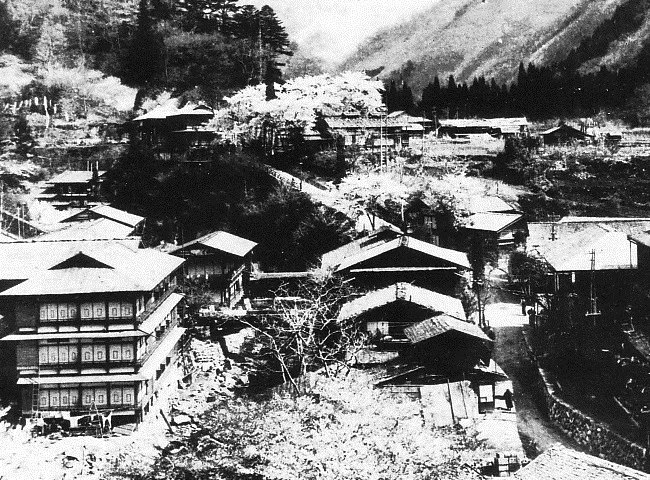
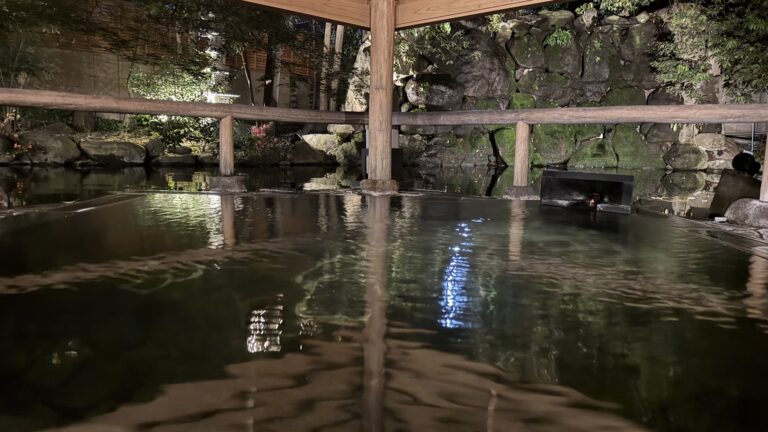
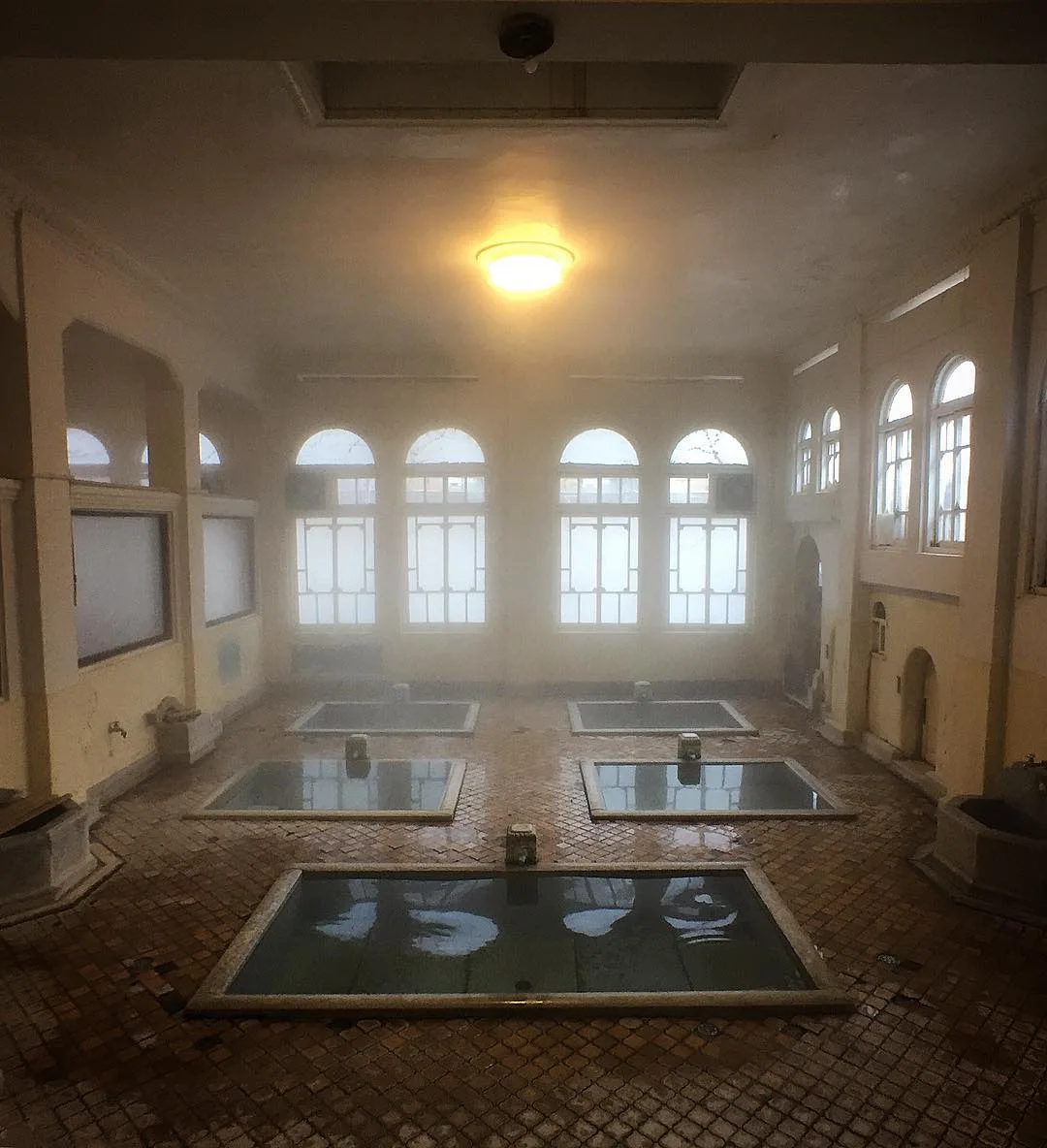
Sekizenkan dates the construction of its main building to 1691 and its opening as an inn to 1694, and says its Genroku-no-yu bathhouse was built in 1930 in the Taisho-Romanesque style: the bath with tall arched windows pictured below. Its history page also records later extensions and rebuilding, so the inn is a mix of periods rather than a single old building. Day bathers can use Genroku-no-yu: apply at the Honkan front desk, no reservation needed.
How do I get to Shima Onsen without a car?
- Take the JR Agatsuma Line to Nakanojo Station.
- From Nakanojo, take the Kan-etsu Kotsu bus to the Shima Onsen terminus (about 40 minutes, ¥1,150 adult).
- Sekizenkan’s Honkan is a two-minute walk from the terminus.
The public baths close at 15:00, so a day trip works best on an early train. Sekizenkan’s day bath stays open until 17:30, with last entry at 17:00.
Nuruyu Onsen, Aomori: a communal bath and kyakusha lodgings
Nuruyu has a tradition of kyakusha lodgings whose guests use a communal bath. Kuroishi’s English page identifies one of them, Goto Onsen Kyakusha, as a “lodge without hot spring bath,” and describes communal baths surrounded by the lodgings.
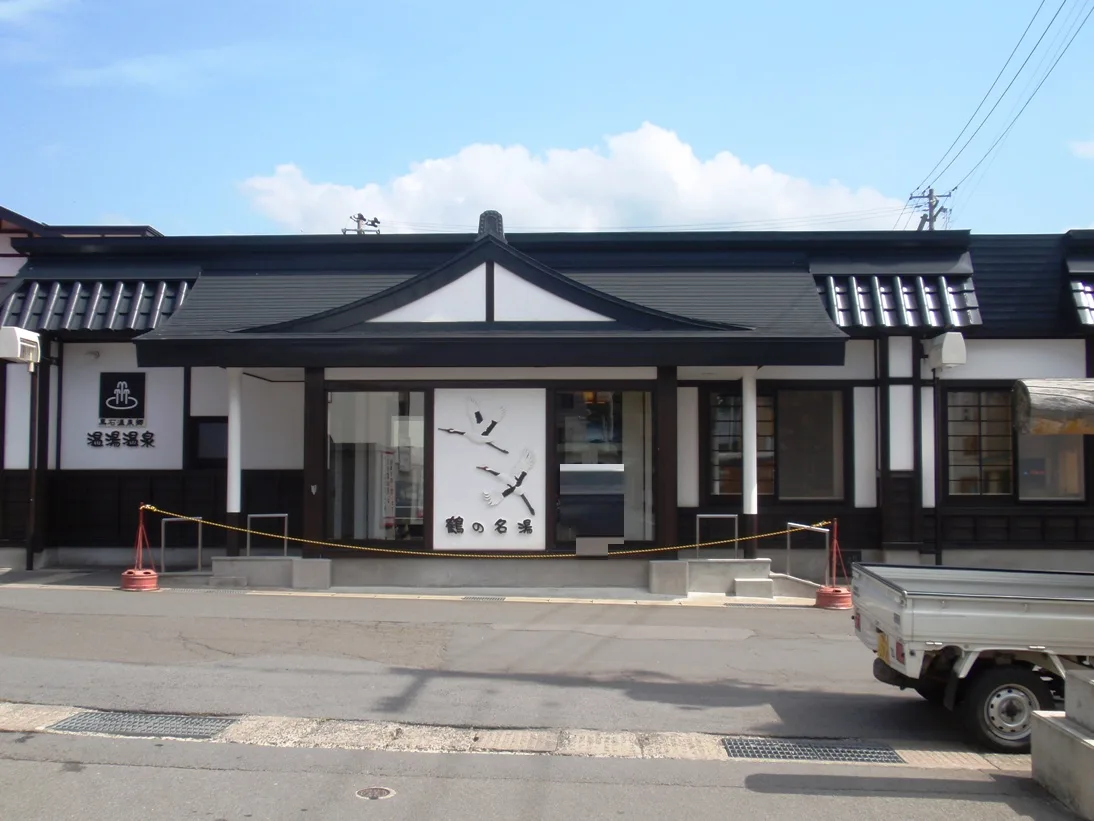
The regional tourism listing gives Tsuru-no-meito’s admission as ¥300 and its hours as 5:00 to 22:00, with no regular closing day (checked 4 October 2026; the page is undated). I have not confirmed the current last-admission time.
How do I get to Nuruyu Onsen?
- From JR Hirosaki Station, take the Konan Railway Konan Line to Kuroishi (¥470 adult).
- From Kuroishi, take the Konan Bus for Nijinoko Park to Shimo-Nuruyu (about 21 minutes), then walk about two minutes.
Kuroishi Station belongs to Konan Railway, not JR, so a JR pass does not cover that leg.
The rule that decides your day is local: who may use the communal bath, and whether a visitor can ride the bus.
Kakuma Onsen, Nagano: three communal baths, confirm access first
Kakuma is a small onsen settlement on a rise above the Kakuma River, near Shibu Onsen, with wooden inns that include three-storey buildings. Yamanouchi Town’s listing, with information marked October 2019, describes it as keeping the feel of an old toji (bath-cure) village and says its three communal baths are free for overnight guests. I have not confirmed the current arrangements or any day-use rules, so ask your inn before relying on communal-bath access.
How do I get to Kakuma Onsen without a car?
- From JR or Shinkansen Nagano Station, take the Nagano Dentetsu (Nagaden) Nagano Line to Yudanaka (ordinary adult fare ¥1,660 from 1 December 2025; some trains need a supplement).
- From Yudanaka, take a taxi to Kakuma (about seven minutes).
Iwase Yumoto Onsen, Fukushima: thatched roofs and a reservation bus
Iwase Yumoto is a small onsen village in Ten-ei, and two of its inns are thatched. The Agency for Cultural Affairs dates the main building of Gensentei Yuguchiya to around 1871, a two-storey timber building with a thatched roof, registered as a national tangible cultural property on 28 June 2017. Bunke, the other thatched inn, describes itself as a 150-year-old farmhouse.
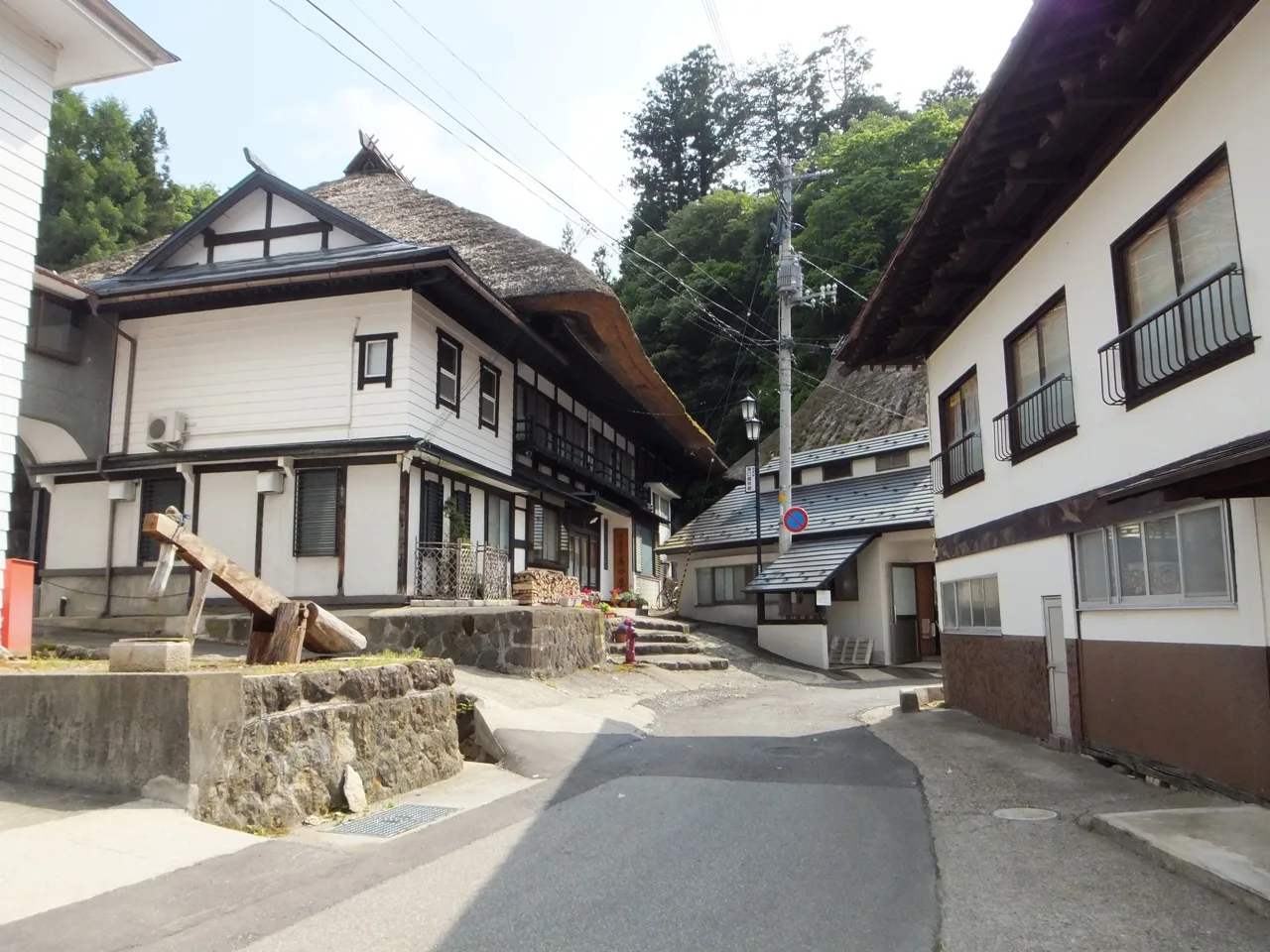
Bunke posted a notice refusing day bathing on 3 May 2022. I have not confirmed whether that policy has changed, or found current day-use rules for Yuguchiya or the communal bath, so contact the inn before planning a bathing visit.
How do I get to Iwase Yumoto Onsen?
- Take the Tohoku Shinkansen to Shin-Shirakawa.
- Bunke’s undated Yacon-go page lists the Yuttari Yacon-go shuttle leaving Shin-Shirakawa Station’s east exit at 13:00 and reaching Iwase Yumoto (post office) at 14:20, at ¥900 adult; the listed return leaves Iwase Yumoto at 11:10. Confirm the timetable, fare and operating days with your inn for your date. The listed schedule does not allow a same-day round trip from Shin-Shirakawa.
- Reservations are required. Bunke’s pages give different booking deadlines, so contact the inn at least two days ahead and ask it to confirm your seat.
Dai Onsen, Iwate: a four-storey wooden ryokan
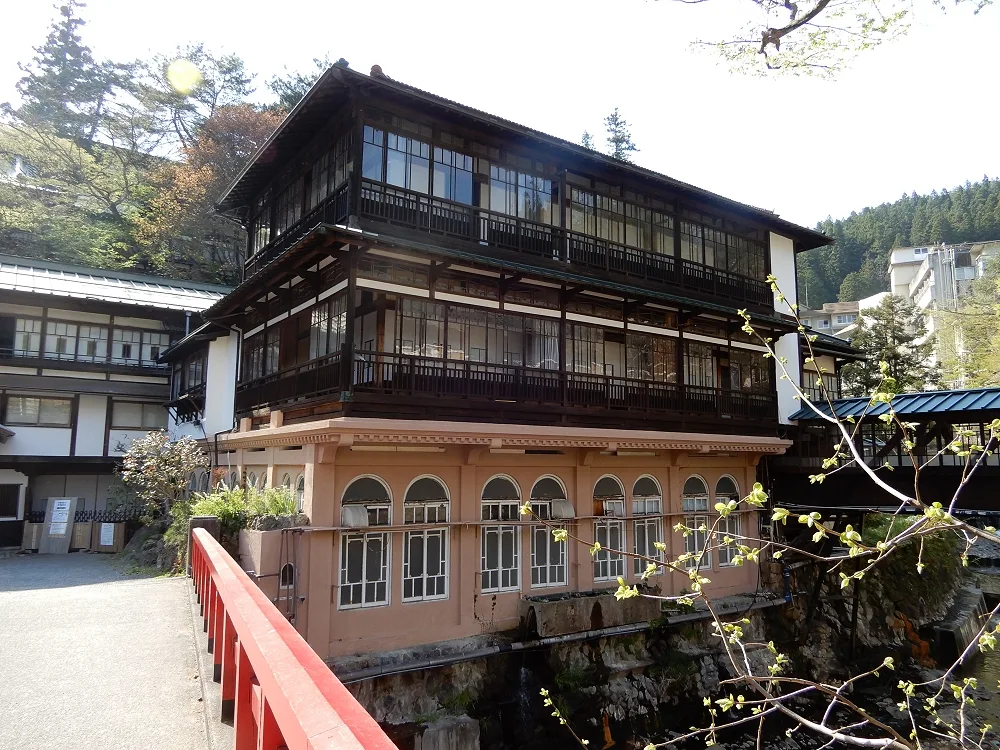
Dai Onsen is one of the hot springs of Hanamaki Onsenkyo. Hanamaki Tourism Association describes Nakashima Ryokan (中嶋旅館) as a four-storey wooden building with a bath carved out of the natural rock beneath it.
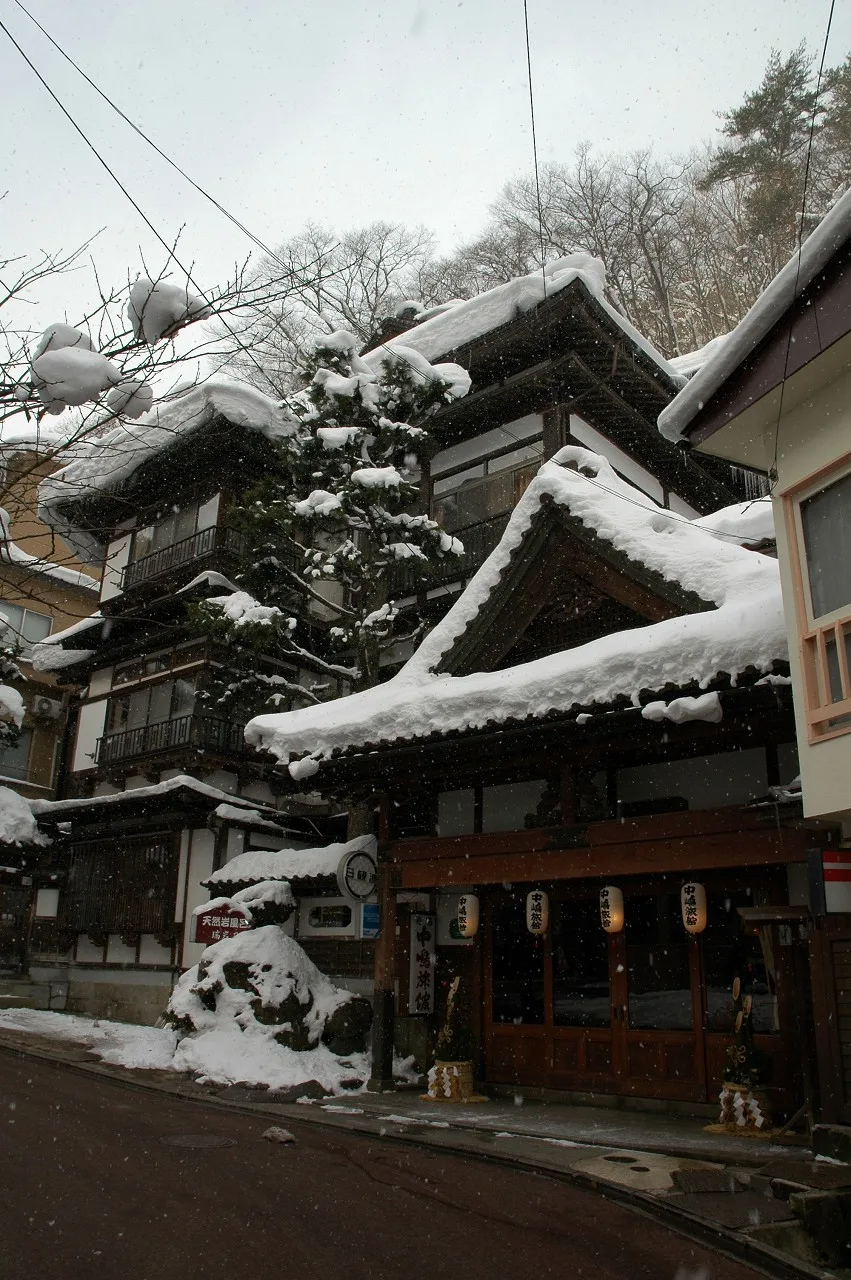
For a day visit, Seika-no-yu is the published day-bathing option: ¥480 for adults and ¥250 for elementary-school children, open 6:00 to 22:00 with last entry at 21:30 and no regular closing day. I could not find a current day-bathing policy for Nakashima Ryokan, so do not count on bathing there without a room.
How do I get to Dai Onsen?
- From JR Hanamaki Station (Tohoku Line), take the Iwate Kenkotsu bus for Dai Onsen from stop 4 (¥580; on the 1 April 2026 weekend timetable, one example runs 11:13 to 11:36).
- Seika-no-yu is about five minutes on foot from the terminus.
This bus leaves from Hanamaki Station, not Shin-Hanamaki, the Shinkansen stop.
Where to stay for a night in a retro onsen town
These booking links are for comparing places to stay; I have not stayed at the inns below.
Sekizenkan Kashotei Sanso, Shima Onsen. This is the name Booking.com lists for Sekizenkan. Check which building the room description names before you book; the photos above do not show the room you would be booking. Paid link: I may earn a commission if you book. See Sekizenkan Kashotei Sanso on Booking.com
Dai Onsen Matsudaya Ryokan. A separate inn from Nakashima Ryokan, pictured above, also in Dai Onsen. Paid link: I may earn a commission if you book. See Matsudaya Ryokan on Booking.com
Other inns. Check an inn’s own booking page, or search Rakuten Travel, a Japanese booking site, and confirm the exact town and inn name. Paid link: I may earn a commission if you book. Search ryokan on Rakuten Travel
If you have not stayed in a ryokan before, my ryokan stay guide explains check-in times, dinner and the futon routine.
Which retro onsen town should you pick?
Pick by how much time you have and whether you plan to stay the night.
Day trip, free bath
Shima, Gunma. Three free public baths until 15:00, and Sekizenkan’s 1930 bathhouse for ¥1,500.
Bathing in Nuruyu
Nuruyu, Aomori. ¥300 at Tsuru-no-meito on the regional listing, reached by rail and bus from Hirosaki.
Check bathing access first
Kakuma, Nagano, and Iwase Yumoto, Fukushima. Contact an inn to confirm bathing access and the last transport leg before you travel.
Add-on to Hanamaki
Dai, Iwate. A short bus ride from Hanamaki Station, with day bathing at Seika-no-yu.
For onsen towns elsewhere in Japan, Kinosaki Onsen in Hyogo is known for public-bath hopping (check each bath’s opening days and closure notices), and Unzen Onsen in Nagasaki pairs its steaming jigoku with the Kojigoku bathhouse. If it is the Showa streetscape you are after rather than the bath, my guide to Fujiyoshida’s Showa-era streets is close to Tokyo. Planning the month? See Japan in October 2026, and for a quick bath near Tokyo, Hakone’s Ryuguden day onsen.
FAQ
What is a Showa-retro onsen town?
Here, “Showa-retro” describes the feel of older inns and communal bathhouses. The buildings in this guide date from several periods, including before and during the Showa era (1926–1989).
Are Shima Onsen’s public baths really free?
Yes. The Shima Onsen Association lists Gomuso-no-yu, Kawara-no-yu and Kami-no-yu as free, open 9:00–15:00 with no regular closing day, at times when residents are not using them.
Can I use Kakuma Onsen’s public baths on a day trip?
I have not confirmed current day-use access. The town’s listing describes free communal-bath access for overnight guests, but its information is marked October 2019. Ask an inn before you travel.
Is there a bus from Yudanaka to Kakuma Onsen?
The town’s Rakuchin Bus cannot be used by tourists, its on-demand service is for registered residents, and this guide has not verified another bus a visitor can take. The Japan47GO listing gives a taxi journey of about seven minutes from Yudanaka Station.
How much is Nuruyu Onsen’s public bath?
The regional tourism listing gives ¥300 and hours of 5:00–22:00 (checked 4 October 2026; the page is undated). Other official material gives different figures, so confirm with the bathhouse before an early-morning visit.
Can I bathe at Iwase Yumoto without staying?
Bunke posted a notice refusing day bathing on 3 May 2022. I have not confirmed whether that has changed, or found current day-use rules for Yuguchiya or the communal bath, so contact the inn first.
Sources
The primary sources behind the figures above (checked 4 October 2026)
- Shima Onsen Association: Gomuso-no-yu, Kawara-no-yu, Kami-no-yu
- Sekizenkan: day bathing, access, history; Kan-etsu Kotsu fare table effective 1 October 2025
- Nuruyu: Tsugaru regional tourism listing for Tsuru-no-meito; Kuroishi kyakusha page; Kuroishi Tourism Association English brochure; Konan Railway, Hirosaki Station; Aomori official tourism (bus)
- Kakuma: Yamanouchi Town, onsen listing (information marked October 2019); Rakuchin community bus; Nagaden fare table (1 December 2025); Japan47GO listing (taxi time)
- Iwase Yumoto: Agency for Cultural Affairs, Yuguchiya main building; Bunke day-bathing notice (3 May 2022) and Yacon-go shuttle; Ten-ei Tourism Association access
- Dai: Hanamaki Tourism Association, Nakashima Ryokan and Seika-no-yu; Seika-no-yu hours and access; Iwate Kenkotsu timetable (1 April 2026)
Before you travel, check the bathhouse or inn’s latest notices and confirm any transport that needs a reservation. In towns this small, a bath rule or a bus can change without an English page noticing.
Join travelers discovering Japan's hidden side
Weekly dispatches from off-the-beaten-path Japan — spots and stories you won't find in guidebooks.
No spam. Unsubscribe anytime.
Welcome aboard!
You're in. See you in your inbox soon.