Nara · World Heritage · News
At 10:45 on 26 July 2026, the 48th UNESCO World Heritage Committee in Busan inscribed the Ancient Capitals of Asuka and Fujiwara — 19 archaeological sites across Asuka village, Kashihara and Sakurai in Nara Prefecture — as Japan’s 27th World Heritage site, and its first since the Sado Island Gold Mines in 2024. One property, 19 component sites, covering the ground where the centralised Japanese state took shape between 588 and 710: palace foundations, the site of Japan’s first full-scale Buddhist temple, painted tombs, and a bare megalithic chamber — some 2,300 tonnes of stacked stone — standing in a field. I visited three weeks ago; the notes below combine that trip with today’s official record. For trip planning — all 19 components, access, bases — see the full Asuka–Fujiwara guide; for the mural viewings, the Kitora manual.
What actually got listed
This is not one monument. It is one World Heritage property made of 19 component sites — a valley’s worth of evidence of how the centralised, law-governed Japanese state took shape. Two capitals in succession: the Asuka palaces from 588 to 694, then Fujiwara-kyō from 694 to 710, Japan’s first planned capital city, built on the Chinese model before the court moved on to Nara. UNESCO’s evaluation frames the 19 sites as the record of a centralised East Asian state taking shape through exchange with China and the Korean kingdoms — inscribed under criteria ii and iii.
| Type | Component sites (municipality) |
|---|---|
| Palaces & gardens | Asuka Palace site, Asuka-kyō garden pond, Asuka Mizuochi water-clock site (Asuka) · Fujiwara Palace site (Kashihara) |
| Temple sites | Asukadera — Japan’s first full-scale temple — Tachibanadera, Kawaradera, Hinokuma-dera (Asuka) · Yamadadera (Sakurai) · Daikandaiji (Asuka/Kashihara) · Moto-Yakushiji (Kashihara) |
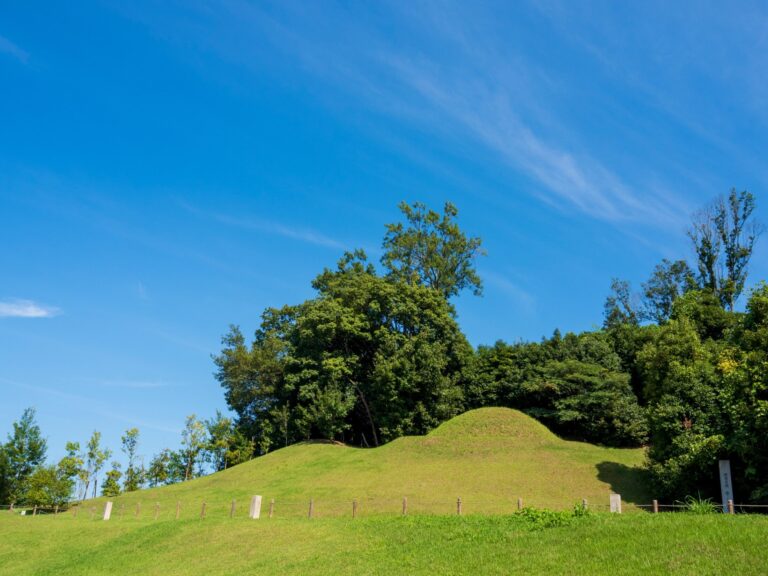
| Tombs | Ishibutai, Kengoshizuka, the mausoleum of Emperors Tenmu & Jitō, Nakaoyama, and the painted Kitora and Takamatsuzuka tombs (Asuka) · Shōbuike (Kashihara) |
| Ritual site | Sakafuneishi stone complex (Asuka) |
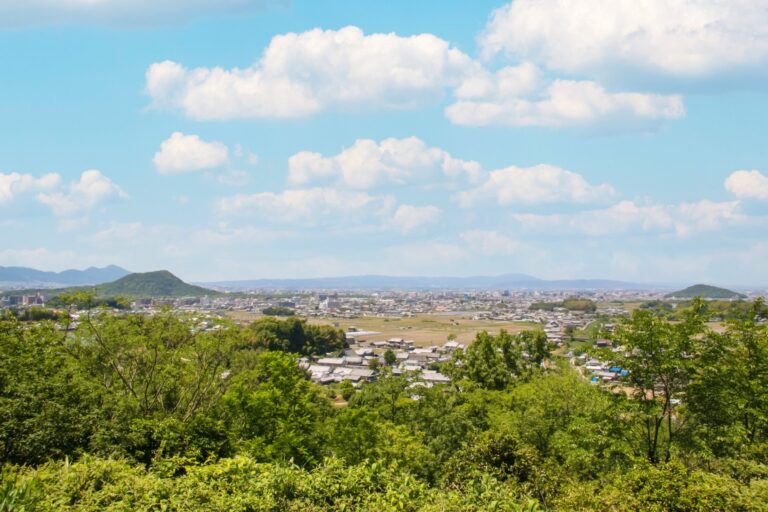
Fifteen of the nineteen sit inside Asuka village — a small farming place of rice terraces with no rail line through its centre. That village character is what makes the property feel unlike any other listing in Japan, and it is exactly what an inscription tends to test.
Which sites reward an actual visit
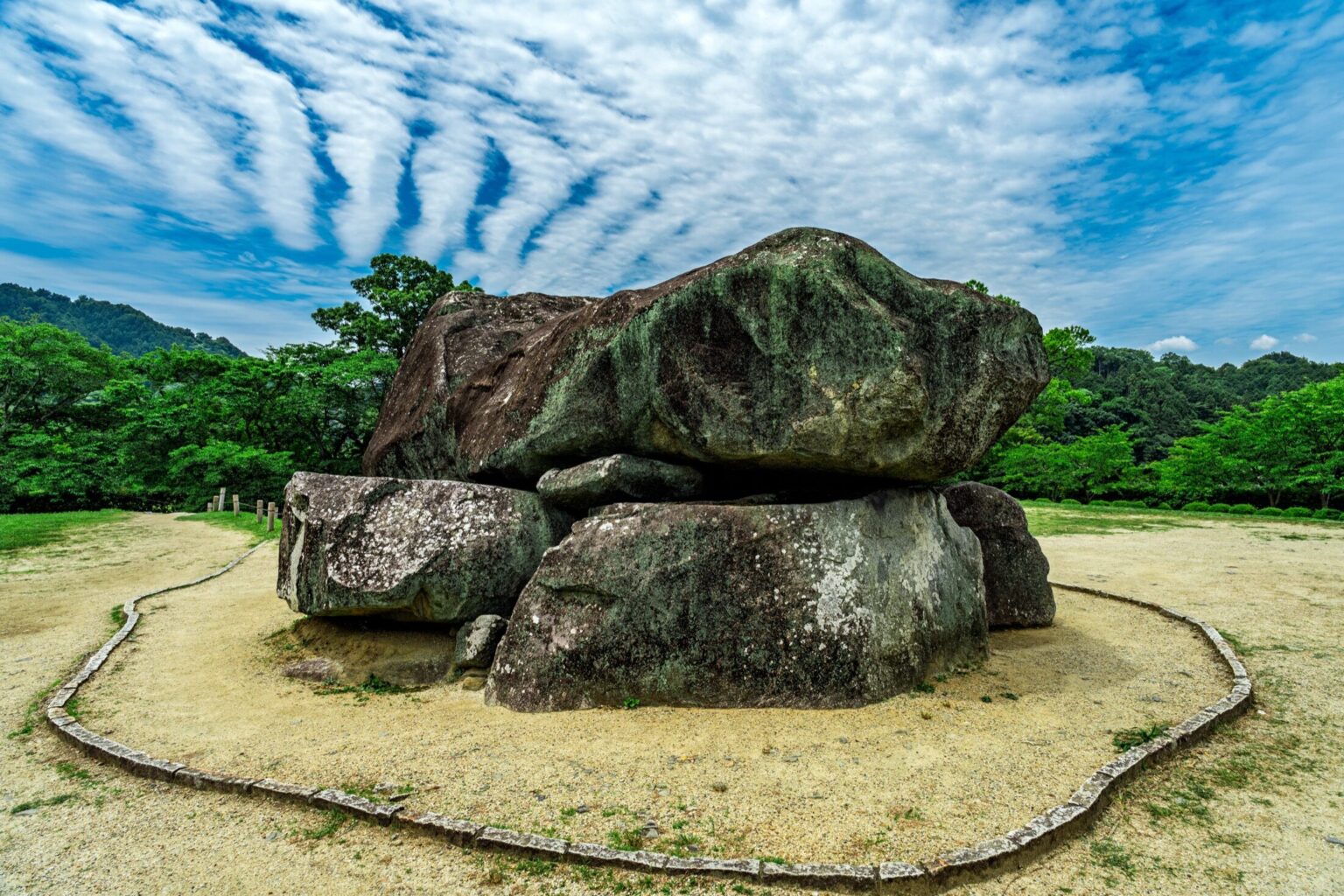
Ishibutai Kofun is the image on every news bulletin today: a tomb that lost its covering mound long ago, leaving thirty-odd granite blocks — about 2,300 tonnes in total, the largest ceiling stone alone around 77 — stacked into a chamber you can walk inside. It dates to the early 7th century and is often linked to the Soga clan leader Umako. Practicalities: admission rose to ¥500 on 1 April 2026 (¥200 for elementary through high-school students), open 9:00–17:00 year-round.
How the mural viewings work. The famous painted walls of Kitora and Takamatsuzuka are not on open display; they live in climate-controlled conservation facilities. Kitora’s are shown in numbered public viewings run by the Agency for Cultural Affairs: the 40th round ran 1–30 August 2026 and showed the White Tiger of the west wall. The 41st runs 19 September to 18 October 2026, closed on 30 September and 14 October, and shows three of the four guardian walls at once. Entry is free but by advance application, about 20 minutes, through glass, no photography; the first application window closed on 23 August and a second is scheduled to open on 8 September for any slots still free. Takamatsuzuka’s murals have their own periodic viewing scheme at a separate facility.
Fujiwara Palace site is the opposite experience: a vast archaeological landscape in Kashihara, a Special Historic Site conveying the sheer footprint of Japan’s first planned capital, with the Three Mountains of Yamato on the horizon. Check Kashihara City’s pages for current access details before building a day around it.
Sakafuneishi is the strangest entry on the list and worth including if your route allows: carved stone channels on a wooded hilltop whose ritual purpose is still argued about. When I passed through in early July, the loudest thing on the nearby lanes was a farm truck.
The village between the monuments
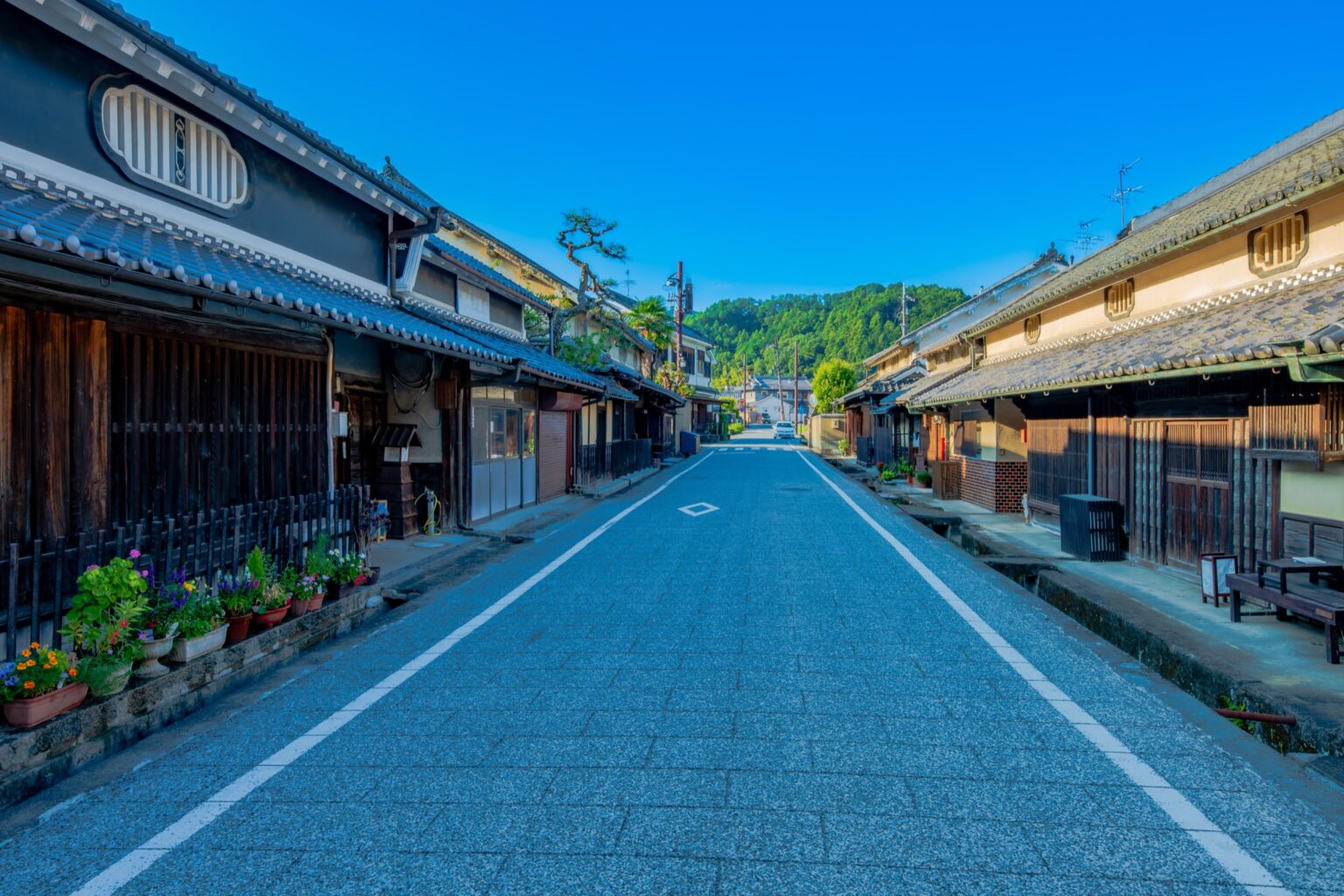
Here is my honest pitch, written before the inscription existed: the best thing in Asuka is not any single site, it is the fact that a 1,300-year-old capital zone is still a working farm village. Between Ishibutai and the palace foundations you pass persimmon orchards, the old plastered lanes of the Oka district, and Okadera on its hillside above the valley — neither is a component of the World Heritage property, and both belong on the same day’s walk. The official model course starts at Kintetsu Asuka Station and works north through several of the palace and temple sites toward Fujiwara and Yamato-Yagi; the valley is cycling country, with hire shops by Asuka Station — check hours, and expect a few climbs at the edges.
What changes now
On the day of the inscription, no new fees, closures or reservation systems had been announced as a result of it. That did not last, and the update below records what changed. The committee’s paperwork does flag the homework Japan has accepted: completing historic-site designation procedures in the Fujiwara area, continuing conservation research on the Kitora and Takamatsuzuka murals, monitoring traffic vibration, and building interpretation that respects the people who live and farm in and around the sites.
Update, 2 September 2026. The attention arrived, and the village has started managing it. The national park will close the Ishibutai car park to cars from 19 September to 15 November, keeping it open to two-wheelers and accessible bays, and states the reason as easing traffic congestion in the village following the World Heritage inscription. The Takamatsuzuka car park closed on 1 September and is not due to reopen for several years, coach parking at Kitora has moved to a paid reservation system, and the volunteer guide service stopped taking bookings for the rest of 2026 within a week of the ICOMOS recommendation. On the visitor numbers themselves, the Sankei Shimbun reported on 2 September that Ishibutai drew about 23,800 people in the first 25 days of August, which the paper described as 2.4 times the previous August without stating the comparison basis, citing the Asuka Tourism Association; neither the association nor the village publishes monthly counts, so that figure cannot be checked independently. Our full guide carries the current access and parking position.
The change nobody needs a committee for is attention: no official visitor forecast exists, but inscriptions tend to bring people, and the empty-field version of these places is the one I saw three weeks ago. Draw your own conclusion about timing.
Plan the visit
Questions I’d actually ask
What exactly was inscribed today?
“Ancient Capitals of Asuka and Fujiwara” — 19 archaeological sites in Nara Prefecture (15 in Asuka village, 4 in Kashihara, 1 in Sakurai, with one temple site spanning two municipalities). The decision came at 10:45 on 26 July 2026 at the 48th World Heritage Committee session in Busan.
How many World Heritage sites does Japan have now?
Twenty-seven — this becomes the 22nd cultural site alongside 5 natural ones. The previous addition was the Sado Island gold mines in 2024.
Can I see the famous tomb murals?
Only through the official viewing programmes. Kitora’s murals are shown in scheduled rounds at the on-site facility. The 41st runs 19 September to 18 October 2026, closed 30 September and 14 October, and shows three of the four guardian walls at once, by advance application (with same-day entry when slots remain), through glass, no photography. Takamatsuzuka’s murals are conserved in a separate facility with their own periodic-viewing scheme.
Is Asuka easy to reach?
Kintetsu serves Asuka Station; routes and times from Kyoto or Osaka depend on the train, so check the timetable. The official model course runs from Asuka Station north to Yamato-Yagi. One trap for pass holders: Kintetsu is a private railway — the nationwide JR Pass doesn’t cover it, so budget a separate ticket or a pass that explicitly includes it.
Will the sites get crowded or restricted now?
Yes, and it has already started. Nothing about the listing itself changed prices at the gates — Ishibutai’s rise to ¥500 happened in April, before the decision — but the village has since moved to manage traffic: the Ishibutai car park closes to cars from 19 September to 15 November 2026, the Takamatsuzuka car park closed on 1 September, coach parking at Kitora is now reservation-only and paid, and volunteer guide bookings are suspended for the rest of 2026. Come by train and bicycle, and check the park’s notices before you drive anywhere.
Join travelers discovering Japan's hidden side
Weekly dispatches from off-the-beaten-path Japan — spots and stories you won't find in guidebooks.
No spam. Unsubscribe anytime.
Welcome aboard!
You're in. See you in your inbox soon.