Shizuoka · Field observation
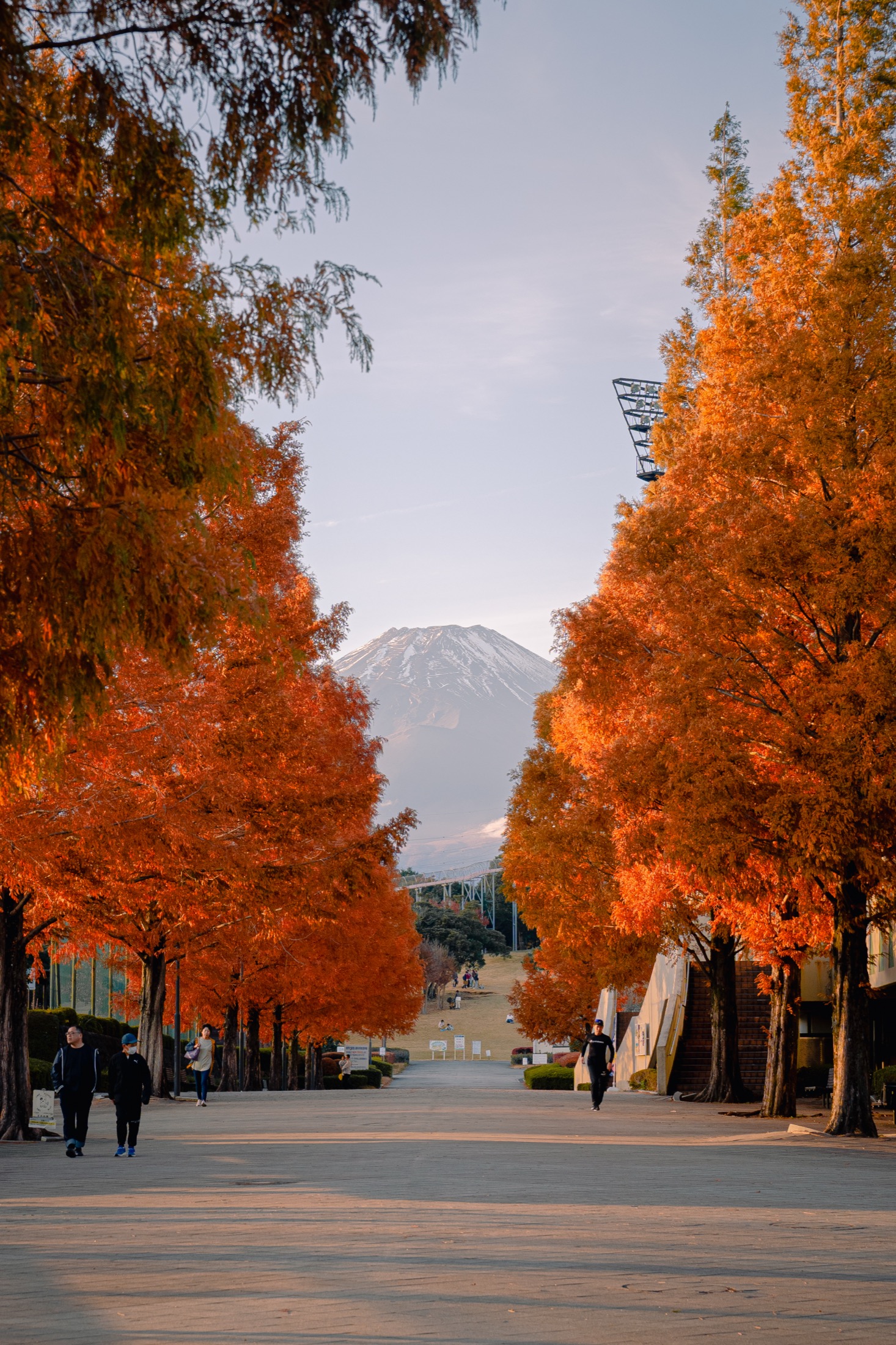
At Susono City Sports Park, on the southeastern foot of Mt. Fuji, an avenue of metasequoia — dawn redwoods — lines the main walkway, and on 23 November 2025 the rows stood in deep rust, framing the snow-streaked mountain dead centre between them. In Japanese- and English-language searches I found no official tourism description or news coverage of this avenue: what follows is my own field report from two visits in autumn 2025, plus practical details from the city’s and park operator’s official pages.
What this is — and how sure I am
Metasequoia is the conifer that behaves like a maple: a redwood that turns copper-rust in late autumn and drops its needles. Japan planted them widely as park and avenue trees in the postwar decades, and the most famous line of them — Makino in Shiga — draws serious crowds every November.
The rows at Susono’s sports park are the same tree in a place with no crowds. I identified the trees from a trunk label naming the species, and my two visits are the only dated observations I have — during them, I did not notice anyone else photographing the trees.
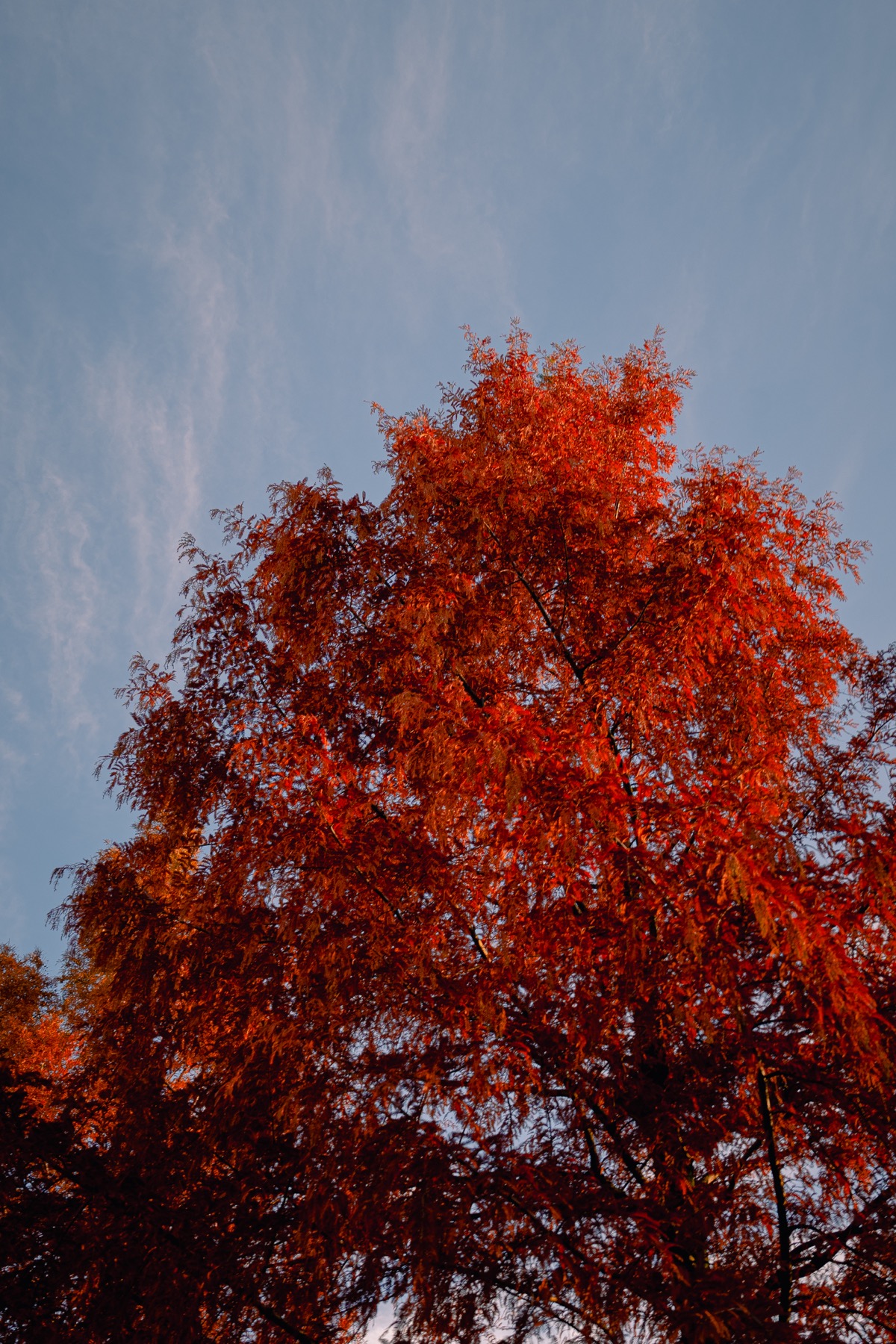
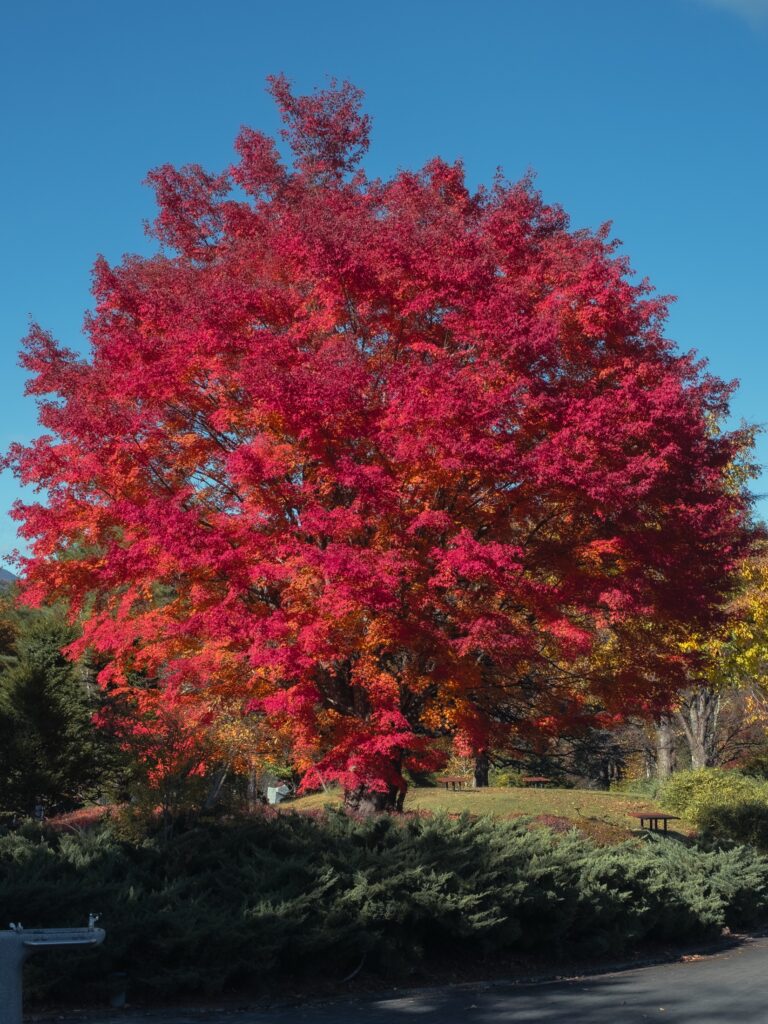
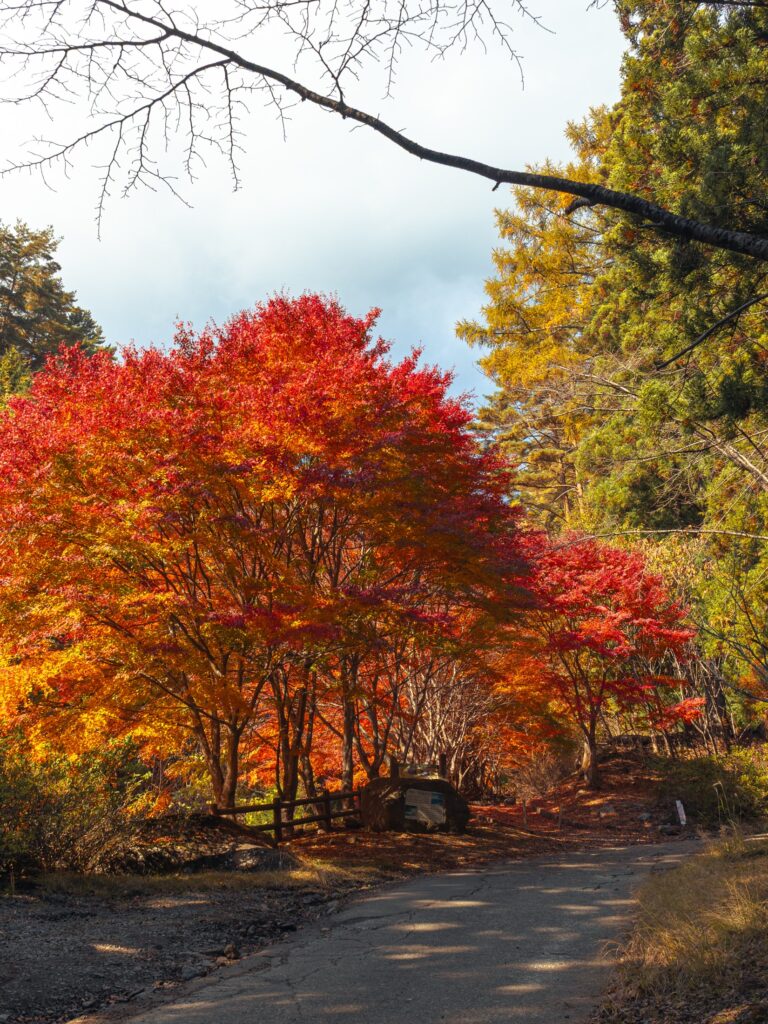
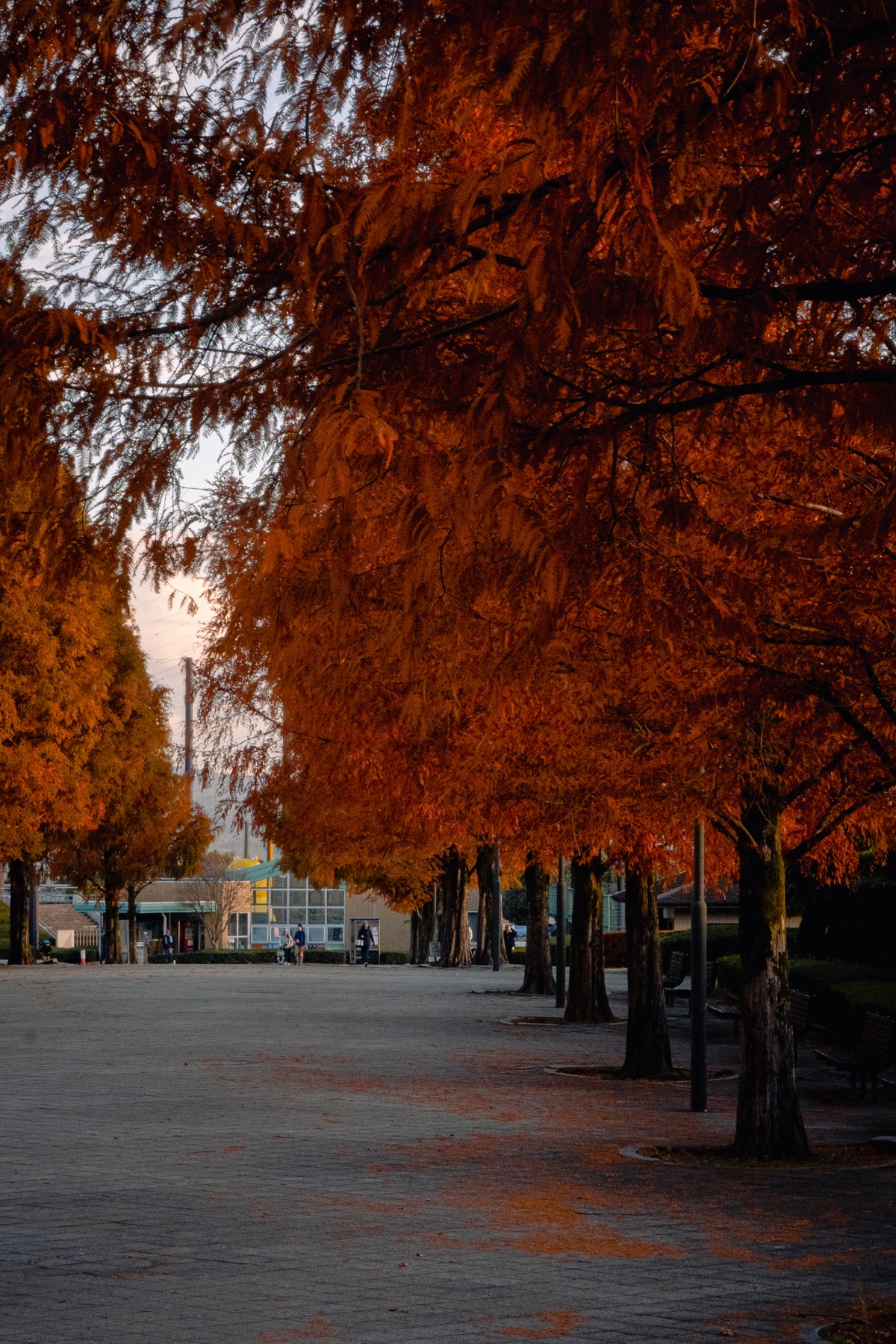
The two visits tell the timing story: green with gold edges on 3 November 2025, fully rust on 23 November, with fallen foliage starting to carpet the pavement. These are two dates from one year, not a record of the full season — but on that showing, late November is when I would try again.
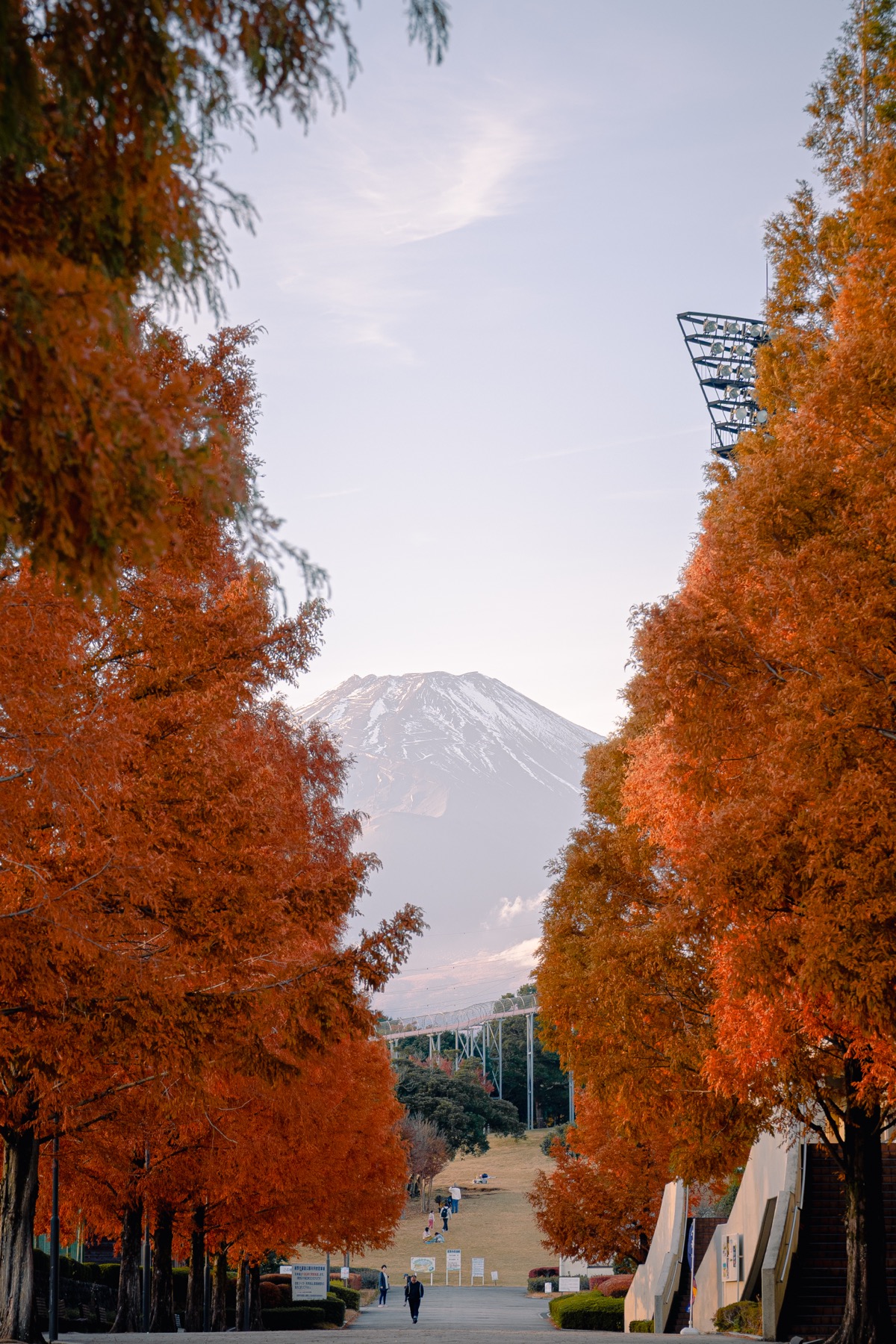
On 23 November, rust-coloured dawn redwoods framed Fuji dead centre between the rows.
The Makino question
Makino’s avenue in Shiga is the famous one: roughly 500 metasequoia over about 2.4 kilometres, per Takashima City, and a destination in itself. Susono is not that, and pretending otherwise would set you up for disappointment: this is a short avenue inside a municipal sports park, not a scenic highway.
What Susono has instead is the backdrop: from the stretch where I photographed, Mt. Fuji sat squarely between the rust rows. If you are already on the Susono or Gotemba side in late November, it works as a brief photography stop — and the walkway will probably be yours.
The park around the trees
This is a working municipal sports complex: an athletics stadium with floodlights, ball fields, and lawns where families picnic under the trees. The stadium has history, too — it hosted Uruguay’s training camp for the 2002 FIFA World Cup. Sports facilities carry their own fees and booking procedures; I walked the avenue and grounds without paying anything.
On both visits I saw dog walkers, children playing with balls, and families on the lawn slope — and no other cameras pointed at the trees. That is the character of the place: a park first, a viewpoint by accident.
Getting there
The park sits in Imazato, Susono — on the Gotemba side of Fuji’s foot, which makes it natural to pair with a Gotemba stay or an outlet run. It is a drive-first destination: the free lot is large, and on both my visits it had plenty of space.
By public transport, the operator’s access page points to Iwanami Station on the JR Gotemba Line, about 3.7 km (nine minutes) away by road — a taxi is the practical onward step. Check the operator’s page for current detail.
Pair it with the Gotemba side
Where it fits in a Fuji autumn
Late in the season
The rows were fully rust on 23 November 2025 — late in the Fuji calendar. It slots alongside the valley-floor stops that also run late, or as a different-angle day from the Kawaguchiko festival weeks.
South-side day
Susono sits on Fuji’s southeastern foot — a different angle on the mountain than the lakes. Pair it with Gotemba’s outlets or an onsen stop rather than backtracking north.
For photographers
Late afternoon put low sun on the rust; the axis shot needs you dead centre on the walkway. I photographed the view at focal lengths of 70–105 mm, framing Fuji between the rows.
The wider season lives in the Mt. Fuji hub and our guide to how Japan’s autumn colour moves; for the lakes’ own festivals, see Yamanaka and Chureito in autumn.
Frequently asked questions
Where exactly is the metasequoia avenue in Susono?
Inside Susono City Sports Park in Imazato, Susono, Shizuoka — along the main walkway by the athletics stadium. At the section I photographed, standing near the walkway’s centre line put Mt. Fuji between the rows.
When do the trees turn?
I can only speak for 2025: still green-gold on 3 November, full rust on 23 November. Treat those as two data points from one year — on that showing, late November is where I would aim.
Is it worth a special trip?
On its own, probably not — it is a municipal park, not a destination. As a stop on a Susono or Gotemba day it earns its place; it was quiet during both of my visits.
Does it cost anything?
No — the grounds and parking are free to walkers. The sports facilities (stadium, fields) have their own fees and booking procedures for people actually using them.
How does it compare with Makino’s metasequoia avenue?
It does not try to. Makino is roughly 500 trees over 2.4 km and is the destination in itself; Susono is a short municipal avenue whose one trick — Fuji centred between the rust rows — Makino cannot do.
Sources
Sources and the limits of this article, stated plainly
- Field observation: 3 November 2025 around 14:10 JST and 23 November 2025, 15:25–15:45 JST; species identified from trunk labelling in the park; all photographs the author’s, at EXIF focal lengths of 70–105 mm.
- Susono City — sports park facility page (Imazato 1616-1; office hours 8:30–21:00, no fixed closing day) and the official park map (parking for about 450 cars)
- Park operator — access and facilities (Iwanami Station, 3.7 km / 9 min by road) and athletics stadium
- Susono Sports Tourism — stadium camp record (Uruguay, 2002 FIFA World Cup)
- Takashima City — Makino metasequoia avenue (about 500 trees / 2.4 km)
- Search note: in Japanese- and English-language searches on 20 September 2026, I found no official tourism description or news coverage specifically about this avenue.
Join travelers discovering Japan's hidden side
Weekly dispatches from off-the-beaten-path Japan — spots and stories you won't find in guidebooks.
No spam. Unsubscribe anytime.
Welcome aboard!
You're in. See you in your inbox soon.