From the dark fields at the foot of Mt. Fuji, the next meteor shower worth planning a night around is the Geminids on December 14, 2026: the National Astronomical Observatory of Japan expects about 60 meteors an hour from a dark site between midnight and 2 a.m. on the 15th, with the moon down by around 9 p.m. and no moonlight at all. Before that, the Orionids peak around October 22 at a quieter 5–10 an hour, dark once the moon sets at 1:24 a.m. — they sit on the day-by-day calendar in our Japan in October 2026 guide, next to the Jusanya moon-viewing night of October 23, and the November calendar picks up from there. The Perseids — the year’s most famous shower — peaked on the night of August 12–13 under a new moon and closed around August 24; what they looked like across Japan is recorded further down. This is the guide I wish I’d had when I started — when Japan’s meteor showers actually happen, how to watch them without any equipment, and where to go.
Live status - updates automatically
Next up: the Orionids, around October 22
The August Perseids and the small September epsilon-Perseids are done for 2026. Our next featured shower is the Orionids, peaking around October 22 at about 5-10 meteors an hour from a dark site (NAOJ) - a modest shower, but the hours before dawn are genuinely worth setting an alarm for. The waxing gibbous moon sets at 1:24 a.m. in Tokyo on the 22nd, so the window that counts starts after moonset. 31 days to go.
Sky forecast today (JMA) - Fuji Five Lakes (Yamanashi): Rain / Eastern Shizuoka: Rain (checked Sep 21, 10:54 JST)
What’s coming: Japan’s three major meteor showers
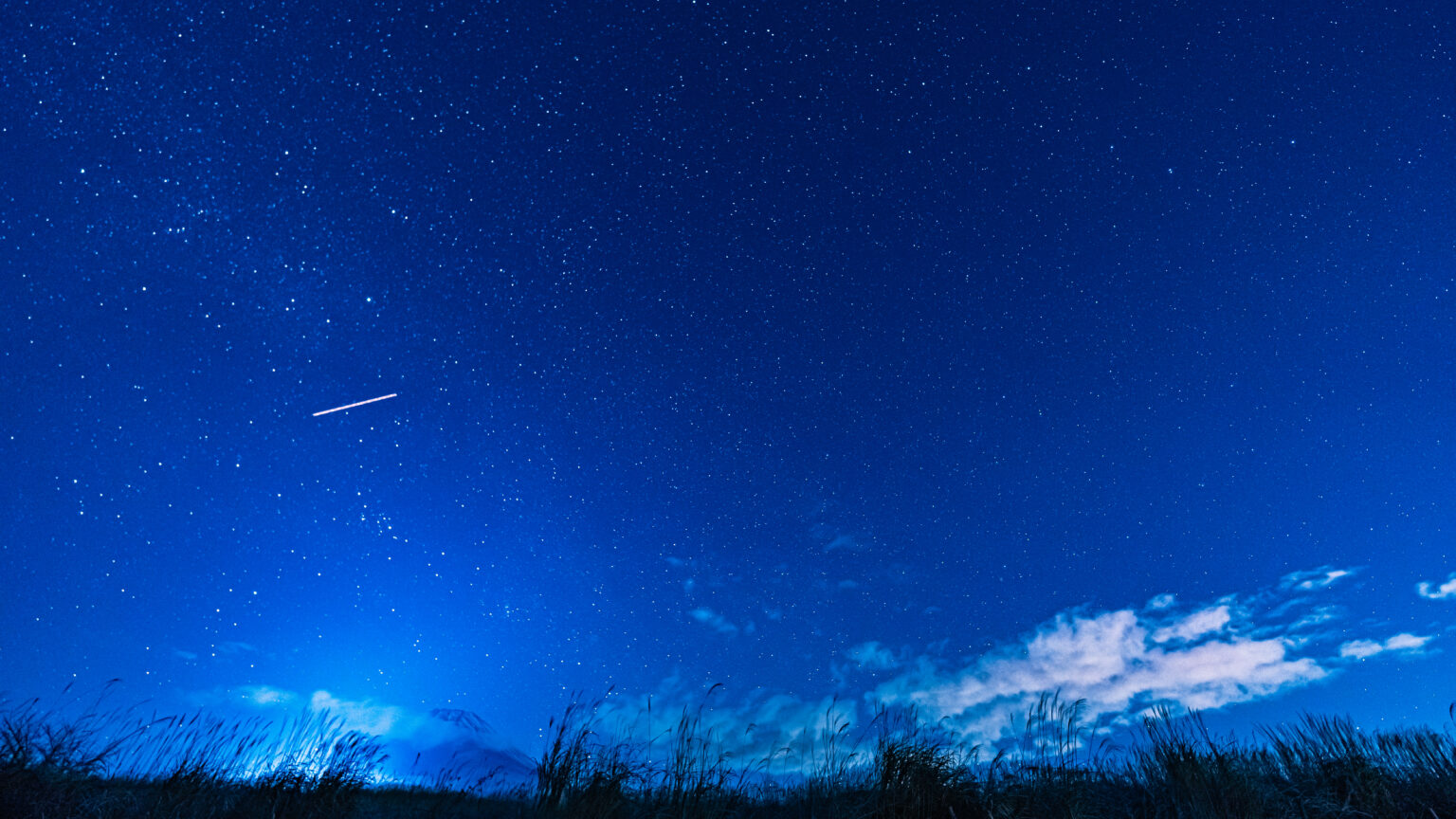
Meteor showers are predictable. Earth crosses the same streams of comet and asteroid debris at the same point in its orbit every year, so the peak dates barely move. Japan’s “three great showers” (三大流星群) are the ones worth planning around:
| Shower | Peak (typical) | Notes |
|---|---|---|
| Quadrantids (しぶんぎ座) | around January 4 | Sharp, short peak; numbers vary year to year. |
| Perseids (ペルセウス座) | around August 13 | Warm nights, very reliable — the easiest to enjoy. |
| Geminids (ふたご座) | around December 14 | Often the richest of all, but bitterly cold — and 2026 is confirmed excellent by NAOJ: peak around 23:00 on December 14, roughly 60 meteors/hour in dark skies between midnight and 2 a.m., and the crescent moon sets by about 9 p.m. — no moonlight at all. |
The single thing that makes or breaks a year is the moon. A shower at new moon (like the Perseids in 2026) can be spectacular; the same shower under a full moon can be almost invisible. That is why the night of 14 December is the one to put in a calendar this year, and why the Perseids in August were worth the early alarm.
The Perseids 2026: how the year’s most famous shower went
The Perseid meteor shower (ペルセウス座流星群) is one of the three most reliable showers of the year. According to the National Astronomical Observatory of Japan (NAOJ), the 2026 peak fell at around 11:00 on August 13 Japan time — daylight here — so the real show was the two nights around it: August 12 into the predawn of the 13th (the best), and the 13th into the 14th, with the sweet spot around 3 a.m. Because the new moon landed on the same date, there was no moonlight to wash it out — the best Perseid conditions until 2029. The activity window closed around August 24 (NAOJ/IMO), and the real-world numbers fell fast: the International Meteor Organization’s live observed rate, read from its activity graph at the time, was about 75 on peak night, roughly 20 by August 15 and around 15 by August 17 — that graph is rebuilt as reports come in, so those figures are a snapshot rather than a citable final number. There was an irony to the timing — the moon finally moved out of the way (through August 23 it set before midnight, leaving the whole pre-dawn sky dark) just as the meteors went.
- Peak: around 11:00 JST, August 13, 2026 (NAOJ) — watch the predawn hours before and after.
- Moon: new moon at 02:37 JST on August 13 (NAOJ) — the same date as the peak, so effectively no moonlight all night.
- How many: about 35 meteors per hour from a dark site, peaking around the 3 a.m. hour on August 13 (NAOJ figures, as reported for Tokyo), and about 30 per hour toward dawn on the 14th. In a bright suburb you’ll see far fewer.
- Speed: the particles hit the atmosphere at about 59 km per second (American Meteor Society), which is why Perseids are fast and often leave trails.
- Where to look: the radiant is in the constellation Perseus, low in the northeast after dark — but you don’t stare at it. Meteors streak across the whole sky.
How the peak looked across Japan (Aug 12–14)
The 2026 peak had perfect moonlight conditions but very uneven weather. Humid Pacific-side air tied to a tropical system south of the country clouded much of eastern and western Japan across the peak nights, while the Japan Sea side and Kyushu held the clear skies. The prefecture table below is kept as a record of how the forecast for the peak window (August 12–14) broke down — it is built from the “star index” (星空指数) published by tenki.jp and JMA cloud forecasts, not from observing reports, so treat it as the sky people were told to expect rather than a log of what each prefecture actually saw — with Kansai, Setouchi, Kyushu, Hokuriku and the northern Japan Sea coast open on the second night while the leftover cloud band parked over Kanto, Fukushima and the Fuji area. The same idea applies to any shower night: check your local star index first — a data eSIM lets you recheck the cloud radar from the road (affiliate link) — and don’t give up on a patchy forecast, since a single break in the cloud can still deliver a few. For everything else lighting up the country this month, see my Japan in August 2026 calendar.
| Prefecture | Peak night | Where it’s clearest / notes |
|---|---|---|
| Hokkaido | △ | Patchy – inland breaks possible, coasts cloudier (index 30) |
| Aomori | ◎ | Wide open – one of that night’s best (index 100) |
| Iwate | △ | Mostly cloudy; brief gaps possible (index 20) |
| Miyagi | ✕ | Mostly cloudy on the Pacific side (index 10) |
| Akita | ◎ | Clear most of the night (index 100) |
| Yamagata | ✕ | Overcast (index 10) |
| Fukushima | ✕ | Overcast – the typhoon’s leftover cloud band sits here (index 0) |
| Ibaraki | ✕ | Overcast (index 10) |
| Tochigi | ✕ | Overcast (index 0) |
| Gunma | ✕ | Overcast (index 0) |
| Saitama | ✕ | Overcast (index 0) |
| Chiba | ✕ | Overcast (index 0) |
| Tokyo | ✕ | Overcast on the mainland – the remnant cloud band parks over Kanto that night (index 0) |
| Kanagawa | ✕ | Overcast – same Kanto cloud shield (index 0) |
| Niigata | ◎ | Wide open along the whole coast (index 100) |
| Toyama | ◎ | Wide open (index 100) |
| Ishikawa | ◎ | Wide open – Noto ideal (index 100) |
| Fukui | ◎ | Wide open (index 100) |
| Yamanashi | ✕ | Poor that night – cloud lingering over the Fuji Five Lakes; skip the drive (index 10) |
| Nagano | △ | Mostly cloudy; high-basin breaks at best (index 20) |
| Gifu | ○ | Broken cloud – usable windows (index 50) |
| Shizuoka | △ | Partly cloudy – western coast has the better odds (index 40) |
| Aichi | ○ | Broken cloud – usable windows (index 50) |
| Mie | ✕ | Overcast along the coast (index 0) |
| Shiga | ◎ | Clear most of the night (index 90) |
| Kyoto | ◎ | Nearly clear – Miyama side best (index 90) |
| Osaka | ◎ | Wide open – a rare perfect sky for the city (index 100) |
| Hyogo | ◎ | Wide open – head for the dark north (Tamba, Sasayama) (index 100) |
| Nara | ◎ | Wide open – Soni Highland conditions excellent (index 100) |
| Wakayama | ◎ | Clear most of the night (index 90) |
| Tottori | ◎ | Wide open – Daisen area excellent (index 100) |
| Shimane | ◎ | Clear most of the night (index 90) |
| Okayama | ◎ | Clear most of the night (index 80) |
| Hiroshima | ◎ | Clear most of the night (index 80) |
| Yamaguchi | △ | Mostly cloudy – the odd break (index 20) |
| Tokushima | ◎ | Clear most of the night (index 100) |
| Kagawa | ◎ | Clear most of the night (index 80) |
| Ehime | ◎ | Clear most of the night (index 90) |
| Kochi | ◎ | Wide open – Shimanto/Muroto superb (index 100) |
| Fukuoka | ◎ | Clear most of the night (index 80) |
| Saga | ◎ | Clear most of the night (index 90) |
| Nagasaki | ◎ | Clear most of the night (index 80) |
| Kumamoto | ○ | Broken cloud – usable windows (index 60) |
| Oita | ○ | Broken cloud – usable windows (index 70) |
| Miyazaki | ◎ | Wide open (index 100) |
| Kagoshima | ◎ | Wide open – Osumi and Satsuma both clear (index 100) |
| Okinawa | ◎ | Nearly clear – watch for passing showers (index 90) |
◎ clear, go for it · ○ mostly clear · △ cloudy with gaps · ✕ clouded or rained out. Forecast as of the evening of 12 August 2026, from tenki.jp star-index and JMA overnight cloud forecasts — always recheck your own local sky before heading out, and remember conditions can differ within a prefecture (coast vs. inland, valley vs. ridge).
How to watch — no telescope needed
- Use your eyes, not a telescope. Meteors cross huge stretches of sky in an instant. Binoculars and telescopes actually make it harder. Just lie back and take in as much sky as you can.
- Let your eyes adapt. Give it 20–30 minutes in the dark before you judge how good it is. One glance at a phone screen resets that.
- Look up, not only at the radiant. Meteors appear all over the sky; facing straight up (or toward the darkest part) works fine.
- Dress warmer than you think. Even in August, the highlands around Mt. Fuji get cold at night. A ground mat and a reclining chair beat standing and craning your neck (affiliate link).
- Use a red light for your feet and gear so you don’t ruin your night vision — a head-torch with a red mode is ideal (affiliate). And check the cloud forecast, because clear sky matters more than anything.
Planning the December night. The Geminids radiant is already usable in the evening, so you do not have to stay up until 2 a.m. to see something — NAOJ expects 35–40 an hour from a dark site by 9 p.m. on 14 December, once the moon has set. What you do need is cold-weather kit: you will be standing still outdoors, in the dark, in mid-December, and that is a different problem from a summer Perseid night. A reclining chair or a mat, a thermal base layer and something hot to drink do more for your meteor count than any equipment (affiliate link).
The moon decides more than the shower does. A bright moon can erase a rich display; a dark sky can make a modest one worth the drive — which is why the Geminids on 14 December, with the moon gone by 9 p.m., matter more this year than any headline about meteor counts.
Where I go: dark spots at the foot of Mt. Fuji
You don’t need a famous observatory. You need a safe, open place with little artificial light and a clear horizon. These are three spots I go back to around Mt. Fuji — open places away from dense town lighting, all looking out toward the mountain. Local lights, traffic and cloud still matter, so treat them as good, not perfect. If you’re timing a Fuji trip around a clear night, my Mt. Fuji visibility forecast and best time to see Mt. Fuji guides pair naturally with this one.
Mizugatsuka Park (水ヶ塚公園)
On Mt. Fuji’s southern flank at about 1,450 m, Mizugatsuka Park is known for its big parking area and its head-on view of the mountain. The altitude gets you above a lot of the haze, and the open ground makes it easy to see a wide sweep of sky.
Fuji Susono “Victory Road” (富士裾野ビクトリーロード)
A long, straight road in Susono that runs almost directly at Mt. Fuji — a local favorite for framing the mountain, with darker sky once you’re clear of the town. It is a working road: use only legal parking areas, never stop or set up on the roadway, and watch for traffic in the dark.
Hirano-no-hama, Lake Yamanaka (平野の浜)
The eastern shore of Lake Yamanaka, in the Hirano district. Standing at the water with Mt. Fuji across the lake, you get an open sky and a reflection when the water is still.
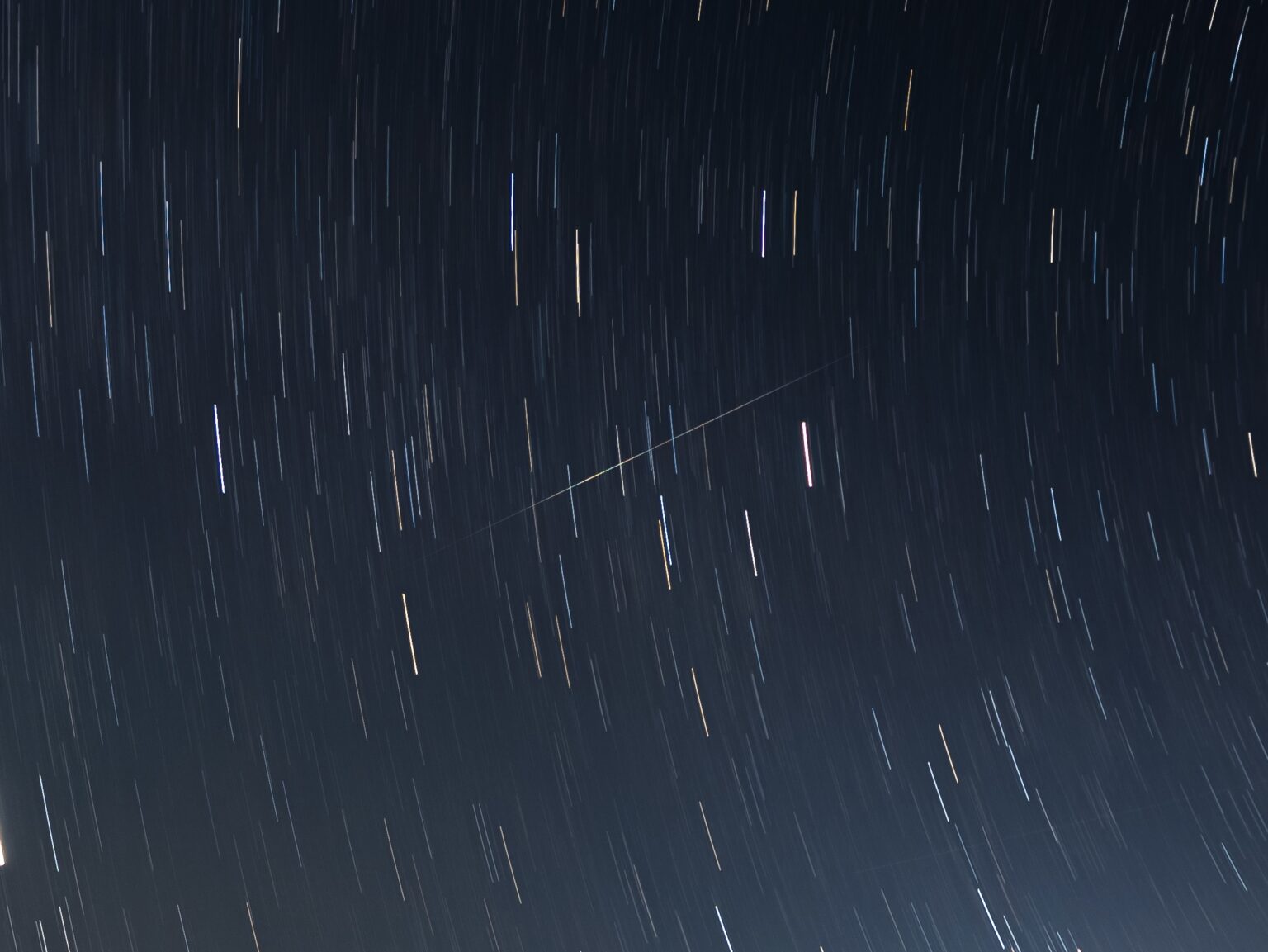
Japan’s famous dark-sky places
If you’re willing to travel for the darkest skies in the country, a few places are recognized for exactly that:
- Achi Village, Nagano (阿智村) — ranked among Japan’s best locations for star observation in the Ministry of the Environment’s FY2006 star-watching survey, a result the village has built its stargazing tourism on. It runs organized stargazing nights in the mountains, and makes an easy add-on to a Lake Suwa and Nagano trip.
- Iriomote-Ishigaki National Park, Okinawa — Japan’s first internationally certified Dark Sky Place (2018). Far south, with skies most of the country can’t match.
- Kozushima Island, Tokyo (神津島) — an island in the Izu chain certified as a Dark Sky Place (2020), with a whole-island lighting policy to protect the night.
- Bisei, Okayama (美星町) — literally “beautiful star town,” certified as a Dark Sky Place (2021) and long protected by a local light-pollution ordinance.
Each of these is a trip in itself rather than a quick night out, so if a shower peak lands on a new moon it’s worth basing yourself nearby — places to stay near the dark-sky areas book up fast around the August and December peaks (affiliate link).
FAQ
Did I miss the 2026 Perseids?
The peak was around 11:00 on August 13 (JST) — daytime in Japan — so the dark hours on either side were the show: the night of August 12 into the early morning of the 13th (closest to the peak), and the 13th into the 14th, with the rate topping out around the 3 a.m. hour on the 13th near Tokyo. The shower stayed technically active until about August 24, but measured rates dropped from roughly 75 at the peak to around 15 by August 17. September has no meteor shower at all on NAOJ’s calendar — the one small exception is the September epsilon-Perseids, which peak around 3 a.m. on September 10 at perhaps eight an hour under a genuinely dark sky — and the new moon falls on September 11, so there is no moonlight to fight. The next shower worth planning a trip around is the Orionids before dawn on October 21–22 (5–10 an hour, dark once the moon sets at 1:24 a.m.), and then the Geminids on December 14–15, which is the one NAOJ calls the year’s best.
Do I need a telescope or binoculars?
No — they make it harder. Meteors flash across large areas of sky, so your naked eyes are the right tool. Just find a dark, safe, open spot and look up.
Which direction do I face?
The radiant is in Perseus (low in the northeast after dark), but meteors appear all over the sky. Facing straight up, or toward the darkest part of the sky, works well.
What ruins a meteor shower?
Moonlight, clouds, and city lights. 2026’s Perseids fall on a new moon, so the main things to manage are cloud cover and light pollution — which is why a dark spot away from town matters.
Which parts of Japan have the best chance on the 2026 Perseid peak nights?
On the peak nights, the clearest skies were on the Japan Sea side (Akita, Niigata, Toyama, Nagano, Shimane and Yamaguchi) and in northern Kyushu (Saga, Nagasaki, Kagoshima), because humid Pacific-side air clouded much of eastern and western Japan; in Kanto the Chiba coast was the best bet, while Tokyo, most of Kansai (Osaka, Kyoto) and Okinawa’s main island were largely clouded or rained out. The same regions tend to hold the clearest skies whenever a Pacific-side cloud band is in place — see the peak-window table above, and always recheck your local forecast, since cloud cover can shift within hours.
Sources & last updated
Last updated: 4 September 2026. The Perseids are over for 2026: they peaked Aug 12–13 and their activity window closed about Aug 24, with IMO’s observed rate falling from roughly 75 on peak night to about 15 by Aug 17. What is still ahead, checked against NAOJ on 4 September: the September epsilon-Perseids around 3 a.m. on Sept 10 (new moon Sept 11); the Orionids, maximum on Oct 22, 5–10 an hour, best after the Tokyo moonset at 1:24 a.m.; and the Geminids, maximum about 23:00 on Dec 14 — NAOJ calls the 2026 conditions ideal, with the moon down by about 9 p.m., roughly 35–40 an hour by 9 p.m., about 60 between midnight and 2 a.m. on the 15th, and 40–55 toward dawn. The prefecture table reflects the forecast for the peak window (Aug 12–14), not observing reports. Sources: National Astronomical Observatory of Japan (NAOJ) — “Hoshizora Joho” August 2026 Perseids page (peak time and hourly rates) and the 2026 almanac’s moon-phase tables (new moon 02:37 JST, Aug 13); American Meteor Society meteor shower calendar (Perseid velocity 59 km/s); JST Science Portal newsflash, August 7, 2026 (Tokyo 3 a.m. peak rate, next comparable conditions in 2029, Geminids outlook); tenki.jp (Japan Weather Association) star-index (星空指数) and the Japan Meteorological Agency overnight cloud forecasts, as issued on the evening of 12 August 2026, for the prefecture outlook table; DarkSky International certification pages for Iriomote-Ishigaki (2018), Kozushima (2020) and Bisei (2021); Ministry of the Environment star-watching survey (Achi). The prefecture outlook is a short-range forecast and will change — check your local sky before you travel. All night-sky photographs are my own, taken near Mt. Fuji.
Join travelers discovering Japan's hidden side
Weekly dispatches from off-the-beaten-path Japan — spots and stories you won't find in guidebooks.
No spam. Unsubscribe anytime.
Welcome aboard!
You're in. See you in your inbox soon.