
Japan · Kyoto Prefecture · Kameoka · Myoshuji Temple
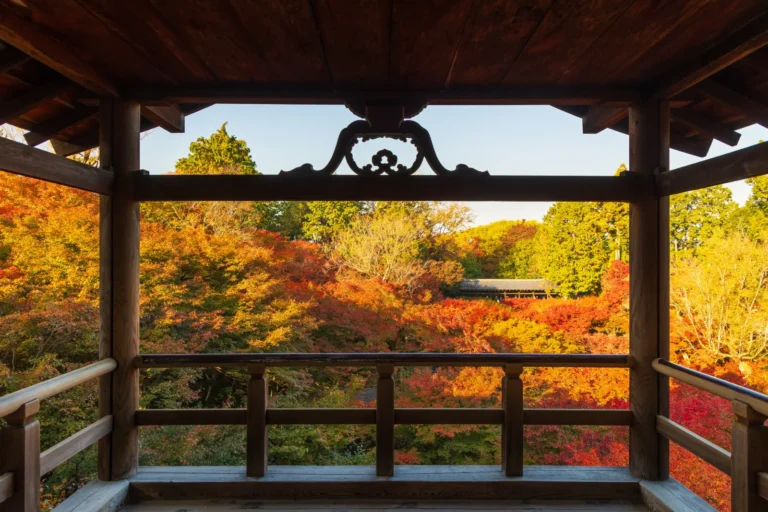
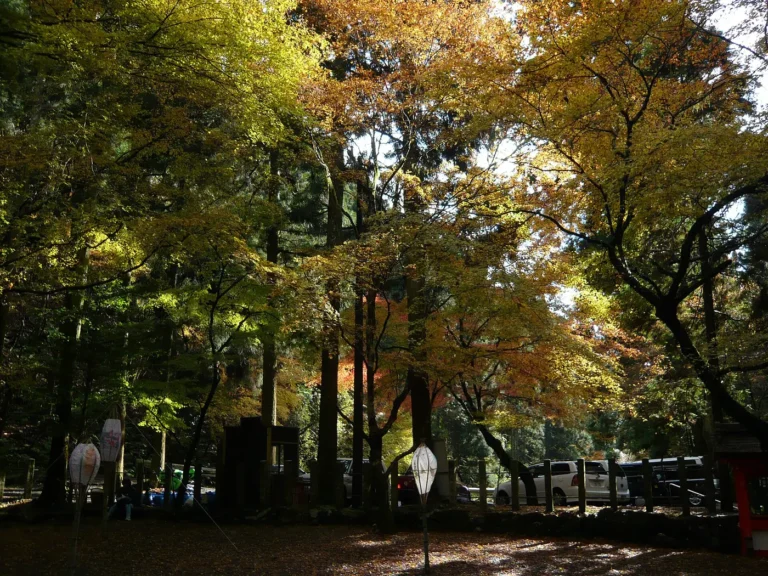
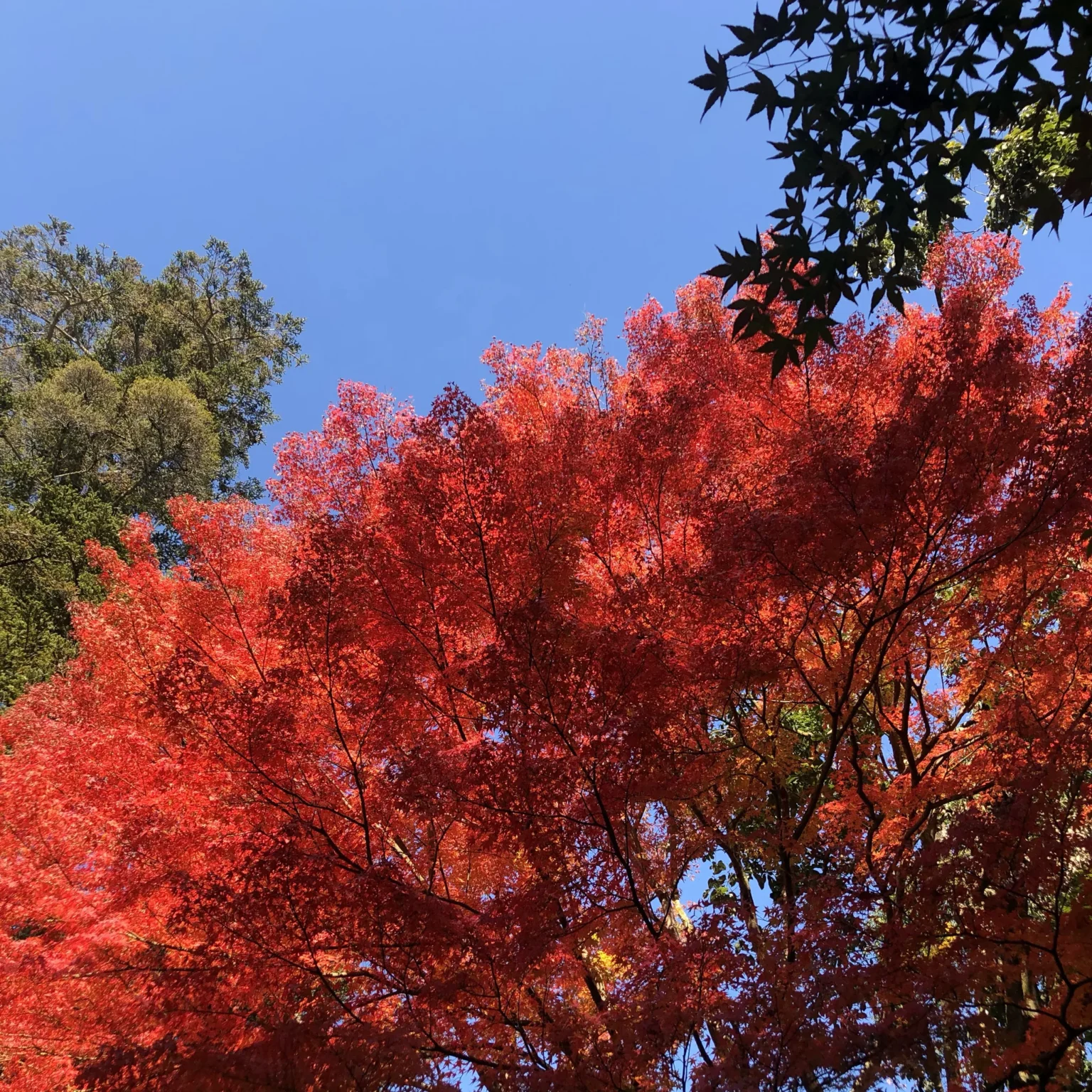
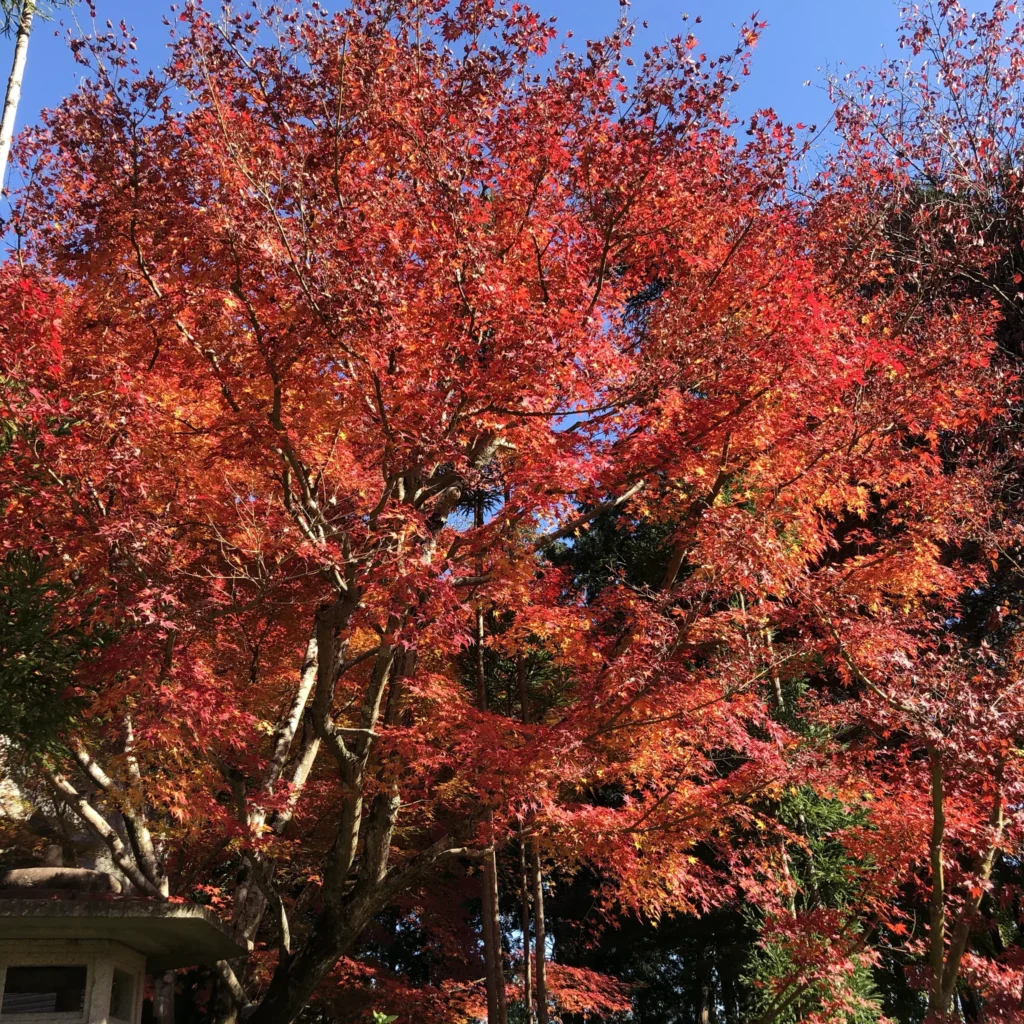
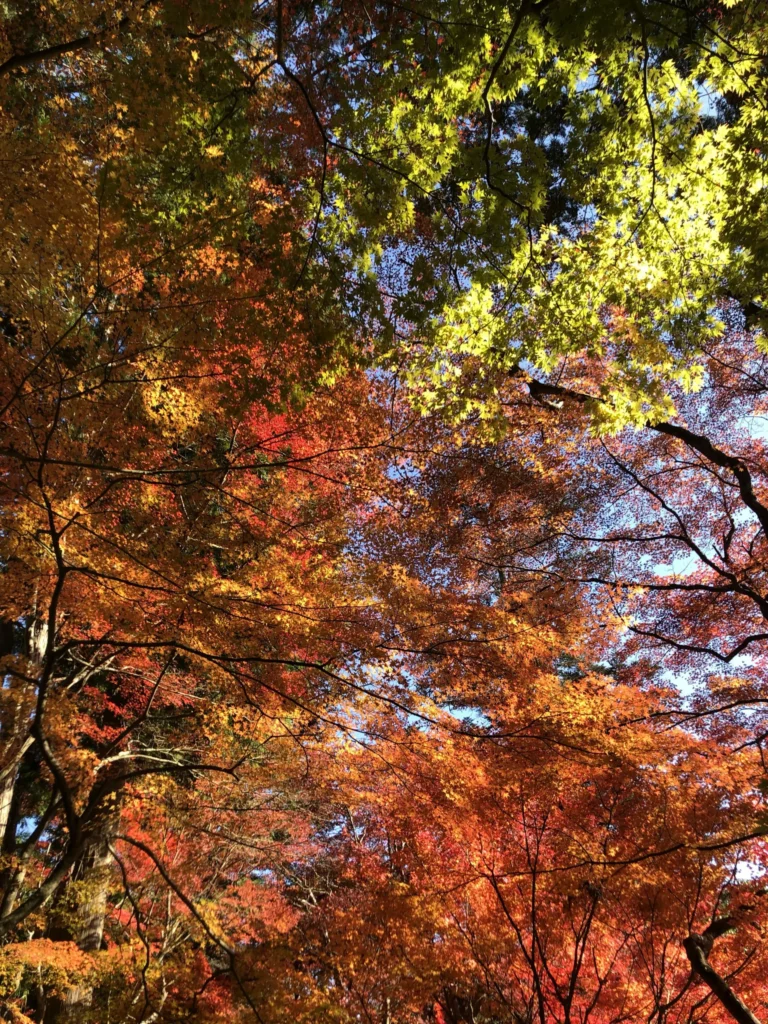
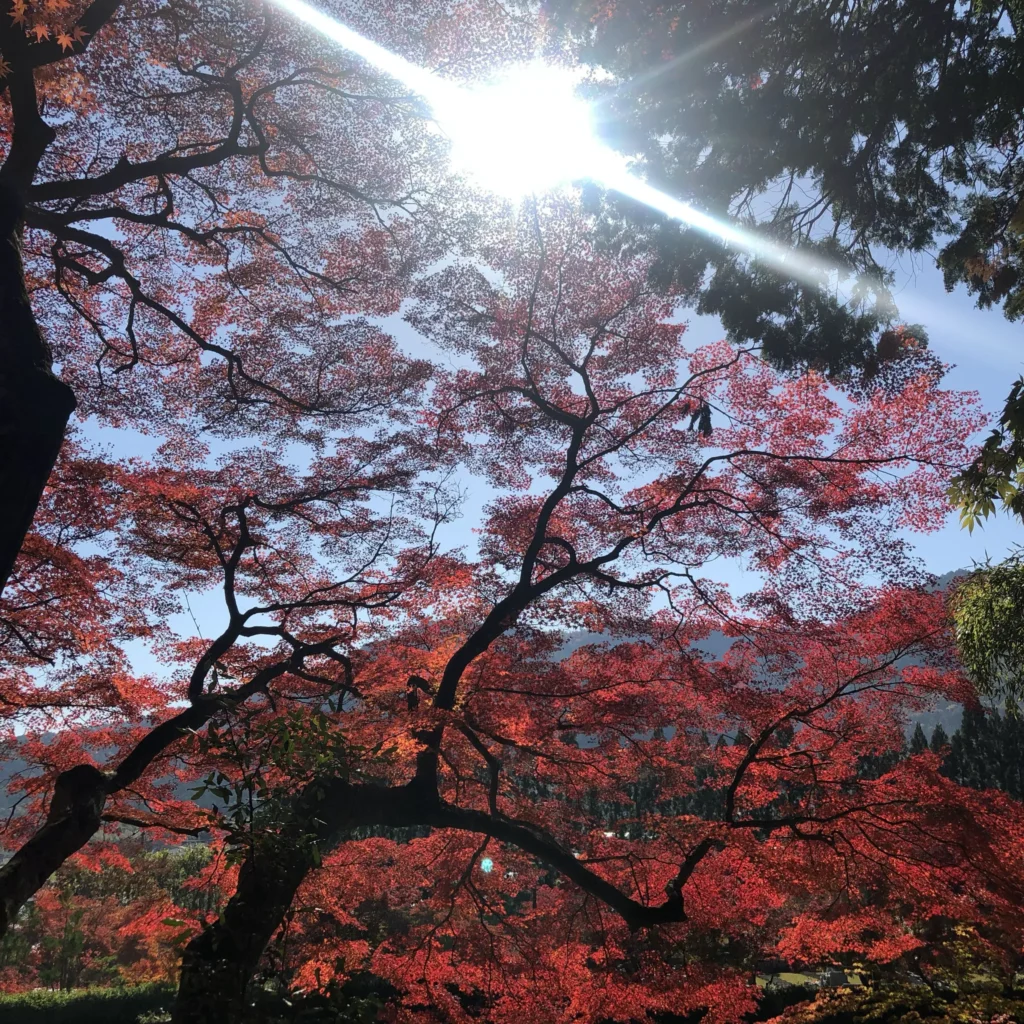
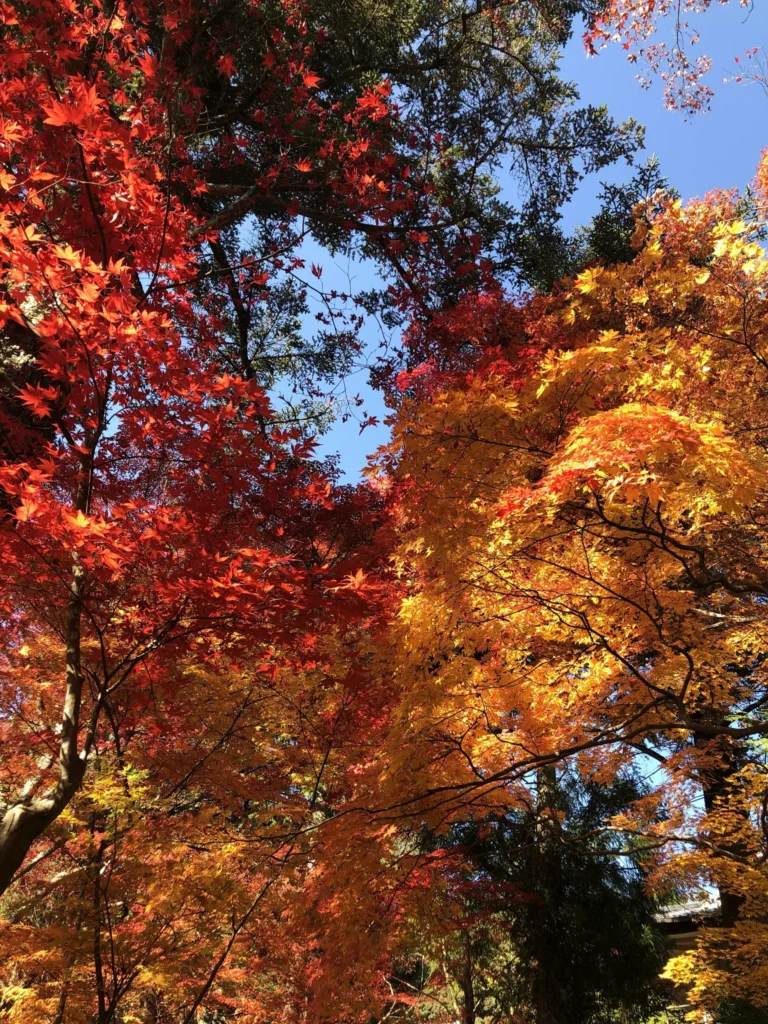
On the morning of 23 November 2019, a public holiday, my family and I drove to Myoshuji, a Soto Zen temple in Kameoka, just west of Kyoto. The maples over the approach were red, orange and yellow, and for the time we were there we had the grounds almost to ourselves.
I’m Nobu. Kameoka has Torokko Kameoka Station, on the Sagano Romantic Train line from Saga and Arashiyama, and Myoshuji (苗秀寺, read Myōshū-ji) sits in Hiedano-cho, the same district as the Yunohana Onsen hot springs. A Japanese leaflet about the temple, hosted on a Hiedano-cho website, is headed 亀岡のもみじ寺, “the maple temple of Kameoka”. Below are my photos from that morning, what that leaflet and the city’s records say about the temple, how to get there, and where to stay nearby.
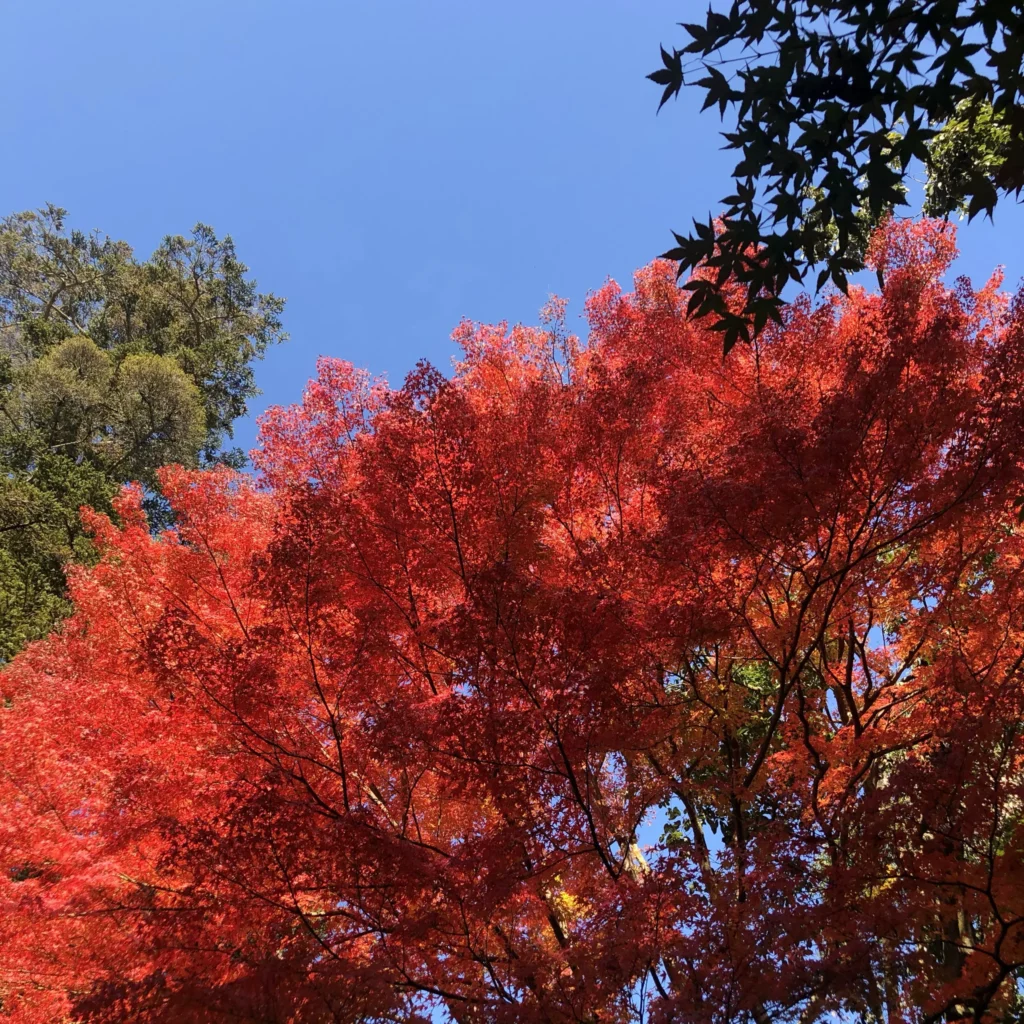
Our visit: red maples and almost no one else
We came by car on a public holiday in late November, and there was almost nobody there apart from us. We didn’t pay anything. We spent about an hour in the grounds; my photos are all from the first ten minutes, between 11:01 and 11:11.
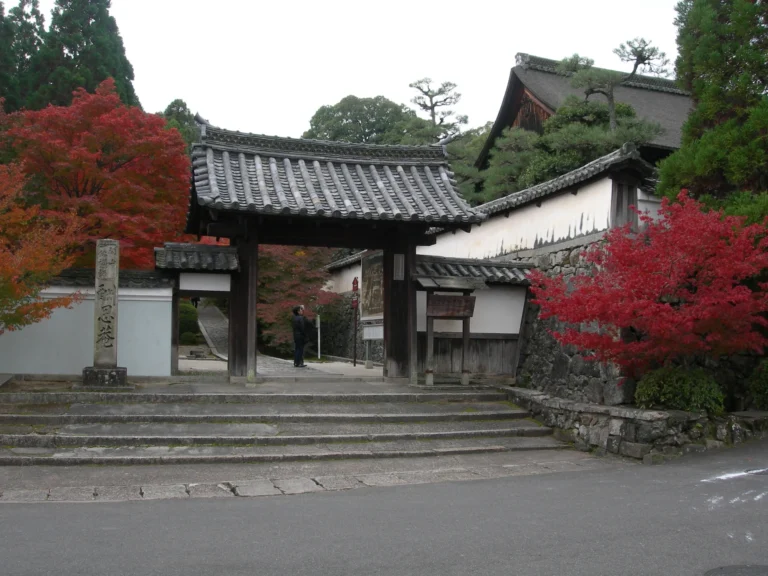
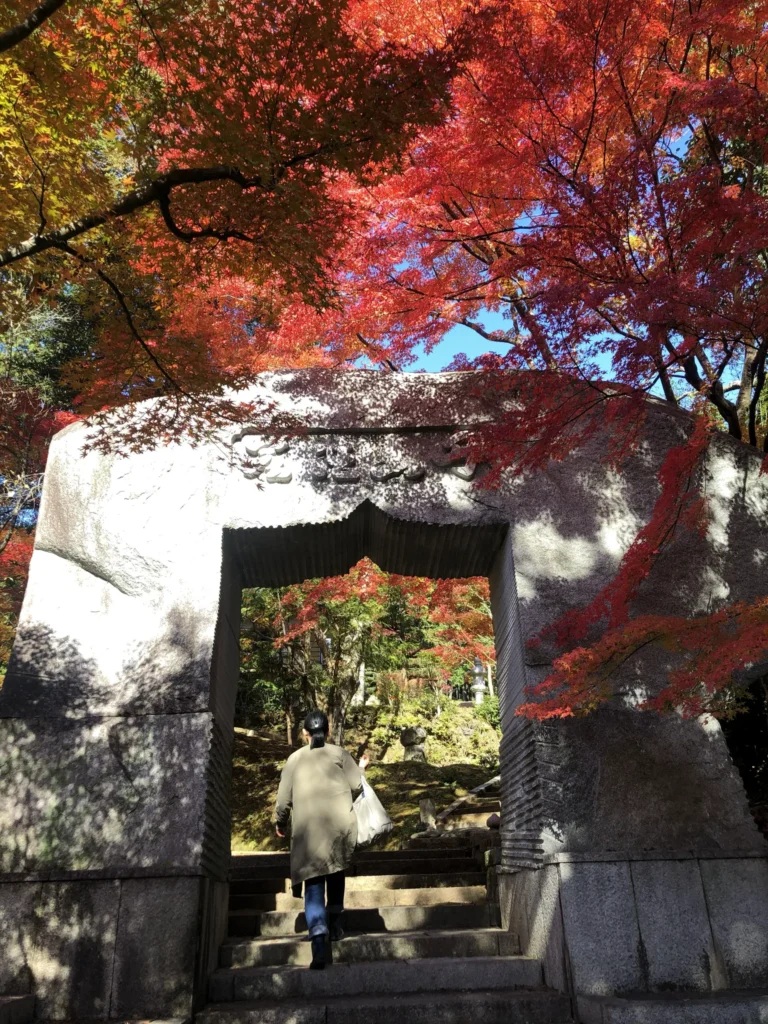
On the way in we walked through a huge pale stone gate. Its top is carved like a hanging curtain, and that morning red maple branches reached over it. Through the opening, stone steps led up into a mossy garden. I don’t remember a sign explaining it.
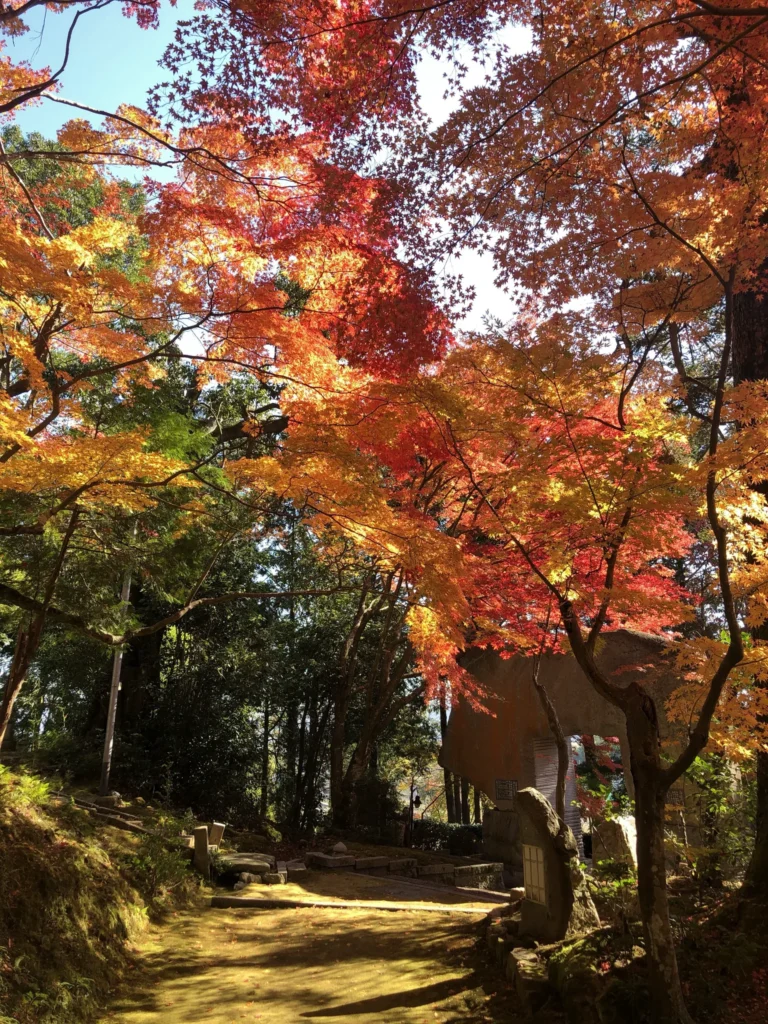
My other photos from that morning show a stone-paved path with bamboo handrails and moss on both sides, leading to a wooden gate with a tiled roof and white walls; another stone path along a stone wall under a tunnel of maples; and the view looking out through the wooden gate, to the maples, tall trees and a bamboo fence.
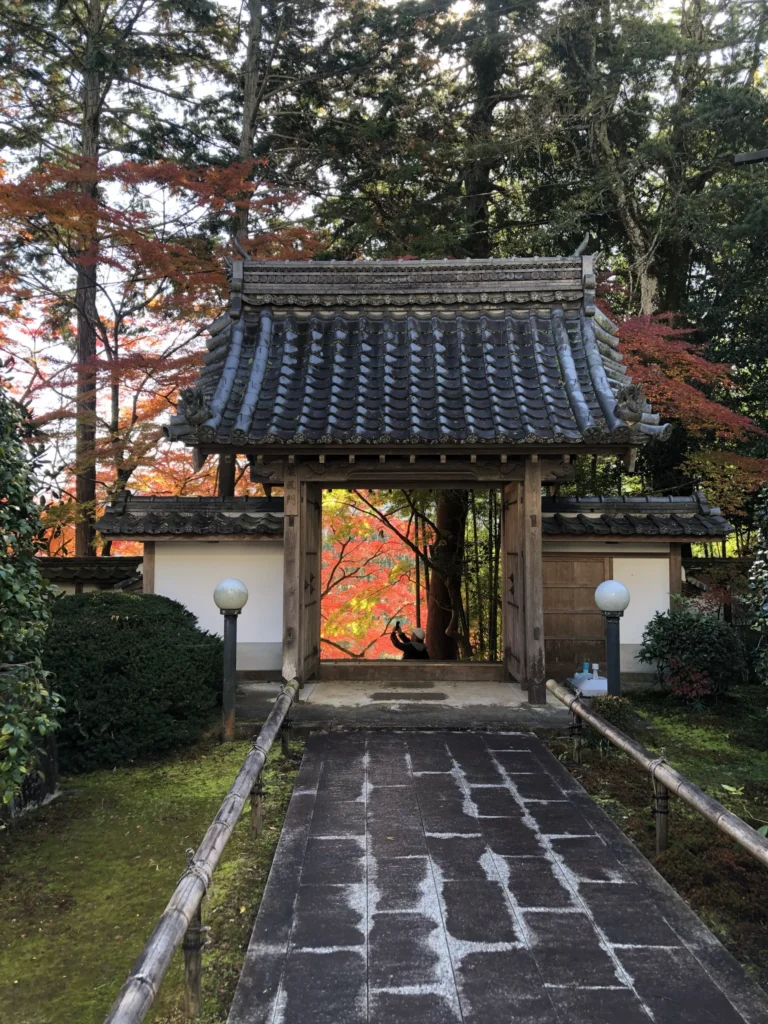
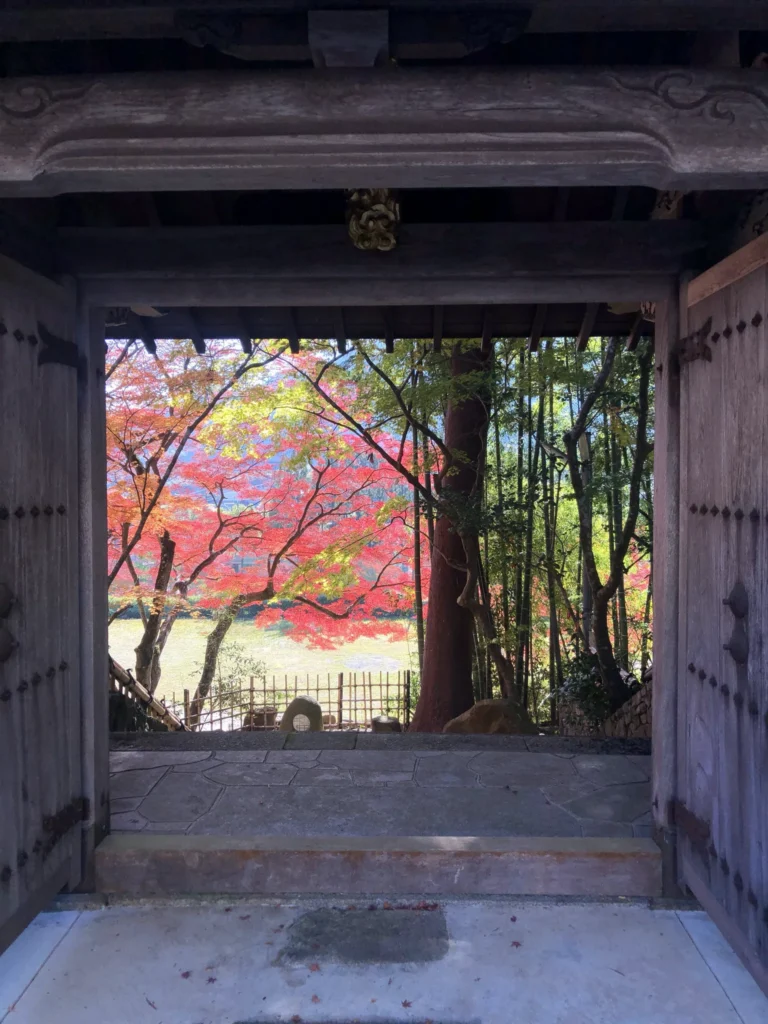
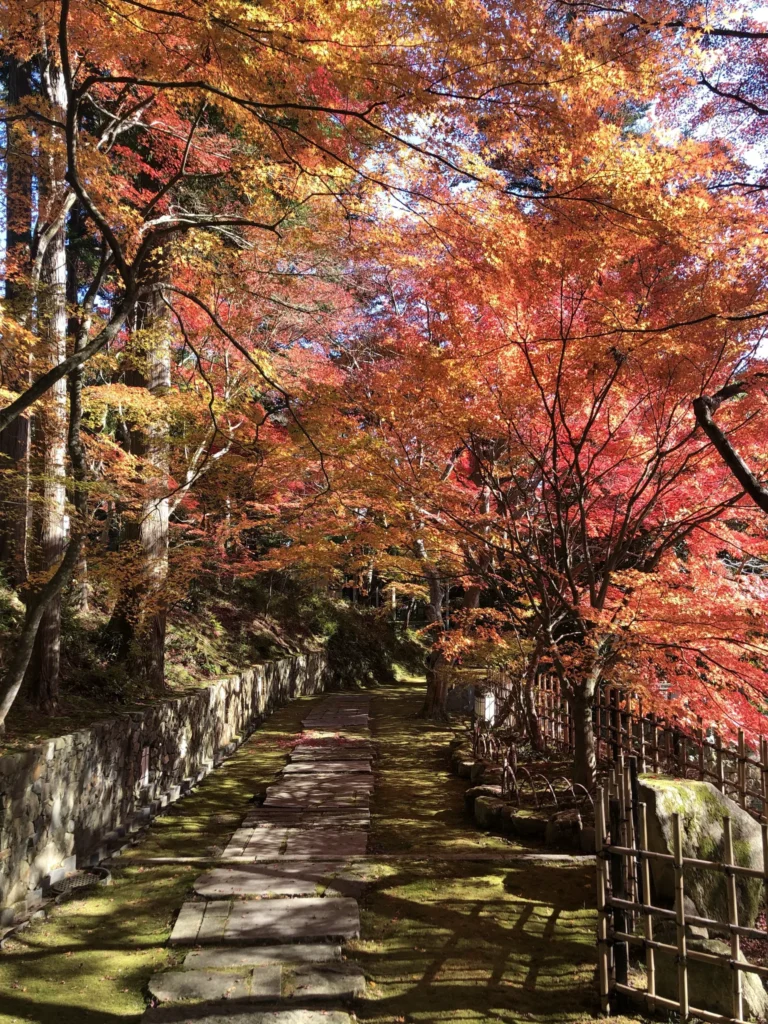
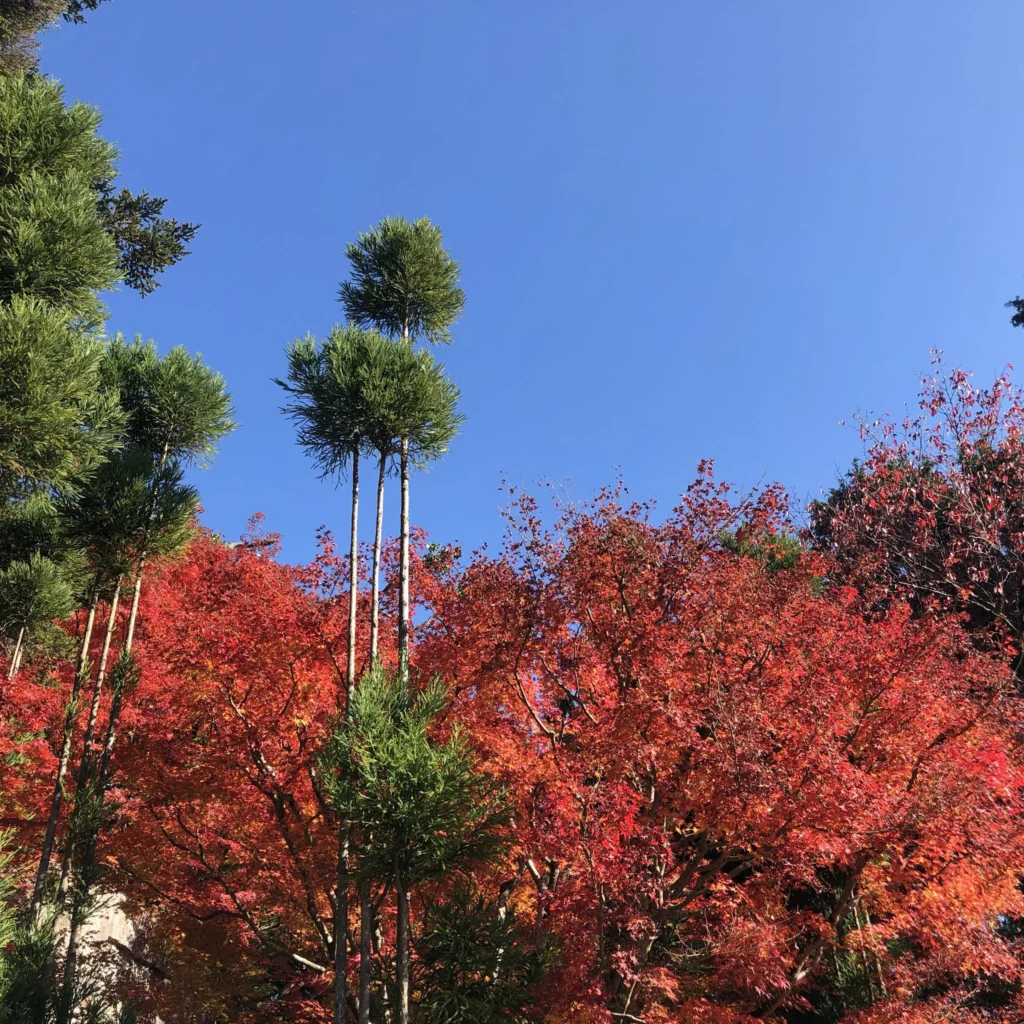
Most of my photos are of the leaves themselves, looking straight up. I can’t tell you whether 23 November was the peak that year. What I can show you is what the trees looked like that morning.
The three gates and the temple’s story
The leaflet (a PDF in Japanese; it doesn’t say who published it) describes the approach as three gates, each with a name. I can’t match the gates in my photos to these names, so I have left my captions without them.
Ryumon (龍門), the first gate
The leaflet explains the name by the “dragon gate” (登竜門) that everyone has to pass through first. It says the pillars are stone from Africa, about a metre square and 25 tonnes each, and that each base stone also weighs 25 tonnes.
Hakuzomon (白像門), the middle gate
Named because it looks like a white elephant. The leaflet gives it as granite from Saga Prefecture, 63 tonnes in total.
Yakuimon (薬医門), the main gate
The gate in front of the main hall, which the leaflet says is about 300 years old, with a gilded dragon carving. It also says the view from here in the maple season is wonderful.
According to the same leaflet, the temple’s story goes back to the Nara period, when it is said to have been a nunnery of the Yuga school. It became a Tendai temple in the Heian period and was burned in fighting by Akechi Mitsuhide’s forces. In 1625 Matsudaira Narishige, lord of Kameyama (today’s Kameoka), revived it as a Soto Zen temple. The leaflet then says the temple was granted the site of one of the domain’s mountain castles, and that Matsudaira Nobumine rebuilt it using timber from the castle. The leaflet says it has trained monks ever since.
Kameoka City’s list of cultural properties, current as of 31 March 2020, gives the main hall as mid-19th century, with a hipped-and-gabled thatched roof now covered in metal sheet. It also lists a granite hokyointo stupa, 2.38 m tall, from the Nanboku-cho period (14th century), and a garden dated to perhaps the mid-Edo period, according to temple tradition. All three are marked 未指定, “not designated”, on that list. The leaflet and the city list give different ages for the main hall, so I’ve written down both.
Getting there
By car. We went by car with our children. The Kameoka tourism association’s Myoshuji page gives about 10 minutes from Kameoka IC. Ask the temple about parking. If you are renting a car in Kyoto, you can search Japanese rental companies on Rakuten Travel (paid link).
By train and bus. Without a car, I would start from JR Kameoka Station, on the JR Sagano Line from Kyoto (my Kyoto Station guide covers finding the platform), and take a bus towards Yunohana Onsen. The tourism association names Kamisaeki as the nearest bus stop, about 5 minutes’ walk from the temple. Keihan Kyoto Kotsu’s stop guide lists route 40 from stop 3 at the station’s South Exit, running via Yunohana Onsen. I couldn’t confirm from these pages that route 40 stops at Kamisaeki, so use the company’s route search to find a bus that does, and its times on your day.
Before you go
Fees and opening hours
We didn’t pay anything in 2019. For the current fees and hours, call the temple on 0771-22-0811.
When to go
The association’s maple page gives November for Kameoka’s autumn leaves in general.
Bears
Kameoka City lists 2026 bear sightings in districts such as Higashibetsuin-cho, Hatano-cho and Shino-cho. Check the list before visiting.
If the quiet is what you are after, my lesser-known autumn temples in Kyoto, my Kyoto in November guide and my guide to Japan’s quieter escapes have more ideas.
Same day: Yunohana Onsen, the Torokko and the Hozu River
We fitted Myoshuji into a day that also took us to Yunohana Onsen, the Sagano Torokko and the Hozu River. If you don’t like crowds, my advice is to stop in Kameoka.
- Sagano Romantic Train (Torokko). The official site lists four stations, from Torokko Saga through Arashiyama and Hozukyo to Torokko Kameoka. Check the timetable and seats on the official site, or book a Sagano Romantic Train ticket on Klook (paid link).
- Hozu River boat ride. Check the season and the day’s sailings on the official site.
- Yunohana Onsen. The hot spring area is in the same Hiedano-cho district as the temple. Three of its inns are below.
From the Saga end, my walk up the Atago-kaido to Saga-Toriimoto is another quiet half-day.
Where to stay near Myoshuji
Three inns at Yunohana Onsen, in the same Hiedano-cho district as the temple, and one hotel by Kameoka Station for travelling without a car.
For a room with its own open-air bath: Kyo Yunohana Resort Suisen
A small inn: its official site lists 13 rooms in seven types, and its Rakuten Travel page lists room types with their own open-air bath. Check Suisen on Booking.com (paid link).
For hot spring rooms: Sumiya Kiho-an
Its official site lists rooms with their own hot spring open-air baths fed by flowing spring water. Check Sumiya Kiho-an on Agoda (paid link).
For a family bath: Syoenso Hozugawatei
Its official site has private baths for families and couples, and some rooms with their own open-air bath. Check Syoenso Hozugawatei on Booking.com (paid link).
For no car: Hotel Route-Inn Kyoto Kameoka Ekimae
Its official site gives 1 minute’s walk from JR Kameoka Station, a natural hot spring bath and a free breakfast buffet. Check Route-Inn Kameoka on Booking.com (paid link).
FAQ
How do you read 苗秀寺?
Myōshū-ji, written Myoshuji. The leaflet hosted on the Hiedano-cho website gives the reading みょうしゅうじ.
Is there an entry fee at Myoshuji?
We didn’t pay anything in November 2019. Call the temple (0771-22-0811) for the current rules.
When are the autumn leaves at Myoshuji?
The tourism association gives November for Kameoka’s leaves in general. On 23 November 2019, when I visited, the maples were red, orange and yellow.
How do I get to Myoshuji without a car?
Take the JR Sagano Line to Kameoka, then a bus towards Yunohana Onsen. The tourism association names Kamisaeki as the nearest stop, about 5 minutes’ walk. Check Keihan Kyoto Kotsu’s route search for the stop and times.
Was it crowded?
Not when we went. On the morning of 23 November 2019, a public holiday, there was almost no one there apart from my family.
What else is near Myoshuji?
Yunohana Onsen is in the same district. The same day we also went to the Sagano Torokko and the Hozu River.
Sources (checked 30 October 2026)
- My own visit, 23 November 2019, about an hour; my photos were taken between 11:01 and 11:11.
- Kameoka tourism association: Myoshuji · maples
- Myoshuji leaflet (PDF, Japanese)
- Kameoka City: list of cultural properties, as of 31 March 2020 (PDF, Japanese)
- Keihan Kyoto Kotsu: stop guide
- Kameoka City: bears
- Sagano Scenic Railway · Hozugawa Kudari
- Suisen · Suisen on Rakuten Travel · Sumiya Kiho-an · Syoenso Hozugawatei · Route-Inn Kameoka
Some links above are affiliate links — they cost you nothing extra and help keep this site going.
Join travelers discovering Japan's hidden side
Weekly dispatches from off-the-beaten-path Japan — spots and stories you won't find in guidebooks.
No spam. Unsubscribe anytime.
Welcome aboard!
You're in. See you in your inbox soon.