
Japan · Yamanashi · Kofu
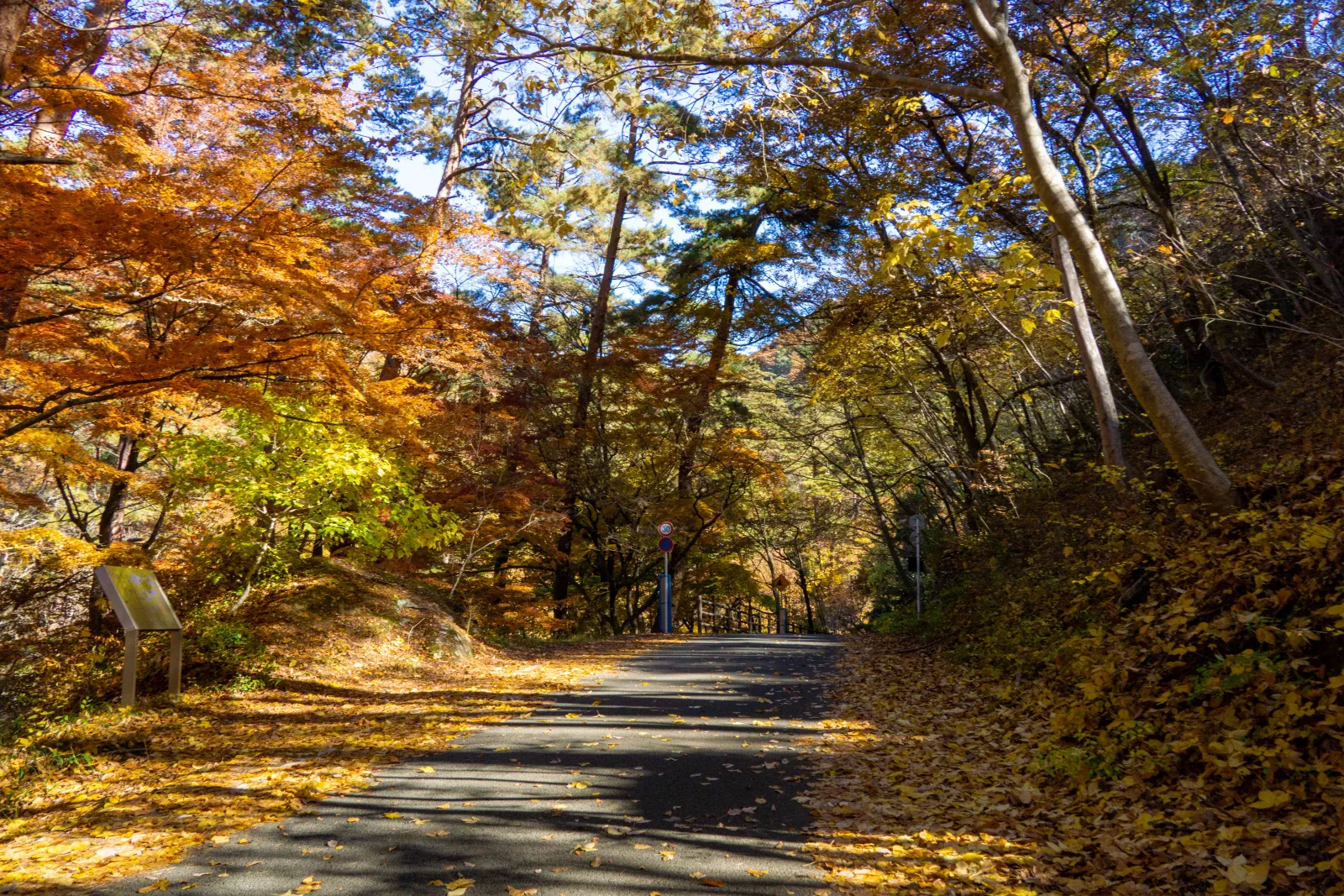
Shosenkyo Gorge is a granite valley spanning Kofu and Kai, about 4.1 km from Tenjinmori up to Senga Falls, and a Special Place of Scenic Beauty. Buses run from Kofu Station. For 2026 the Kofu Tourism Association expects the autumn colour to peak around 10 November. From 1 December to 31 March, buses terminate at Shosenkyo-iriguchi Tenjinmori, at the lower end of the gorge.
Below: what to see along the valley, how long the walk takes, the ropeway with its view of Mt Fuji, the bus details that change with the season, why Kofu became a crystal-polishing town, and short notes on other autumn spots in Yamanashi. Sources are at the end.
What to see at Shosenkyo Gorge
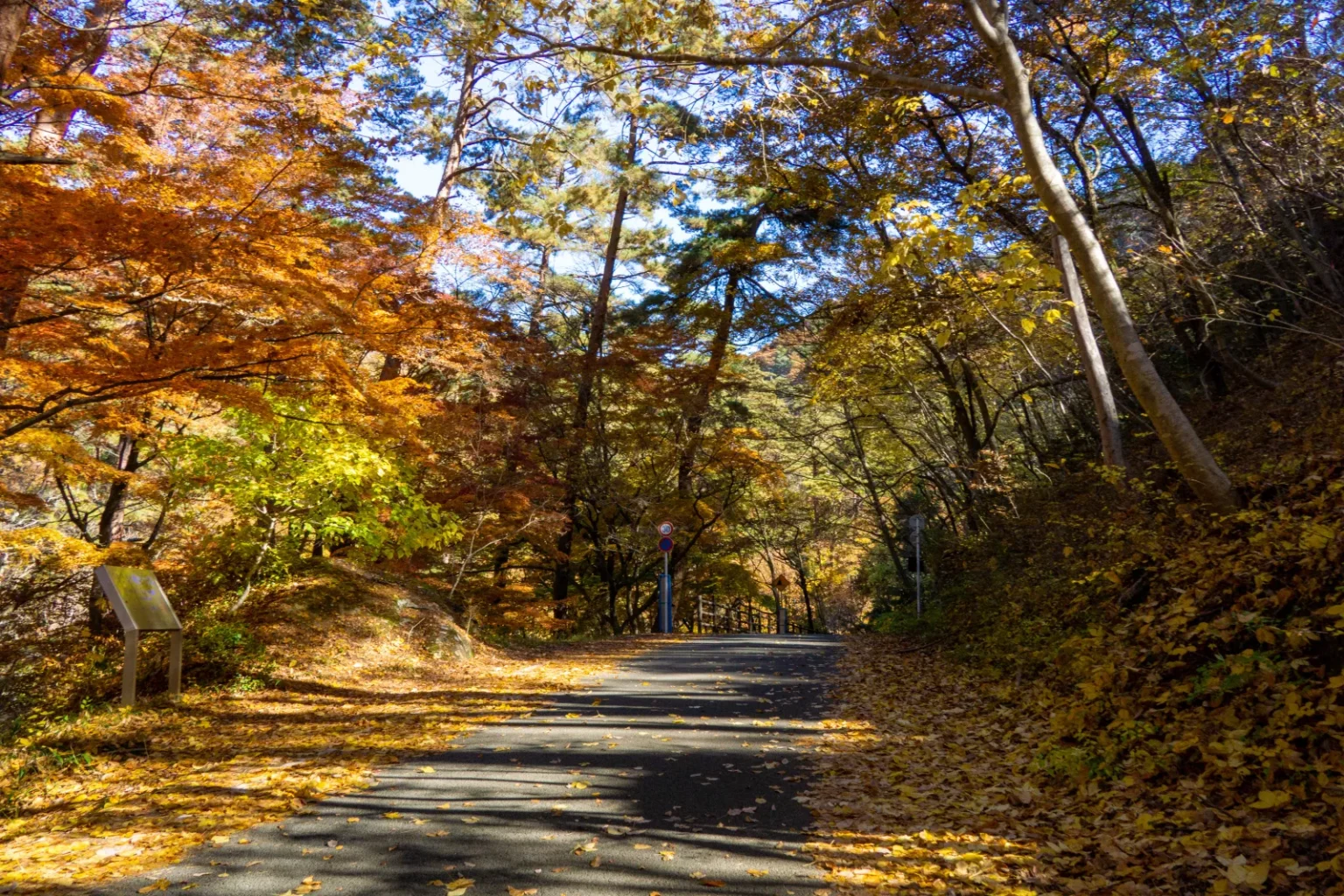
Yamanashi Prefecture’s cultural-property guide lists the gorge, officially Mitake Shosenkyo, as a Place of Scenic Beauty from 7 March 1923 and a Special Place of Scenic Beauty from 31 March 1953, spanning Kofu and Kai. It describes about 4.1 km of valley from Tenjinmori to Senga Falls, with oddly shaped rocks along the way.
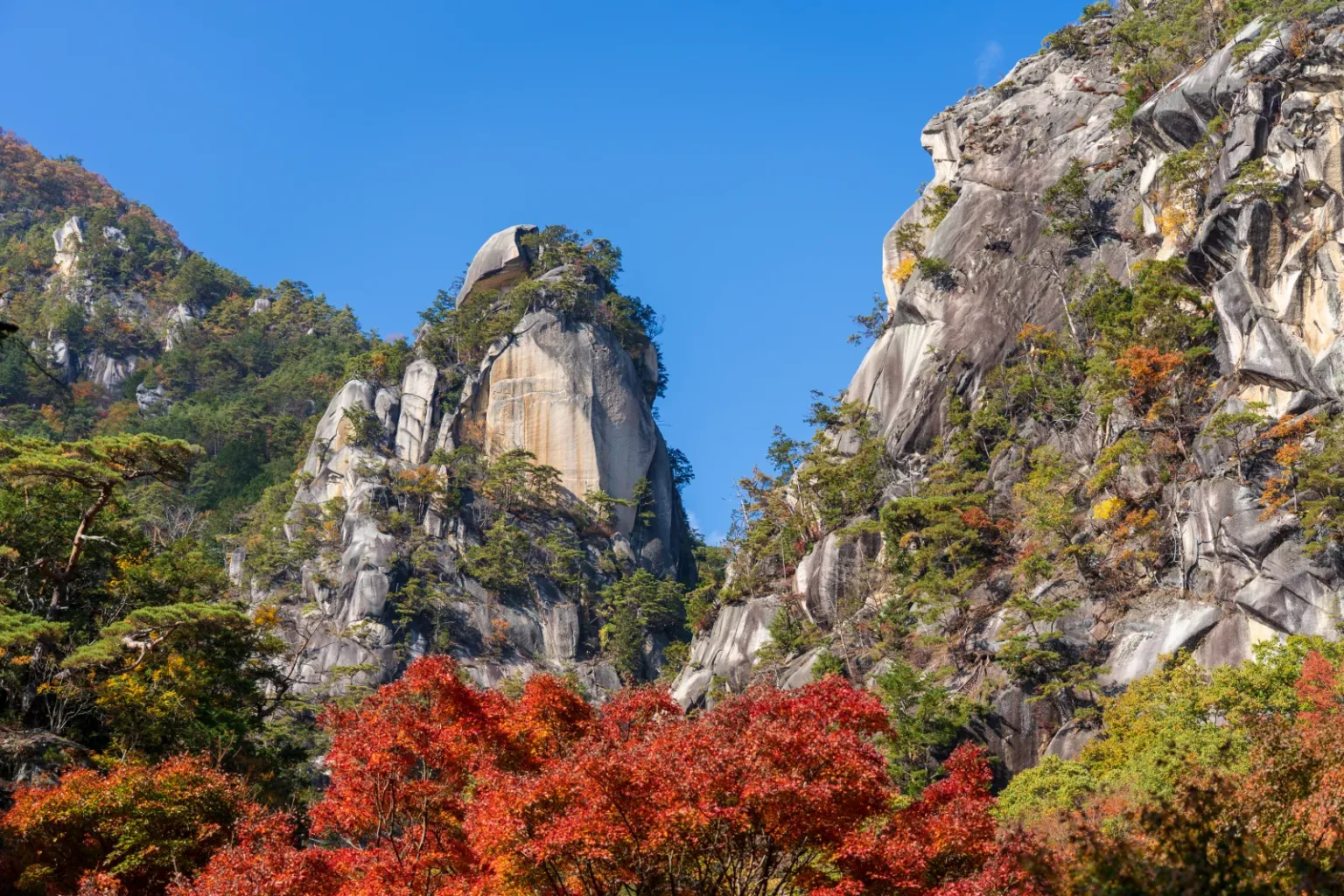
Kakuenbo (覚円峰). The Shosenkyo Tourist Association describes it as a sheer granite peak about 180 metres high, shaped by weathering and water. It says the name comes from Kakuen, a monk and disciple of the Zen master Takuan, who trained on the summit.
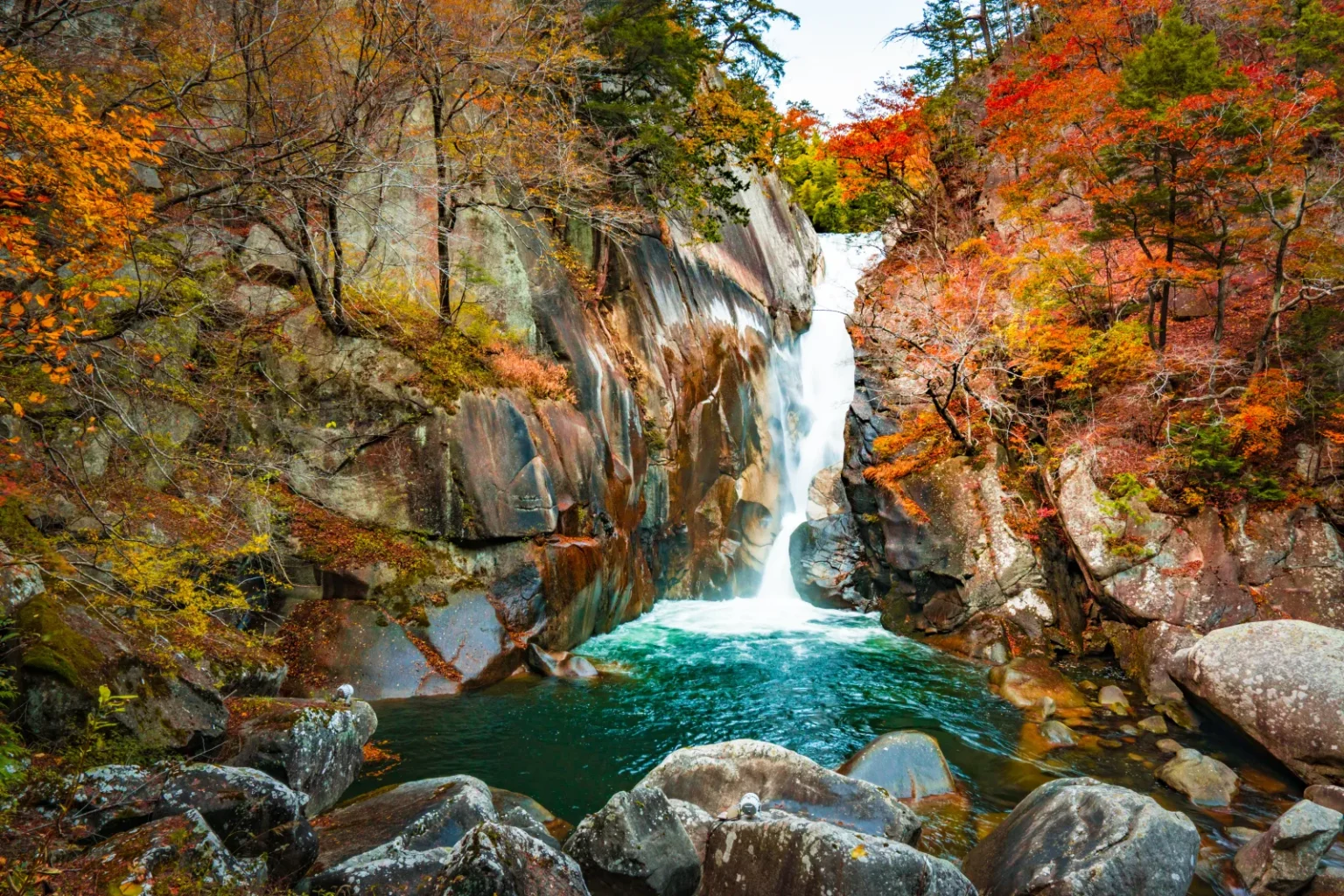
Senga Falls (仙娥滝). At the top of the gorge. The association says it was formed by a fault and drops 30 metres over granite.
Ishimon (石門). A natural arch formed by huge granite boulders.
Tenkorin (天鼓林). A prefectural natural monument: if you stamp hard on the ground at certain spots in the wood, the association says, you hear a drum-like sound come back from below.
Nagatoro Bridge (長潭橋). Near the entrance to the gorge. Completed in 1925, it is the oldest concrete arch road bridge in the prefecture, the association says, and was recognised as civil-engineering heritage by the Japan Society of Civil Engineers in 2012.
How long does the Shosenkyo walk take?
The prefecture gives the length from Tenjinmori to Senga Falls as about 4.1 km. The Kofu Tourism Association offers two model walks: a short one of 30 to 40 minutes and a longer one of 2 to 2½ hours through the gorge. Road closures on prefectural roads are posted on Yamanashi Prefecture’s road-information page, so check it on the day.
In winter, distances matter more. The Shosenkyo Tourist Association says it is about 5 to 6 km from the Shosenkyo-guchi Tenjinmori bus stop to Senga Falls, and that from 1 December to 31 March the buses go no further than Tenjinmori. It also warns about road surfaces in winter.
Shosenkyo Ropeway and the view of Mt Fuji
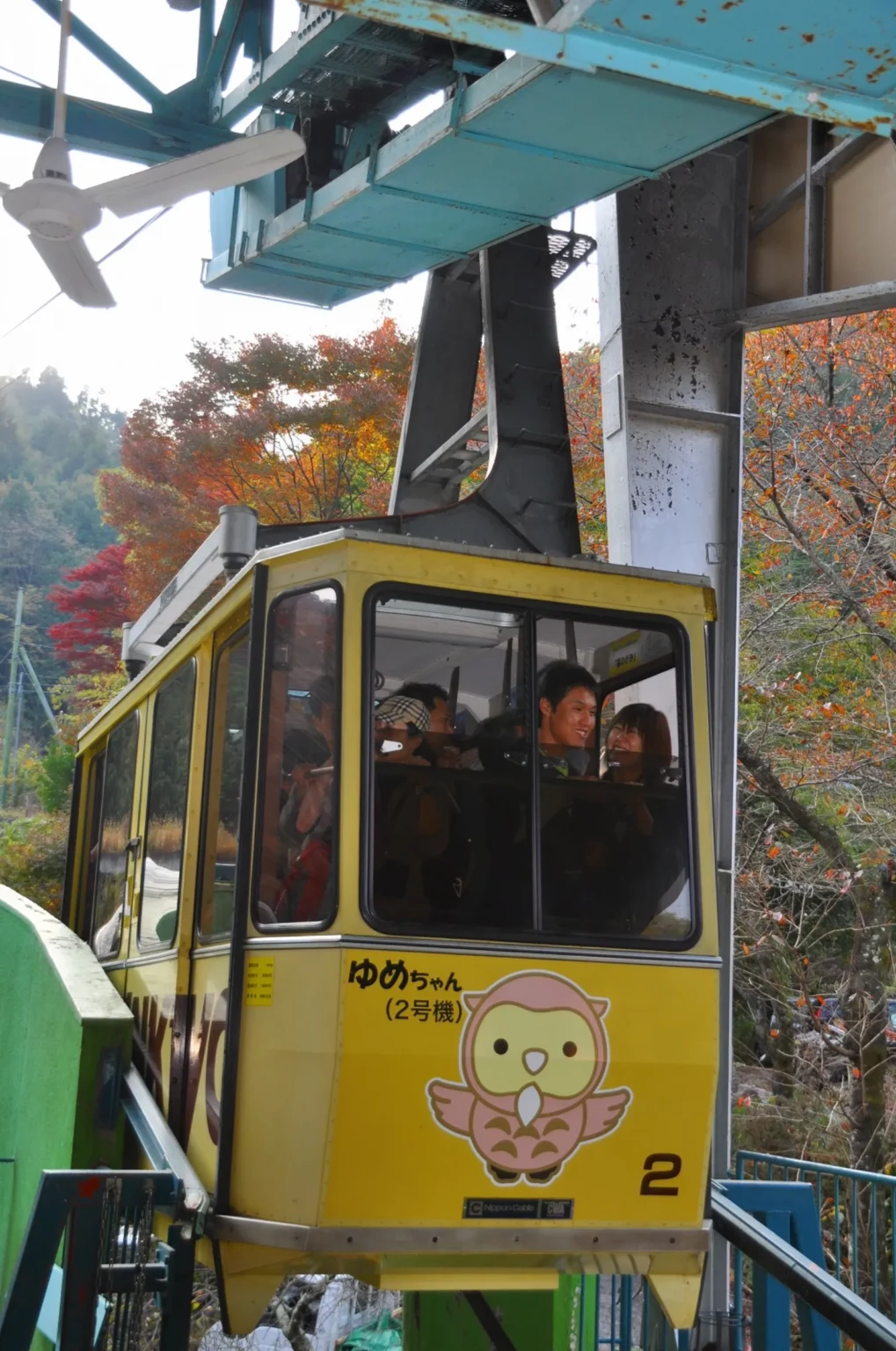
The ropeway runs from Sengataki Station, near the falls, to Panoramadai Station in about 5 minutes, every 20 minutes, with extra cars every 5 to 10 minutes when it is busy. Fares are ¥1,500 return or ¥800 one way for adults (junior-high age and up), and ¥750 or ¥400 for children aged 4 to primary school; under-4s ride free. From 1 April to 30 November the last car up is at 17:10 and the last down at 17:30; from 1 December to 31 March, 16:10 and 16:30.
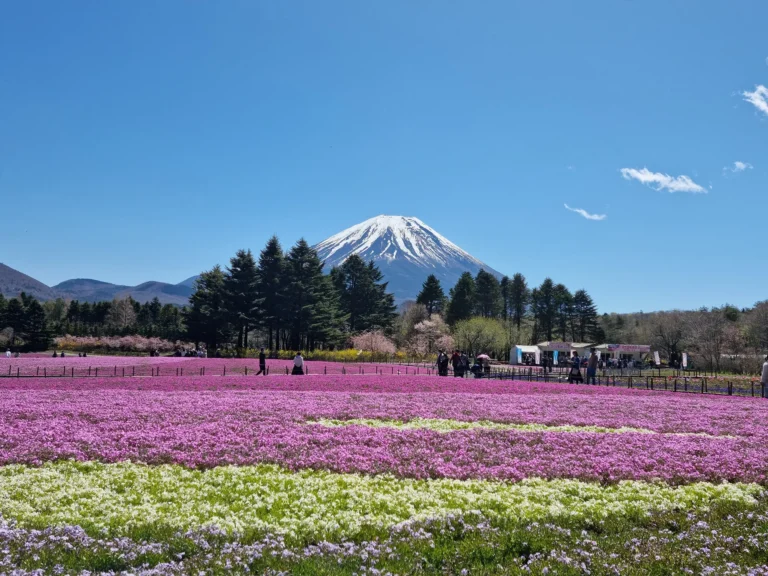
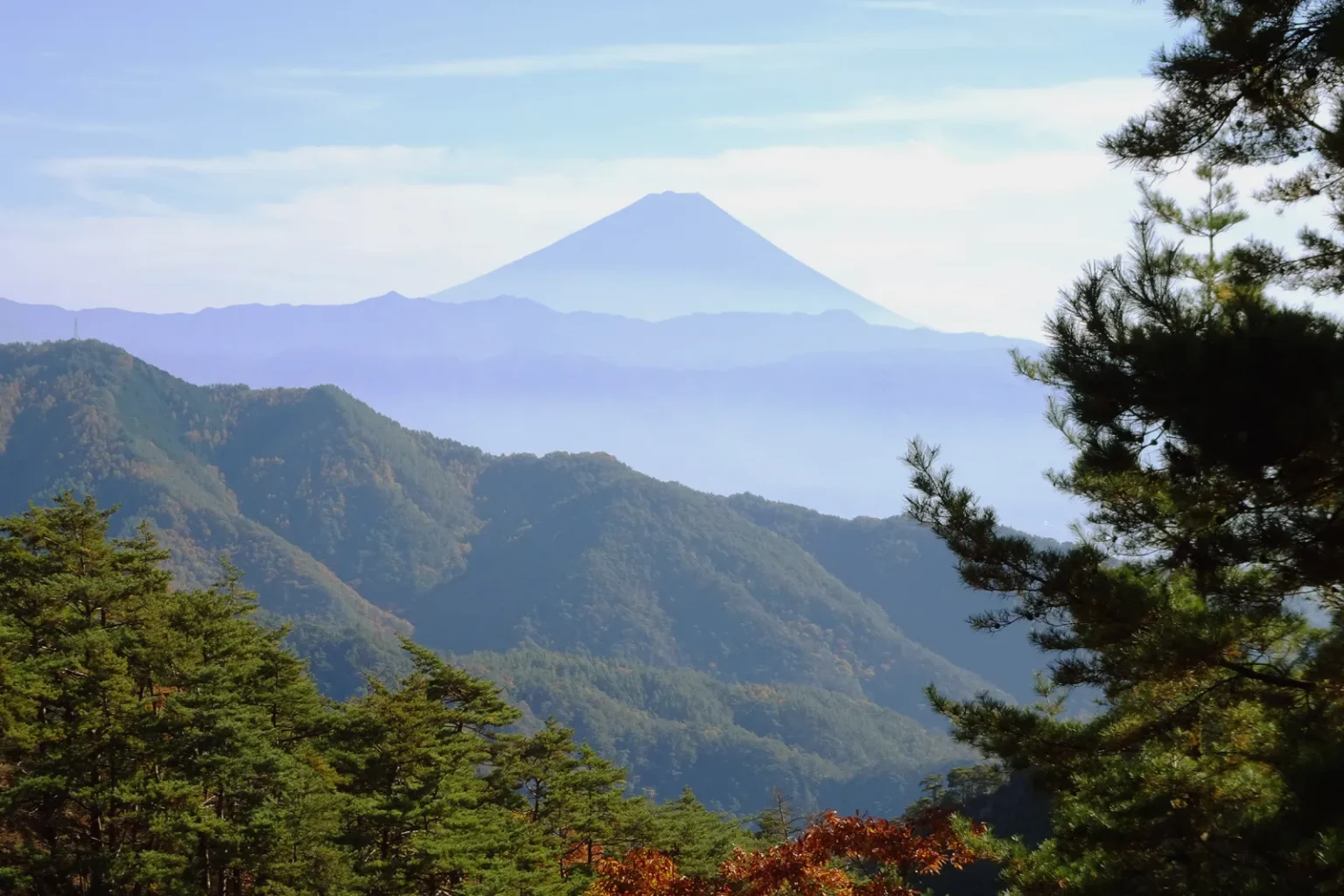
The operator says that from the top you can see Mt Fuji, Kitadake and Ainodake, which it lists as Japan’s three highest peaks, all in Yamanashi. It may stop in strong wind or snow, and it closes once a year for maintenance; the operator asks you to phone for those dates.
Shosenkyo autumn leaves in 2026
The Kofu Tourism Association says the colour usually peaks from early to mid-November. On 22 October 2026 it reported some trees in the Takiue area starting to turn, and in its 27 October update it expected the peak around 10 November, depending on the weather.
Crystal Mikoshi, 15 November. The Shosenkyo Tourist Association has announced the Crystal Mikoshi, a portable shrine carrying crystal as its sacred object, for Sunday 15 November 2026, 11:00–13:30, rain or shine, around Senga Falls and Suisho Kaido. It says visitors who are handed a happi coat can join in carrying it. We found no 2026 dates for a gorge light-up.
Parking. There are two free car parks along the Greenline road: Tenjinmori, for about 60 cars, and the prefectural Greenline car park, for about 35 cars and 5 buses. The tourism association warns they get very crowded in the autumn-leaf season. If you plan to hire a car, compare rental cars in Japan on DiscoverCars.
For how forecasts like this are made, see our autumn forecast explainer.
How to get to Shosenkyo Gorge from Tokyo and Kofu
To Kofu. As an example from JR East’s November 2026 timetable, the Azusa 1 limited express leaves Shinjuku at 7:00 and reaches Kofu at 8:27.
Bus from Kofu Station. Yamanashi Kotsu’s Shosenkyo buses leave from stand 4 at the bus terminal on the south side of Kofu Station. Adult one-way fares are ¥710 to Shosenkyo-iriguchi Tenjinmori, ¥1,000 to Greenline Shosenkyo and ¥1,090 to Shosenkyo Takiue. From 1 December to 31 March the buses end at Tenjinmori. Some buses don’t run on Saturdays and holidays, so check the timetable for your day.
Autumn extras. Yamanashi Kotsu runs extra rapid buses on Saturdays, Sundays and holidays from the third Saturday of October to 30 November. The Kofu Tourism Association advises leaving plenty of time to queue for the bus back from Takiue in the autumn season.
Where to stay. Kofu is the base for the gorge. Search Kofu hotels on Booking.com or compare Kofu stays on Agoda.
Staying near Kofu Station makes the first bus easy.
Check Kofu availability for your datesWhy Kofu polishes crystal: the Shosenkyo connection
Yamanashi Prefecture traces Kofu’s crystal craft to the discovery of crystal about 1,100 years ago on Mt Kinpu, deep beyond Shosenkyo. In the Tenpō era of the Edo period, it says, craftsmen were brought from Kyoto and a method was devised of polishing crystal with emery on an iron plate. Kofu City describes its jewellery industry as having started with the crystal found around Mitake Shosenkyo, and says the city now has every stage of jewellery-making, from design and stone-cutting to metalwork and sales.
Other places to add to a Yamanashi trip
For a few more destinations around the prefecture:
- Lake Kawaguchi. See our Kawaguchiko autumn leaves festival guide.
- Lake Yamanaka, Asahigaoka lakeside park. Yamanakako Village’s 2026 specification for its autumn event at the park sets the period as 30 October to 15 November 2026. See our Yamanakako autumn leaves festival guide.
- Lake Shoji. The smallest of the Fuji Five Lakes and part of the Mt Fuji World Heritage site, the prefecture’s tourism site says.
- Minobusan Kuonji. See our Minobusan Kuonji guide.
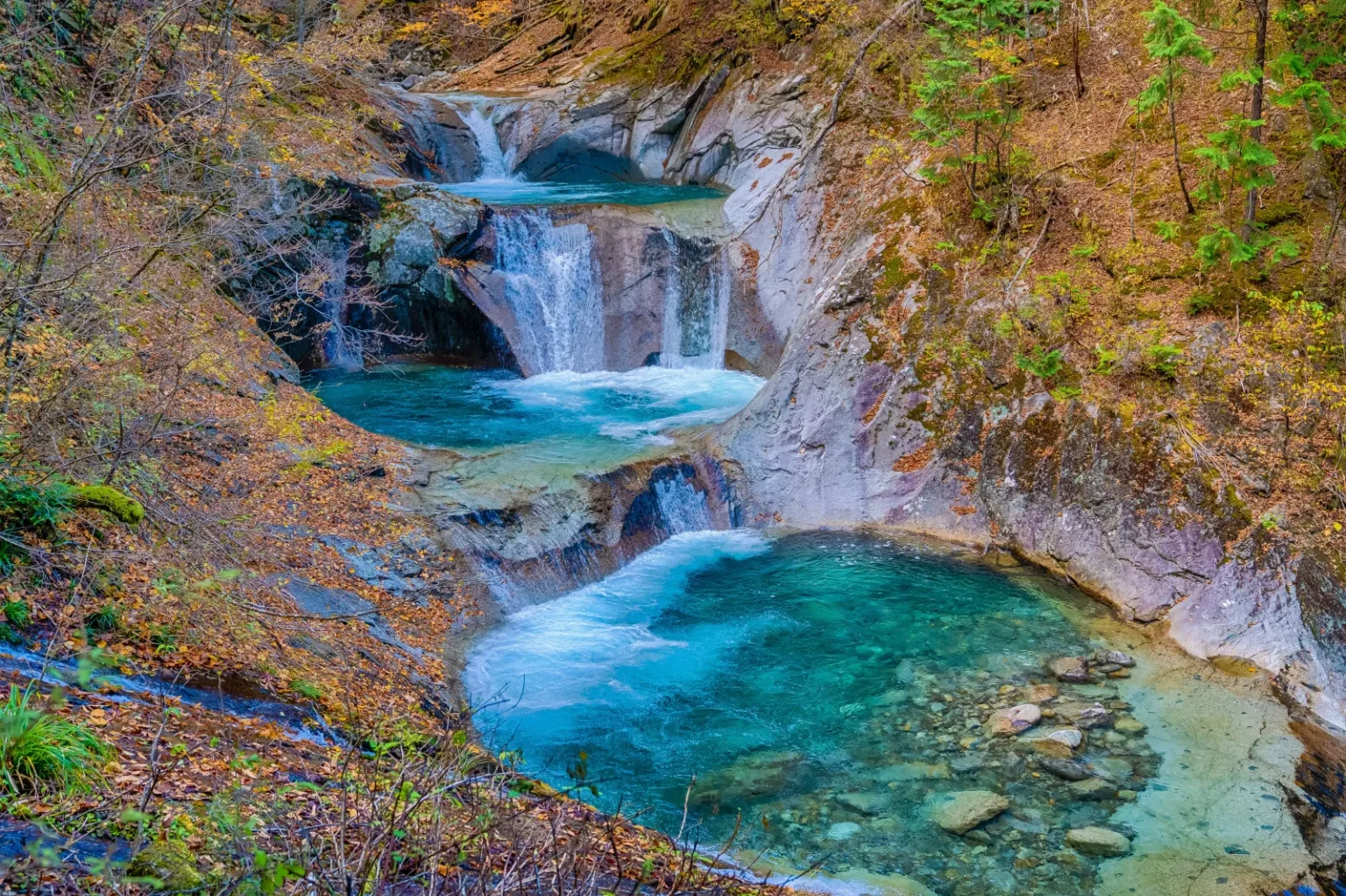
- Nishizawa Valley (Yamanashi City). The prefecture lifted a closure on 14 September 2026, and the whole trail is open again. Yamanashi City gives the usual maple season as mid-October to early November and closes the trail for winter from 1 December to 28 April, depending on snow.
- Saruhashi (Otsuki). Otsuki City calls it one of Japan’s three “strange bridges”, with Kintaikyō in Iwakuni and the Kiso plank bridge, and lists it as a national Place of Scenic Beauty.
- Kiyosato Terrace. Sun Meadows Kiyosato’s 2026 green season ends on 3 November. The panorama lift runs 9:00–16:30 (last ride up 16:00) and costs ¥3,000 for adults.
- Mt Kentoku and Mt Daibosatsu. Yamanashi City gives the Kentoku trailhead as about 30 minutes by bus from Yamanashi-shi Station. For Daibosatsu, the access to Kamihikawa Pass is by Eiwa Kotsu bus from Kai-Yamato Station. We could not confirm the 2026 bus seasons for either, so check before planning a hike.
For more autumn colour within reach of Tokyo, see our Chichibu guide and Fukuroda Falls guide.
Shosenkyo Gorge: FAQ
How long is the walk through Shosenkyo Gorge?
Yamanashi Prefecture gives about 4.1 km from Tenjinmori to Senga Falls. The Kofu Tourism Association’s longer model walk takes 2 to 2½ hours.
How do I get to Shosenkyo from Kofu Station?
Take Yamanashi Kotsu’s Shosenkyo bus from stand 4 at the south-side bus terminal. Adult fares are ¥710 to Tenjinmori, ¥1,000 to Greenline Shosenkyo and ¥1,090 to Takiue.
Do buses reach Senga Falls in winter?
No. From 1 December to 31 March buses stop at Shosenkyo-guchi Tenjinmori, about 5 to 6 km from Senga Falls.
When are the autumn leaves best at Shosenkyo?
Usually early to mid-November. For 2026, the Kofu Tourism Association expected the peak around 10 November in its 27 October update.
How much is the Shosenkyo Ropeway?
¥1,500 return or ¥800 one way for adults, and ¥750 or ¥400 for children. The ride takes about 5 minutes.
Can you see Mt Fuji from Shosenkyo?
The ropeway operator says Mt Fuji, Kitadake and Ainodake can all be seen from the top station.
Is there parking at Shosenkyo?
Yes: two free car parks on the Greenline road, Tenjinmori (about 60 cars) and the prefectural Greenline car park (about 35 cars and 5 buses). Both get very busy in the autumn season.
Sources (checked 27 October 2026)
- Yamanashi Prefecture: Mitake Shosenkyo (cultural property); Road information; Koshu crystal craft; Nishizawa reopening; Bear warning (Japanese)
- Kofu: 2026 Shosenkyo autumn report; Model course (English); Jewellery industry plan (Japanese)
- Shosenkyo Tourist Association: Sights; Access and parking; October 2026 news (Japanese)
- Transport: Yamanashi Kotsu Shosenkyo bus; JR East Azusa 1, November 2026; Shosenkyo Ropeway fares and times, home (Japanese)
- Other Yamanashi spots: Lake Shoji; Yamanashi City Nishizawa Valley, forest therapy (seasons), Mt Kentoku; Daibosatsu access; Otsuki City Saruhashi; Sun Meadows Kiyosato hours and fares; Yamanakako Village 2026 autumn event specification (Japanese)
Some links above are affiliate links — they cost you nothing extra and help keep this site going.
Join travelers discovering Japan's hidden side
Weekly dispatches from off-the-beaten-path Japan — spots and stories you won't find in guidebooks.
No spam. Unsubscribe anytime.
Welcome aboard!
You're in. See you in your inbox soon.