
Japan basics · Toilets · Finding one, the buttons, what to flush
One rule worth knowing about toilets in Japan: under the national registration rules, a roadside station (michi-no-eki) must have a car park that users can use free, 24 hours a day, and clean toilets; an earlier summary of the rules says the toilets should be usable 24 hours. Squat toilets are still in use. In my own village’s official list, 26 of the 60 cubicles in its 16 public toilets were squat in 2023.
I’m Nobu. When I’m out in Yamanakako, I often use the lakeside public toilet called Marimo-an; in Fujiyoshida, the roadside station. Elsewhere, I often use convenience stores and the service areas and parking areas on the expressways. This guide covers what those places have, what the buttons mean, what you can flush, and what has changed at Shibuya’s designer toilets.
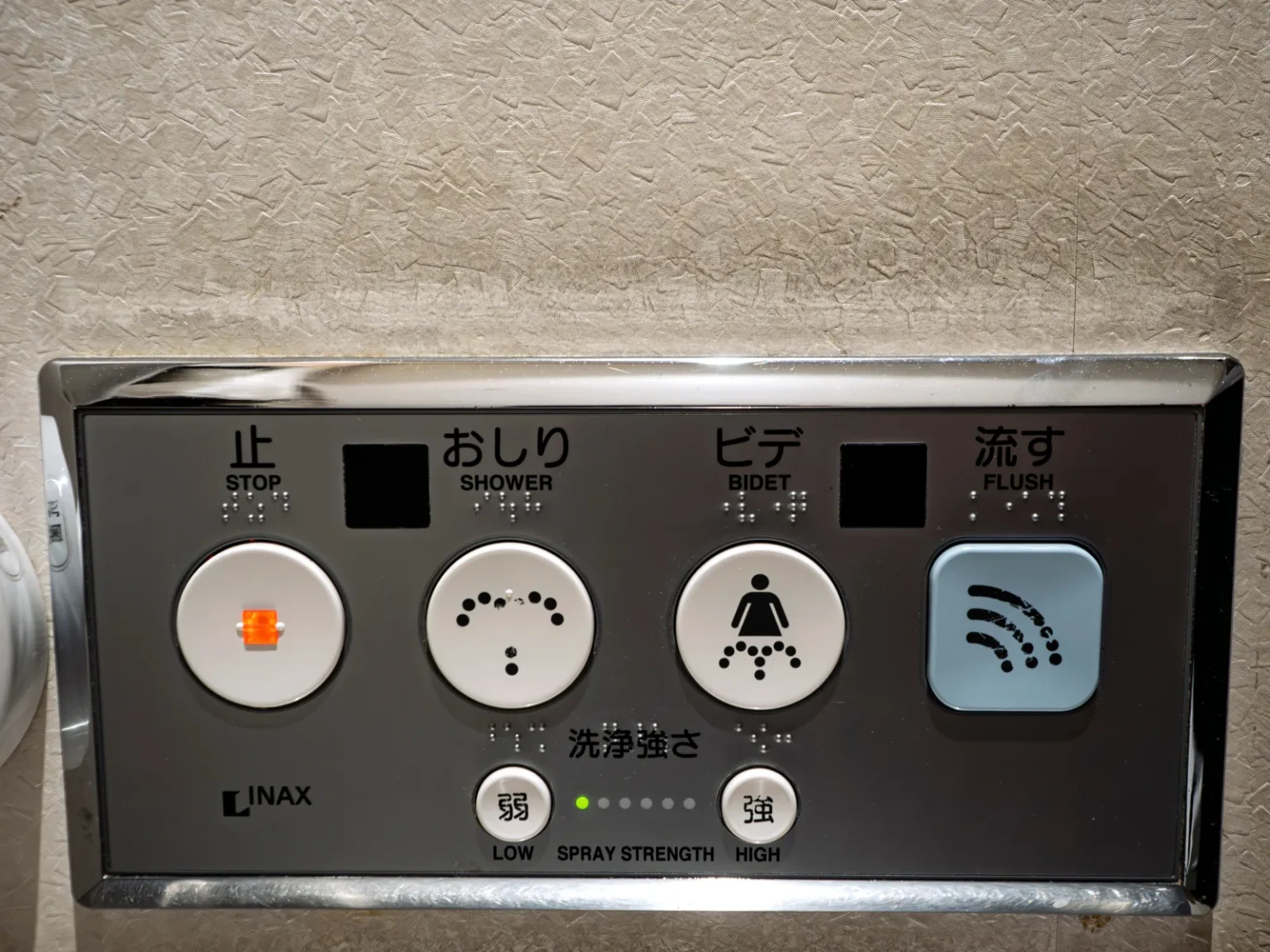
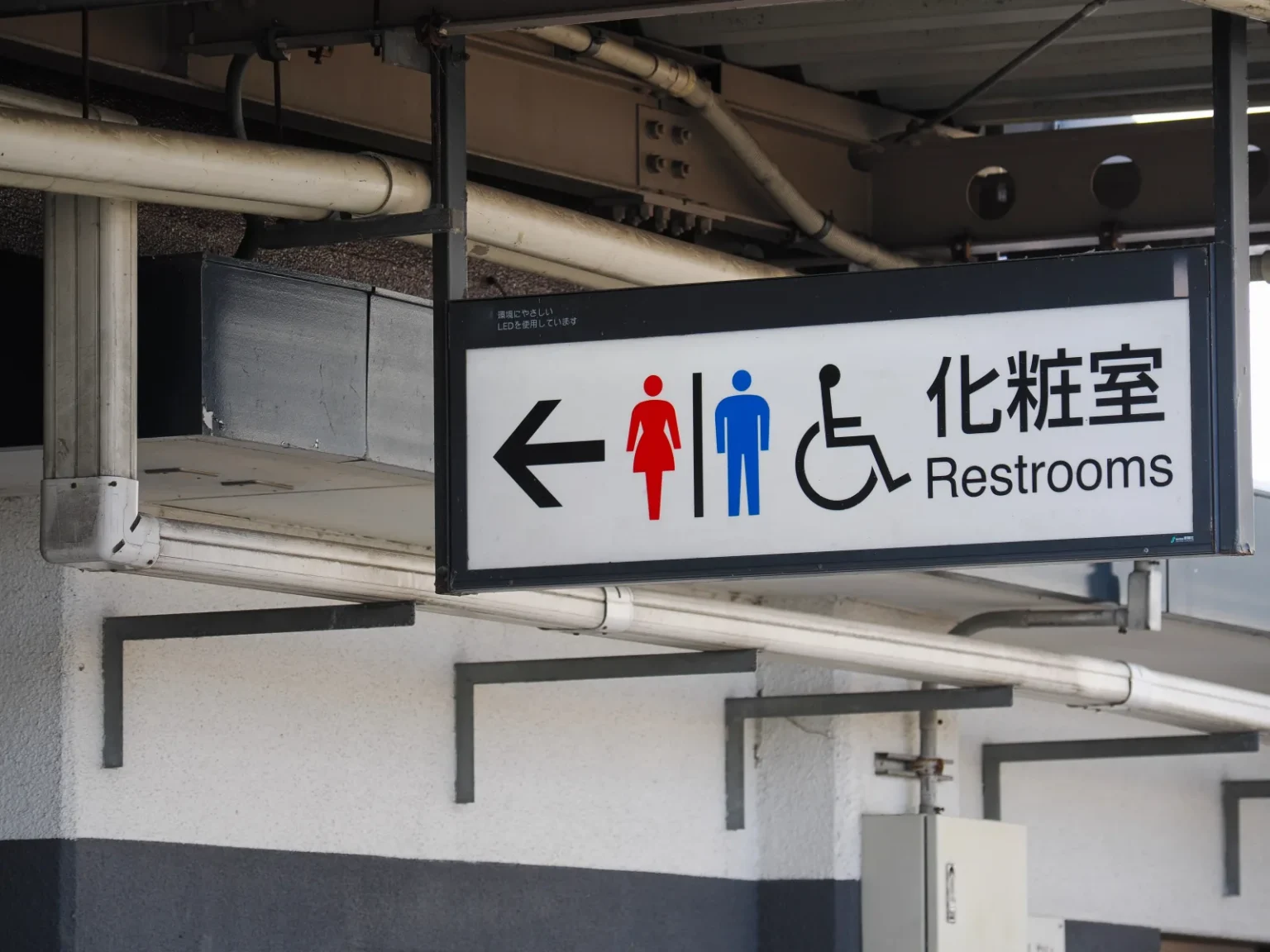
Where can you find a toilet when you are out in Japan?
Convenience stores and expressway service areas are places I often use. Whether a convenience store lets you use its toilet is decided store by store. Nippon.com (May 2026) reports that shoppers can use the toilets in the majority of 7-Eleven, FamilyMart and Lawson stores.
Roadside stations have national rules behind them. The Ministry of Land, Infrastructure, Transport and Tourism (MLIT) registers them, and under “rest functions” its registration rules list free, 24-hour use, a car park of sufficient size, and clean toilets (Western-style in principle). An earlier MLIT summary of the same rules spells out “clean toilets usable 24 hours”. In Fujiyoshida, I often use the roadside station.
| Where | What the rule or source says |
|---|---|
| Roadside station (michi-no-eki) | Free 24-hour car park and clean toilets, Western-style in principle (MLIT registration rules); an earlier MLIT summary says the toilets are usable 24 hours |
| Convenience store | Each store owner decides; the majority of the three big chains’ stores allow shoppers in (Nippon.com) |
| Village public toilets, Yamanakako | All 16 listed as open 0:00–23:59; 3 open only April–November (village list, April 2023) |
| Mt Fuji climbing trails | A contribution of about ¥100–300 per use, ¥100 coins preferred (official climbing site) |
A Japan eSIM is one way to have mobile data for map apps.
Check a Japan eSIMFor a roadside station near Mt Fuji with a free museum attached, see my visit to Michi-no-Eki Narusawa.
What does one village’s own toilet list show?
Yamanakako village publishes its public toilets as open data. The list is dated 1 April 2023 and covers 16 toilets. For each one it gives the number of squat and Western cubicles, the opening hours and whether there is a toilet for wheelchair users.
| Toilet (village list) | Squat / Western cubicles | Notes |
|---|---|---|
| Marimo-an, by the village car park at Yamanaka | 0 / 6 | Wheelchair-user toilet; open all year |
| Panorama-dai car park | 3 / 0 | Squat only; open all year |
| Ishiwari-yama trailhead (Ishiwari Shrine car park) | 3 / 0 | Squat only; open all year |
| Tourist information centre, Asahigaoka | 3 / 3 | Wheelchair-user toilet; open all year |
| Yui-no-hiroba Hirari | 0 / 3 | Wheelchair-user toilet and baby facilities |
| Bungaku-no-mori park | 1 / 2 | Open April–November only |
| All 16 toilets | 26 / 34 | All listed as 0:00–23:59; 6 with a wheelchair-user toilet; 3 open April–November only |
Marimo-an, the one I use, has no squat cubicles at all. The toilet at the Panorama-dai car park has only squat ones. Even within this small village, toilet types vary. Next door, Fujikawaguchiko town publishes an English public toilet map of Lake Kawaguchiko and Lake Saiko. It marks 13 toilets, including Oishi Park, Yagisaki Park, Tatami Iwa and Roadside Rest Katsuyama. For directions to Lake Yamanakako, see the Lake Yamanakako access guide.
Will you still meet a squat toilet in Japan?
Yes, though I rarely come across one myself; I often use convenience stores, expressway service areas and parking areas, and the roadside station. The village list above shows where they still are: in its case, park, viewpoint and trailhead toilets. Schools are another sign that they have not gone. In Japan’s public primary and junior high schools, 68.3% of toilet bowls were Western-style on 1 September 2023, which leaves 420,891 squat bowls (Ministry of Education).
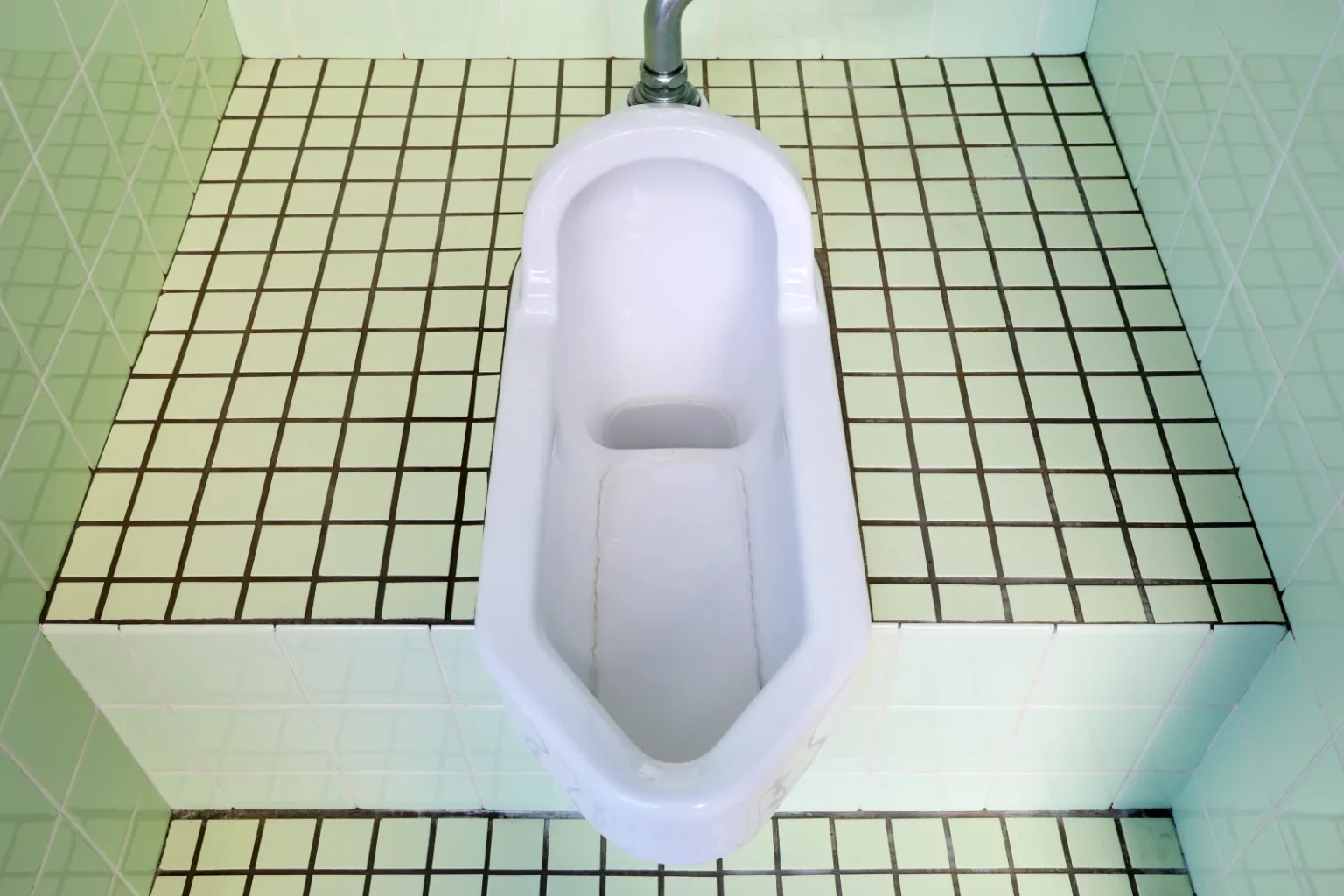
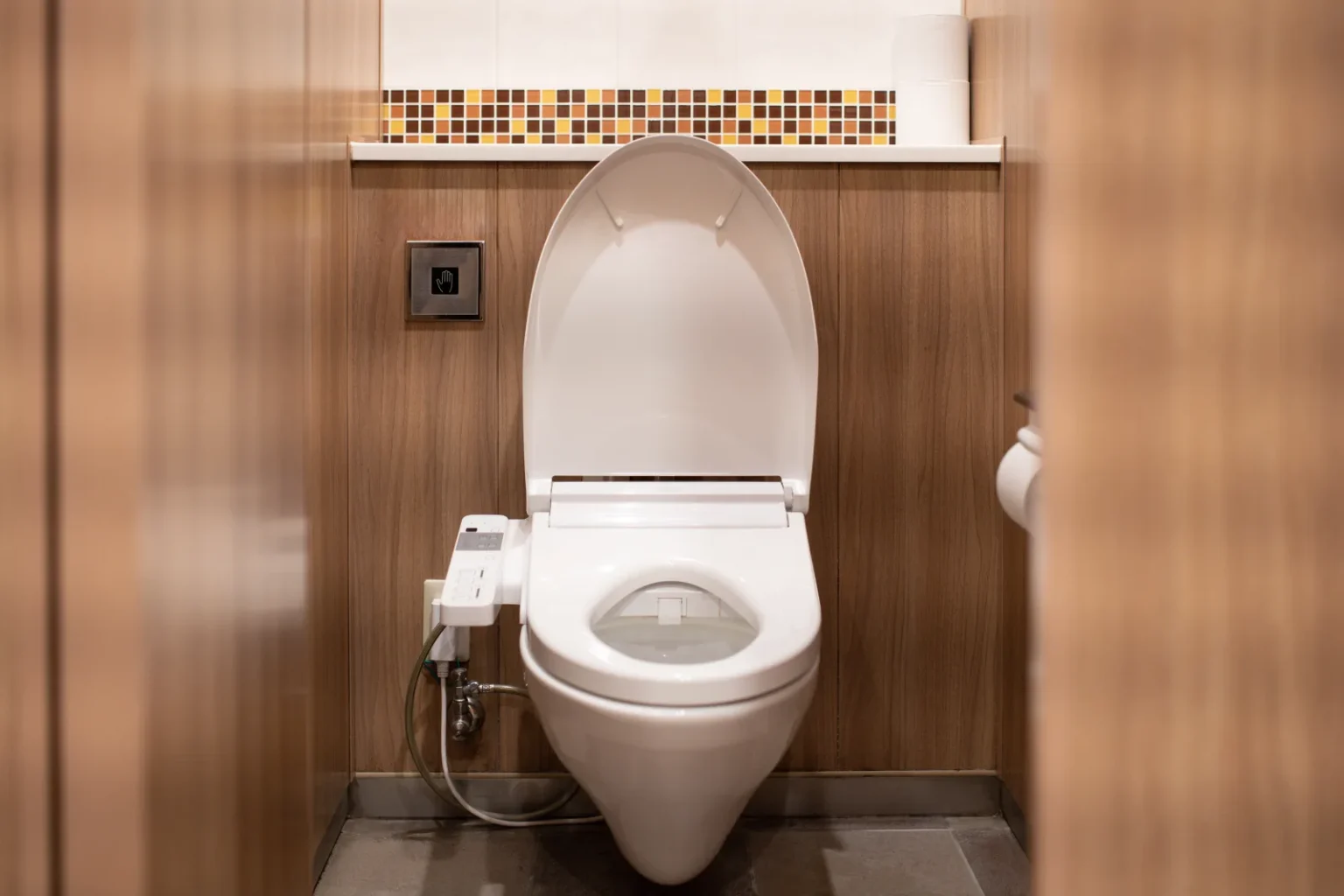
Several of the village’s toilets have both kinds.
How do you use the buttons on a Japanese toilet?
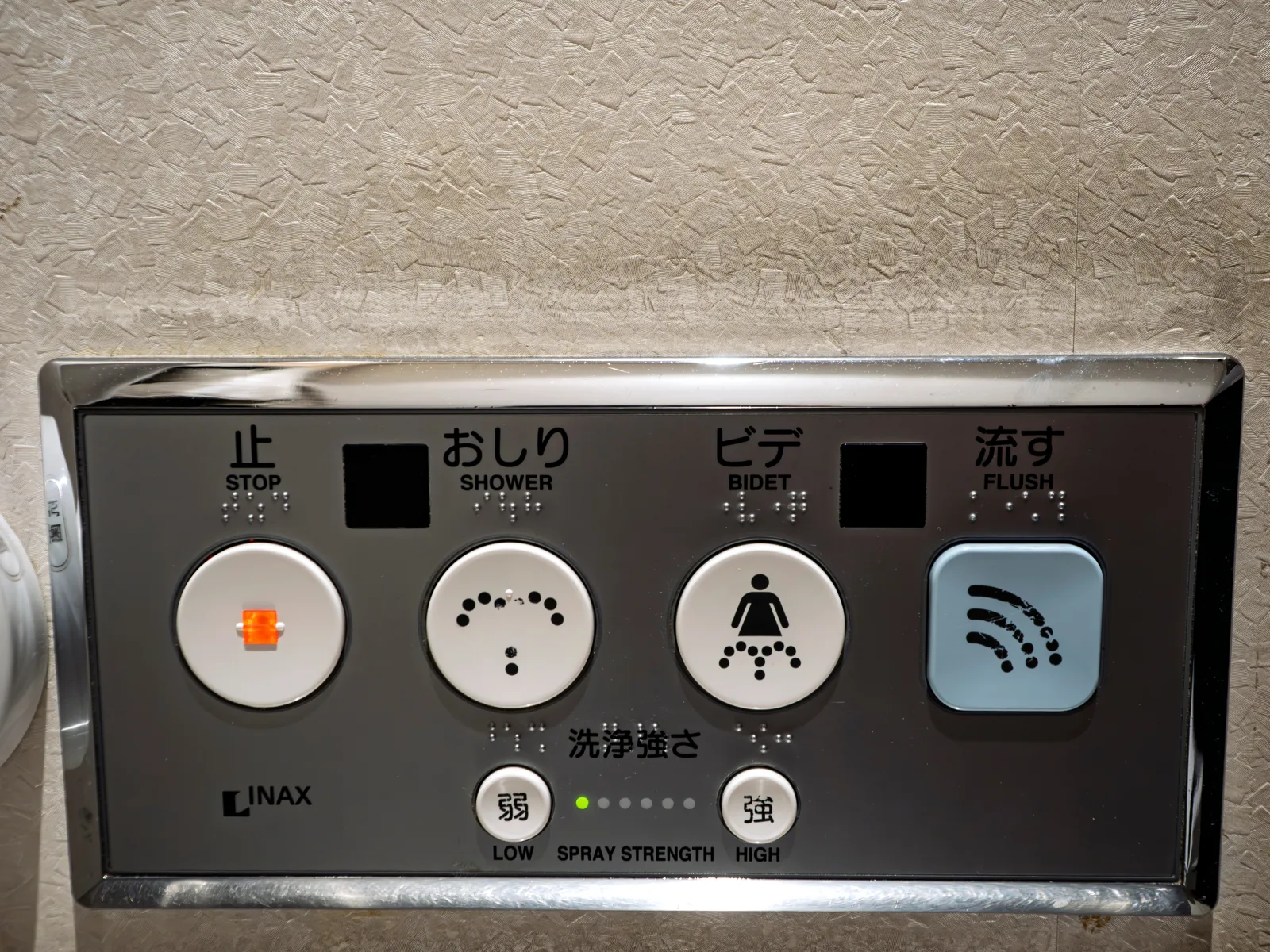
Someone I know from abroad struggled with exactly this, and some panels are still labelled only in Japanese. (My own toilet at home is a TOTO.) The good news is that the main symbols now have an agreed standard, although older seats and some layouts differ.
The Japan Sanitary Equipment Industry Association (JSEIA), the trade body whose members include TOTO, LIXIL and Panasonic, agreed standard symbols for toilet controls in January 2017. Its members began using them on new products from that financial year. Six were registered in the international standard ISO 7000 in January 2018. In December 2018, seven were added to the Japanese standard JIS S 0103. A seat installed before then may use different pictures, so the Japanese words in the table are worth knowing too.
| Japanese on the panel | What it does |
|---|---|
| 止 (tomeru) | Stop: switches off the spray. At the left end of each of the three wash-control panels shown here |
| おしり (oshiri) | Rear wash |
| ビデ (bide) | Front wash (bidet) |
| 乾燥 (kansō) | Dryer |
| 流す 大 / 小 (nagasu dai / shō) | Flush: large / small |
| 便ふた開閉 / 便座開閉 | Open or close the lid / the seat |
| 音 (oto) | Plays a privacy sound; TOTO’s version is called Otohime (see below) |
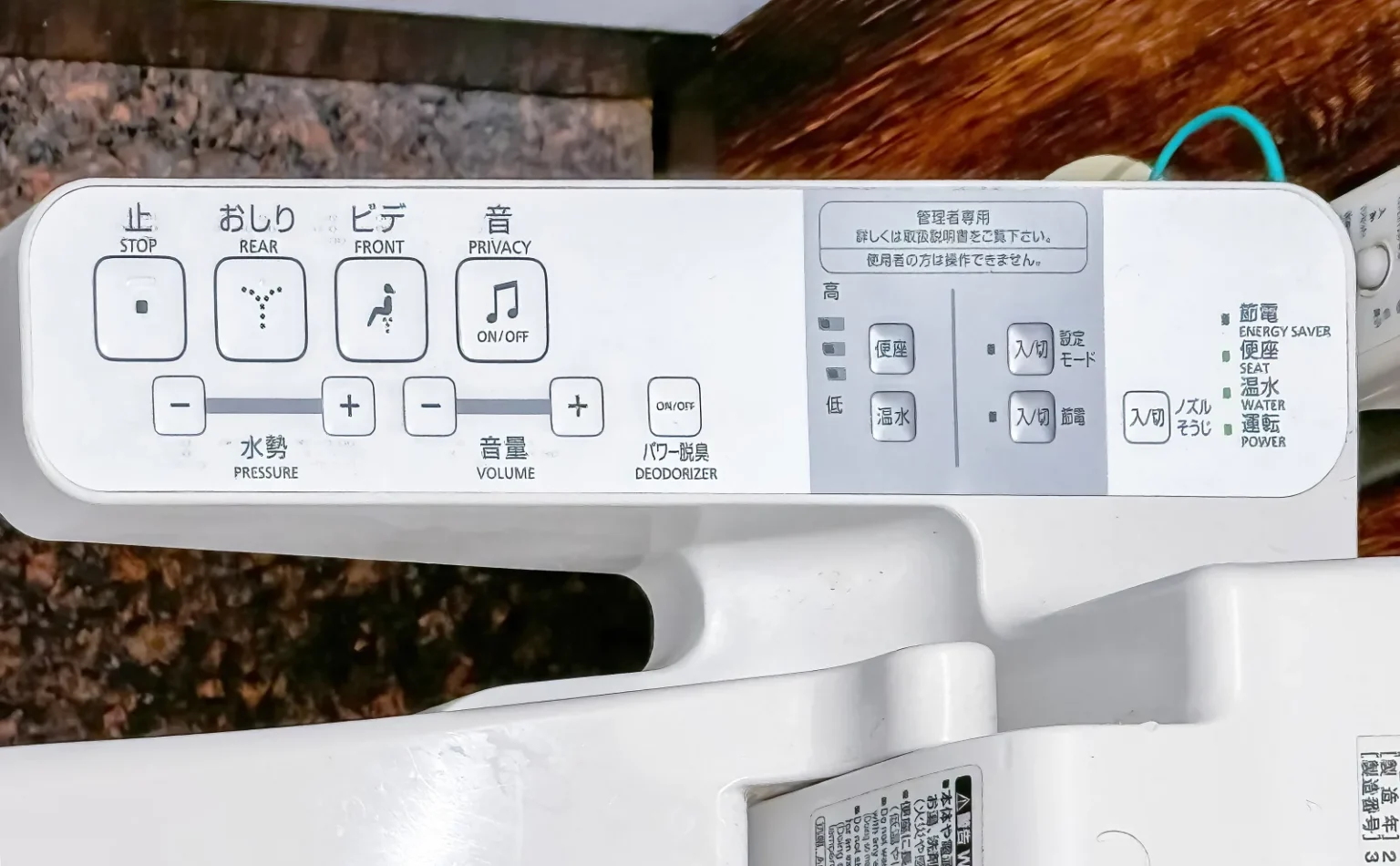
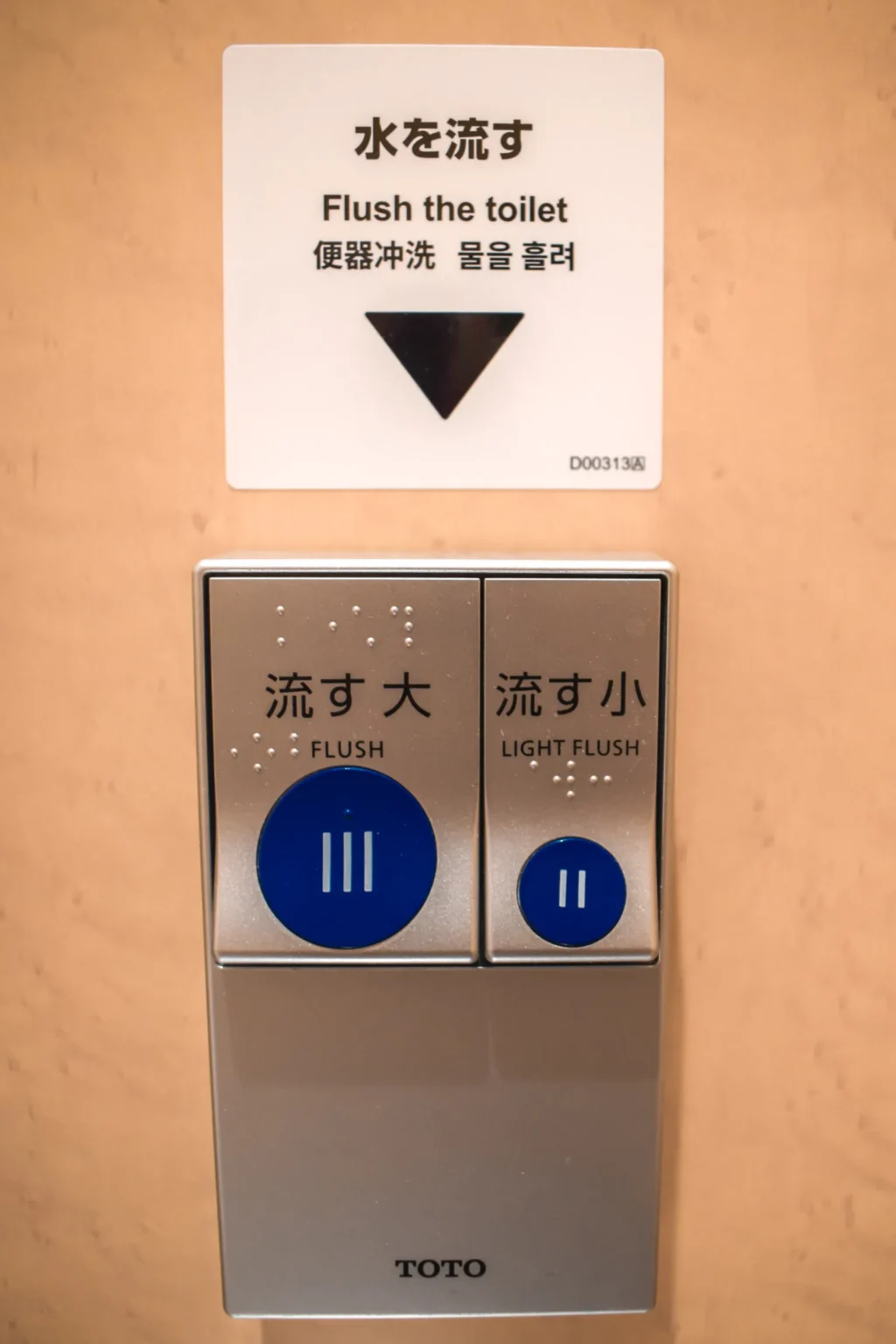
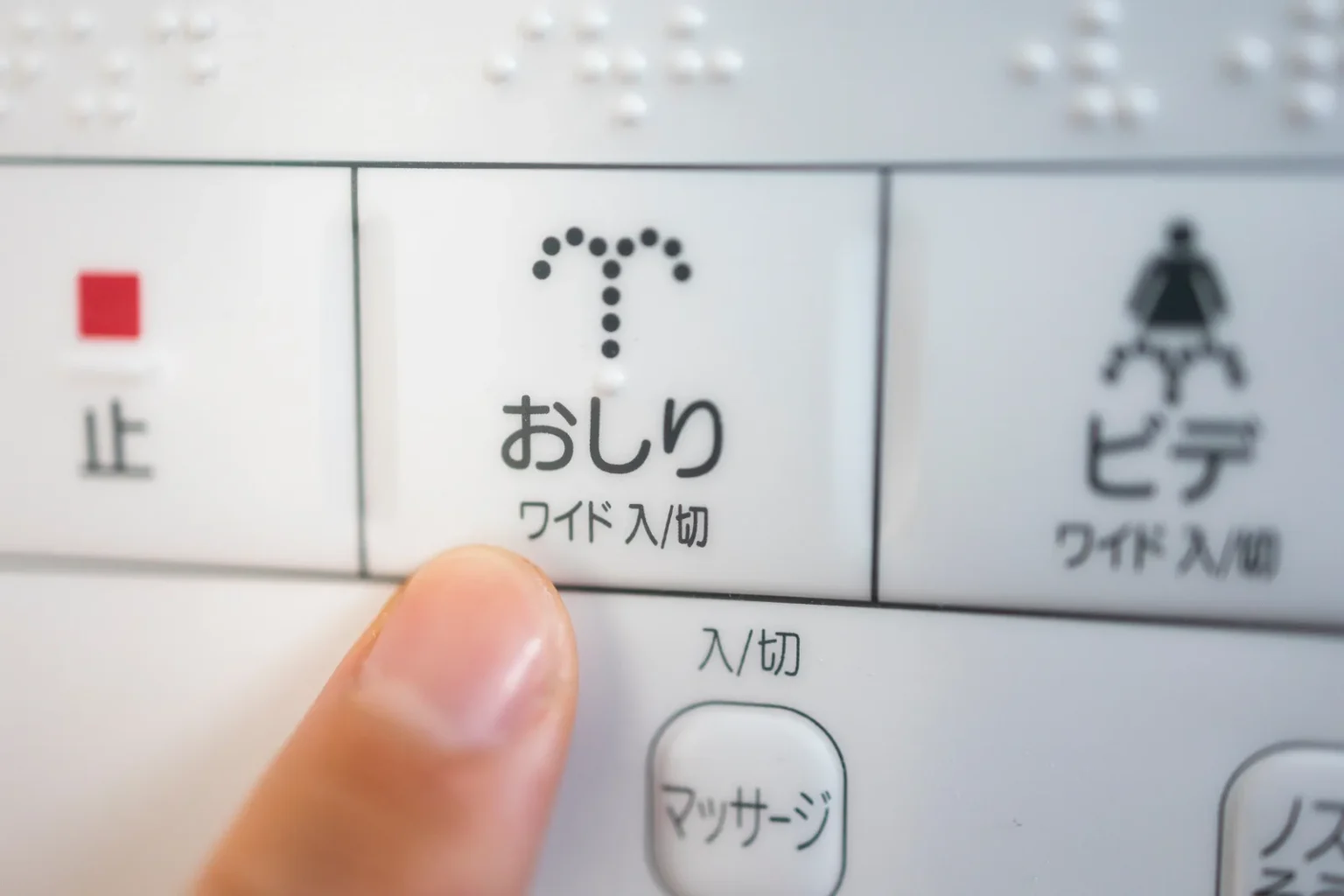
How common are these seats? In homes of two or more people, 82.5% had a warm-water bidet seat at the end of March 2026, the same as a year earlier (Cabinet Office consumer survey). For the kanji on toilet doors and signs, including the three names for an accessible toilet, see my guide to Japanese signs.
Do you need to bring toilet paper, and what can you flush?
I have almost never found a toilet without paper. My habit is simple: I look before I use it, and if there is none, I go and find another toilet rather than make do. If you carry tissues, do not flush them.
Toilet paper: in the bowl
At ordinary flush toilets, toilet paper is made to break up in water and goes in the bowl. Toilets with their own treatment systems, such as those on Mt Fuji, post their own instructions.
Tissues and personal wet wipes: not in the bowl
The Tokyo Bureau of Sewerage asks people not to flush disposable nappies, wet wipes, tissues or anything else that does not dissolve easily in water. Tissues are not toilet paper. For anything other than toilet paper, follow the toilet’s own signs.
“Flushable” products
Iiyama city’s sewerage page explains that the Consumer Affairs Agency and the Japan Sewage Works Association treat a product as flushable only if it meets the loosening standard for toilet paper in JIS P 4501.
What is Otohime?
Otohime is TOTO’s registered trademark for a device that plays the sound of flowing water. TOTO says it went on sale in 1988, when water shortages were a social problem. It was designed to stop people flushing twice to cover the sound of using the toilet. On TOTO’s current models it can also play birdsong. The seat panel pictured above has a similar button, marked 音 PRIVACY.
What is a barrier-free toilet?
MLIT now uses “barrier-free toilet” (バリアフリートイレ) as the umbrella term for what used to be called a multi-function toilet (多機能トイレ) and similar toilets for people who need their accessibility features. In Yamanakako’s list, 6 of the 16 public toilets have a toilet for wheelchair users, including Marimo-an and the tourist information centre.
What is THE TOKYO TOILET, and can you still see the transparent toilets?
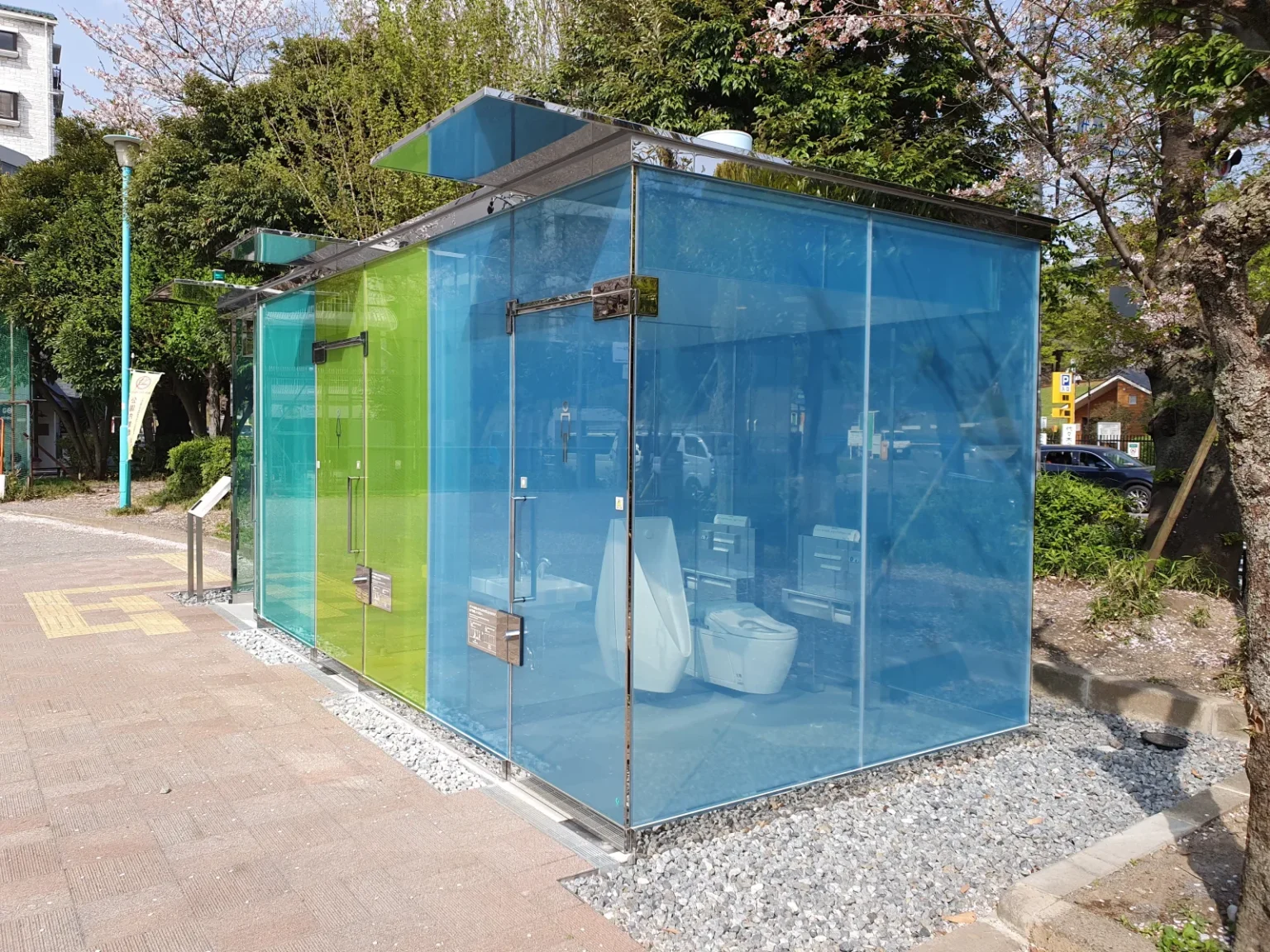
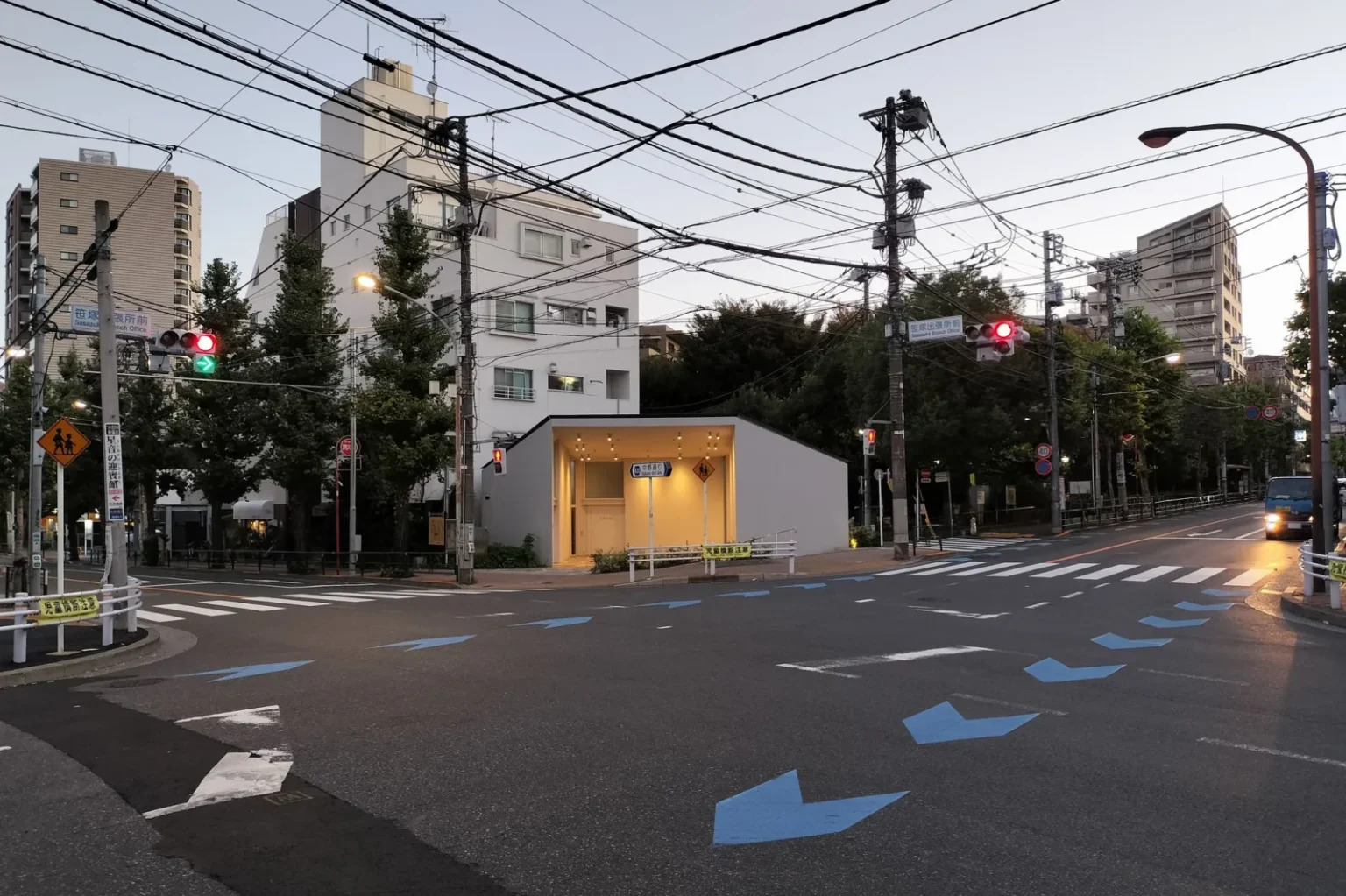
THE TOKYO TOILET was a Nippon Foundation project that renovated 17 public toilets in Shibuya with 16 creators, including architects and designers. The project ended at the close of the 2023 financial year. Shibuya City took over maintenance and upkeep, with the Foundation staying on the management committee and providing funding support until the end of that year, 31 March 2024.
Two of the toilets, at Yoyogi-Fukamachi Mini Park and Haru-no-Ogawa Community Park, have glass walls. In normal operation the glass is clear and turns opaque when you lock the door. A notice dated 22 June 2023 said that, because the glass took too long to turn opaque in cold weather, they would be kept opaque from mid-October to mid-May “for the time being”. The clear-to-opaque switch would run only from mid-May to mid-October. No later notice changing this was found when this guide was researched. The project’s own website, tokyotoilet.jp, was back up on 24 November 2026 with a map of all 17 toilets; its pages for the two glass toilets did not mention the winter arrangement.
What about toilets on Mt Fuji?
On the climbing trails, toilets ask for a contribution (a “tip”) of about ¥100 to ¥300 per use. The amount is shown at each toilet and differs between them. The official climbing site asks you to bring ¥100 coins so that no change is needed. The Fujinomiya summit toilet takes PayPay and similar payments, and for mountain hut toilets you ask the hut. Paper is provided in principle. Each toilet uses a different treatment system, so follow its own instructions. The trails, the fee and what to carry are in my Mt Fuji climbing guide.
For the rest of a first trip, from ticket gates to rubbish bins, start with Japan essential tips. If you are heading to a hot spring, onsen etiquette covers the changing room and the bath.
Toilets in Japan: FAQ
Can I use a roadside station toilet at night?
Under MLIT’s registration rules, a roadside station’s car park must be free to use 24 hours a day, and an earlier summary of the rules says its clean toilets should be usable 24 hours.
Do I need to bring toilet paper to Japan?
I have almost never met a toilet without paper, but I always look before I use one, and go elsewhere if there is none. The Mt Fuji climbing site says paper is provided in principle on the trails. If you use tissues, do not put them in the bowl.
Can I flush toilet paper in Japan?
Yes, at ordinary flush toilets toilet paper goes in the bowl; follow any posted instructions where a toilet has its own treatment system. Tissues, wet wipes and nappies do not. The Tokyo Bureau of Sewerage asks people not to flush them, or anything else that does not dissolve easily in water.
Do all Japanese toilets have bidet seats?
No. In homes, 82.5% of two-or-more-person households had a bidet seat in March 2026. Some public toilets are still squat-only: in Yamanakako village’s 2023 list, 26 of 60 public cubicles were squat.
Which button stops the bidet spray?
止 (tomeru, stop). On each of the three wash-control panels shown in this guide it is at the left end, but layouts vary.
Are the transparent toilets in Shibuya clear in November?
Possibly not: a June 2023 notice said they would stay opaque from mid-October to mid-May for the time being, with the clear-to-opaque switch running from mid-May to mid-October.
Sources (checked 23 October 2026)
- MLIT: Roadside station registration requirements; earlier summary of the requirements (Japanese)
- Yamanakako village: Open data, public toilet list as of 1 April 2023 (Japanese, xlsx)
- Fujikawaguchiko town: Public toilet map (English)
- Cabinet Office: Consumer Trends Survey (results published 2026; ownership at end of March 2026) (Japanese, PDF)
- Ministry of Education: Western-style toilets in public schools, 1 September 2023 (Japanese, PDF)
- Japan Sanitary Equipment Industry Association: Toilet control pictograms in JIS S 0103 (Japanese)
- Tokyo Bureau of Sewerage: Do not flush nappies or tissues (Japanese)
- Iiyama city: What can go down the toilet (Japanese)
- TOTO: Why Otohime was born (Japanese)
- MLIT: Barrier-free toilet campaign, December 2022 (Japanese, PDF)
- THE TOKYO TOILET: tokyotoilet.jp and its maintenance page (checked 24 November 2026)
- The Nippon Foundation: All 17 THE TOKYO TOILET toilets completed, June 2023; notice on the transparent toilets, 22 June 2023 (Japanese)
- Mt Fuji official climbing site: FAQ (Japanese)
- Nippon.com: convenience store restrooms, May 2026
Some links above are affiliate links — they cost you nothing extra and help keep this site going.
Join travelers discovering Japan's hidden side
Weekly dispatches from off-the-beaten-path Japan — spots and stories you won't find in guidebooks.
No spam. Unsubscribe anytime.
Welcome aboard!
You're in. See you in your inbox soon.