
Japan · Ibaraki · Okukuji
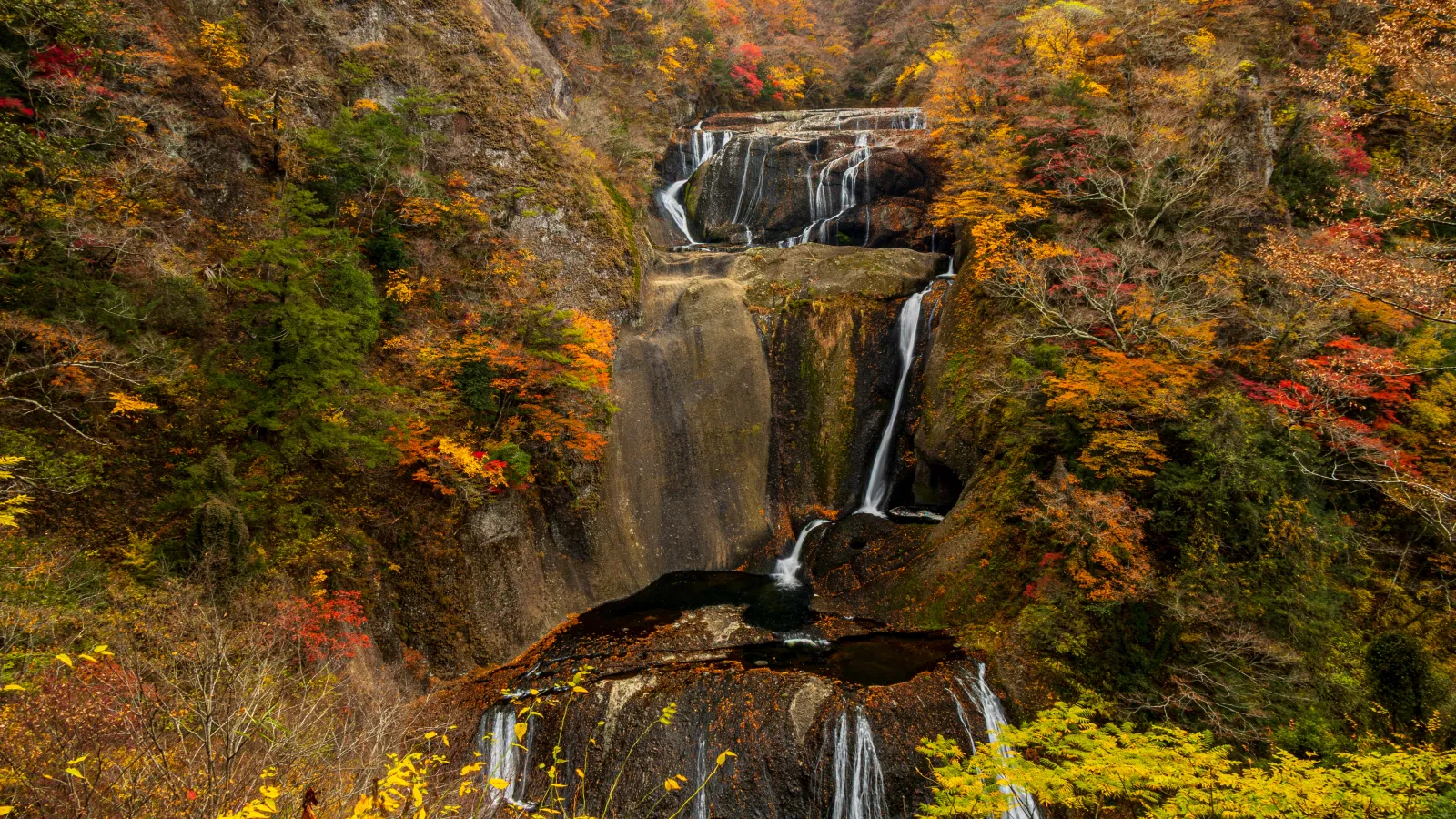
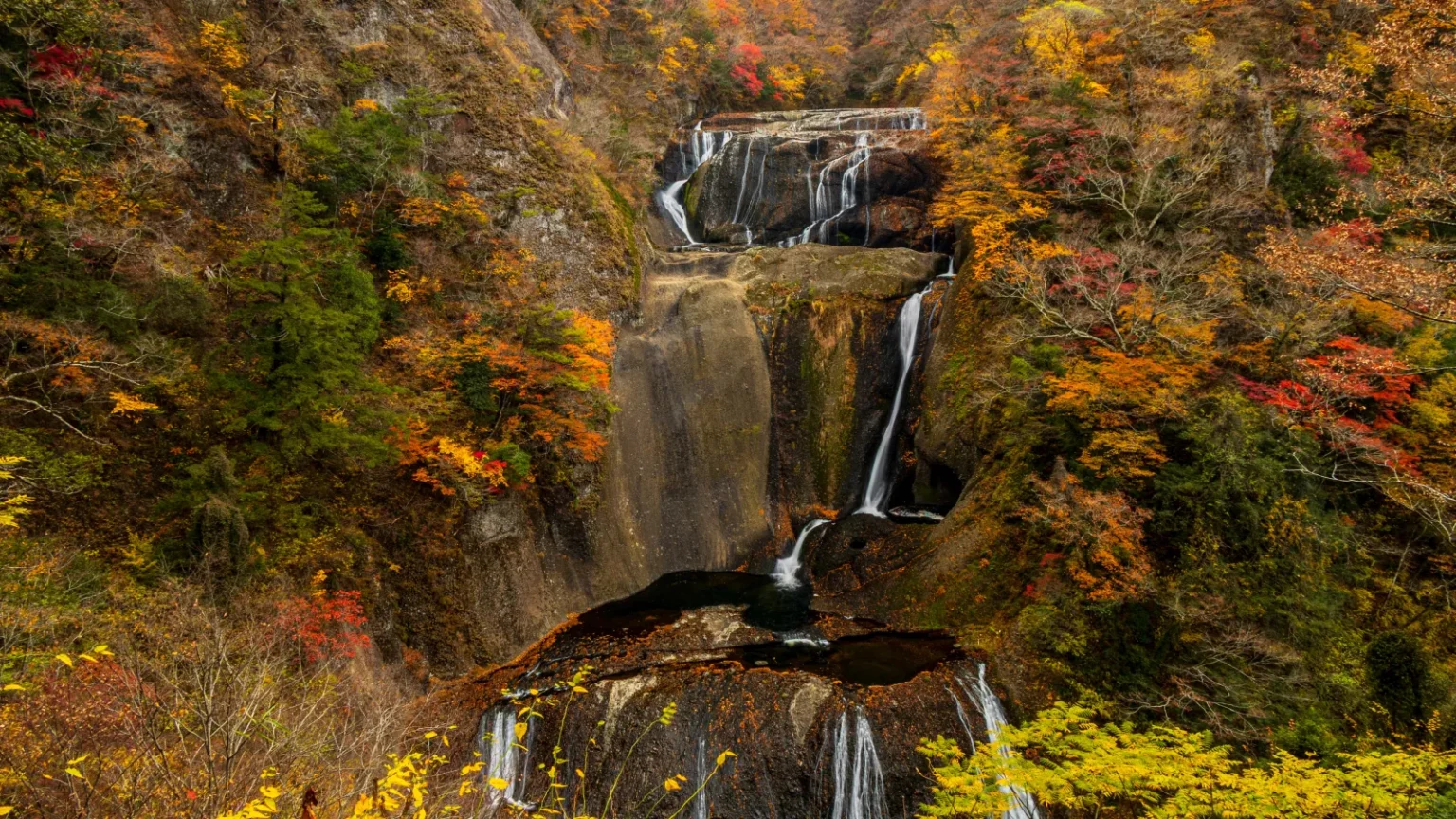
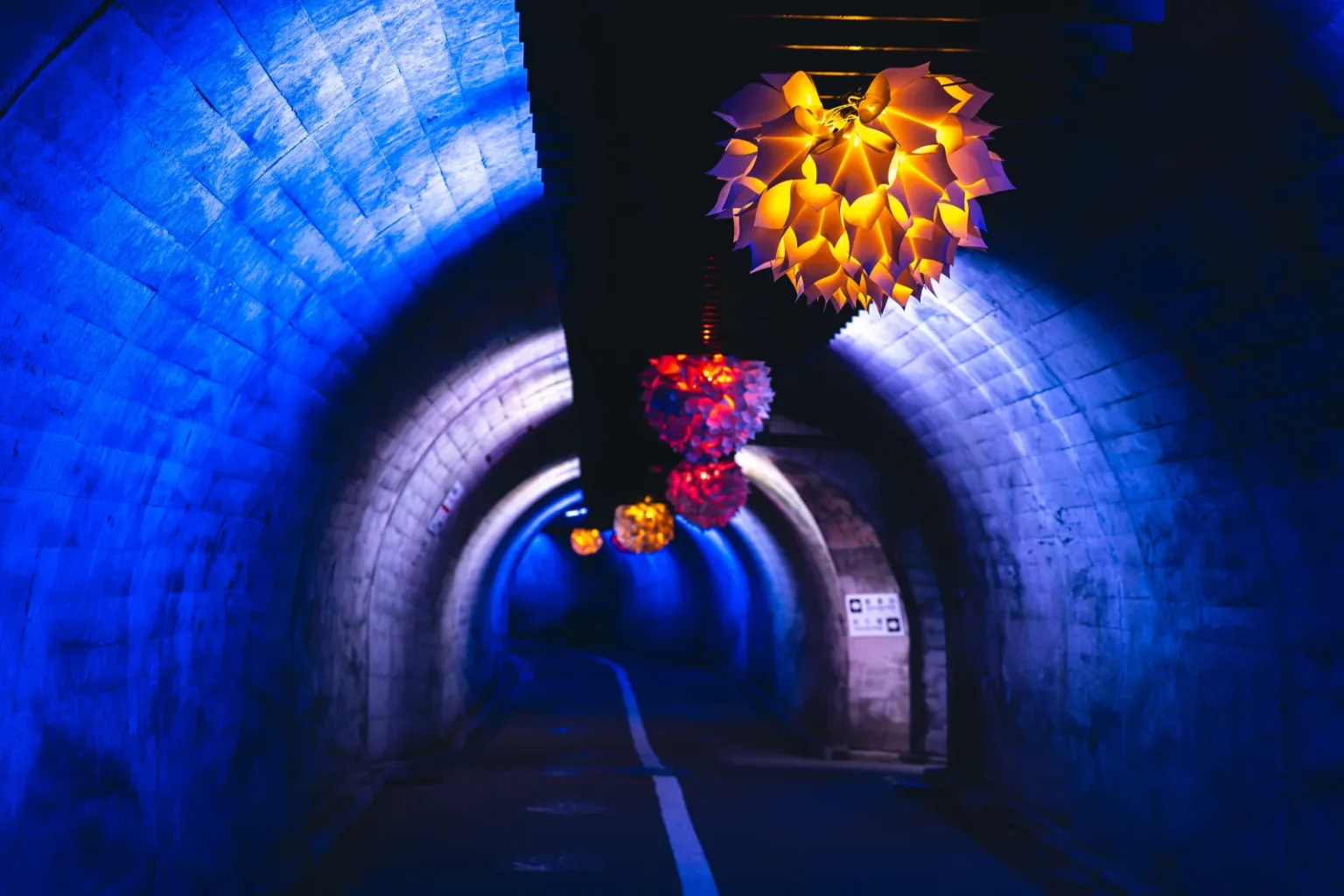
Fukuroda Falls is a four-tiered waterfall in Daigo, northern Ibaraki, seen from decks reached through a tunnel. Entry is ¥500 for adults. In a usual year the leaves around it are best from early to mid-November. Only three buses a day run from Fukuroda Station to the falls, so plan the ride before you go.
This guide covers the tunnel and decks, what the town and the prefecture each say about the falls’ size, how to get there by train, bus or car, and what has and hasn’t been announced for autumn and winter 2026. The second half covers other autumn spots in Okukuji and the north of the prefecture: Ryujin Suspension Bridge, Mt Nantai, Hananuki Gorge, Hanazono Gorge and Eigen-ji in Daigo.
Fukuroda Falls tickets, hours and the viewing decks
You see the falls from viewing decks reached through the Fukuroda Falls tunnel. Daigo Town’s prices are ¥500 for adults and ¥300 for children; groups of 20 or more pay ¥400 and ¥200. The town counts adults as 15 and over, not including junior-high pupils, and children as primary and junior-high pupils. The town also lists exemptions from the fee for holders of disability certificates, so ask at the counter.
The tunnel is open every day: 8:00–18:00 from May to October, 8:00–17:00 in November, and 9:00–17:00 from December to April.
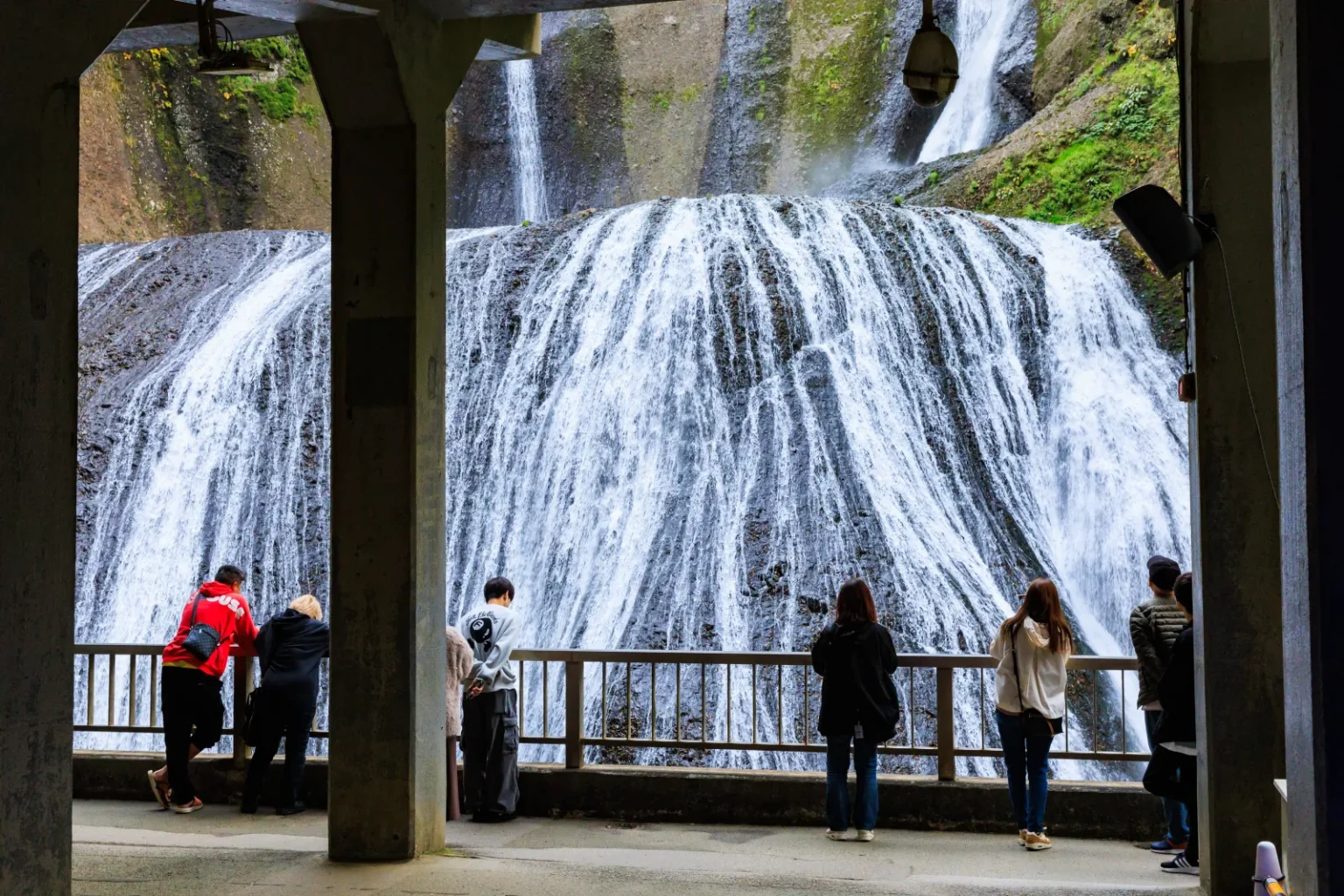
The town’s page names two decks. Above the elevator in the tunnel is the second viewing deck, which the Daigo Town Tourist Association says has three platforms looking at all four tiers of the falls. Pets are allowed on the first deck but not above the elevator.
How big is Fukuroda Falls, and why “four-tiered”?
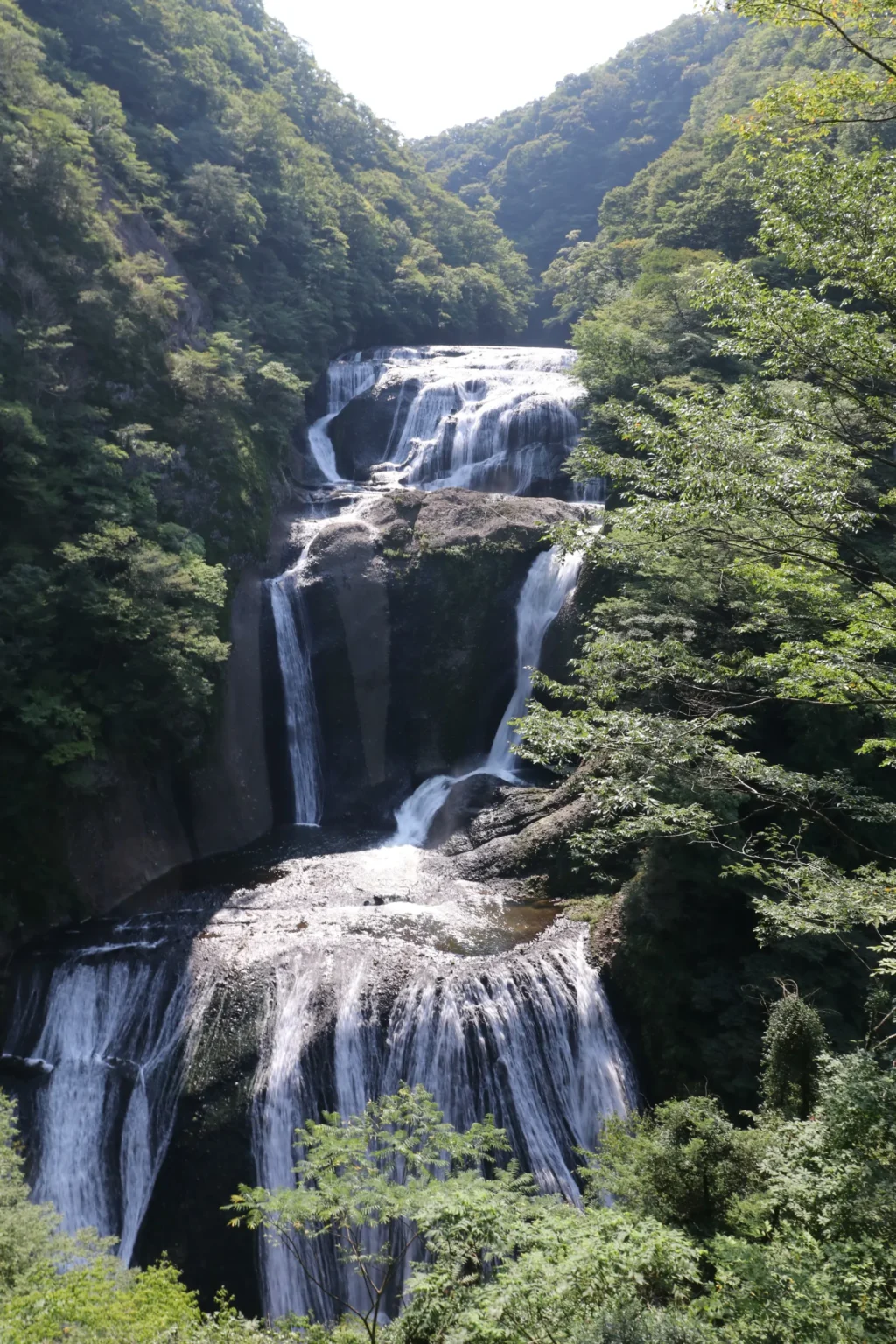
Two official sets of numbers. Daigo Town’s tourism page gives the falls as 120 metres high and 73 metres wide. Ibaraki Prefecture’s Board of Education, describing the falls as a cultural property, gives a total height of about 80 metres and a maximum width of about 50 metres. Neither page explains the difference, so treat both as official figures from different sources.
Status. The town and the prefecture both describe it as counted among Japan’s three great waterfalls; that is a traditional ranking, not a legal designation. The legal one: Fukuroda Falls and the nearby Namase Falls were designated a national Place of Scenic Beauty on 10 March 2015.
The name “Yodo no Taki”. The falls are also called 四度の滝 (Yodo no Taki, “four-times falls”). The town gives two explanations: the water drops over the cliff in four stages, and the poet-monk Saigyō is said to have praised it as a place you must visit once in each of the four seasons to appreciate. The town’s cultural-property page adds a third tradition, that the name comes from the monk Kūkai carrying out a fourfold fire ritual here.
The rock. The town explains that the falls formed where the river followed joints and faults in a layer of volcanic breccia about 15 million years old, eroding the tuffaceous sandstone and other layers.
Autumn leaves, the Daigo Light illumination and winter ice
Autumn colour. Ibaraki Prefecture’s tourism site gives the usual peak at Fukuroda Falls as early to mid-November. It says it will post 2026 colour reports from late October.
Daigo Light (大子来人). The tourist association’s page for the falls’ illumination still shows the last season, 1 November 2025 to 12 January 2026. As of 27 October 2026 we found no dates, hours or price announced for 2026, so check that page before planning an evening visit.
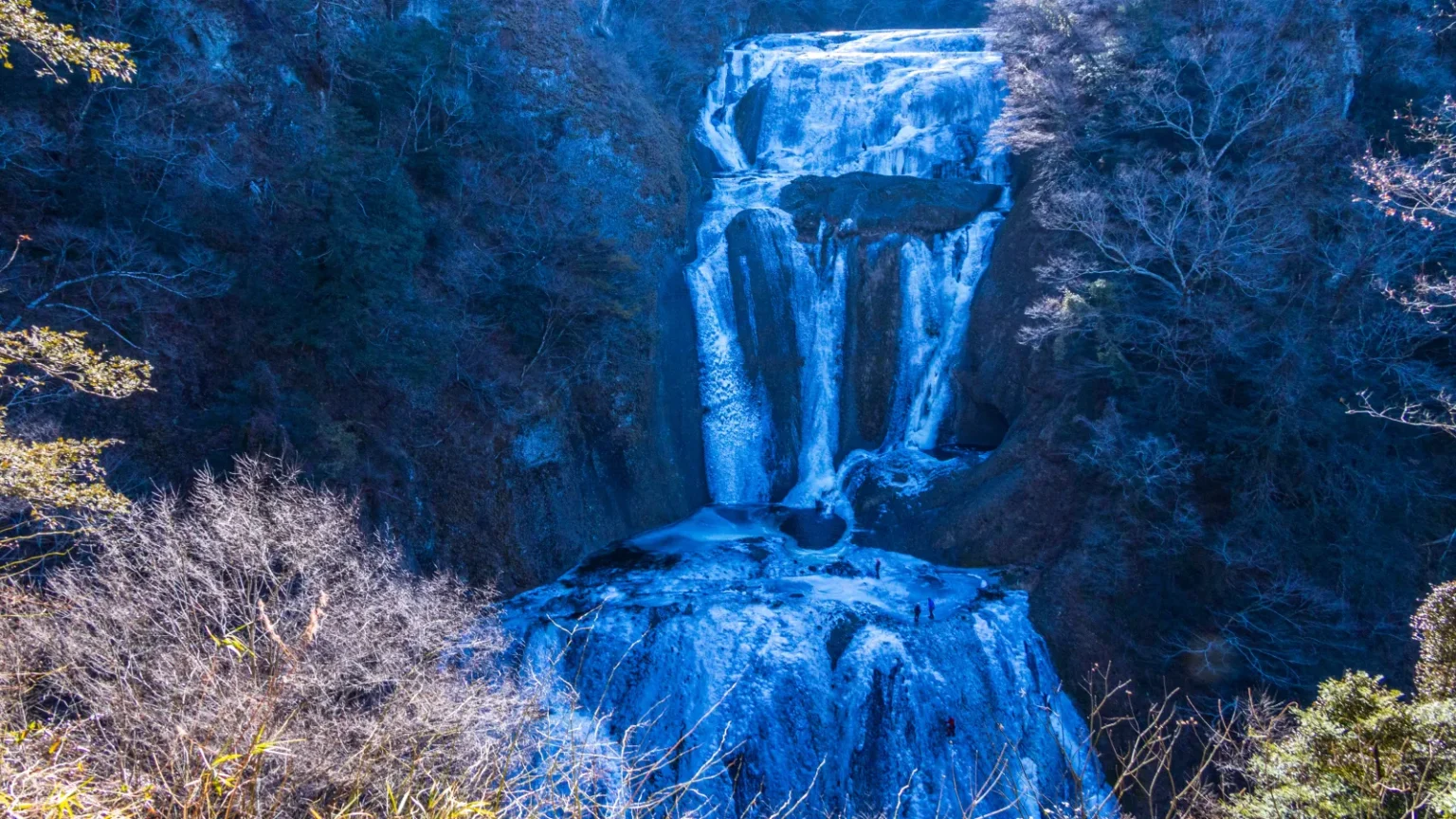
The frozen falls. The tourist association says a long cold spell can freeze the whole fall white, but that it has rarely frozen completely in recent years. Even at about 70 per cent frozen it looks different, it says, and because the ice melts as the sun gets up, mornings are best.
How to get to Fukuroda Falls
From Tokyo by train. JNTO gives about 2 hours 30 minutes by train from Tokyo Station to Fukuroda Station on the JR Suigun Line. The Suigun Line begins at Mito; if you plan to stop there, see our Mito day-trip guide.
From Fukuroda Station. The tourist association’s timetable shows three buses to the Takimoto stop, leaving Fukuroda Station at 10:40, 12:33 and 14:30, and three back, leaving Takimoto at 11:03, 13:53 and 15:30. The fare is ¥260 for adults and ¥130 for children; the ride is about 7–10 minutes and the falls are about 10 minutes on foot from the stop. On foot from the station the town gives about 40 minutes.
From Hitachi-Daigo Station. Buses leave Hitachi-Daigo at 10:15 and 13:10, and Takimoto at 12:50, 15:00 and 15:52; ¥420 for adults and ¥210 for children. A one-day Fukuroda–Daigo bus pass costs ¥500 and covers all these sections.
Daytime works on the Suigun Line. JR East has announced daytime works with some trains cancelled between Hitachi-Daigo and Iwaki-Ishikawa, with no replacement buses. That section is beyond Hitachi-Daigo, away from Tokyo; Fukuroda Station is not in it. Check JR East’s service information if you are coming from the north.
Highway bus from Tokyo. Ibaraki Kotsu’s Daigo–Ota line runs from Busta Shinjuku and Tokyo Station, and every bus must be booked. It stops at Fukuroda-no-Taki Iriguchi, and the adult fare from Tokyo Station is ¥3,000.
By car. The town lists a free car park with 42 spaces, a second free car park with 223 (203 for cars, 9 of them for disabled drivers, 8 medium and 12 large vehicles), and about 700 spaces in private paid car parks. We found no traffic controls or shuttle buses announced for the 2026 autumn season around the falls. If you need a car, compare rental cars in Japan on DiscoverCars.
More autumn colour in Okukuji and northern Ibaraki
Usual peak dates below are from Ibaraki Prefecture’s tourism site unless stated.
Eigen-ji (もみじ寺, “maple temple”), Daigo. A temple in the same town as the falls. The prefecture’s site gives its usual peak as late October to late November.
Mt Nantai (Okukuji), Daigo. The tourist association gives the summit as 654 metres. Its routes: course A, about 13 km and 4 hours 30 minutes; course B via the Yuzawa gorge, about 11 km and 3 hours 40 minutes, which it describes as fairly difficult; and course C, a traverse to Fukuroda Falls of about 17 km and 7 hours 30 minutes. The usual peak for Mt Nantai and Yuzawa is early to mid-November.
Ryujin Suspension Bridge, Hitachiota. 446 metres long with a 375-metre central span, which the operator calls one of the longest pedestrian suspension bridges in Japan. Crossing costs ¥320 for adults and ¥210 for primary and junior-high pupils. It is open 8:30–17:00 (last entry 16:40), and until 20:00 on Saturdays for a light-up (last entry 19:30); it can close in strong wind or lightning. The three free car parks hold 265 cars. Hitachiota City’s 36th Ryujinkyo autumn-leaf festival runs from 1 to 30 November 2026, and crossing is free on 13 November, Ibaraki Prefecture Day. The usual peak is mid to late November.
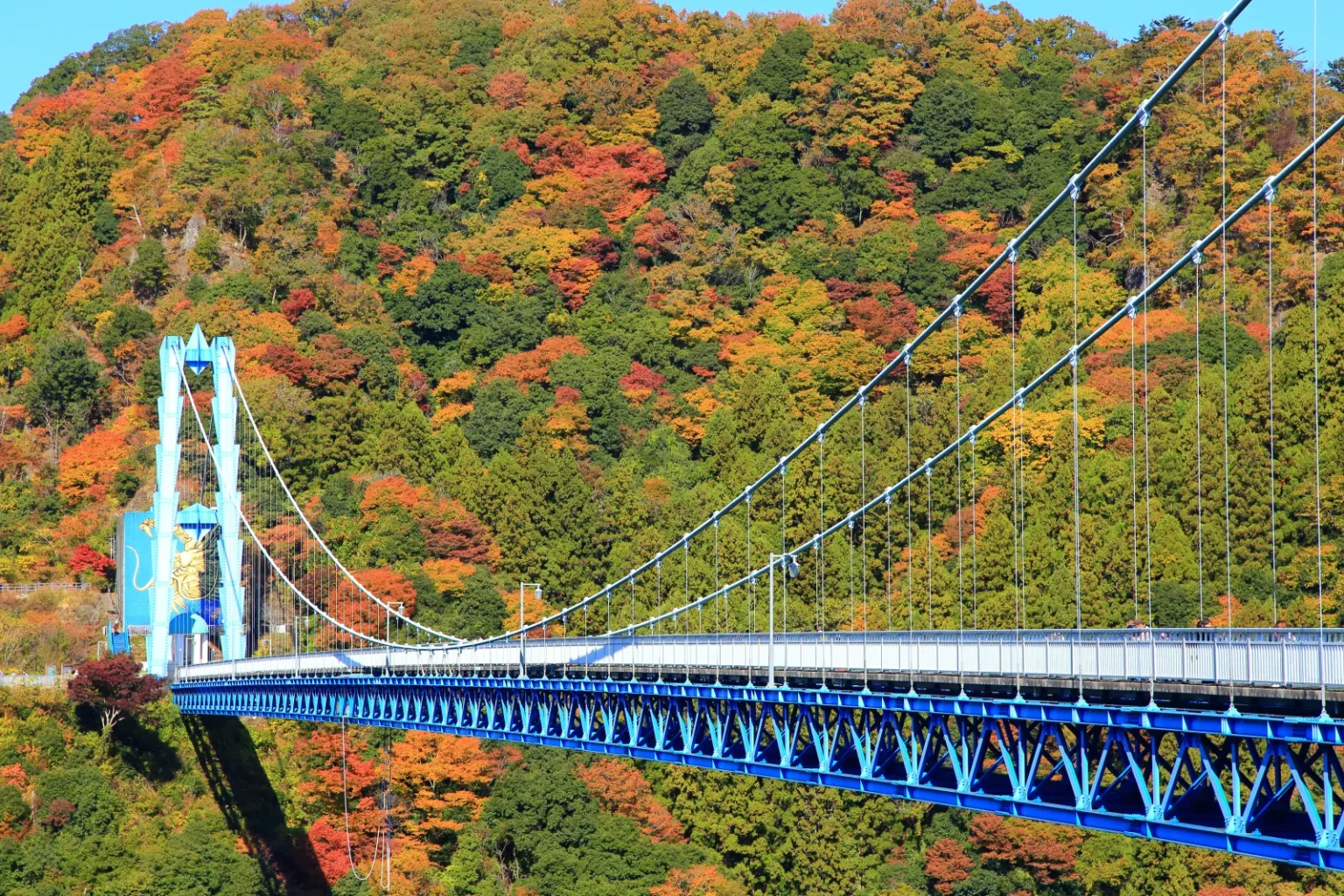
The bridge also has a 100-metre bungee jump; Bungy Japan charges ¥19,000 for a first jump and warns that in the autumn-leaf season the car parks get very busy, and that without a booking you may wait over three hours or not get a jump.
Hananuki Gorge, Takahagi. The city describes the roughly 60-metre Shiomi-taki suspension bridge as covered by a “tunnel” of autumn leaves. The 2026 festival runs from 31 October to 30 November, with a light-up from 7 to 23 November, sunset to 19:00. During the festival the Hananuki car park charges ¥1,000 for cars (110 spaces) and the Ōno car park ¥1,000 (40 spaces). A shuttle from Takahagi Station runs on 14–15 and 20–24 November. Part of the city road along the gorge is closed to vehicles from 28 to 30 October 2026 for rock-fall clearance. The usual peak is mid to late November.
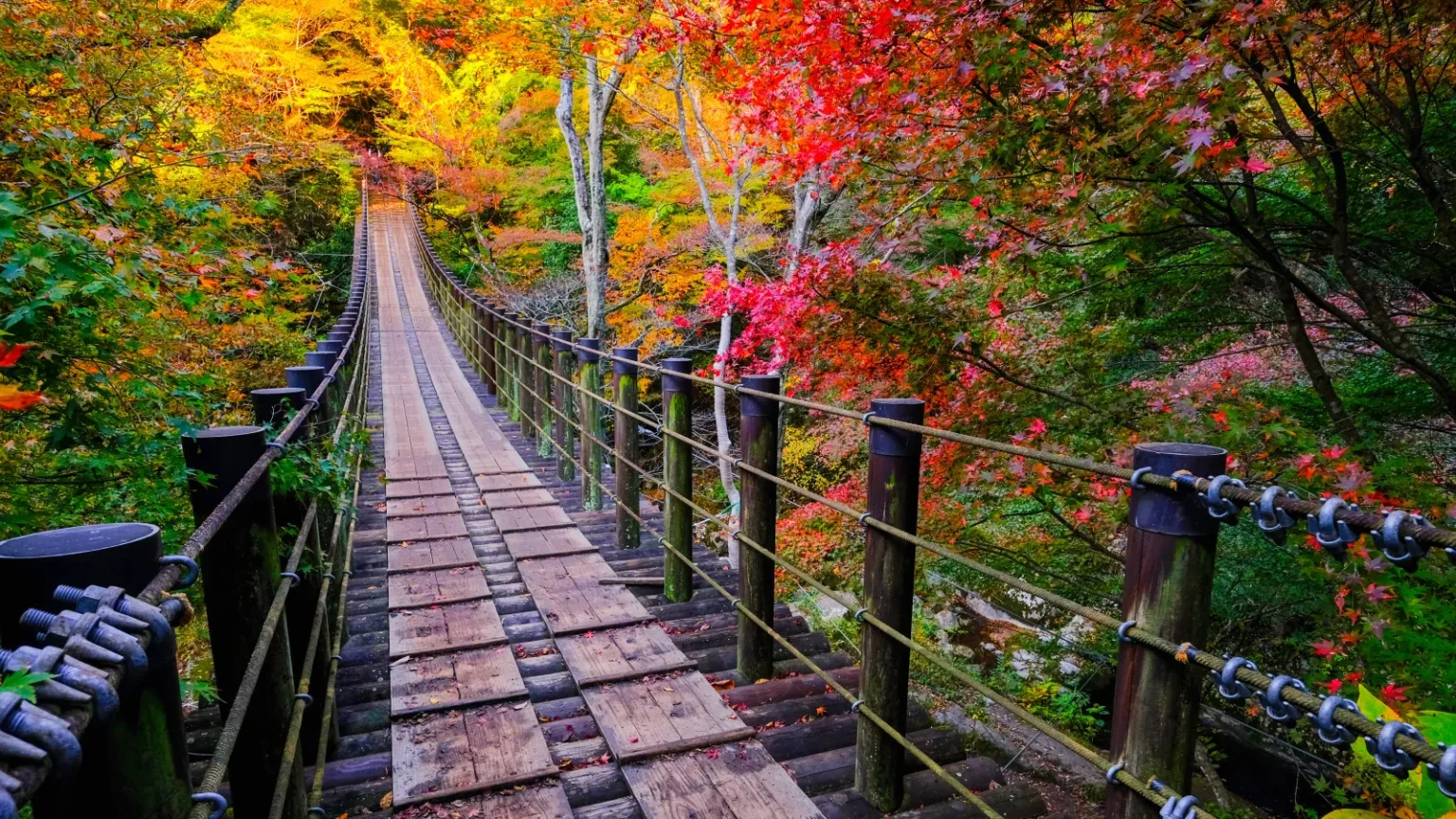
Hanazono Gorge, Kitaibaraki. Usual peak early to mid-November. The prefecture’s site gives about 35 minutes by taxi from JR Isohara Station or about 30 minutes by car from the Kitaibaraki interchange, and a city car park with 60 spaces. The Nanatsudaki hiking trail starts behind Hanazono Shrine.
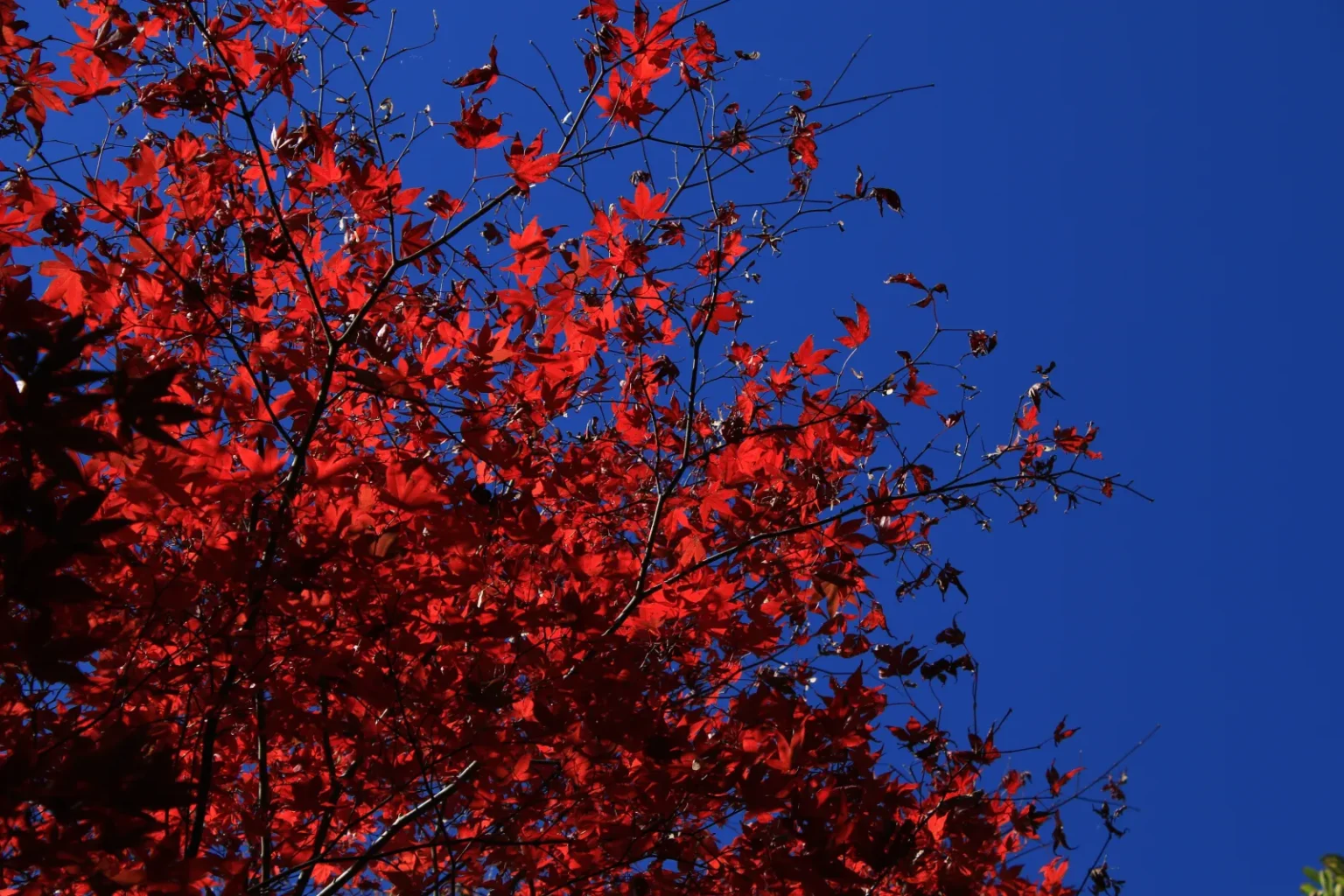
For autumn colour closer to Tokyo, see our Tokyo autumn leaves guide, our Saitama autumn leaves and our Chichibu guide. For how Japan’s forecasts work, see our explainer, and for another waterfall north of Tokyo that partly freezes in winter, see Kegon Falls in winter.
Where to stay near Fukuroda Falls, and what to eat
Daigo Town lists three places to stay near the falls: Fukuroda Onsen Omoide Romankan, Yūkyū no Yado Takimikan and Kitashinokan Bekkan. The tourist association describes Fukuroda Onsen’s water as soft on the skin and well known as a “beauty bath”. Search Daigo and Fukuroda stays on Booking.com or compare Daigo stays on Agoda.
Staying overnight takes the pressure off the three daily buses.
Check rooms in Daigo for your datesLocal food. The tourist association lists Okukuji shamo chicken, Okukuji apples, sweetfish from the Kuji River, yuba, konnyaku, tea and soba as Daigo’s local products. It says the apples are known for ripening on the tree, with apple picking from mid-September to late November. The town calls Okukuji tea Japan’s northernmost tea-growing area, and the tourist association says it has about 500 years of history.
If you have more time in Kanto in late autumn, our Japan in November 2026 guide covers what else is on.
Fukuroda Falls: FAQ
How much does it cost to see Fukuroda Falls?
¥500 for adults and ¥300 for primary and junior-high pupils, for the tunnel and viewing decks. Groups of 20 or more pay ¥400 and ¥200.
When are the autumn leaves best at Fukuroda Falls?
Ibaraki Prefecture’s tourism site gives the usual peak as early to mid-November.
How do I get from Fukuroda Station to the falls?
Three buses a day leave Fukuroda Station for the Takimoto stop, at 10:40, 12:33 and 14:30 on the timetable we checked; ¥260 for adults, about 7–10 minutes, then about 10 minutes on foot. Walking from the station takes about 40 minutes.
Is there a bus from Tokyo to Fukuroda Falls?
Yes. Ibaraki Kotsu’s Daigo–Ota highway bus runs from Busta Shinjuku and Tokyo Station and stops at Fukuroda-no-Taki Iriguchi. Every bus must be booked; the adult fare from Tokyo Station is ¥3,000.
How tall is Fukuroda Falls?
Daigo Town gives 120 metres high and 73 metres wide. Ibaraki Prefecture’s Board of Education gives a total height of about 80 metres and a maximum width of about 50 metres.
Will Fukuroda Falls freeze this winter?
No one can say in advance. The tourist association says the falls have rarely frozen completely in recent years, and that partial freezing is best seen in the morning.
Is the Daigo Light illumination on in 2026?
As of 27 October 2026, the official page still showed the 2025–26 season and no 2026 dates had been announced.
Sources (checked 27 October 2026)
- Daigo Town: Fukuroda Falls and Namase Falls (fees, hours, parking, access, places to stay); Cultural-property notes; Okukuji tea; Bear sighting (Japanese)
- Daigo Town Tourist Association: Fukuroda Falls; Access and bus times; Daigo Light; Seasons; Mt Nantai; About Daigo; Apples; Tea (Japanese)
- Ibaraki Prefecture: Board of Education, Fukuroda and Namase Falls; Prefectural designation; Autumn leaves 2026; Hanazono Gorge; Bear in Nakagō, Daigo (Japanese)
- Transport: JNTO Fukuroda Falls; Ibaraki Kotsu Tokyo/Shinjuku to Daigo; JR East 2026 daytime works and service information
- Ryujin Suspension Bridge: Official guide; Hitachiota City Ryujinkyo autumn-leaf festival; Bungy Japan Ryujin bungee
- Takahagi City: Hananuki Gorge; Autumn-leaf festival 2026; Road closure 28–30 October (Japanese)
Some links above are affiliate links — they cost you nothing extra and help keep this site going.
Join travelers discovering Japan's hidden side
Weekly dispatches from off-the-beaten-path Japan — spots and stories you won't find in guidebooks.
No spam. Unsubscribe anytime.
Welcome aboard!
You're in. See you in your inbox soon.