Osaka · Fireworks
Osaka’s signature fireworks night is not in summer in 2026. The 38th Naniwa Yodogawa Fireworks Festival takes place on Saturday, October 17, 2026, fireworks 19:00–20:00 — a 60-minute, five-scene show over the Yodogawa river that draws around 500,000 visitors in a typical year. Paid seats cost ¥5,000–¥28,000 (adult prices) and there are no same-day tickets — but as of September 27, 2026 the organiser’s own ticket site had only the ¥14,000 Exciting Seat still on sale; every other category was marked sold out or out of stock. The Umeda-side riverbank is completely closed to viewing, and the show goes ahead in rain with no postponement date. Here is how the October edition actually works — tickets, the closed areas, access stations and the timing rules that decide whether you see it at all.
Why Osaka’s fireworks now happen in October
For decades this was an August ritual. The organisers moved the 2025 edition to October because of the Osaka-Kansai Expo’s run, and for 2026 they have simply kept the October slot — the official announcement says the festival continues in October “following last year,” without further explanation. For travellers the practical effect is good news: mid-October in Osaka usually means jackets-at-night weather instead of August humidity, and the date lands in cool autumn travel season, ahead of Kansai’s main foliage peak — our October guide covers what else is peaking that week.
Tickets: every official seat type and price
Paid seats are sold in advance only — through the organiser’s official ticket site, Lawson Ticket, Pia, Seven Ticket, e+ and travel agents such as JTB and Yomiuri Travel. The organiser’s site opened on August 1, 2026, closes at 21:00 on October 16 (other sellers set their own cut-offs), requires member registration and, since September 1, has taken credit-card payment only. None of the official seats are sold on the day.
Seat status on the official ticket site, checked September 27, 2026: the Exciting Seat (¥14,000) was still on sale. The Premier Seat and Panorama Left 2, 3, 4 and Right 2 were marked ‘sold out’ (完売) — the organiser uses that label only once every seller has sold out. The Noryosen boat, the Stage Seat and Panorama Left 1, Right 1 and Right 3 were marked ‘out of stock’ (品切れ) on the official site: cancelled seats can return there, and other sellers may still have some. Transferring tickets for payment without the organiser’s consent is prohibited, and for the Noryosen boat the organiser says it cannot promise a seat to anyone who bought on resale. Check live seat status on the official ticket site (seat details on the organiser’s seat page).
| Seat type | Adult | Child | Notes |
|---|---|---|---|
| Premier Seat | ¥20,000 | ¥10,000 | Premium reserved block |
| Exciting Seat | ¥14,000 | ¥7,000 | Near the central launch area |
| Stage Seat | ¥14,000 | ¥7,000 | Reserved seating with pre-show stage entertainment |
| Noryosen boat seat | ¥28,000 | ¥14,000 | Moored boat by the river — it does not cruise |
| Panorama Seat (Left 1–4 / Right 1–3) | ¥5,000 | ¥2,500 | The budget tier — you book a numbered zone, then sit anywhere inside it on a first-come basis |
Child = age 3 to elementary school; under-3s are free on a lap. The official ticket site adds a ¥220 system fee and a ¥110 FamilyMart issuing fee per ticket. Tripods and selfie sticks are banned in the Exciting, Stage, Panorama and Noryosen blocks; for tripod photography the organiser points to the photo areas in the Pia, e+ and Lawson Ticket seat blocks. The organiser’s office near Hankyu Juso (weekdays 10:00–17:00) also sells tickets over the counter, cash only.
The official purchase flow is Japanese-language, payment and pickup options vary by seller, and there are no phone sales in 2026 — so if you don’t read Japanese, the safest route is asking hotel staff to help you through the booking flow the moment your dates are fixed — and don’t assume you can simply buy at a convenience-store terminal on arrival: pickup and payment methods vary by seller, so check the current Lawson Ticket, Seven Ticket, Pia, e+ or official page for the seat you want. For how Japan’s paid fireworks seating works in general — and why it beats gambling on free ground — see our paid fireworks seats guide.
Where you can — and can’t — watch free
Watching is free: the festival is run by local volunteers and funded by its paid sponsor seats and local sponsorship money, so a ticket is optional. In 2026, though, free viewing is tightly limited. The entire Umeda-side (left bank) riverbank is closed, and the riverside from around Nakatsu to Noda is off-limits because of expressway works. Free viewing is on the Juso-side (right bank) grounds and riverbed outside the paid blocks and any closed zones — not on top of the embankment, where viewing is not allowed, and not on Juso Ohashi bridge, where you may not stop to watch. Place-holding outside the paid areas is banned until noon on the day; after noon, unattended sheets are still not allowed and may be removed, and each person may take up no more than one square metre.
Getting there (and back)
The viewing side is served by a ring of stations, none of them Umeda: Hankyu Juso and Minamikata, Osaka Metro Nishinakajima-Minamigata, JR Tsukamoto and Mitejima, and Hanshin Himejima. The organiser lists Juso and Tsukamoto stations as each about a 15-minute walk from the reserved-seat entrances, but says to allow 15–30 minutes from station to riverbank on the night. Paid-seat gates open at 14:00 (common gate at the central stairs), 15:00 (Panorama) and 16:00 (other seats). Traffic restrictions run around the site from about 16:00 to 23:00, with some starting at 13:00; there is no car or bicycle parking and every road around the site is a no-parking zone, so don’t come by car or bicycle — check the official traffic-restriction map (updated September 16) for the closed roads.
Base yourself accordingly: Umeda is one Hankyu stop from Juso, and Shin-Osaka works as a base for the Minamikata / Nishinakajima-Minamigata approach — and if the trains are crushed after the finale, Umeda is close enough that some visitors simply walk back once the crowds thin. October 17 is a Saturday in autumn-travel season, so rooms move early. Compare Osaka hotels on Agoda and Trip.com’s Osaka listings before rooms near the river go; if you’d rather sleep on the viewing side of the river, check Booking.com for Juso-area stays — staying near Juso is what actually cuts the final walk to minutes.
What the show itself is like
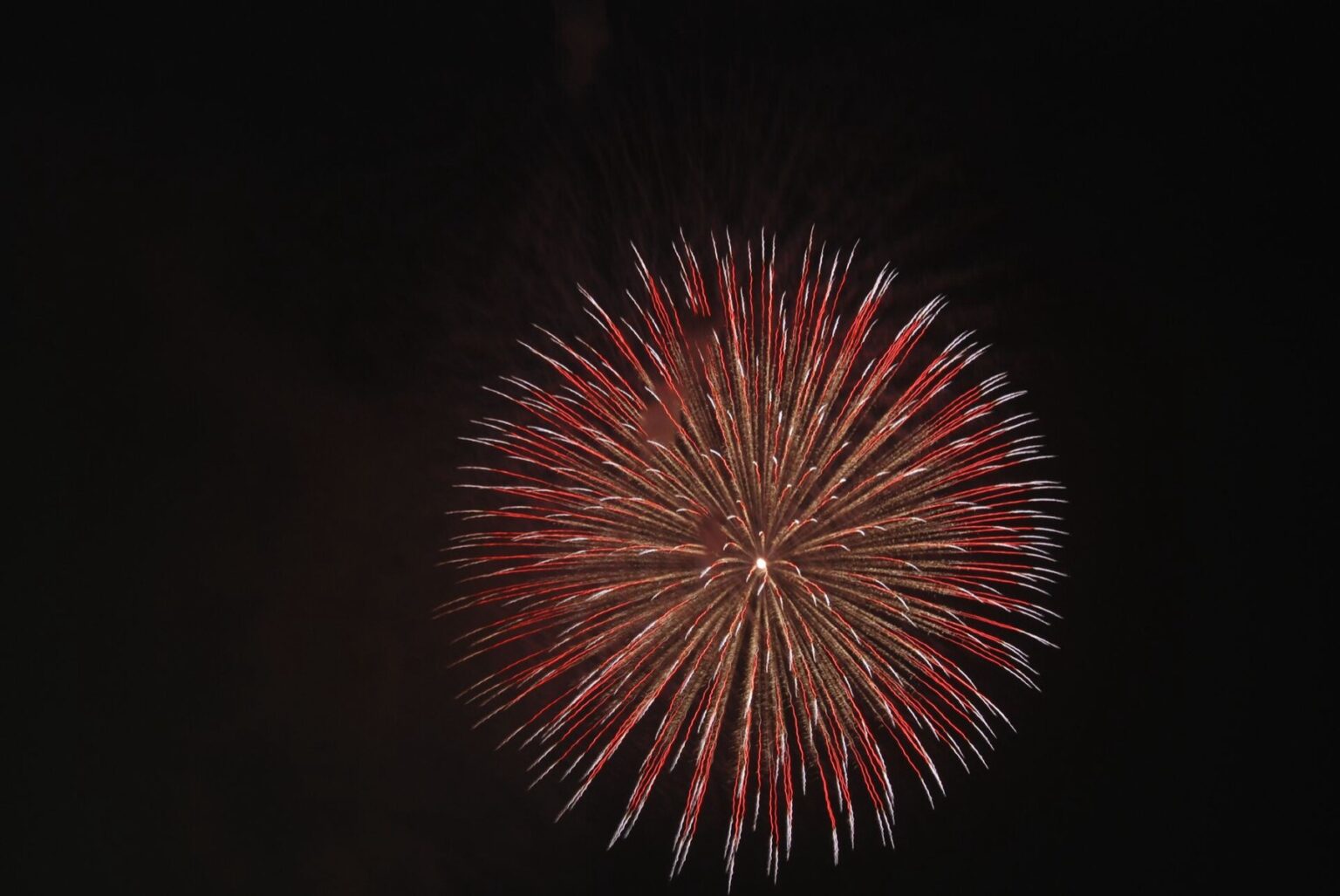
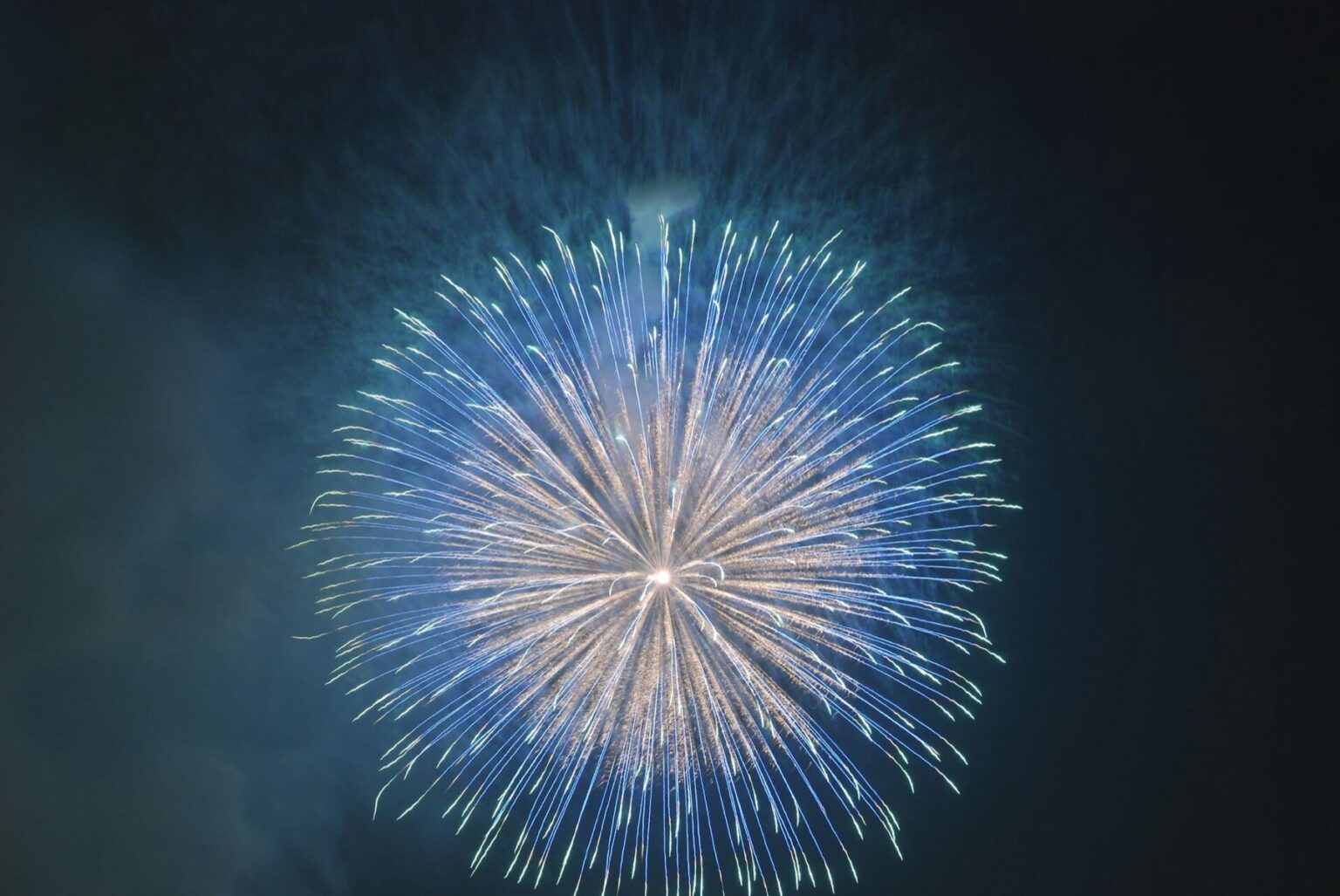
The organisers stage the hour as five themed scenes rather than a single continuous barrage, built around music and choreographed launches — they describe it as aiming to be Japan’s premier urban entertainment fireworks show, and the finale brings water fireworks (suichū hanabi) blooming across the river surface, a Yodogawa signature. It is a different style of fireworks festival from the classic countryside events: shorter, denser, staged against a city skyline. If you want the full spectrum, the Big Three fireworks festivals are the traditional counterpoint.
The skyline alternative: watch from Harukas 300
For the 2026 edition, Abeno Harukas’s 300-metre observatory runs a ticketed special evening on fireworks night (October 17, 17:45–20:30), with viewing areas set up on the north side and the launch audio piped in live. Nine plans went on sale on August 17 — the five viewing plans online (the heliport plan was ¥6,000, a 60th-floor seat ¥5,500 and 60th-floor standing ¥4,500), the four food-and-drink plans by phone — and on September 15 Harukas 300 announced that the special-evening tickets are sold out. If any same-day tickets are released, they will be posted on the Harukas 300 website after 16:00 on October 17 and sold only at the 16th-floor ticket counter. It is a separate paid option, sold by Harukas 300, not an official riverside seat: the 60th-floor areas are indoors, the heliport and some 58th-floor seats are outdoors, and Harukas does not refund tickets if the fireworks are hard to see or cannot be seen.
Make it an Osaka autumn weekend
October 17 slots into a bigger Kansai plan neatly: the Kishiwada danjiri region’s October festivals fall the previous weekend (October 10–11, 2026), autumn menus arrive in the food streets, and our 7-day Kansai itinerary builds the wider loop. For the following evening, a small-group Osaka food tour is a low-effort add-on; day trips and passes around Kansai are on the Kansai rail pass and Klook.
FAQ
When is the Naniwa Yodogawa Fireworks Festival in 2026?
Saturday, October 17, 2026, with fireworks from 19:00 to 20:00. It runs in rain and is cancelled outright in severe weather — the organiser states there is no postponement date. The organiser makes the cancellation call at 11:00 the day before and posts it on the official site; on the day itself the show can still be cancelled or stopped for lightning, rising water, an earthquake or other emergencies. Tickets are refunded only if the festival is cancelled (refund window October 27 – November 14, 2026), and Noryosen boat seats may be unusable if a typhoon makes landfall in Kansai within a week of the event.
Can I buy tickets on the day?
No. All official paid seats are advance-only. The organiser’s ticket site closes at 21:00 on October 16 (other sellers set their own deadlines). As of September 27, 2026, only the ¥14,000 Exciting Seat was still on sale there; every other category was marked sold out or out of stock. Out-of-stock categories can come back on the official site when orders are cancelled, and other sellers may still have some of their own.
Is there anywhere free to watch?
Yes — watching is free, but only from the Juso-side (right bank) grounds and riverbed outside the paid blocks and closed zones. The Umeda-side riverbank is closed in 2026, the Nakatsu–Noda stretch is off-limits, viewing from the top of the embankment is not allowed, and you may not stop on Juso Ohashi bridge. No place-holding before noon; after noon, no unattended sheets and no more than one square metre per person. Arrive early: the organiser warns that reaching your station after 17:30 may already be too late.
Which station should I use?
Not Umeda. Use Hankyu Juso or Minamikata, Metro Nishinakajima-Minamigata, JR Tsukamoto or Mitejima, or Hanshin Himejima — Juso and Tsukamoto are about 15 minutes on foot from the reserved-seat entrances. After the finale, wait about an hour before heading back to a station; the organiser recommends it, and it is safer and far less stressful than the 20:05 crush.
Why is it in October instead of August?
The 2025 edition moved to October because of the Osaka-Kansai Expo, and the organisers kept the October date for 2026. Practically, it means cooler viewing weather and a date that pairs with Kansai’s autumn season rather than midsummer heat.
Can I watch from the Umeda side of the river?
No. The entire Umeda-side (left bank) riverbank is closed to viewing in 2026, and the stretch between Nakatsu and Noda is off-limits during the event because of expressway works. Plan for the Juso side or a paid seat.
Is the Harukas 300 evening the same as an official fireworks seat?
No — it is a separate observatory event sold by Harukas 300, watching from 300 metres up and several kilometres away, not from the riverbank — and it is sold out (Harukas notice, September 15, 2026). Any same-day tickets would be announced after 16:00 on October 17 and sold only at the 16th-floor counter. Official riverside seats are sold only through the festival’s own ticket channels.
Sources
The primary sources behind the dates, prices and rules above
- Official outline (yodohanabi.com) — date, hours, rain policy, stations and the closed Umeda-side riverbank
- Official seat page — seat types, prices, sale period, child ages and sales at the organiser’s office
- Official ticket site — live seat status
- Official FAQ — gate times, arrival times, the cancellation decision and what ‘sold out’ means
- Official rules page — place-holding, embankment viewing, resale, refunds and fees
- Official traffic-restriction map — road closures, parking and Juso Ohashi bridge
- Official program page — the five scenes and the water-fireworks finale
- Organiser’s 30th-edition page — the 500,000 crowd figure
- Kintetsu Fudosan press release, August 7, 2026 (PDF) — Harukas 300 plans, prices, sales routes and refund terms
- Harukas 300 notice, September 15, 2026 (PDF) — special evening sold out and the same-day ticket rule
- Organiser announcements on the October scheduling (2025–2026)
Seat status checked on the organiser’s ticket site and the Harukas 300 notice on 27 September 2026; traffic map as updated by the organiser on 16 September 2026. Seat availability changes daily — confirm on the official site before travelling.
More fireworks & Osaka: How paid fireworks seats work · Japan’s Big Three fireworks · Japan in October.
Join travelers discovering Japan's hidden side
Weekly dispatches from off-the-beaten-path Japan — spots and stories you won't find in guidebooks.
No spam. Unsubscribe anytime.
Welcome aboard!
You're in. See you in your inbox soon.