
Kumamoto · Oguni · Aso
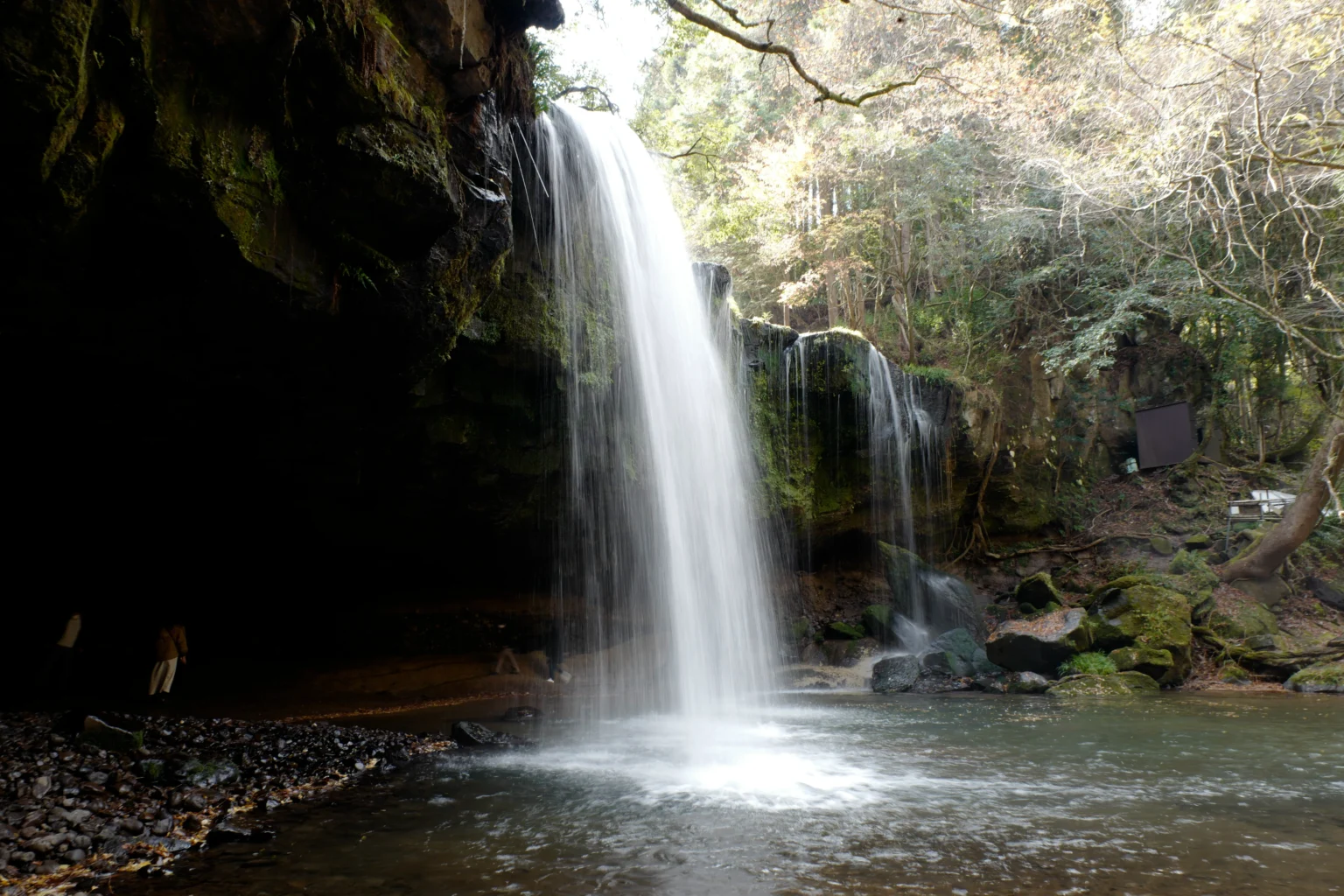
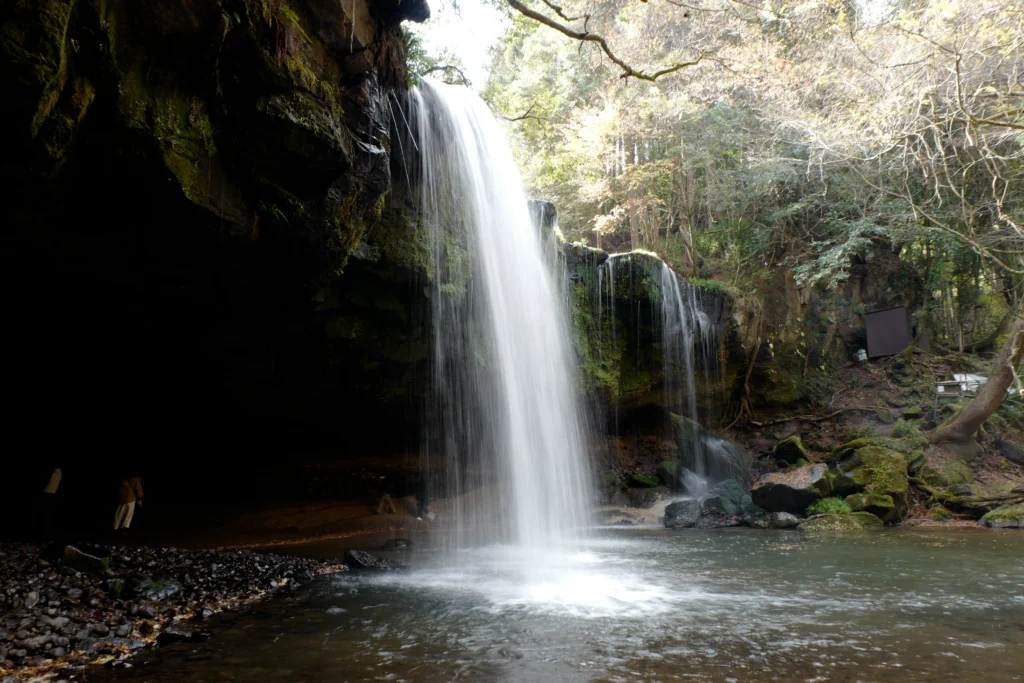
Nabegataki is a wide, curtain-like waterfall in Oguni, on the northern edge of Kumamoto’s Aso region — and a waterfall where, when the river-zone access is open, you can walk behind the curtain and look out through it. The booking rule is more forgiving than it looks. On ordinary opening days reservations take priority but entry without one is permitted; advance booking is compulsory on 19 specified dates in the 2026 financial year — one of which, 19–23 September, is running as this is published.
Reservations and walk-up entry
The park’s English page says flatly that “advance reservation is required”. Oguni Town’s FY2026 annual schedule is more precise, and it is the operational document: reservation-only (完全予約制) applies on 19 named dates, and its calendar legend marks ordinary opening days as entry permitted without a reservation.
| 2026 reservation-only dates | Holiday period |
|---|---|
| 2 May (Sat) – 6 May (Wed) | Golden Week |
| 8 Aug (Sat) – 16 Aug (Sun) | Obon |
| 19 Sep (Sat) – 23 Sep (Wed) | Silver Week |
On ordinary opening days the town’s wording is yoyaku yusen — reservation-priority: holders of a booking are let in first, and walk-ups are permitted. I visited without a reservation in autumn 2025 and was admitted — consistent with walk-up entry being permitted, though a personal account is not a guarantee of admission on a future date. For a visit now, work from the FY2026 schedule: book if your date falls in one of the blocks above, and consider booking anyway for a fine weekend.
How the booking works. Advance reservations are accepted only through Webket — neither individual nor group bookings can be made by telephone. Bookings open on the 1st of the preceding month, and tickets are timed-entry rather than just dated. You can still buy on the day, as long as you purchase before your slot begins.
Visitor cancellations are accepted until 23:59 three days before entry — for a 4 November visit, until 23:59 on 1 November. After that, visitor-requested cancellations are not refunded. There is no online discount: ¥300 is ¥300 either way.
The reason for the system is worth knowing, because it explains the tone of everything else: the town introduced it because traffic congestion in the surrounding hamlets had become a serious problem, not to limit numbers inside the park. The approach is a narrow country road through people’s villages.
Walking behind the water — and the 2026 caveat
The draw is the broad recess behind the falls, which leaves just enough room to stand and watch the cascade from the inside. Slipping around to the back of it is the whole reason to come.
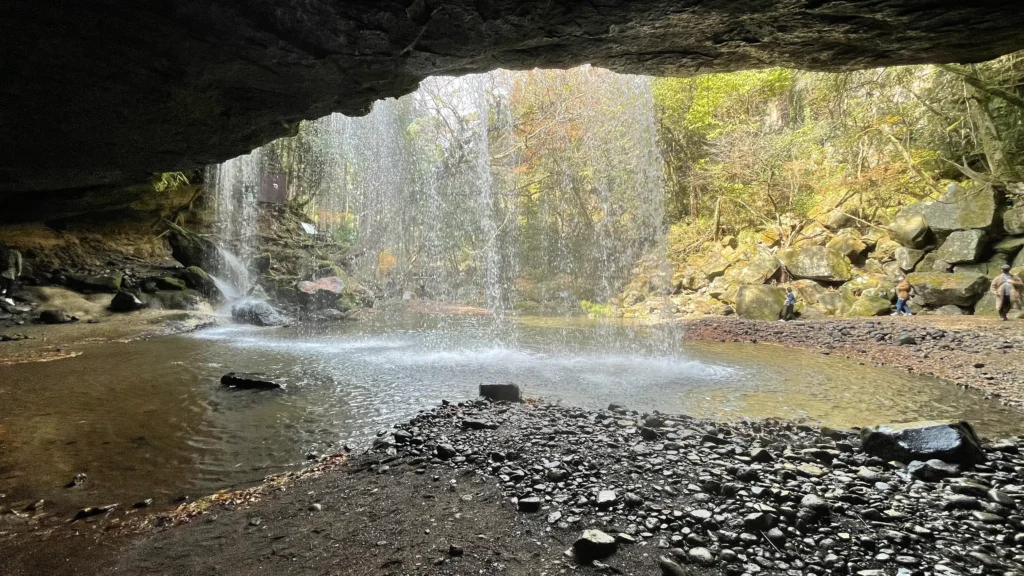
Compulsory booking applies on 19 dates this financial year. The 120 steps apply every day.
The walk: about 120 steps
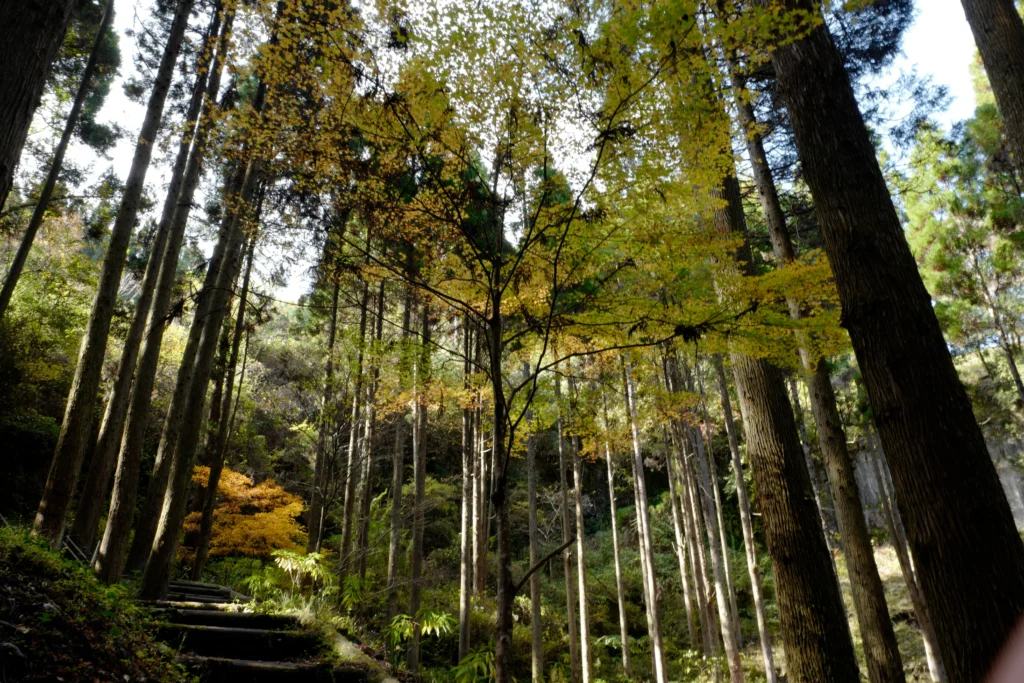
The walk from the car park to the basin takes about three minutes — but it drops roughly 120 steps, a figure the town publishes in its group-booking guide rather than on the main visitor page. They are steep, the ground near the basin stays wet and uneven, and there is no wheelchair access to the falls.
I found the stairs manageable, but the descent and the climb back may be difficult if you have limited mobility or balance. Wear closed shoes with good grip, and avoid sandals. Everything behind the water and on the approach is slick.
Fees, hours and the small print
| Item | Detail |
|---|---|
| Adult (high school and up) | ¥300 |
| Child (elementary / junior high) | ¥150 |
| Below elementary-school age | Free |
| Disability certificate holders | Free; one accompanying carer also enters free |
| Opening hours | 9:00–17:00, last entry 16:30 |
| Closed | 28 December – 3 January |
| Parking | 123 spaces; large buses cannot enter — only vehicles under 9 m |
Two things to plan around: the park suggests allowing 40 to 60 minutes for a visit, and once you leave you cannot re-enter on the same ticket. Groups pay cash at the gate rather than online, and there is no group discount.
The park also closes at short notice for heavy-rain and flood warnings, approaching typhoons and earthquakes — it shut on 5 July 2026 for high water. For that closure the operator cancelled bookings and issued refunds from its side; if another closure affects your visit, follow the instructions in that notice.
When to go
I visited a couple of days after heavy rain, when the flow was strong — worth bearing in mind if the forecast has just cleared, after checking the park has not closed for high water. I arrived around midday half-expecting flat light, and the sun coming down through the trees and the spray was the thing I remember most, so don’t write off the middle of the day.
Spring
The fresh-green maple season is the local headline. Note that the Golden Week evening illumination that older guides describe no longer appears in any official listing — Kumamoto Prefecture’s page for it now returns a 404, and the town announced no light-up for 2026.
Summer
Green, cool and misty, and a genuine escape from Kyushu’s heat. This is also when the Obon reservation-only block falls, 8–16 August.
Autumn
When I went. The cedars stay dark green and the maples turn against them, and the park keeps ordinary hours — no special opening, no illumination, no extended evenings in 2026.
Winter
Cold snaps can freeze parts of the curtain into icicles. The path gets slicker still, and the park is shut 28 December to 3 January.
Getting there
Driving is the simplest option. There is no bus to the falls themselves and Oguni Town has no railway, so the final leg is always car or taxi.
| From | By car |
|---|---|
| Kurokawa Onsen | ~25 minutes |
| Aso Station | ~50 minutes |
| Michi-no-Eki Oguni (Yu Station) | ~10 minutes |
| Hita IC | ~1 hour |
| Kumamoto IC | ~1.5 hours |
| Kumamoto or Fukuoka city | ~2 hours |
Without a car it is still possible: a highway bus from Fukuoka to Yu Station takes around two and a half hours, and a taxi covers the last eight minutes. Large coaches cannot make the approach road at all — the town’s advice to groups is to change to a microbus or taxi at Yu Station.
Car hire and a base: Kurokawa or Aso
Where to stay, and what to pair it with
Allow 40 to 60 minutes at the park, plus travel time — this is a stop rather than a destination. The obvious anchor is Kurokawa Onsen, 25 minutes away, whose riverside open-air baths are the reason most people are in this part of Kyushu at all — and where our review of Pizzeria Tre Passo covers an unexpected dinner option in the valley.
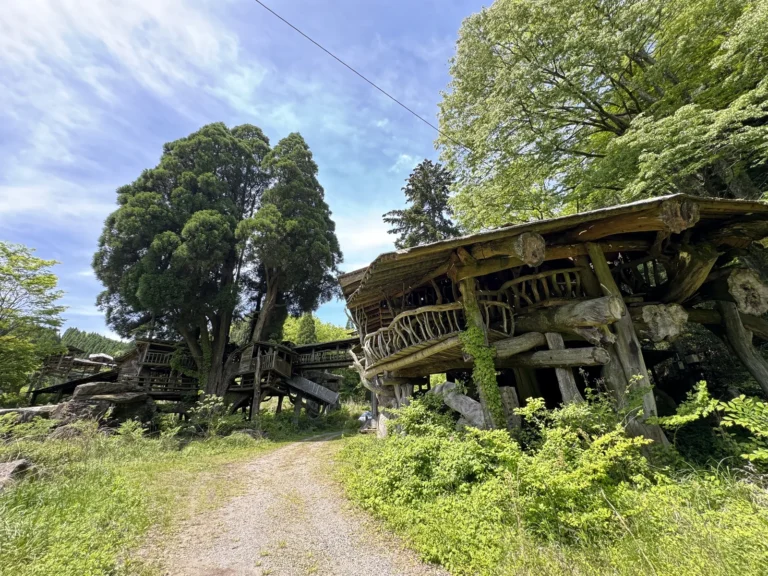
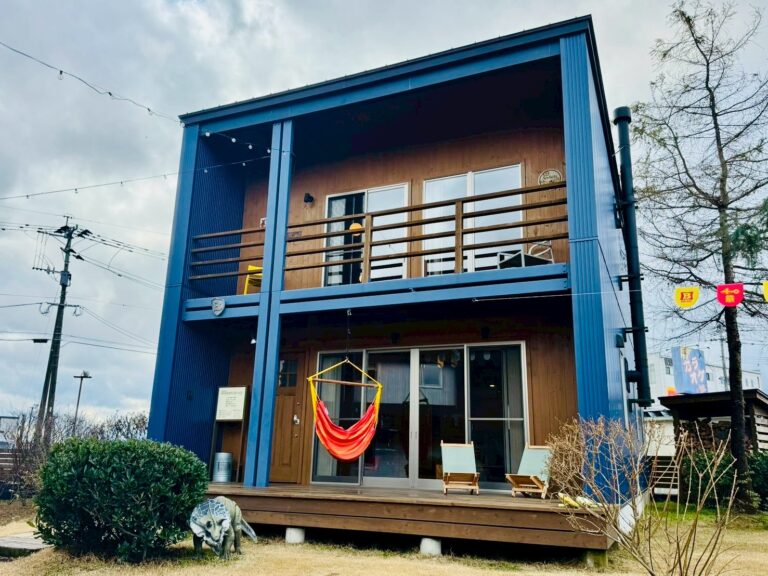
South of there the Aso caldera opens up: the grassland at Kusasenri beneath the active volcano, the red-beef bowls at Imakin Shokudo, and the Takamori tree house built around a 400-year-old cedar. If you are staying longer, the BESS log-house stay is a different way to sleep in the region, and the Ariake ferry is an alternative route out towards Nagasaki.
One time-limited 2026 note: an “Aso Fukko-wari” Oguni accommodation voucher was valid from 7 to 30 September 2026 for visitors from outside the town. Check the town’s official announcement for eligibility and current status before relying on it.
Frequently asked questions
Do I need a reservation for Nabegataki Falls?
Not on ordinary opening days. For the 2026 financial year, Oguni Town’s schedule makes advance booking compulsory on 19 dates: 2–6 May, 8–16 August and 19–23 September 2026. On other opening days reservations take priority but walk-up entry is permitted. Book through Webket if your date falls in one of those blocks, or if you are visiting on a fine weekend.
How much does Nabegataki Falls cost?
¥300 for high school students and older, ¥150 for elementary and junior-high students, and free below elementary-school age. Holders of a disability certificate enter free, and one accompanying carer also enters free. There are 123 parking spaces, and there is no discount for booking online.
Can you still walk behind Nabegataki Falls?
It was open when we checked on 22 September 2026. Oguni Town announced an earthquake-related closure on 31 July 2026 and reopened access on 28 August, but this is a river area entered at your own risk and the operator may restrict it again in bad weather. Check the town’s site the morning you travel.
How hard is the walk to the falls?
Short but steep: about three minutes each way, down roughly 120 steps. The ground near the basin is wet and uneven, and there is no wheelchair access. Wear shoes with grip.
How do I get to Nabegataki Falls without a car?
There is no bus to the falls and no railway in Oguni, so the practical option is a highway bus from Fukuoka to Yu Station (about two and a half hours) then a taxi for the last eight minutes. Most visitors drive — Kurokawa Onsen is 25 minutes away.
Is there a light-up at Nabegataki Falls?
Not in 2026. The Golden Week evening illumination that older articles describe does not appear in the town’s 2026 calendar or events listing, and Kumamoto Prefecture’s page for it now returns an error. On regular open days in 2026 hours remain 9:00–17:00, with last entry at 16:30.
Sources
Official sources, re-checked 22 September 2026
- Oguni Town — Nabegataki Falls official page and the town’s FY2026 annual park schedule (reservation-only dates, closures), reservation FAQ (booking window, cancellation, no phone bookings, no online discount) and group-use guide (step count, bus restrictions, disability admission)
- Oguni Town notices — the 31 July 2026 closure of the area behind the falls, its 28 August 2026 reopening, and the 5 July 2026 heavy-rain closure
- Kumamoto Prefecture official tourism — driving times from Kurokawa Onsen, Aso and the major cities; parking capacity; timed-entry description
- Photographs: taken by the author at the falls in autumn 2025.
Join travelers discovering Japan's hidden side
Weekly dispatches from off-the-beaten-path Japan — spots and stories you won't find in guidebooks.
No spam. Unsubscribe anytime.
Welcome aboard!
You're in. See you in your inbox soon.