
Renting a car near Mt. Fuji makes the Fuji lakes and quiet back-roads far easier to explore. But the roads here are catching a lot of visitors out: foreign cyclists keep riding onto the expressway because a maps app told them to, and foreign rental-car crashes around the mountain have jumped sharply. Much of it comes down to a mix of left-hand driving, narrow roads and one thing in particular — not being able to read the signs. This is a visual guide to the Japanese road signs you actually need before you drive (or cycle) in Japan.
Sign meanings here are checked against Japan’s National Police Agency and land-ministry (MLIT) references. Rules can change and local signage varies — treat this as preparation, not a substitute for the official rules of the road.
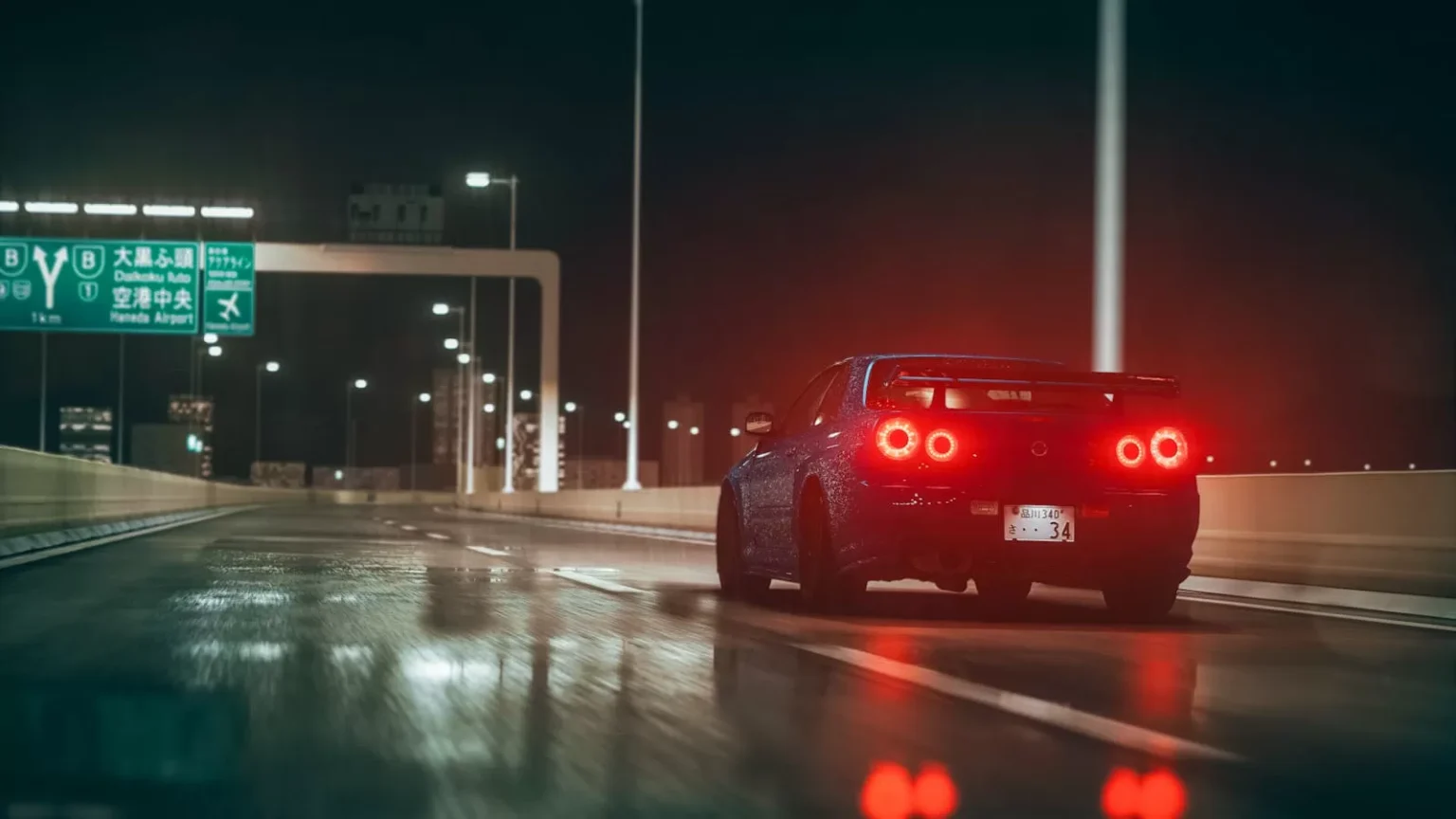
Why this matters near Mt. Fuji
The Mt. Fuji lakes (Fujiyoshida, Kawaguchiko, Yamanaka) are a driving-heavy area with narrow farm roads, an expressway threaded through them, and a lot of first-time-in-Japan drivers. The result has been a run of avoidable trouble:
In the reported cases, cyclists had followed a maps app onto the Higashi-Fujigoko Road, a motor-vehicles-only expressway where bikes, pedestrians and small mopeds are banned — and the highway operator, NEXCO Central, has been warning riders about it. The fix is simple once you know what to look for. Let’s start with the rules that come before any sign.
Before you drive: the non-negotiables
- Drive on the left. Cars and bicycles keep left; the driver sits on the right.
- Everyone belts up, front and back, and no phone in your hand while driving.
- Never drink and drive — Japan’s drink-driving penalties are severe, and they can extend to passengers who knowingly ride with an impaired driver.
- Pedestrians have priority, especially at crossings.
How Japanese road signs work
Japan groups road signs into a few families, and knowing the family tells you how seriously to take a sign at a glance:
The essential signs, at a glance
These are the signs that decide whether you have a smooth drive or a wrong turn onto an expressway. The symbol is what matters — the Japanese text is there so you can match it on the road.
| Sign | Name | What it means | What to do |
|---|---|---|---|
| Stop 一時停止 / 止まれ | A required full stop — not a yield. | Stop completely at the line, check, then go. | |
| Do Not Enter 車両進入禁止 | No vehicle entry from this direction (e.g. a one-way exit). | Never enter. Turn around or find another route. | |
| One Way 一方通行 | Traffic flows only in the arrow’s direction. | Go only that way; never against it. | |
| Motor Vehicles Only 自動車専用 | Expressway-type road. No bikes, pedestrians or mopeds ≤125cc. | On a bike or on foot: do not enter. This is what has been happening near Fuji. | |
| Speed Limit 最高速度 | Maximum speed in km/h (not mph). | Keep at or below it. If no limit is posted, follow the local signs (see the speed FAQ below). | |
| Slow Down 徐行 | Go slow enough to stop immediately — stronger than “drive slowly.” | Drop to a crawl; be ready to stop at once. | |
| Bicycles Only 自転車専用 | Path reserved for bicycles. | Cars stay out; check any plate below for exceptions. | |
| Pedestrians Only 歩行者専用 | Road/path for people on foot. | No cars or bikes unless a plate below allows it. | |
| Auxiliary Plate 補助標識 | Changes the main sign: a time window, days, vehicle types or a zone. | Always read it — the rule above may apply only “8–20” or “except bicycles.” |
The five signs foreign drivers misread most
If you only memorise a handful, make it these:
- Stop (止まれ) — it’s a red inverted triangle, not the octagon you know. Same rule: a complete stop.
- Do Not Enter (車両進入禁止) — a red circle with a white bar. It usually marks a one-way exit; going in means a head-on lane.
- One Way (一方通行) — a blue arrow. Wrong-way one-ways are a classic rental-car crash.
- Motor Vehicles Only (自動車専用) — the blue “car” sign marks an expressway. On a bike or on foot, this is the one that’s putting foreign visitors in danger near Fuji.
- Slow (徐行) — not a suggestion; it means slow enough to stop on the spot.
US & most countries
Red octagon
Japan
Red inverted triangle
Different shape, same rule: come to a full stop.
Driving (and cycling) around Mt. Fuji
Everything above matters most in exactly this area. A few Fuji-specific pointers:
- The expressway trap. The blue “motor vehicles only” sign marks roads like the Higashi-Fujigoko Road. If you’re on a rental bicycle or moped, a maps app may still route you onto it — don’t follow it onto a road with that sign.
- Set your app to avoid highways. On a bike or scooter, switch your maps app to a cycling profile where available, or turn on “avoid highways/tolls,” so it stops pointing you at the expressway.
- Narrow roads. Backroads around the lakes and Fujiyoshida can be one car wide with blind bends — this is where the crashes happen. Slow right down, use pull-outs, and don’t hug the left edge into a ditch.
- Parking. Park only in marked lots (many are paid); stopping on narrow tourist roads blocks everyone and is often prohibited.
If you haven’t booked wheels yet, you can compare rental cars or check TOCOO, a Japan-based aggregator (coupon IJMEMZ takes ¥1,000 off a base rental of ¥10,000 or more, options excluded — check it shows before payment), and since you’ll lean on maps and translation the whole drive, a Japan eSIM is worth sorting first.
Before you drive near Fuji — quick checklist
- Paper IDP (1949 Geneva) + home licence + passport, all on you
- Maps app set to avoid highways/tolls (essential on a bike or moped)
- Know the “car” (自動車専用) and “no entry” (進入禁止) signs on sight
- Parking spot checked in advance
- Weather and road width checked — mountain roads narrow fast
A few points of etiquette
Beyond the signs: come to a genuine full stop at every 止まれ (police do watch), let pedestrians cross, don’t overtake on solid centre lines, and keep left except to pass. Flashing your hazard lights briefly is the normal way to say “thanks” after someone lets you in.
Frequently asked questions
Can I drive in Japan on my home licence?
Not on its own. You need a Japanese licence, a 1949 Geneva Convention International Driving Permit, or (for Switzerland, Germany, France, Belgium, Monaco and Taiwan) your licence plus an official Japanese translation from an authorised body such as JAF or your embassy. Carry it with your passport and home licence.
Is my International Driving Permit valid in Japan?
Only if it’s issued under the 1949 Geneva Convention. Permits issued under the 1968 Vienna Convention are not accepted, and it must be the paper original — a digital version won’t do.
Are Japan’s stop signs octagonal like in the US?
No. Japan’s stop sign is a red inverted triangle reading 止まれ (newer ones also say STOP). The rule is the same: a complete stop at the line.
Can I ride a bicycle on the expressway?
No. Roads marked with the blue “motor vehicles only” (自動車専用) sign ban bicycles, pedestrians and mopeds of 125cc or less. This is the exact mistake happening around Mt. Fuji.
My maps app is sending me onto an expressway by bike — what do I do?
Don’t follow it. Set the app to a cycling profile or “avoid highways/tolls,” and if you see the “motor vehicles only” or “do not enter” sign, do not go in — find a parallel local road. If you have already reached a slip road, stop before it and turn back only where it is safe.
What do the numbers on speed signs mean?
They’re the maximum speed in km/h, not mph. Where no limit is posted, cars are generally capped at 60 km/h on ordinary roads as of 2026 — but many narrow local roads without a centre line move to a 30 km/h default from 1 September 2026, and expressway limits vary by road and section, so always follow the posted signs.
Related reads
Join travelers discovering Japan's hidden side
Weekly dispatches from off-the-beaten-path Japan — spots and stories you won't find in guidebooks.
No spam. Unsubscribe anytime.
Welcome aboard!
You're in. See you in your inbox soon.