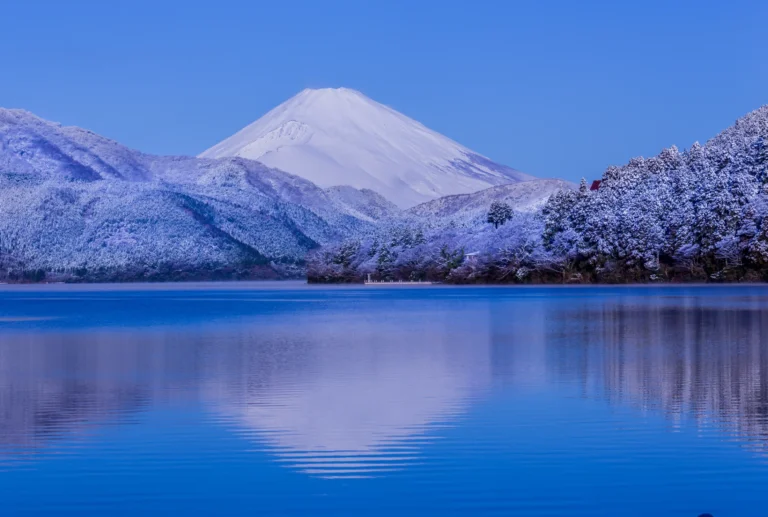
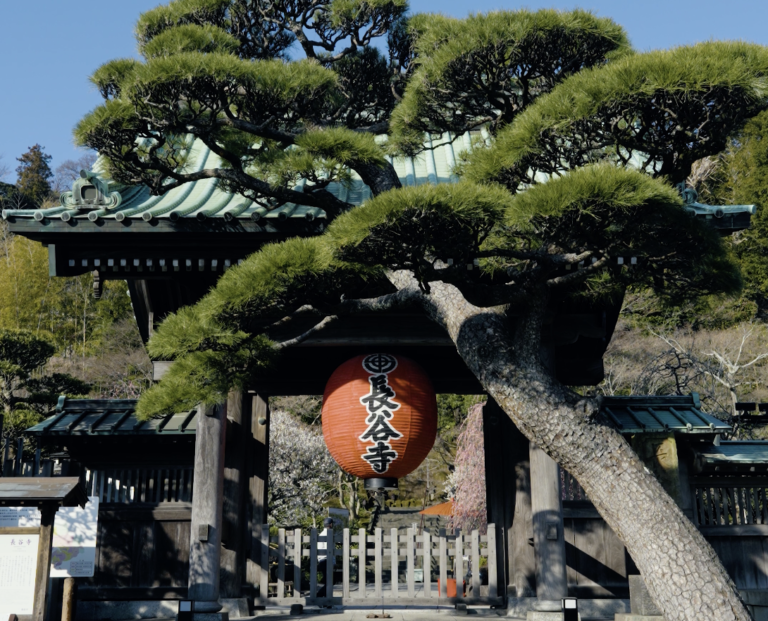
Kanagawa · Hakone · Autumn 2026
In typical years Hakone’s autumn colour starts around Lake Ashi and Sengokuhara in early November and works down to Hakone-Yumoto by early December, according to Odakyu’s Hakone Navi. For 2026, the Japan Weather Association’s spot pages on 11 October gave late November to early December for the Hakone Museum of Art and early December for Hakone Gora Park; Weathernews gave most Hakone spots a peak starting between about 12 and 22 November. The listings we checked that day showed no 2026 light-up.
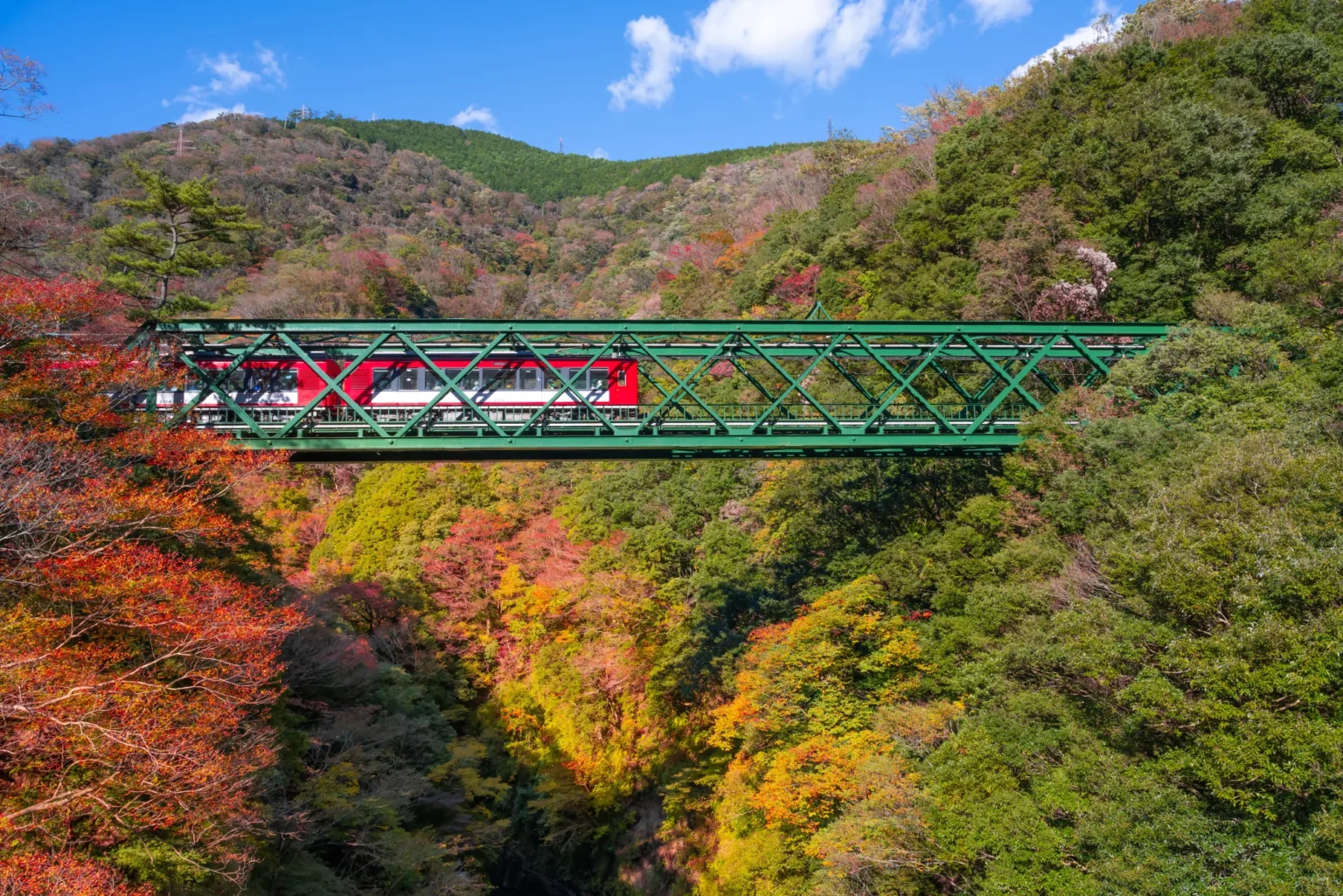
When are Hakone’s autumn leaves best in 2026?
Two weather companies publish spot-by-spot 2026 forecasts for Hakone, and they are different kinds of forecast. The Japan Weather Association (JWA, which runs tenki.jp) gives each spot a window, such as “late November to early December”. Weathernews gives the day a spot’s peak is expected to start and the day leaves are expected to start falling. A Weathernews start date can fall before a JWA window opens and the two can still overlap, so read them side by side rather than as rival peak dates. How the two companies work is explained in who forecasts Japan’s autumn colours.
For the season as a whole, JWA’s national forecast of 1 October 2026 (based on the iroha maple) says colour in eastern Japan will be around normal or later than normal, because temperatures are expected to stay above normal into November. Weathernews said on 8 October 2026 that autumn heat is holding the colour back and that peaks from late October onwards will run a little later than normal. Neither says how Hakone compares with its own normal, and spot by spot the comparison varies.
Here is what each says for Hakone, as we read the pages on 11 October 2026. Hakone Navi’s figures are the usual timing on its 2026 spot list, not a 2026 forecast.
| Spot | 2026 forecasts, and Hakone Navi’s typical timing |
|---|---|
| Hotel de Yama garden (Lake Ashi) | JWA window: late October to mid-November. Typical: late October to mid-November |
| Hakone Wetland Garden (Sengokuhara) | Weathernews: peak from about 12 November, leaves falling from about 25 November. Typical: late October to early November |
| Lake Ashi | Weathernews: peak from about 15 November, leaves falling from about 28 November |
| Hakone Gora Park | JWA window: early December. Weathernews: peak from about 14 November, leaves falling from about 3 December. Typical: late November |
| Hakone Museum of Art (Gora) | JWA window: late November to early December. Weathernews: peak from about 19 November, leaves falling from about 7 December. Typical: early to mid-November |
| Komagatake Ropeway | Weathernews: peak from about 19 November |
| Choanji temple (Sengokuhara) | Weathernews: peak from about 21 November, leaves falling from about 2 December. Typical: early to mid-November |
| Horaien garden (Kowakudani) | Weathernews: peak from about 21 November. Typical: early to mid-November |
| Okada Museum garden (Kowakudani) | Weathernews: peak from about 22 November. Typical: early to late November |
| Hakone-Yumoto (Tenseien waterfalls) | No 2026 forecast on the pages we checked. Typical: late November to early December |
On 11 October the JWA pages for the Museum of Art, Gora Park and Hotel de Yama were all marked green, with no colour yet. Hakone Navi describes the typical pattern as colour starting on the high ground and around the lake and finishing in the valley at Hakone-Yumoto, about 100 m above sea level. JWA adds that colour can differ within one spot, depending on altitude and tree species. Between them, the two 2026 forecasts put most named spots between about 12 November and early December. Both companies update their pages through the season, so check again the week before you go.
Where to see autumn leaves in Hakone
The spots below have a 2026 forecast, an operator listing, or both. Hakone Navi groups them by area.
Lake Ashi and the sightseeing cruise
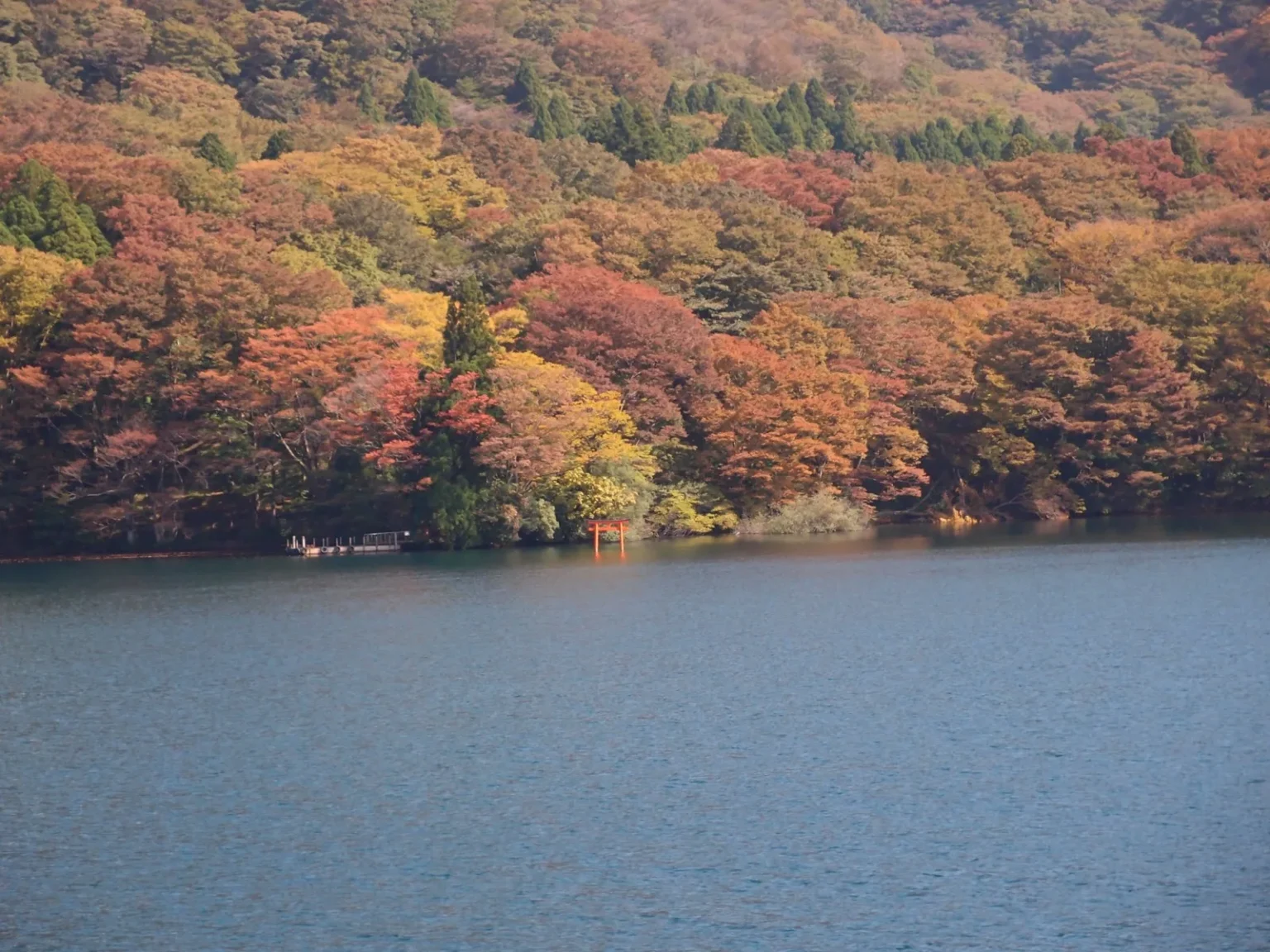
Hakone Navi gives the pirate-ship cruise from Togendai a typical season of late October to late November, and the lakeside park at Kojiri early to late November. Weathernews says that from Motohakone and Onshi-Hakone Park you can see Mount Fuji across the lake on a clear day. The garden of Odakyu Hotel de Yama (山のホテル) above the lake, a former villa garden of Baron Iwasaki with maples and zelkovas according to Hakone Navi, has the earliest of JWA’s three Hakone forecasts. We could not find a page from the hotel on whether the garden is open to non-guests this autumn, so ask the hotel before you plan around it. For a day-use onsen on the lakeshore, see our Ryuguden Honkan guide.
Hakone Ropeway and Owakudani
Hakone Navi lists the slopes along the ropeway between Owakudani and Ubako/Togendai, with a typical season of early to late November. Weathernews’ Owakudani page describes the view from the gondola between Owakudani and Togendai. The ropeway runs 9:00–17:00 from February to November and 9:00–16:15 in December and January, and stops for strong wind, thunder or an approaching typhoon. The operator says suspensions for volcanic gas are decided from readings at several points, and that gas levels are not directly tied to the volcanic alert level. On 11 October 2026 the Japan Meteorological Agency’s list of volcanoes under warnings did not include Hakoneyama.
Sengokuhara: Choanji temple, the susuki fields and the Wetland Garden
Choanji (長安寺) is a temple where, in Hakone Navi’s description, several hundred rakan statues (arhats, disciples of the Buddha) with different expressions stand around the grounds among the autumn leaves. Weathernews lists entry as free. From Hakone-Yumoto, Hakone Navi gives about 24 minutes on the Hakone Tozan Bus T line to the Hakone Sengoku stop, then about 2 minutes on foot. The pages we checked disagree on opening hours (Weathernews: 5:00–17:00; Walkerplus: 24 hours), so plan for daylight.
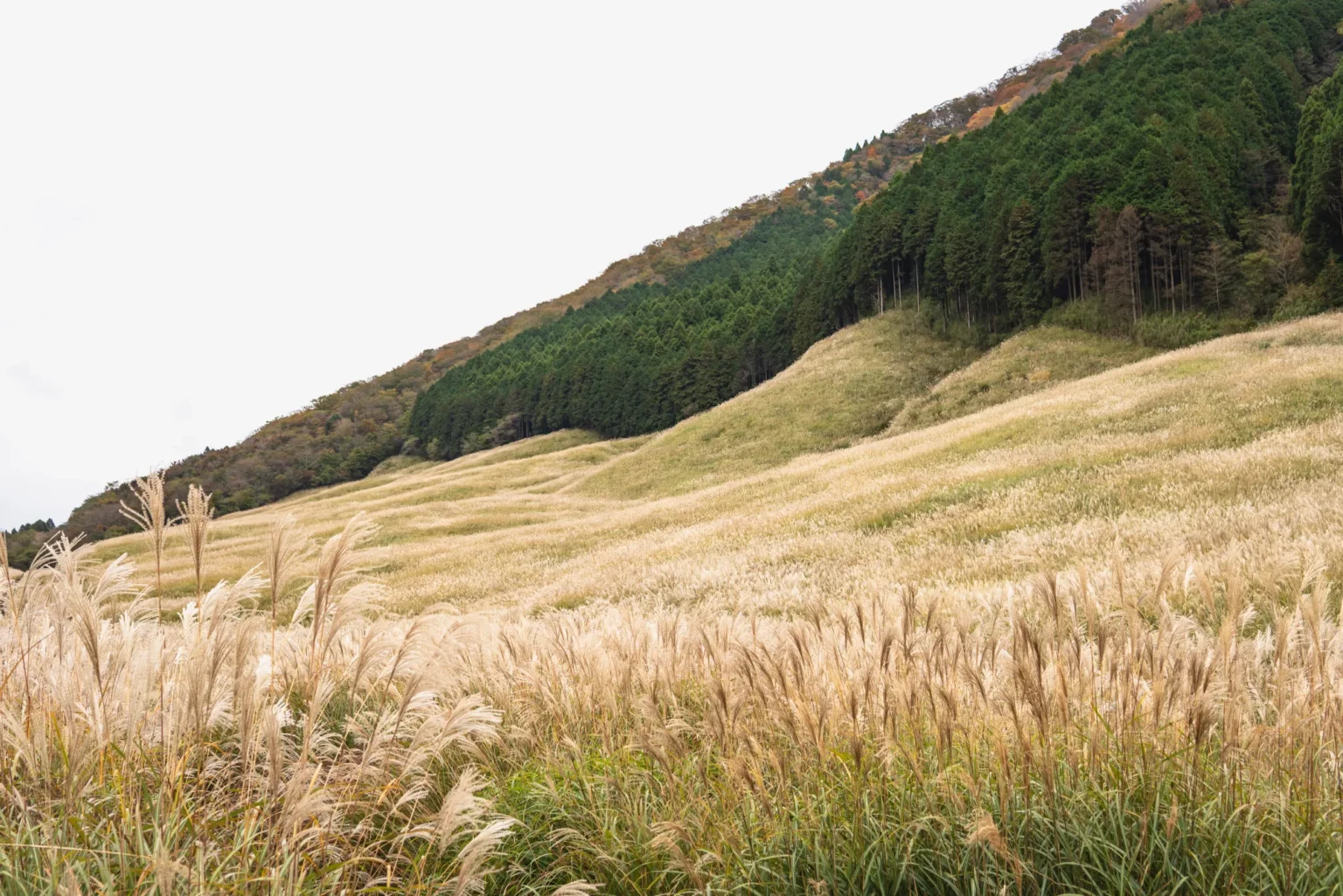
Sengokuhara’s susuki grass is the other autumn sight here. The Kanagawa Prefecture tourism site gives its season as late September to early November and says the grass turns from silver to gold as the plumes open. Hakone Navi’s susuki status page (updated 6 October 2026) gives about 30 minutes from Hakone-Yumoto on the T line to the Sengoku Kogen stop. Hakone Wetland Garden, nearby, has the earliest Weathernews date among the Hakone spots we checked; its autumn wildflower show runs until 8 November 2026, according to the Weathernews listing.
Gora: Hakone Museum of Art and Hakone Gora Park
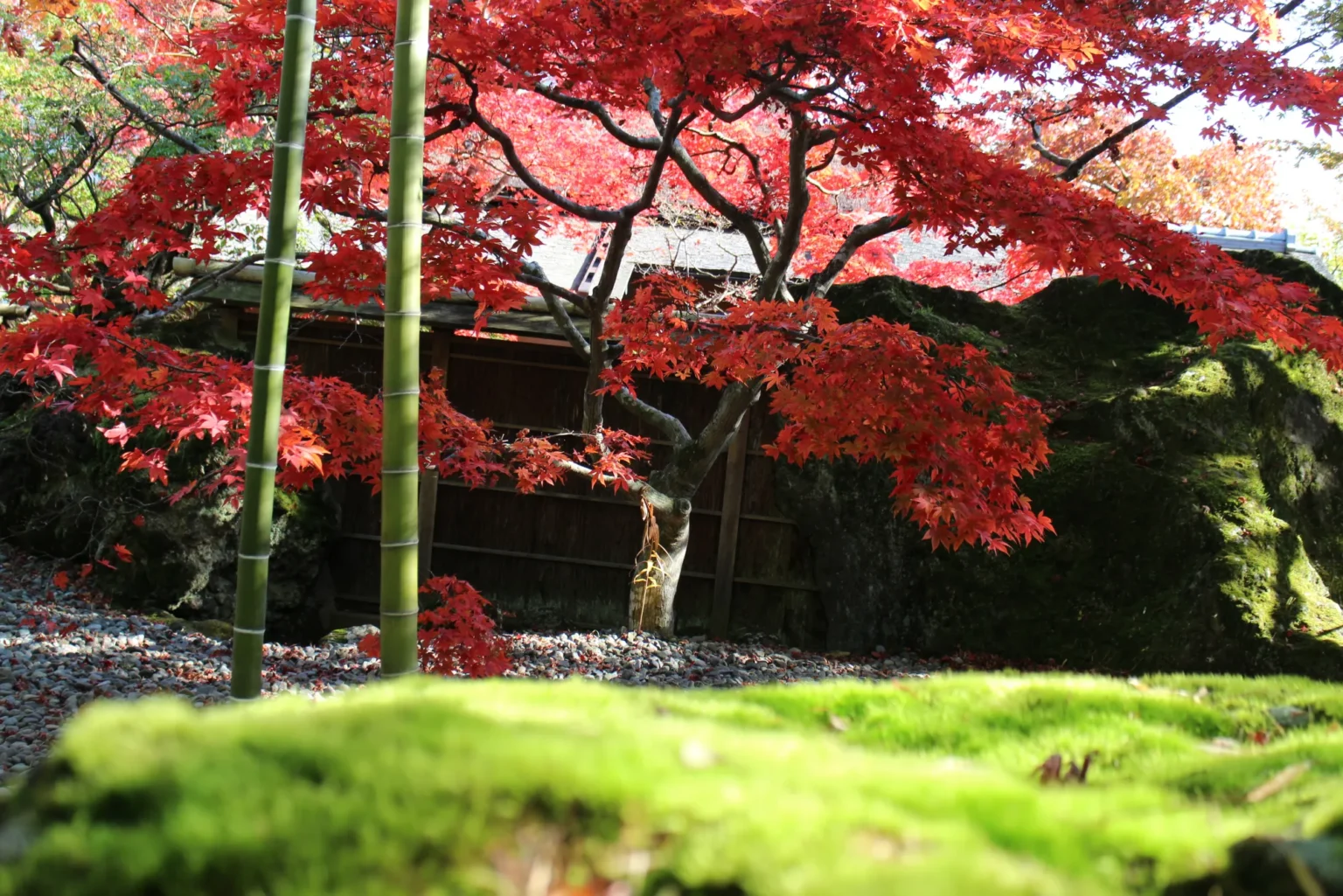
The Hakone Museum of Art’s garden includes a moss garden (苔庭) under maples. The museum closed for renovation on 7 May 2026 and pre-opens on Friday 30 October 2026; its ticket page names 23 December as the grand opening. From 30 October to 20 December admission is ¥1,000 for adults and ¥500 for high-school and university students (Hakone Navi gives 20 December as the last day of the special price); from 21 December the museum’s regular fees of ¥1,500 and ¥700 apply, and the grand opening is on 23 December. Junior-high pupils and younger go free. From April to November it opens 9:30–16:30 (last entry 16:00), from December to March 9:30–16:00 (last entry 15:30). The museum’s standard closing day is Thursday, but its own calendar, read on 11 October 2026, shows no closing days in November 2026. Stay off the moss and lawns, and leave tripods and selfie sticks behind: the museum asks for both. Hakone Navi gives about a minute’s walk from Koen-kami station on the cable car from Gora.
Hakone Gora Park is next door. Adults pay ¥650 and children of primary-school age or under go free; it is free with the Hakone Freepass. Hours are 9:00–17:00 from March to November (last entry 16:30) and 9:30–16:30 from December to February. JWA notes that you can see autumn roses and autumn leaves together here, and the park posted on 9 October 2026 that its autumn roses were in bloom.
Gora Park entry, the cable car, the ropeway and the lake cruise are all covered by the Hakone Freepass.
Search “Hakone Free Pass” on KlookKowakudani and Hakone-Yumoto: the late end
Between Gora and the valley, Hakone Navi lists the Hakone Kowakien Horaien garden and the garden of the Okada Museum of Art, with Weathernews peak-start dates of about 21 and 22 November. In typical years Hakone-Yumoto is where the season ends: Hakone Navi gives late November to early December for the Tamadare and Hien waterfalls in the garden of the Tenseien ryokan, about 12 minutes on foot from Hakone-Yumoto Station, and says the garden is open to non-guests from 8:00 to 17:00. We found no 2026 forecast for Yumoto itself.
Are there autumn light-ups in Hakone in 2026?
On 11 October 2026 the listings we checked showed no 2026 light-up in Hakone. tenki.jp shows “no information” for night viewing at its three Hakone spots (the Museum of Art, Gora Park and Hotel de Yama), which is not the same as saying there will be none. Walkerplus, with data as of October 2026, lists no light-up at Choanji. A Hankyu Travel page says a 2026 light-up at the Hakone Museum of Art is undecided, and lists none at Lake Ashi, the Tozan railway, Owakudani, Gora Park or the Komagatake ropeway. The museum’s own site, read the same day, mentions no evening opening. If one is announced, we will add it here. For maples after dark near Tokyo, see Tokyo’s autumn light-ups.
How to handle the November crowds on the Hakone loop
Hakone Navi warns that many people come in the high season and that you may not be able to enjoy the leaves at your own pace. What the operators publish, as of 11 October 2026:
Roads around Owakudani
Hakone Navi’s 2026 spot list says roads around Owakudani get especially busy in the autumn season, and suggests drivers use the free car park at Ubako Station.
Parking in Gora
Gora Park’s notice of 1 August 2026 says nearby car parks have limited spaces and may be full from the morning, and asks visitors to come by public transport.
Ropeway queues
The ropeway’s page says journey times vary with crowding. On 10–11 October 2026 Odakyu ran a free, pre-booked fast lane at Sounzan and Owakudani to ease crowding; the notice covered only those two days.
Holiday weekends
Japan’s November holidays in 2026 fall on Tuesday 3 November and Monday 23 November, so 21–23 November is a three-day weekend. It overlaps the Weathernews peak-start dates for Choanji and Horaien.
On the operator pages we checked on 11 October 2026 we found no advance queue-time forecasts, so we don’t give any. Our suggestion, not a source’s: if you can choose, go on a weekday, avoid 3 November and the 21–23 November weekend, and leave the car behind. Gora Park asks visitors to come by public transport, and Hakone Navi points drivers heading for Owakudani to the free car park at Ubako.
Getting around Hakone in autumn
For Tokyo to Hakone (Romancecar or Shinkansen, and whether the Freepass pays), see our Tokyo to Hakone guide. Once you are there, Hakone Navi’s autumn model course (9 October 2026) follows the usual loop: the Hakone Tozan train from Hakone-Yumoto up to Gora, Gora Park and the Museum of Art by the cable car, then the ropeway from Sounzan over Owakudani to Togendai. From Togendai the pirate ship crosses Lake Ashi.
The Hakone Freepass covers the Tozan train, cable car, ropeway, lake cruise and designated buses. It costs from ¥7,100 for 2 days from Shinjuku, with the Romancecar fee extra; whether it pays on your route is worked out in the Tokyo to Hakone guide.
Prefer a guided day or bundled tickets around the loop?
Search “Hakone” on KlookWhere to stay for the autumn leaves
How Hakone Navi describes the main bases, with the timing the sources above give for the spots nearby:
Lake Ashi (Motohakone, Hakone-machi)
The pirate ships call at Motohakone and Hakone-machi ports, with Mount Fuji views. Nearby, Hotel de Yama’s garden has the earliest JWA window (late October to mid-November); Weathernews has Lake Ashi from about 15 November.
Sengokuhara
A highland resort with many museums, the golden susuki fields in autumn and the Sengokuhara marsh. Weathernews dates here run from about 12 November (Wetland Garden) to about 21 November (Choanji).
Gora
The next-biggest hot-spring town after Yumoto, once a district of upscale villas. The Museum of Art and Gora Park are here; their forecasts run from mid-November (Weathernews) to early December (JWA).
Hakone-Yumoto
About 100 m above sea level, with many places to stay and souvenir shops; Hakone Navi calls it the centre of Hakone’s hot springs. Typical colour here is late November to early December, and it is the start of the loop.
Pick the area that matches the spots you want to see, then search.
See Hakone stays on Booking.comCompare prices for the same dates on a second site.
See Hakone hotels on AgodaCombining Hakone with Mount Fuji and Tokyo in November
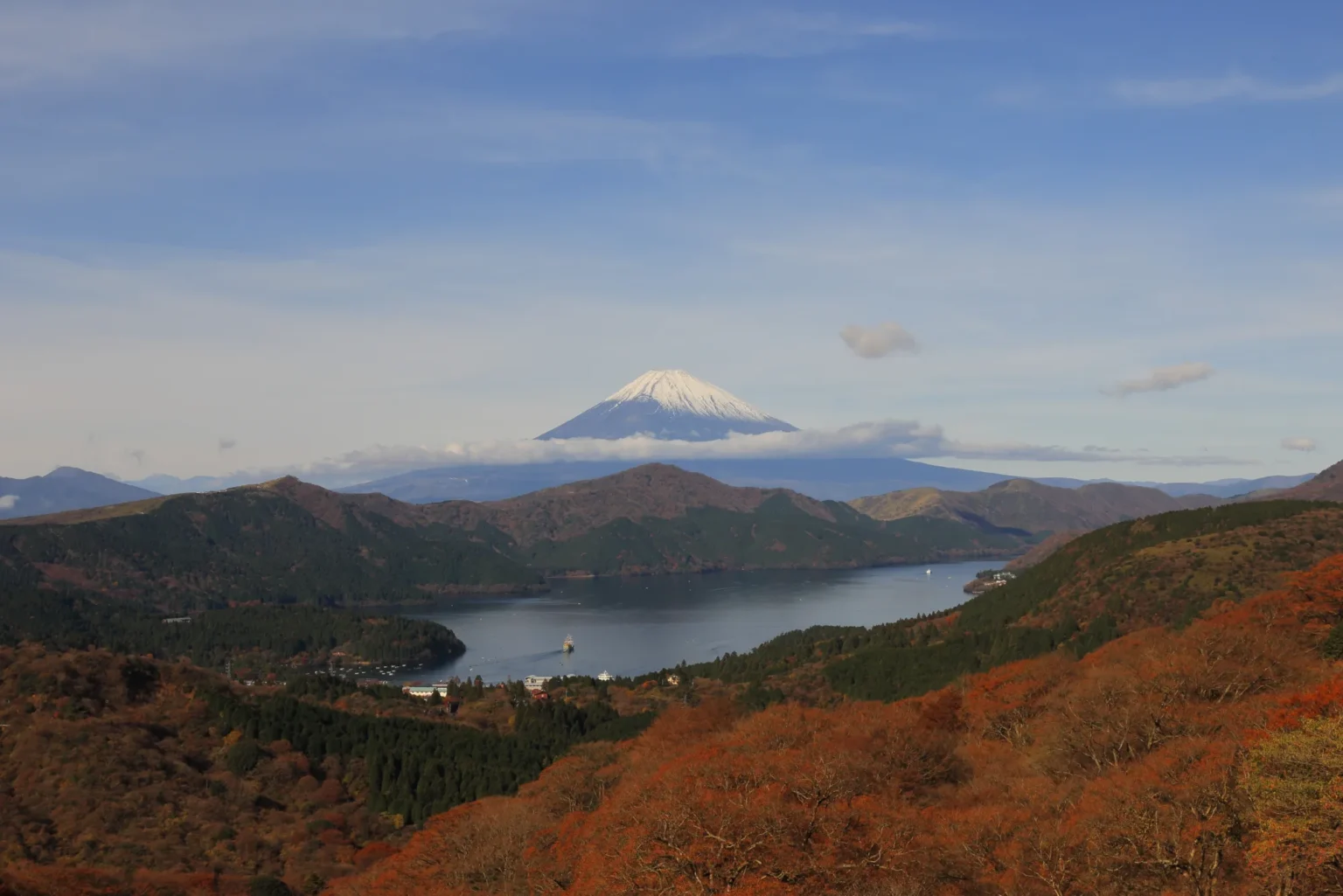
On the Yamanashi side of Mount Fuji, the Fuji Five Lakes have their own autumn-leaf festivals in late October and November: the Fujikawaguchiko Autumn Leaves Festival and Lake Yamanaka’s. For Tokyo’s own season, see Tokyo autumn leaves, from city gardens to Mount Takao. For the whole month, see Japan in November 2026, and for clothing, what to wear in Japan in November.
FAQ
When is the best time to see autumn leaves in Hakone in 2026?
For most spots, mid-November to early December. On 11 October 2026 the Japan Weather Association gave a window of late November to early December for the Hakone Museum of Art and early December for Gora Park, while Weathernews gave most Hakone spots a peak starting between about 12 and 22 November. The two are different kinds of forecast and can overlap. In typical years, Hakone Navi says, the season runs from early November to early December.
Which part of Hakone turns first?
In typical years, Lake Ashi and Sengokuhara, according to Hakone Navi; the colour then moves down to Hakone-Yumoto. In the 2026 forecasts, the Hotel de Yama garden by Lake Ashi (JWA: late October to mid-November) and Hakone Wetland Garden in Sengokuhara (Weathernews: from about 12 November) come first.
Are there autumn light-ups in Hakone?
On 11 October 2026 the listings we checked showed no 2026 light-up in Hakone. tenki.jp shows “no information” for night viewing at its Hakone spots, Walkerplus lists no light-up at Choanji, and Hankyu Travel says a light-up at the Hakone Museum of Art is undecided for 2026.
Is the Hakone Museum of Art open in autumn 2026?
Yes, from its pre-opening on Friday 30 October 2026, after a renovation closure that began on 7 May. Adults pay ¥1,000 from 30 October to 20 December and ¥1,500 from 21 December. From April to November it opens 9:30–16:30 with last entry at 16:00. Its calendar, read on 11 October 2026, shows no closing days in November 2026.
Is the Hakone Ropeway running to Owakudani?
It runs 9:00–17:00 through November but stops in strong wind, thunder, typhoons or high volcanic gas. On 11 October 2026 Hakoneyama was not on the Japan Meteorological Agency’s list of volcanoes under warnings. Replacement buses run between Sounzan and Owakudani from 7 to 24 December 2026 and between Togendai and Owakudani from 12 January to 26 February 2027; the operator expects them to be very crowded.
Does the Hakone Freepass cover the autumn spots?
It covers the transport: the Tozan train, cable car, ropeway, lake cruise and designated buses. Gora Park entry is free with it. Museum admission is not part of the pass. From Shinjuku it costs ¥7,100 for 2 days, and the Romancecar fee is extra.
How do I avoid the worst of the crowds?
On the operator pages we checked on 11 October 2026 there were no advance queue-time forecasts. Gora Park says nearby parking can fill from the morning, and Hakone Navi says roads around Owakudani are busy in autumn. Our suggestion is to go on a weekday, by public transport, and to avoid 3 November and the 21–23 November holiday weekend.
Sources (checked 11 October 2026)
- Japan Weather Association, tenki.jp: Hakone Museum of Art; Hakone Gora Park; Odakyu Hotel de Yama; 2026 forecast no. 1 (1 October 2026)
- Weathernews: 2026 forecast (8 October 2026); spot pages for Choanji, Lake Ashi, Hakone Museum of Art, Hakone Gora Park, Hakone Wetland Garden, Komagatake Ropeway, Horaien, Okada Museum of Art, Owakudani
- Hakone Navi (Odakyu): autumn leaves in Hakone (29 September 2026); 18 autumn spots by area (29 September 2026); Freepass autumn model course (9 October 2026); Sengokuhara susuki status (6 October 2026); area guide
- Hakone Ropeway: hours and operating notes; maintenance replacement-bus notice (July 2026, PDF); fast lane, 10–11 October 2026
- Hakone Gora Park: hours and admission; public transport request (1 August 2026); news
- Hakone Museum of Art: home, closure notice and calendar; hours and fees; pre-opening and tickets
- Hakone Freepass: prices and coverage
- Japan Meteorological Agency: volcanic warnings
- Kanagawa Prefecture tourism: Sengokuhara susuki grass field
- Walkerplus: Choanji autumn data; Hankyu Travel: Hakone autumn spots
- Cabinet Office: national holidays
Join travelers discovering Japan's hidden side
Weekly dispatches from off-the-beaten-path Japan — spots and stories you won't find in guidebooks.
No spam. Unsubscribe anytime.
Welcome aboard!
You're in. See you in your inbox soon.