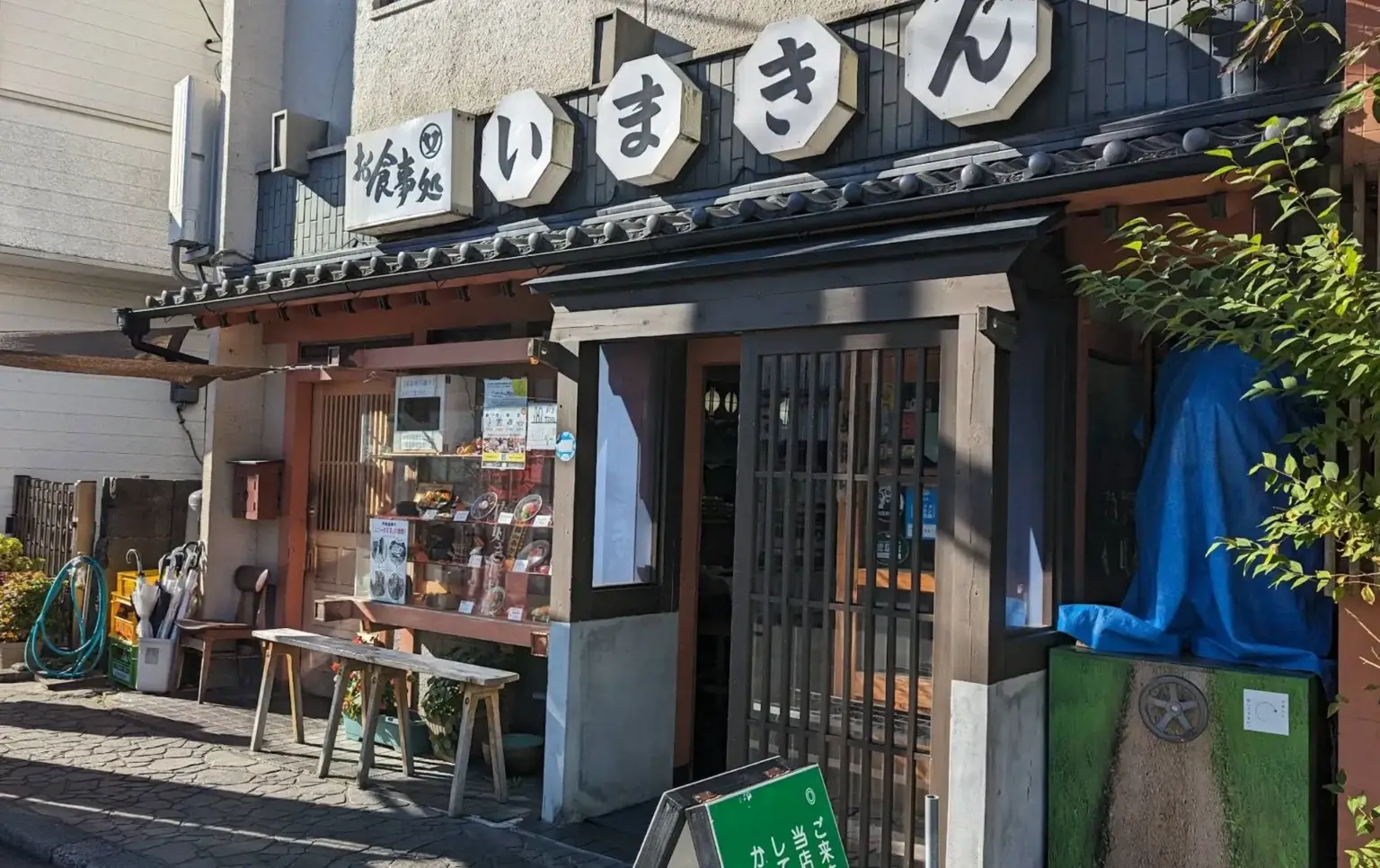

Imakin Shokudo (いまきん食堂) is a 100+ year-old taishu-shokudo (popular family diner) in the Aso Uchimaki onsen district of Kumamoto, famous nationwide for one specific dish: an Akaushi (Japanese Brown beef) bowl — Akaushi-don — that landed it on Tabelog’s “Top 100 Restaurants in Japan” list in 2024. The shop sits between the Aso volcanic caldera and Uchimaki Onsen, serves 9:00–18:00 year-round, and the queue commonly runs 1-2 hours on weekends. This is the 2026 visit guide: what makes the Akaushi-don distinctive, how to time the queue, and how to get there from JR Aso or by car.
Last updated: 2026-05-29 · Tabelog Top 100 (2024) · Author: Nobutoshi · 100+ years operation
Quick facts
- Formal name
- いまきん食堂 (Imakin Shokudo)
- Founded
- 100+ years (Meiji-Taisho era)
- Signature dish
- Akaushi-don (あか牛丼)
- Cattle breed
- Akaushi 赤牛 (Japanese Brown)
- Cut used
- Momo (thigh / lean) — not fillet
- Preparation
- Seared rare
- Hours
- 9:00 – 18:00 (seasonal variation)
- Days closed
- Open year-round
- Recognition
- Tabelog Top 100 Restaurants Japan (2024)
- Address
- 〒869-2225 熊本県阿蘇市黒川1440-1
- Phone
- 0967-35-5088
- Queue typical
- 1–2 hours on weekends
Why this specific Akaushi-don
Imakin Shokudo’s Akaushi-don breaks the standard “wagyu = fillet, melted in your mouth” model. The shop uses momo (thigh/lean) cuts of Aso-raised Akaushi cattle, seared rare, then sliced and piled on rice with raw egg yolk. The texture is muscular and slightly chewy — the opposite of A5 wagyu’s marbled softness — and the flavour is more concentrated.
Akaushi (赤牛 / Japanese Brown) is one of Japan’s four native wagyu breeds, raised primarily in Kumamoto and Kochi. Versus the more famous Japanese Black (Kuroge), Akaushi has lower fat marbling, redder muscle, and a more pronounced beefy flavour — qualities Imakin’s preparation emphasises rather than disguises. The Aso pasture-raised version is grass-fed first and grain-finished, which gives the meat its distinctive colour and texture.
The Akaushi-don is the famous order, but Imakin also serves champon (Kumamoto/Nagasaki-style noodle bowl) and hormon-nikomi (offal stew) — dishes from the shop’s earlier 100 years as a workers’ diner before the Akaushi-don made it nationally famous.
The queue — what to expect and how to plan
Standard queue conditions
Weekends and holidays: 60-120 minute wait, especially 11:00-13:30. Weekdays: usually under 30 minutes outside peak lunch (11:30-13:00). Best strategy: arrive at 09:00 opening or after 14:30 for the lowest wait. Plates may sell out late afternoon — call before driving.
- 09:00 (open): often only 5-15 min wait, especially weekdays
- 11:00 – 13:30 (peak): 60-120 min, weekend can be longer
- 14:30 – 16:00: usually under 30 min, sometimes walk-in
- 16:00 – 18:00: low wait but stock check needed (Akaushi-don can sell out)
- Reservation policy: generally none — first come, first served
How to get to Aso Uchimaki
| From | Route | Time |
|---|---|---|
| JR Aso Station | Bus to Uchimaki Onsen + 10 min walk | ~25 min |
| Kumamoto Station | JR Hohi Line to Aso (~90 min after Kyushu earthquake restoration) → bus + walk | ~2h |
| Kumamoto (drive) | Kyushu Expressway → Kumamoto IC → R57 to Aso → Uchimaki | ~90 min |
| Fukuoka (drive) | Kyushu Expressway → Kumamoto → R57 | ~2h 30m |
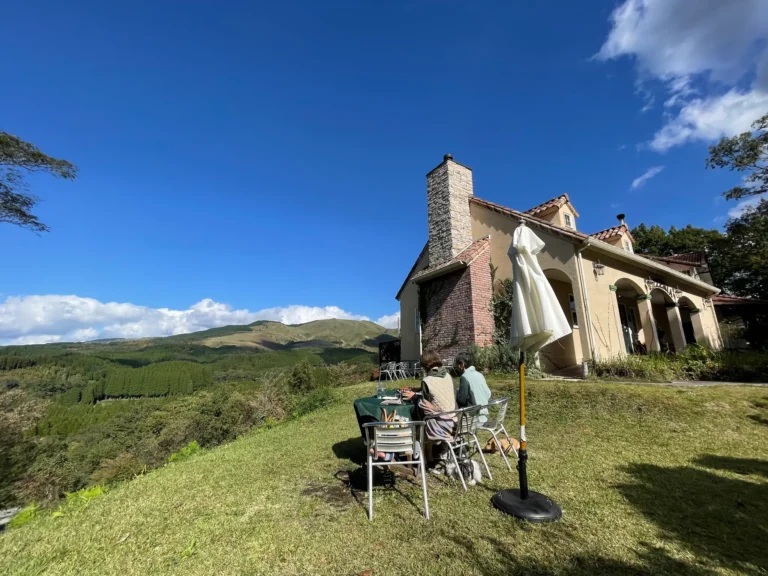
Uchimaki Onsen is one of the more accessible onsen districts on the Aso caldera floor. The closest parking is a public lot 2-3 minutes from the shop. Combining Imakin with an onsen stay overnight in Uchimaki makes the queue painless — many Uchimaki ryokan serve Akaushi-don variations as part of dinner.
Tips for visitors from Singapore, Bangkok, KL & Jakarta
Practical notes for SEA travellers
- From SIN/KUL/BKK/CGK: Direct to Fukuoka (FUK) via Scoot, AirAsia X, Jetstar Asia, ANA; FUK → Aso by Kyushu Expressway ~2.5 h drive. Or FUK → Kumamoto Shinkansen ~30 min + JR Hohi Line / drive.
- Halal: The Akaushi-don is not halal-certified. Halal-friendly options near Aso are limited; pack snacks from Kumamoto Station konbini.
- Vegetarian: The shop is meat-focused. Vegetarian options nearby include ryokan in Uchimaki that offer plant-based set menus on advance request.
- Climate vs SEA: Aso caldera floor 460 m elevation. Spring 12-18°C, summer 22-28°C, autumn 14-20°C, winter 0-8°C with snow possible. Always cooler than the Kumamoto coast.
- JR Pass: Covers Sanyo + Kyushu Shinkansen to Kumamoto. The JR Hohi Line to Aso (after 2016 earthquake reconstruction) is also covered.
FAQ
What is Akaushi-don?
A rice bowl topped with seared rare Akaushi (Japanese Brown / 赤牛) beef from Aso pasture-raised cattle. Imakin uses momo (thigh) cuts — leaner and chewier than fillet — sliced thin and arranged on rice with raw egg yolk, soy-based sauce, and shredded greens. The taste profile emphasises beefy concentration over the marbled-soft texture of A5 wagyu.
How long is the queue at Imakin Shokudo?
Weekends and holidays: 60-120 minutes typical, especially 11:00-13:30. Weekdays outside lunch peak: usually under 30 minutes. Best strategy: arrive at 9:00 opening or after 14:30. Akaushi-don can sell out before 18:00 closing — call ahead 0967-35-5088 if arriving late.
Can I reserve a table?
Generally no — Imakin operates first-come, first-served. The queue is what it is. If avoiding queues is critical, plan for a weekday morning visit at 09:00 opening, or have lunch at an Aso ryokan instead (many serve Akaushi-don variations on their dinner course).
What’s the difference between Akaushi and Kuroge wagyu?
Akaushi (赤牛) is Japanese Brown cattle, raised primarily in Kumamoto and Kochi. Kuroge (黒毛) is Japanese Black — the dominant breed behind A5 wagyu. Akaushi has less marbling, redder muscle, and more pronounced beef flavour. Imakin’s preparation deliberately uses the chewy, lean qualities Akaushi is known for rather than trying to imitate Kuroge’s softness.
How do I get to Imakin Shokudo without a car?
JR Aso Station + bus to Uchimaki Onsen + 10-minute walk. From Kumamoto Station, the JR Hohi Line connects to Aso (~90 minutes after the line’s earthquake-reconstruction reopening). Combining the visit with an Uchimaki Onsen overnight stay eliminates the rush.
What other Aso experiences should I pair with Imakin?
Aso volcanic caldera viewpoints (the Nakadake crater, weather permitting), Aso-Kuju National Park hiking, and Uchimaki Onsen baths. The shop itself is a 30-minute meal — pair it with at least one of these for a full day on the caldera floor.
Are there other Akaushi-don shops in Aso?
Yes — Aso has several Akaushi specialists. Imakin is the most famous (Tabelog Top 100, 2024). Alternatives include shops at Aso Roadside Station (道の駅 阿蘇) and various Uchimaki ryokan that serve their own Akaushi versions. None match Imakin’s reputation but the wait is shorter.
Sources used for this article
- Imakin Shokudo official — aso-imakin.com (founding, menu, hours, contact)
- Aso Roadside Station official — aso-denku.jp
- Kumamoto Prefecture tourism — kumamoto.guide
- Hotpepper Gourmet listing — hotpepper.jp (queue/wait reports)
- Retty restaurant database — retty.me
Plan an Aso trip — three paths
A queue-free Imakin visit is easier with an Uchimaki Onsen overnight. Three booking paths:
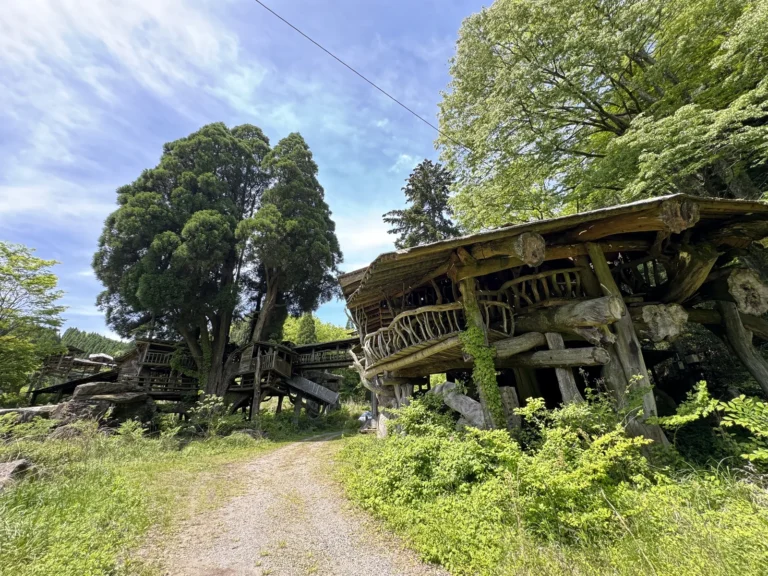
While you’re in the Aso area, it’s worth the short drive south to see the Takamori tree house and its 400-year-old cedar wrapped in a hand-built wooden castle.
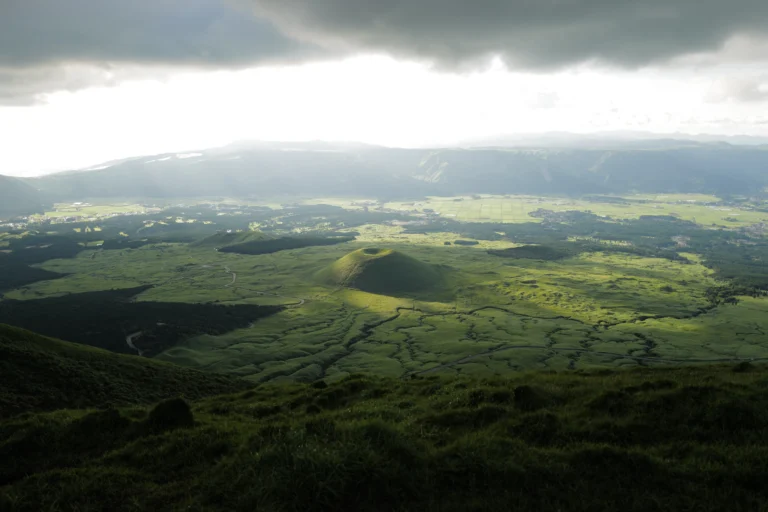
Related reading: pair the meal with a drive up to Kusasenri, the grassland where horses roam free beneath Mt. Aso.
Onigiri Bongo, Ōtsuka
A legendary rice-ball counter — handmade onigiri worth the queue.
Nankintei, Kunitachi
A 24-hour roadside machi-chūka famous for hand-wrapped jumbo gyoza.
Imahana, Setagaya
A Shōwa-era set-meal diner with a wall of hand-brushed menus.
Join travelers discovering Japan's hidden side
Weekly dispatches from off-the-beaten-path Japan — spots and stories you won't find in guidebooks.
No spam. Unsubscribe anytime.
Welcome aboard!
You're in. See you in your inbox soon.