Tokyo · Jindaiji
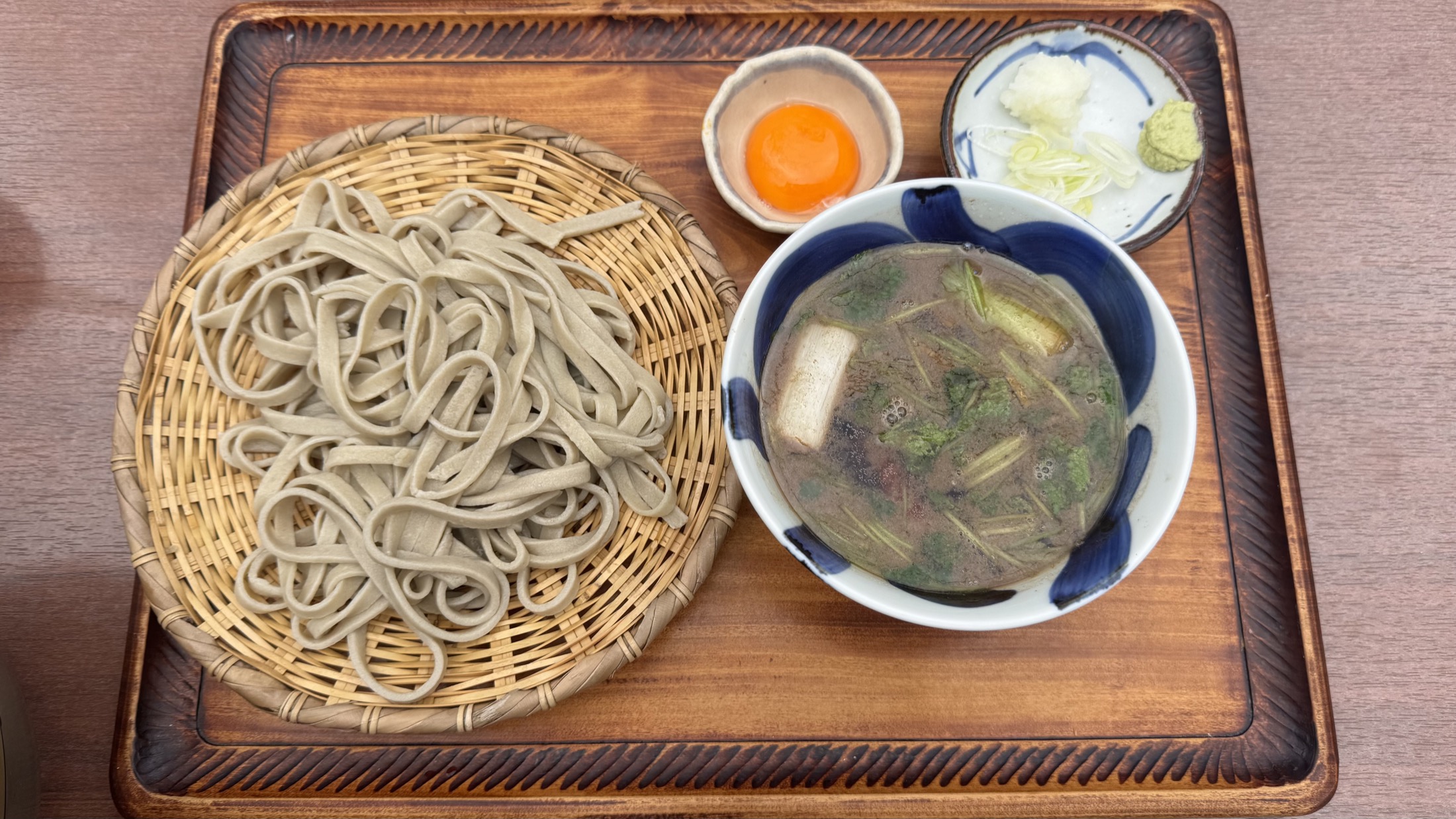
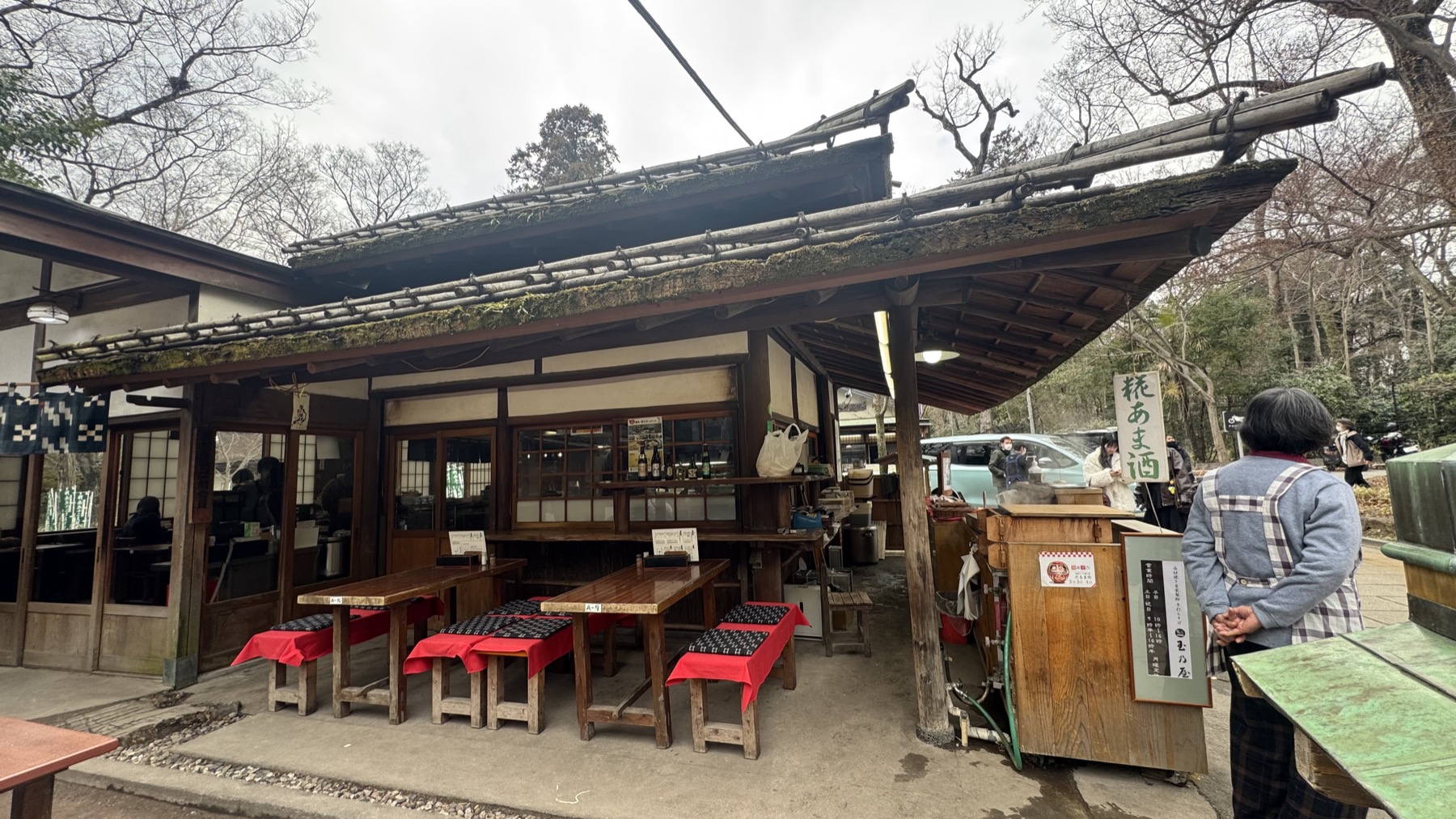
Up the slope from Jindaiji — one of the oldest temples in Tokyo — the old gate town has been known for soba since the Edo period, because the volcanic-ash soil here grew buckwheat where it could never grow rice. At Tamanoya, a wooden soba house with an open charcoal hearth out on the terrace, the buckwheat is stone-milled in the shop and cut into juwari noodles: 100% buckwheat, no wheat binder at all.
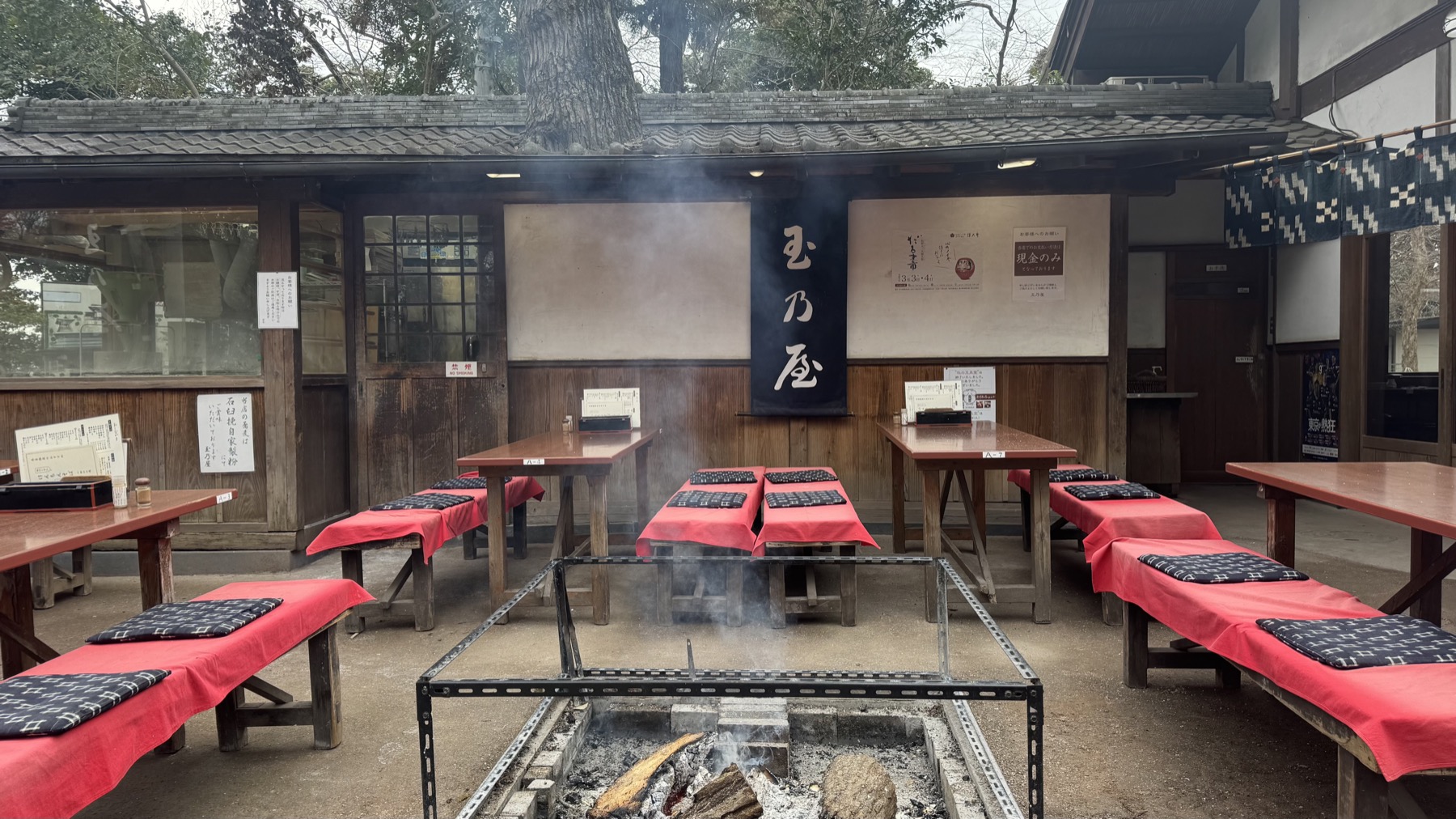
Jindaiji is the kind of place most visitors to Tokyo never reach, which is exactly why I like it. The temple is quiet and green, the approach is lined with old soba shops, and the whole pocket of Chofu feels a couple of degrees cooler and slower than the rest of the city. Tamanoya sits a little above the main soba street, near the gate of the Jindai Botanical Gardens, with bench seats set out around a charcoal hearth that they keep smoking through the day.
Why soba, and why “juwari” matters
The short version: the land here is old volcanic ash, which drains too fast for rice but suits buckwheat. People grew it, ground it, and offered soba to the temple — and “Jindaiji soba” has been a name for a couple of centuries. Juwari (十割) means ten parts out of ten: pure buckwheat, with none of the wheat flour most soba uses to hold the noodle together. It is harder to make and more fragile to eat, but the flavour is stronger and cleaner, and you taste the grain instead of the wheat. Tamanoya mills its own, and you can pick a thin cut (seiro) or a thicker, rustic inaka cut.
I went for the kamo-seiro — cold soba you dunk into a hot, dark broth loaded with duck and leek. The fat from the duck clings to the cold noodles, the dip is sweet and savoury at once, and at the end you pour in the cloudy soba-cooking water to drink what’s left as a soup. It is a cold-weather way to eat soba, and on a cool day by the temple it is close to perfect. I paid about ¥2,100 for it when I visited; some listings show ¥1,950, so check the current menu — soba and duck have both been creeping up.
Getting there, and what to do around it
There is no station within easy walking distance, which is the one catch. The usual approach is a bus toward Jindaiji from Chofu Station (Keio Line) or from Mitaka / Kichijoji on the JR side, then a short walk in. Come hungry and a little early: the shop keeps daytime hours, closes on Mondays, and is cash only, which still catches people out.
On the map
Good to know
What is juwari soba?
Juwari (十割) soba is made from 100% buckwheat with no wheat flour as a binder. It has a stronger buckwheat aroma and a more delicate, breakable texture than the more common nihachi (80% buckwheat / 20% wheat) soba. Tamanoya stone-mills its own buckwheat in the shop.
What is kamo-seiro?
Kamo-seiro is cold soba served with a separate bowl of hot dipping broth full of duck (kamo) and leek. You dip the cold noodles into the warm, sweet-savoury duck broth. It’s a popular cool-weather way to eat soba.
How do I get to Tamanoya / Jindaiji?
There’s no nearby train station. Take a bus to Jindaiji from Chofu Station (Keio Line) or from Mitaka or Kichijoji (JR), then walk in. Tamanoya is up the slope by the Jindai Botanical Gardens.
Is it cash only?
Yes — bring cash. Like many old soba shops around Jindaiji, Tamanoya does not take cards.
When is it open?
Daytime hours, roughly 10:00–16:00 (from about 9:30 on weekends and holidays), closed on Mondays. Soba shops can sell out of the day’s noodles, so don’t leave it too late, and confirm hours before a special trip.
Why is Jindaiji known for soba?
The volcanic-ash soil around Jindaiji drains too fast for rice but suits buckwheat, so soba was grown and offered to the temple. “Jindaiji soba” has been a local name since the Edo period.
Takinoya, Mitaka (soba)
More west-Tokyo soba — a local tatami-room shop in Mitaka.
Imahana, a Showa-era diner
Nearby in west Tokyo – a tiny set-meal shokudo with walls of hand-brushed menus.
Ume-no-Yu (Chōfu)
Soak after your soba — a wood-fired neighbourhood sentō nearby in Chōfu.
Skip the Crowds in Japan (2026)
Swap the Senso-ji crush for Jindaiji’s temple town.
Jindaiji Daruma Ichi
The same temple town’s big daruma-doll fair in early March — pair it with the soba.
Tsubakiya Café, Kichijoji
A Taishō-era coffee parlour a short hop east, for dessert after.
Onigiri Bongo
Another quiet Tokyo food classic worth the detour.
Join travelers discovering Japan's hidden side
Weekly dispatches from off-the-beaten-path Japan — spots and stories you won't find in guidebooks.
No spam. Unsubscribe anytime.
Welcome aboard!
You're in. See you in your inbox soon.