Nagano · Togura-Kamiyamada Onsen · Hotel review
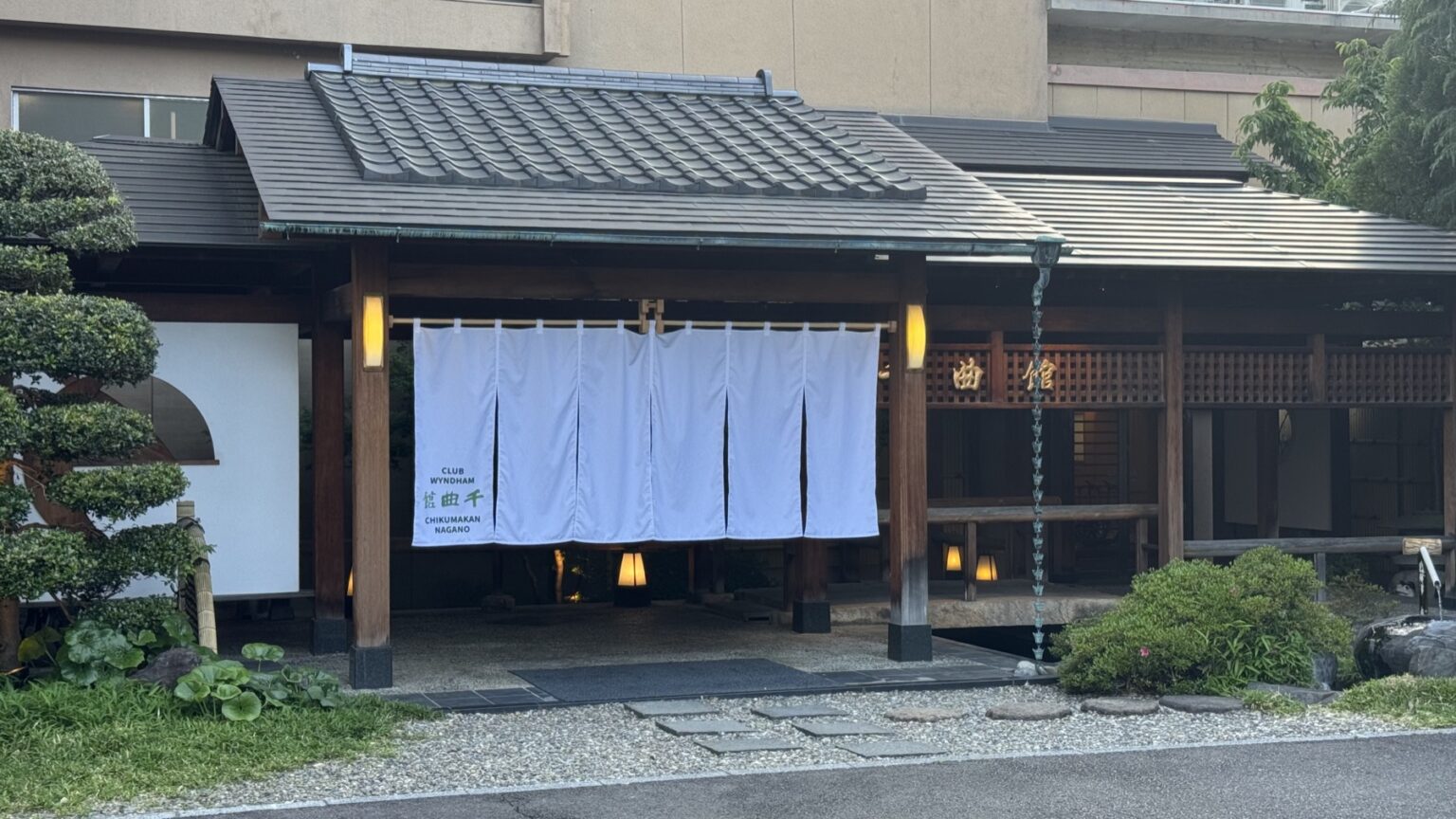
Club Wyndham Chikumakan is a dog-friendly onsen ryokan in Togura-Kamiyamada, a 130-year-old hot-spring town in Chikuma, Nagano, that runs two natural sulfur sources — a milky-white one and a clear, emerald-green one — free-flowing through six baths, and books tatami rooms that take up to two dogs under 12 kg. We stayed two nights in mid-May with two dachshunds; this is the honest, practical version of what that’s like, including the one paperwork detail that trips up first-time dog travellers.
Quick facts
A quick note on who’s writing: I’m Nobu, a Japanese travel writer at hiddenjapan-gems.com, and I travel with two small dogs, so dog-friendly ryokan are something I actually test rather than summarise. Togura-Kamiyamada is one of the onsen towns in Nagano that has leaned into taking dogs, and Chikumakan is the property we booked through Rakuten Travel. Everything below is from that stay, cross-checked against the ryokan’s own site and Chikuma City’s tourism office.
Bringing a dog: the rules, the kit, and the vaccine certificate
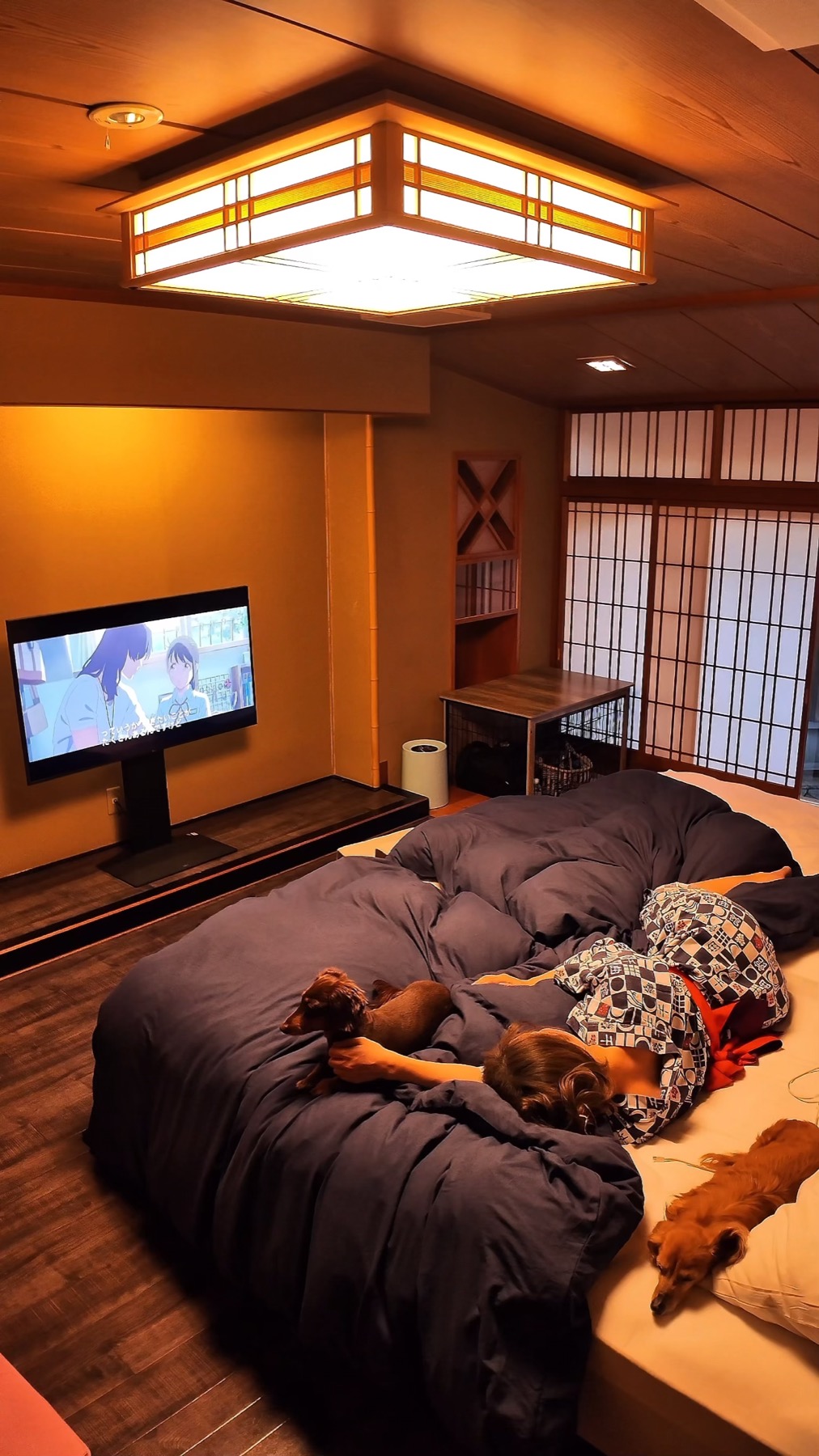
The short version: bring proof of vaccination, keep your dog under 12 kg, and expect it to stay caged at meals. This is a properly dog-set-up ryokan, not a place that merely tolerates dogs — our room had no pet smell at all — but the rules are specific, and the one that catches people out is the paperwork.
Two small dogs, max
Up to two dogs per room, each under 12 kg; fighting breeds aren’t accepted. The fee is about ¥3,300 per dog, per night, settled at the inn.
The room is kitted out
A cage, a toilet tray and potty sheets, food and water bowls, an adhesive lint roller, foot-wipe wipes and waste bags are all provided. You don’t need to pack the bulky stuff.
Cage for moving and meals
Bring a full-body carrier or cage and use it in the corridors (a pet cart is available too). Left alone in the room, your dog must be crated — and dogs can’t come into the dining room, so they wait, caged, in the room during dinner.
Bring your dog’s own food
No dog meals are served, so pack what your dog normally eats. For walks, the Chikuma River green park (Yunosato Shinsui Park) is a short stroll along the embankment — good early-morning territory.
One source of confusion worth clearing up: the general Club Wyndham vacation-club pages list “no pets except service dogs.” That refers to the standard member rooms. Dogs are only accepted in the dedicated dog-friendly rooms, which is what you book on the travel sites — so go by the ryokan’s own dog-room information, not the club’s blanket line.
Two spring sources, six baths
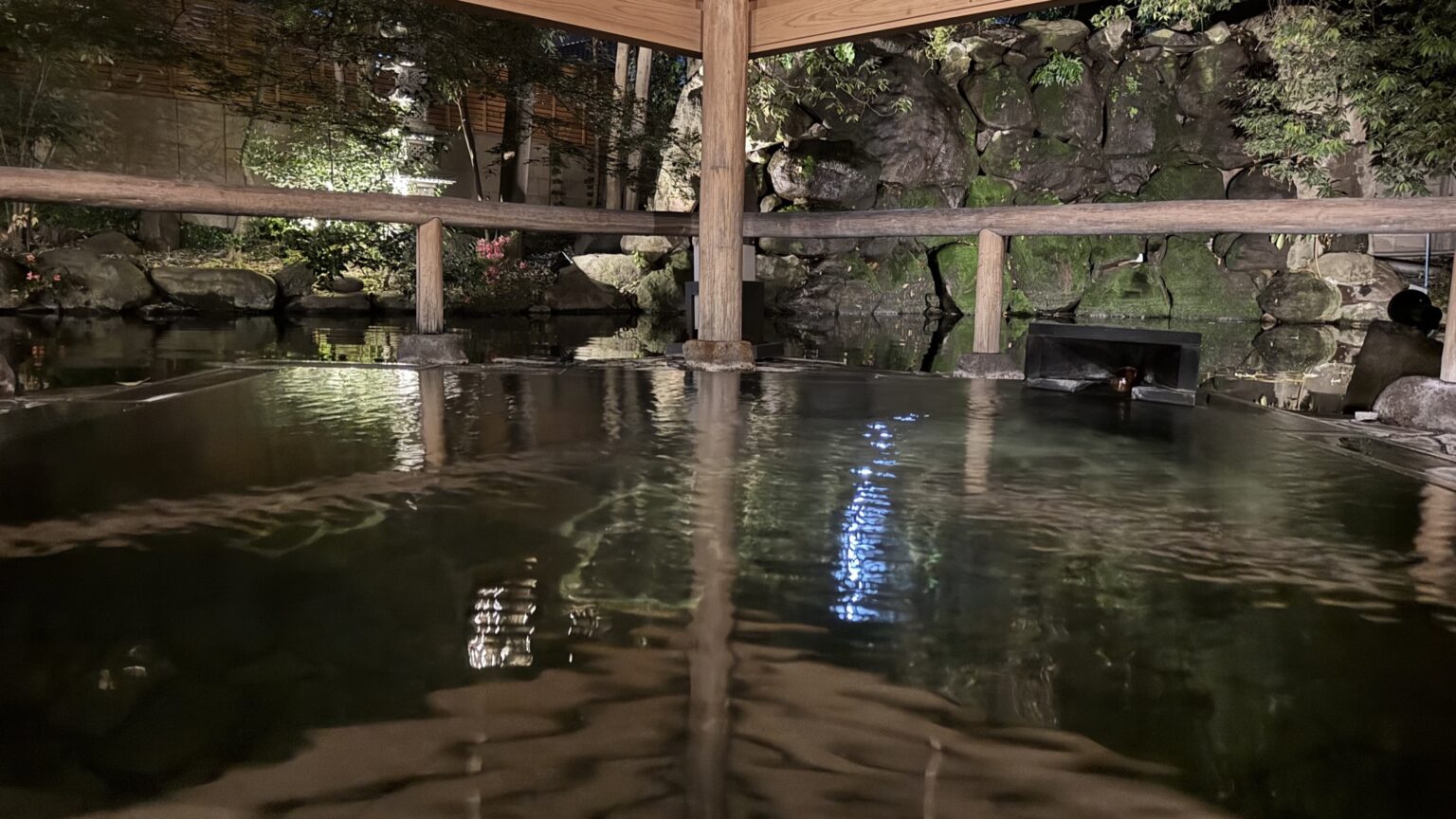
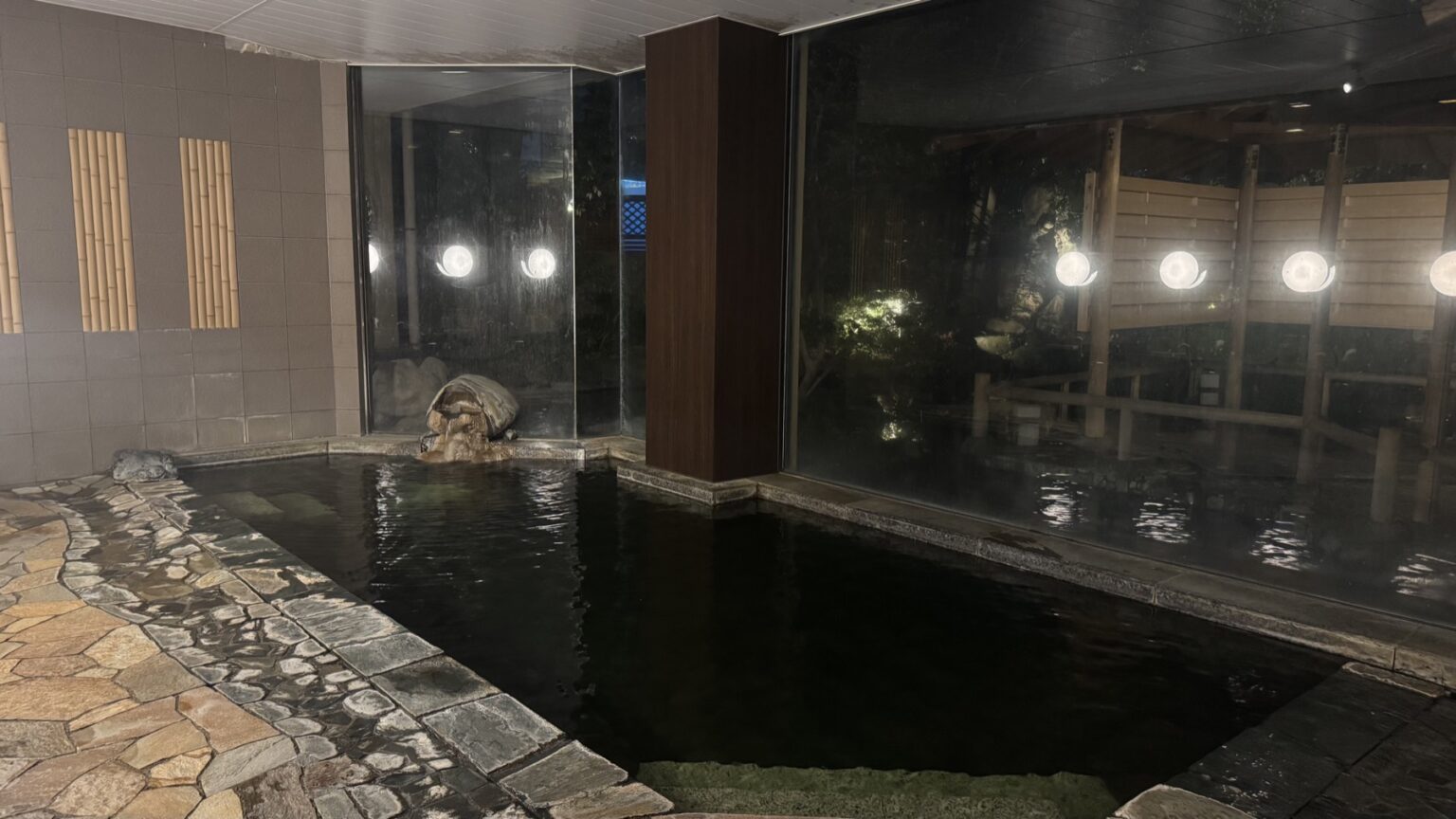
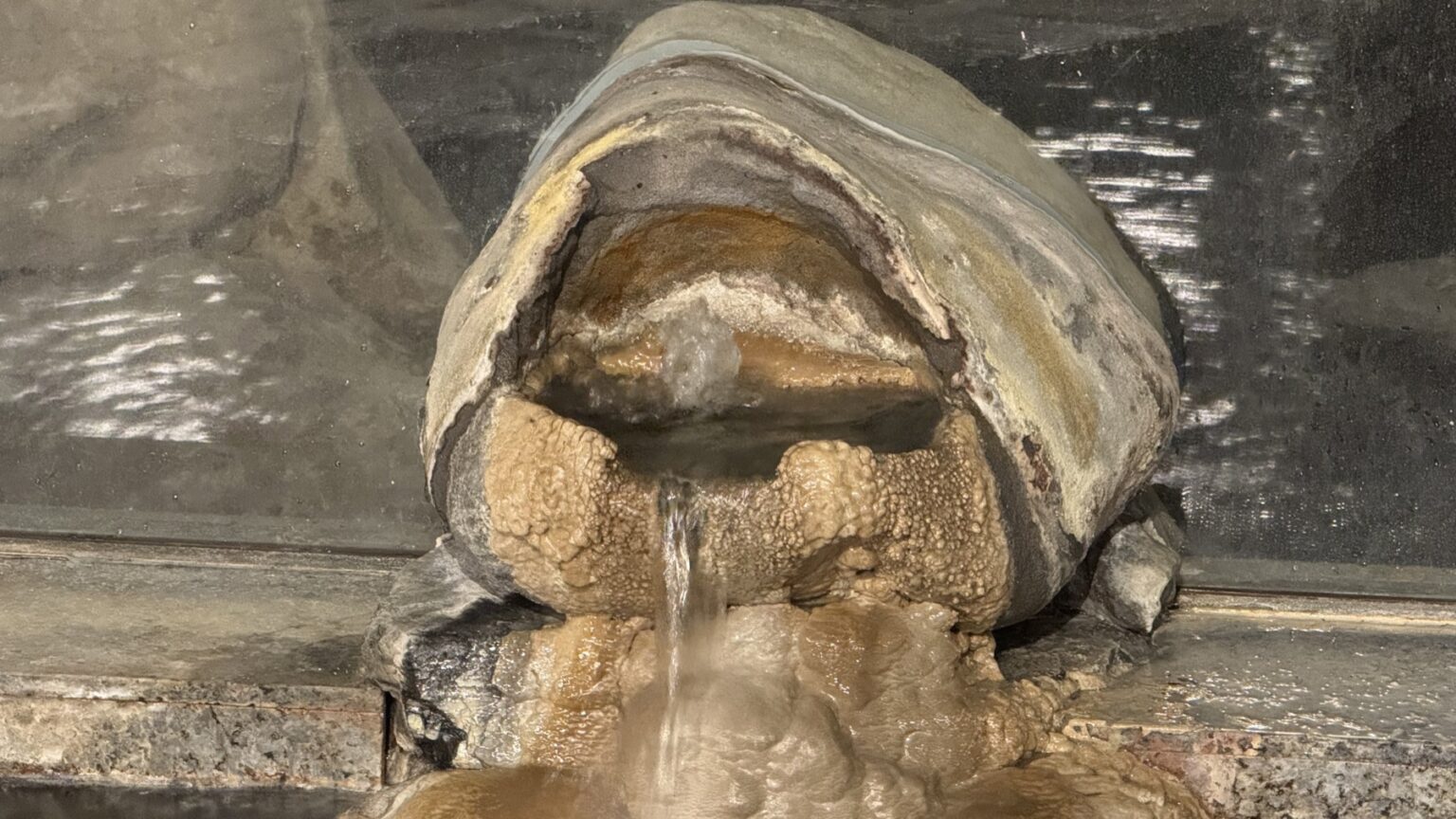
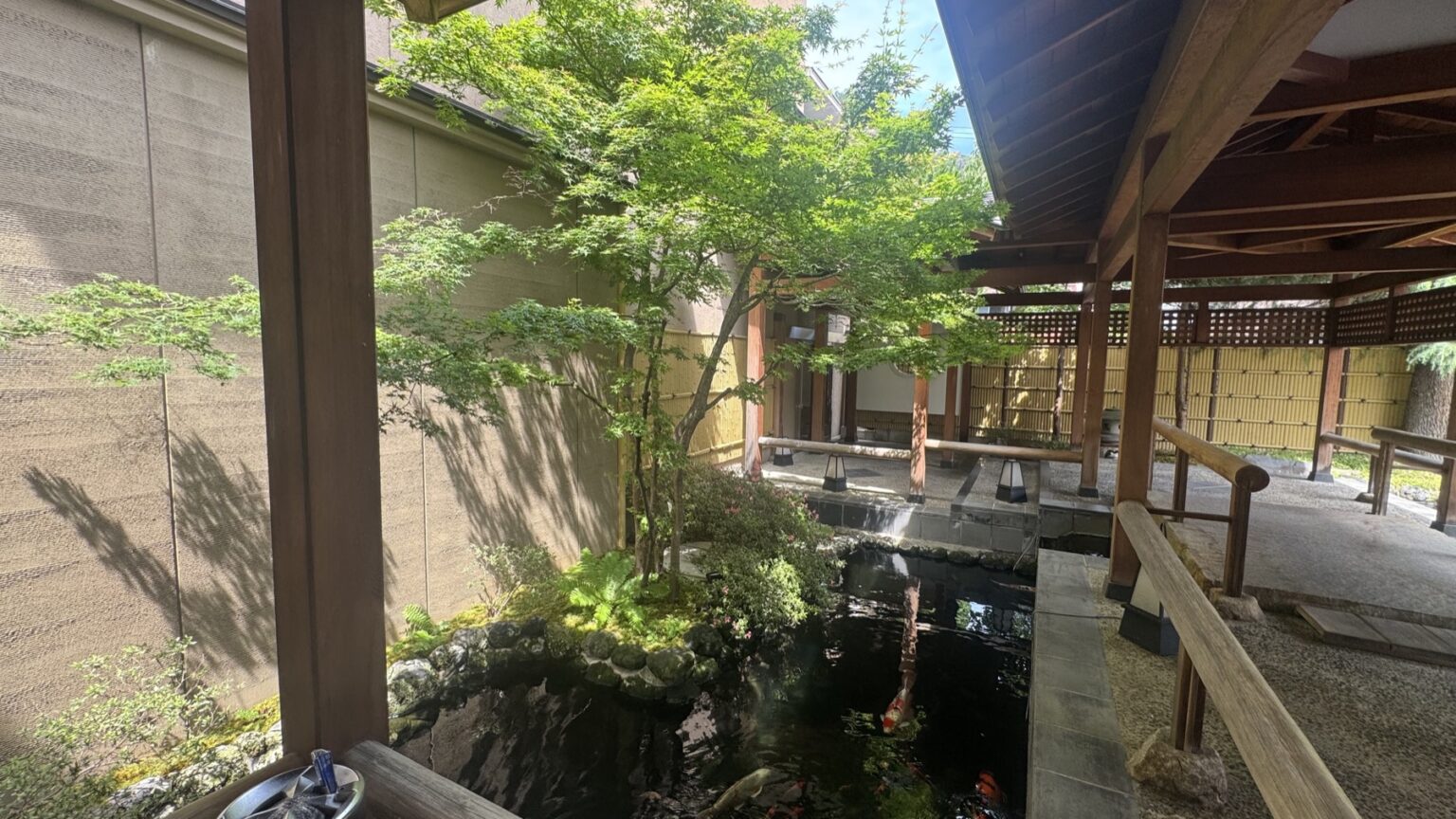
Six baths, fed by two different sources, all free-flowing from the spring. That’s the line on the ryokan’s own front page, and it’s the real reason to come. Togura-Kamiyamada is a simple sulfur spring the locals call a bijin-no-yu — a “beautiful-skin” water, soft and faintly eggy — and Chikumakan draws on two of them: the milky-white Kamiyamada source and a clear, emerald-green Chikuma source. Depending on the time of day and the weather, the water shifts between clear, cloudy-white and green, which is a sulfur spring doing its thing rather than a gimmick.
| Bath | Type | What’s special |
|---|---|---|
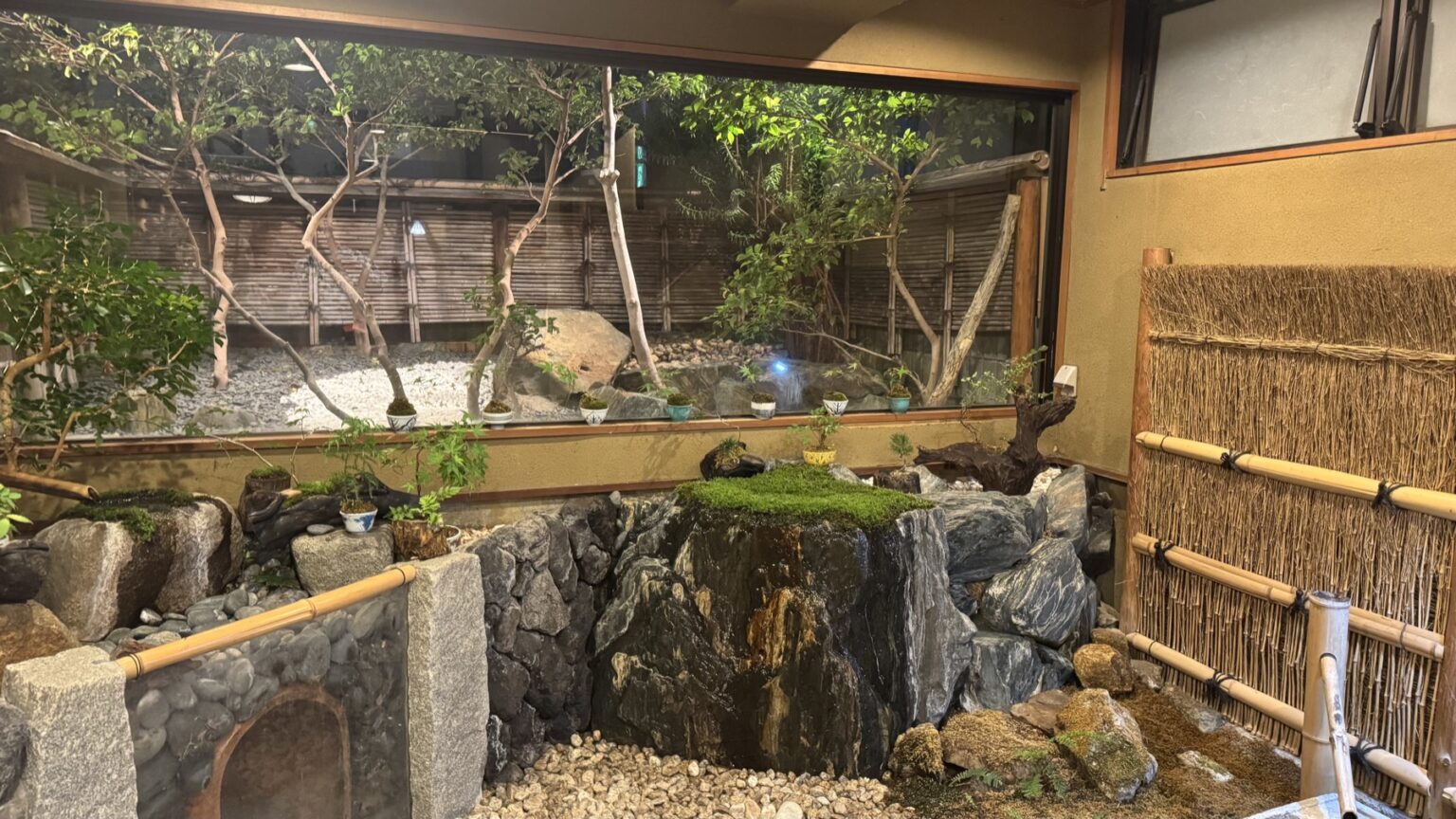
| Shōzan-no-yu (象山の湯) | Indoor | The big indoor bath, with garden-and-waterfall windows |
| Sumako-no-yu (須磨子の湯) | Indoor | The second large indoor bath |
| Chōrō-no-yu (聴瀧の湯) | Open-air | The sound of a waterfall and a koi pond beside you |
| Teiju-no-yu (庭樹の湯) | Open-air | Lit up at night against the garden |
| Taishō-roman-no-yu (大正ロマンの湯) | Private (reserve) | Both sources side by side — Chikuma on the left, Kamiyamada on the right |
| Hisen-no-yu (飛泉の湯) | Private (reserve) | The second private bath |
The two private (kashikiri) baths run 7:00–22:50 in 50-minute slots at ¥5,500 each (Club Wyndham members get one free a day); you book them at the front desk when you check in, first-come, no advance reservation. They’re the quiet hero of a dog trip — being able to take a family bath for half an hour means nobody has to leave the dogs for long. And there’s a neat extra: from 23:30 to 6:30 the two private baths open to everyone, with men using Hisen-no-yu and women using Taishō-roman-no-yu, so a very late or very early soak is on the table. The public baths don’t rotate by gender, so check which is which when you arrive.
Dinner: a beef kaiseki you cook at the table
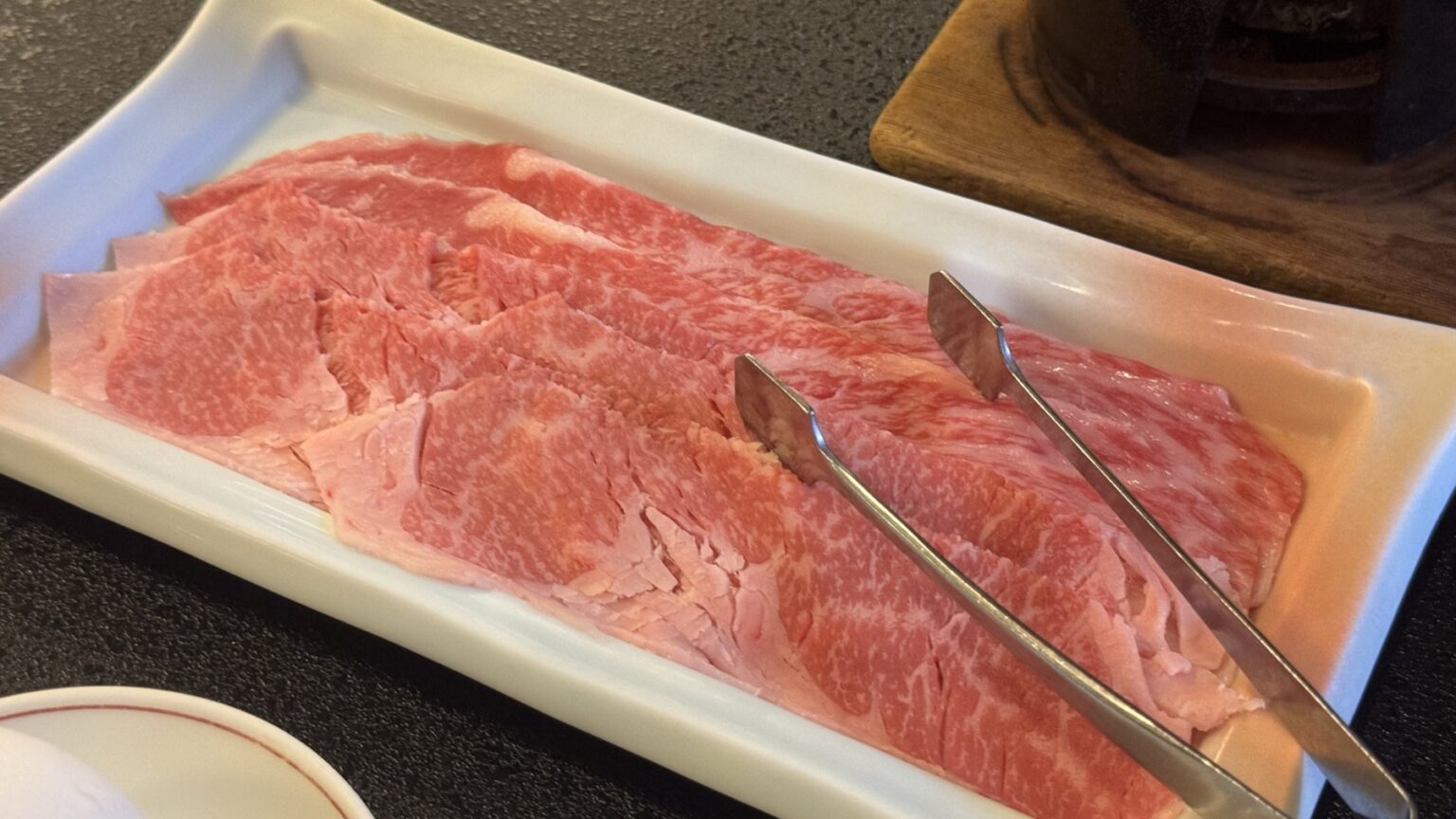
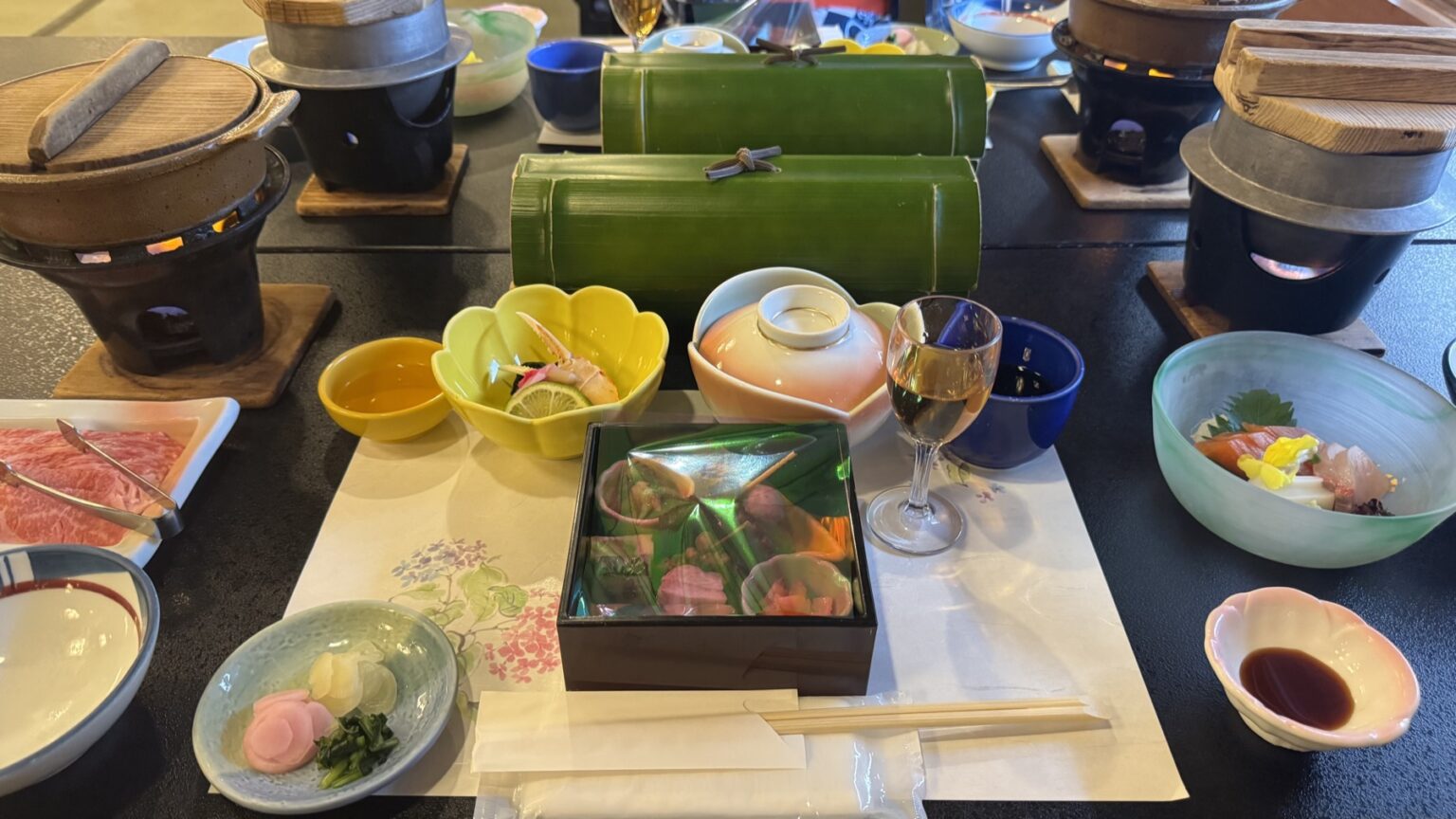
The half-board plan is a multi-course kaiseki built around a table hot-pot of domestic Japanese beef — shabu-shabu or sukiyaki, your call. The beef came out properly marbled, and around it ran the usual sequence of a good ryokan dinner: sashimi, simmered and grilled dishes, a lacquer box of small bites, course after course, all set at your own table with the little burners going. Breakfast the next morning was the traditional spread. We paid about ¥25,000 a night for two on this dog-friendly, half-board plan (dinner and breakfast both nights); rates move with the season and the plan, so treat that as a guide and check the current price when you book.
One honest caveat for some travellers: the dinner is built on beef, and the broth and stocks use bonito (katsuo), so it isn’t suitable for strict vegetarians, vegans or halal diets as standard. If that’s you, raise it with the ryokan when booking — and note that Nagano’s certified halal and vegan restaurants are mostly over in Nagano city, not in the onsen town.
Best time to visit
Late May to early June is the sweet spot if you want to pair the onsen with the Obasute rice terraces, when the paddies are flooded and the “moon in each paddy” is at its best. But the area reads differently across the year, and the town is open and bathing-ready in every season.
Spring (late Mar–Apr)
The apricot groves at nearby Mori bloom a week before the cherry trees — Chikuma is one of Japan’s biggest apricot regions, and the Anzu Festival runs in early April.
Late May–June
The Obasute terraces flood and mirror the sky; mild days, cool mornings. This is when we went, and it’s my pick.
Summer
Riverside fireworks — a Summer Festival in mid-July and the big Chikumagawa fireworks (around 10,000 shots) in early August.
Autumn–winter
Golden rice and clear “City of the Moon” nights in autumn; quiet, sometimes snowy terraces in winter (bring snow tyres if driving).
How to get there
By train it’s about three hours from Tokyo; by car it’s 10–20 minutes off the expressway. Either way the last leg is easy, and the ryokan runs a free shuttle from the station.
- From Tokyo by train: take the Hokuriku Shinkansen to Ueda or Nagano, then change to the Shinano Railway (a local third-sector line — note it’s a separate fare and not covered by the Japan Rail Pass) and get off at Togura Station. Total time is roughly three hours.
- From Togura Station: it’s about a 20-minute walk or a 5-minute taxi — but the ryokan’s free shuttle runs to the door. Reserve it by noon the day before (phone +81-26-275-1111 or email the inn).
- By car: about 10 minutes from the Sakaki IC (Jōshin-etsu Expressway), 20 minutes from the Koshoku IC, or 15 minutes from the Obasute Smart IC. Free parking on site. In winter, bring snow tyres or chains.
What’s nearby: a Chikuma day-trip plan
Chikumakan sits in the middle of the “City of the Moon” Japan Heritage area, so the onsen is really the base for a two-day loop. Most of the best stops are within an easy drive.
| Where | From the ryokan | Why go |
|---|---|---|
| Obasute rice terraces | ~15 min by car | Japan’s first farmland named a national scenic beauty; the flooded “moon in each paddy” |
| Ringo no Ki patisserie | ~10 min | Apple pie from its own orchard and local apricot sweets |
| Mori apricot village | Near (seasonal) | One of Japan’s largest apricot groves — blossom late March to April |
| Zenkō-ji temple, Nagano | ~50 min | The great pilgrimage temple this onsen town once served |
| Matsumoto Castle | ~1 hr | One of Japan’s twelve original keeps, black against the Alps |
| Lake Suwa | ~1 hr+ | Lake walks, fireworks, and a distant Mt Fuji view |
If you only have one full day around the stay, this is the loop I’d run: arrive by 4 pm, settle the dogs, take a private bath and the beef dinner; then the next morning, drive up to the Obasute terraces for first light (about fifteen minutes), come back through Ringo no Ki for apple pie, and either point the car at Zenkō-ji for the afternoon or laze in the baths until checkout. It’s a gentle, dog-friendly version of central Nagano.
The onsen town itself
Togura-Kamiyamada opened in 1893 and grew up as a place to let loose, not a quiet cure resort. The springs were dug at the Chikuma riverbed in the Meiji era, and the town flourished as the shōjin-otoshi stop — the “breaking-the-fast” hot spring — where pilgrims to Zenkō-ji, about 50 km north, came to relax with food, drink and a soak after their pilgrimage. That history is why it became an entertainment-and-geisha district: at its post-war peak it drew well over a million visitors a year, and geisha culture still continues here, one of the few onsen towns where it does.
It wears that past lightly and pleasantly now — about fifty ryokan and hotels across three districts on the Chikuma River, with neon, snack bars and old shateki shooting galleries giving the main street a genuinely Showa-retro feel. If you want to bath-hop, the town has seven public bathhouses run as a “Seven Lucky Gods” stamp tour (adult entry roughly ¥300–¥800), plus three free footbaths to rest your feet between them. And the whole area belongs to the 2020 Japan Heritage story Tsuki-no-Miyako — “the City of the Moon” — built around the Obasute terraces and their moon-in-each-paddy, with weekly Saturday-night moon-viewing tours run by the local tourism office.
Practical tips (and notes for visitors from Southeast Asia)
The basics are easy: free Wi-Fi, free parking, washlet toilets, and barrier-free help including a wheelchair to borrow. A few things are worth confirming directly, and a few are specific to travellers flying in from the tropics.
Cash & cards
The ryokan is comfortable, but rural onsen towns still lean on cash. Carry yen for the public baths, shooting galleries and the pet fee, and confirm card acceptance for your room bill when you book.
Families & access
Japanese-Western rooms suit families, and there’s wheelchair help and washlet toilets. Confirm child rates, bedding and lift access with the inn directly.
Getting here from SE Asia
Fly into Tokyo (Narita or Haneda) on budget carriers such as Scoot from Singapore or AirAsia X from Kuala Lumpur, then the Shinkansen toward Nagano. From March 2026 Scoot also flies Singapore–Haneda, which lands you closer to the city.
Pack a light jacket
May in this part of Nagano averages about 23 °C by day but drops to around 11 °C at dawn — a long way from Singapore or Bangkok at 30 °C-plus. Days are lovely; mornings and evenings want a layer.
Good to know
Is Club Wyndham Chikumakan really dog-friendly?
Yes — it has dedicated dog rooms, kept odour-free, with a crate, bowls, potty sheets and cleaning kit provided. Up to two dogs per room, each under 12 kg (no fighting breeds), for about ¥3,300 per dog a night. Dogs stay in the room, not the baths or the dining room.
What do I need to bring for my dog?
The big one is paperwork: vaccination certificates for both rabies and a 5-in-1 (or higher) combination vaccine, each given within the past year, shown at check-in (copies are fine). Also bring your dog’s own food — no dog meals are served — and a carrier for moving through the building.
How many baths are there, and what’s the water like?
Six baths fed by two sources — a milky-white Kamiyamada source and a clear, emerald-green Chikuma source — all free-flowing from the spring. It’s a simple sulfur “beautiful-skin” water; the colour shifts between clear, white and green through the day.
Can I book a private bath?
Yes. The two private baths run in 50-minute slots, 7:00–22:50, for ¥5,500 each, booked at the front desk on check-in (first-come, no advance booking). From 23:30 to 6:30 they also open to all guests — men use Hisen-no-yu, women use Taishō-roman-no-yu.
What’s for dinner, and are there vegetarian or halal options?
The half-board plan is a kaiseki built around a domestic-beef hot-pot (shabu-shabu or sukiyaki), with sashimi and the usual courses, plus a traditional breakfast. It uses beef and bonito stock, so it isn’t suitable for strict vegetarian, vegan or halal diets as standard — raise it with the inn when booking.
How do I get there from Tokyo?
Hokuriku Shinkansen to Ueda or Nagano, then the Shinano Railway to Togura Station (a separate fare, not on the Japan Rail Pass) — about three hours total. From Togura it’s a free shuttle (reserve by noon the day before), a 5-minute taxi, or a 20-minute walk. By car it’s 10–20 minutes off the expressway.
What else is there to do in the onsen town?
Togura-Kamiyamada is a Showa-retro hot-spring town with seven public bathhouses run as a “Seven Lucky Gods” bath tour, three free footbaths, and old shooting galleries and neon. It’s part of the “City of the Moon” Japan Heritage area around the Obasute terraces.
When should I visit?
Late May to early June, to catch the flooded Obasute terraces, is my pick. Apricot blossom comes in early April, riverside fireworks in July and August, and golden rice and clear moon-viewing nights in autumn.
We came for an easy onsen night with the dogs and left having half-discovered a corner of Nagano — the terraces, the apricot town, the old pilgrim’s hot spring — that most overseas visitors drive straight past on the way to somewhere louder. If you travel with a small dog and you want a real ryokan rather than a workaround, this is an easy one to recommend.
Join travelers discovering Japan's hidden side
Weekly dispatches from off-the-beaten-path Japan — spots and stories you won't find in guidebooks.
No spam. Unsubscribe anytime.
Welcome aboard!
You're in. See you in your inbox soon.