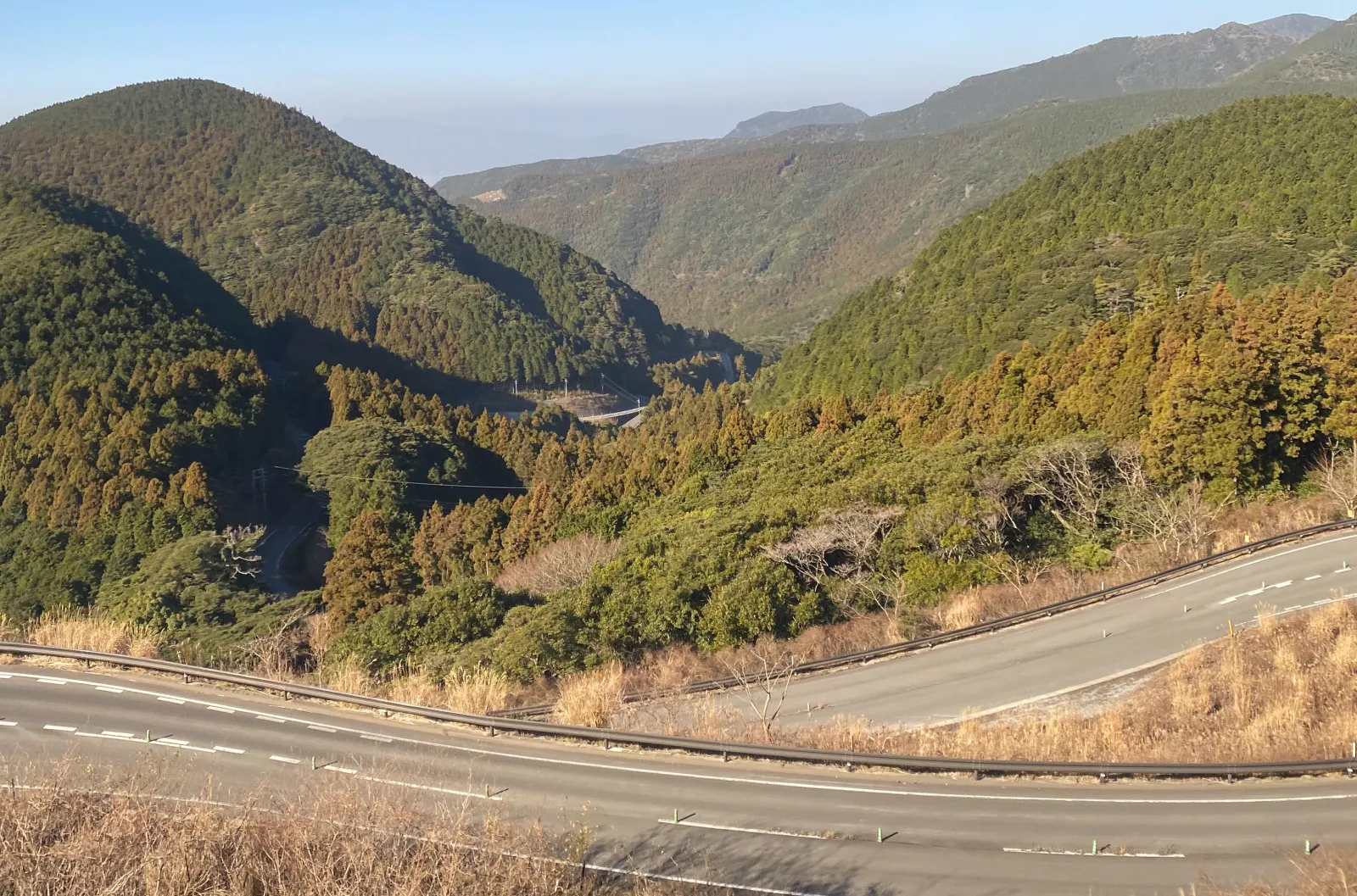
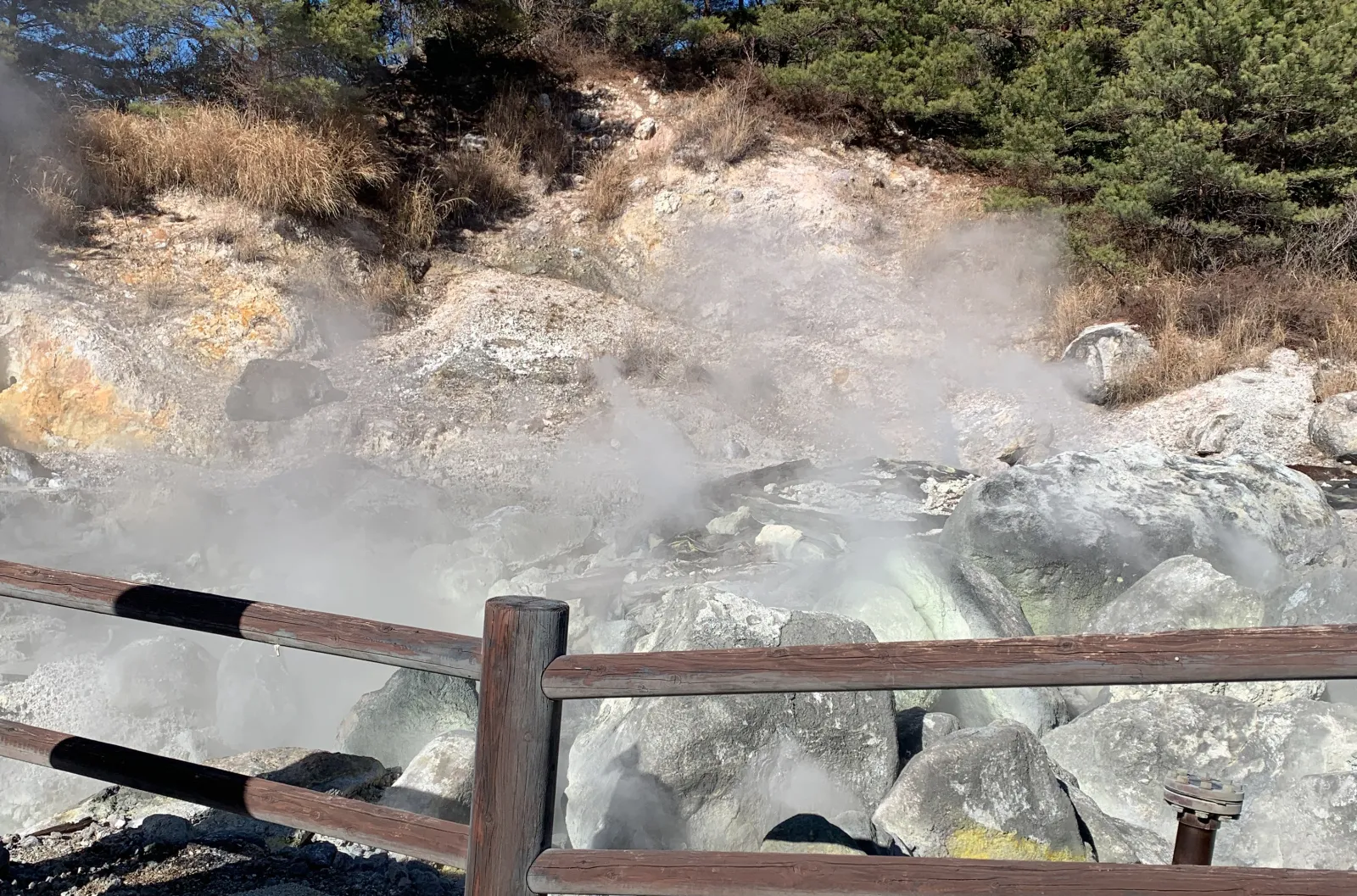
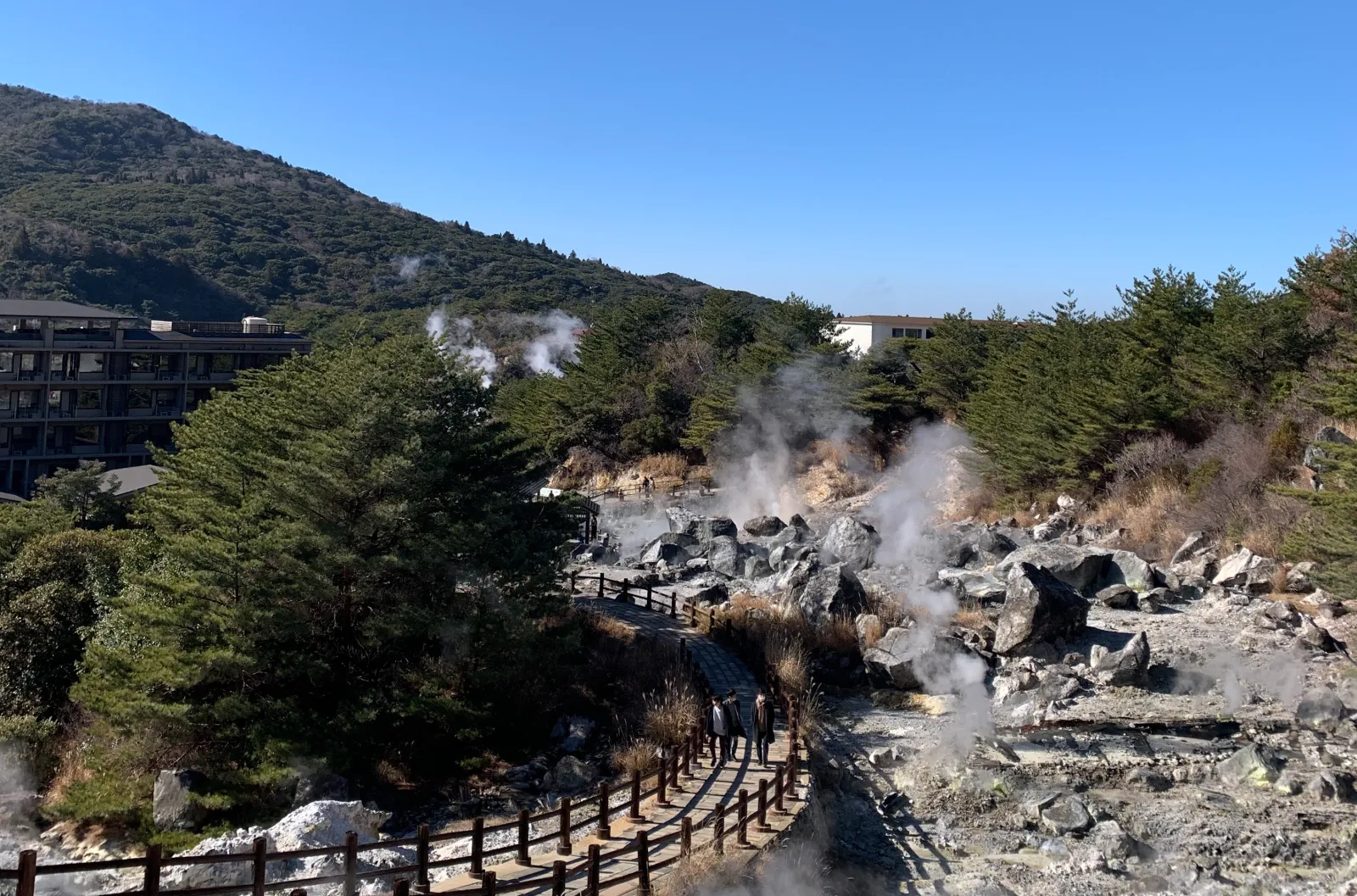
Unzen sits on a volcano, at about 700 meters up on the Shimabara Peninsula in Nagasaki, and you notice this before you see any of it. The road from the coast narrows, bends, and then suddenly you smell sulfur — not faintly, the way it is at some onsen towns, but as the dominant thing in the air. A few minutes later the road delivers you into the valley the locals call the Jigoku, the Hells, where steam jets come out of cracked rock and the white ground looks like something has been spilled and left to dry.
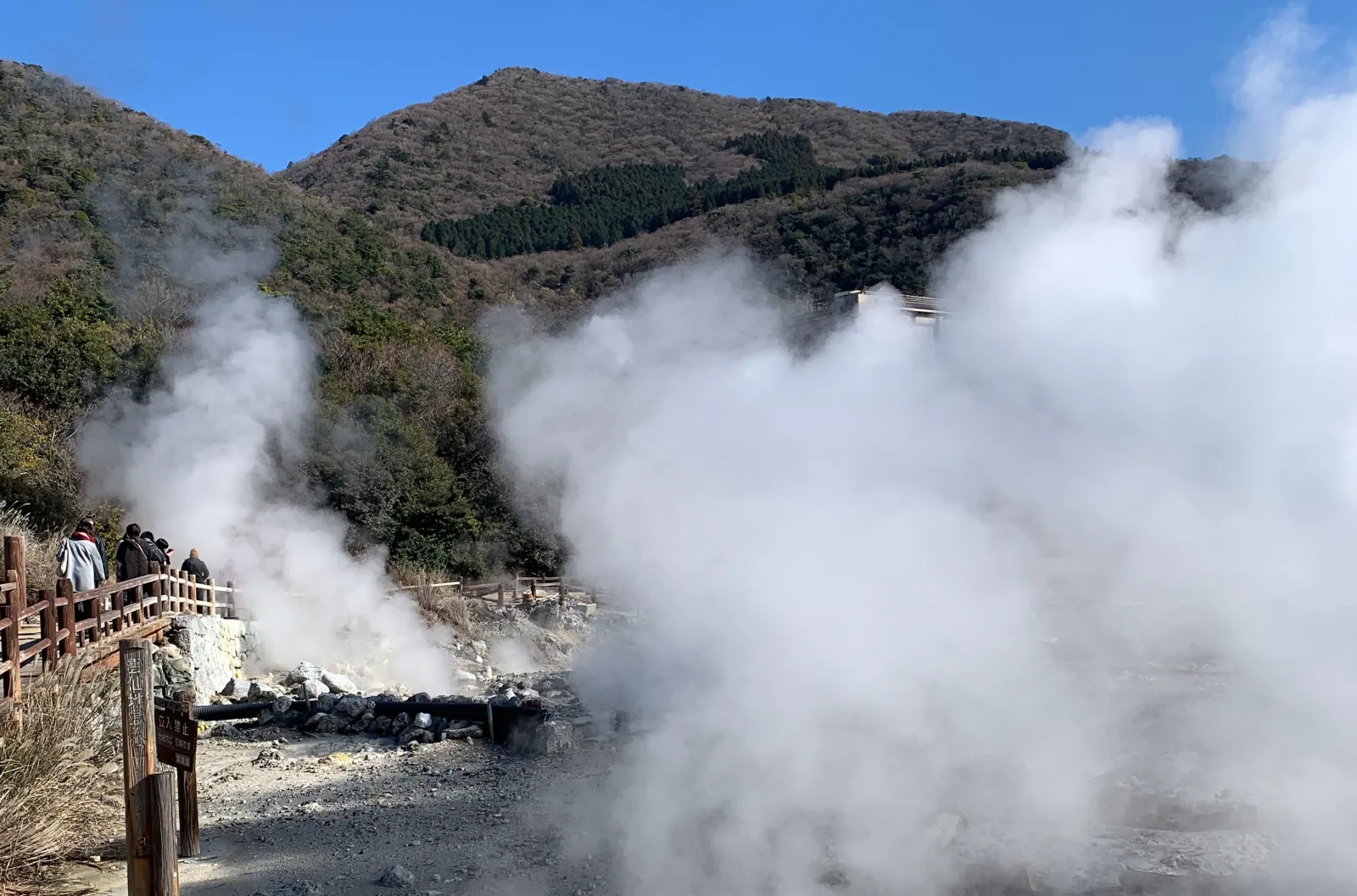
Table of Contents
Quick Facts
| Where | Unzen Onsen (雲仙温泉), Obama-cho, Unzen City, Nagasaki Prefecture. About 700 m elevation. |
| Jigoku walk | 30-odd named steam vents along a boardwalk loop, 30–60 minutes depending on stops. Free to enter. |
| Kojigoku Onsenkan | Day-use bath, adults ¥500, children ¥250. 9:30–19:00, closed Wednesdays. Tel 0957-73-3273. |
| Volcano status | Unzendake eruption warning level 1 (October 2026). The 1990–95 eruption ended in 1996. |
| Best time | Cold mornings Oct-Mar for steam drama; late April–May for the azaleas; summer evenings for the full onsen town feel. |
| Access | About 80 min by bus from JR Isahaya Station. 90 min by car from Nagasaki Airport. |
What Unzen Actually Is
Unzen is three things stacked on top of each other. Underneath, an active stratovolcano complex with Mt. Fugen (雲仙普賢岳, 1,359 m) and, above it, Heisei-Shinzan (1,483 m), the lava dome built by the 1990–95 eruption and now the highest point. On June 3, 1991 a pyroclastic flow from that eruption left 43 people dead or missing, among them journalists, firefighters and police. On top of the volcano, an onsen town that’s been attracting visitors since the 1600s and foreign visitors (British, Dutch, Russian) since the late 1800s. Covering the whole thing, a national park, designated in March 1934 as one of Japan’s first three.
The volcanic layer is what makes the onsen. The onsen town is what draws people. The national park is what kept it from being overdeveloped. Walk five minutes in any direction out of the town and you’re in forest.
Walking the Jigoku
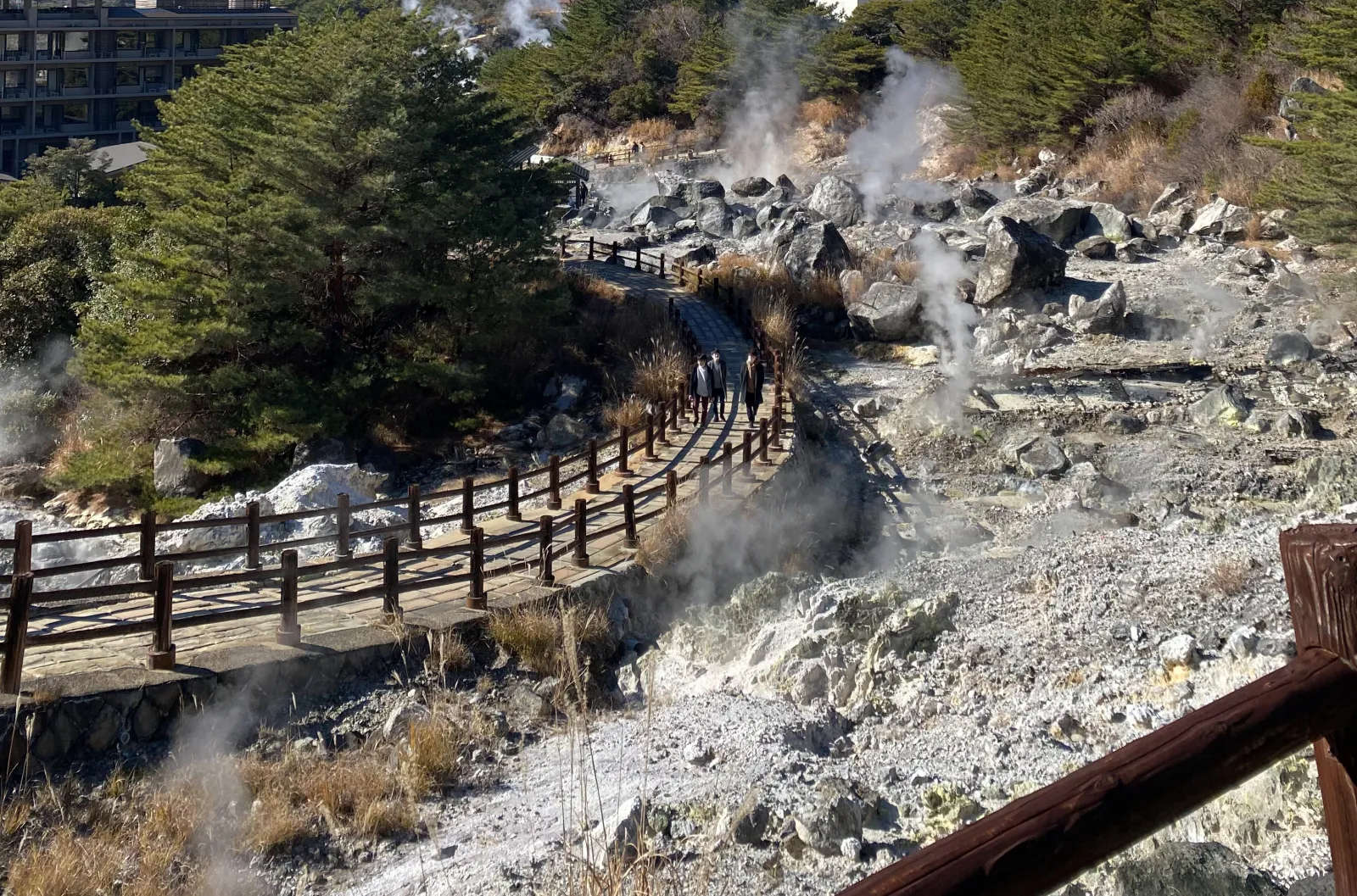
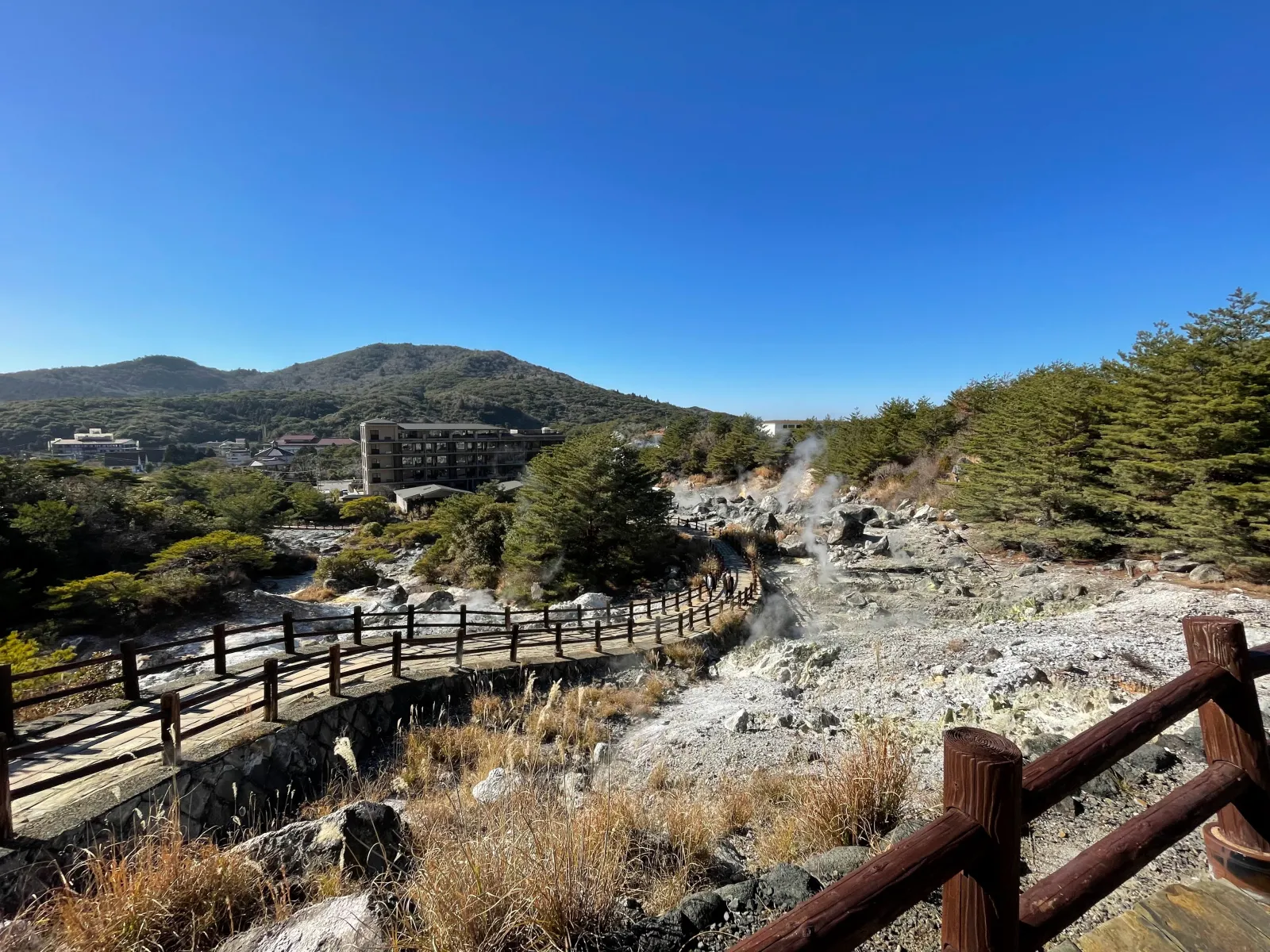
The Jigoku walk is the centerpiece of a day in Unzen. Roughly thirty active steam vents sit in a compact basin right at the edge of the onsen town — walk ten minutes from any ryokan and you’re in it. A wooden boardwalk loops through the steaming rocks. Signs mark the named vents, including Oito Jigoku (named after Oito, a woman in a local tragic legend), Daikyoukan Jigoku (the Great Shriek) and Seishichi Jigoku. Between 1627 and 1632 more than 30 Christians were martyred at Unzen Jigoku, and a memorial to them stands there. Allow 30 to 60 minutes for the loop, depending on how often you stop.
Some details worth knowing before you walk it:
- It’s free. No admission gate, no ticket. The Jigoku has no car park of its own; use one of the paid lots nearby and walk in.
- The steam is hot. Actually hot. The vents run up to 120°C and the water in the ground can hit 98°C. Stay on the boardwalk — stepping off isn’t a minor mistake here.
- Best light is early or late. Steam shows up better against a cold morning sky than a hot afternoon one. November through March is when the Jigoku photographs at its most dramatic.
- Onsen eggs are a thing. Unzen Jigoku Kobo by the walk sells eggs cooked in the steam, two for ¥200. It opens 10:00–16:00 until they sell out and may close in bad weather.
Kojigoku Onsenkan — The Bath Worth Making Time For
If you can only soak once in Unzen, soak at Kojigoku Onsenkan (小地獄温泉館).
It sits a few minutes by car from the main Jigoku area, past a short wooded drive, in a low building that looks more like a village community center than a tourist facility. The entry fee is ¥500. The water comes out of the ground cloudy white, sulfur-rich enough that your silver jewelry will tell you about it for a few days, and hot. It’s the real thing — kakenagashi, source-fed, not recirculated.
The bathhouse has been a public bath since 1919, but the hot spring itself was in use as a therapeutic site as far back as 1731. Yoshida Shoin — the late-Edo scholar — is said to have visited on one of his travels. The facility is run by Seiunso, the hotel next door, which means everything is clean and the staff at the counter know what they’re doing even when a busload shows up.
Specifics worth having on hand:
- Address: 長崎県雲仙市小浜町雲仙462 (Seiunso, which runs it, is next door at 雲仙500-1). From the Kojigoku-iriguchi bus stop it is about 2 minutes by car or 12 minutes on foot.
- Phone (reservations not needed for day-use): 0957-73-3273 (Seiunso reception).
- Fee: ¥500 adults, ¥250 children.
- Hours: 9:30–19:00.
- Closed: Wednesdays.
- Parking: Free. About 200 spaces, shared with Seiunso.
- Tattoos: the Japan Tourism Agency’s guide text says Kojigoku, like Unzen’s other public baths, does not restrict tattooed bathers.
Go in the afternoon, stay long enough that your skin starts to feel slightly tight from the sulfur, and step outside afterward into the cedar trees. That’s the Unzen half-day most people remember.
Other Day-Use Onsen in Town
If Kojigoku is closed the day you visit, or if you want to try more than one, two small public bathhouses in the main onsen town run on the cheap:
- Unzen Shinyu Onsenkan (雲仙新湯温泉館). ¥200 for adults. Open 9:00 to 22:00, closed Wednesdays. Walk to it from most ryokan in the town center.
- Yunosato Onsen Kyoudou Yokujou (湯の里温泉共同浴場, locally nicknamed “Dankyu-buro”). ¥200. Open 9:00 to 22:00, closed Tuesdays. Small, no frills, used by locals.
Both are public-bath simple — no towels, no shampoo by default. Bring your own kit, or buy a starter pack at the counter.
Up to Nita Pass and the Ropeway
Nita Pass (仁田峠) sits above the onsen town and is the starting point for views across the Shimabara Peninsula, along with the Unzen Ropeway up to the summit of Mt. Myoken. In clear weather, you can see Kumamoto on the other side of the Ariake Sea.
Two things to know before planning a trip up:
- The ropeway runs every 12 minutes from 8:51. Last car up is 17:03 from April to October and 16:51 from November to March. A round trip costs ¥1,500 for adults. The Nita Pass loop road from town is open 8:00–18:00 (April–October) and 8:00–17:00 (November–March).
- The Mt. Fugen trail via Azamidani is closed beyond Azamidani because of a landslide (October 2026). The route via Mt. Myoken is open. Check the Unzen Ropeway site before climbing.
Tickets are sold at the bottom station, and the ropeway site also links an online ticket service.
Food
Unzen doesn’t have a deep restaurant scene — most visitors eat at their ryokan, which typically serves a kaiseki dinner as part of the room rate. For lunch or between onsen dips, a few local options:
- Onsen tamago at Unzen Jigoku Kobo by the walk — two for ¥200, 10:00–16:00.
- Champon and sara udon — the local Nagasaki specialties are easy to find at casual restaurants along the main road.
- Castella — Nagasaki’s sponge cake, a common souvenir across the prefecture.
Getting to Unzen
Getting there, and staying the night
By car
The easiest option by a margin. From Nagasaki Airport: about 90 minutes via the Nagasaki Expressway to Isahaya, then Route 57 via Obama up the mountain to Unzen Onsen. From Fukuoka: about 2 hours 30 minutes. From Kumamoto: 2 hours plus the Ariake ferry (included in the drive time if you time it right). Compare rental rates on DiscoverCars for pickup at Nagasaki Airport or Isahaya.
By train and bus
Take the JR Nagasaki Main Line to Isahaya Station (about 30 minutes from Nagasaki Station). From Isahaya, catch the Shimatetsu Bus to Unzen — journey time around 80 minutes. There are about 8 buses a day from Unzen to Isahaya, and some trips need a change at Obama; check the Shimatetsu timetable before you go.
Ferry from Kumamoto
Two crossings link Kumamoto with the Shimabara Peninsula. From Kumamoto Port, the Ocean Arrow (30 minutes) and the Kyusho Ferry (60 minutes) land at Shimabara Port, about 40 minutes by car from Unzen. Further north, the Ariake Ferry runs from Nagasu to Taira Port in about 45 minutes. See our Ariake Ferry Kumamoto guide and our Taira Port day-trip guide (Shimabara, Unzen and Obama in one day).
Where to Stay
Unzen has ryokan and hotels within walking distance of the Jigoku, from budget guesthouses to serious luxury. A few patterns:
- Kyushu Hotel — founded in 1917 and now a resort hotel aimed at adults; the Jigoku is basically out the front door.
- Unzen Kanko Hotel — historic (1935), a Registered Tangible Cultural Property, old-world atmosphere. Closer to the boutique-hotel side of traditional.
- Seiunso — adjacent to the Kojigoku Onsenkan itself. It is the main building of the bathhouse complex.
- Minshuku in the side streets — smaller family-run inns away from the main road.
Compare rates across Unzen on Agoda, Booking.com, or Expedia. Autumn weekends and Golden Week book up two to three months ahead.
Frequently Asked Questions
Is Unzen safe? Isn’t the volcano active?
The Mt. Unzen volcano complex is classified as active and monitored continuously. As of October 2026 the eruption warning level is 1, and the 1990–95 eruption ended in 1996. Visiting the onsen town and the Jigoku walk is considered safe; the closed parts of the Mt. Fugen summit trail are due to a landslide, not volcanic activity. Always check the Japan Meteorological Agency’s current warning level before climbing.
How long do I need?
A day trip covers the Jigoku walk plus one bath. An overnight gets you the evening atmosphere, a proper ryokan dinner, and time to try two or three onsen. Two nights if you also want to ride the ropeway to Mt. Myoken or hike to Mt. Fugen.
Can I visit the Jigoku without paying anything?
Yes. The Jigoku walk itself has no admission fee. The nearby car parks are paid. Nothing else in the walk costs money unless you buy onsen eggs or a coffee from the stands along the route.
Is Kojigoku Onsenkan worth going to over the other public baths?
For most visitors, yes. The water is noticeably different — cloudier, stronger sulfur, source-fed. ¥500 at Kojigoku versus ¥200 at Shinyu or Yunosato is a small difference for a better soak. If you have time for only one bath, make it this one.
Can I visit Unzen without a car?
Yes, but your schedule shrinks. The Isahaya-Unzen bus takes about 80 minutes each way and runs about 8 times a day; a day trip from Nagasaki is doable but tight. Overnight without a car works well — everything in the onsen town is walkable. You’ll want a car for Nita Pass or the ferry crossing.
Does it snow in Unzen?
Yes, most winters. At 700 m elevation in Nagasaki, Unzen gets snow from late December through February in most years. Roads can require chains; the onsen town itself stays open.
Are tattoos allowed at Unzen onsen?
At the public baths, yes: the Japan Tourism Agency’s guide text says Unzen’s public baths, including Kojigoku, do not restrict tattoos. Ryokan set their own rules, so ask when you book.
Final Take
Unzen is old in a way that most hot-spring towns in Japan aren’t anymore — quiet streets, shops that close at eight, steam coming out of the ground at the end of every alley. You can see it in a day. You’ll remember it better from two. Plan your stay around an afternoon at Kojigoku Onsenkan, and the rest of the town will fall into place around it.
Checked October 2026 against unzen.org, the Unzen Ropeway site, the Shimatetsu timetable and the Japan Meteorological Agency. The ropeway schedule and volcanic status can change without notice, so check the official sites before you go.
Japanese Sentō Guide
Prefer a neighbourhood bath to a hot-spring resort? How sentō work, and where to go.
Join travelers discovering Japan's hidden side
Weekly dispatches from off-the-beaten-path Japan — spots and stories you won't find in guidebooks.
No spam. Unsubscribe anytime.
Welcome aboard!
You're in. See you in your inbox soon.