
Japan · plugs, voltage and adapters · by home country · 2026
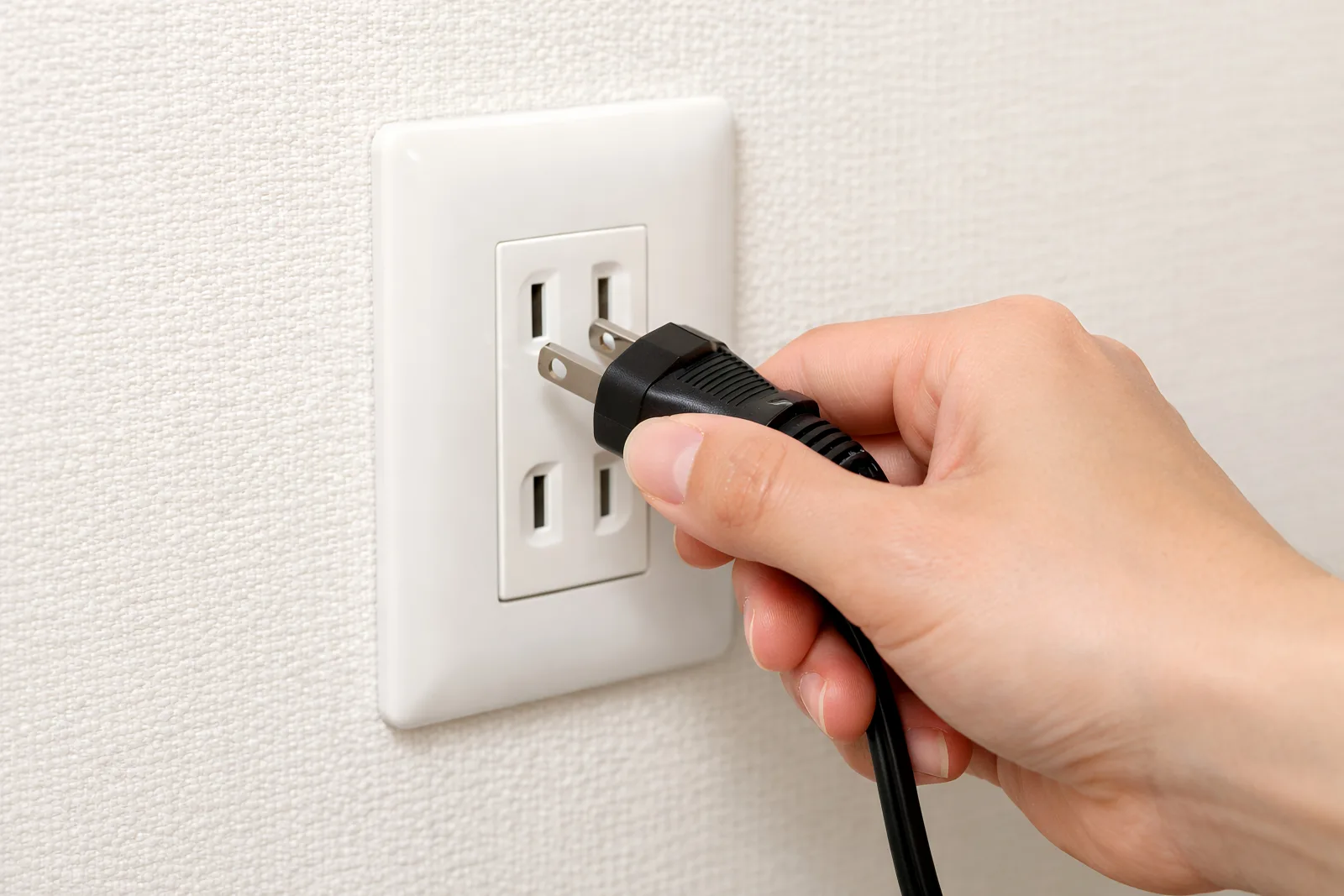
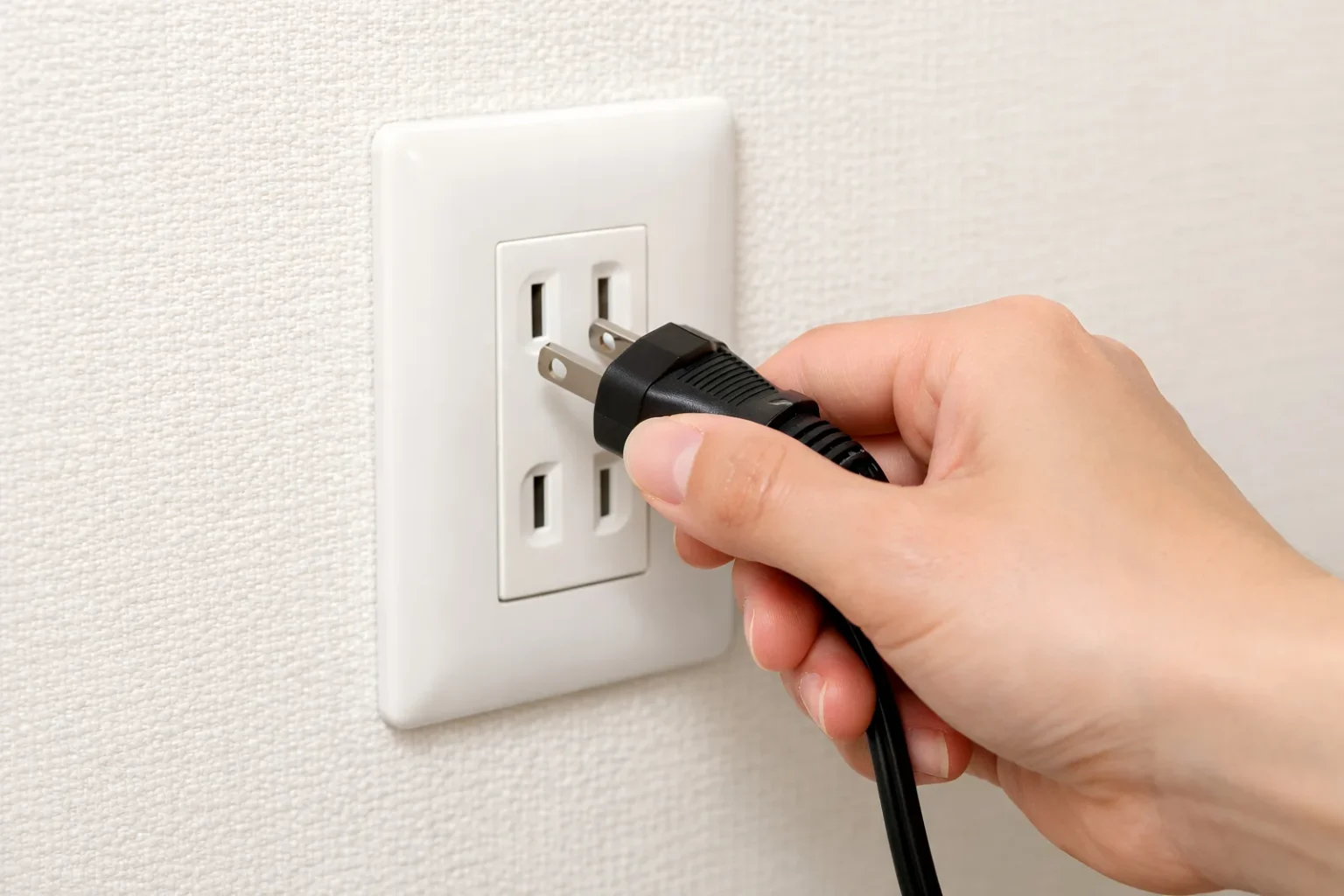
Japan runs on 100 V: 50 Hz in the east and 60 Hz in the west, including Nagoya, Kyoto and Osaka (JNTO). Japan uses Type A plugs, which have two flat parallel pins, and Type B, which adds a round earth pin (IEC). A two-slot socket has no hole for a Type B earth pin; a Type A plug with two equal-width pins fits, but a wider neutral pin may not. UK, Australian, Singapore, Hong Kong and European plugs need an adapter. The US uses the same types, but the IEC says Japanese plugs can be used in the US “but often not the other way around”, because the American neutral pin is wider. An adapter does not change the voltage: check your charger’s INPUT line, then find your country below.
Sources: JNTO for voltage, frequency and shops; the IEC’s World Plugs guide for plug types, using the Internet Archive copy of 16 August 2026 because the IEC retired the guide (checked 19 October 2026); Apple, Dyson and Kashimura for chargers, dryers, adapters and transformers.
Japan’s sockets, voltage and frequency
JNTO gives one voltage for the whole country: 100 volts AC, at 50 Hz in the east and 60 Hz in the west. The Agency for Natural Resources and Energy puts the boundary around the Fuji River in Shizuoka and Itoigawa in Niigata. A label that reads “50/60Hz” covers both halves.
The IEC lists two plug types for Japan. Type A has two flat parallel pins and no earth. Type B has the same two pins plus a longer round earth pin.
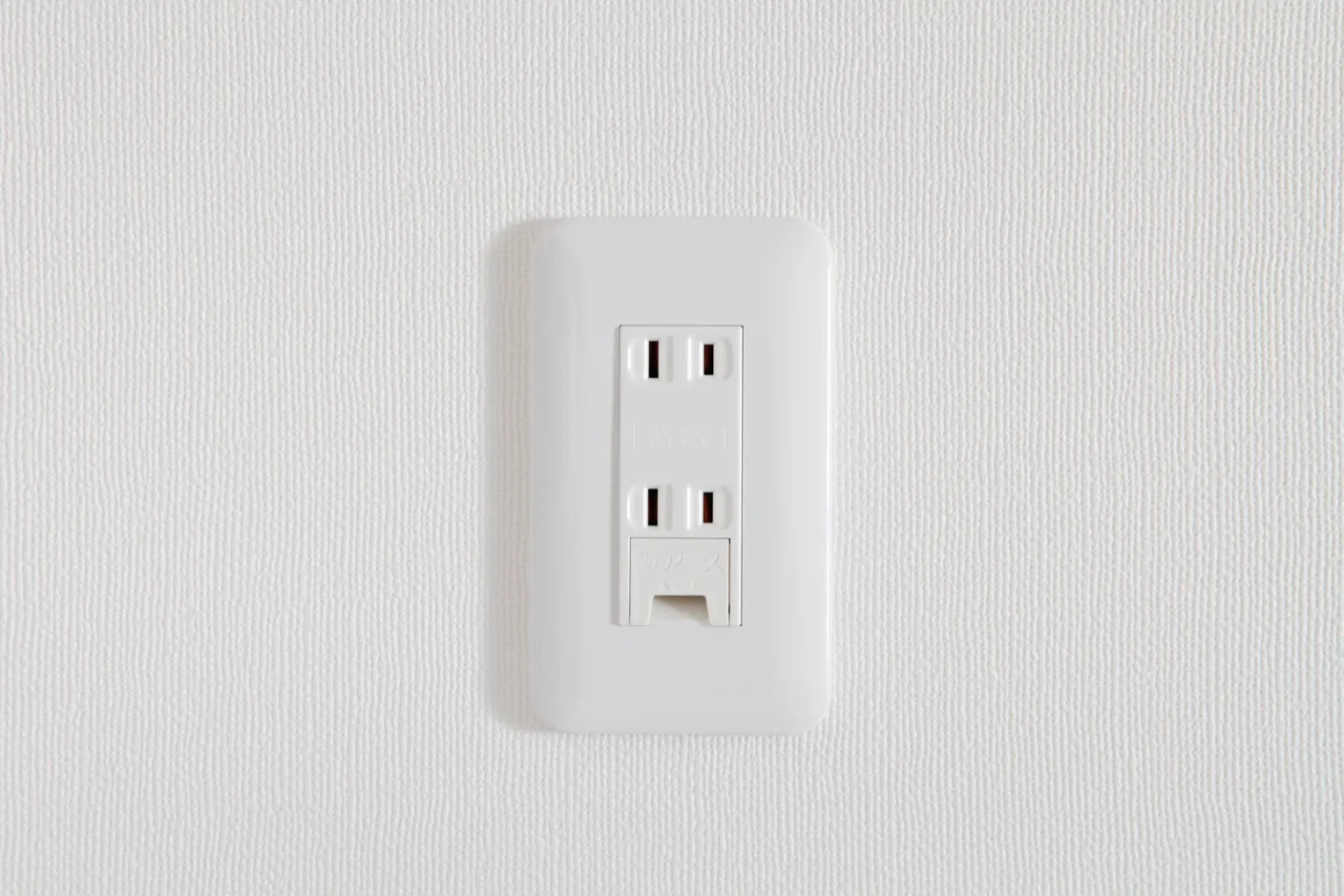
Will your plug fit? By home country
Plug shape only; voltage is the next section. Data: IEC World Plugs, archived 16 August 2026, checked 19 October 2026.
| Home country (IEC) | Your plug in a Japanese socket |
|---|---|
| United States A / B · 120 V · 60 Hz | Works with conditions: two equal flat pins, no earth pin: fits; Type B (earth pin) needs an earthed three-hole socket; one with a wider neutral pin often does not fit (IEC) IEC · 16 Aug 2026 |
| Singapore C / G / M · 230 V · 50 Hz | Doesn’t work: needs a plug adapter IEC · 16 Aug 2026 |
| Australia I · 230 V · 50 Hz | Doesn’t work: needs a plug adapter IEC · 16 Aug 2026 |
| Canada A / B · 120 V · 60 Hz | Works with conditions: same plug types as the US; two equal flat pins, no earth pin: fits; Type B (earth pin) needs an earthed three-hole socket IEC · 16 Aug 2026 |
| United Kingdom G · 230 V · 50 Hz | Doesn’t work: needs a plug adapter IEC · 16 Aug 2026 |
| Thailand A / B / C / F / O · 220 V · 50 Hz | Works with conditions: two equal flat pins, no earth pin: fits; Type B (earth pin) needs an earthed three-hole socket; round-pin plugs need an adapter IEC · 16 Aug 2026 |
| Germany C / F · 230 V · 50 Hz | Doesn’t work: needs a plug adapter IEC · 16 Aug 2026 |
| Malaysia A / C / G / M · 240 V · 50 Hz | Works with conditions: two equal flat pins, no earth pin: fits; G, C and M need an adapter IEC · 16 Aug 2026 |
| Philippines A / B / C · 230 V · 60 Hz | Works with conditions: two equal flat pins, no earth pin: fits; Type B (earth pin) needs an earthed three-hole socket; round-pin (C) plugs need an adapter IEC · 16 Aug 2026 |
| Indonesia C / F · 220 V or 110 V · 50 Hz | Doesn’t work: needs a plug adapter IEC · 16 Aug 2026 |
| Hong Kong D / G · 220 V · 50 Hz | Doesn’t work: needs a plug adapter IEC · 16 Aug 2026 |
| India C / D / M · 230 V · 50 Hz | Doesn’t work: needs a plug adapter IEC · 16 Aug 2026 |
| South Korea C / F · 220 V · 60 Hz | Doesn’t work: needs a plug adapter IEC · 16 Aug 2026 |
| Taiwan A / B · 110 V · 60 Hz | Works with conditions: same plug types as the US; two equal flat pins, no earth pin: fits; Type B (earth pin) needs an earthed three-hole socket IEC · 16 Aug 2026 |
| China A / I · 220 V · 50 Hz | Works with conditions: two equal flat pins, no earth pin: fits; Type I (angled pins) needs an adapter IEC · 16 Aug 2026 |
United States, Canada and Taiwan
The IEC says that on the American plug the neutral pin is wider than the live pin, while on the Japanese plug both pins are the same size, so “Japanese plugs can be used in the US but often not the other way around.” If a wider pin or an earth pin stops the plug going in, do not force it. Type A is an ungrounded plug type (IEC), and a two-slot socket has no earth hole, so if your device has an earth pin, check its manual on earthing before you use any adapter.
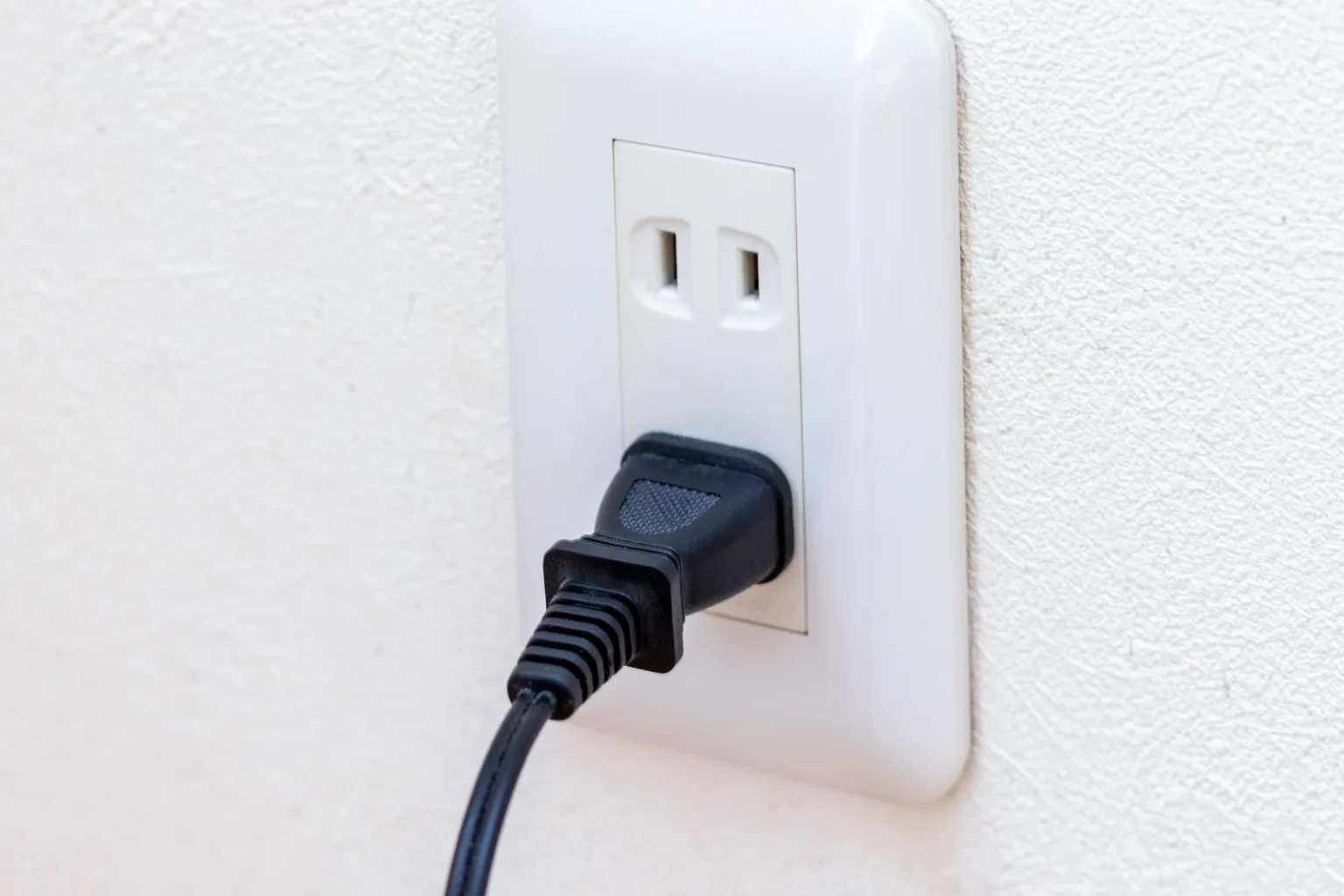
UK, Singapore, Hong Kong and Malaysia
The IEC lists the Type G plug, three rectangular blades with a fuse inside, for the UK, Ireland, Cyprus, Malta, Malaysia, Singapore and Hong Kong. It does not fit a Japanese socket, so you need an adapter that ends in Japan’s Type A pins. If the appliance needs its earth blade connected, a two-pin socket cannot do that; check its manual.
Australia and New Zealand
Type I has two flat pins set in a V, usually with an earth pin. They do not match Japan’s parallel slots, so you need an adapter.
Germany, France, South Korea, Indonesia and India
Round-pin plugs need an adapter: the IEC lists C and F for Germany, C and E for France, C and F for South Korea and Indonesia, and C, D and M for India. All list 220–230 V (Indonesia also 110 V), so do the voltage check below.
If you need an adapter, match the pin drawings on its pack with your own plug. Then check your appliance’s voltage, wattage and earth needs against the adapter’s rating. The Kashimura NTI-577 below is rated 13 A at 125 V (13 A is about 1,300 W at Japan’s 100 V); it has an earth terminal but comes without an earth wire, and it does not change the voltage (Amazon Japan listing). The terminal does not provide an earth connection until it is wired as the appliance manual requires. Use an appliance that needs earthing only if you can make that connection as its manual says; otherwise do not use it.
Amazon links are affiliate links. As an Amazon Associate, Hidden Japan Gems earns from qualifying purchases.
Adapter for Japanese sockets
Read the label: adapter only, or a transformer?
A plug adapter changes the shape only; your device still gets 100 V. Look for the small print after INPUT on the charger or power brick:
INPUT 100–240V ~ 50/60Hz
Covers Japan’s voltage and frequency. A plug with two equal flat pins and no earth pin goes straight in; otherwise it works with a plug adapter, as long as any earth the device needs is provided and the adapter’s rating is not exceeded. Apple says its USB power adapters are designed for 100 V to 240 V AC at 50 to 60 Hz.
220–240V only
Doesn’t work: the device is not rated for Japan’s 100 V, and a plug adapter is not enough. Use a device rated for 100 V, or a transformer that converts 100 V to 220–240 V, if the device’s maker allows one.
110–120V only
Not labelled for 100 V. Check the manual or ask the maker before use. Makers can say no: a 2019 Dyson US guide for the Supersonic (HD01) says it is not suitable for use outside the United States.
Dual voltage (a selector)
JNTO names dual-voltage hair dryers, travel irons and shavers as appliances that “should work” anywhere in Japan. If yours has a voltage selector, check that it includes 100 V and set it as its manual says.
Hair dryers, straighteners and Dyson
For heat tools, the label must list 100 V and the local frequency (50 or 60 Hz, or 50/60 Hz); its wattage must be within the adapter’s rating; and if the tool needs earthing, use it only where the earth connection can be made as its manual says. An adapter’s earth terminal does nothing unless it is connected; if you cannot make the connection, do not use the tool. A tool labelled 220–240 V only needs a transformer sized as above, if the maker allows one, or swap it for a 100 V-rated tool.
Dyson’s answer depends on the model. A 2019 US guide for the Dyson Supersonic (model HD01 on its cover; filed under the Professional Edition on dyson.com) says “Do not operate with a voltage converter” and “This machine is not suitable for use outside the United States of America.” Check the guide for your exact model. The Supersonic Travel is a separate model; Dyson’s Australian and Singapore pages say it “automatically adapts to the voltage wherever you are, from 100–240V”, that a travel plug adaptor may be needed, and recommend an adapter rated to 1,300 W across 100–240 V.
Buying an adapter or a Japanese charger in Japan
JNTO says conversion plugs and transformers are easy to find in cities: in Akihabara (Tokyo), Nipponbashi (Osaka), Yodobashi Camera and Bic Camera.
The Kashimura NTI-577 linked above is the inbound kind. Its Amazon Japan listing says it converts B, BF, B3, C, O, O2 and SE plugs (Japanese letters) to Japan’s A type, except some South African (B3L) and Brazilian (CB) plugs; and has an earth terminal for three-pin plugs.
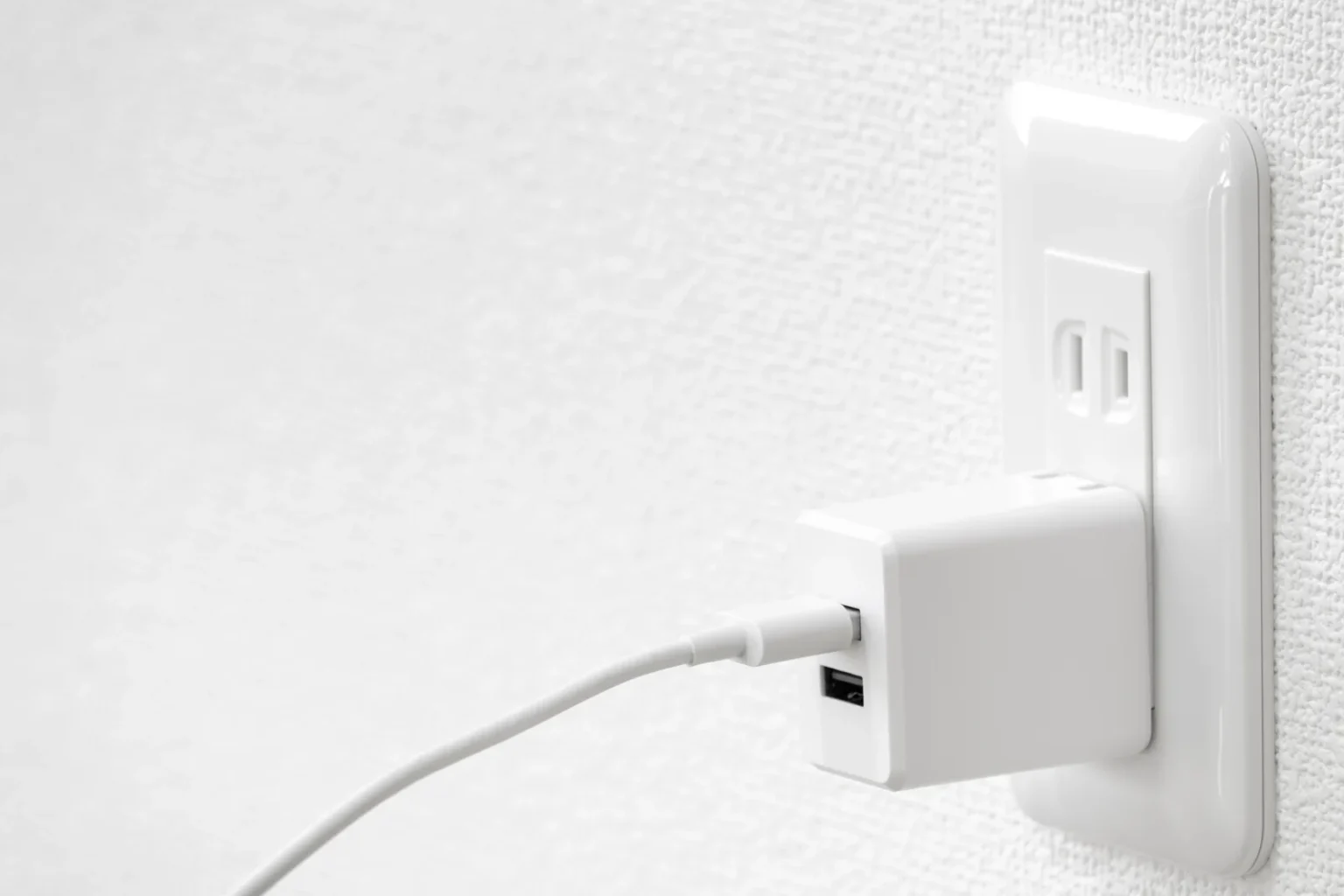
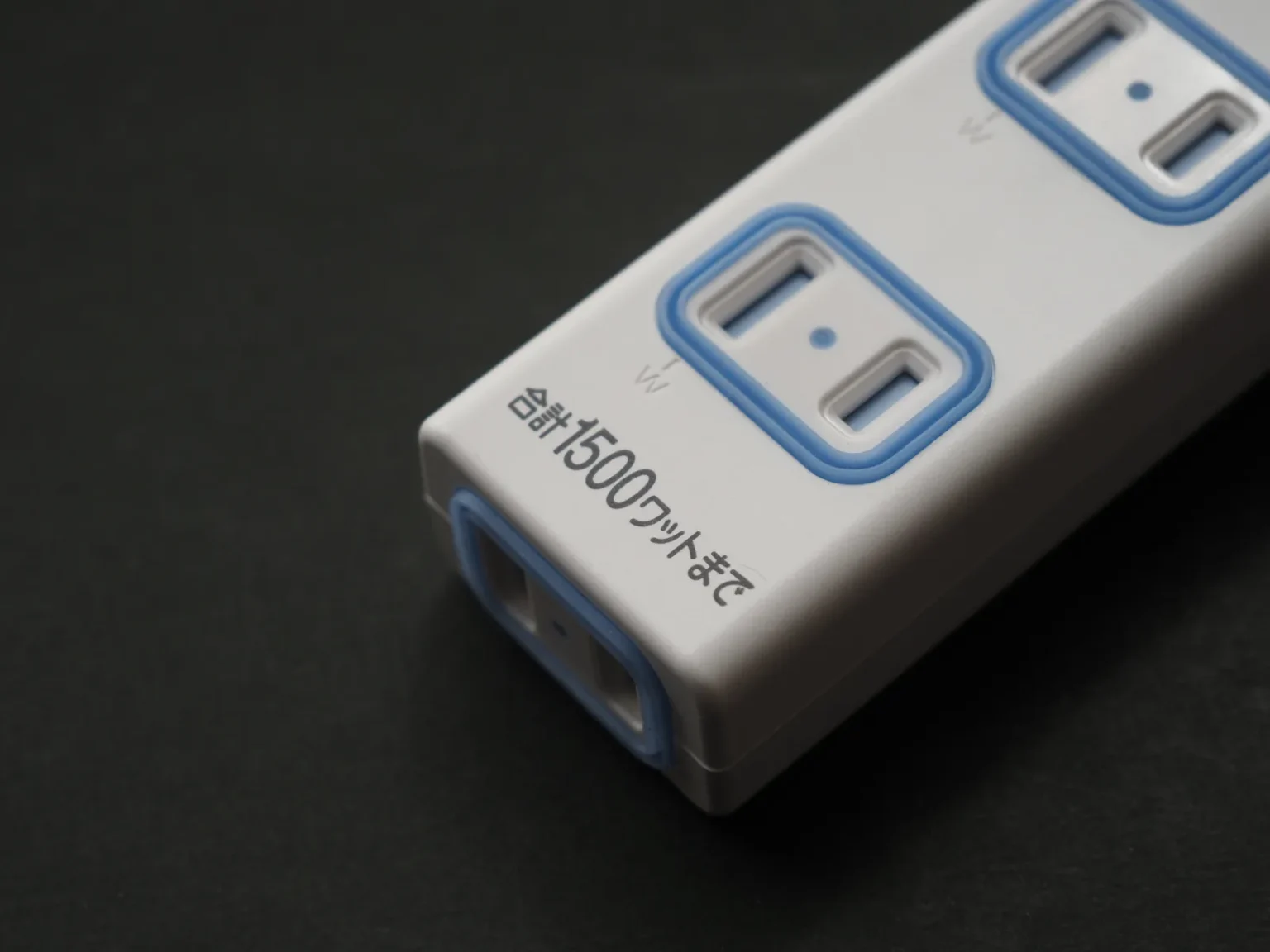
A Japanese USB charger needs no adapter. If you order one online, check whether your hotel accepts parcels; see how Amazon Japan hotel and konbini delivery works. The charger below lists “AC100V–240V 50/60Hz” input and three USB ports (two USB-C, one USB-A). The power strip is for Type A plugs: its listing gives 1,400 W in total, says it is safe on 100–240 V and has no voltage conversion.
Order in Japan, deliver to your hotel
Charging on trains and in town
JNTO says new shinkansen models have outlets next to the window seats (ask for one when you buy the ticket), and some hamburger chains and family restaurants have outlets. See getting around Japan for trains, and cash or card in Japan and IC cards such as Suica for paying at the shop.
Questions people ask
Do I need an adapter for Japan from the US?
It depends on the plug. Both countries use Type A and B, but the IEC says Japanese plugs can be used in the US “but often not the other way around”, because the American neutral pin is wider. Plugs with two equal flat pins and no earth pin go straight in. If the plug has an earth pin, it needs an earthed three-hole socket or another way to keep it earthed as the device’s manual says.
Is Japan 100V or 110V?
100 V across the country (JNTO), at 50 Hz in the east and 60 Hz in the west.
Can I use my UK plug in Japan?
Not directly. The UK’s Type G plug (IEC) does not fit Japanese sockets. Use an adapter, and check that the label includes 100 V; UK mains is 230 V.
Do Australian plugs work in Japan?
No. Australia’s Type I plug (IEC) has angled pins. Use an adapter, and check the label for 100 V.
Will my phone or laptop charger work in Japan?
Yes, if its label reads 100–240 V and 50/60 Hz, as Apple’s USB power adapters do. A plug with two equal flat pins and no earth pin goes straight in; otherwise use a plug adapter, and if the plug has an earth pin, keep it earthed as the manual says.
Can I use my Dyson or hair straightener in Japan?
Check the model. The 2019 US guide for the Dyson Supersonic (HD01) says not to use it with a voltage converter or outside the US; Dyson says the Supersonic Travel adapts from 100 to 240 V. For other heat tools, a label without 100 V means it is not rated for Japan.
Before you go
Trip planning: from the USA, from Singapore, and Japan tips for 2026.
Mobile data from the airport onwards, set up on your phone before you fly.
Japan eSIM plans on KlookSources
- Checked 19 October 2026 — JNTO: Plugs & Electricity (voltage, frequency, dual-voltage appliances, where to buy, shinkansen outlets)
- Checked 19 October 2026 — IEC: World Plugs, which on that date said the interactive guide had been retired. Country data and plug-type descriptions from the Internet Archive copy of 16 August 2026
- Checked 19 October 2026 — Agency for Natural Resources and Energy, energy education material: electricity supply pages (Japanese, PDF, 2022), 50 Hz / 60 Hz boundary
- Checked 19 October 2026 — Apple Support: About Apple USB power adapters
- Checked 19 October 2026 — Dyson: Supersonic Travel (Australia), Supersonic Travel (Singapore), Supersonic user guide, US (PDF, 2019, HD01)
- Checked 19 October 2026 — Kashimura: adapters for use in Japan (Japanese); WT-19EJ / WT-20EJ transformer release, 26 June 2026 (Japanese, PR TIMES)
- Checked 19 October 2026 — Amazon Japan product listings for the Kashimura NTI-577 adapter, the charger and the power strip linked above
Join travelers discovering Japan's hidden side
Weekly dispatches from off-the-beaten-path Japan — spots and stories you won't find in guidebooks.
No spam. Unsubscribe anytime.
Welcome aboard!
You're in. See you in your inbox soon.