
Japan · getting around · taxi and ride apps 2026
Uber works in Japan, but mostly as a taxi app. Uber Japan’s area page (October 2026) lists Uber Taxi in all 47 prefectures, a June 2026 announcement counted more than 1,000 partner taxi companies, and the ride is charged at the meter fare, plus applicable app, booking and facility fees. Private-car rides exist in two narrower forms: Uber’s chauffeured “Premium” cars in some cities, and rideshare with private drivers, available only in limited areas and hours. GO, which says it is the most downloaded taxi app in Japan, accepts overseas phone numbers and international cards.
What works, by what you want to do
| You want to… | Status in Japan |
|---|---|
| Hail a taxi with Uber | Works. Uber Taxi in all 47 prefectures; fare on the meter (Uber Japan, checked 19 Oct 2026) |
| Hail a taxi with GO, DiDi or S.RIDE | Works. GO in all 47 prefectures; DiDi and S.RIDE in listed areas (company sites, checked 19 Oct 2026) |
| Get a private car and driver through Uber | Works with conditions. “Premium” hire cars in listed cities only (Uber Japan, checked 19 Oct 2026) |
| Ride with a private driver, as with UberX at home | Works with conditions. In set areas and hours only, under Japan’s 2024 rideshare scheme run by taxi companies (MLIT, Uber Japan, checked 19 Oct 2026) |
| Book a ride inside the Grab app | Not confirmed for 2026; a link with GO began on 8 July 2022 (GO press release) |
| Use Lyft | Not confirmed. Lyft’s cities page does not list Japan (checked 19 Oct 2026) |
| Order food on Uber Eats | Works in Tokyo (Uber’s Tokyo page, checked 19 Oct 2026) |
Uber in Japan: the ride options
Uber Taxi
Uber Taxi sends an ordinary licensed taxi; Uber’s Japan page says its products vary by city. The fare is “the price appearing on the taximeter at the end of the trip”, with a ¥100 app usage charge included in the estimate and a booking fee of up to ¥680, plus any facility fee, charged separately. Priority Taxi adds a ¥700 priority fee.
You can pay by card in the app, and Uber Taxi can also be paid in cash where the app offers it: on 18 May 2026 Uber Japan began letting cash-paying riders in Hiroshima apply discount codes, with a nationwide roll-out planned.

Uber Premium and Private car
Uber Japan describes Uber Premium as a hire-car service: upscale hire cars with experienced drivers, booked in the Uber app. Uber’s English Japan page lists Private car for up to four (price includes booking fees, highway tolls and other fees) and Premier Van for up to five (price includes highway tolls and other fees). On Uber Japan’s area page (last updated October 2026), Premium is marked in areas including Tokyo’s 23 wards, Kyoto, Osaka, Nagoya, Sapporo, Fukuoka, Naha, Narita and the towns around it plus Kisarazu in Chiba, and five Mt Fuji towns: Fujiyoshida, Oshino, Fujikawaguchiko, Narusawa and Yamanakako.
Fujiyoshida, where I live, signed an overtourism agreement with Uber Japan on 4 September 2026. Uber Taxi started there in September 2025 and Premium in January 2026. Under the agreement, Uber is to set up several pick-up spots in the town centre, where they will not block traffic, and show them in the app to riders and drivers. The aim is to ease congestion and stop on-street pick-ups around Arakurayama Sengen Park and Honcho-dori.
Rideshare in Japan: the 2024 rules
Taxi-company rideshare runs under a scheme the Ministry of Land, Infrastructure, Transport and Tourism (MLIT) created in March 2024, known in Japanese as Nihon-ban raidoshea (Japanese-style rideshare). Local private cars and ordinary drivers supplement taxi companies, which run it. Transport bureaus set the days, hours and number of cars for each area. A February 2026 MLIT notice lets 12 designated taxi areas, including Tokyo’s 23 wards with Musashino and Mitaka, run more cars, including at hours not otherwise allowed, when heavy rain or extreme heat is forecast.
A separate, older scheme, which MLIT now calls public rideshare (jikayo yusho ryokaku unso), lets towns and non-profits carry passengers in private cars where other transport is short. One example: in Tango, Kyotango (Kyoto Prefecture), a non-profit started the “Sasaeai Kotsu” service, dispatched through the Uber app, on 26 May 2016, according to a 2023 Cabinet Office meeting paper. Whether it still runs in 2026 was not confirmed.
Uber began supporting the taxi-company scheme in April 2024, offering its app to the taxi companies that run it, so Uber’s app has been used for both kinds. Uber Japan’s area page marks a few places as rideshare only, with no Uber Taxi: Miura in Kanagawa, Nozawa Onsen in Nagano, and Akashi, Takarazuka, Kawanishi and Inagawa in Hyogo. Other areas where Uber’s app offers rideshare alongside Uber Taxi could not be confirmed from the area page; check the app on the day.
GO, DiDi and S.RIDE
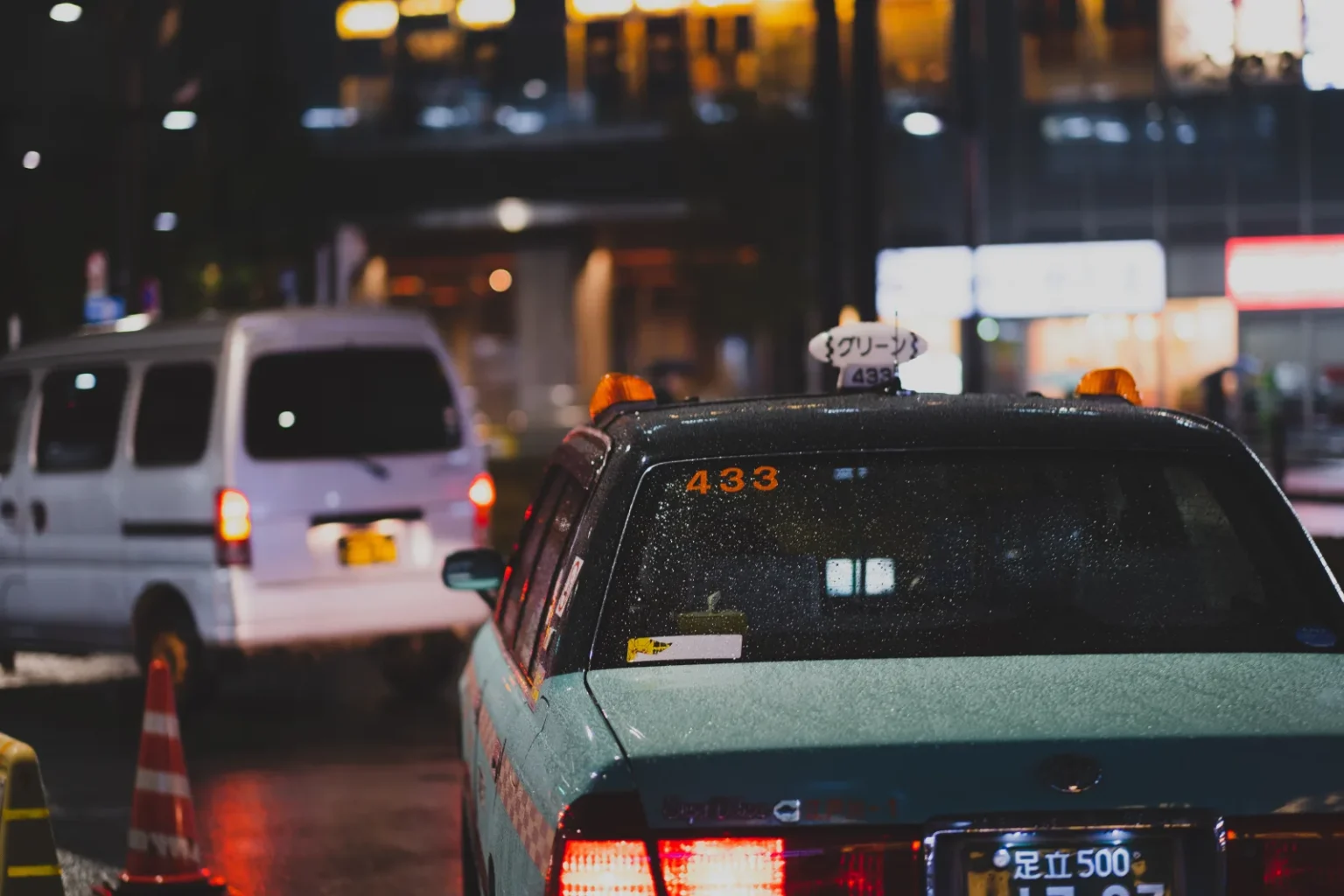
GO says it is the most downloaded taxi app in Japan (over 35 million downloads by January 2026) and covers all 47 prefectures. It has accepted overseas mobile numbers since 10 November 2023, and its press release that day said the app shows English and takes overseas-issued credit cards. Two conditions on GO’s own pages matter for visitors. Sign-up needs an SMS code, and GO asks you to sign up from inside Japan after you arrive. GO says it will end coupon distribution to users verified with non-Japanese phone numbers.
DiDi (DiDi Mobility Japan) runs taxi dispatch and, in some areas, Japan’s rideshare scheme. Its FAQ says the fare is the taxi meter plus a pick-up fee and any tolls, paid in the car or in the app by card or PayPay. The DiDi pages checked did not say whether overseas phone numbers work or whether the app has English screens.
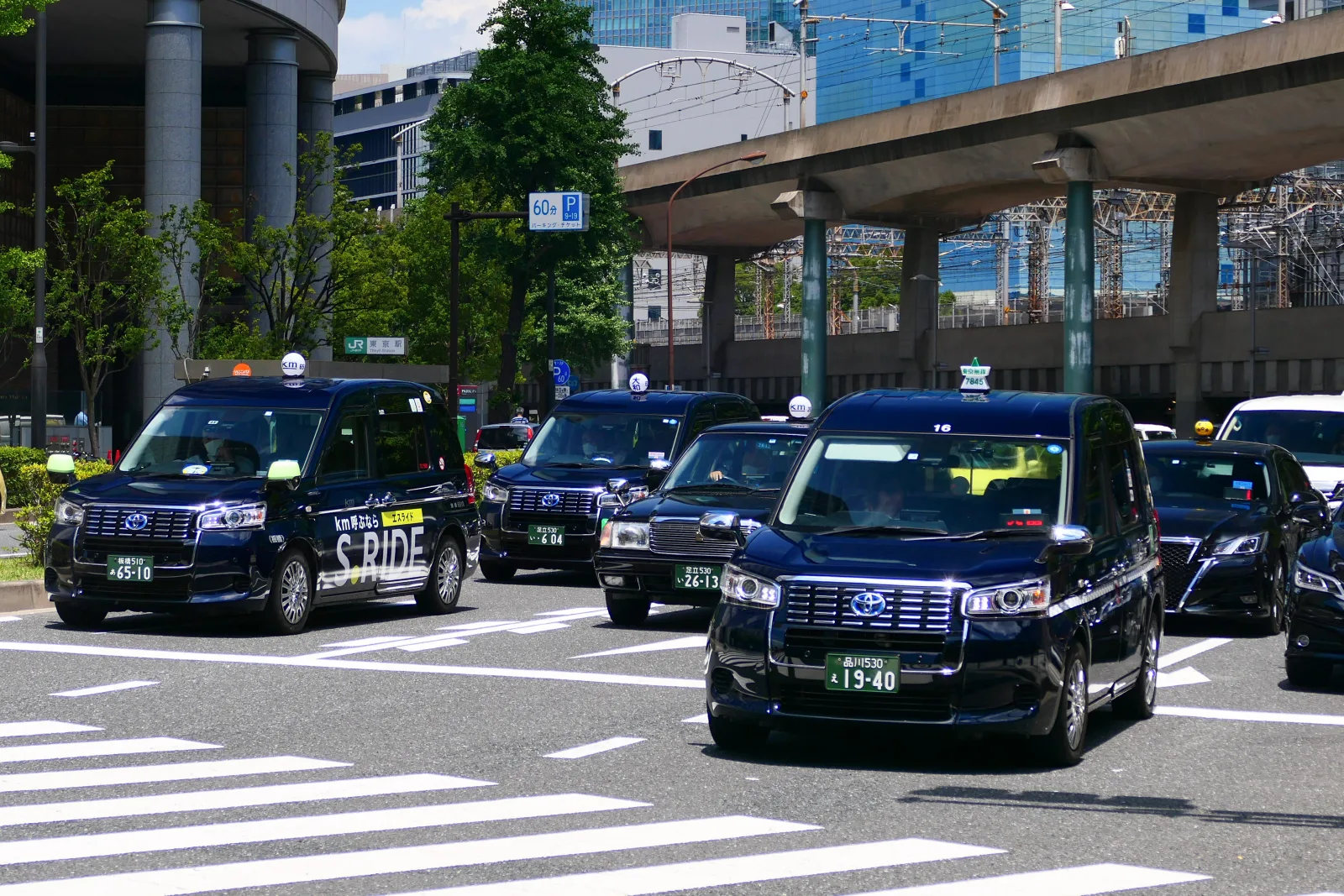
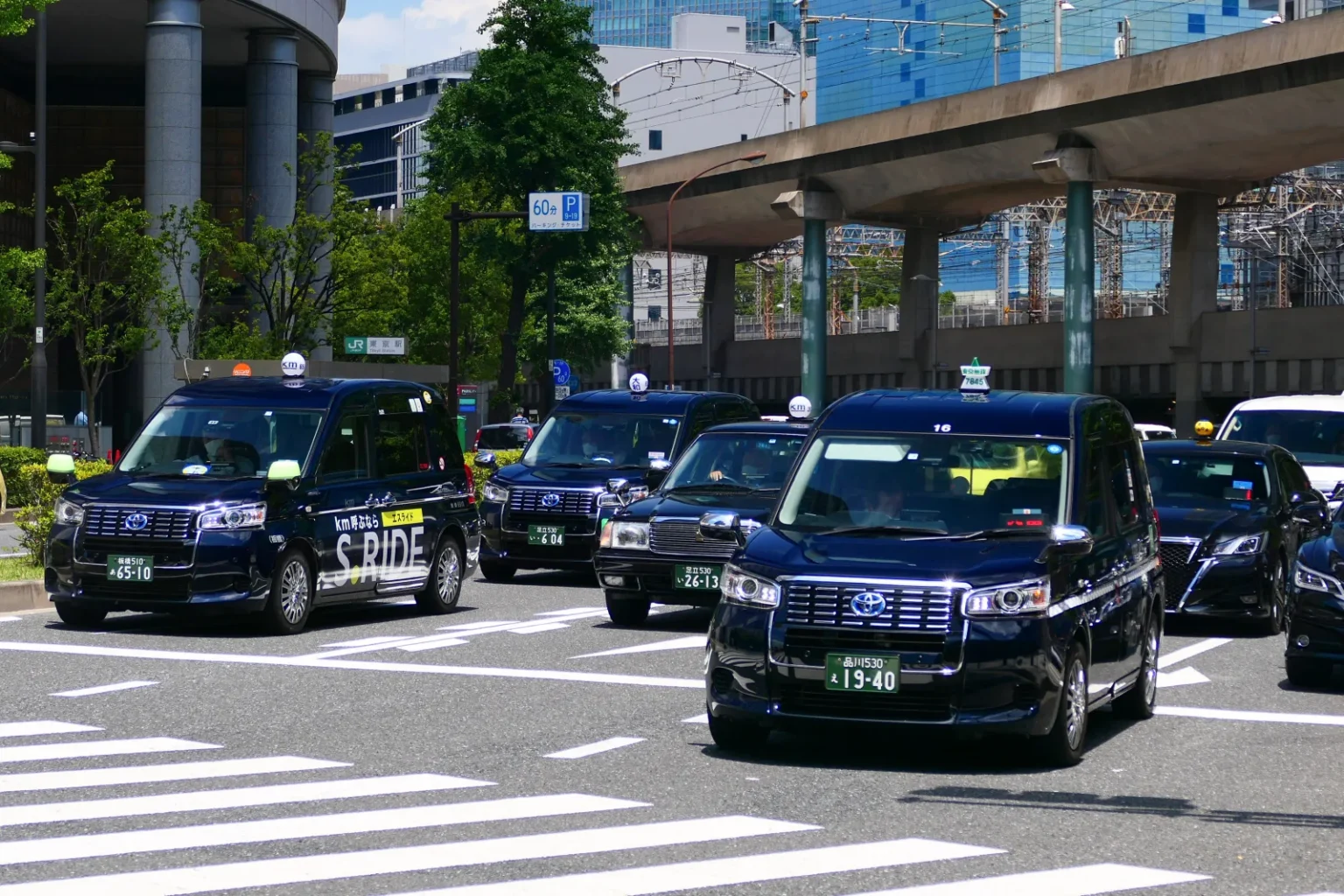
S.RIDE covers Tokyo and the surrounding prefectures, Osaka, Nagoya, Sendai, Kanazawa and Hamamatsu. It lists no app arrangement fee, with the pick-up fee and the fare charged separately, and says one in three Tokyo taxis takes its orders.
Grab, Kakao T and other home-country apps
On 8 July 2022 GO announced that Grab users from Singapore, Malaysia and the Philippines could call GO taxis in Japan from the Grab app. A GO release on 10 November 2023 listed Kakao T, Grab, Alipay and Ctrip as linked apps, used by a cumulative 130,000-plus people since 2022. No 2026 statement from GO or Grab confirming that the Grab link still runs was found on the pages checked. GO’s English page (checked 19 October 2026) does not mention it; install Uber or GO as well.
Airport taxis: Haneda, Narita and app pick-up points
Haneda Airport says fixed taxi fares cover routes between the airport, Tokyo and Kanagawa Prefecture, except some areas that stay on the meter; Narita has fixed fares to six Tokyo zones. Tolls are paid on top, and a higher fixed fare applies from 22:00 to 5:00. At Haneda you can take a fixed-fare taxi from the terminal taxi ranks without booking; Haneda Airport says to contact each taxi company for details. The Tokyo Hire-Taxi Association’s Haneda chart for the 23 wards, Musashino and Mitaka (in use from 20 April 2026) has 19 zones and leaves out Minato, Chuo, Shinagawa, Ota, Meguro and Koto; the association has a separate chart for the Tama area.
| Haneda to | Daytime fixed fare (22:00–5:00 fare) |
|---|---|
| Chiyoda (Tokyo Station, Marunouchi) | ¥7,600 (¥9,000) + tolls |
| Shibuya | ¥8,500 (¥10,000) + tolls |
| Shinjuku | ¥9,000 (¥10,700) + tolls |
| Taito (Asakusa, Ueno) | ¥9,100 (¥10,800) + tolls |
| Toshima (Ikebukuro) | ¥11,200 (¥13,200) + tolls |
Narita’s airport taxi council runs fixed fares from the airport to six Tokyo zones, also with no booking needed; the airport says to ask the driver before you get in. Daytime fares (late-night fares are higher): Shinjuku, Shibuya, Toshima and Minato (except Daiba) are in Zone D: ¥31,500 via the Keiyo Road or ¥32,500 via the Bayshore route, plus tolls. Chiyoda, Chuo and Taito are Zone C at ¥29,000 or ¥31,000, plus tolls. Going the other way, the Tokyo association’s fixed fares to Narita need an advance booking. If you would rather arrange a transfer before you land, compare pre-booked airport transfers on Kiwitaxi and check the total price and conditions.
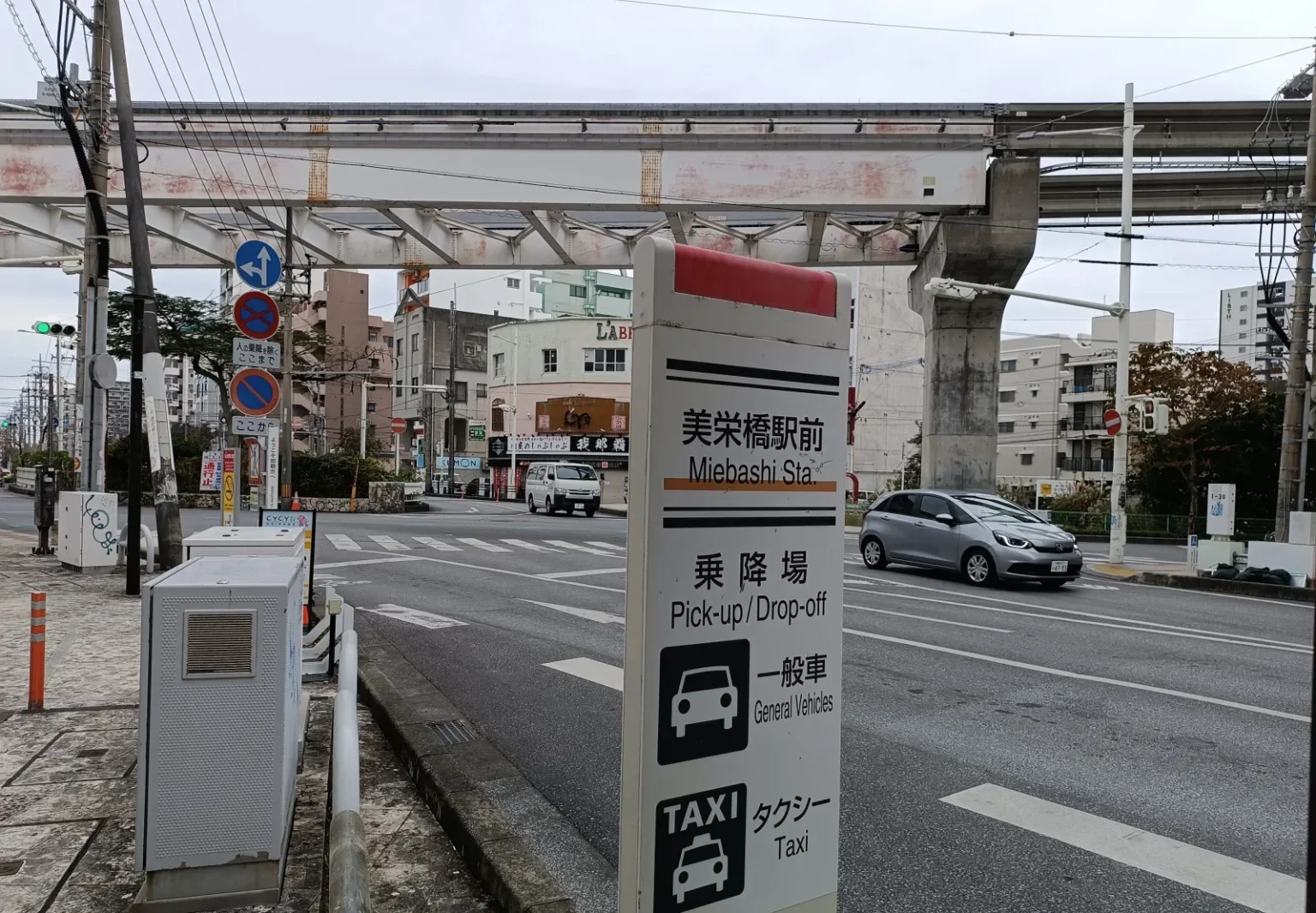
At Haneda, app rides use separate stands: on the 2nd floor (departures level) at Terminals 1 and 2, not the 1st-floor taxi ranks. At Terminal 3, a stand shared by ride apps opened for a trial on 9 June 2026 on the 8th floor of the P5 car park, about a 5-minute walk from arrivals. Haneda Airport says pick-up points can change with congestion, so check the one shown in your app.
Trains from Narita, or a transfer booked before you fly
What a Tokyo taxi costs on the meter
Uber Taxi and DiDi say their taxi fare is the meter fare, so for an ordinary metered ride the local taxi tariff is the base; fixed-fare rides are priced separately. In Tokyo’s 23 wards, Musashino and Mitaka, the Tokyo Hire-Taxi Association’s fare table gives the upper fare as ¥500 for the first 1.0 km, then ¥100 for every 232 m. Rides from 22:00 to 5:00 cost 20% more. Each taxi company sets its own pick-up fee; DiDi and S.RIDE list it as a separate charge on app bookings. The association’s fare table also lists a 10% discount on the part of a metered fare above ¥9,000.
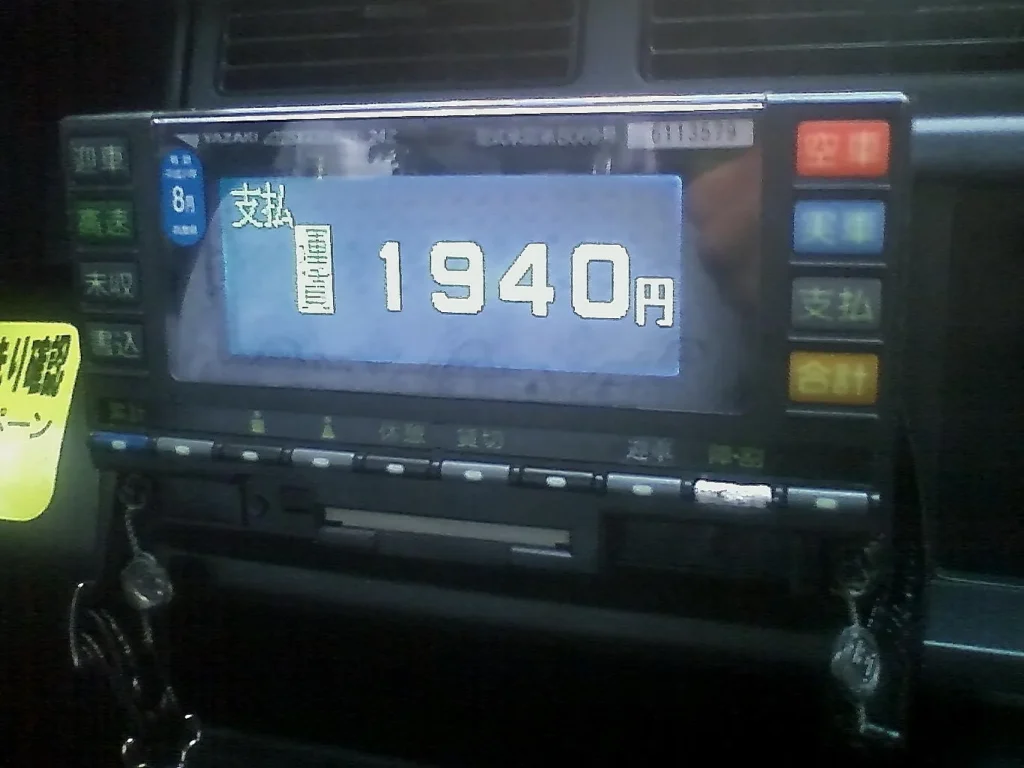
Paying through the app also settles the card question, as GO, DiDi and Uber all take card payment in the app. For a fixed-fare ride booked by phone, the Tokyo association asks you to confirm non-cash payment with the taxi company when booking. For cards elsewhere in Japan, see our cash vs card guide.
Before you fly: set up two apps
- Uber: sign in at home and check the payment method on your account.
- GO: download it at home, but register after landing, as GO asks. The code comes by SMS to the number you sign up with, so keep a line that can receive texts in Japan, such as your home SIM on roaming; a data-only eSIM cannot by itself receive GO’s verification SMS.
- Destination in the app: enter it before you request the car, so you do not have to explain the address to the driver.
Data for the ride apps
For trains and passes, see how to get around Japan. If you have big suitcases, read the Shinkansen luggage rules. Heading straight to Mt Fuji from the airport? Haneda or Narita for Mt Fuji compares the buses and trains.
Questions travellers ask
Does Uber work in Japan?
Yes, mainly as a taxi app. Uber Japan says Uber Taxi runs in all 47 prefectures with more than 1,000 taxi companies. Chauffeured Premium cars run in some cities, and private-driver rideshare runs only in limited areas and hours, under Japan’s 2024 taxi-company rideshare scheme, where it operates. Checked 19 October 2026.
Is Uber expensive in Japan?
Uber Taxi costs the taxi meter fare plus a booking fee of up to ¥680 and any facility fee, with a ¥100 app charge included in the estimate. In central Tokyo the meter starts at ¥500 for the first 1.0 km. Other apps also add the taxi company’s pick-up fee to the meter fare.
Can I use Grab in Japan?
Not confirmed for 2026. A Grab link to GO taxis began on 8 July 2022, but the pages checked on 19 October 2026 do not confirm whether it still works. Install Uber or GO as well.
Which taxi app should tourists use in Japan?
Uber and GO both cover all 47 prefectures; Uber Japan says visitors from more than 200 countries and regions use its app. GO takes international cards and Apple Pay but needs an SMS code and asks you to register after arriving in Japan. DiDi and S.RIDE cover listed areas; their pages checked did not say whether overseas numbers work.
Is there Lyft or DiDi in Japan?
DiDi does, through DiDi Mobility Japan. Lyft’s cities page did not list Japan when checked on 19 October 2026, so Lyft in Japan is not confirmed.
Do taxis in Japan take cards?
Uber, GO and DiDi take card payment in the app. For taxis hailed in the street or booked by phone, the payment options depend on the taxi company; the Tokyo Hire-Taxi Association asks you to confirm non-cash payment when booking a fixed-fare ride.
Getting Around Japan
Trains, buses and the JR Pass, by route.
Japan Cash vs Card
Where cards work and where cash still wins.
Kawaguchiko vs Fujiyoshida
Where to stay at the foot of Mt Fuji.
Sources
- Checked 19 October 2026 — Uber: Uber cities in Japan (products, fees, airports); Uber in Tokyo; Uber Taxi service areas (Japanese, updated October 2026)
- Checked 19 October 2026 — Uber Japan newsroom (Japanese): growth strategy, June 2026; Toto group partnership, 31 July 2026; cash payment discounts, 18 May 2026; Fujiyoshida agreement, 4 September 2026; Uber Premium, 24 August 2026; taxi-company rideshare, 26 January 2024; Haneda Terminal 3 app pick-up, 9 June 2026
- Checked 19 October 2026 — MLIT: notice on the private-car scheme (Japanese rideshare), 26 February 2026; catalogue of measures for local transport (public rideshare and Japanese rideshare)
- Checked 19 October 2026 — Cabinet Office regulatory reform working group: Kyotango City paper on Sasaeai Kotsu, 6 November 2023
- Checked 19 October 2026 — GO: GO (English); GO Ticket set-up page; press releases Grab link, 8 July 2022 and overseas phone numbers, 10 November 2023
- Checked 19 October 2026 — DiDi Mobility Japan: home, rider FAQ, service areas; S.RIDE: home; Lyft: cities
- Checked 19 October 2026 — Tokyo Hire-Taxi Association: fare table; taxis from Haneda and Haneda fixed-fare chart (from 20 April 2026); fixed-fare conditions; Narita fixed fares
- Checked 19 October 2026 — Airports: Haneda Airport, taxi; Narita Airport, taxi
Join travelers discovering Japan's hidden side
Weekly dispatches from off-the-beaten-path Japan — spots and stories you won't find in guidebooks.
No spam. Unsubscribe anytime.
Welcome aboard!
You're in. See you in your inbox soon.