Nagano · Chikuma
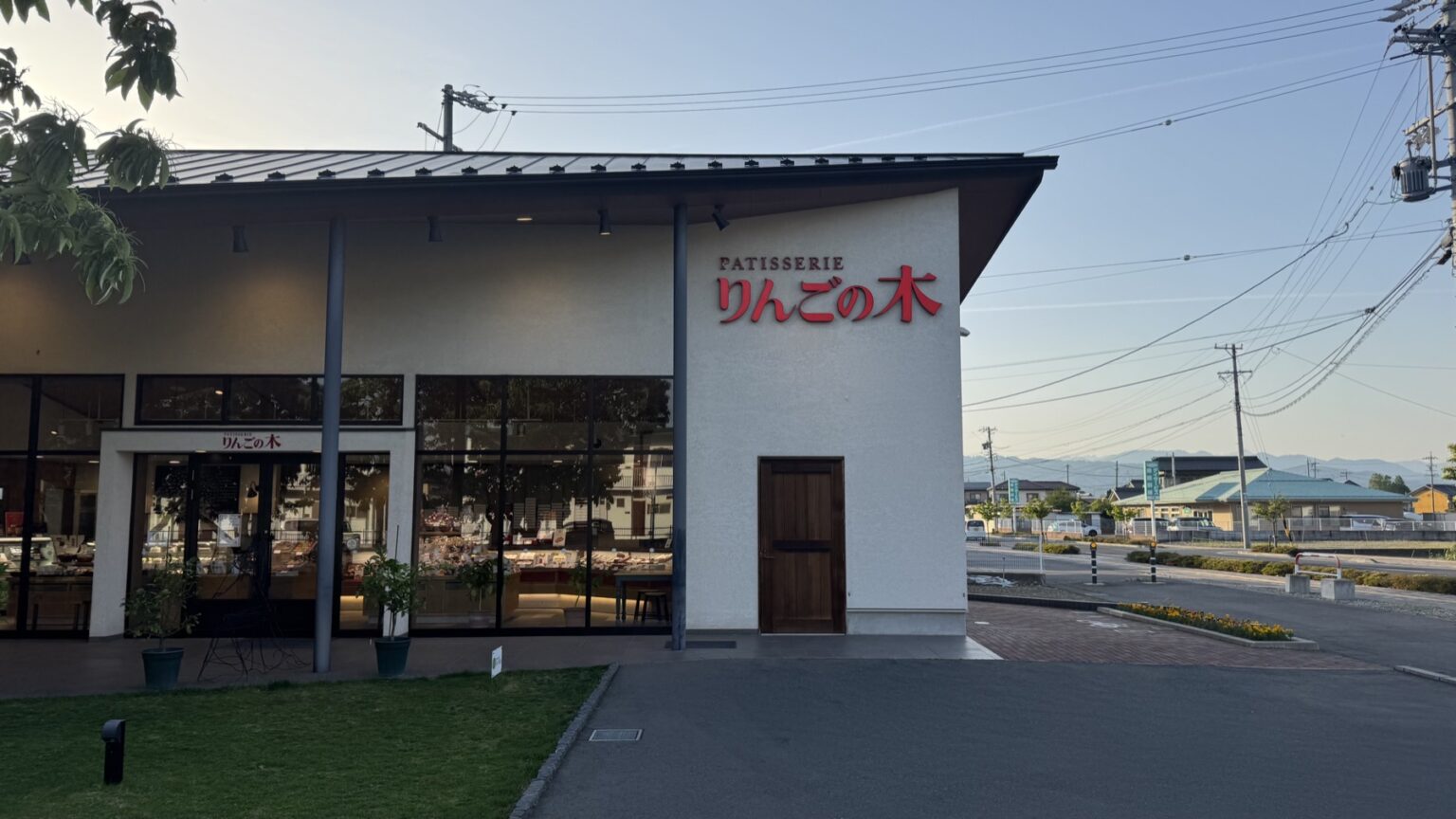
Chikuma, in northern Nagano, is one of Japan’s great apricot towns — the hillsides at Mori and Kurashina hold some of the country’s largest apricot groves, in a prefecture second only to Aomori for the fruit. Patisserie Ringo no Ki turns that local apricot, along with apples from its own orchard, into pies, jellies and baked sweets. I came down off the Obasute rice terraces with a box of apple pies, some apricot jure, and a bag of cookies for the road.
Apricot country
If you only know Nagano for apples, the apricot will surprise you. Around Chikuma, the Mori and Kurashina districts are famous enough to be called the apricot capital of Japan, the trees thick enough that locals talk about a hundred thousand of them flowering at once in early April. The fruit has been grown here since the Edo period, and it turns up in everything — jam, jelly, parfaits. Ringo no Ki leaned into that: in 2013 it started its own “anzu jure” project, planting apricots in its own orchard, including a rare local variety, and building sweets around them.
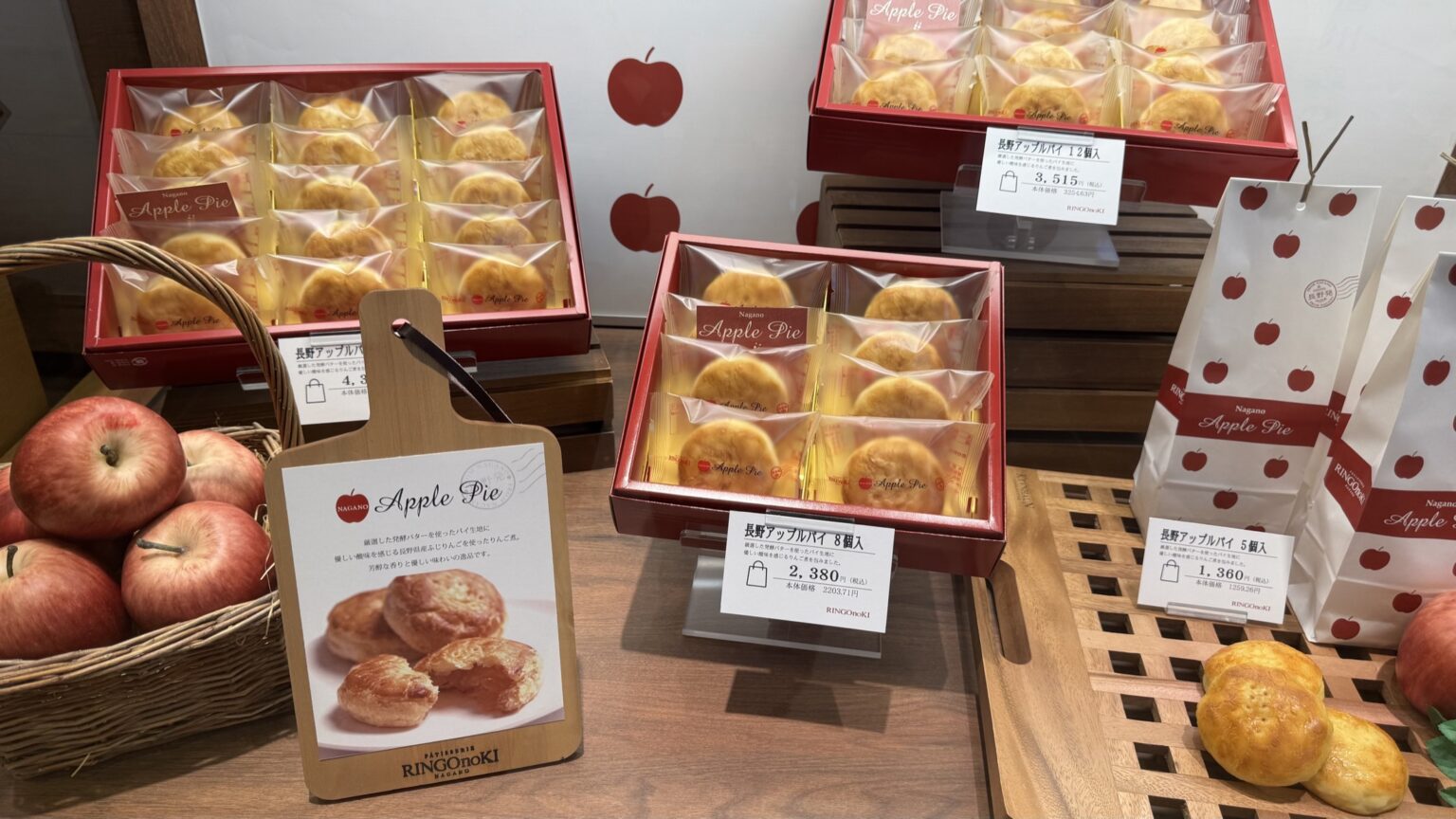
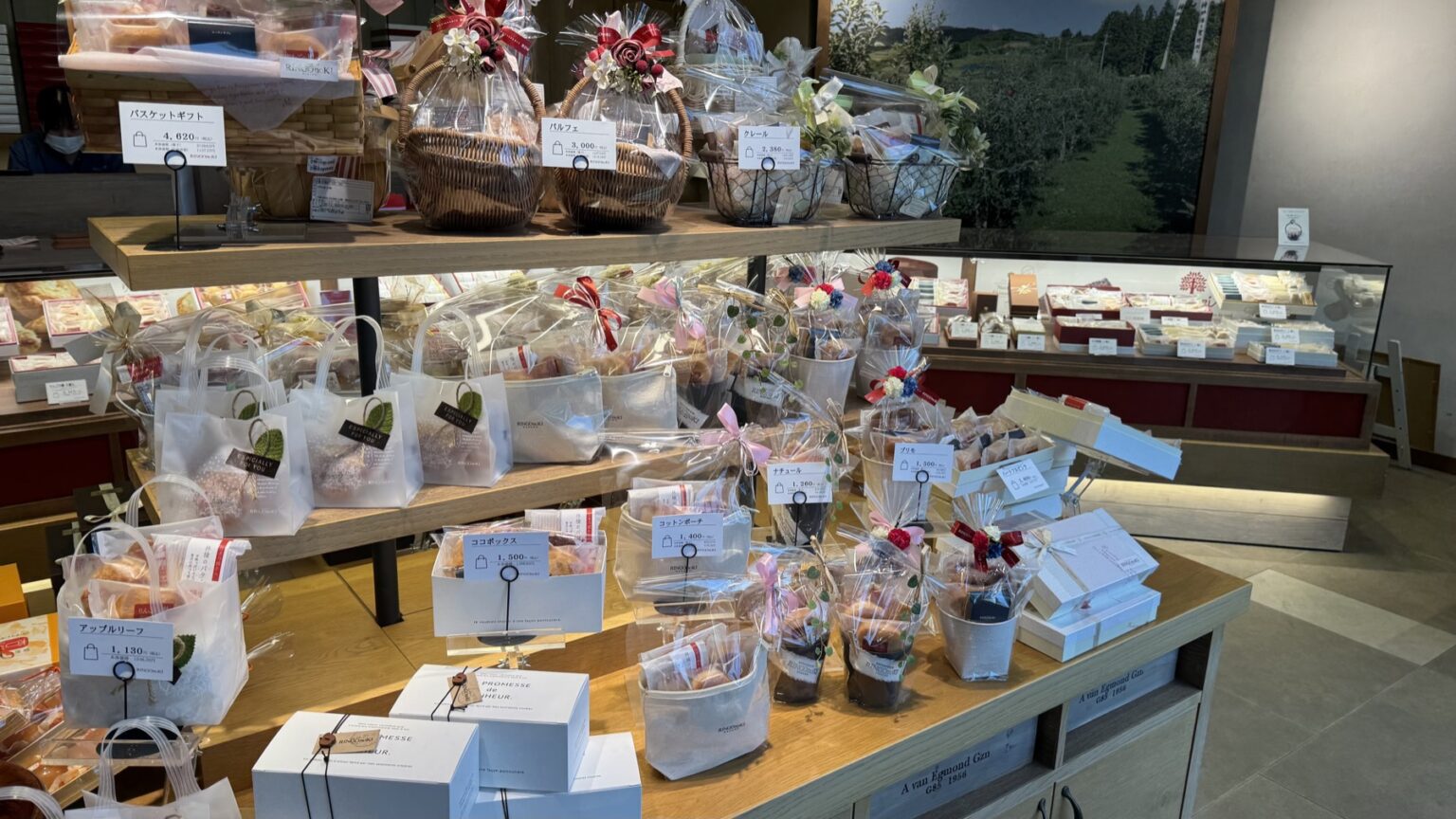
So the case here is half apple, half apricot. I picked up the apple pie, made with the shop’s own-orchard apples and sold as single pies or in gift boxes, and a few of the anzu jure — apricot set into a soft, bright jelly that tastes far more of fruit than of sugar. There’s a wall of wrapped baked sweets too, the kind that survive a day in a bag, which is exactly what you want if you’re touring. If you sit in rather than carry out, the attached café does apricot parfaits and an apple-pie à la mode.
Pair it with the terraces
The reason this shop is in my notes at all is that it sits a short drive from the Obasute rice terraces — the famous flooded hillside above the same city. Come down from the viewpoint, grab pie and jelly here, and you’ve turned a one-stop photo trip into a proper little Chikuma afternoon. If you’re stringing together a longer Nagano trip, Matsumoto Castle and Lake Suwa are both an easy drive on. It’s easiest by car: it’s close to the Koshoku interchange with its own car park, and a little far to walk from the nearest station (Yashiro). The shop opens daily, 9 to 7, closing only on New Year’s Day.
On the map
Good to know
Why apricot in Chikuma?
The Mori and Kurashina districts of Chikuma are one of Japan’s largest apricot-growing areas, in a prefecture (Nagano) that’s the country’s number-two producer. The fruit has been grown here since the Edo period and shows up in jam, jelly and parfaits across town.
What should I buy at Ringo no Ki?
The apple pie, made with apples from the shop’s own orchard, and the anzu jure (apricot jelly). There’s also a big range of wrapped baked sweets that travel well, and an attached café for parfaits and apple-pie à la mode if you eat in.
How do I get there?
It’s easiest by car — close to the Koshoku interchange, with its own parking — and a bit far to walk from the nearest station (Yashiro). It pairs naturally with a visit to the nearby Obasute rice terraces.
When is it open?
Daily from 9:00 to 19:00, closed only on New Year’s Day. Hours can change, so confirm before a special trip.
When do the apricot trees bloom?
The apricot groves at Mori usually flower in early April, a little before the cherry blossoms — a pale, quiet bloom that draws Japanese visitors but very few from overseas.
Can I sit in, or is it takeout only?
Both. Alongside the takeout cases there’s an attached café — Rinkurian — serving apricot parfaits, apple-pie à la mode and a vegetable-heavy lunch, so you can eat in if you’d rather not carry sweets around.
If you’re spending a night in Chikuma to slow down, Club Wyndham Chikumakan, a dog-friendly onsen ryokan with six baths, makes an easy base near the apple-pie cafe.
Join travelers discovering Japan's hidden side
Weekly dispatches from off-the-beaten-path Japan — spots and stories you won't find in guidebooks.
No spam. Unsubscribe anytime.
Welcome aboard!
You're in. See you in your inbox soon.