
Kyoto · Forests & hiking
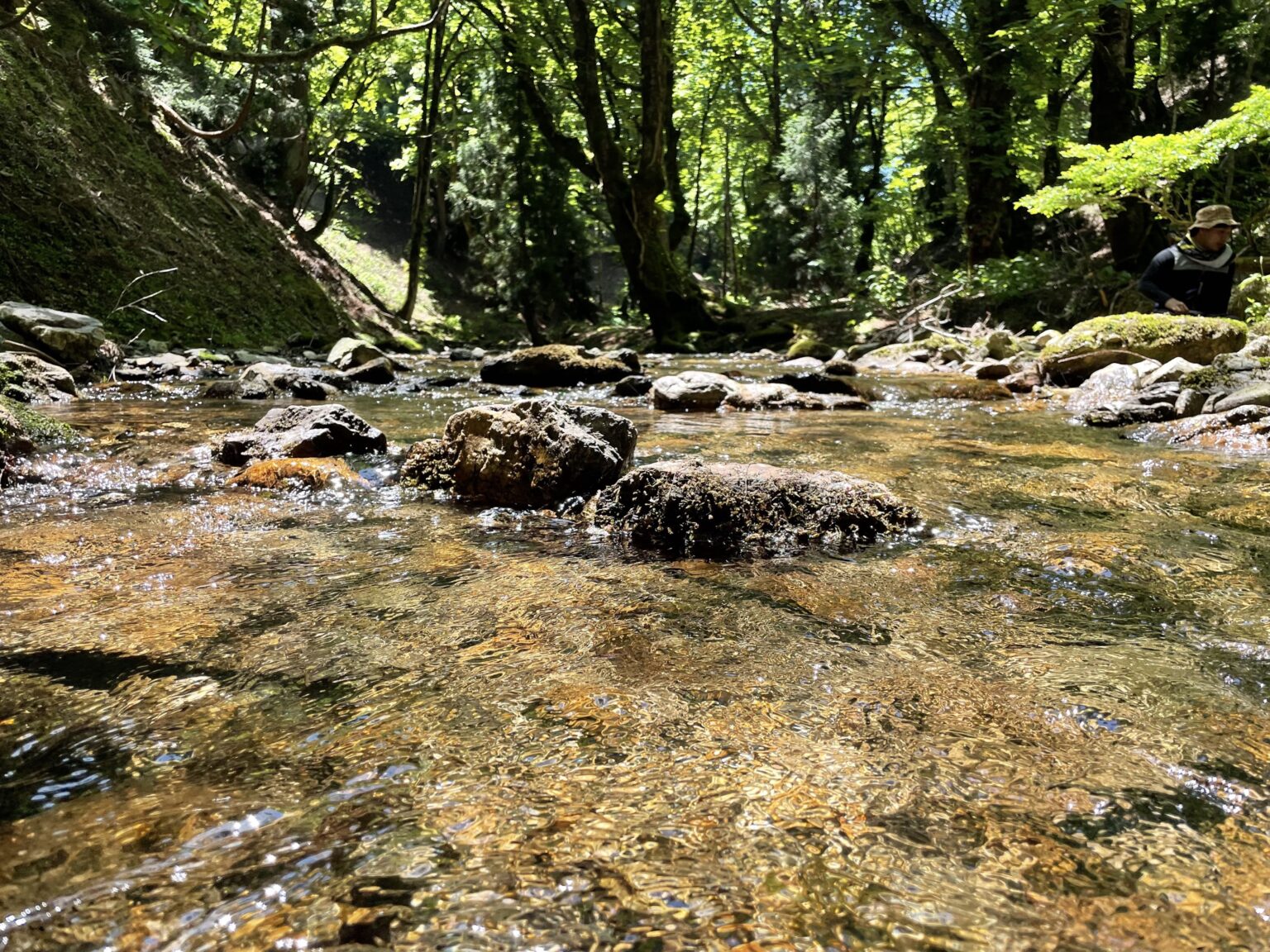
Ashiu is one of western Japan’s last great primeval forests — a cool-temperate woodland at the source of the 146-kilometre Yura River — and you can only walk into it on a guided tour with a Kyoto University-certified group, from about ¥11,000 per person, with tours running mostly between April and November.
I’ve hiked a lot of Japanese mountains, and almost all of them you can just turn up and climb. Ashiu is different. It’s a research forest run by Kyoto University, two hours north of the city in the Tamba highlands, and the gate is closed to anyone without a certified guide. That sounds like a hassle until you’re standing in it: trees that have never been cut, a stream you can drink from, an old timber railway disappearing into the green, and a guide who can tell you the name of every plant on a numbered tag. This is how to actually visit — the rules, the route I walked, what to pack, and the leeches nobody warns you about.
What Ashiu is · Why you can only go with a guide · The route I walked · The old forest railway · When to go (and the leeches) · How to get there · What to pack · Where to stay · For readers from Southeast Asia · FAQ
What Ashiu actually is
Ashiu (芦生) is a primeval forest at the headwaters of the Yura River, in the Tamba highlands of northern Kyoto Prefecture. It’s one of the largest natural cool-temperate forests left in western Japan, and since 1921 it has been a research forest of Kyoto University — which is exactly why it survived. While the hills around it were logged, this valley was studied and left mostly alone, so you get old beech, giant katsura and horse-chestnut, and an understorey that hasn’t been tidied for human visitors. In 2016 the wider area was designated the Kyoto Tamba Kogen Quasi-National Park.
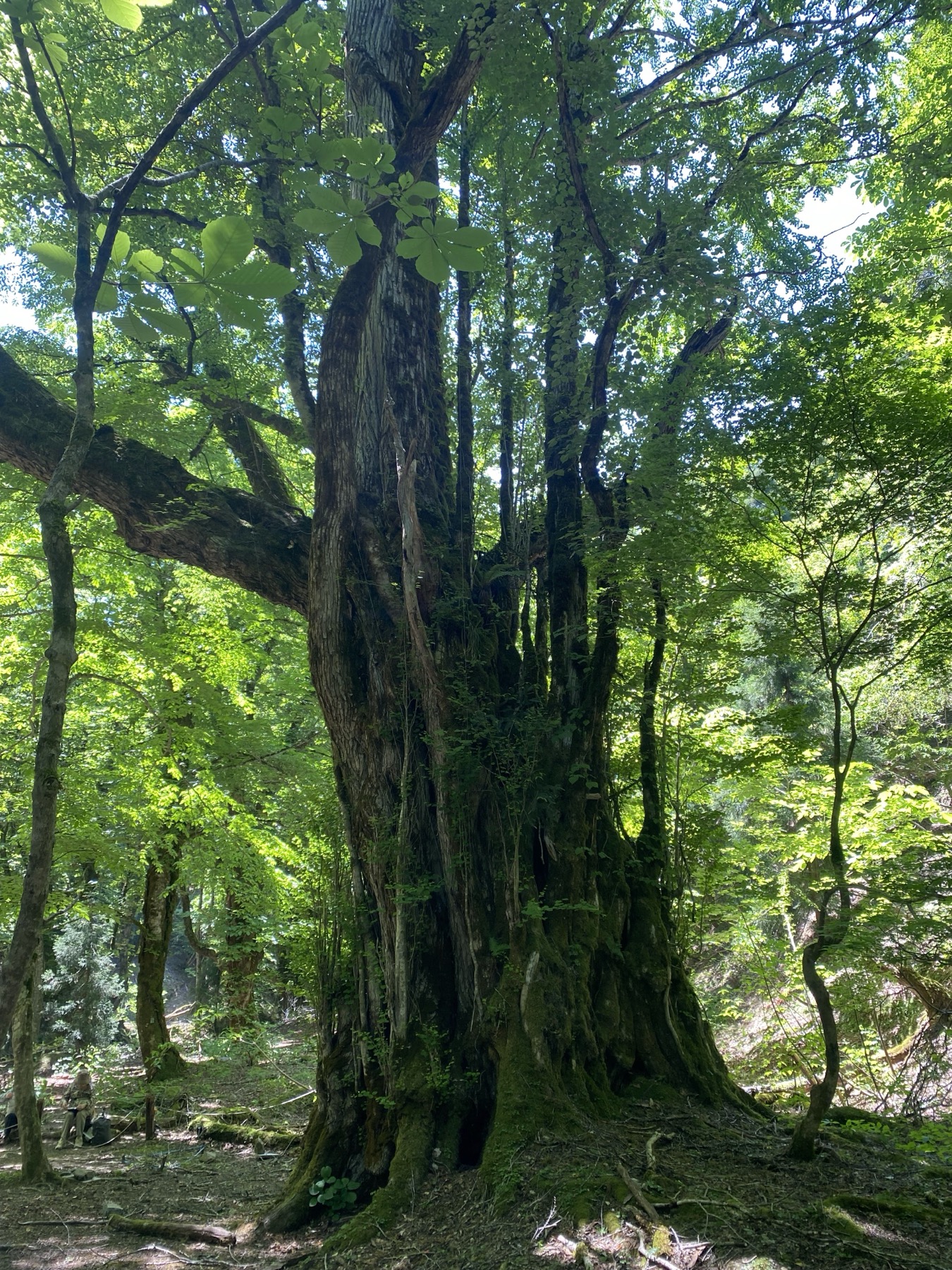
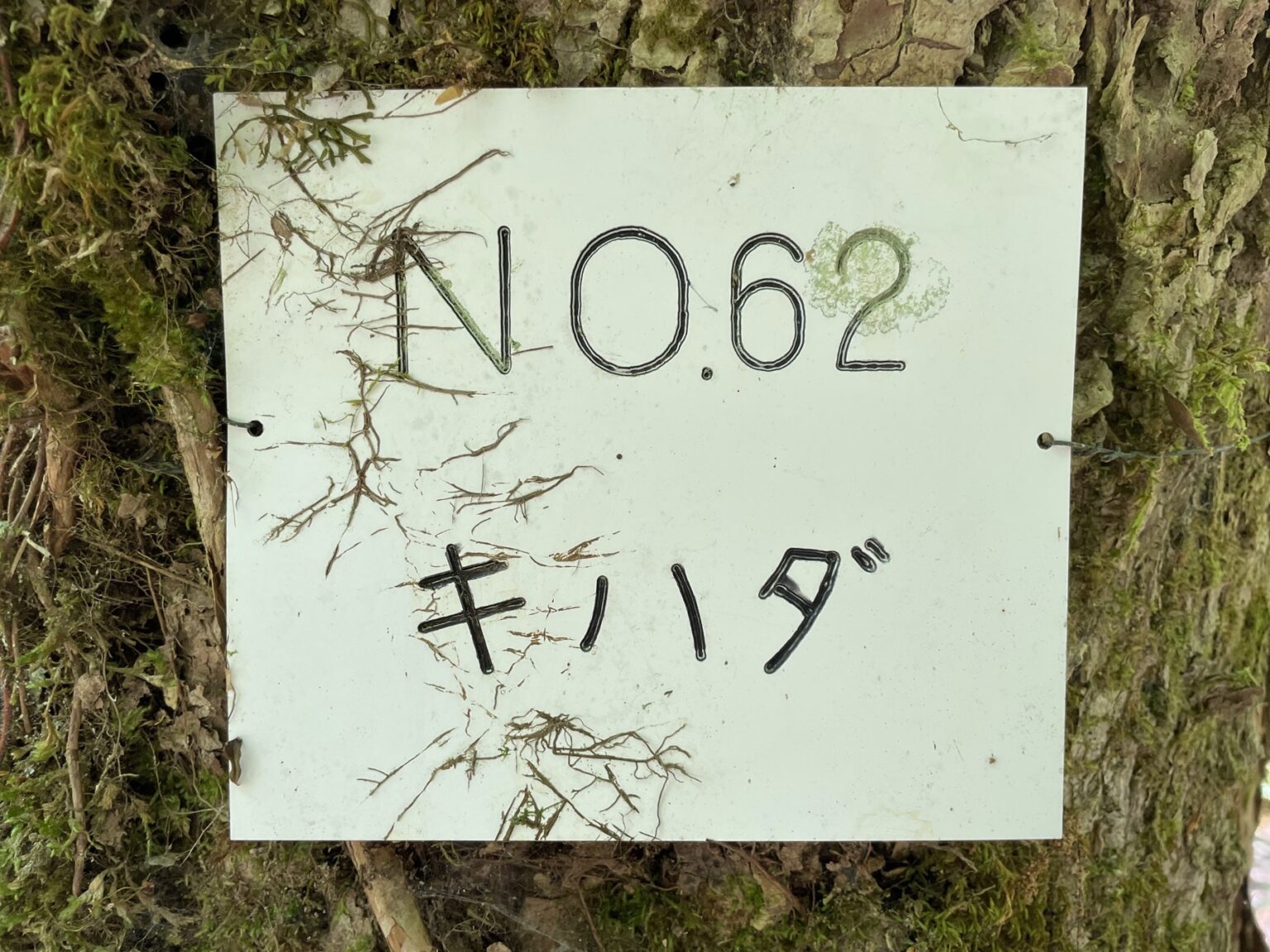
It is also, quietly, a working scientific site. Trees carry little numbered survey tags, plots are marked, and your guide reads the forest like a catalogue — this one’s a kihada, that hollow is where a bear sleeps. It’s the opposite of a manicured garden, and that’s the whole appeal.
Why you can only go with a guide
Because it’s a research forest, not a park — entry is restricted, and the only legitimate way in for a visitor is a tour run by one of four guide organisations certified by Kyoto University. You cannot drive in, park, and wander; there’s no casual day-ticket. You book a tour, the guide handles the entry permit, and you go in as a small group.
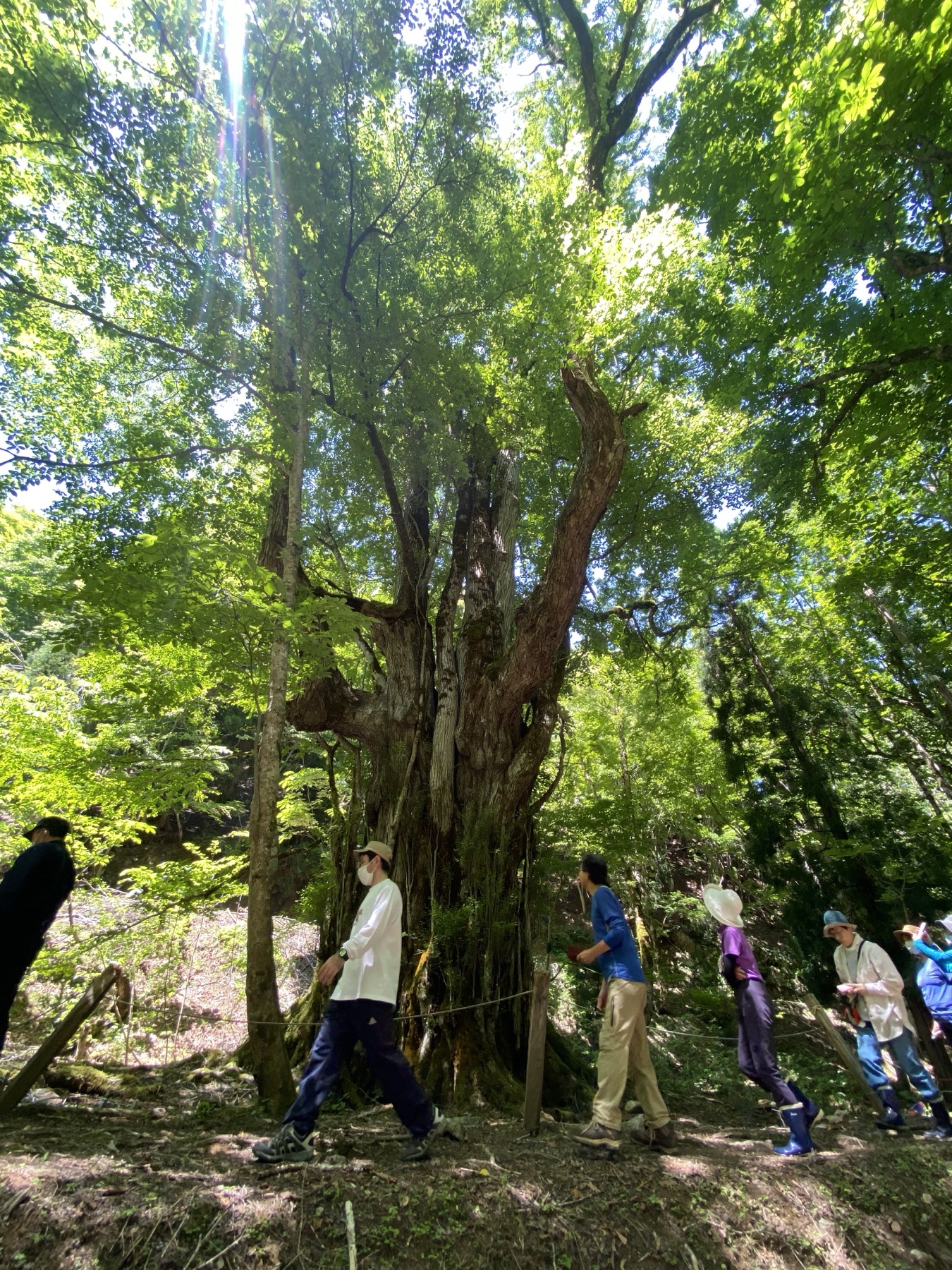
It’s worth doing properly rather than resenting it. The certified groups — among them the Ashiu Moribito Association, Ashiu Yama-no-ie, and the Miyama Nature & Culture Village (Kajika-sō) — run regular and custom treks, usually with lunch, from roughly ¥11,000 per person for a shorter group trek up to about ¥25,000 for a full-day tour, depending on the operator, length, and group size. Book ahead: popular dates in the fresh-green and autumn seasons fill early, and some run a booking window that closes well before the day.
The route I walked: Shimodani & Bunanoki Pass
I did the Shimodani–Bunanoki Pass course (下谷・ブナノキ峠), a roughly three-to-four-hour loop that’s a good middle option — real forest, real climbing, but not a full day on your feet. It threads two of the things Ashiu is famous for: the beech ridge up at the pass, and the giant trees down in the Shimodani valley.
Bunanoki Pass (939 m)
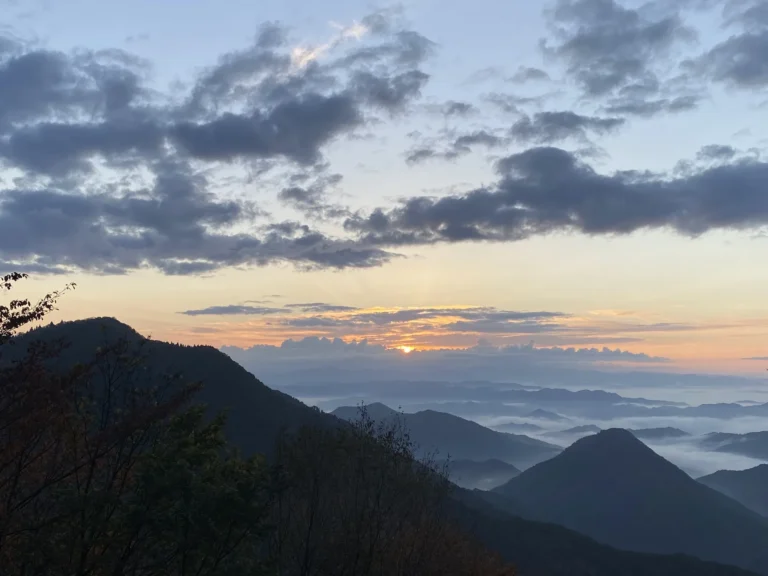
“Beech-tree pass.” A ridge of old beech and water-oak; on a clear day the view reaches all the way to the Sea of Japan.
Shimodani valley
The gentler, lower half — protected katsura trees and enormous old horse-chestnuts (tochi), with the stream never far away.
The water
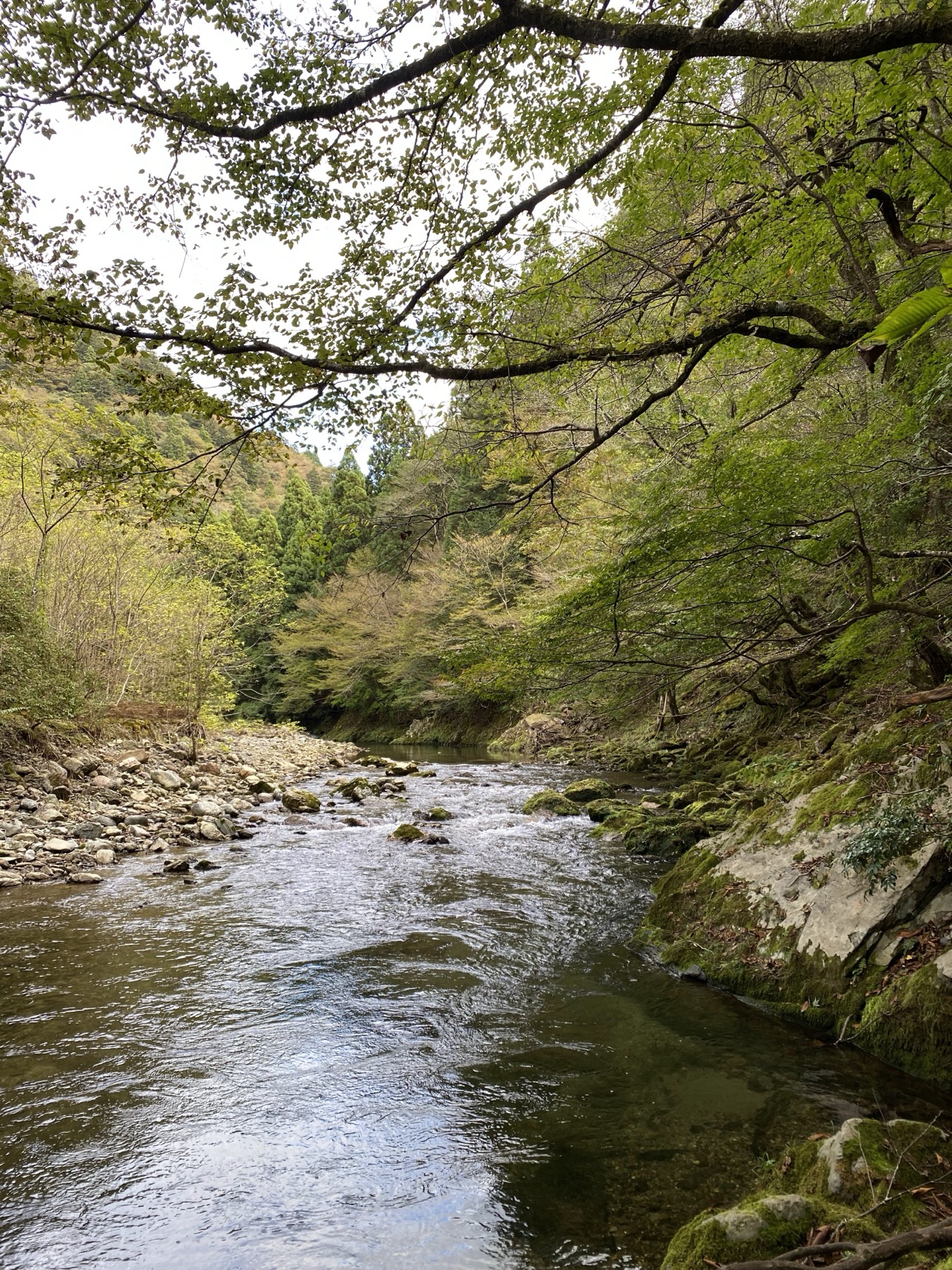
The streams here are the literal first trickle of the Yura River. The water is astonishingly clear, and the sound of it follows you most of the walk.
The pace
It’s a nature walk, not a peak-bag. You stop a lot — for a plant, a salamander, a tree the guide wants you to touch. Three to four hours passes slowly, in a good way.
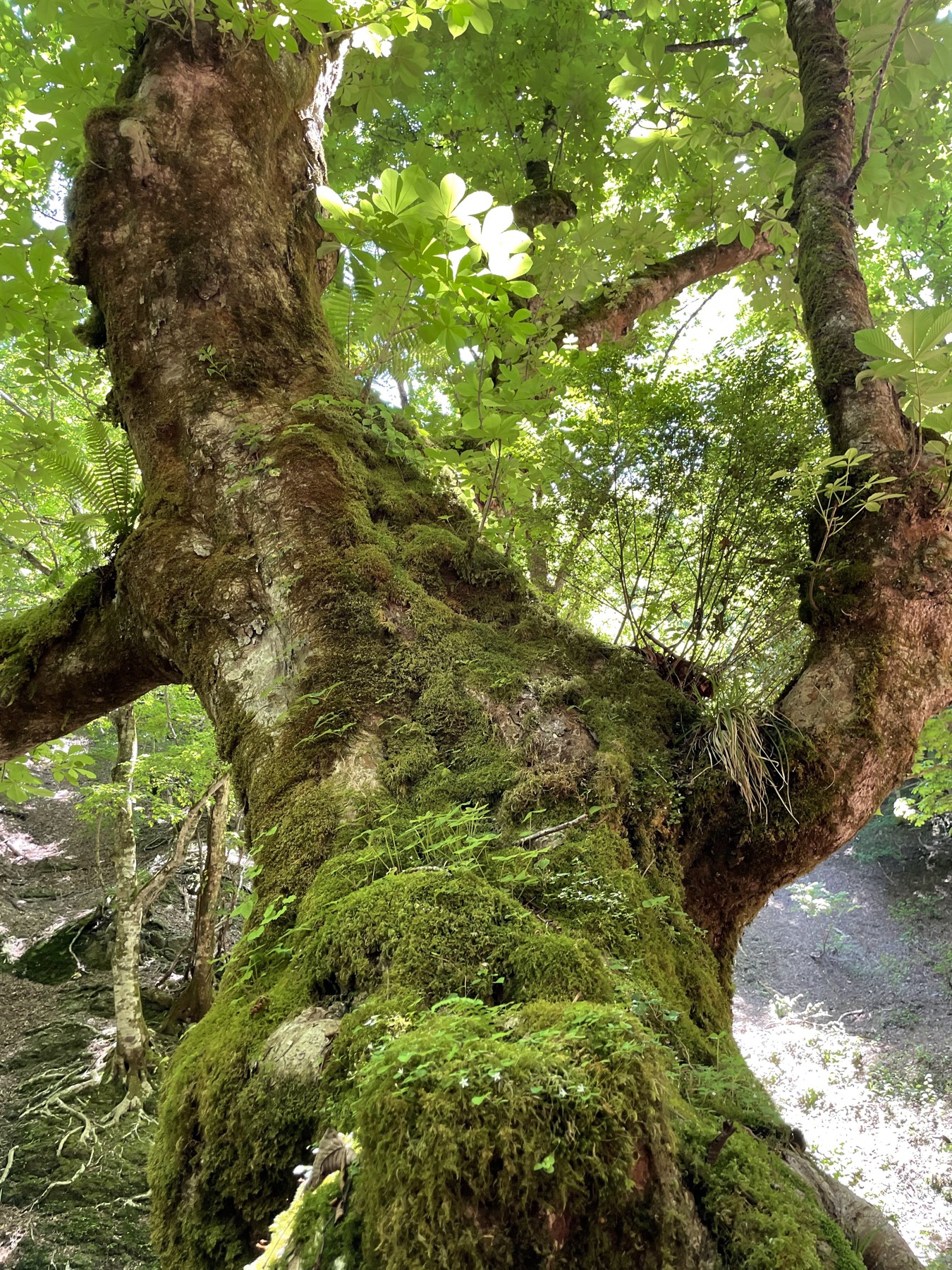
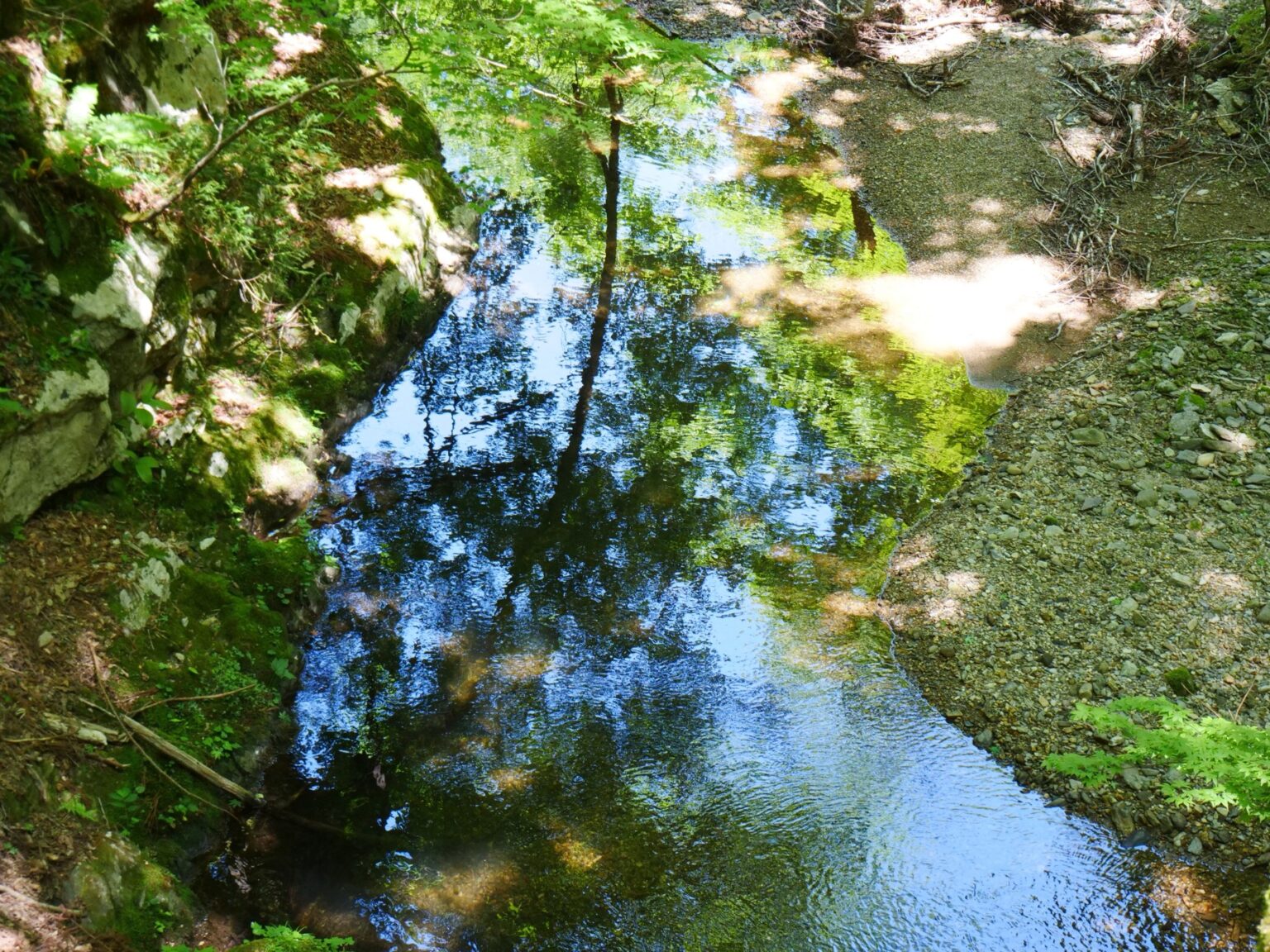
There are longer courses too — the full Bunanoki Pass route combined with the Yura source can run closer to 7 km and six hours, including the minibus transfer in — and gentler ones that stay low in Shimodani. Tell the guide org what you’re up for.
The old forest railway
One of the strangest, best things in Ashiu is the narrow-gauge railway. It was laid to haul timber and supplies out of the forest, and stretches of the track and its little carts are still here, rusting quietly into the moss. Part of the walk in follows the old rail bed along the river, and it gives the place an oddly tender, abandoned feeling — a reminder that even a forest this wild has a human history.
When to go — and the leeches
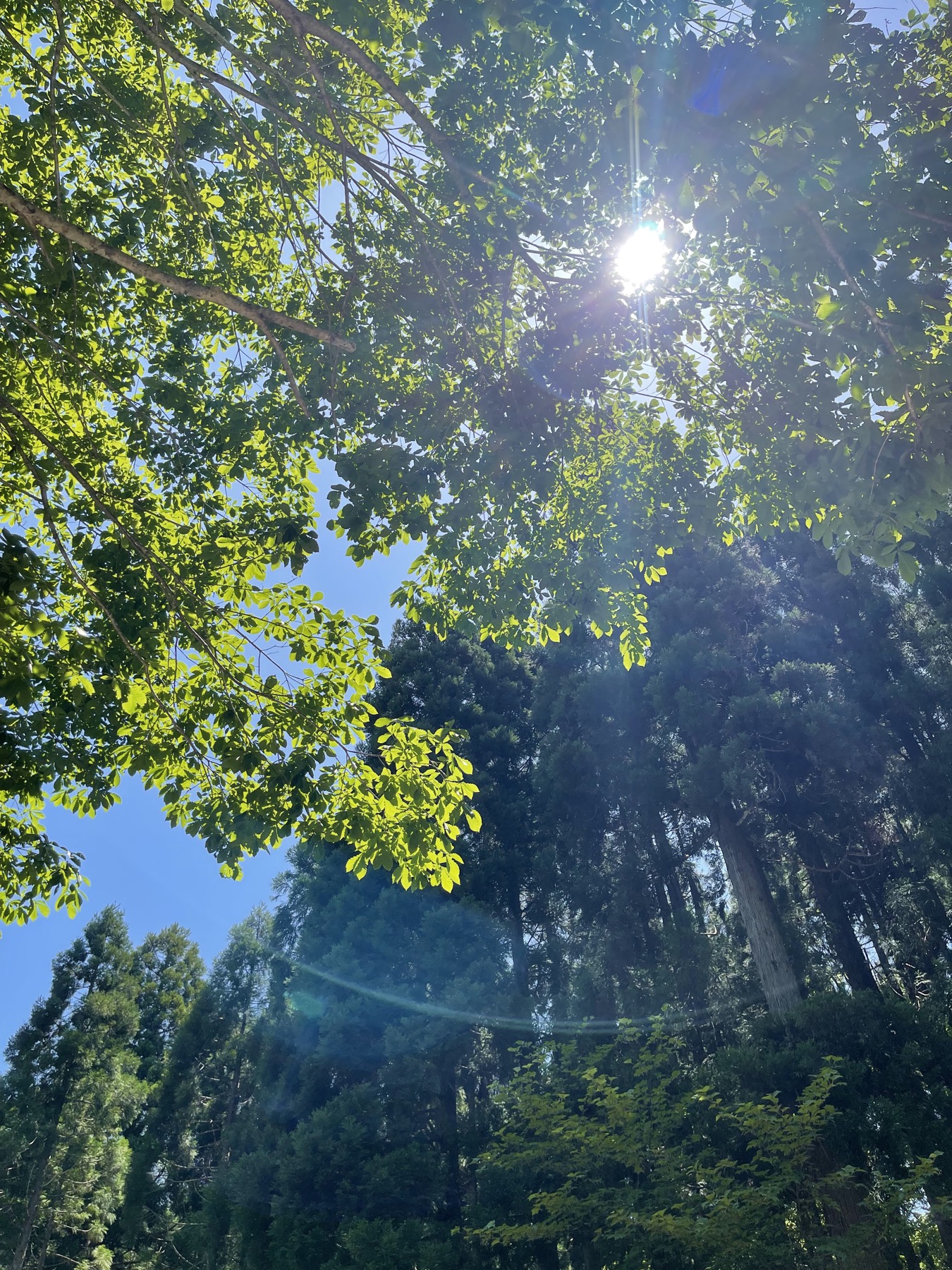
Tours run from March to December, and there are two headline seasons: fresh green in May–June, when the new leaves almost glow, and autumn colour in late October–November, when the beech and maple turn. I went in summer, which is lush and quiet and a little wild — and which brings the one thing you should plan for.
How to get there
Ashiu sits above the village of Miyama, in Nantan City, in the far north of Kyoto Prefecture. The honest answer is that you want a car: public transport into this part of the Tamba highlands is sparse and slow, and most guide tours meet at a trailhead or lodge you can’t easily reach by bus.
- By car: roughly 1.5–2 hours from Kyoto city, via Route 162 (the Shūzan Kaidō) and Miyama. Your guide org confirms the exact meeting point.
- Without a car: some tours arrange pickups, or you can bus to Miyama and coordinate with the guide — ask when you book. It’s doable, but it’s the hard way.
- The Ashiu Road Park on the approach is a handy roadside stop to regroup before the forest.
If you’re building a rural-Kyoto trip around it, Ashiu pairs naturally with other quiet corners north and west of the city — see our guides to Kameoka and the Ine boat houses on the Sea of Japan coast that this very river runs toward.
What to pack
This is a real forest walk on uneven, often wet ground — not a stroll. The guide supplies the local knowledge; you supply the kit. Here’s what I’d bring, all on Amazon Japan so you can have it sent to your Kyoto hotel before you head north.
Trekking poles
The valley ground is uneven and the descents are slick with moss and leaf litter. Poles save your knees.
Gaiters
Keep mud, water and — in summer — leeches out of your boots. The single most useful thing to add for a warm-season trek.
Insect & leech repellent
For the warm months. Treat socks and boots; reapply after stream crossings.
Rain shell
Mountain weather turns fast, and the forest is wet even when it isn’t raining. A packable shell, not an umbrella.
Daypack
Room for water, a layer, lunch and a camera. Keep your hands free for the rough bits.
Dry bag
For your phone and camera at the stream crossings — and there are stream crossings.
Some links above go to Amazon.co.jp through our affiliate tag; buying through them supports the site at no extra cost to you.
Where to stay
The smart move is to stay a night in Miyama or the wider Nantan area so you’re not driving two hours before a morning tour. Miyama is lovely in its own right — it’s the village of thatched-roof farmhouses — and rural Kyoto inns are exactly where Rakuten Travel’s inventory beats the big international sites.
Find a base near Ashiu
Rakuten Travel has the best coverage of small inns and lodges around Miyama and Nantan. Booking is useful if you’d rather base in Kyoto city and drive up for the day.
No car? You’ll want one for this corner of Kyoto — compare rental cars or look at Rakuten’s rental option for a day up north.
For readers from Southeast Asia
If you’ve done Kyoto’s temples and want the complete opposite — cool, green, empty — Ashiu is the antidote, though it takes a little planning from Singapore, Bangkok, KL or Jakarta.
A true escape from the heat
Even in summer the forest sits cool and shaded, a world away from a 31°C city. Spring and autumn are around 12–20°C up here, so bring a layer even in warm months.
You’ll need to drive — or arrange a pickup
An international driving permit and a rental car make this easy; without one, ask the guide org about pickups when you book. Either way, book the tour well ahead.
Book the guide early, in English where you can
Some certified groups can handle English by arrangement; confirm language, price and what’s included by email before you commit. It’s the one genuinely off-the-beaten-path day in this guide.
Frequently asked questions
Can I visit Ashiu forest without a guide?
No. Ashiu is a Kyoto University research forest with restricted entry, and the only legitimate way in for visitors is a tour with one of four certified guide organisations. There’s no casual day-ticket and you can’t drive in and wander on your own.
How much does an Ashiu guided tour cost?
Roughly ¥11,000 to ¥25,000 per person depending on the operator, course length, and group size, usually with lunch included. Tours run about three to six hours. Confirm the current price and what’s included with the guide organisation when you book.
When is the best time to go?
Tours run March to December. The two standout seasons are fresh green in May–June and autumn colour in late October–November. Summer is lush and quiet but brings land leeches, so prepare for those if you go in the warm months.
Are there really leeches?
Yes, from roughly June into September, especially after rain. They’re harmless but a nuisance. Wear gaiters, tuck trousers into socks, treat your boots and socks with repellent, and check your ankles at breaks. Guides carry salt or spray.
How hard is the trekking?
It depends on the course. Mine — Shimodani and Bunanoki Pass — was a moderate three-to-four-hour walk with some climbing on uneven, sometimes wet ground. There are gentler valley courses and longer, harder ones; tell the guide your experience so they match you to the right one.
How do I get to Ashiu?
It’s above Miyama in Nantan City, far north of Kyoto city — about 1.5–2 hours by car via Route 162. Public transport is very limited, so a rental car is the practical option; some tours can arrange pickups if you ask when booking.
What is the Yura River source?
Ashiu sits at the headwaters of the Yura River, which runs about 146 kilometres north to the Sea of Japan. The clear streams you cross on the walk are quite literally the river’s first water.
Is it suitable for children or beginners?
Gentler valley courses can suit fit families and beginners, but it’s a real forest walk on rough ground, not a paved trail. Discuss ages and fitness with the guide organisation when you book so they put you on an appropriate course.
Ashiu is the rare place in Japan that you have to earn a little — book ahead, drive up, hand yourself over to a guide. What you get back is a forest the way it was before any of the temples in Kyoto were built: uncut, unhurried, and almost entirely your group’s for the morning. Go in fresh green or autumn if you can, pack for leeches if you can’t, and drink from the river while you’re there.
Join travelers discovering Japan's hidden side
Weekly dispatches from off-the-beaten-path Japan — spots and stories you won't find in guidebooks.
No spam. Unsubscribe anytime.
Welcome aboard!
You're in. See you in your inbox soon.
![A Night at Hoshinoya Kyoto: Boat Ride, Kaiseki & River Views [Stay Review]](https://hiddenjapan-gems.com/wp-content/uploads/2026/04/IMG_4741-768x432.webp)