
Japan · Toyama · Nanto
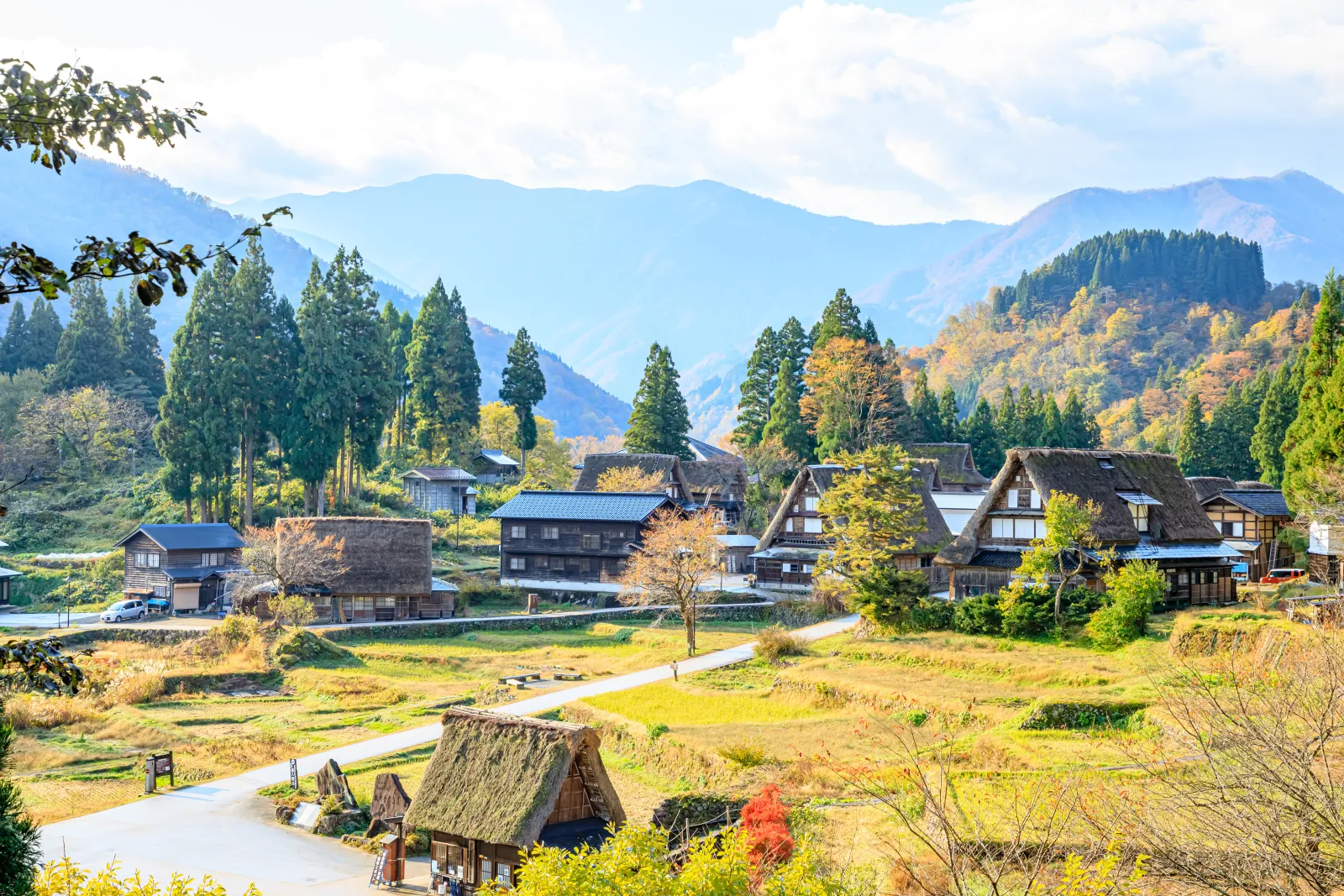
Gokayama, in Nanto City, Toyama, is home to Ainokura and Suganuma, the two Toyama villages in the Shirakawa-go and Gokayama World Heritage site. Their gassho-style houses have steep thatched roofs. On the World Heritage Bus, the 8:25 from Shin-Takaoka reaches the Ainokura-guchi stop at 9:28 for ¥1,100, and the village is a 5-minute walk from there. In autumn the colour usually reaches the villages in early November, and it is mostly yellow and orange, with few maples.
This guide covers both villages, the rules that come with visiting a place where people still live, why the houses are built the way they are, the bus, the farmhouse inns, and the Shogawa Gorge boat to an inn you can only reach by water. The last section covers other autumn places in Toyama.
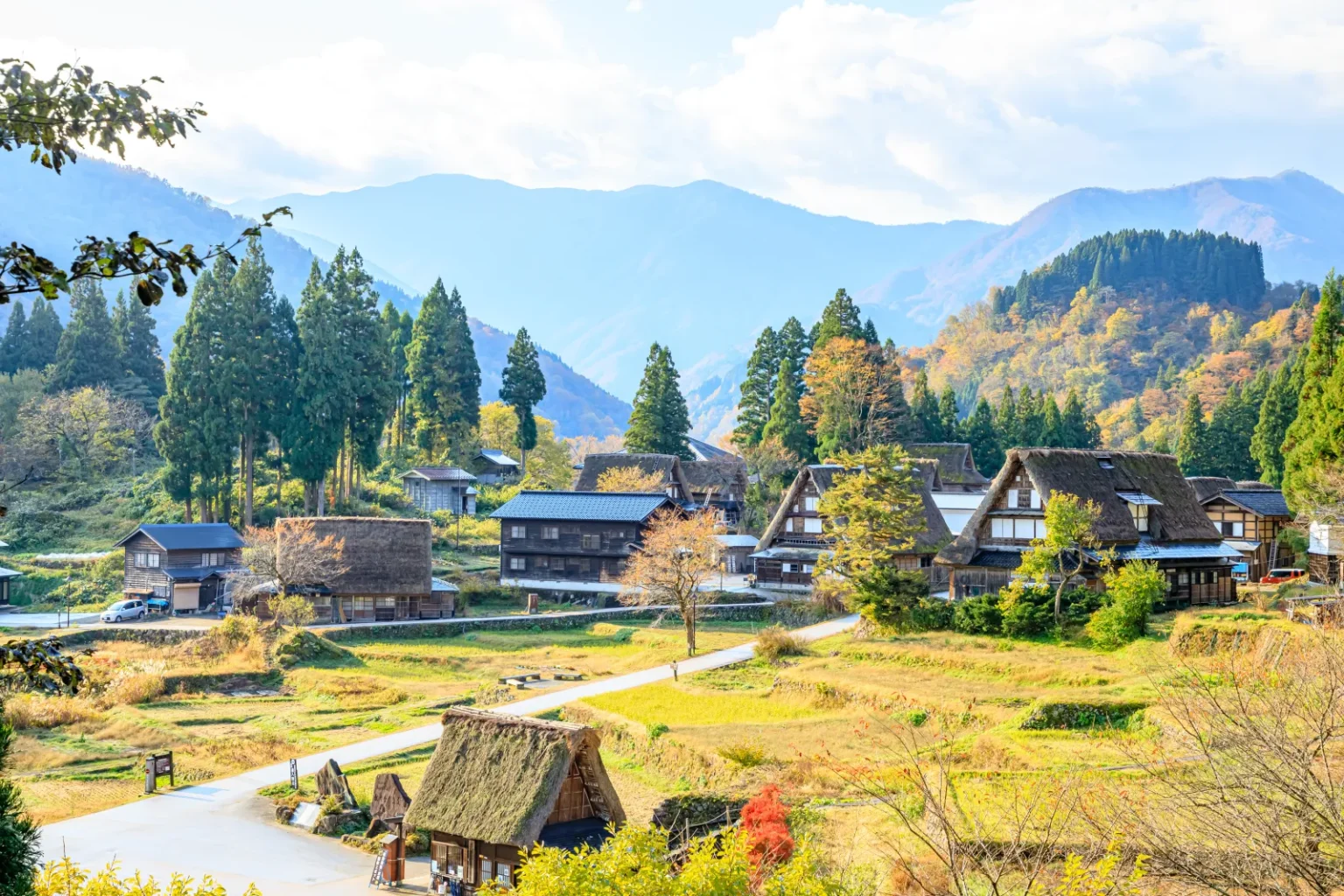
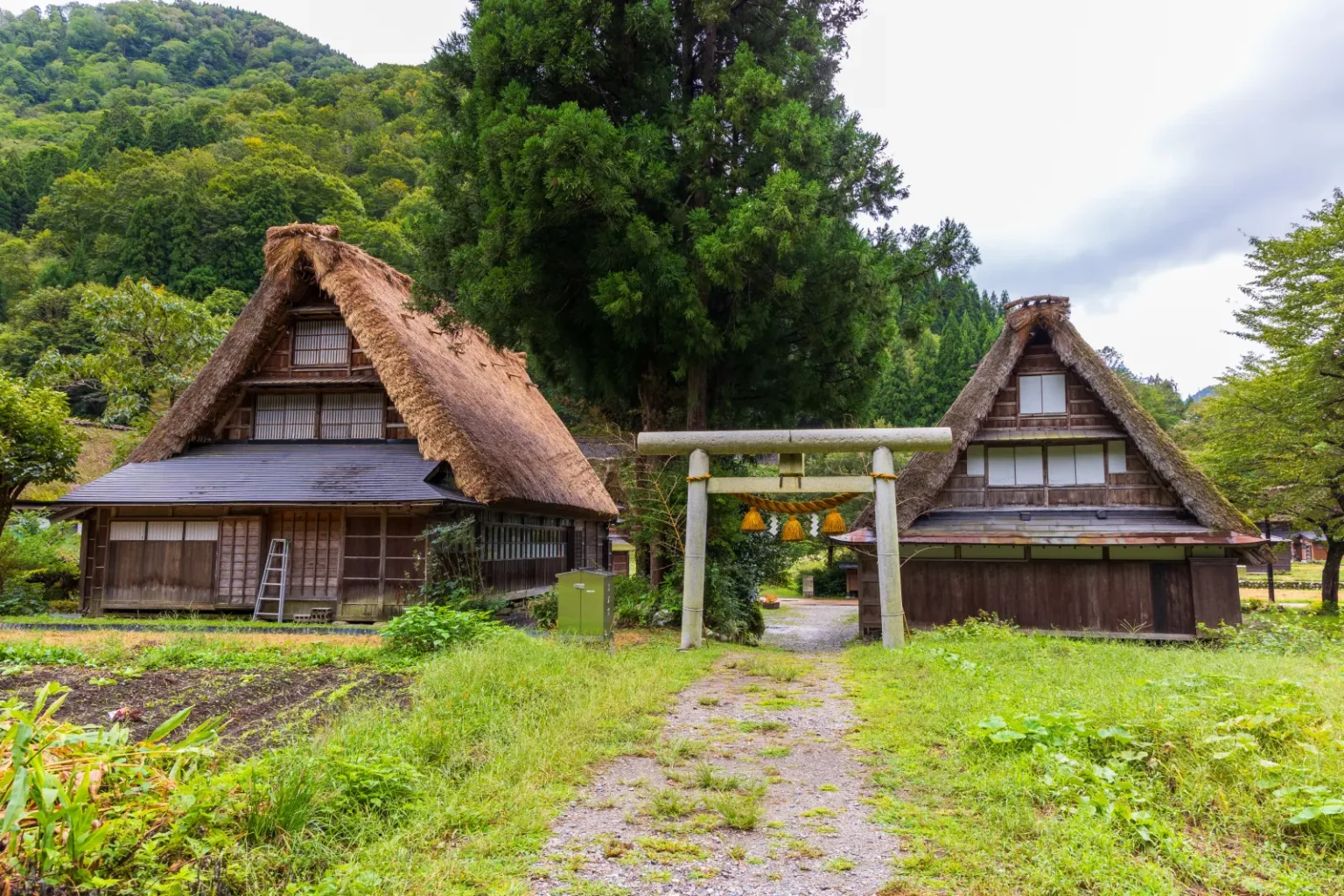
Ainokura: 20 gassho houses, and the visitor rules
Ainokura, Suganuma and Ogimachi in Shirakawa-go were inscribed on the World Heritage list in December 1995 as the Historic Villages of Shirakawa-gō and Gokayama. Nanto City says Ainokura and Suganuma have been protected as national Historic Sites since 1970.
A description written by Nanto City for the Agency for Cultural Affairs puts it at about 30 households on a single terrace, with 20 gassho-style buildings and about 80 residents.
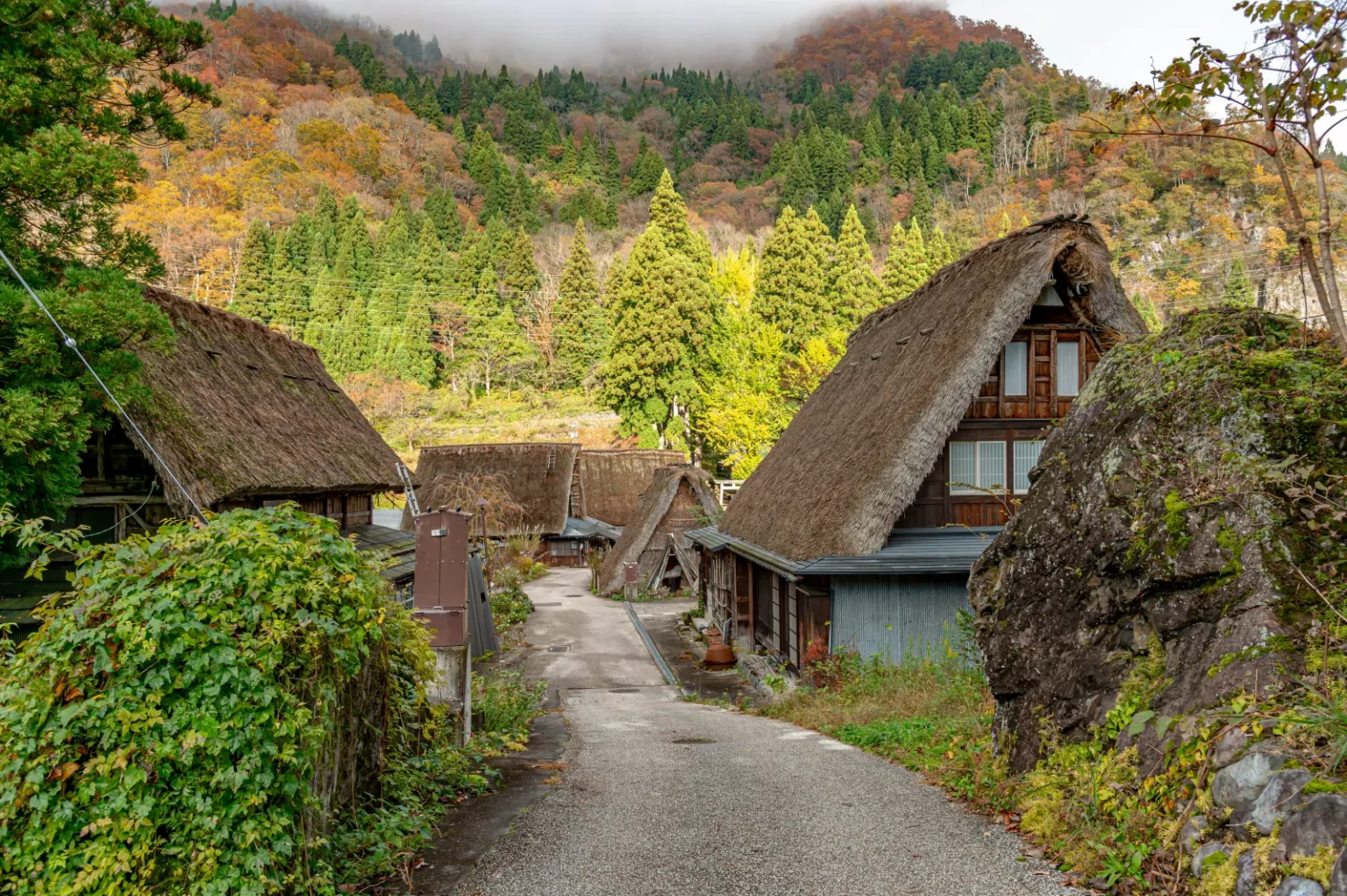
The village is open 8:30–17:00 every day. Ordinary cars and kei cars pay a ¥1,000 preservation contribution to park, and motorbikes ¥300.
The rules are on the tourist office’s page for visitors. Do not go onto fields, under the eaves of houses or onto any private land. Do not visit or walk around the village after dark or early in the morning. Smoking is only allowed in designated places, you cannot pick plants, residents’ cars use the lanes so give way, and do not take photos in a way that blocks the road. Take your rubbish home. I could not find an explicit drone rule from the tourist office or Nanto City. That does not mean flying one is allowed; contact the tourist office or Nanto City before you fly.
The viewpoint. The tourist office says the viewpoint for a photo of the whole village is a 5–6 minute walk along the terraced fields from the start of the path at the village car park. I could not confirm whether the path is open in snow.
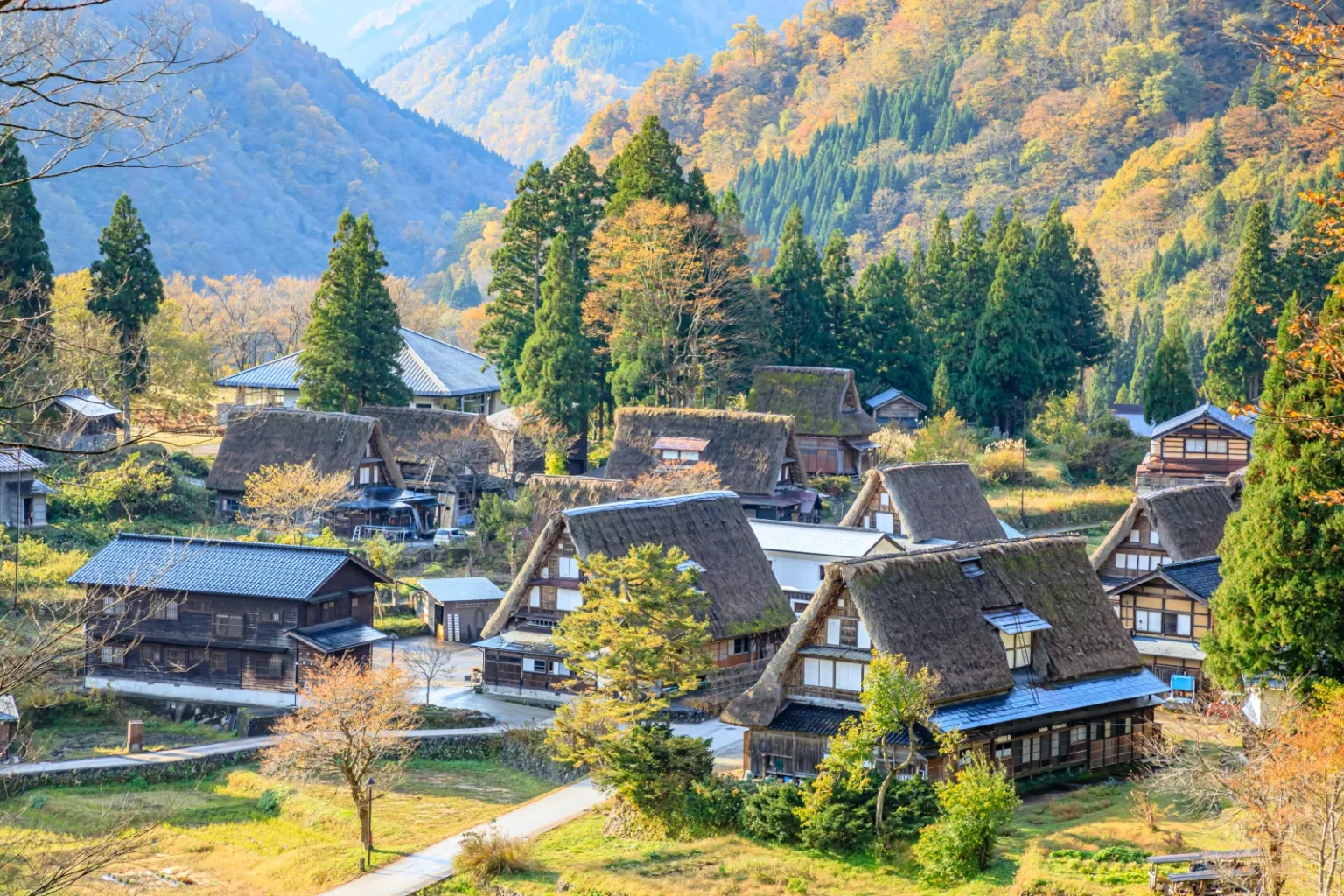
Museums. The Ainokura Traditional Industry Museum is open 8:30–17:00, at ¥300 for adults and ¥150 for primary and junior-high pupils. The Ainokura Folk Museum is closed for the time being, so the joint ticket price on its page does not apply.
Why the houses look like this: silkworms, paper and gunpowder
The steep roofs are usually explained by snow, and that is part of it. Nanto City’s heritage plan gives the rest. The plan says gassho houses are thought to have developed from three needs: silkworm-raising used the space under the roof; enshō (saltpetre, a raw material for gunpowder) was made in pits dug under the floor, which needed a large floor area; and heavy snow called for a steep roof.
Another Nanto City plan explains why those trades mattered. Gokayama produced almost no rice, so families paid their taxes to the Kaga domain with income from silkworm-raising, papermaking, saltpetre and making straw raincoats. The saltpetre was made by digging a pit under the house and filling it with soil, grass and silkworm droppings. Toyama Prefecture sums up the house as silkworm-raising in the big attic, papermaking in the earth-floored work area, and saltpetre-making under the floor.
The houses also supply the bamboo for Gokayama’s folk song. The tourist office says Kokiriko, passed down mainly in Kaminashi, is “said to be” Japan’s oldest folk song and has roots in dengaku. The kokiriko clappers are made from soot-darkened bamboo taken from the ceilings of gassho houses and cut to seven sun five bu.
Nanto City also notes that some Gokayama villages, such as Soyama and Tamukai, were places of exile for the Kaga domain from 1690 until the end of the Edo period. That applied to those villages, not to all of Gokayama.
Suganuma: nine gassho houses
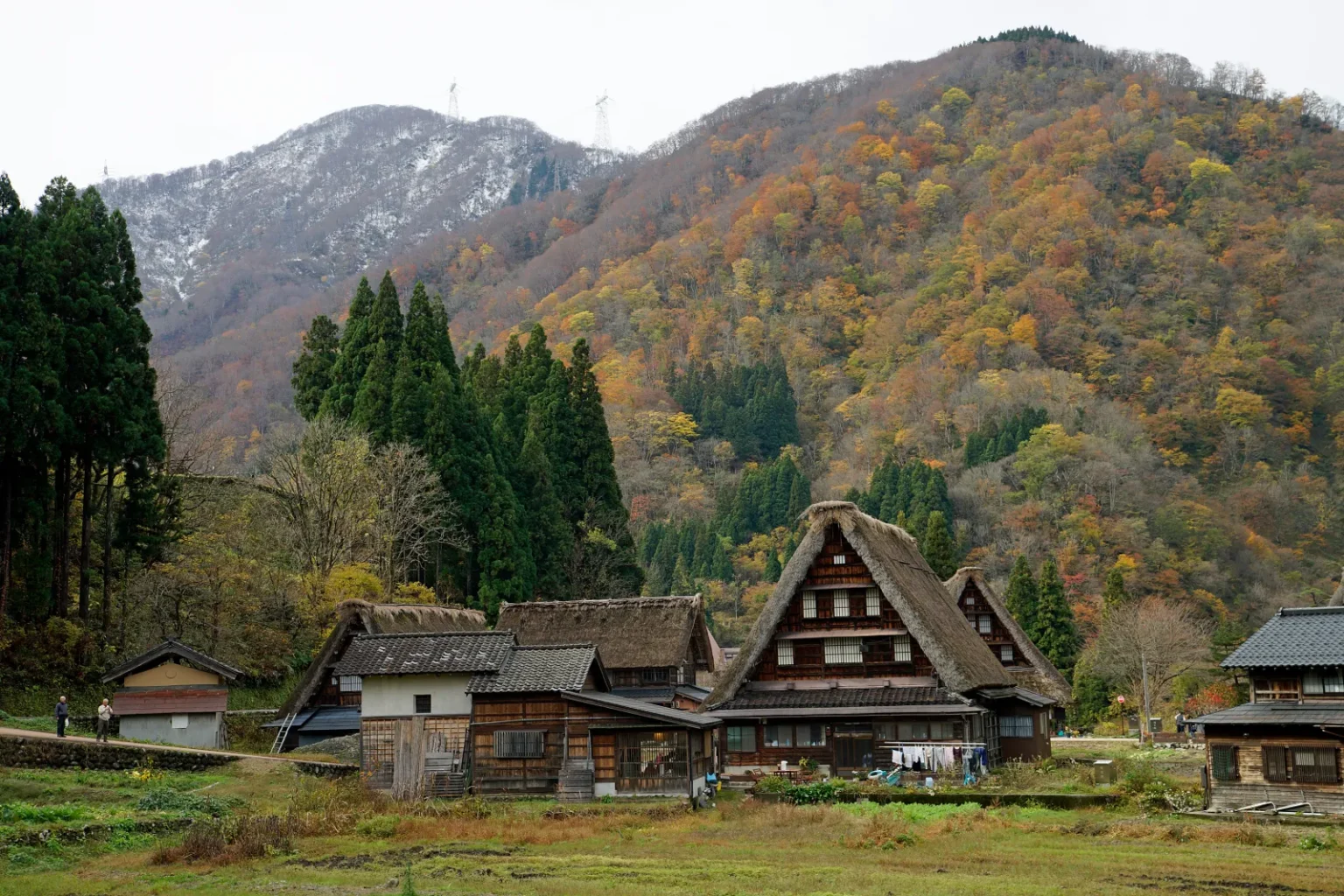
Suganuma has nine gassho houses, according to the tourist office. The preservation association gives its hours as 8:00–17:00 from April to November and 9:00–17:00 from December to March. Cars must enter the car park by 16:00.
Of its two museums, the Gokayama Folk Museum is open. The Enshō no Yakata, the saltpetre museum, has been closed for repairs since 31 July 2026, so you pay the single-museum fee, not the ¥400 joint ticket listed on its page.
Gokayama in autumn, and the winter light-ups
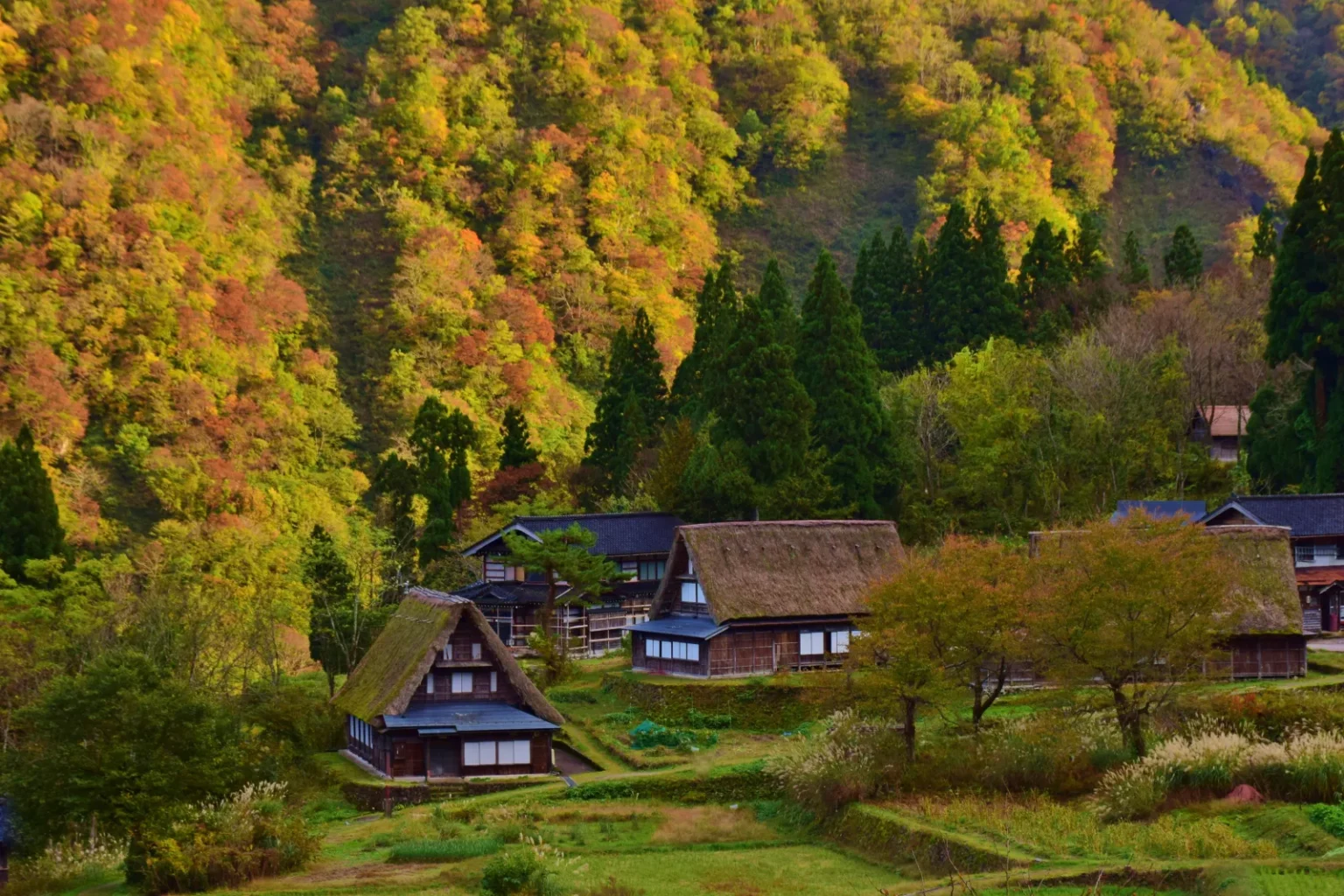
The tourist office’s season page says autumn colour comes to the villages, at 200–400 m, in early November. It also says the World Heritage villages have few maples. Most of the colour is the yellow to orange of beech, Japanese horse chestnut and oak. For how Japan’s autumn forecasts are made, see our autumn forecast explainer; for November travel, Japan in November 2026.
Kokiriko dance in November. The tourist office lists a seasonal Kokiriko dance in Kaminashi, not in Ainokura, on 1 and 3 November 2026 at 14:00, ¥500 per person, with a capacity of 15.
Light-ups. Ainokura’s autumn light-up for 2026 was on 12 and 13 September; the 7 and 14 October dates were window-light evenings, not light-ups. The next Ainokura light-up is on 20 and 21 February 2027, from dusk to 20:00. Suganuma’s winter light-ups are on 26 January and 6 and 7 February 2027, from about sunset to 20:00. Ordinary cars do not need a reservation for either. At Suganuma every bus must book; at Ainokura, microbuses and larger buses must book.
How to get to Gokayama
World Heritage Bus. Kaetsuno Bus runs the World Heritage Bus from Takaoka Station and Shin-Takaoka Station through Johana to Ainokura-guchi, Suganuma and Shirakawa-go, five times a day each way, every day. Shin-Takaoka is on the Hokuriku Shinkansen; JR West gives 8 minutes as the standard transfer there between the Shinkansen and the Johana Line.
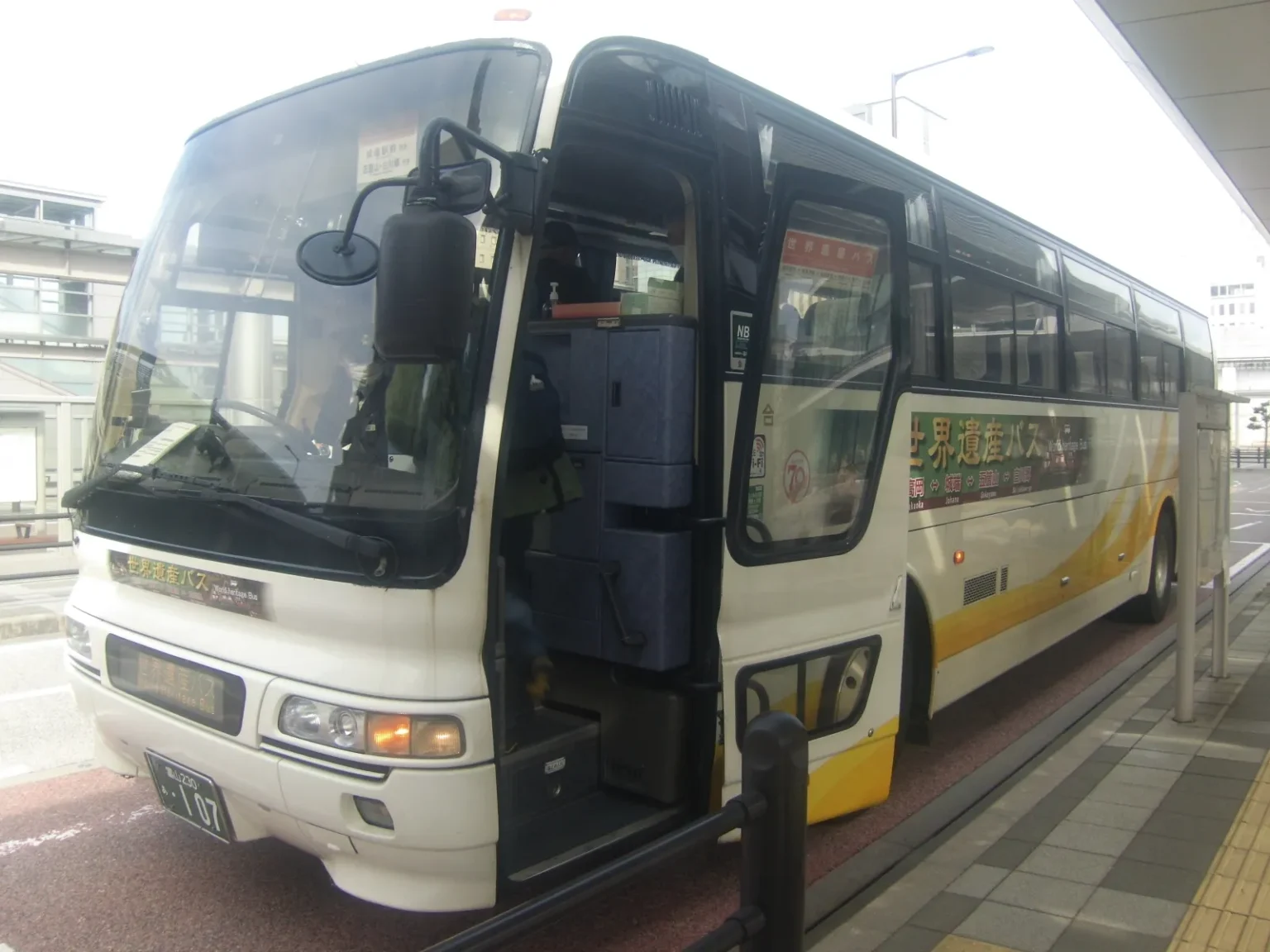
| From Takaoka or Shin-Takaoka to | Fare | Example |
|---|---|---|
| Ainokura-guchi | ¥1,100 | Shin-Takaoka 8:25 → 9:28 |
| Suganuma | ¥1,300 | Shin-Takaoka 8:25 → 9:43 |
| Shirakawa-go | ¥2,000 | — |
Between the villages, Ainokura-guchi to Suganuma is ¥370, and Suganuma to Shirakawa-go is ¥910. The tourist office says the village is a 5-minute walk from the Ainokura-guchi stop.
You do not have to book, but Kaetsuno Bus offers 16 reservable seats on each bus for the main sections, from one month before until the day before. You cannot reserve on the day.
With five buses a day each way, a night nearby takes the pressure off the timetable.
Check stays near GokayamaFrom Kanazawa. Hokuriku Railroad runs a reserved highway bus from Kanazawa Station West Exit via Shirakawa-go to Gokayama Suganuma, ¥2,200 one way. If you change buses at Shirakawa-go, you pay each section separately. For Shirakawa-go itself, see our Shirakawa-go guide, and for Kanazawa in autumn, our Kenrokuen in autumn guide.
Staying in a gassho house
Several Ainokura farmhouse inns are listed on the tourist office’s English pages. Goyomon, Yomoshirō, Gasshō Minshuku Nakaya and Chōyomon each list a night with two meals from ¥15,000 per person, plus ¥500 for heating from November to May. The pages say you can book directly with the inn in Japanese only, or email the Gokayama tourist office (gokayama@tabi-nanto.jp). The office says it handles English by email only and will explain how to book.
Shōshichi accepts one group a day and lists ¥33,000 per person for two to four people, with two meals; you book through a form on its website.
For other places to stay, check current listings for Gokayama and Takaoka.
If the farmhouse inns are full, look around Gokayama and Takaoka.
Search stays in Gokayama on Booking.comAgoda’s search lists Gokayama places to stay, such as GOKAYAMA BASE, under Takaoka, so you can compare Takaoka and Gokayama stays on Agoda. If you would rather make a day trip from a city, search Kanazawa hotels on Booking.com.
Shogawa Gorge cruise: a boat to an inn reached only by water
Shogawa Yuransen’s boats leave from Komaki port in Shogawa-machi, Tonami. Omaki Onsen, up the gorge, describes itself as a remote inn reached only by boat. Omaki Onsen’s site says normal sailings resumed on all courses on 15 September 2026.
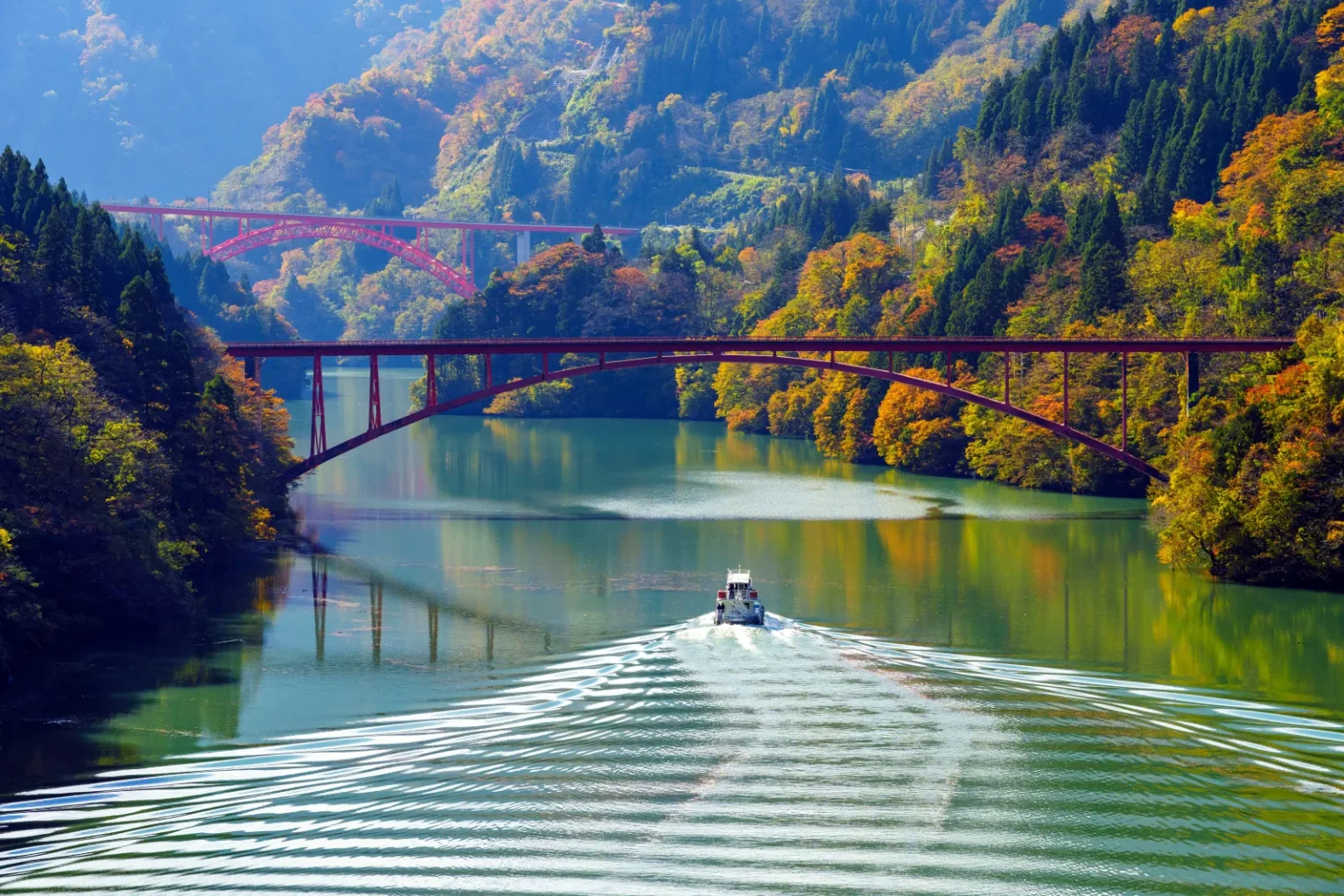
Omaki Onsen course. About 60 minutes return, ¥3,400 for adults, which includes junior-high pupils, and ¥1,700 for primary-school children. From 1 April to 30 November boats leave Komaki at 8:30, 10:30, 14:30 and 16:00. From 1 December to 31 January there are three: 9:00, 11:30 and 15:20. From 1 February to 31 March there are four again: 9:00, 11:30, 14:30 and 16:00. Individuals do not need to book.
You cannot get off at Omaki unless you have a day-use or overnight booking at Omaki Onsen, and you cannot ride one way only.
Nagasaki Bridge course. About 25 minutes, ¥1,500 for adults and ¥750 for primary-school children. From 1 April to 30 November it leaves at about 9:50 and 13:20; from 1 December to 31 January at about 10:20 and 14:20; and from 1 February to 31 March at about 10:20 and 13:50.
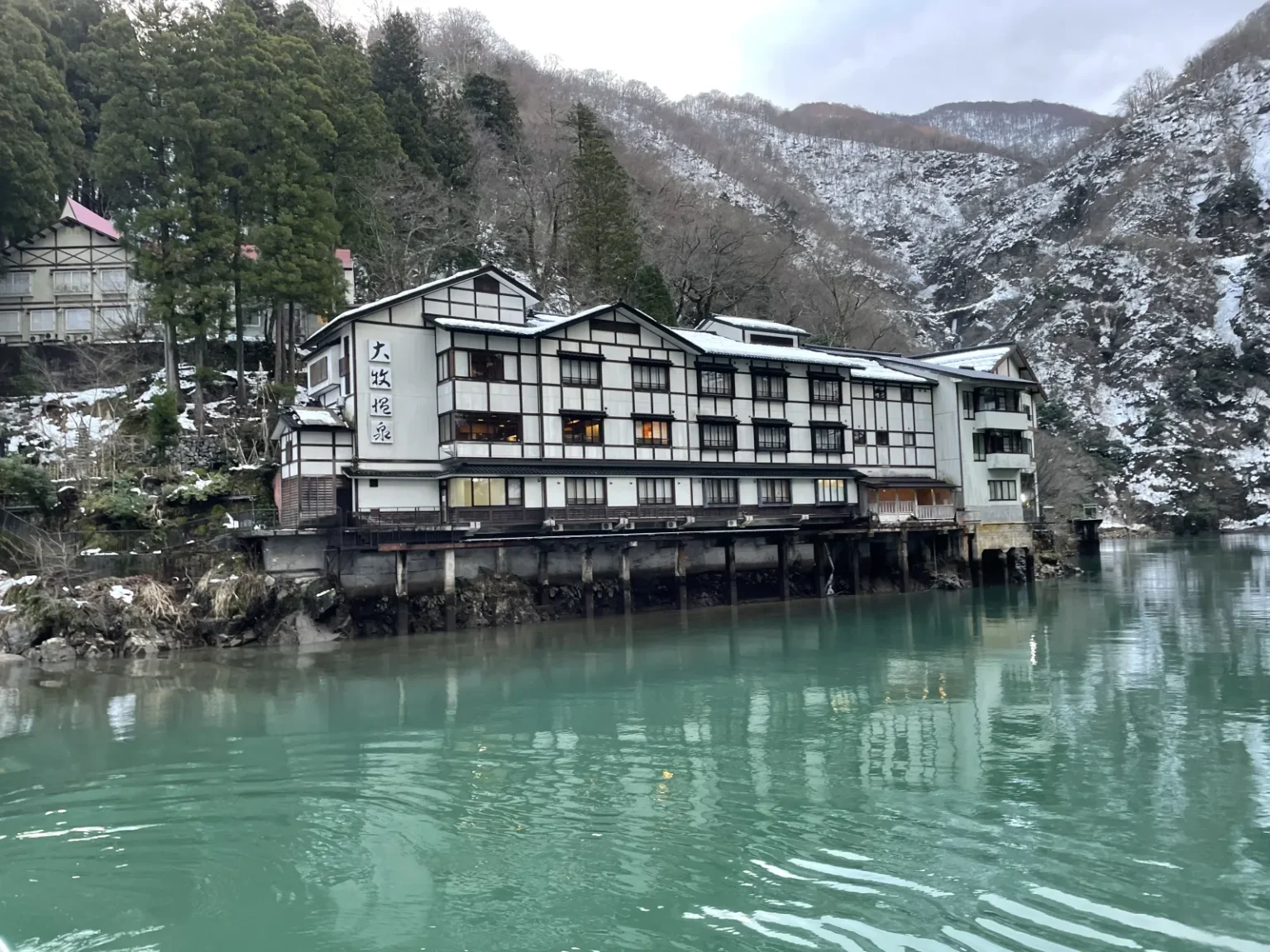
Getting to Komaki. The operator’s access page links Kaetsuno Bus times from Takaoka Station (stand 2) to Komaki, and gives about 40 minutes by car from Ainokura. Komaki is not on the World Heritage Bus timetable.
I could not find a usual peak date for the gorge’s autumn colour from the operator or the city. Tonami City’s tourism material describes the autumn colour in general terms only.
More autumn places in Toyama
If you are planning a wider autumn trip in Toyama, consider these. Where I found a current notice from the city, prefecture or operator, it is noted.
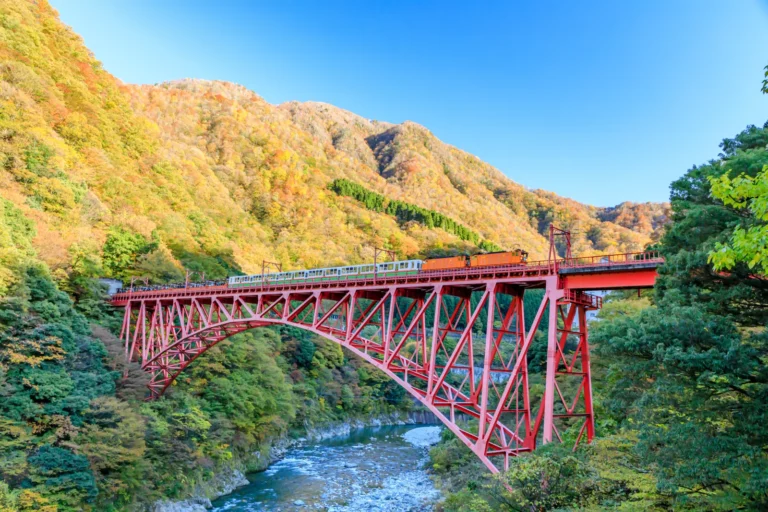
Kurobe Gorge and Unazuki Onsen. The Kurobe Gorge Railway resumed running all the way from Unazuki to Keyakidaira on 1 October 2026. At Keyakidaira you can only go into the station building and visitor centre for now. Our Kurobe Gorge Railway in autumn guide has the details.
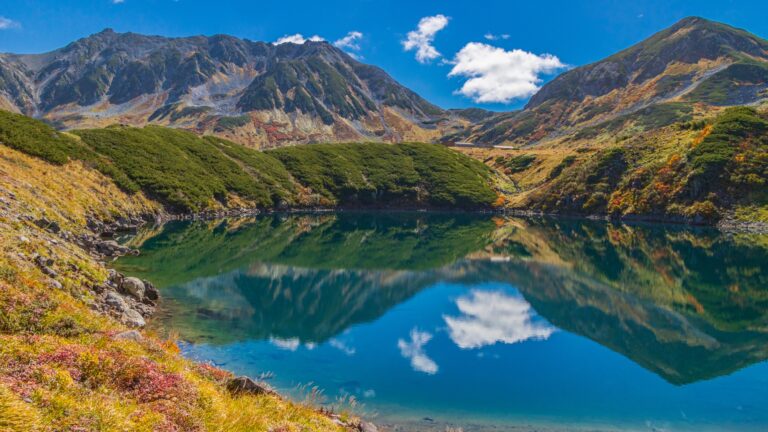
Tateyama and Shomyo Falls. See our guides to Tateyama Murodo in autumn and Shomyo Falls.
Sankyoson viewpoint, Tonami. It looks over the Tonami Plain’s scattered farmhouses, gabled azumadachi farmhouses set among sheltering groves of trees called kainyo. Tonami City says the road to the viewpoint usually closes from early December to the end of March.
Amaharashi Coast, Takaoka. Takaoka City says that in good weather you can see the 3,000 m-class Tateyama range across Toyama Bay. The JR Himi Line runs along the coast between Etchū-Kokubu and Amaharashi. I could not find an official statement of which season gives the clearest view.
Arimine Lake. The Komi, Oritate, Higashidani and Seigan lines of the Arimine forest road opened on 1 June 2026, and the Oguchigawa line on 1 July. Each trip costs ¥2,700 for a small car. I found no 2026 notice yet of the winter closing date.
Inotani anticline and syncline, Toyama City. A national Natural Monument since 1941: folded rock layers exposed on the left bank of the Jinzū River.
Gokayama: FAQ
Is Gokayama the same as Shirakawa-go?
They are one World Heritage site, inscribed together in 1995, but Gokayama’s villages, Ainokura and Suganuma, are in Nanto, Toyama, and Shirakawa-go’s Ogimachi is in Gifu. The World Heritage Bus links all three.
How much does it cost to visit Ainokura?
The tourist office lists a ¥1,000 preservation contribution for cars that park; I found no separate charge listed for walking in. The Traditional Industry Museum is ¥300 for adults.
Do I need to book the World Heritage Bus?
No, but each bus has 16 reserved seats you can book from one month before until the day before. You cannot reserve on the day.
Can I walk around Ainokura at night?
The tourist office asks visitors not to visit or walk around after dark or early in the morning. The next Ainokura light-up, on 20 and 21 February 2027, runs until 20:00.
When are the autumn leaves best in Gokayama?
The tourist office says early November at the villages, mostly yellow and orange beech, horse chestnut and oak.
Can I get off the Shogawa boat at Omaki Onsen?
Only if you have a day-use or overnight booking at Omaki Onsen. Everyone else stays on board for the return trip.
Is the saltpetre museum in Suganuma open?
No. Enshō no Yakata has been closed for repairs since 31 July 2026. The Gokayama Folk Museum is open.
Sources (checked 28 October 2026)
- Gokayama tourist office (World Heritage Gokayama): World Heritage; Ainokura; Rules for visitors; Ainokura Folk Museum; Traditional Industry Museum; Ainokura light-up 2026–27; Kokiriko dance; Seasons; Culture and Kokiriko; Suganuma; Gokayama Folk Museum; Suganuma light-up; Notices; Booking help; inn pages Goyomon, Yomoshirō, Nakaya, Chōyomon
- Nanto City: Ainokura and Suganuma; Cultural heritage plan; Master plan; Bear notice (Japanese)
- Agency for Cultural Affairs: Ainokura (Nanto City text); Suganuma Historic Site; Inotani anticline and syncline (Japanese)
- Toyama Prefecture: Gokayama landscape; Bear warning; Bear map; Arimine roads June, July (Japanese)
- Suganuma preservation association: Hours (Japanese)
- Buses: World Heritage Bus timetable; Fares; Kaetsuno Bus reservations; Hokuriku Railroad, Kanazawa–Shirakawa-go–Gokayama; JR West, Shin-Takaoka Station (Japanese)
- Shogawa Gorge: Shogawa Yuransen fares and timetable; Access; Omaki Onsen; Tonami City tourism (Japanese)
- Other places: Shōshichi; Tonami City, Sankyoson, viewpoint; Takaoka City, Amaharashi; Kurobe Gorge Railway (Japanese)
Some links above are affiliate links — they cost you nothing extra and help keep this site going.
Join travelers discovering Japan's hidden side
Weekly dispatches from off-the-beaten-path Japan — spots and stories you won't find in guidebooks.
No spam. Unsubscribe anytime.
Welcome aboard!
You're in. See you in your inbox soon.