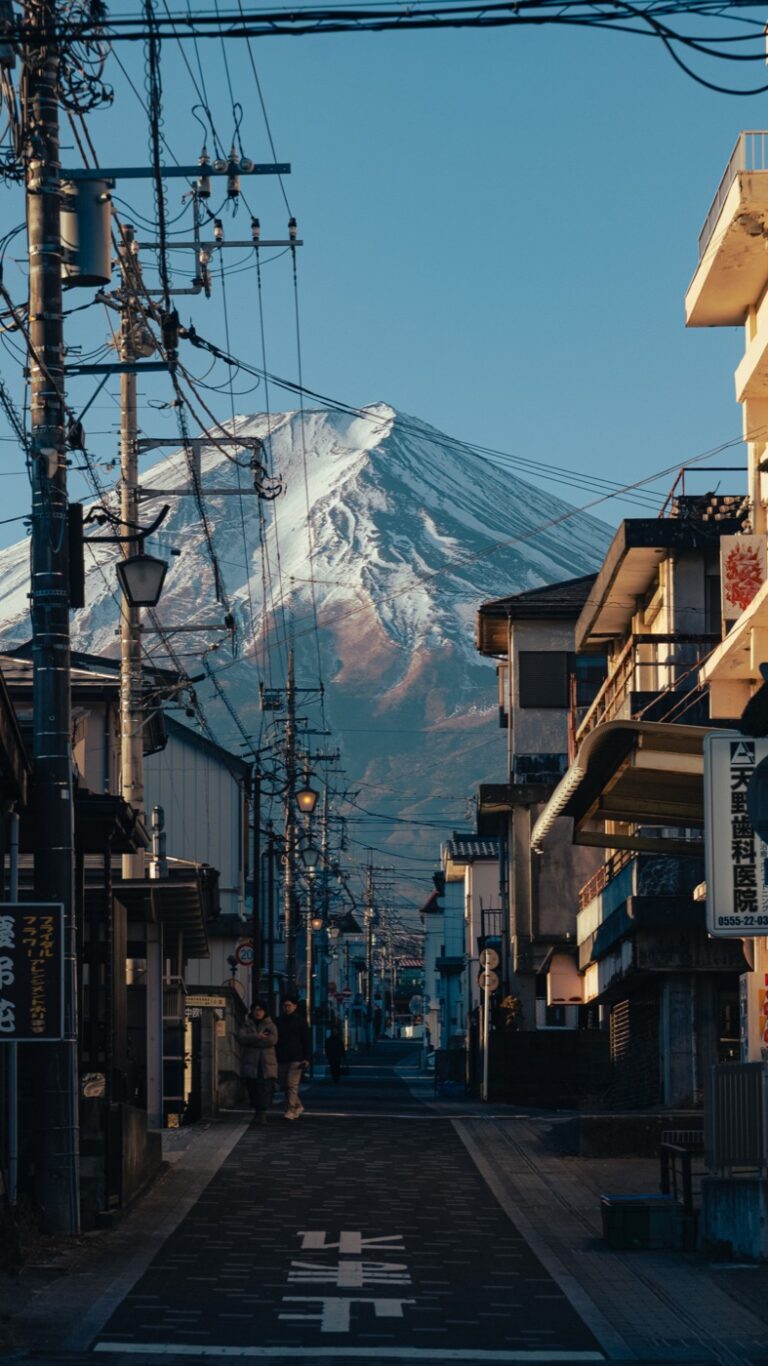
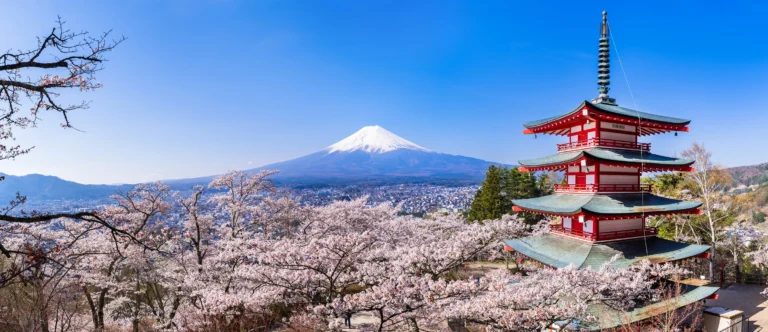
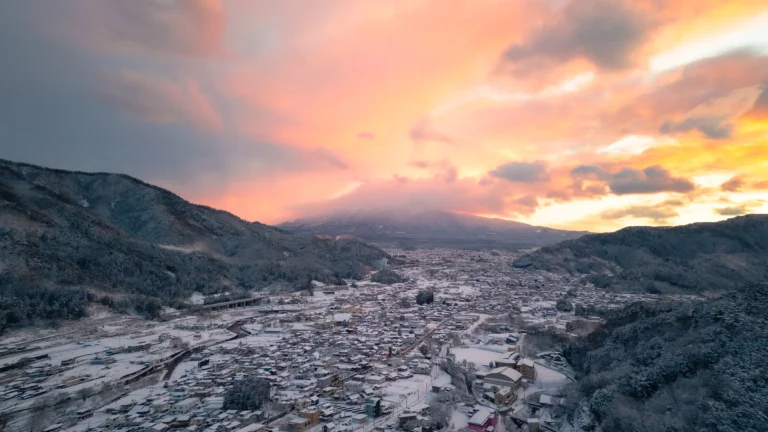
Fuji Five Lakes · Summer Fireworks
From 2 to 5 August 2026, Fujikawaguchiko Town fires fireworks over four different lakes on four consecutive nights: Lake Saiko’s Ryugusai on Sunday the 2nd (fireworks 19:30–20:00), Lake Motosu’s Shinkosai on Monday the 3rd, Lake Shoji’s Ryokosai on Tuesday the 4th (19:15–19:30), and the roughly 10,000-shell Kojosai finale over Lake Kawaguchi on Wednesday the 5th. Everyone plans for the finale. The first three nights are the reason to come early — and there is one catch the event listings don’t spell out: the sightseeing buses to those three lakes stop running hours before the first shell goes up.
Four lakes, four nights — the 2026 series at a glance
These four festivals are all organised within Fujikawaguchiko Town, and in 2026 they run back to back. The camera press in Japan picked the series up this week precisely because the format is unusual: most towns put everything into one night. Here, the same corner of Yamanashi keeps the sky lit for four. (Strictly, the whole Five Lakes region lights up in sequence: Lake Yamanaka — a separate village — holds its own opener on 1 August, and Fujikawaguchiko Town’s four lakes then run 2–5.)
| Night | Lake & festival | Fireworks time | Character |
|---|---|---|---|
| Sun 2 Aug | Lake Saiko — Ryugusai (竜宮祭) | 19:30–20:00 | Lanterns on the water, then fireworks; a shrine festival for a water goddess |
| Mon 3 Aug | Lake Motosu — Shinkosai (神湖祭) | Not yet published | Fireworks echoing between mountains over the old-¥1,000-note lake |
| Tue 4 Aug | Lake Shoji — Ryokosai (涼湖祭) | 19:15–19:30 | The smallest lake, the closest fireworks, festival stalls from 16:00 |
| Wed 5 Aug | Lake Kawaguchi — Kojosai (湖上祭) | From 19:45 | The 10,000-shell headliner — full guide here |
I live in Fujiyoshida, just east of the lakes, and my honest read is this: the Kojosai is the spectacle, but the three small nights are where this series feels like the small, local Japan most travellers hope to find. At a time when big-name fireworks festivals nationwide are converting their best ground into paid seating, these are free lakeshores where the main competition for space is a family with a cooler box. (For the opposite experience — Japan’s fully ticketed Big Three, one of which shares these exact dates — see the Nagaoka–Omagari–Tsuchiura guide.)
Night 1 — Ryugusai at Lake Saiko (Sun 2 Aug)
The opener is the most atmospheric of the three. The Ryugusai is the festival of Ryugu Shrine, dedicated to Toyotama-hime, the water deity of Ryugu Shrine. The night pairs lanterns with fireworks on the lake — lanterns drifting first, then a compact 30-minute show from 19:30.
Saiko is the quiet, forested lake — no lakeside town to speak of, just campsites and a shoreline road. That is the appeal. Bring a picnic sheet, arrive before dusk, and you will watch lanterns drift out onto black water with almost nobody between you and the shore.
Night 2 — Shinkosai at Lake Motosu (Mon 3 Aug)
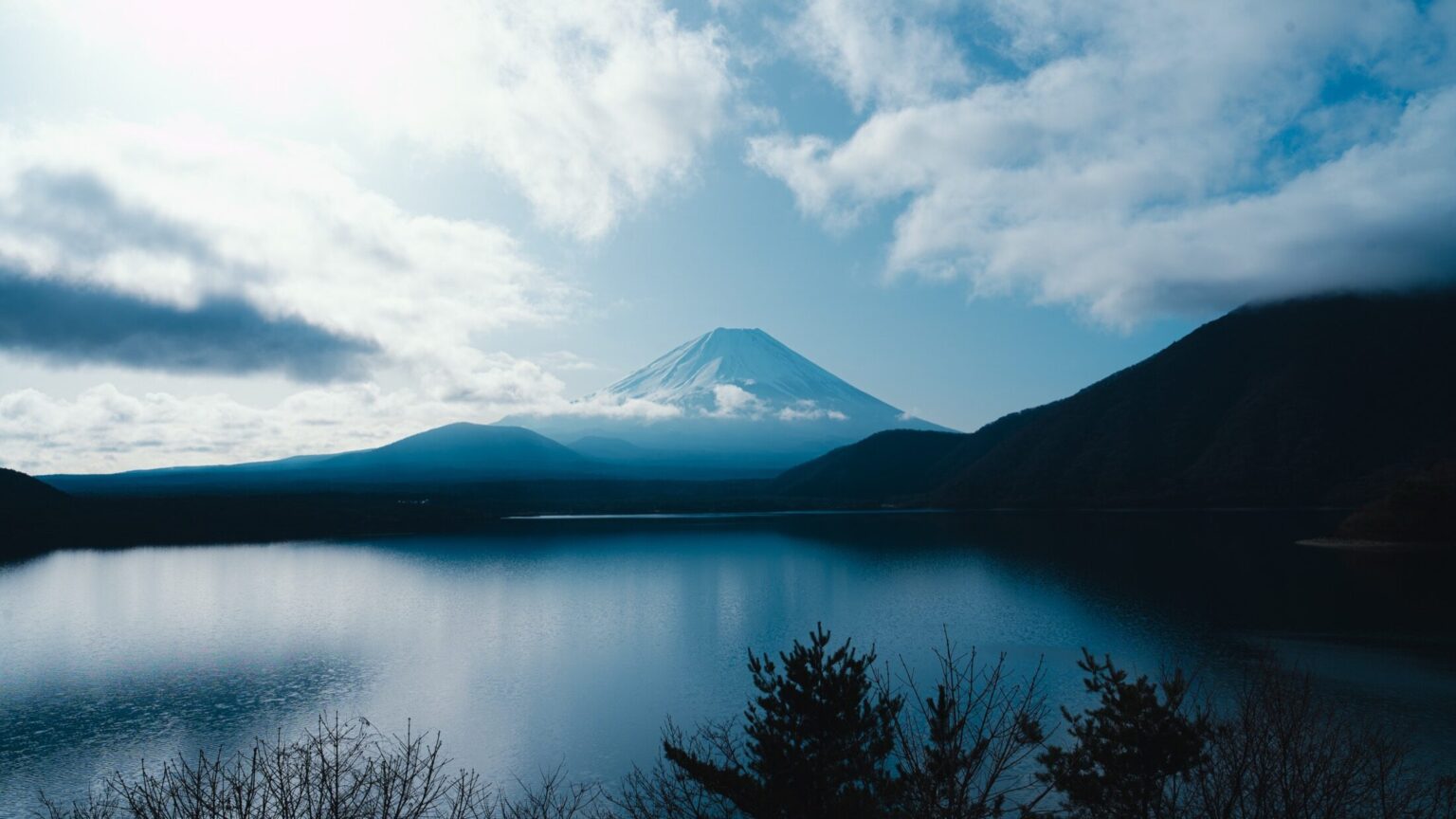
Motosu is the deepest and clearest of the Five Lakes, and the lake pictured on the back of the former ¥1,000 note — the famous view is from the northwest shore, looking across the water at Fuji. The Shinkosai happens every year on 3 August on the east shore, where the lake sits in a bowl of mountains on three sides. What locals talk about is the sound: the bursts bounce off the surrounding slopes, so a modest show hits harder than its shell count.
One honesty note: as of late July the town had not yet published a start time for 2026 — its two sibling nights run roughly 19:15–20:00, but check the town’s event page on the day. And because the venue is the east shore, Fuji sits off-axis from the natural viewing direction; this is the night to stop worrying about compositions and just listen to fireworks in a mountain amphitheatre.
Night 3 — Ryokosai at Lake Shoji (Tue 4 Aug)
If you only make one of the small nights, make it this one. Shoji is the smallest of the Five Lakes — a pond by Fuji standards — and the Ryokosai is officially billed as the intimate, at-home one: festival stalls and events on Tategou-hama beach (他手合浜) from 16:00, fireworks at close range 19:15–19:30. Fifteen minutes sounds short until you are standing under shells bursting more or less overhead.
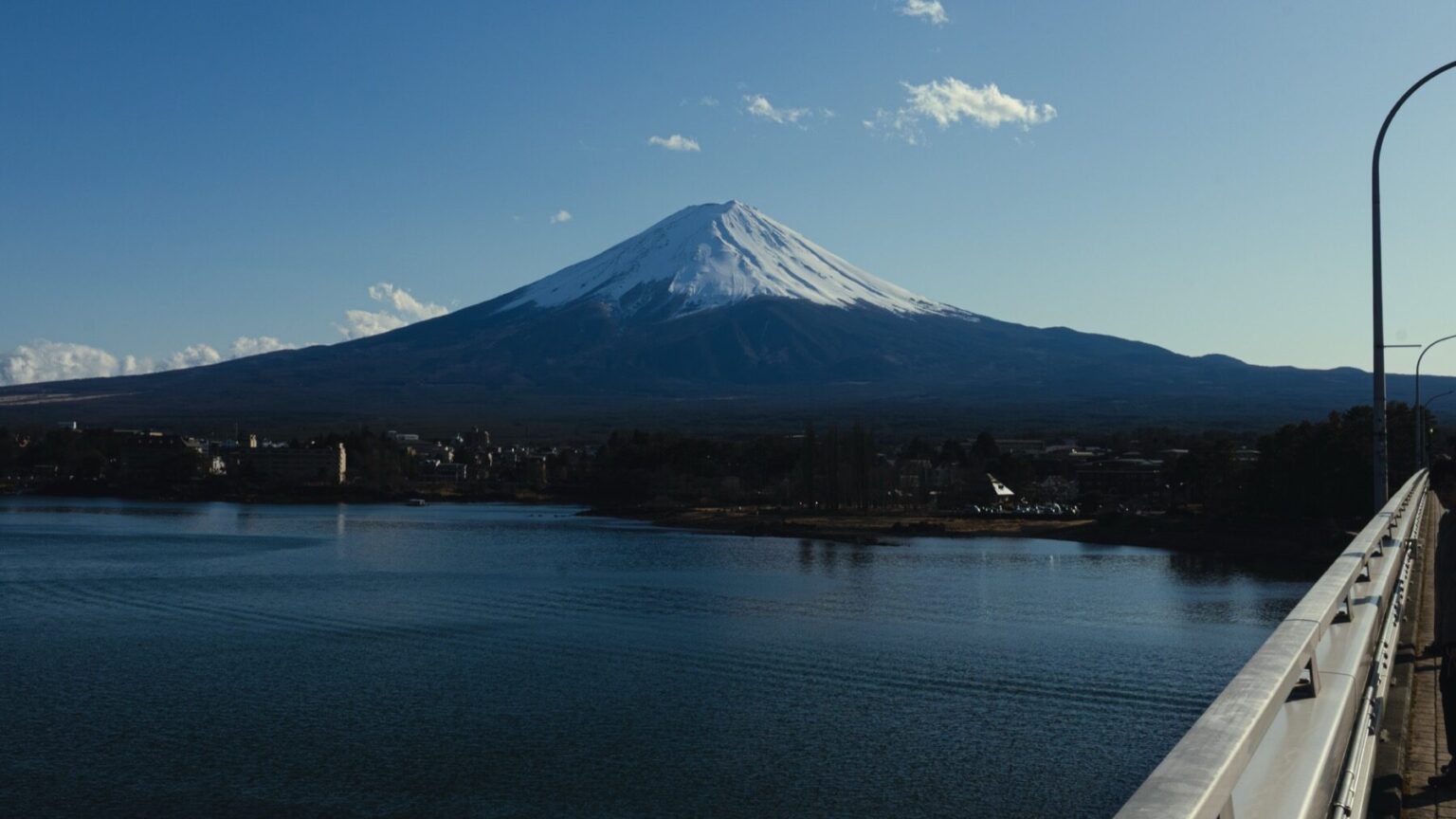
Two practical advantages over its siblings. First, parking: the prefectural Tategou-hama lot sits right at the venue (it even takes large vehicles). Second, geometry: Tategou-hama is the classic Shoji viewpoint, the one the tourism association lists for upside-down Fuji reflections — you look straight across the water at the mountain. Of the three quiet nights, this is the one where a Fuji-behind-the-fireworks photograph is a realistic ambition rather than wishful thinking.
The transport trap: there is no bus home
Here is the detail that decides your whole plan. The three small lakes are served by Fujikyu’s sightseeing bus loops from Kawaguchiko Station — the Green Line for Saiko, the Blue Line for Shoji and Motosu. Both are daytime services:
| Route | Serves | Last departure from Kawaguchiko Stn | Last bus back arrives |
|---|---|---|---|
| Green Line | Lake Saiko | 16:40 | 18:15 |
| Blue Line | Lakes Shoji & Motosu | 15:35 | 17:45 |
Every fireworks show starts after 19:00. In other words: you can ride a bus to any of these festivals in the afternoon, but there is no scheduled bus back after the show. Taxis out at Saiko or Shoji at 20:30 are not something I would gamble a night on either. That leaves two plans that actually work, and one that half-works:
Plan A — drive
A rental car turns the whole series into an easy loop — the three small lakes sit on one short westward loop along Route 139 — roughly 10–35 minutes between them, more in festival traffic — and Shoji has on-site parking. Skip the car only for the Kojosai night, when roads around Kawaguchiko close from 17:00.
Plan B — sleep where you watch
Stay at the lake that is firing that night: campsites and small inns at Saiko and Motosu, a handful of lakefront places at Shoji. Walk out of your tent or room, watch, walk back. This is the version I’d call the best summer night in Yamanashi.
Plan C — finale only, by rail
No car, no camping gear? Base in Kawaguchiko town and do the 5 August Kojosai on foot — the venue is 15 minutes’ walk from the station, and Fujikyu runs eight extra trains after the finale. You lose the quiet nights but keep the headliner.
Plan the four nights
Fuji behind the fireworks: an honest map
The town markets the series as fireworks over lakes with Fuji at various angles, which is accurate — and worth decoding, because the four venues are not equal:
| Lake | Fuji + fireworks odds | Why |
|---|---|---|
| Shoji (4 Aug) | Best | Tategou-hama faces Fuji straight across the small lake |
| Saiko (2 Aug) | Possible | Fuji only clears the ridge from the western (Nenba) end |
| Kawaguchi (5 Aug) | Possible from north shore | Main viewing areas sit on the Fuji side; the north shore (Oishi side) puts Fuji behind the show |
| Motosu (3 Aug) | Unlikely | East-shore venue points you away from the mountain |
One more thing photographers should hear: these are 15–30 minute shows. There is no hour of pyrotechnics to experiment through. Scout your spot in daylight, set one composition, and if there is a lantern release (Saiko), shoot that first — the lanterns are gone by the time the sky show starts. August evenings on these lakes also mean mist rolling in fast after sunset; a clear 18:00 does not guarantee a visible summit at 19:30. I track this daily on my Fuji visibility page if you want the morning read before committing to a spot.
The finale, and the ¥10 million keeping all this alive
The series ends on 5 August with the Kojosai — a festival past its 100th edition, roughly 10,000 shells, giant starmines and musical fireworks over Lake Kawaguchi from 19:45. It needs its own logistics (road closures from 17:00, no advance place-holding, extra trains after), so I’ve kept the full Kojosai guide separate.
Worth knowing as you enjoy any of these nights: Fujikawaguchiko Town is openly crowdfunding ¥10,000,000 (through 26 August) to keep the series affordable to run, citing the surging cost of shells and security staffing. Four free festival nights on public lakeshores is not a business model — it is a town deciding this tradition is worth paying for. Showing up, eating at the stalls, and sleeping a night locally is the most direct way a traveller votes for that decision.
Questions I’d actually ask
Are the fireworks free to watch?
Yes — all four nights are free, open lakeshores. There is no paid seating at any of the four venues, which has become genuinely unusual for Japanese fireworks in 2026.
If I can only make one of the three quiet nights, which one?
Lake Shoji on 4 August. It has the earliest festival atmosphere (stalls from 16:00), the closest fireworks, on-site parking, and the only venue that faces Mt Fuji straight on.
Can I do this without a car?
Only partially. Buses reach all three small lakes in the afternoon, but the last return buses leave before the fireworks start — Green Line back by 18:15, Blue Line by 17:45. Without a car, either stay overnight at the lake you’re watching or limit yourself to the 5 August Kojosai, which is walkable from Kawaguchiko Station and served by extra trains afterwards.
What happens if it rains?
The Kojosai officially runs in rain and cancels only in severe weather. The three small lakes had not published a 2026 weather policy at the time of writing — check the town tourism federation’s event pages (or call the tourism division, 0555-72-3168) on the day.
Where exactly do I stand at Lake Shoji?
Tategou-hama, the main beach on the north shore — the same spot listed for upside-down Fuji reflections. The prefectural parking lot is directly behind the beach. Arrive by late afternoon and the festival is already running around you.
Is the Motosu start time really unannounced?
As of 24 July 2026, yes — the town’s event page for the Shinkosai lists the date and venue but no fireworks time, noting details will be updated. Its sibling festivals run roughly 19:15–20:00, which is the sensible planning window, but verify on the day.
Join travelers discovering Japan's hidden side
Weekly dispatches from off-the-beaten-path Japan — spots and stories you won't find in guidebooks.
No spam. Unsubscribe anytime.
Welcome aboard!
You're in. See you in your inbox soon.