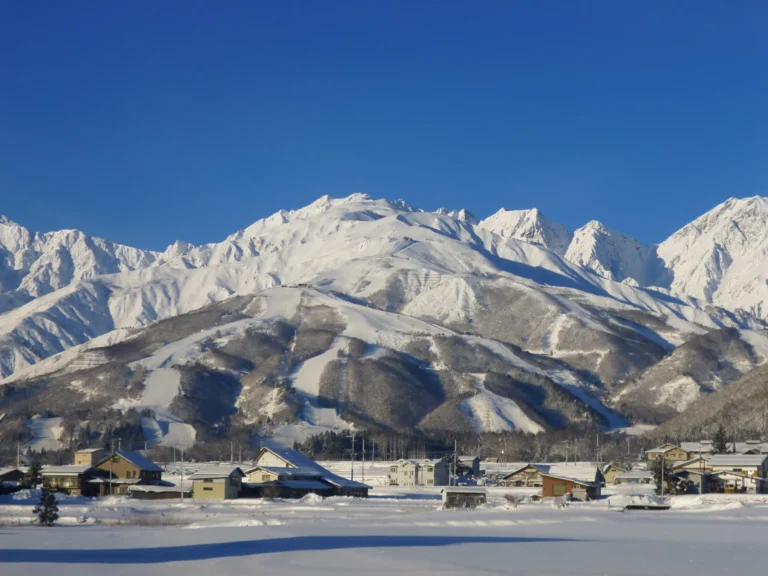
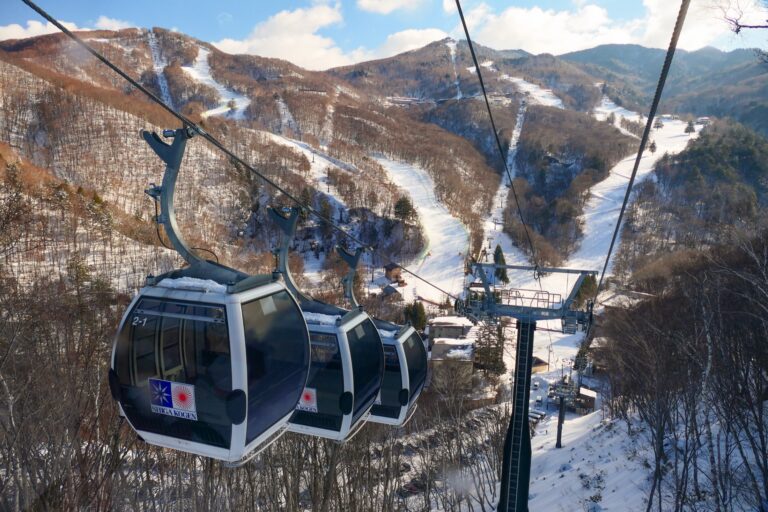
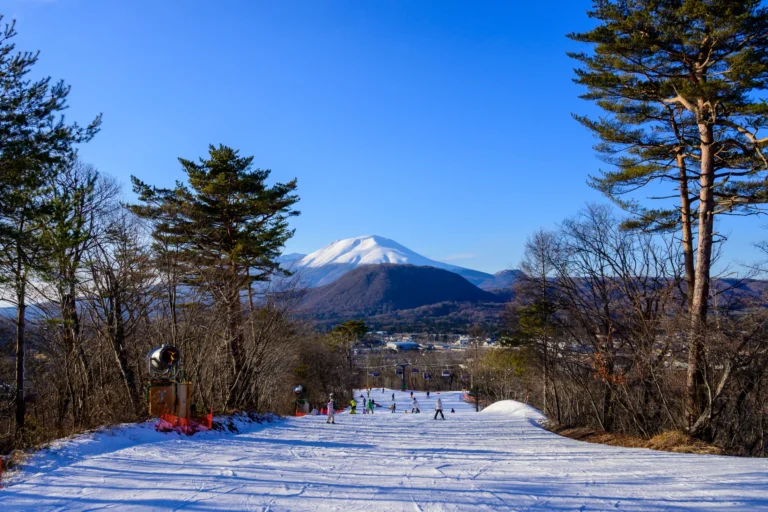
Nagano · Winter 2026-27
Shiga Kogen has published its 2026-27 prices: one common ticket covers all 18 ski areas and all 45 lifts and gondolas, and an adult day costs ¥9,500. The two-day ticket saves exactly ¥500 over two singles — the discount is not what you are buying here.
What you are buying, and the fine print that decides which ticket to choose, is worth real money. This guide works through it from the resort’s own rate card.
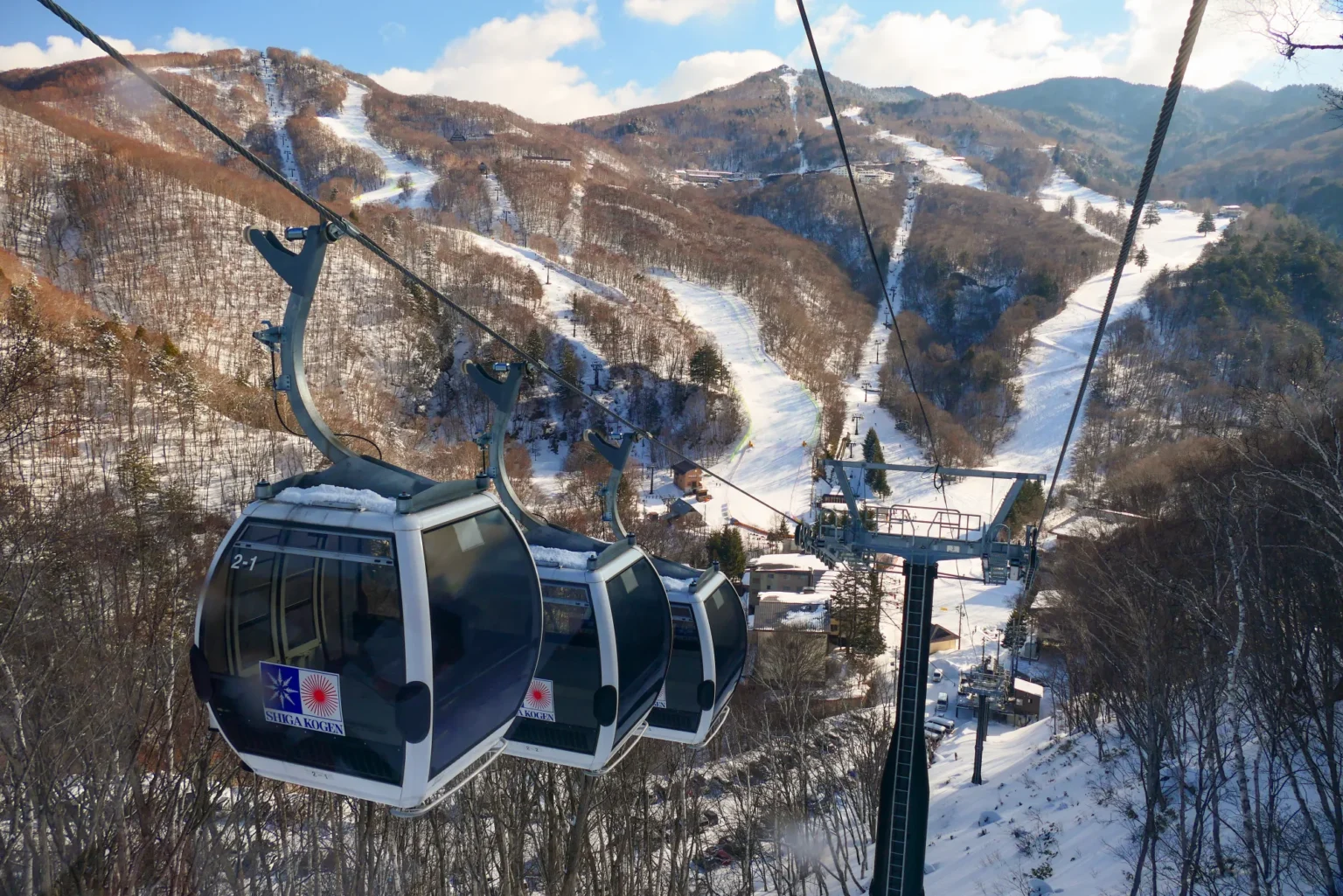
The rate card, and what it actually rewards
The Ropeway Association publishes one price list for the whole mountain range. These are selected 2026-27 window prices for the common ticket — 4, 6, 8 and 9-day versions also exist — and the ticket covers all 45 lifts and gondolas across the 18 areas during normal operating hours. Night and early-morning sessions are sold separately.
| Ticket | Adult | Average per day (total saving vs 1-day tickets) |
|---|---|---|
| 1 day | ¥9,500 | ¥9,500 |
| 2 days | ¥18,500 | ¥9,250 (saves ¥500) |
| 3 days | ¥27,500 | ≈¥9,167 (saves ¥1,000) |
| 5 days | ¥45,500 | ¥9,100 (saves ¥2,000) |
| 7 days | ¥63,500 | ≈¥9,071 (saves ¥3,000) |
| 10 days | ¥90,500 | ¥9,050 (saves ¥4,500) |
Even the ten-day ticket knocks less than five per cent off the daily rate. If you are used to resorts where a week’s pass halves the per-day price, this looks stingy — until you read the line under the table: the regular 2-to-10-day tickets can be used on non-consecutive days, anywhere in the 2026-27 season. The 1-day ticket is different — it is valid only on the day you first pass a gate. The discounted early-season and spring tickets are different again, usable only on consecutive days from the date of issue, and the opening-festival 2-day ticket is issued on 5 December only, for that weekend.
The regular multi-day ticket is not a discount product. It is season-long flexibility on one card.
That changes what it is for. A regular three-day ticket can be one day in January, one in February and one in March — three visits, one purchase. One caution before you treat it as always-right: if your dates fall in the cheap windows, separate tickets can beat it. Three days split across December, February and April costs ¥26,500 bought separately at the applicable rates — ¥1,000 less than the ¥27,500 pass. Run your own dates against the seasonal table below before you buy. The mechanism worth keeping either way: the ticket is a rechargeable “key ticket” with no deposit, which you keep, take home, and reload from the web next time — no queue at the window.
Who pays less than ¥9,500
Quite a lot of people, which is the second thing the headline price hides.
| Category | 1-day | Note |
|---|---|---|
| Senior (60+) | ¥8,000 | Show ID proving age |
| Student (junior-high / high-school, with ID) | ¥6,500 | Show a student ID |
| Child (elementary age & younger; EN page: 0–12) | ¥4,000 | Free on Kids’ Ski Days — see below |
| Preschooler | Free | One free child per paying adult |
| 4-hour ticket (adult) | ¥7,500 | Four continuous hours from gate entry |
Two things stand out. First, the senior rate takes ¥1,500 off the adult day price for skiers aged 60 and over, with proof of age — a friendlier senior deal than Happo-one’s, where skiers 65 and over save only ¥300 on a high-season day (¥9,500 against ¥9,800) and must buy at the window. Second, the family arithmetic is better than it looks:
The family fine print, verified
Adult + child packs: one adult and one child of elementary-school age or younger together pay ¥12,000 for a day, ¥23,000 for two, ¥34,000 for three. Compared with separate adult and child tickets for the same days, that saves ¥1,500, ¥3,000 and ¥4,500 respectively.
Kids’ Ski Days: on the third Sunday of each month — 20 Dec, 17 Jan, 21 Feb, 21 Mar, 18 Apr — children of elementary-school age and younger get a free 1-day lift ticket. The rate card itself tells you to check before buying an adult-and-child pack on those dates, since the child’s ticket is free anyway.
One label to know: the official table lists adults as 18–59 in Japanese and “19–59” in its English line, and defines the student rate as junior-high and high-school students with ID. If you are 18 and no longer in school, confirm your category with the Ropeway Association before buying.
The cheap windows the headline price hides
The ¥9,500 rate is the mid-season price. The season runs 5 December to 5 May, and both ends are officially cheaper:
| Window | Adult 1-day | Condition |
|---|---|---|
| Opening festival, 5–6 Dec | ¥5,000 | 2-day version ¥7,500, issued 5 Dec only, consecutive |
| Early season, 5–18 Dec | ¥7,500 | 2-day ¥14,500, consecutive; issued to 17 Dec |
| Spring, 1 Apr – 5 May | ¥7,500 | Same rule; 2-day issued to 4 May |
The opening-weekend day ticket is 47 per cent off the mid-season rate, and the two-day version cuts even deeper. How much is actually open in early December is a weather question — check which areas are operating before travelling.
The point ticket: for people who ride five lifts, not fifty
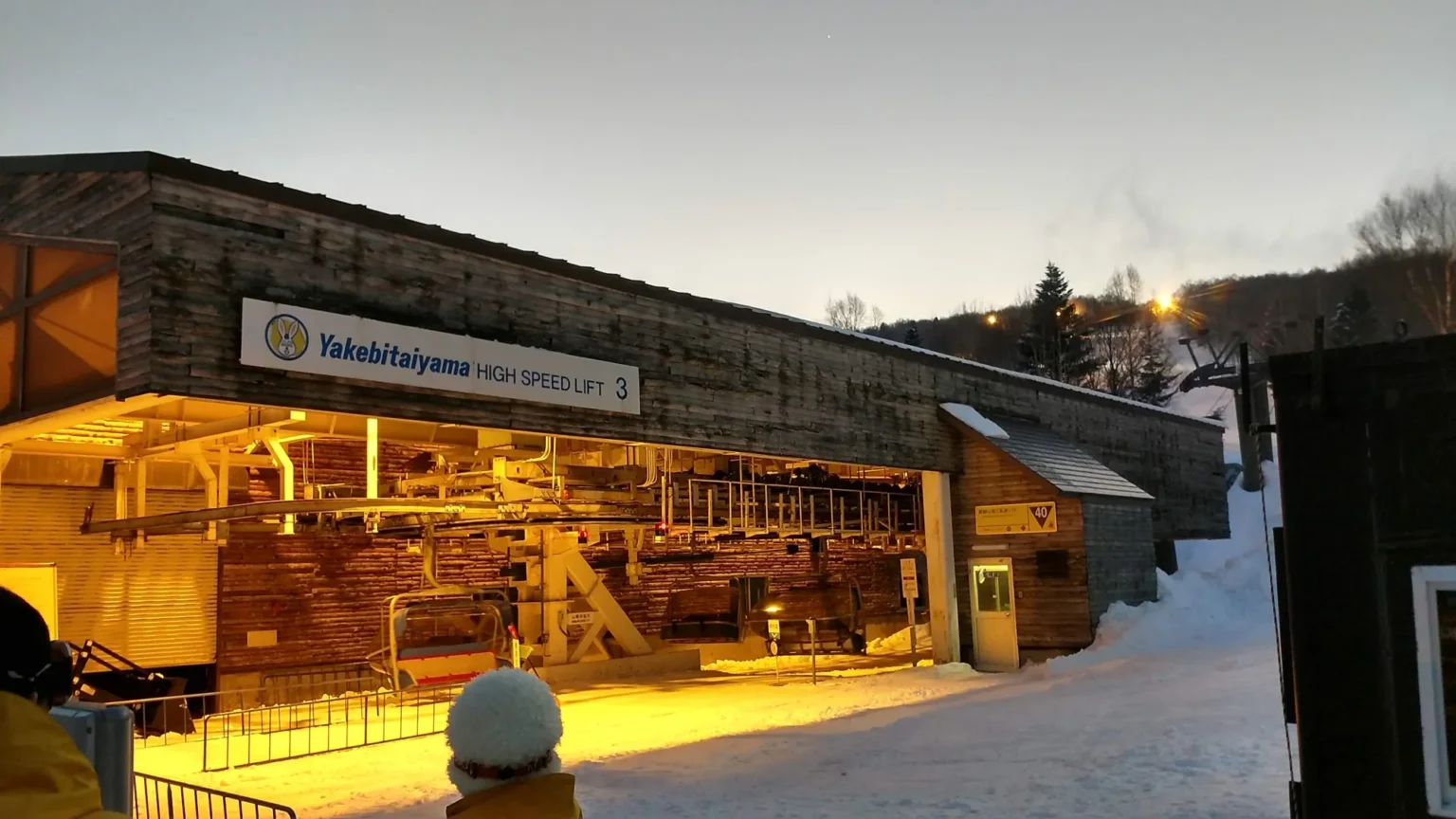
The quietest product on the rate card is the point ticket: 20 to 50 points at ¥200 a point for adults, ¥100 for children, each lift priced in points. The two Yakebitaiyama gondolas and the Okushiga gondola cost 9 points a ride — ¥1,800 — while small pair lifts cost 2, or ¥400.
The arithmetic: the day ticket costs the same as 47.5 points, so if the lifts you actually plan to ride add up to less than that, points win. Five rides on a 9-point gondola come to ¥9,000 — still ¥500 under the day ticket. The minimum purchase is 20 points (¥4,000). Three warnings from the fine print: leftover points are not refunded and do not carry over to next season, adult and child point cards cannot be shared, and if a short day is your plan, compare the ¥7,500 4-hour ticket too. Points are also stated to be usable in night-skiing hours, which otherwise require a separate ticket.
The season pass, and the trap in the delivery options
Season passes went on sale 1 September, valid 1 December to 5 May. The prices are on the purchase site; what deserves attention is the collection mechanics — the same lesson as the early-bird passes we checked in September, where how you receive a pass shapes how you buy it. If you are weighing Shiga against something you can do in a single day, the day-trip resorts near Tokyo are the other half of that decision.
Three rules from the official purchase page
The early-bird rates are web-only. Pay-on-delivery is available only at the regular price.
No overseas shipping. Mail delivery (from 10 November, in Tuesday batches) is domestic only. Buying from abroad still works: purchase online and collect at an operating ski-area ticket window from 1 December.
Window pickup requires the purchase confirmation shown on a smartphone or tablet — a printed copy is refused. The FAQ says so twice. Bring age ID for every person you bought a pass for, and note that names cannot be changed after purchase.
Getting there: Nagaden’s winter timetable, published 4 September
Nagaden Bus published its 2026-27 winter schedule on 4 September 2026, and it contains changes worth knowing before you book anything.
The basics first. The spine of this trip is the Hokuriku Shinkansen — Tokyo to Nagano in as little as 1 hour 19 minutes, though the timetable’s own suggested morning connection (6:28 from Tokyo, arriving 8:03) takes 1 hour 35. From Nagano Station’s East Exit, the express bus runs to the Shiga Kogen ski areas — ¥3,000 to any Shiga stop under the fare revision that takes effect 5 December, children half. The winter timetable runs 5 December to 5 April with seven departures every day, the first at 9:10 — note it ends a month before the ski season does, after which the roughly four-a-day shoulder schedule applies. Destinations vary: the 13:10 runs to Hotaru Onsen for Kumanoyu and Yokoteyama, the rest toward Okushiga. The 9:10 reaches Yamanoeki at 10:28, Ichinose at 10:41 and the Okushiga Kogen Hotel at 11:03.
The Friday-night bus
Every Friday from 8 January to 19 March, a reservation-required 21:00 departure — “Weekend Shiga”, unassigned seating but a seat guaranteed — leaves Nagano East Exit and reaches the Okushiga Kogen Hotel at 22:56. The 19:04 Shinkansen from Tokyo connects. Reservations are planned to open 1 December on highwaybus.com; payment is web or convenience store.
The Saturday early bus
On Saturdays from 19 December to 20 March (plus 11 February and 21 March) an extra 8:15 departure reaches Yamanoeki at 9:31, the earliest arrival on the schedule.
Buying tickets
The Friday night bus is reserved seating; check conditions for the daytime services when you buy. On the Snow Monkey direct service, Nagaden is explicit: capacity-limited, no onboard payment, buy before boarding.
The snow monkey change that outdates old guides
From 5 December, the Shiga Kogen express no longer stops at Snow Monkey Park. A separate direct Snow Monkey Park express takes over — every 20 minutes from Nagano East Exit from 8:00, about 50 minutes, ¥3,000, running 5 December to 5 April with outbound departures from 8:00 to 13:30 — and a combined park-entry-plus-bus ticket went on web sale on 5 September. If a guide tells you to ride the Shiga bus to the monkeys, it is describing last winter. Our Jigokudani guide covers the park itself.
What the one ticket actually opens
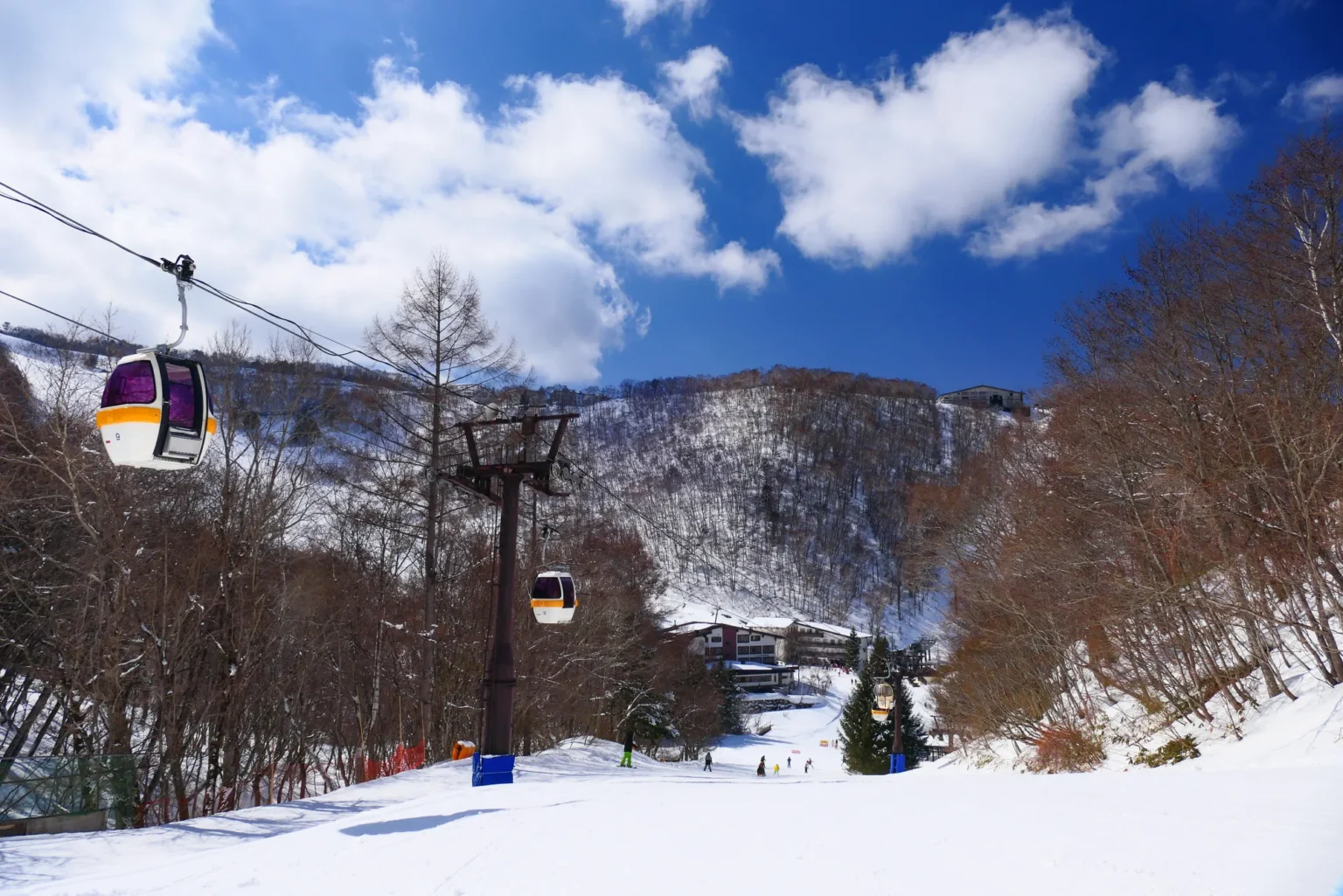
The 18 areas are individually named on the official rate card, and the point-ticket table doubles as a census of them: every lift in every area, each with its point price — from Sun Valley and Maruike, through the Ichinose and Takamagahara cluster, to Yakebitaiyama with its two gondolas, Okushiga at the far end of the bus route, and Kumanoyu and Yokoteyama-Shibutoge. Free parking is listed area by area — about 1,300 spaces in the Ichinose cluster alone, 1,700 around the Yakebitai Prince Hotel lots, 900 at Okushiga.
Two practical notes from the same fine print. Lost key tickets are not reissued — treat the card like cash. And refunds for weather closures follow the Ropeway Association’s published rules rather than a blanket promise, so a storm day is not automatically money back.
How this fits the other passes
Shiga Kogen is one of the seven resorts on the NAGANO7 Powder Dream Pass, so if your trip also takes in Nozawa or Madarao, run that arithmetic before buying Shiga-only days — we worked through the break-even there. If you are comparing early-bird products across Japan generally, our September round-up is the wider view, and the Nagano high-country guide sorts the region when snow is not the only aim. Visiting Nozawa around 15 January? Our Nozawa Fire Festival guide has the 2026 timetable.
Where to stay
Staying on the mountain puts you at the lifts; staying at Yudanaka or Shibu Onsen below gives you the hot-spring town and the bus up. The standalone lift ticket is bought from the resort and earns us nothing. If you book through the accommodation, ski-package or rail-pass links below, we may earn a commission — and note the ski packages may bundle their own lift passes, so compare against the rate card above.
Yudanaka & Shibu Onsen stays Ryokan on Rakuten Travel Shiga Kogen ski packages Rail pass options
Common questions
Does one ticket really cover every lift in Shiga Kogen?
Yes, during normal operating hours: the common key ticket covers all 45 lifts and gondolas across all 18 ski areas, by the Ropeway Association’s own definition of the product. Night skiing and early-morning sessions are sold as separate tickets, though point tickets also work at night.
Do multi-day tickets have to be used on consecutive days?
The regular 2-to-10-day tickets do not — they can be used on non-consecutive days at any point in the season, which runs 5 December 2026 to 5 May 2027. The 1-day ticket is valid only on the day you first pass a gate. The discounted early-season and spring tickets are the opposite case: they must be used on consecutive days from the date of issue, and their 2-day versions stop being issued on 17 December and 4 May respectively.
Should I buy a regular multi-day ticket if one of my days falls in December or April?
Check the arithmetic first. The regular three-day ticket is ¥27,500, but a day in the early-season window (to 18 December) or the spring window (from 1 April) costs ¥7,500 on its own — so one mid-season day plus one December day plus one April day is ¥26,500 bought separately. The regular multi-day ticket wins when your days all fall in the ¥9,500 mid-season band; the discounted windows can beat it when they don’t.
What is the cheapest adult day on the rate card?
The opening festival: 5–6 December 2026, when an adult day is ¥5,000 — 47 per cent off the mid-season ¥9,500 — and the two-day festival ticket is ¥7,500, less than a single mid-season day. Otherwise the early-season window to 18 December and the spring window from 1 April are ¥7,500 a day, children’s 1-day tickets are free on the five Kids’ Ski Day Sundays, and the adult-plus-child packs save ¥1,500 to ¥4,500 against separate tickets. If you only want a handful of rides, the 20-point minimum purchase is ¥4,000.
How do I get there from Tokyo?
Shinkansen to Nagano (from 1 hour 19 minutes, depending on the train), then the Nagaden express bus from the East Exit — ¥3,000 to any Shiga stop from 5 December, about 78 minutes to Yamanoeki, seven departures a day plus a Saturday 8:15 and a reserved Friday 21:00 night bus in the deep season. The timetable’s suggested connection is the 6:28 train from Tokyo, arriving Nagano 8:03 for the 9:10 bus, which reaches Yamanoeki at 10:28.
Can I see the snow monkeys on the same bus?
Not from 5 December 2026, when the new winter timetable begins: the Shiga Kogen express will pass the Snow Monkey Park stop without stopping. A separate direct Snow Monkey Park express covers it — from Nagano East Exit, about 50 minutes, ¥3,000, outbound 8:00 to 13:30 at 20-minute intervals, with a combined entry-plus-bus web ticket. You cannot hop off the Shiga bus at the park any more, so plan the monkeys as their own leg, or base at Yudanaka between the two.
Day ticket, 4-hour ticket or points — which should I buy?
Add up what you will actually ride. A full day of lift-hopping: the ¥9,500 day ticket. A half-day: the ¥7,500 4-hour ticket, which runs continuously from your first gate. A handful of rides: points — five rides on a 9-point gondola cost ¥9,000, and the 20-point minimum is ¥4,000. If your planned lifts total more than about 47 points’ worth, the day ticket wins.
Can I buy the season pass from outside Japan?
You can buy it on the web — the early-bird rates are web-only — but it will not be posted abroad, and window pickup requires showing the confirmation on a smartphone or tablet, plus age ID for each named holder. A printed confirmation is refused, and names cannot be changed after purchase. Plan to collect it at a ticket window when you arrive, any open ski area from 1 December.
Sources
The primary documents behind every figure above
- Shiga Kogen Ropeway Association — the 2026-27 window rate card (all ticket prices, the 18-areas/45-lifts definition, non-consecutive rule, age bands, point table, packs, Kids’ Ski Days, opening-festival and early/spring rates, key-ticket rules, season dates and hours), the season-pass purchase page (web-only early rates, no overseas shipping, smartphone-only pickup), and the access page (drive routes, rail connections, free-parking counts) — all checked 8 September 2026
- Nagaden Bus — winter timetable release of 4 September 2026 and its attached PDFs: the Shiga Kogen express timetable and revised fare table (5 Dec 2026 – 5 Apr 2027), and the Snow Monkey Park direct express timetable
- Photographs: Wikimedia Commons, each credited to its author with its licence linked in the caption
Join travelers discovering Japan's hidden side
Weekly dispatches from off-the-beaten-path Japan — spots and stories you won't find in guidebooks.
No spam. Unsubscribe anytime.
Welcome aboard!
You're in. See you in your inbox soon.