Japan · Winter · Nagano & Niigata
Japan’s ski resorts sell next winter’s lift passes months ahead at the lowest price they will ever charge, then raise it in stages as the season approaches. Saku Ski Garden Parada in Nagano opened its 2026-27 sale on 1 September 2026 at ¥20,000 for an adult season pass against a regular ¥50,000 — and that window closes on 31 October.
I want to be precise about what this article is and is not. It is not a ranking of Japanese ski resorts. It is an explanation of a pricing system that runs every autumn, is almost entirely invisible in English, and can cut what you pay to ski in Japan by a third to two-thirds — followed by the harder question nobody seems to answer: which of these passes a foreign visitor can actually buy and use.
The answer to that second question turns out to vary enormously between resorts, and not in the way you would guess. So I read the actual purchase pages, the terms of use and the small print, and the results are below.
What actually happens every autumn
Japanese resorts price a season pass in phases, and each phase is more expensive than the last. The vocabulary is worth learning because it is printed on every page: 超早割 (chō-hayawari, super early bird), 早割 (hayawari, early bird), then 通常 (tsūjō, regular). Some resorts run four phases, some two.
Parada published its whole ladder in a single announcement on its own site on 23 August, and its operating company repeated the headline figures in a press release on 31 August. That makes it a clean worked example. Here is every figure the resort has confirmed for the 2026-27 winter.
| Season pass | Super early bird 1 Sep – 31 Oct | Early bird 1–30 Nov | Regular |
|---|---|---|---|
| Adult (high school and above) | ¥20,000 | ¥25,000 | ¥50,000 |
| Senior (60+) | ¥20,000 | ¥25,000 | ¥45,000 |
| Elementary and junior high | ¥15,000 | ¥20,000 | ¥30,000 |
| Kinder (below school age) | ¥10,000 | ¥15,000 | ¥20,000 |
| One-day lift ticket | Super early bird 1 Sep – 31 Oct | Early bird 1–30 Nov | Regular |
|---|---|---|---|
| Adult | ¥4,000 | ¥5,000 | ¥5,600 weekday / ¥5,900 weekend |
| Senior (60+) | ¥3,500 | ¥4,500 | Not confirmed for 2026-27 |
| Elementary and junior high | ¥2,700 | ¥3,000 | Not confirmed for 2026-27 |
| Kinder | ¥2,000 | ¥2,200 | Not confirmed for 2026-27 |
The resort’s own line is blunt: the cheapest you will ever buy is 1 September to 31 October. The price is flat across those two months, so there is no penalty for thinking it over until late October — but wait until November and the same adult season pass costs ¥5,000 more. The kinder season pass is new this year.
Where I have to correct the marketing, and it matters to your arithmetic. The press release advertises the day ticket as a ¥1,900 saving against a ¥5,900 regular price. But the resort’s own announcement states the 2026-27 regular adult day ticket as ¥5,600 on weekdays and ¥5,900 at weekends and holidays. Against a weekday ticket the real saving is ¥1,600. The ¥5,100 / ¥3,500 / ¥2,500 regular prices quoted for senior, child and kinder appear only in the press release and have not been confirmed on the resort’s site for this winter — they match last season’s weekend rates exactly, so treat them as unconfirmed rather than as this year’s prices.
When does a season pass actually pay for itself?
At Parada, five days. That is the number that matters, and it is unusually low.
A ¥20,000 season pass divided by a ¥4,000 super-early-bird day ticket is exactly five days. Measured against the regular weekday price of ¥5,600 — what you would pay turning up on the day without planning — it is 3.6 days. For a family living within driving range, or anyone spending a fortnight in Nagano over the winter, the pass stops being a commitment and starts being the obvious purchase.
Five days on the hill and the season pass has paid for itself. That is the whole argument, and it is why the September-to-October window matters.
Compare that with the big-name passes, where the arithmetic is far less forgiving. Shiga Kogen’s 2026-27 adult season pass is ¥100,000 at the super-early-bird price against an ¥8,500 online day ticket — about twelve days. The NAGANO7 Powder Dream Pass covering seven northern Nagano resorts is ¥140,000 in its super-early phase. Those are passes for people who ski most weekends, not for a two-week trip.
Can a foreign visitor actually buy one of these?
Sometimes, and the deciding factor is almost never price — it is how the pass is delivered. This is the part I could find nowhere in English, so I went through the purchase mechanics resort by resort. The pattern that emerges is simple: a pass redeemed by QR code removes the postal barrier entirely, while a pass that arrives in the post is effectively closed to visitors, because several resorts state plainly that they do not ship overseas. Removing the postal barrier is not the same as a clear run, though — checkout, payment and ID rules still have to be checked resort by resort, and I get to those below.
Delivery is not the only gate. Happo-one’s ¥6,400 early-window day ticket is bought online with no postage involved at all, but the discount is tied to a My Number card — a document a short-stay visitor will not have, and one a foreign resident may hold. It is the clearest example of an eligibility rule doing the excluding that postage usually does. The same Happo-one sale does include one early ticket without the card condition — a ¥16,600 two-day ticket that the rate card says anyone can buy.
| Resort | How the pass reaches you | Workable for a visitor? |
|---|---|---|
| Saku Parada | Digital. Nothing is posted; you show a QR code and swap it for a ticket on site | Yes, with caveats below |
| Shiga Kogen | Web purchase with QR pickup at the resort, or by post for ¥1,000 more | Yes, via the QR route only — the resort states it does not ship overseas |
| Nozawa Onsen | Mail-in application with a photo, bank transfer, pass posted in advance | No — counter pickup is not offered and overseas shipping is refused |
| Appi Kogen | Photo glued to a paper form; the discounted tiers are in-person application only | No, not for the discounted tiers |
| Hakuba Valley | Online, but some tiers are restricted to people living in Japan | Partly — see the residency note below |
Parada is the outlier here, and in a genuinely useful way. Its ticket shop states that nothing is ever posted, that purchased tickets appear in a “My Ticket” list, and that you show a QR code at the ticket counter or a vending machine to collect the real pass. Better still, its season-pass page says outright that the phone is the season pass and that the photo registration which used to be required is no longer needed. For a visitor with no Japanese address, that removes both of the usual obstacles at once.
Three things that can still stop you, and I could not resolve them from outside. First, the checkout enforces 3-D Secure on every card payment, so a card that cannot complete that step will fail — this is the realistic risk, not a stated ban on foreign cards. Second, the account form stores an address and a phone number, but I could not reach the form itself to see whether either must be Japanese, so I will not tell you it works. Third, the shop was still behind a maintenance page when I checked in the early hours of 1 September, so the 2026-27 flow could not be inspected on day one. Everything above is read from the same shop’s published rules during last season. Check before you commit money.
The residency rule is the one to understand. Hakuba Valley sells some 2026-27 pass tiers only to people living in Japan — its own English wording is that they “are available only to customers residing in Japan at the time of purchase,” with photo ID checked at pickup. The line is residence, not nationality: a foreign resident of Japan qualifies with a Residence Card, while a visitor flying in does not. This is worth knowing because it is often described online as Japanese resorts charging tourists more, which is not what is happening. Where prices diverge, it is through resident discounts, not a foreigner surcharge.
If all of that sounds like too much friction, there is an English-language route. WAmazing Snow, a registered Japanese travel agency, sells genuine 2026-27 early-bird lift products in English with prices in dollars and yen, including deadline-dated super-early-bird day tickets at several resorts. It does not currently list Parada — its 2026-27 lineup was still being prepared when I checked — but it is the cleanest way in for anyone who cannot navigate a Japanese checkout. Shiga Kogen also runs its own English ticket site with an online shop.
The resort behind the headline: what Parada actually is
Working out the rest of the trip
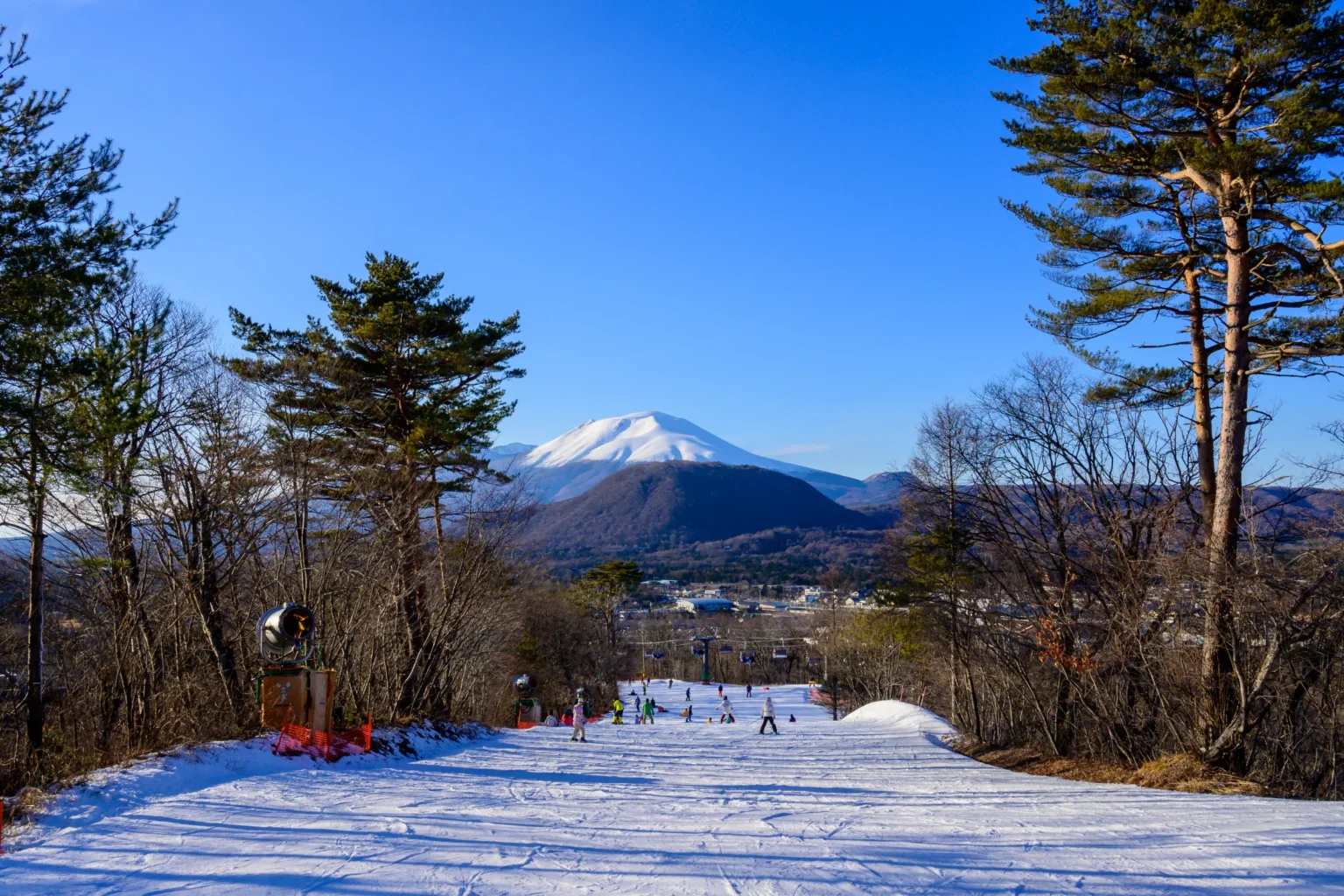
Small, gentle, family-shaped, and unusually close to Tokyo. Seven courses and six lifts split across two areas, North Parada and South Parada, with the summit at 1,046 m and the base at 757 m. That is a vertical of under 300 m — this is not a powder destination and I would not sell it as one.
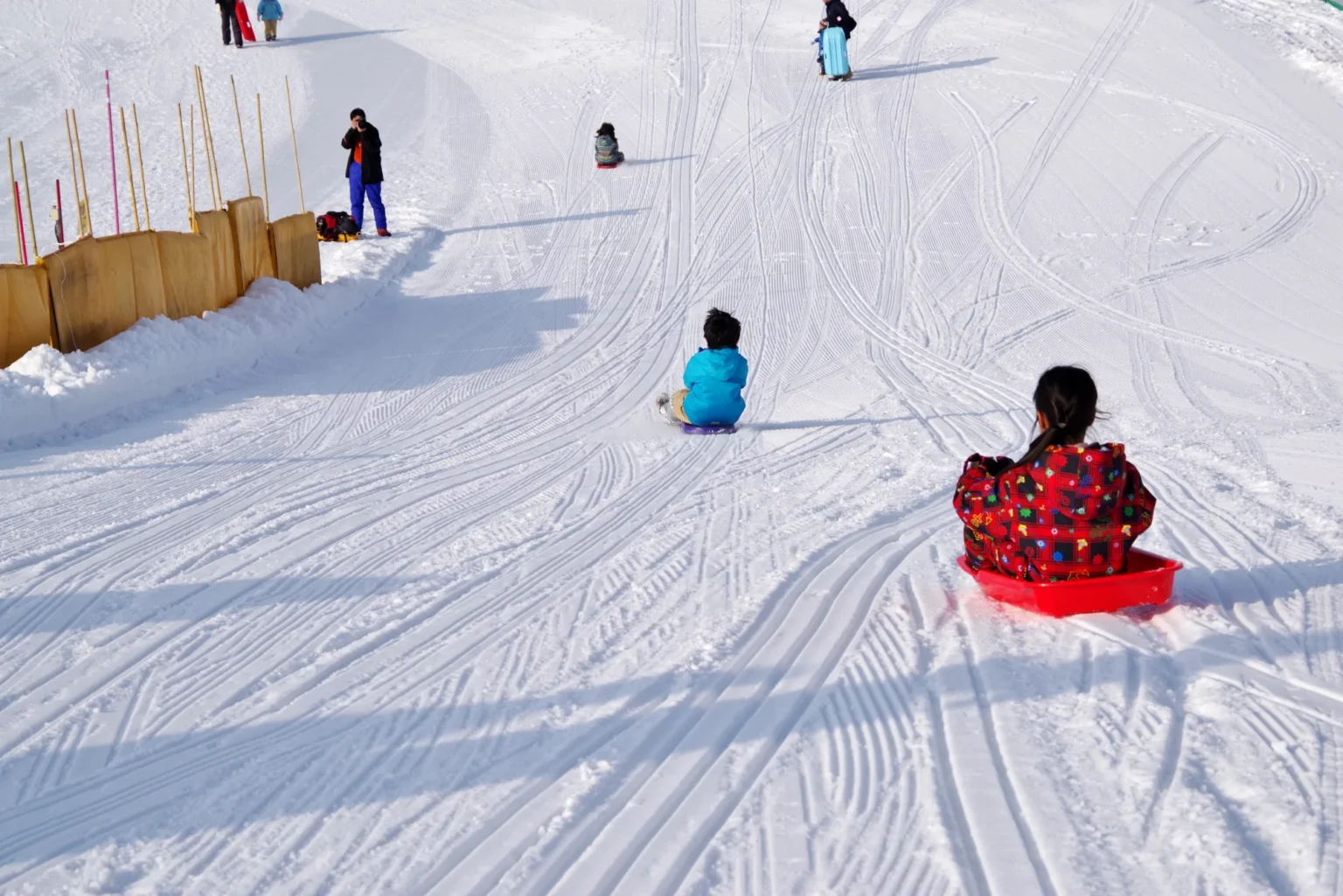
What it has instead is everything a family with small children needs in one place: outdoor kids’ areas on both sides of the mountain plus an all-weather indoor one, a dedicated beginners’ park, a sledding slope, ski and snowboard schools, rental down to 15 cm boots, an on-site crèche taking children from two on weekends, and a day-use hot spring with a view. The resort uses snow-making, which at this modest elevation is not a luxury. Last season it also ran night skiing until 22:00, though the 2026-27 timetable had not been published when I wrote this.
By shinkansen
Hokuriku Shinkansen from Tokyo to Sakudaira, 164 km, about 1 hour 13 minutes on the fastest service and under an hour and a half on the slower Asama, no transfers. An unreserved seat is ¥6,040 one way. Nagano Prefecture’s tourism board puts the resort 11 minutes from the station by taxi, and the resort runs a free shuttle from Sakudaira’s Asama exit.
By car
The resort’s own winter access page says to exit the Joshin-etsu Expressway at Sakudaira Smart IC, about 5 minutes from the ski base, or Saku IC, about 10. Its marketing line is 90 minutes from central Tokyo.
Hours
Lifts ran 8:30–16:30 at weekends and 9:00–16:30 on weekdays last season. The 2026-27 timetable had not been published when I wrote this, so treat these as indicative.
Language
There is no English version of the resort’s website — I checked, and the English URLs return errors. The snowboard school offers English lessons, but only as a private lesson with a ¥6,500 surcharge on top.
What the marketing says, and what the resort’s own pages say
Two claims travel with this resort everywhere, and both need qualifying before you plan around them.
“A 90% fine-weather rate.” This is the resort’s most-repeated line and it appears in the press release, on the city tourism association’s page, and in the meta description of the resort’s own winter pages. What it does not appear in is any visible body copy on the official site, and no measurement period, method, or definition of a “fine” day is given anywhere. The Saku basin genuinely is on the dry, inland side of Nagano and gets far less cloud than the Sea-of-Japan resorts — that part is consistent with the climate data further down this page. But treat 90% as a marketing figure, not a statistic you can check.
“Japan’s only ski resort directly connected to an expressway.” Partly true, and the detail matters if you are driving. An escalator does run up from the Sakudaira parking area, and you can enter from either direction of the expressway. But it lands at South Parada, and the resort’s own winter access instructions tell drivers to leave the expressway at the Smart IC and drive about five minutes to North Parada, which is the main ski base. Last season South Parada opened only from late January to early March, roughly six weeks inside a three-month season. If the walk-in from the service area is the reason you are going, confirm South Parada is open on your date.
One more piece of honesty about dates: the 18 December 2026 to 22 March 2027 season is published as a planned operating period, and it appears in the press release rather than on the resort’s website. As I write, the resort’s own winter pages still carry last season’s information behind a banner saying the 2026-27 update is in preparation.
What happens if there is no snow?
You lose the money. This is the single most important thing to understand before buying any Japanese season pass in September, and it is stated plainly enough that nobody should be surprised.
Parada’s ticket terms say digital tickets cannot be changed, cancelled or refunded for any reason whatsoever, and the season-pass text adds that there is no refund regardless of how many times you use it. Tickets also die with the season — they do not carry over to the next winter. No poor-snow exception is published.
Other resorts are, if anything, more explicit. Yuzawa Nakazato states in the same block of small print both that snow and weather conditions may delay the opening or close the season early, and that the money is not refundable for any reason. Ishiuchi Maruyama’s terms are similar, with one narrow exception: it reserves the right to offer a refund or a substitute such as a next-season discount only if facilities are severely restricted for most of the operating period. A thin January does not qualify.
How I would decide. Buy the September price only if you would still ski enough days to break even in a mediocre snow year, not a good one. At Parada that is five days, which is a low bar. At a ¥100,000 pass it is twelve or more, and twelve days is a real commitment to make in September for a winter that has not been forecast yet. Japan’s Meteorological Agency had published nothing at all about this coming winter when this article went up; its cold-season outlook was due later in September.
Is this cheap by Japanese standards?
Yes, and Parada is going the opposite way to the market. Its 2026-27 super-early-bird day ticket at ¥4,000 is ¥500 cheaper than the equivalent last season, and the company says it cut the price deliberately to keep families coming.
That is unusual. The most recent nationwide survey of Japanese lift prices, covering last winter, put the average adult one-day window ticket at ¥7,327, up about 8% on the season before, with the steepest rises at the inbound-heavy Hokkaido resorts. For this coming winter, Niseko United’s own published prices run to ¥13,500 for a peak-period adult day ticket. Against that, ¥4,000 for a day and ¥20,000 for a season is a different market entirely.
| 2026-27 adult season pass | Earliest price | Regular price |
|---|---|---|
| Saku Parada (Nagano) | ¥20,000 | ¥50,000 |
| Hakuba Happo-one, new customer (Nagano) | ¥95,000 age 40+, ¥49,000 age 18–39 | ¥115,000 / ¥59,000 |
| Shiga Kogen (Nagano) | ¥100,000 | ¥110,000 |
| NAGANO7 Powder Dream Pass, 7 resorts | ¥140,000 | ¥160,000 |
| Ishiuchi Maruyama Unlimited (Niigata) | ¥52,000 | ¥82,000 |
Two things in that table deserve a second look. Happo-one’s cheaper adult band is for ages 18 to 39 and the expensive one is for 40 and over, which is the reverse of what most people assume when they see two adult prices. And Ishiuchi Maruyama’s ladder has four rungs rather than three, running from ¥52,000 in July and August up to ¥82,000 in season — a ¥30,000 swing on the same pass depending only on when you click buy.
Where the snow actually is
Not where the altitude suggests. Japan’s snow comes off the Sea of Japan, and exposure to that northwesterly beats elevation every time — which is the trade-off you are making when you choose a sunny, convenient resort like Parada over a deep one.
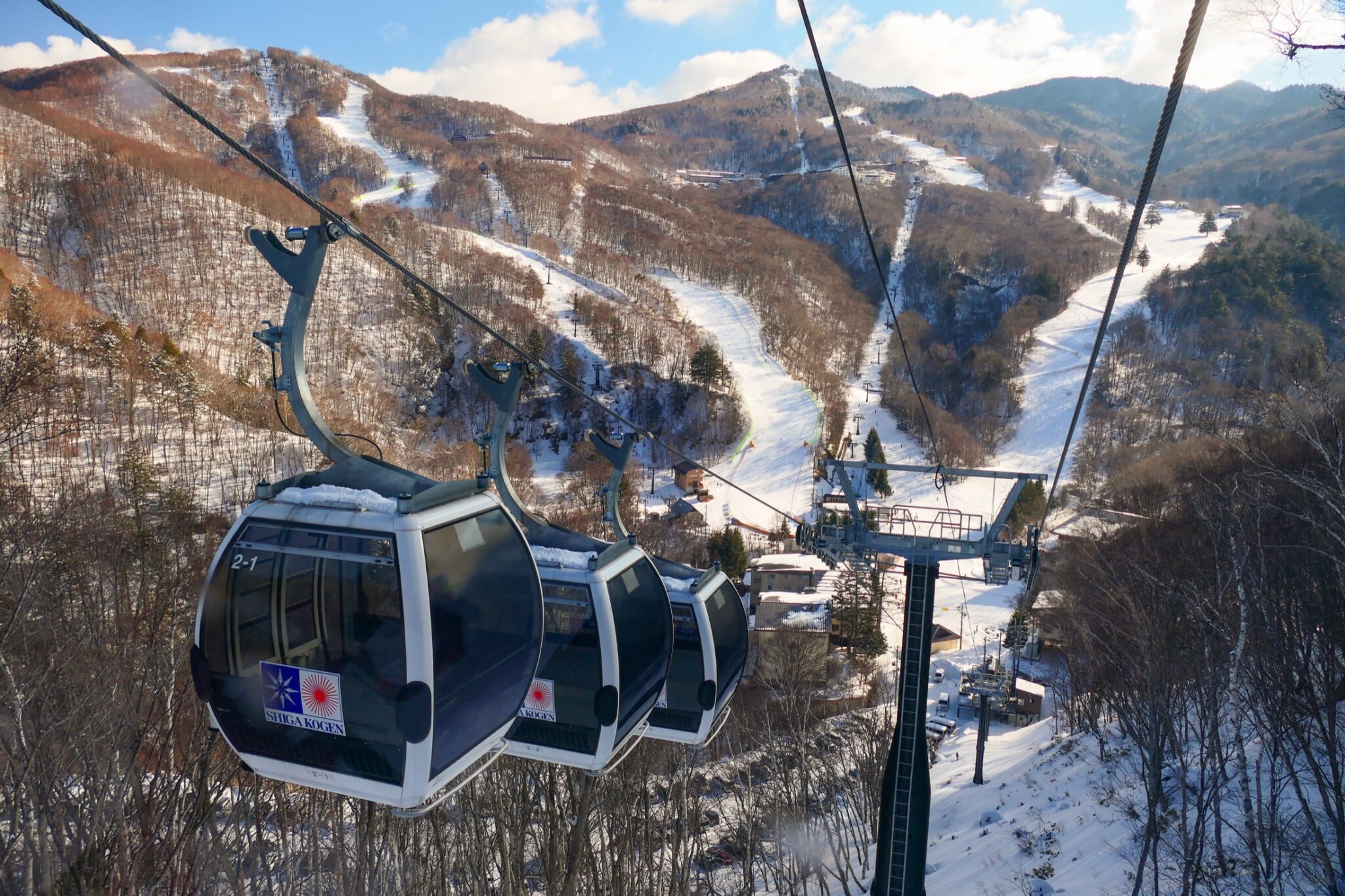
The Japan Meteorological Agency’s 1991–2020 climate normals make the point cleanly. Nozawa Onsen’s valley station, at 576 m, records 1,087 cm of cumulative snowfall a year and a maximum depth of 205 cm. Yuzawa in Niigata, at just 340 m, gets 1,054 cm and 208 cm. Sugadaira in Nagano sits at 1,253 m — nearly 700 m higher than Nozawa — and records 648 cm and 104 cm. Almost 700 m more altitude, and 40% less snow.
These are valley-floor weather stations rather than on-mountain readings, so they understate what falls on the ski terrain above them. Use them to compare climate zones, never as a resort’s snowfall figure. One more useful pattern from the same data: snowfall peaks in January, but snow depth peaks in February. If you want the deepest base, February is the month.
So which one should you buy?
Visiting Japan for a week or two
Skip season passes entirely. Buy super-early-bird day tickets where they exist, or use an English platform that sells them. The break-even on a ¥100,000 pass is a dozen days you will not have.
Living in Japan, skiing occasionally
Parada’s ¥20,000 is the kind of number that survives a bad winter. Five days and you are even, and it is close enough to Tokyo to use on a whim.
Living in Japan, skiing seriously
Look at the multi-resort passes in their super-early phase. NAGANO7 at ¥140,000 across seven areas is a different proposition from a single-hill pass, and the November price is ¥10,000 higher.
Travelling with small children
Value the kids’ land, the sledding slope, the rental sizes and the crèche above the vertical drop. On that measure a small resort near the shinkansen beats a famous one every time.
Planning a Nagano winter
Common questions
When exactly do Japanese ski passes go on sale?
It varies far more than most guides admit, so “September” is a useful rule of thumb rather than a rule. September and October are the busy window — Parada sells 1 September to 31 October at one flat price, Shiga Kogen’s super-early tier ran through September, Nozawa’s early-bird application window was September, Happo-one’s opened on 1 October — but some resorts open much earlier. Ishiuchi Maruyama’s cheapest tier ran in July and August, Hakuba Valley’s sale opened in mid-July, and one regional operators’ association allocated its 2026-27 passes by lottery back in April. If you have a target resort, check its site from early summer.
Can I buy a Japanese ski season pass from overseas?
At some resorts yes, at others no, and delivery is what decides it. Passes issued as a QR code redeemed on site — Saku Parada, or Shiga Kogen’s web-purchase-with-pickup option — need no Japanese address. Passes posted in advance generally cannot work: Nozawa Onsen and Shiga Kogen both state they do not ship overseas, and Nozawa does not offer counter collection at all. Check the delivery method before the price.
Do Japanese ski resorts charge foreigners more?
Not through a foreigner surcharge, no. Niseko United’s published prices, for instance, vary only by date and age. What does exist is the reverse construction: discounted tiers restricted to people living in Japan, verified by photo ID, as Hakuba Valley does for parts of its 2026-27 season pass. A foreign resident of Japan qualifies for those with a Residence Card; a visitor does not. Some municipalities also run resident discounts, which is a different thing again from resort pricing.
What happens to my season pass if the snow is bad?
Nothing, in your favour. Parada’s terms refuse refunds for any reason and its tickets do not carry over to the next season. Yuzawa Nakazato states in the same breath that it may open late or close early because of snow conditions and that the money is not refundable. Ishiuchi Maruyama allows a refund or substitute only if the facilities are severely restricted across most of the operating period. Buying in September means accepting the winter’s weather risk yourself.
How do I get to Saku Parada without a car?
Take the Hokuriku Shinkansen from Tokyo to Sakudaira, about 1 hour 13 minutes on the fastest service, and ¥6,040 for an unreserved seat one way. From the station it is roughly 11 minutes by taxi according to Nagano Prefecture’s tourism board, and the resort runs a free shuttle from the station’s Asama exit. Be aware the shuttle timetable published now is last season’s, several departures ran only at weekends and over New Year, and no journey time or reservation rule is stated — check again in December.
Is a ¥20,000 season pass really worth it for a small resort?
It depends entirely on your ski-day count, and the honest number at Parada is five. Against the ¥4,000 early-bird day ticket the pass breaks even on day five; against the ¥5,600 regular weekday ticket, on day four. If you live within reach of Nagano and expect six or more days, it is straightforward value. If you are visiting Japan once this winter, buy day tickets.
Are the prices tax-included?
Probably, but no page says so. None of the Parada announcements, the press release, or Shiga Kogen’s official flyer carries a tax notation at all. Parada’s own ticket shop separately states that its prices include consumption tax, and Japan’s total-price display rule makes tax-inclusive the strong reading — but since the resort has not labelled these specific figures, I am not going to state it as fact.
Related reading
Is the NAGANO7 pass worth ¥140,000?
The seven-resort pass in detail, with the break-even worked out against single-resort tickets.
Shiga Kogen, Nozawa and the NAGANO7 pass
Ski resorts you can reach in a day
Ten resorts within day-trip range of Tokyo, sorted by how long the door-to-door actually takes.
Best ski resorts near Tokyo
Travelling on heavy snow days
What actually happens to trains, roads and flights when Japan gets a serious snowfall.
Japan in heavy snow
Hakuba, all year round
The valley beyond the powder season, and how to reach it from Tokyo.
Hakuba Village guide
If you are building a wider Nagano winter around this, the snow monkeys at Jigokudani pair naturally with the Shiga Kogen side of the prefecture, and Hakuba Station is the other end of the same journey from Tokyo. For a sense of what the high country looks like outside winter, there is Nagano’s high country sorted by altitude.
Sources checked
Parada prices, sale windows and the regular 2026-27 adult day-ticket rate: the resort’s own announcement of 23 August 2026 at saku-parada.jp, plus the operating company’s press release of 31 August 2026 via PR TIMES. Purchase mechanics, delivery, transfer and refund rules: the resort’s ticket shop at parada.resnow.jp, read through archived captures of its help, terms and season-pass pages because the shop was in maintenance on 1 September 2026. Terrain, lifts, hours, schools and facilities: saku-parada.jp; station-to-resort taxi time from Nagano Prefecture’s official tourism site. Shinkansen fares and journey times: timetable and fare references, reflecting JR East’s revision of 14 March 2026. Other resorts’ 2026-27 passes: official pages and flyers at shigakogen-ski.or.jp, happo-one.jp, nozawaski.com, ishiuchi.or.jp, hakubavalley.com, yuzawa-nakazato.com, appi.co.jp and powderdreampass.com. Lift-price inflation: the most recent nationwide survey, published December 2025 and covering the 2025-26 winter. Snowfall and snow-depth normals for 1991–2020: the Japan Meteorological Agency.
Join travelers discovering Japan's hidden side
Weekly dispatches from off-the-beaten-path Japan — spots and stories you won't find in guidebooks.
No spam. Unsubscribe anytime.
Welcome aboard!
You're in. See you in your inbox soon.