Nagano · Hakuba · Roadside Station
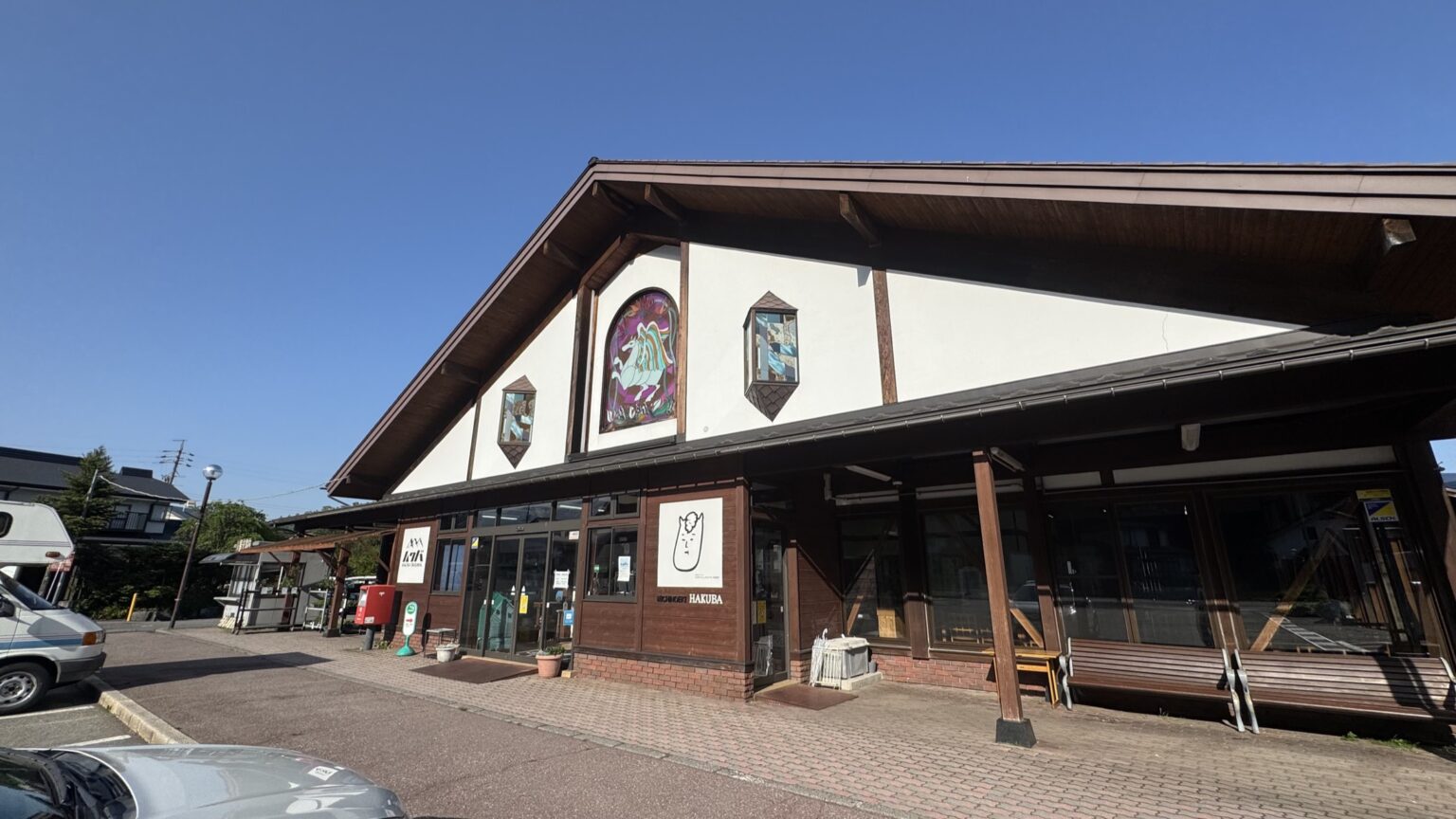
Michi-no-Eki Hakuba is a roadside station on Route 148 in the Nagano Alps — one of more than 1,200 government-registered rest stops across Japan, each with free parking, clean toilets and a local farm shop. This one’s specialty is purple rice, an ancient grain grown in Hakuba’s Aoni terraced fields, and you’ll find it turned into amazake, onigiri and even chiffon cake, alongside Shinshu apple juice and handmade soba in the restaurant.
What is a “michi-no-eki”?
If you’re not from Japan, this needs a word of explanation. A michi-no-eki — literally “road station” — is an officially registered roadside rest stop, and there are over 1,200 of them around the country. Every one has free parking and 24-hour toilets, but the good ones are destinations in their own right: a farm-produce shop selling whatever the surrounding area grows, a restaurant cooking local dishes, regional souvenirs you won’t find in cities, and a tourist-information corner. They’re built for drivers, so you really want a car to use one — but if you’re road-tripping the Japanese countryside, they’re the single best place to eat well and shop local for very little money.
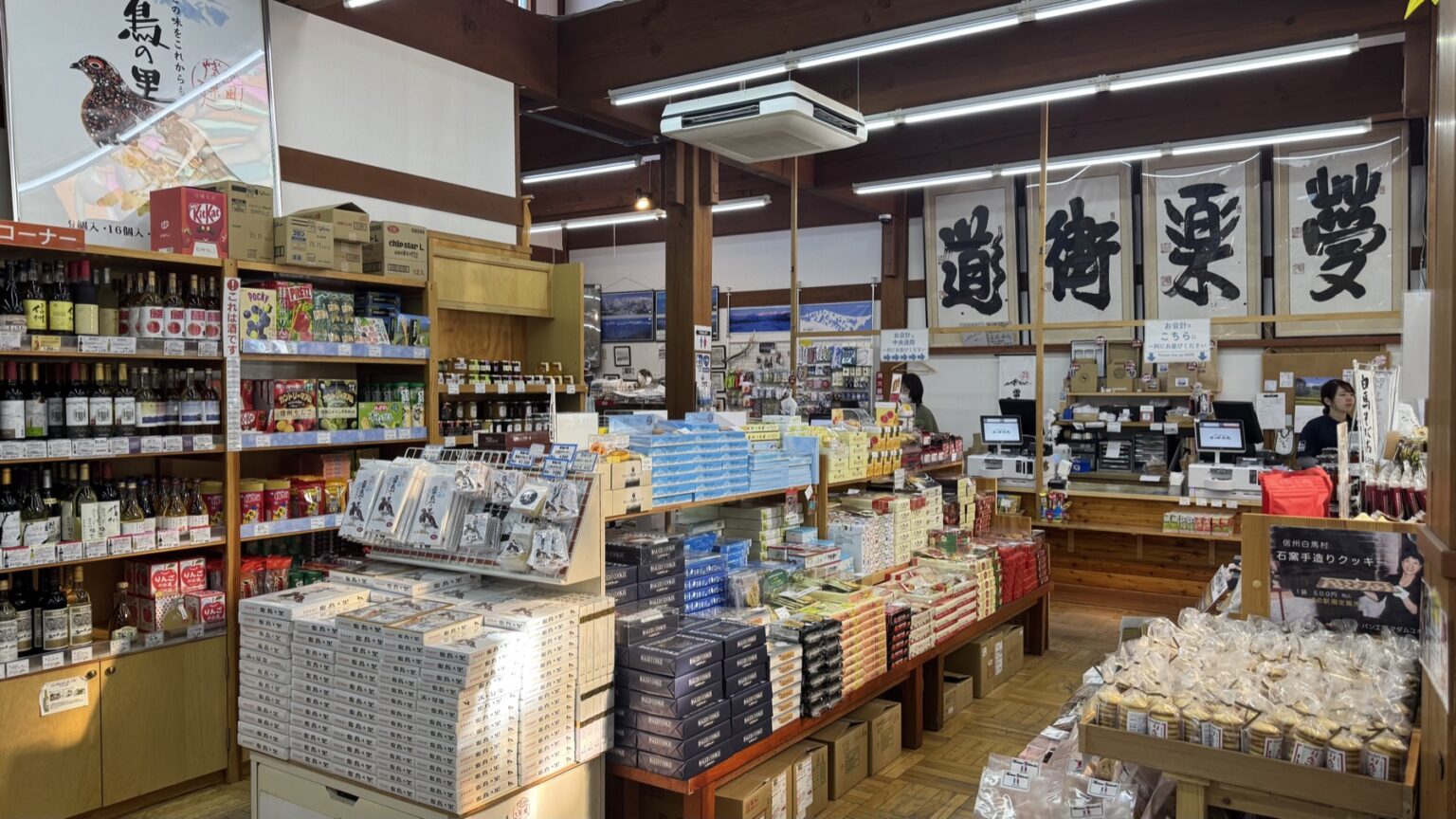
Hakuba’s specialty: purple rice
Hakuba is famous abroad as a ski resort, but its food specialty is something older — purple rice (murasakimai), a type of ancient grain. It’s grown up at Aoni, a tiny hamlet above the village whose terraced paddies are listed among Japan’s hundred finest. Because Aoni is hemmed in by hills, the rice grows there without cross-pollinating with ordinary varieties, with very little pesticide. Cooked in with white rice it stains the whole pot a deep violet, and it’s rich in anthocyanin — the same antioxidant in blueberries — at a much higher concentration. At the station it turns up in every form you can imagine, which is half the fun.
What I bought
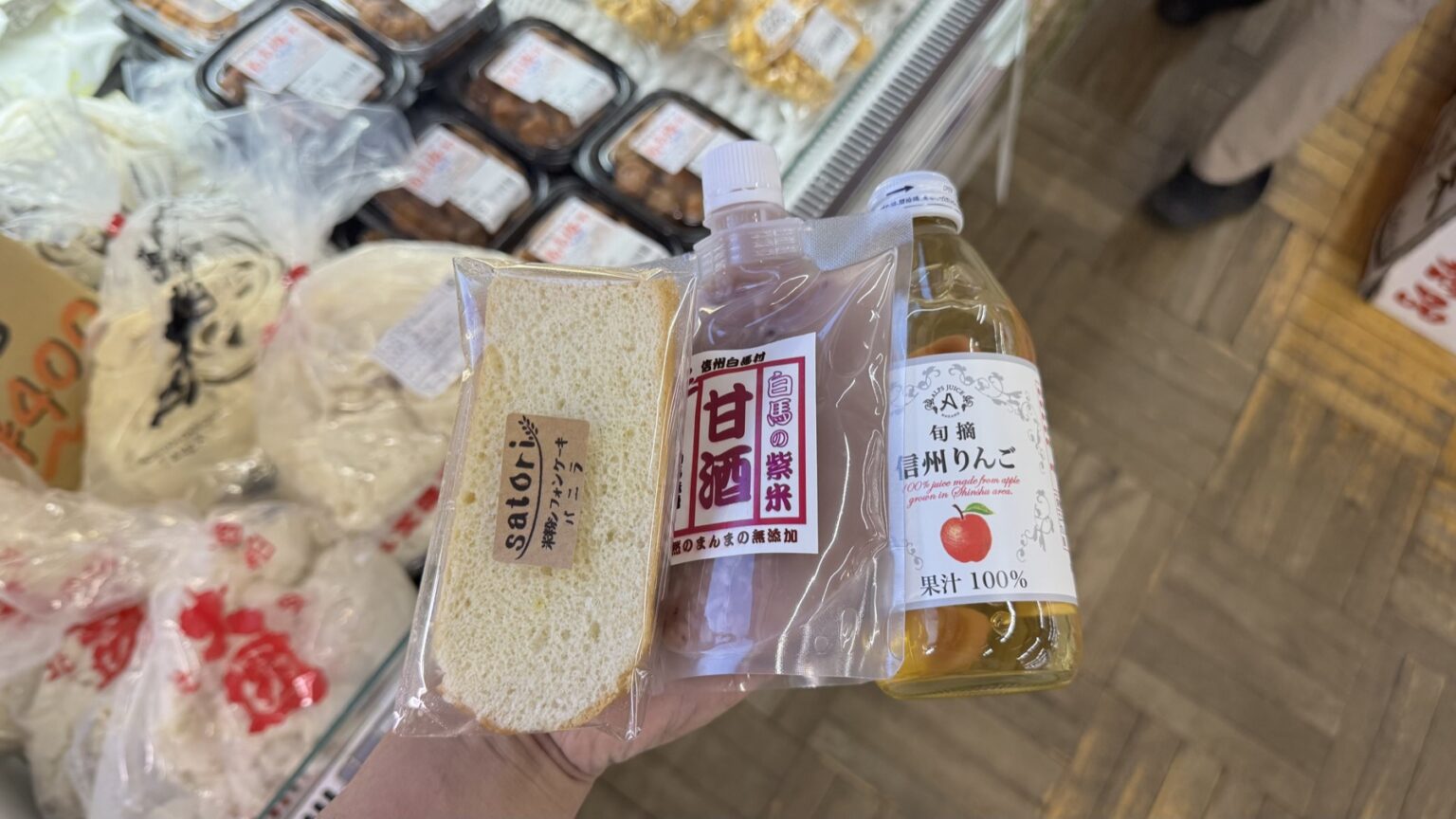
I came out with a small haul, and it’s a good snapshot of what’s worth picking up here:
Purple-rice amazake
A sweet, non-alcoholic fermented-rice drink, here made with the local purple rice so it comes out a soft pink. Warming, and a Japanese health staple.
Rice-flour chiffon cake
A slice of chiffon made with rice flour instead of wheat — lighter, slightly springy, and naturally a little gluten-free-friendly.
Shinshu apple juice
100% juice from Nagano (“Shinshu”) apples, which the prefecture is known for. Crisp and not too sweet.
Purple-rice onigiri
A rice ball made with the violet rice — the simplest way to actually taste the local grain on the spot.
The shop and the restaurant
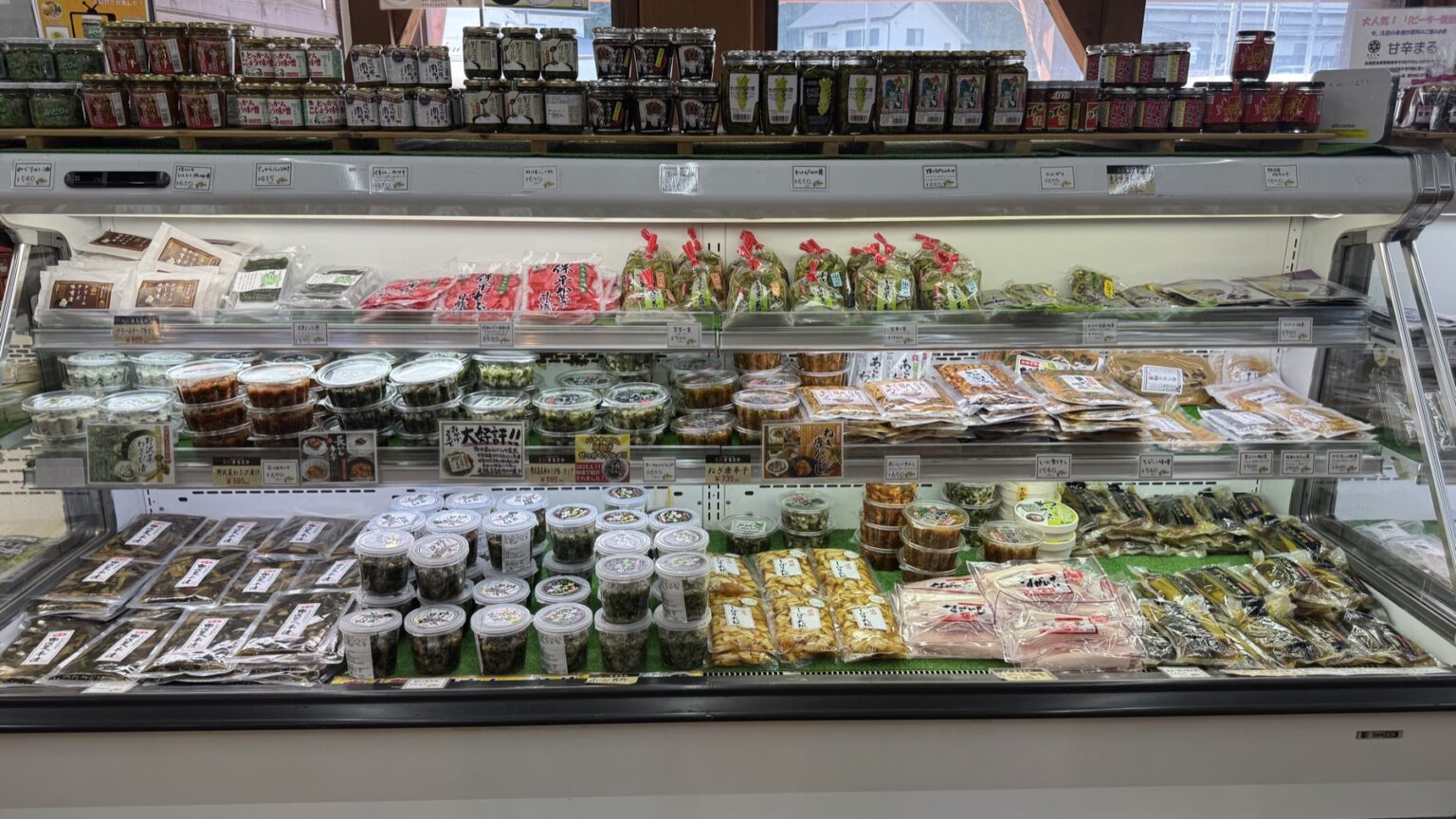
The shop runs 9:00 to 19:00, and beyond the purple-rice products it’s stocked with the wider Hakuba and Shinshu larder — soba and blueberry goods, oyaki (stuffed dumplings), pork from the area, pickles and seasonal vegetables in the chilled case. The restaurant is open 11:00 to 19:00 (last orders 18:30). The dish to get is the soba set, which comes with hand-cut buckwheat noodles, vegetable tempura and a serving of the local purple-rice okowa (steamed sticky rice) — the specialty on one plate.
| At the restaurant | Roughly | What it is |
|---|---|---|
| Soba set | ¥1,400 | Hand-cut soba + tempura + local purple-rice okowa |
| Pork curry | ¥1,200 | Curry with Hakuba-area pork |
| Pork-cutlet curry | ¥1,400 | Rōsu katsu curry made with Shinshu apple |
| Grilled-pork rice bowl | ¥1,300 | With gyōja-ninniku (mountain leek) |
Getting there
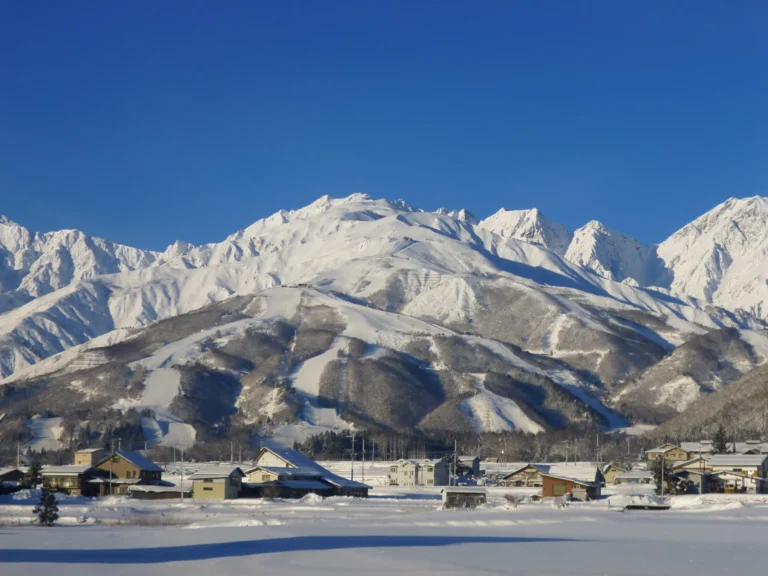
The station sits on Route 148 in Hakuba Village, with the Northern Alps — the white peaks the village is named for — rising right behind it. It’s built for cars, so it’s an easy stop on a drive between Nagano and the Itoigawa coast, or on the way to and from the ski slopes; there’s EV charging too. Hakuba Station is nearby if you’re on the train, but a car makes the most of a roadside station like this.
Staying in Hakuba
Hakuba is a full resort valley — pensions, ryokan and ski lodges — and a great base for the Northern Alps in summer or winter. Booking has the widest choice; Rakuten Travel is good for the Japanese-run inns.
Good to know
What is a michi-no-eki (roadside station)?
An officially registered roadside rest stop — there are over 1,200 in Japan. Each has free parking and 24-hour toilets, and most add a local farm-produce shop, a restaurant serving regional dishes, souvenirs and tourist information. They’re aimed at drivers, so a car is the natural way to visit.
What is Hakuba’s purple rice?
An ancient grain (murasakimai) grown in the terraced fields of Aoni hamlet above Hakuba, isolated enough to grow without cross-pollination and with little pesticide. It cooks up deep violet and is high in anthocyanin, the antioxidant also found in blueberries. The station sells it as rice, amazake, onigiri, sweets and more.
What are the opening hours?
The shop is open 9:00–19:00 and the restaurant 11:00–19:00 (last orders 18:30). The regular closing day is Tuesday, though the station stays open daily through the busy summer and ski seasons. Confirm before a special trip.
What should I buy or eat?
The purple-rice products — amazake, onigiri, rice-flour sweets — plus Shinshu apple juice. In the restaurant, the soba set comes with hand-cut noodles, tempura and local purple-rice okowa, which sums the place up on one plate.
Do I need a car?
It helps a lot. Roadside stations are designed for drivers, with large free parking and EV charging. Hakuba Station is nearby for train travellers, but a car lets you treat the station as a proper stop on a Nagano road trip.
Is it worth stopping if I’m not driving?
If you’re already in Hakuba it’s an easy, free browse for local food and gifts. But as a destination in itself it’s most useful to people on the road — that’s what a michi-no-eki is for.
Plan a Hakuba Trip
A roadside stop is best with a car and a night in the valley.
Hakuba Village Year-Round
What to do in the valley across the seasons.
Getting to Hakuba
Trains, buses and the practicalities of arriving.
Kamikōchi
The Alps’ most famous valley, an easy add-on.
Matsumoto Castle
Japan’s oldest original keep, on the way in.
Join travelers discovering Japan's hidden side
Weekly dispatches from off-the-beaten-path Japan — spots and stories you won't find in guidebooks.
No spam. Unsubscribe anytime.
Welcome aboard!
You're in. See you in your inbox soon.