Nagano · Hakuba Valley · Year-Round Guide
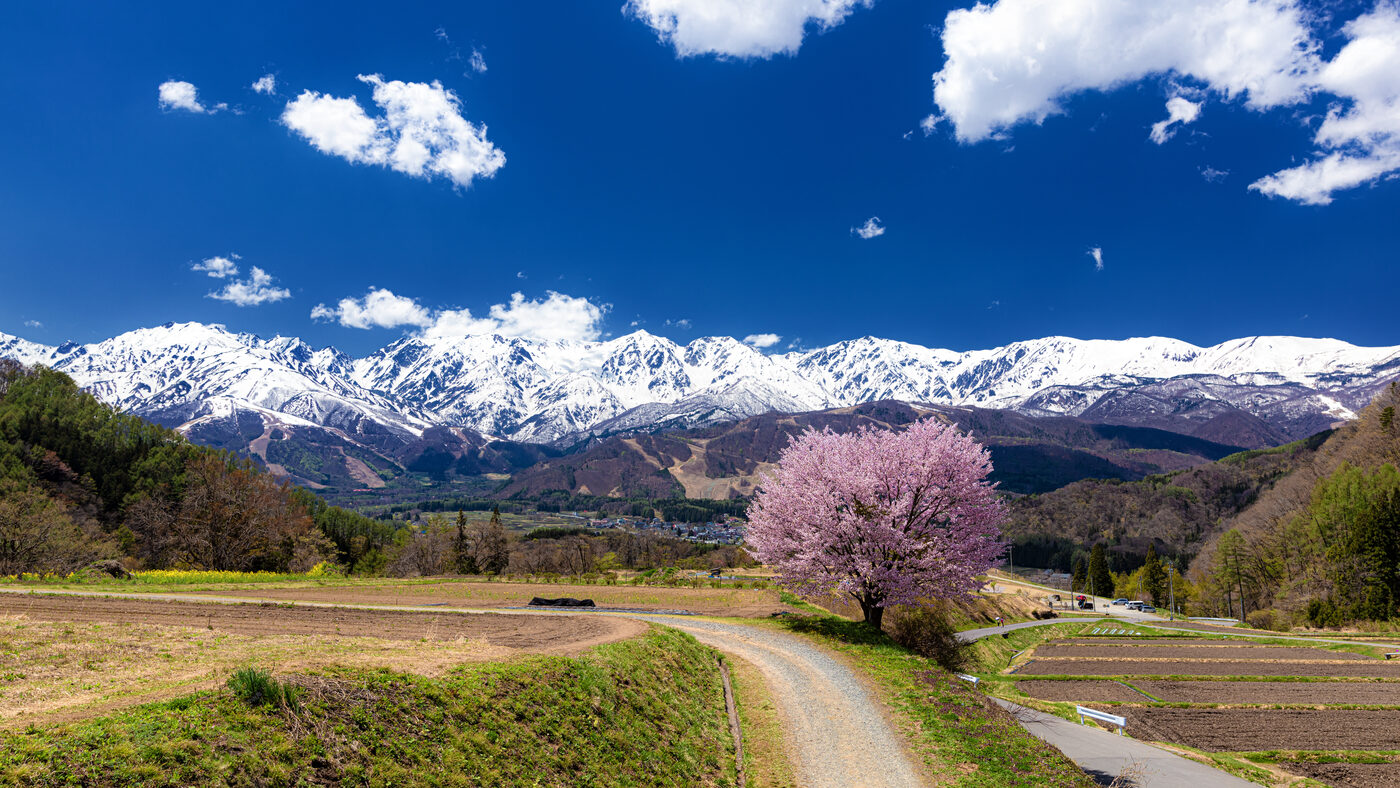
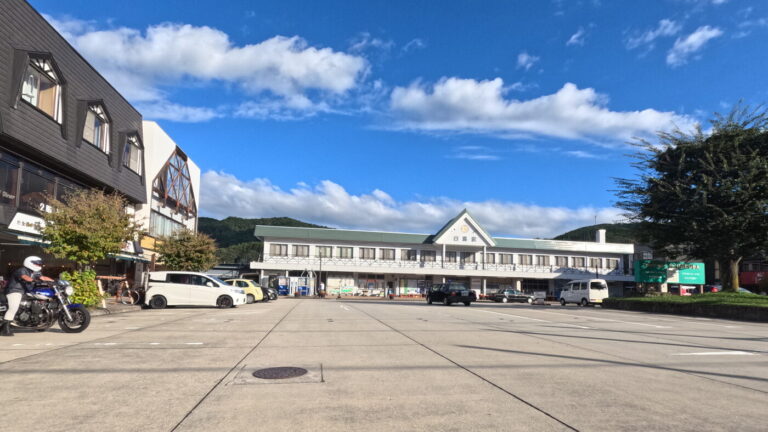
Hakuba is the only place in Japan where you can ski a 1998 Olympic course in February, stand beside a mirror-still alpine pond at 2,060 m in August, photograph a single cherry tree against unmelted snow peaks in late April, and watch maple foliage burn against summer-green forest in October — and reach all of them from the same train station.
Most international travelers think of Hakuba as a ski resort. It is — and a very good one. But it’s also a working farming village of roughly 8,000 people, sitting at the foot of the Northern Japan Alps, with three rivers, an alpine pond at 2,000 meters, and a four-season rhythm that’s actually clearer here than in Tokyo or Kyoto. This is a guide for anyone arriving in any of those seasons.
The Four Seasons of Hakuba
The Japanese word for “four seasons” (四季 / shiki) gets thrown around a lot in travel marketing, but Hakuba is one of the few places where the four are genuinely distinct — and where each one rewards a completely different kind of trip. Below is the rhythm.
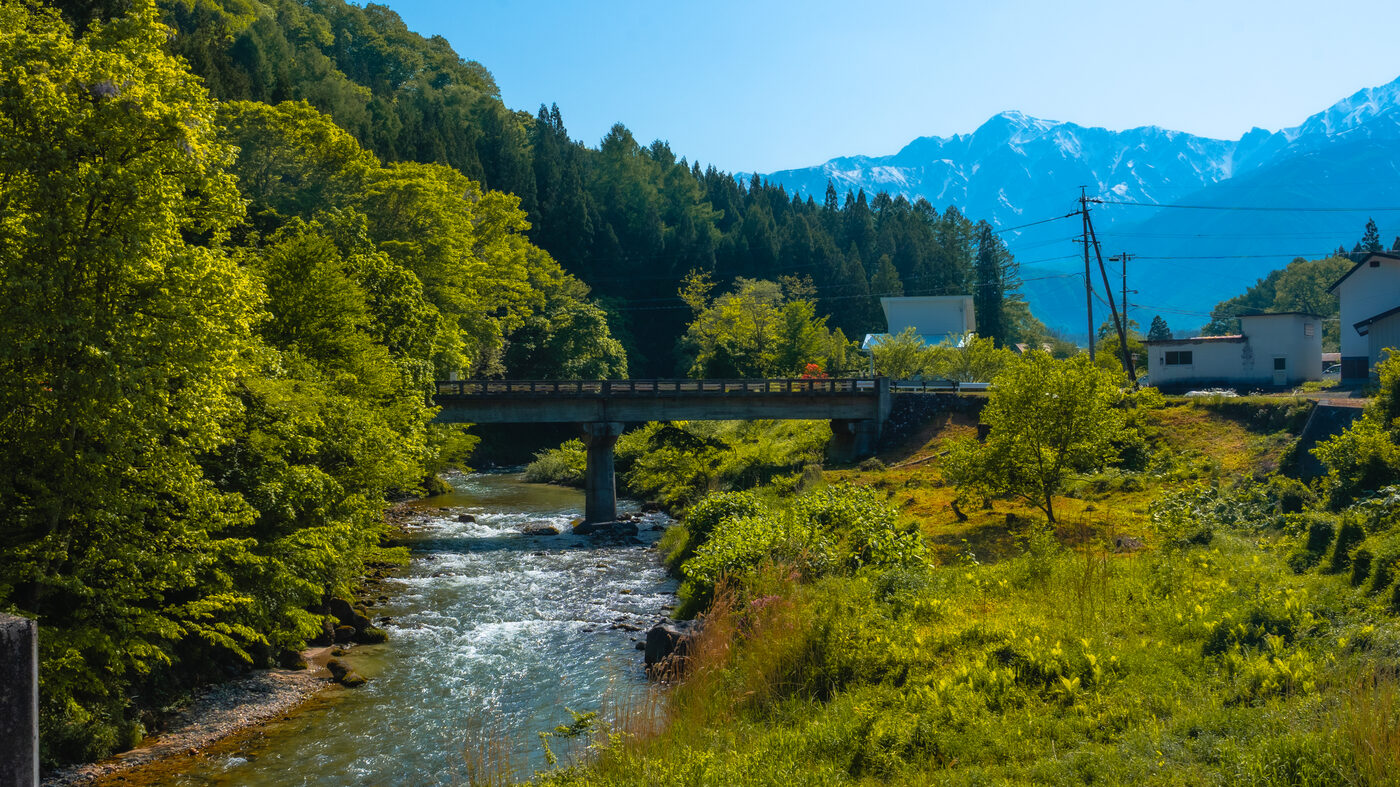
Late April – Early June: Cherry Blossoms Against Unmelted Snow
The signature image of Hakuba — a lone cherry tree in full bloom while the peaks behind it are still fully snow-covered — happens for about ten days a year, usually the last week of April through Golden Week. The village typically blooms three to four weeks after Tokyo (late April vs late March), so if you missed the Tokyo sakura, Hakuba is your second chance.
Through May, the rice paddies flood for transplanting, and the entire valley becomes a mirror for the mountains. By early June the green is in, the cherries are gone, and the snow has retreated to above 2,000 m.
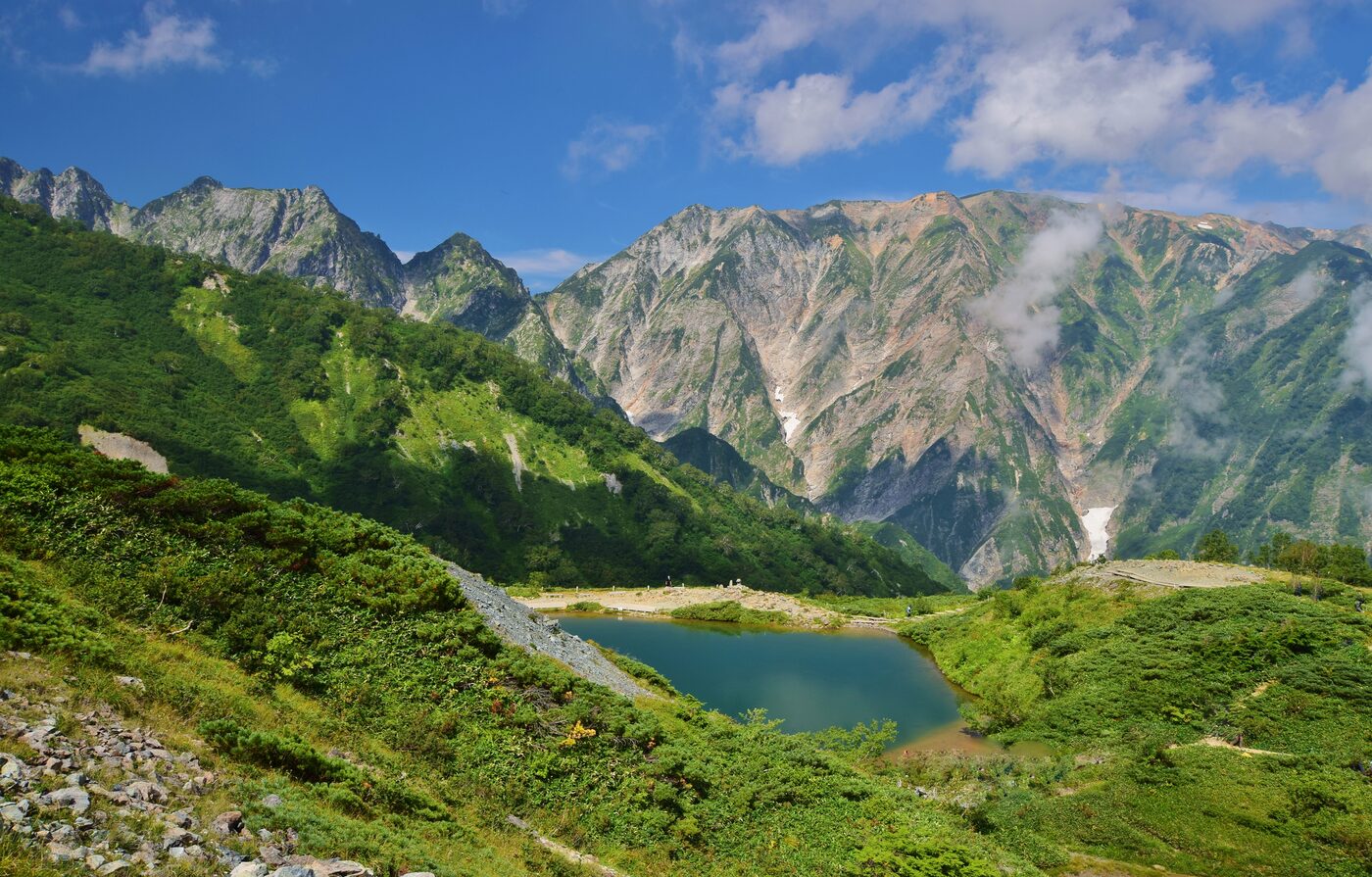
July – August: Alpine Hiking and Cool Refuge from the Heat
July 1 opens the high alpine season. The Happo-One ropeway runs to within a 90-minute hike of Happo-ike — an alpine pond at 2,060 m where the reflected ridgeline of Shirouma is the photograph every Japanese alpine guide carries. For travelers coming from Tokyo’s 35°C and 80% humidity, the temperature drop here is the entire point.
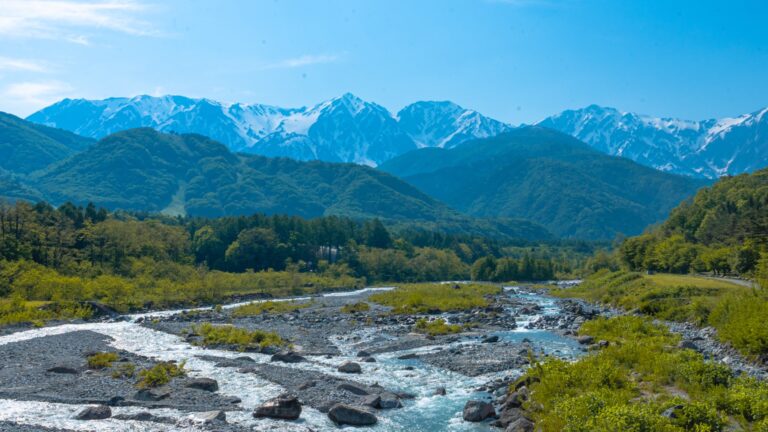
The Oide Park stretch of the Himekawa River is open for walking, and the village rice paddies are at peak summer green. This is the easiest season to combine Hakuba with Kamikochi (3 hours south) — both are at their best in the same window.
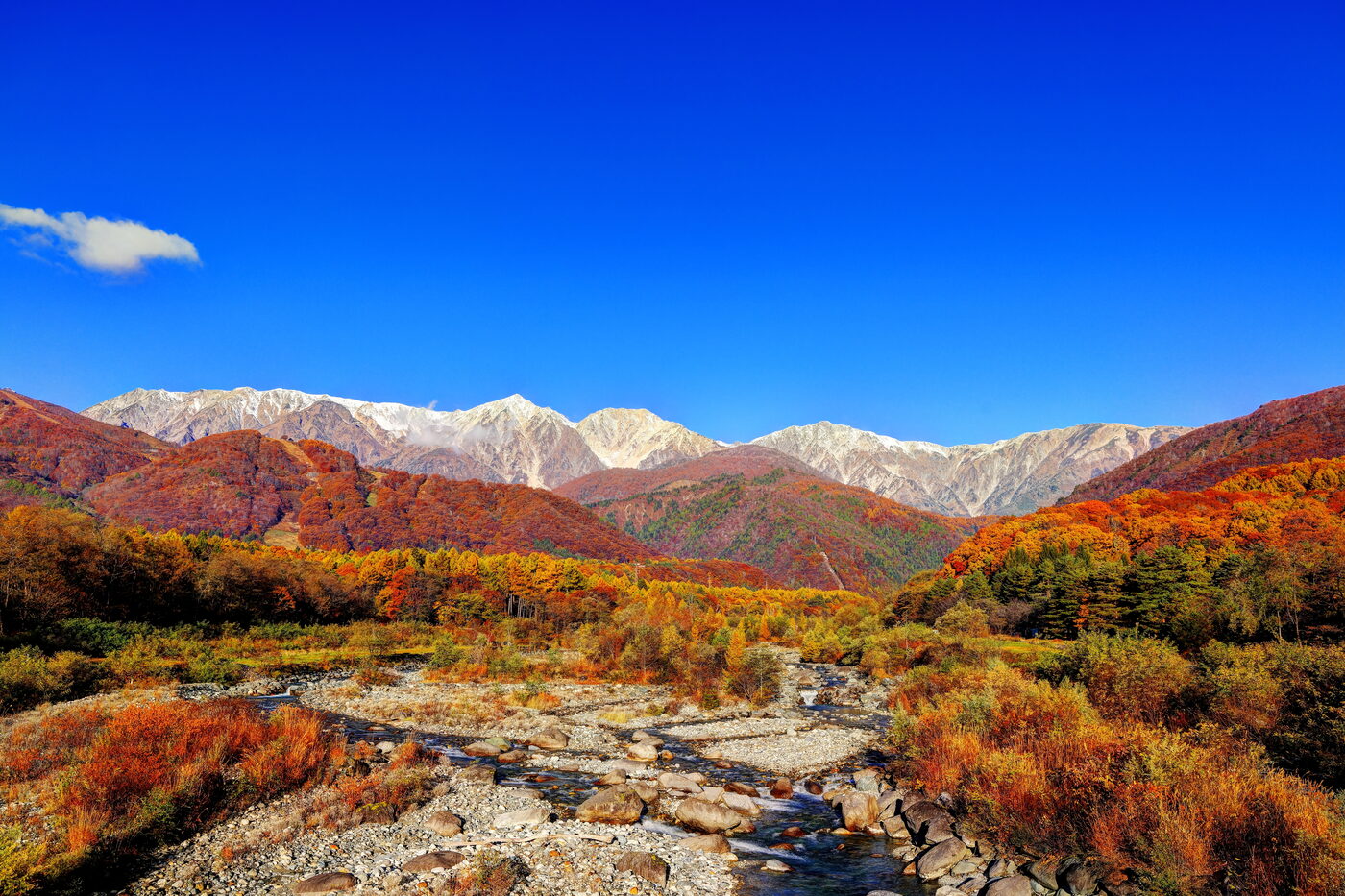
Mid-September – Late October: Foliage Against Early Snow
The foliage starts in the high mountains in mid-September — earlier than almost anywhere else in Japan — and works its way down to the village by mid-October. For a brief two-week window in early October, the village sits in green-and-red foliage with the first snow of the year visible on the highest peaks. It’s the photograph people come back for.
Oide Park on the Himekawa and the nearby riverside trails are the easiest places to see this overlap. The Happo-One ropeway runs until early November, so you can still get up to alpine height and look down at the autumn coloring the valley below.
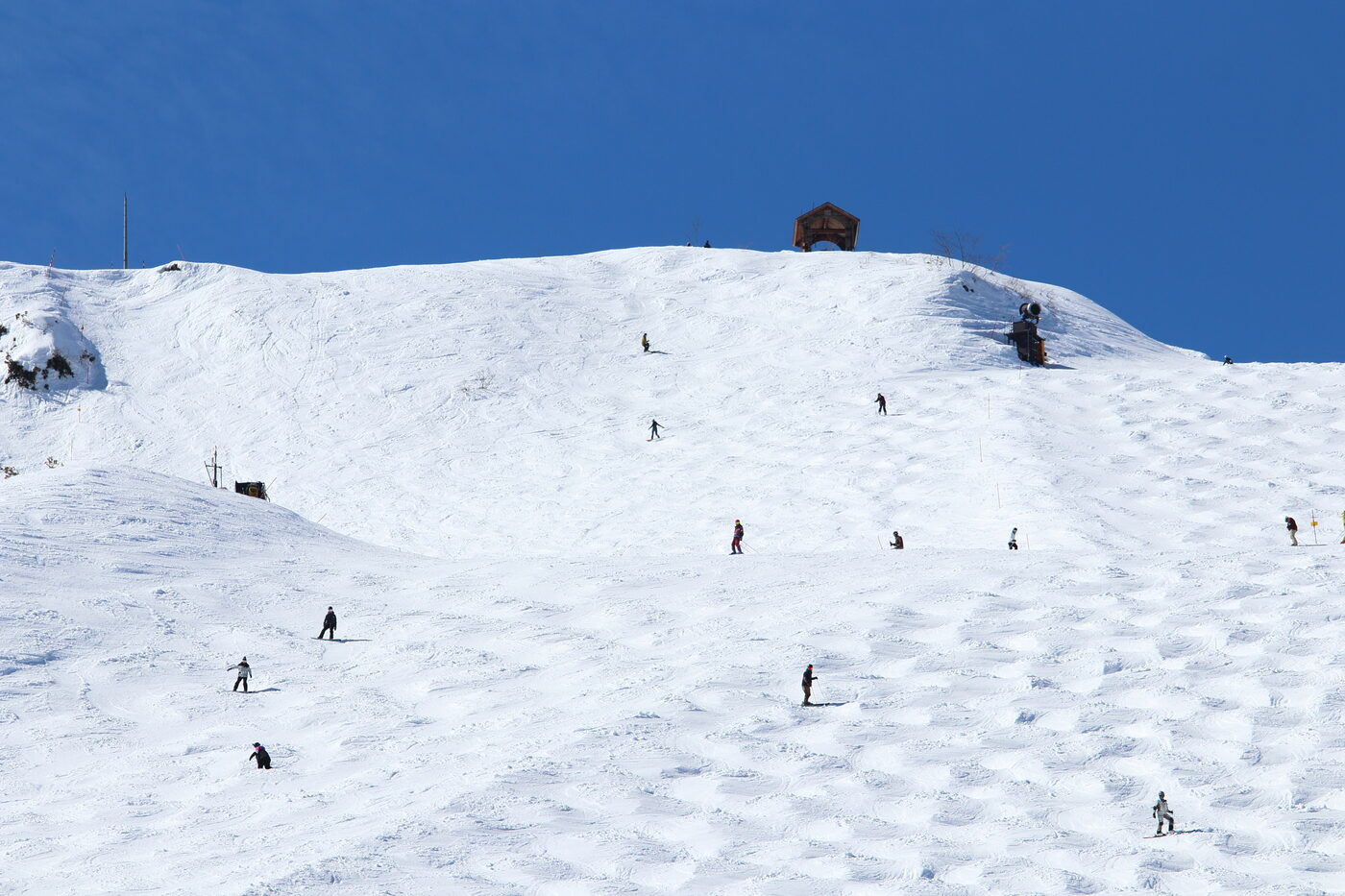
Mid-December – Mid-April: Olympic Powder and the Reason Most People Come
The reason Hakuba shows up on every “best ski in Japan” list is the snow. The valley averages 11 meters of snow at village level and 14+ meters on the upper mountains, and it falls as the famously dry “Japow” that’s effectively impossible to find outside the Sea of Japan side. The 1998 Nagano Olympics happened here — and the courses are still skiable.
Ten ski resorts share the valley under the Hakuba Valley pass: Happo-One (the largest), Hakuba 47, Hakuba Goryu, Tsugaike Kogen, Iwatake, Cortina, Norikura and Sanosaka, plus the smaller family-oriented areas — check the Hakuba Valley site for the current resort line-up; a single multi-resort pass covers the valley. Snowboarders comparing the resorts’ parks, tree and backcountry rules and 2026–27 tickets can start with snowboarding in Hakuba.
If you can only come once: late April for the cherry-and-snow contrast, or early February for the powder. Those are the two windows you cannot replicate anywhere else.
The Iconic Spots: Where to Actually Go
Six places in Hakuba show up again and again in photos. They’re worth the visit regardless of season — but each one rewards a specific window.
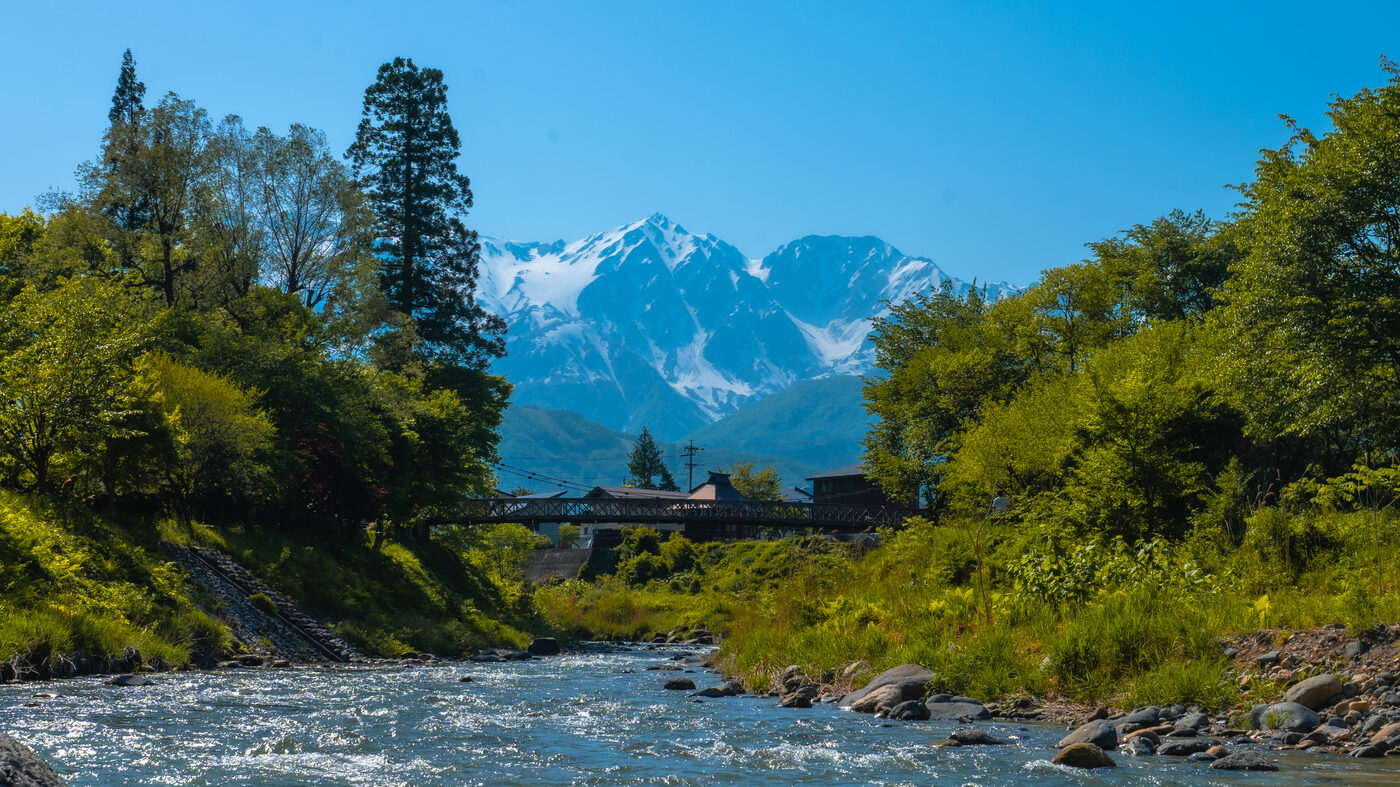
Oide Park (大出公園)
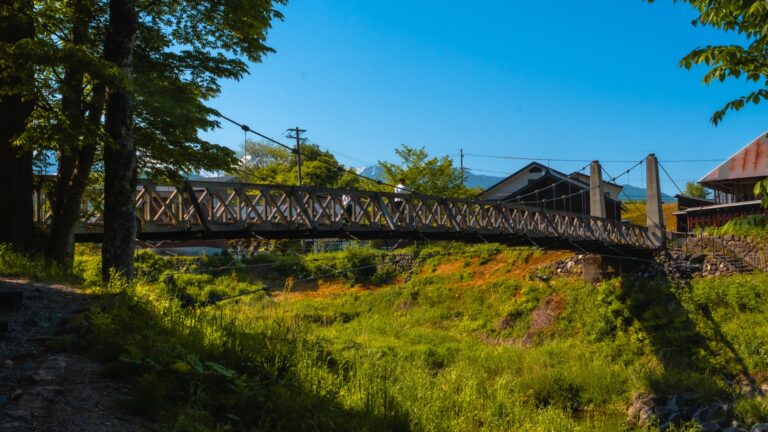
The single most photographed view in Hakuba. A wooden footbridge crosses the Himekawa River with the entire Shirouma range filling the background. Cherry trees ring the park in late April; foliage in October. A 15-minute drive or 30-minute bus ride from Hakuba Station. See our full Hakuba Ōide Park guide for the four-layer composition breakdown and cherry-weekend access rules.
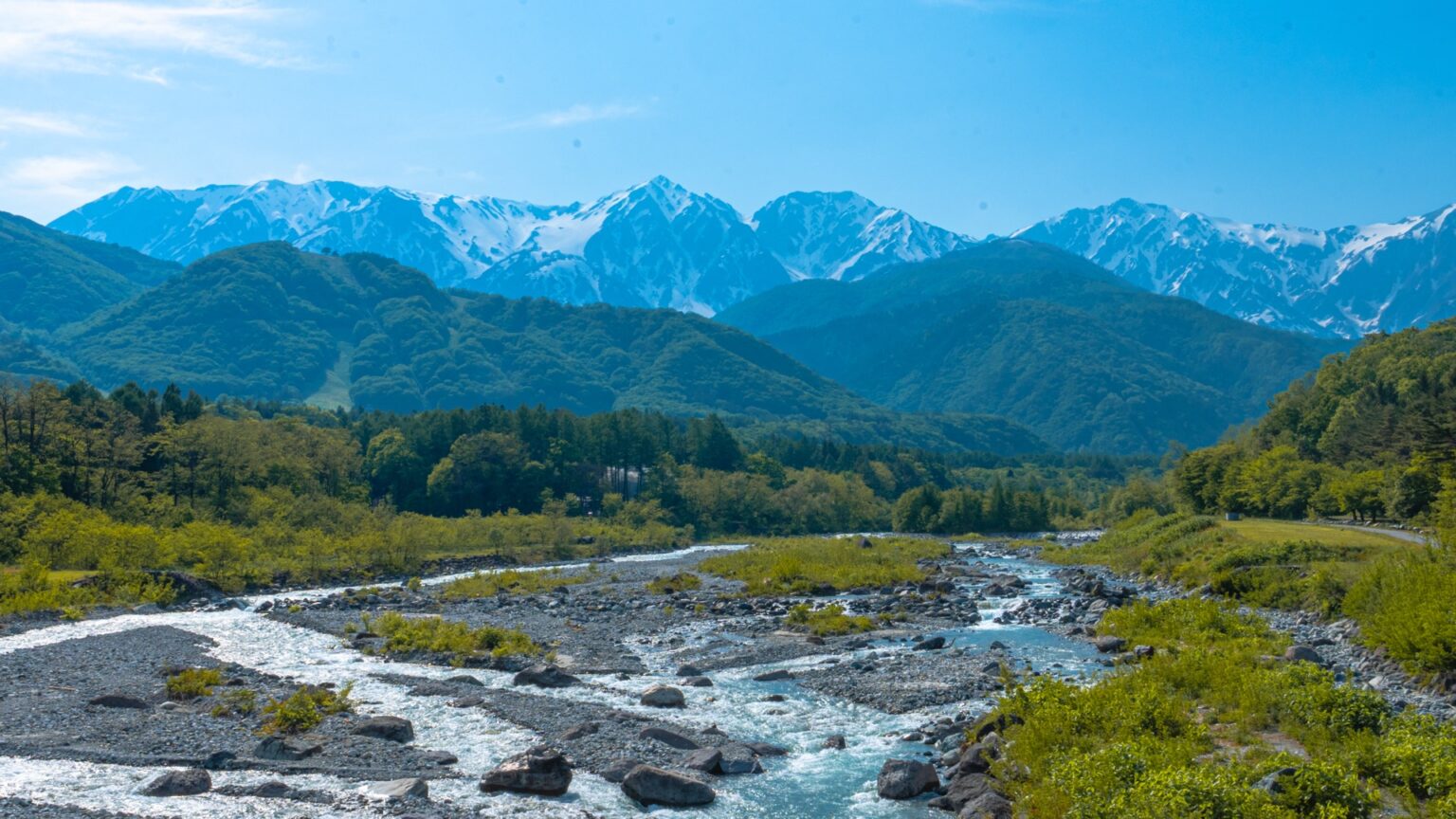
Hakuba Ohashi (白馬大橋)
A 100-meter road bridge over the Matsugawa river selected as one of Japan’s Top 100 Roads in 1987. Wide, low, horizontal view of the Hakuba Sanzan peaks above the glacial-melt river. No parking lot, no admission — pair it with a Kurashita-no-yu onsen soak. See the full Hakuba Ohashi guide for lighting windows by season.
Happo-ike (八方池)
The alpine pond at 2,060 m where the Shirouma range reflects perfectly in calm weather. Take the Happo-One ropeway up, then hike 90 minutes along the ridge. The hike is moderate but not casual — proper shoes and a layer. Open mid-July through early November.
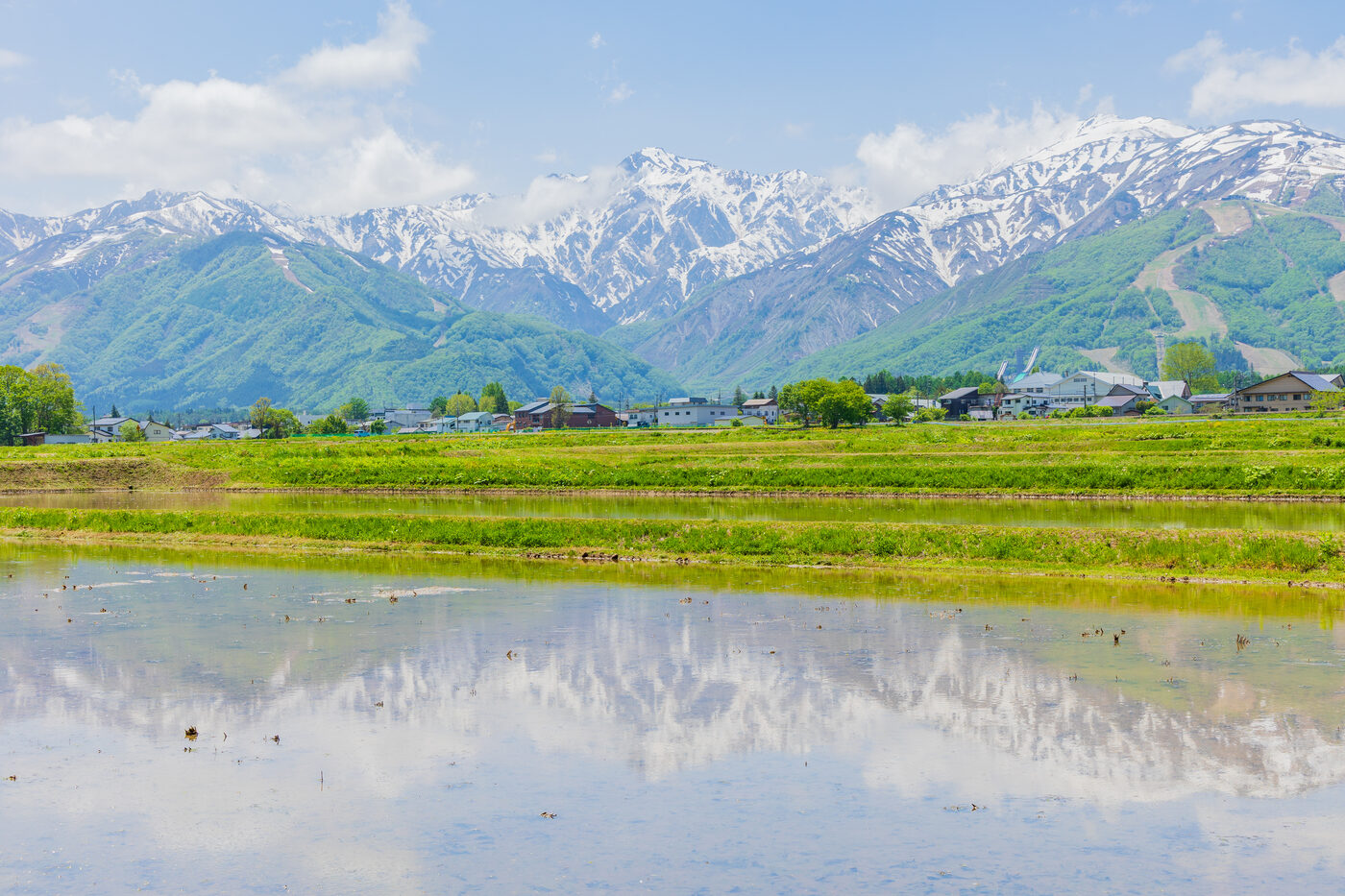
Rice Paddy Reflections
For three or four weeks in mid-May to mid-June, the freshly flooded rice paddies act as enormous mirrors for the still-snowed peaks. The fields along Route 322 east of the station are the easiest to access. Best in the first hour after sunrise when the water is still.
Happo-One Ski Resort
The largest of the ten resorts and the venue for the 1998 Olympic downhill. Top-to-bottom run is 8 km. Has runs at every level but is famous among advanced skiers for its long fall-line groomers. Tied into the Hakuba Valley Pass shared across all ten resorts.
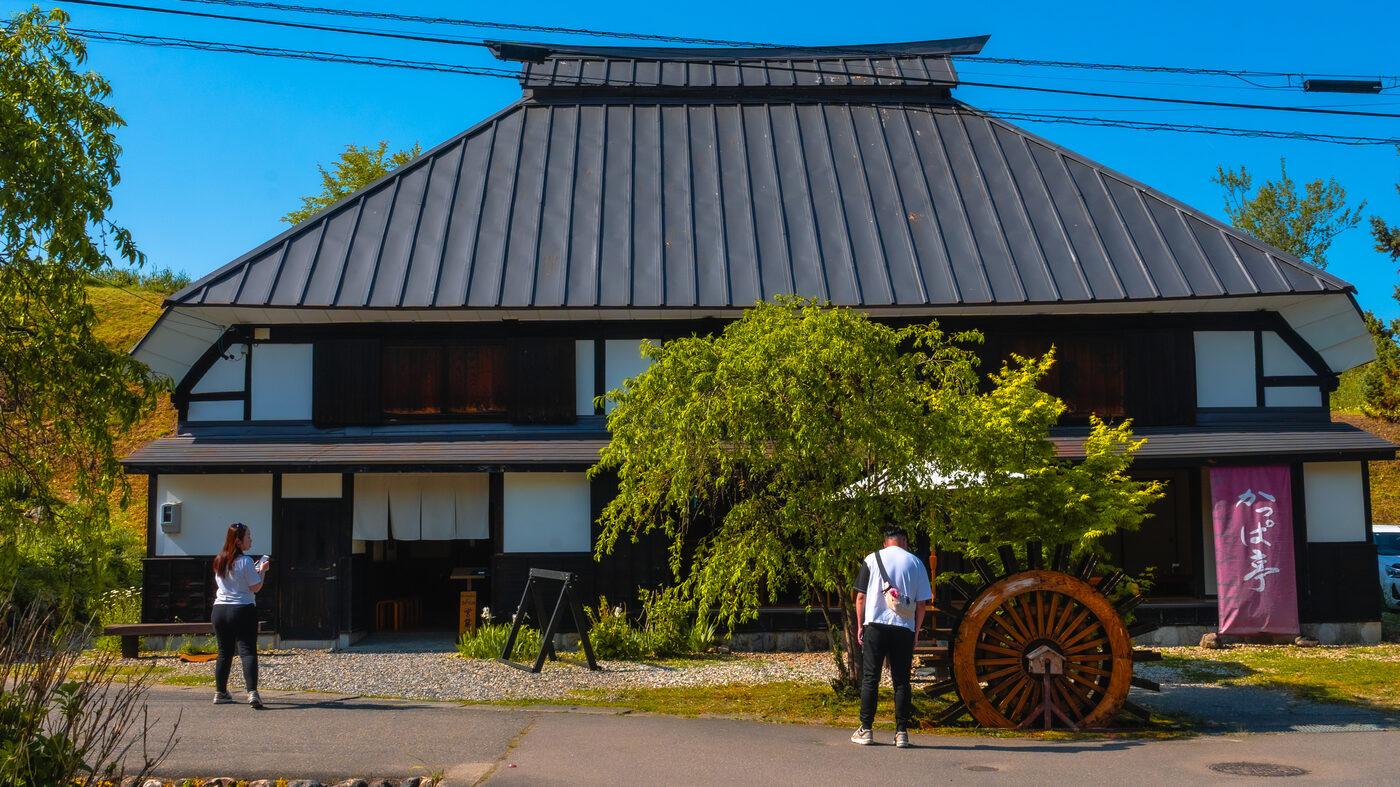
Old Farmhouse Buildings
Scattered through the village are converted farmhouses with thick black thatched roofs — once homes, now soba restaurants, cafés, and small inns. Worth a half-hour just walking the side streets to find them. The older the building, the better the soba it tends to serve.
The Village Beyond the Famous Spots
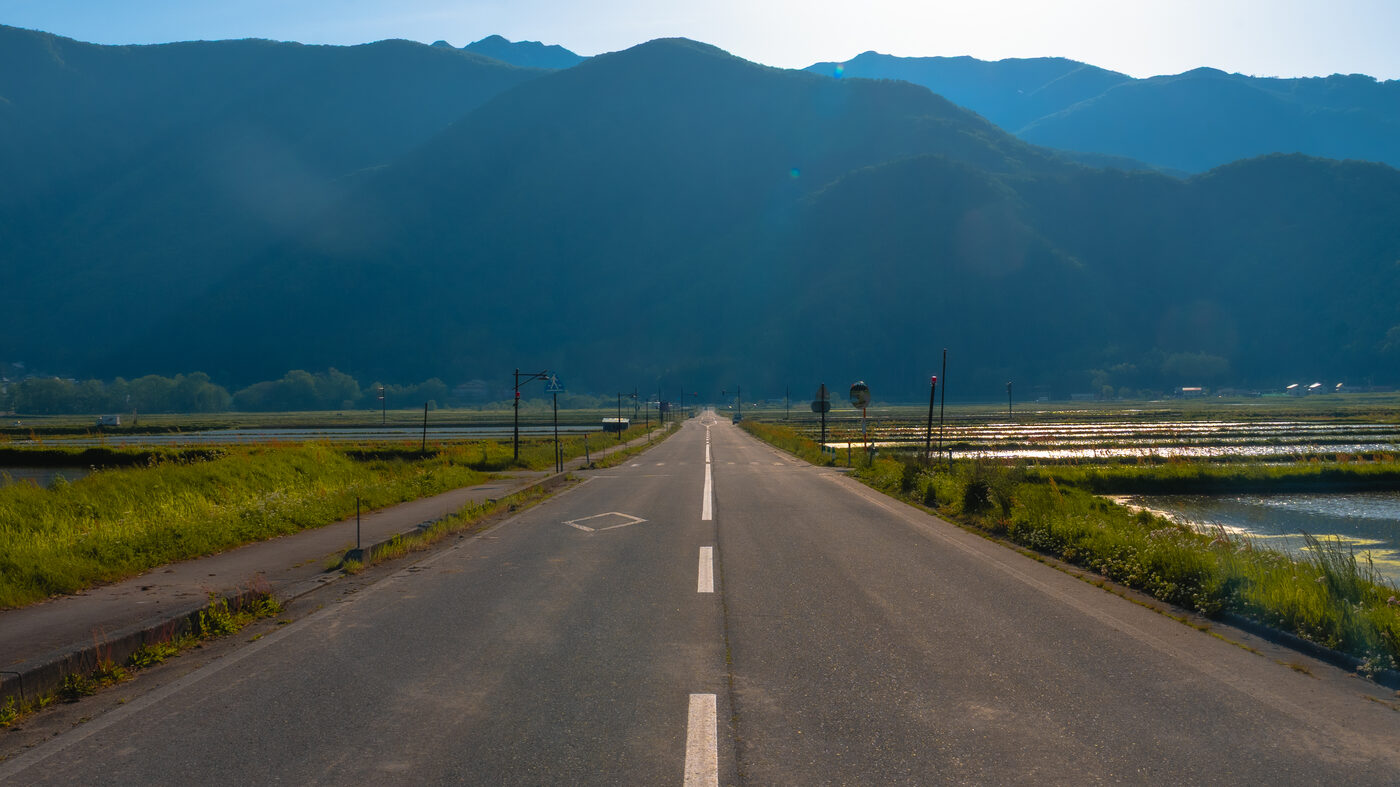
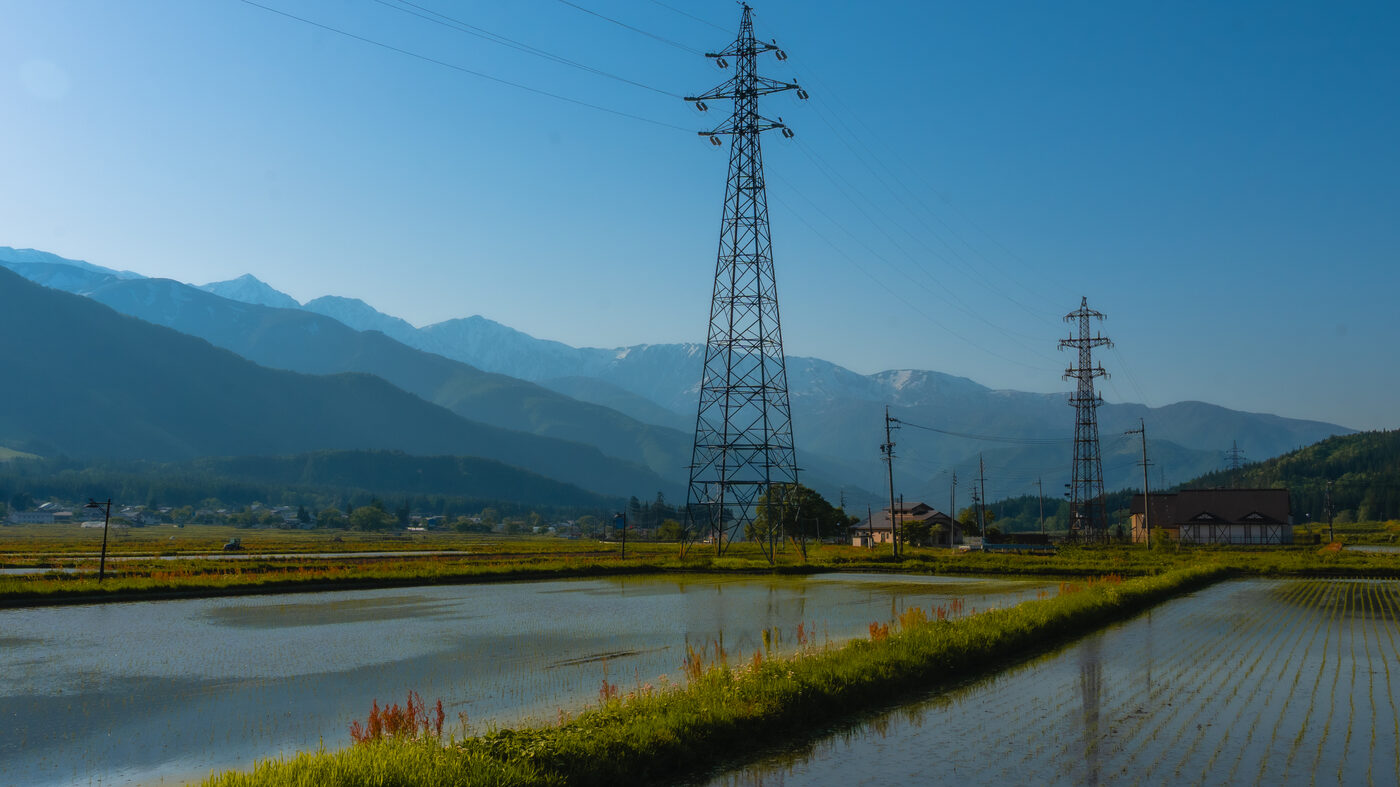
The Hakuba most travelers never see — the working farmland and side roads outside the resort areas.
Most visitors never leave the resort strip between Happo and Echoland. That’s the loss. The hour after dawn and the hour before sunset are when Hakuba is most photogenic — and that’s also when the side roads, rice fields, and old farmhouses are empty.
A ten-minute drive east of Hakuba Station puts you on Route 322, running between the village and the Eastern Alps. The road is flat, the fields are wide open, and the entire Hakuba range fills the western horizon. In late May this is where you find the rice-paddy reflections; in October, the harvest stubble against early snow. There’s no admission, no parking fee, no crowd.
Where to Stay: The Three Hakuba Zones
The village is spread out across roughly 6 km of valley, and where you stay determines whether you can walk to the lifts (winter) or to a soba restaurant (summer). Three zones make up the practical choice.
Happo
The largest and busiest zone, immediately south of Happo-One. This is where most ski-school families stay — within walking distance of the lifts, the largest concentration of bars and restaurants, and where the highway buses drop off. Loud during ski season; very quiet in shoulder months.
Wadano
A forested strip just north of Happo, quieter, with mid-range lodges and a few small ryokan. Walking distance to Happo lifts. The best balance of access and atmosphere for first-time visitors who want a less rowdy ski-season base.
Echoland
Pension-and-restaurant strip about 1.5 km south of Happo. More food options per square meter than anywhere else in the village. Some of the original Hakuba pensions are here — small, family-run, English often spoken because they’ve been working with international visitors since the 1990s.
Search Hakuba hotels and lodges on Booking — filter by Happo, Wadano, or Echoland depending on what kind of trip you’re planning. For traditional ryokan and onsen-focused stays, Rakuten Travel has deeper inventory on the smaller properties that don’t list on international sites.
What to Eat
Hakuba’s food is a mix of Shinshu soba, jibie (game meat), and modern resort-town international cooking. The local specialties to seek out:
Shinshu soba — Nagano Prefecture is one of the great soba regions of Japan, and Hakuba sits inside that. The buckwheat is grown in Togakushi and the southern Azumino plain. The old farmhouse-converted restaurants serve the best of it. Lunch around ¥1,500.
Jibie (game) cooking — Deer and wild boar from the surrounding mountains. A few dedicated restaurants do this seriously; sausages, ragu, and steaks. Best in autumn and winter.
Onsen tamago and sansai (mountain vegetables) — Side dishes at most ryokan dinners. Sansai is at its best in spring (May–June).
Aprés-ski international — Hakuba is one of the most internationally-staffed ski towns in Japan, which means in winter you can find genuine Italian, Mexican, Indian, and Australian-style cooking. Most of these places close in shoulder season.
Practical Tips by Season
Spring (April – May): Pack for 5–20°C, rain possible. Walking shoes fine for the village, light boots for any hiking.
Summer (June – August): Pack for 18–28°C village, 8–15°C alpine. Bring a fleece even on hot days — Happo-ike is 12°C in August. Sunscreen at altitude matters.
Autumn (September – October): 5–20°C, can drop to near-freezing at the high alpine. First snow on peaks possible from late September.
Winter (December – March): -10 to 2°C village, -15°C or colder on the mountain. Down jacket, hat, gloves, waterproof boots non-negotiable. Most lodges have boot dryers.
Note for Travelers from Southeast Asia
For travelers coming from Singapore, Malaysia, Indonesia, the Philippines, or Thailand — Hakuba is one of the most dramatic temperature shifts you can do in a Japan trip. The village in mid-winter is around 30°C colder than Singapore at the same time of year. Plan for that:
Buying winter gear (down jacket, gloves, beanie) in Tokyo or Nagano before heading to Hakuba is usually cheaper and easier than renting in the village itself. UNIQLO Ultra Light Down and HEATTECH lines do the job. Direct flights from Singapore (Scoot, Singapore Airlines, ANA), Bangkok (Thai, JAL), and KL (AirAsia X, JAL) all land at Haneda or Narita — from either, the Hokuriku Shinkansen + bus combination is the cleanest route in.
Halal options in Hakuba are limited — pre-pack snacks from Tokyo or use convenience stores (some onigiri and salads are halal-friendly; check the labels).
A One-Day Itinerary by Season
Spring (Late April – Early May)
Morning: Cherry blossoms at Oide Park (best before 9 AM). Late morning: Rice paddy reflections on Route 322. Lunch: Soba at a converted farmhouse. Afternoon: Walk the Himekawa River from Oide Park downstream — the river is at its loudest with snowmelt. Evening: Onsen at Mimizuku-no-yu.
Summer (July – August)
Early morning: Happo-One ropeway to the top station. 90-minute hike to Happo-ike. Picnic at the pond (bring food up — limited at the top). Afternoon: Walk the Oide Park section of the Matsukawa River. Evening: Aprés-ski food in Echoland.
Autumn (October)
Morning: Tsugaike Nature Park boardwalk for high alpine foliage. Lunch: Soba and jibie. Afternoon: Oide Park for the foliage-and-early-snow contrast. Evening: Onsen.
Winter (January – February)
Full day at Happo-One or any of the ten Hakuba Valley resorts. Late afternoon: Onsen at Hime-no-yu. Evening: Aprés-ski international food in Echoland or Happo.
Frequently Asked Questions
What’s the best time of year to visit Hakuba?
Depends on what you want. For powder skiing, mid-January to mid-February. For the cherry-blossom-and-snow contrast, late April to early May. For alpine hiking, mid-July to early September. For foliage, mid-October. Each window is roughly two to three weeks of peak conditions.
Can I visit Hakuba without skiing in winter?
Yes. Snowshoeing, snow trekking, onsen visits, and photography are all worth the trip. The valley in mid-winter under fresh snow is one of the most photogenic places in Japan. Bring proper boots and layers — the village itself is walkable but cold.
How long should I stay?
Minimum two nights for any season. Three to four nights is the sweet spot — enough to see Oide Park, do one alpine experience (ski, ropeway, or hike), eat at a couple of soba places, and not feel rushed by the Nagano-bus timetable. Beyond five nights, expand to Kamikochi or Matsumoto as side trips.
Is Hakuba family-friendly?
Very, especially in summer. Oide Park is flat and stroller-friendly. The Iwatake gondola brings the family to viewing decks without a real hike. In winter, the resorts have well-developed ski schools with English instructors at Happo, Iwatake, and Goryu.
Do I need to speak Japanese?
Not for the ski-season tourist core. English is widely spoken in Happo, Echoland, and at the major lodges and resorts — Hakuba has been working with international visitors for thirty years. Outside the resort areas (in farmland, traditional restaurants, smaller pensions) Japanese helps, but a translation app handles most situations.
Is there Wi-Fi in Hakuba?
Most lodges and cafés have it. The Hakuba Happo Bus Terminal and Hakuba Station both have free Wi-Fi. Mobile coverage is solid throughout the village. Up at the alpine pond and the higher ski areas, expect intermittent or no signal.
What Stays With You
The thing about Hakuba that’s hard to convey in a photo: the scale of the mountains relative to the village. From the rice paddies, the peaks fill almost half the sky. From the lift line at Happo, you ski into them. From your hotel window, they’re the first thing you see when you open the curtains and the last thing before sleep. They don’t disappear, and they change with every season — and that’s why people who visit once tend to come back.
Book your Hakuba lodge or ryokan
Hotels, pensions, and onsen ryokan across all three zones — free cancellation on most properties.
Search hotelsTraditional ryokan & onsen stays
For machiya and onsen-style stays Booking doesn’t fully cover — Rakuten has the deeper local inventory.
Browse on RakutenActivities & lift passes
Hakuba Valley Pass, ropeway tickets, ski school sessions, and summer experiences — book before you arrive.
Browse on KlookKeep reading on Hidden Japan Gems
Jigokudani Snow Monkey Park
Across the prefecture: Jigokudani’s bathing macaques.
Michi-no-Eki Hakuba
A roadside stop in the village: purple rice, soba and local food.
Join travelers discovering Japan's hidden side
Weekly dispatches from off-the-beaten-path Japan — spots and stories you won't find in guidebooks.
No spam. Unsubscribe anytime.
Welcome aboard!
You're in. See you in your inbox soon.