Japan · Yamanashi · Fuefuki · Hoto noodles
On Tuesday 20 October 2026 my partner and I drove to Kanjukuya Hyakken, a hoto restaurant in an old-style wooden building in Fuefuki, Yamanashi, for lunch. It was quiet, there was no wait, and we ordered pork hoto, cold soba and tempura.
I’m Nobu, and I live in Yamanakako, Yamanashi. Hoto (ほうとう, sometimes written houtou) is one of Yamanashi’s representative local dishes: thick flat noodles simmered with vegetables in miso broth. Kanjukuya has three hoto restaurants, and Hyakken is its branch in the Kasugai area of Fuefuki. Below is what we ate, what the building looked like inside, how hoto differs from udon, and where to stay in Isawa Onsen.
Our lunch: pork hoto, cold soba and tempura
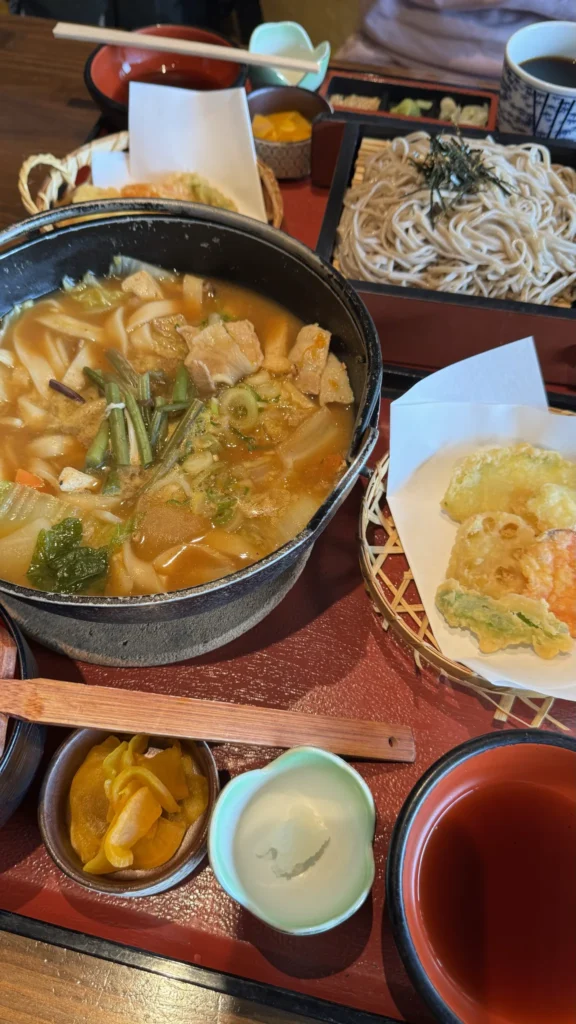
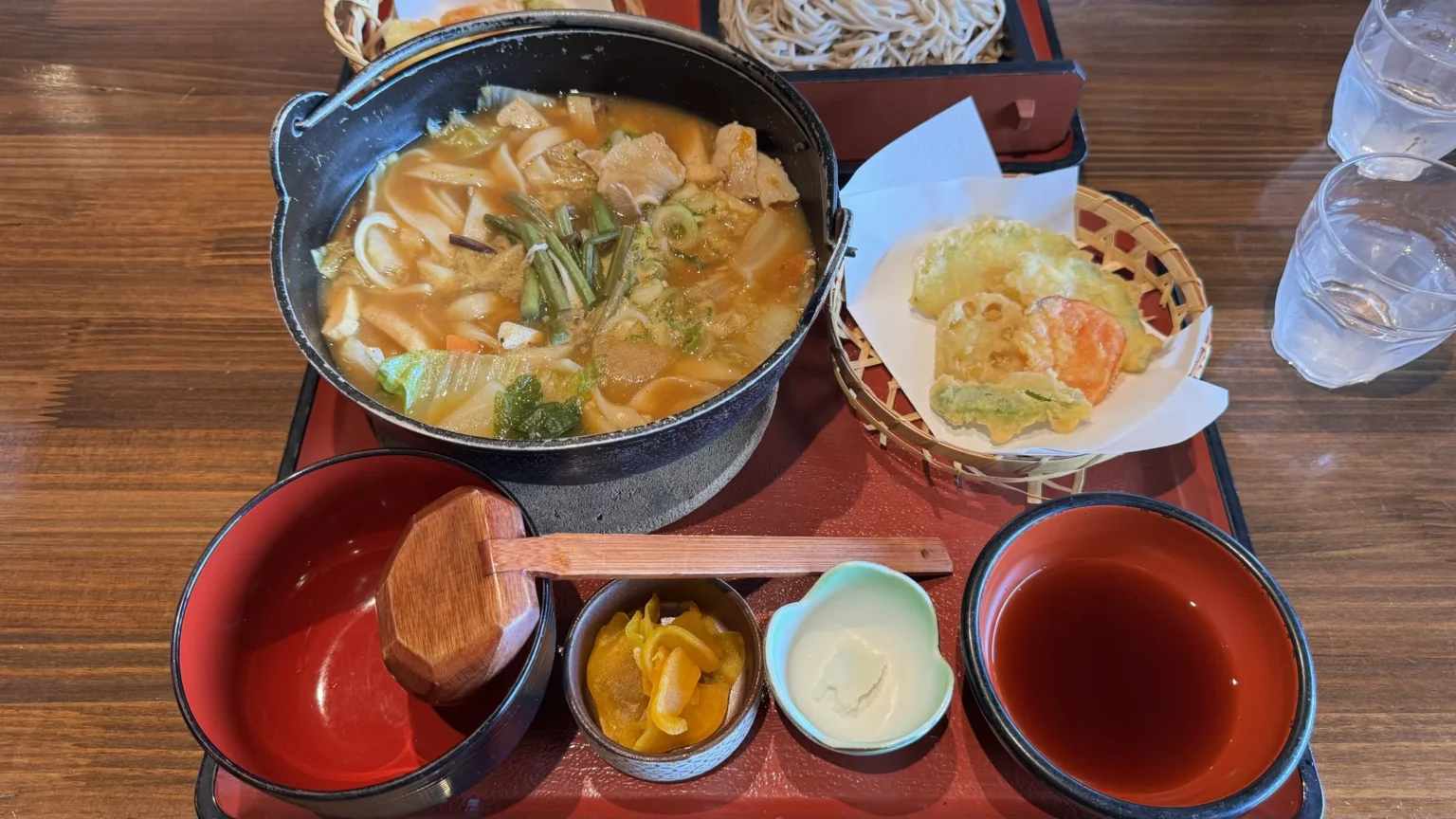
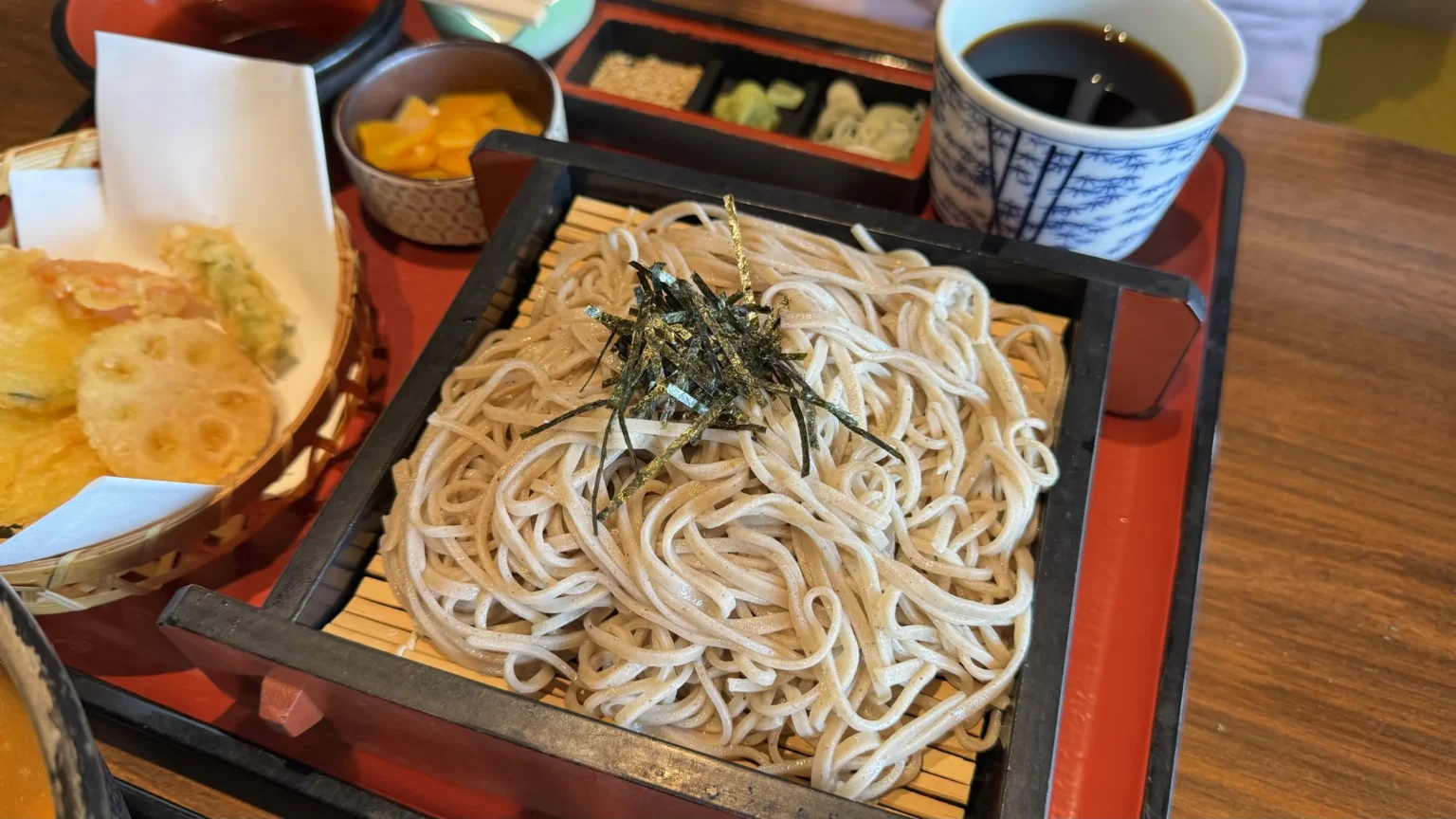
My first photo there is from 12:46 on a Tuesday. It was quiet, and there was no wait. My partner and I ordered pork hoto, zaru soba (cold buckwheat noodles on a bamboo tray) and tempura.
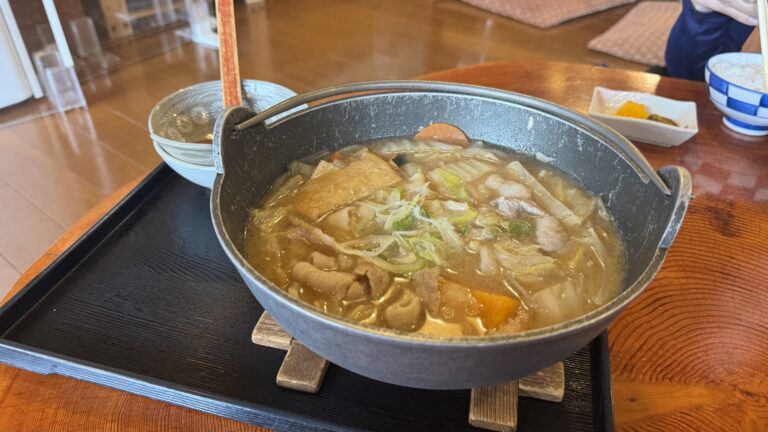
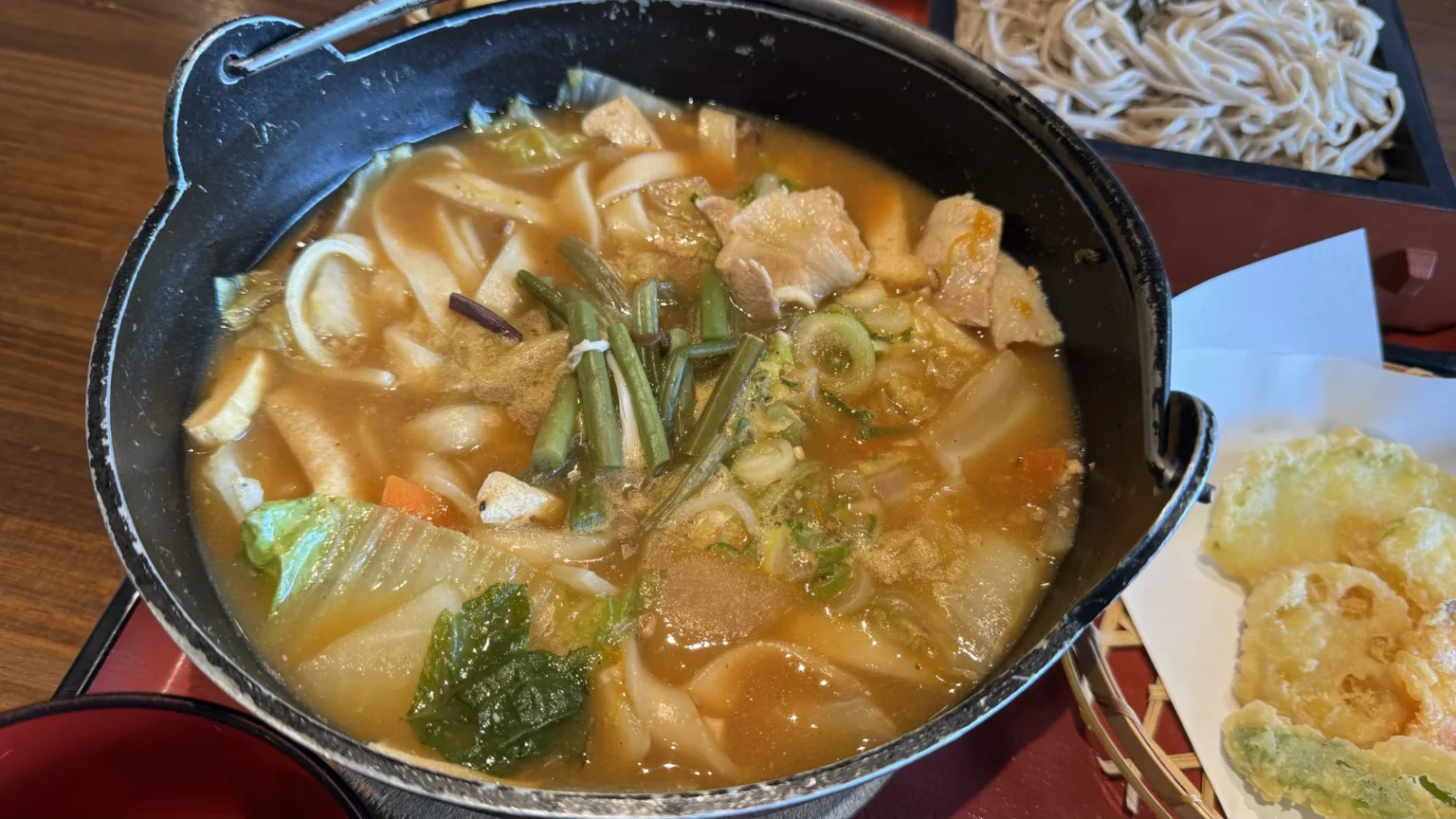
The hoto arrived in its own iron pot on a red tray, with a wooden ladle and an empty bowl. In the pot were thick flat noodles, pork, Chinese cabbage, green beans, carrot and pumpkin in a miso broth, with leafy greens on top. On the side came a basket of tempura, which included lotus root. Yellow pickles and a small white dish came alongside.
The broth is miso, and the restaurant’s own page says it blends its homemade miso with Koshu miso, the local Yamanashi style. I found the noodles firm and chewy, with a texture that reminded me of Sanuki udon. For the two of us, the amount was just right.
The menu was in Japanese when we went. On that day both card and cash were accepted. The restaurant notes on its site that menus differ between its branches.
Inside: old chests, carved transoms and daruma
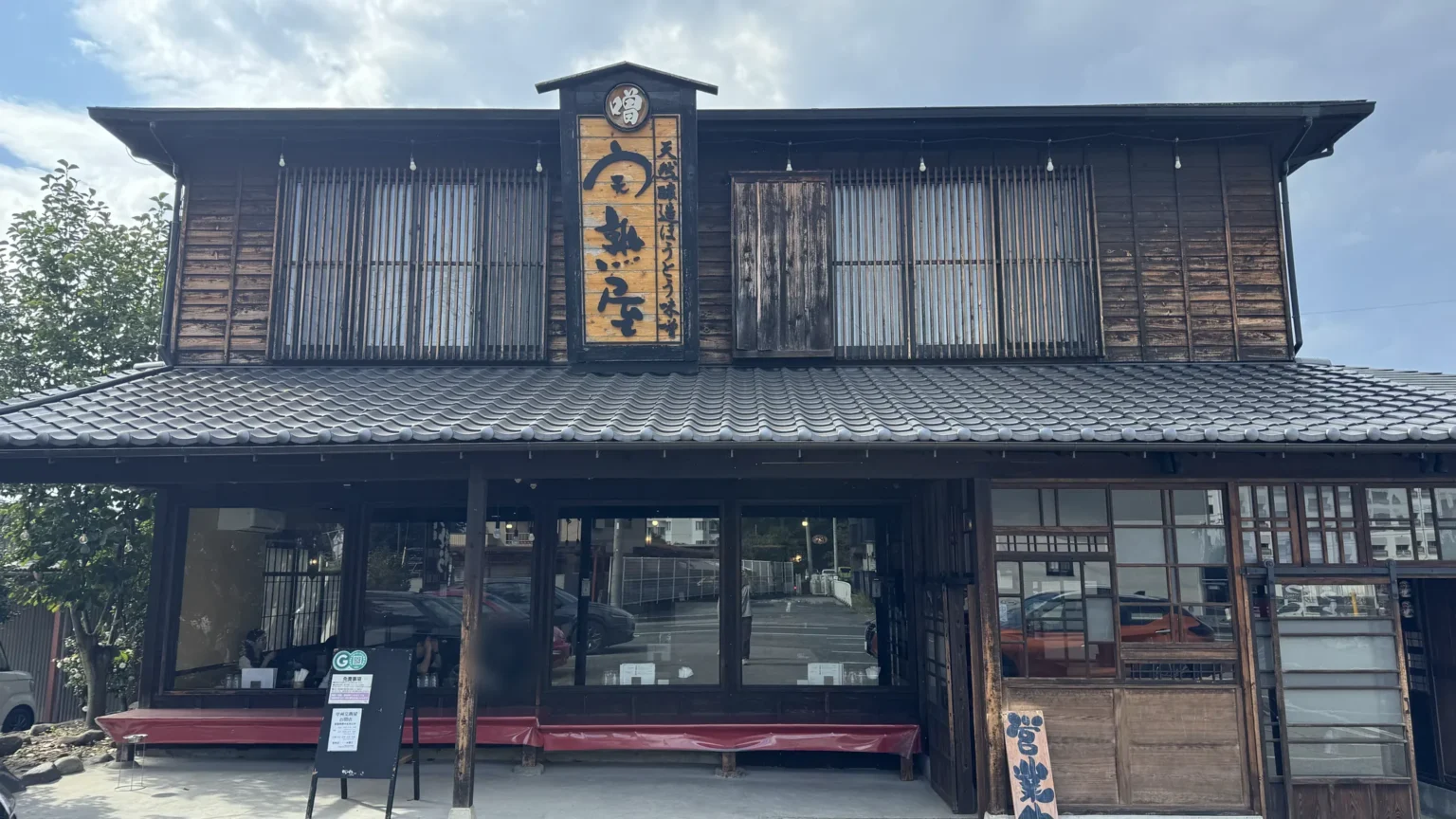
The building is a two-storey wooden house with a tiled roof, a hanging wooden name board and red benches under the eaves. When we went, there were old wooden chests of drawers inside and carved wooden panels above the openings, an antique cash register on a chest by the entrance, and white papier-mâché daruma with red faces in rows on a wooden board, nine of them in my photo.
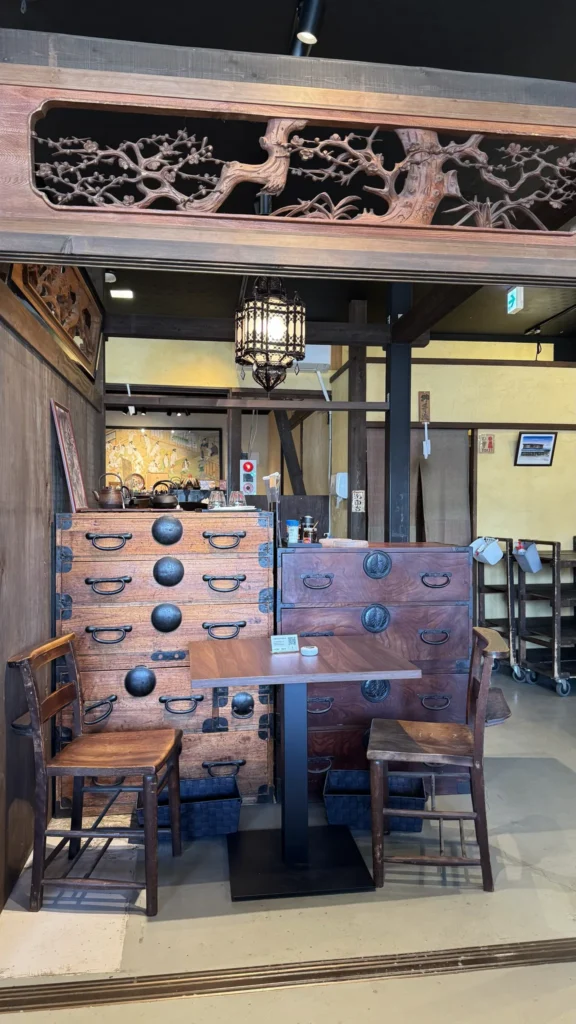
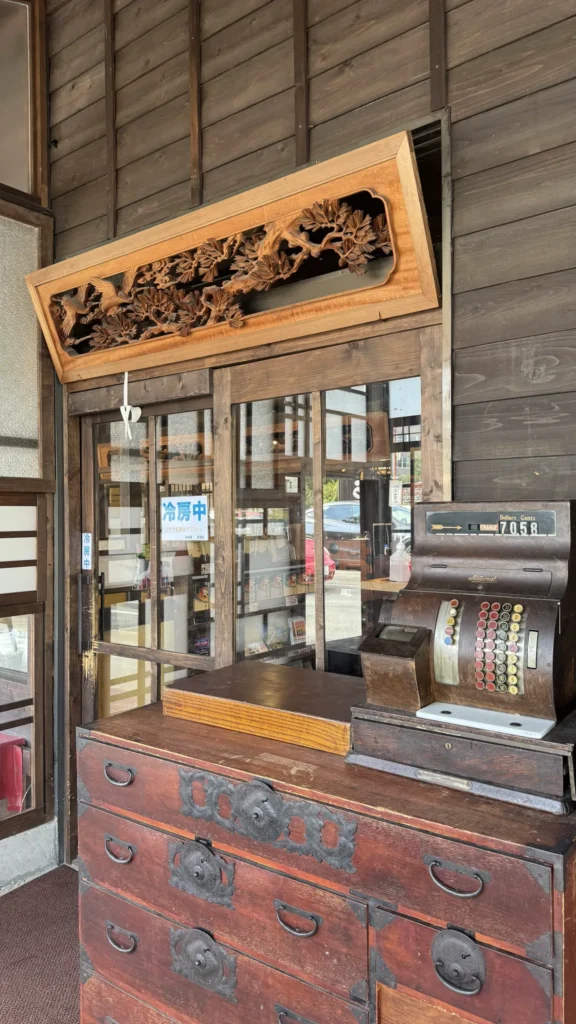
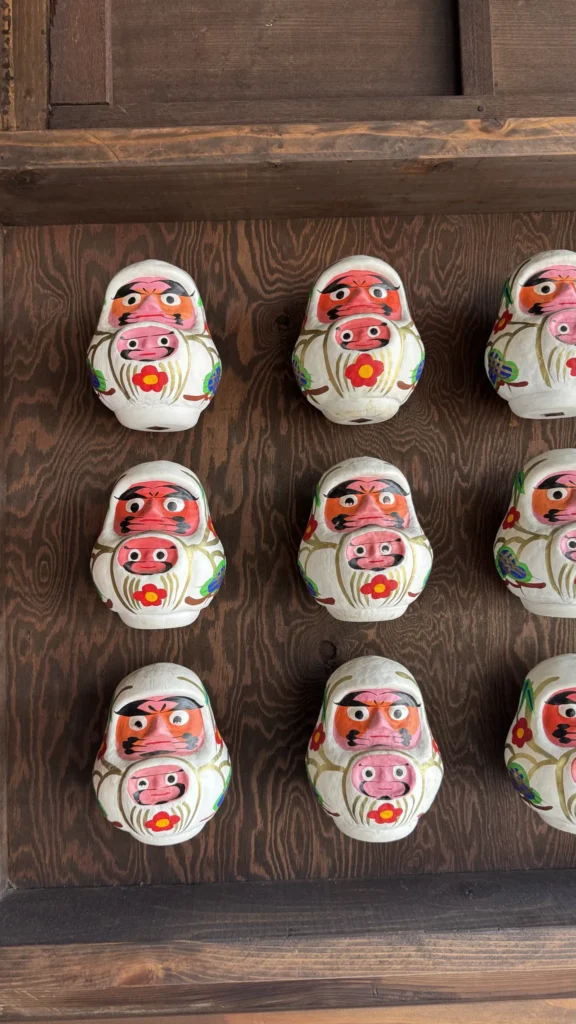
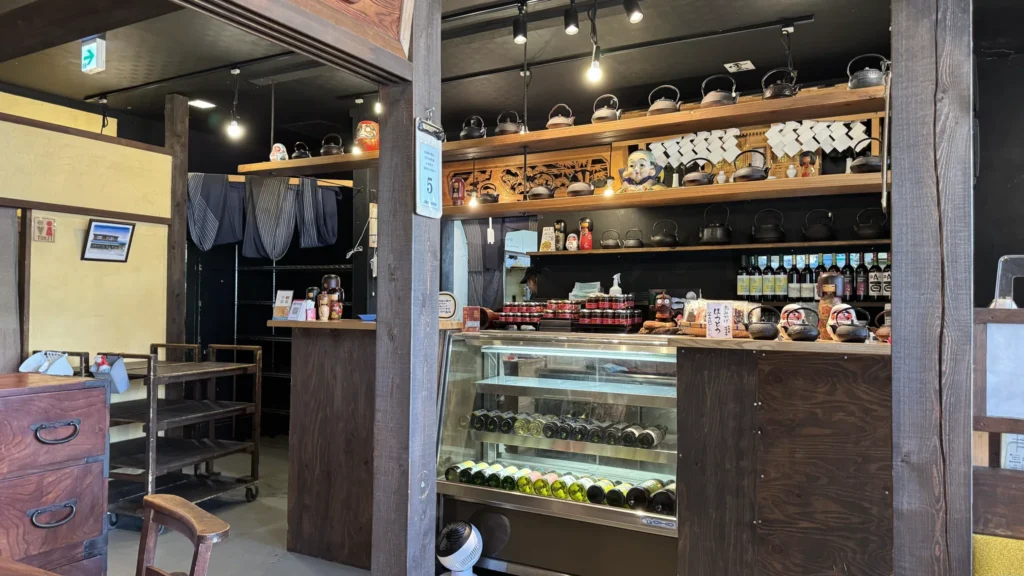
There was also a shop counter with iron kettles, teapots, wine and a chilled case. We only came for lunch and didn’t buy anything.
How hoto differs from udon
My noodles reminded me of Sanuki udon, but Japan’s Ministry of Agriculture, on its page on Yamanashi food, explains how the two differ: udon dough usually has salt added and is left to mature, while hoto dough has no salt and goes into the boiling pot as soon as it is made. As the hoto noodles slowly break down, the broth thickens.
A Yamanashi dish
Yamanashi Prefecture calls hoto a representative local dish loved across the prefecture: flour dough rolled out and cooked straight in the pot.
Koshu miso
The prefecture describes Koshu miso as a blend of rice and barley miso, often used for hoto.
Kanjukuya’s miso
The restaurant’s hoto page says its staff make miso every year and age it in a storehouse more than 120 years old, then combine it with Koshu miso.
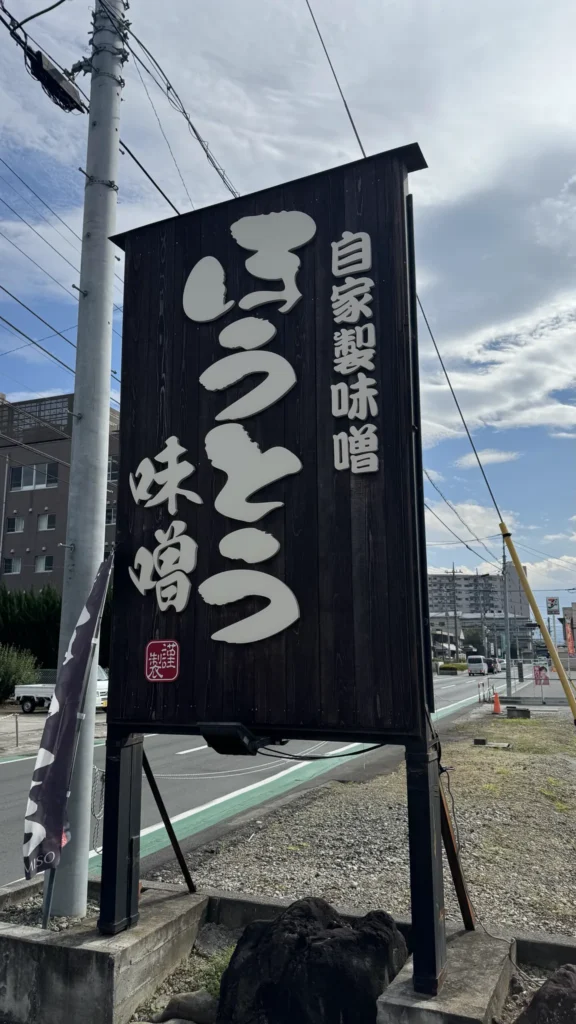
Kanjukuya is run by Hototo Farm, an agricultural company, and its branch list names three restaurants: the main restaurant in Enzan, Koshu, this one in Fuefuki, and one at Lake Kawaguchi. If you are near Mount Fuji instead, I have also written about hoto at Shoya by Lake Yamanaka, and for dietary needs, my guide to gluten-free and halal food around Mount Fuji.
Getting there and opening hours
We came by car, and the car park was big. Kanjukuya’s branch list gives the address as 1169-2 Komatsu, Kasugai-cho, Fuefuki, and the hours as 11:30–15:00 and 17:00–20:00 on weekdays and 11:00–20:00 straight through on weekends and holidays, with last orders at 19:30. It lists Wednesday as the closing day and asks you to check Google Maps for the latest opening days. To book a car for a Yamanashi trip, you can search Japanese rental companies on Rakuten Travel (paid link).
For more of the prefecture, see my Yamanashi guides, including Shosenkyo Gorge above Kofu.
Where to stay: Isawa Onsen
Isawa Onsen, a hot spring town in Isawa-cho, is also in Fuefuki. Here are three options there, depending on what you need:
For a room with its own open-air bath: Hanayagi no Sho Keizan
Its official room page lists 15 Japanese-Western rooms with their own open-air bath, plus 2 Japanese-style and 3 Western-style rooms, each also with a private open-air bath. Check Keizan on Booking.com (paid link).
For a bath even without staying: Isawa View Hotel
Its official notice of 21 June 2024 lists day bathing from 15:00 to 20:00, ¥1,650 for adults, no booking needed, closed on irregular days. Check before you go. Check Isawa View Hotel on Booking.com (paid link).
For no car: Hotel Hana Isawa
Its official site gives about 5 minutes’ walk from JR Isawa-Onsen Station, and family baths. Check Hotel Hana Isawa on Booking.com (paid link).
If you are heading on to Mount Fuji, my Mount Fuji area hotels guide covers Kawaguchiko and Lake Yamanaka.
FAQ
What is hoto?
One of Yamanashi’s representative local dishes: thick flat noodles cooked in a pot with vegetables in miso broth. Japan’s Ministry of Agriculture explains that, unlike udon, the dough has no salt and goes into the pot straight after cutting, which thickens the broth.
When is Kanjukuya Hyakken open?
Its site gives weekdays 11:30–15:00 and 17:00–20:00, and weekends and holidays 11:00–20:00, with last orders at 19:30. It lists Wednesday as the closing day and asks you to check Google Maps for the latest.
Is there an English menu?
When we went on 20 October 2026, the menu was in Japanese.
Did we have to wait?
No. On a Tuesday lunchtime in October 2026 it was quiet and we didn’t have to wait.
Can I pay by card?
On the day we went, both card and cash were accepted.
Is this the same as Kanjukuya’s main restaurant?
No. Hyakken is the Fuefuki branch. The main restaurant is in Enzan, Koshu, and there is a third at Lake Kawaguchi. Kanjukuya’s site says menus differ between branches.
Sources (checked 31 October 2026)
- My own visit and photos, 20 October 2026, 12:46–13:04.
- Kanjukuya: branches · about Kanjukuya · about hoto
- Yamanashi Prefecture: hoto · processed foods (Koshu miso)
- Ministry of Agriculture, Forestry and Fisheries: Yamanashi food
- Keizan · Isawa View Hotel · Hotel Hana Isawa
Some links above are affiliate links — they cost you nothing extra and help keep this site going.
Join travelers discovering Japan's hidden side
Weekly dispatches from off-the-beaten-path Japan — spots and stories you won't find in guidebooks.
No spam. Unsubscribe anytime.
Welcome aboard!
You're in. See you in your inbox soon.