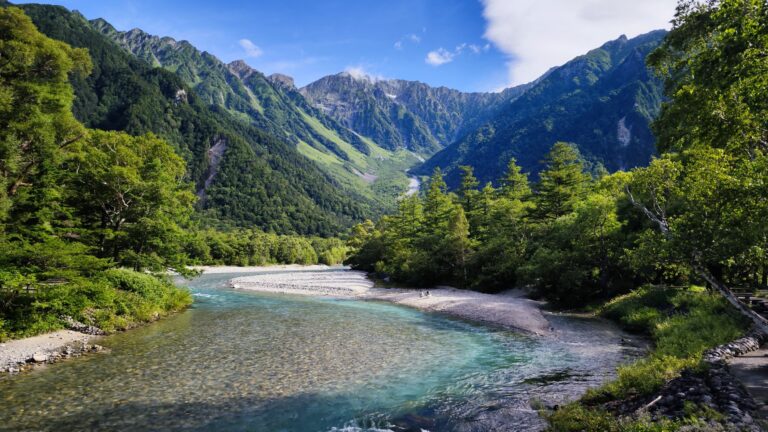
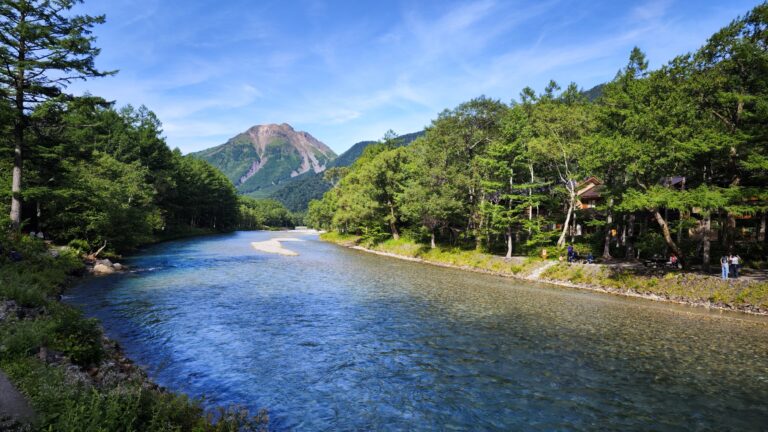
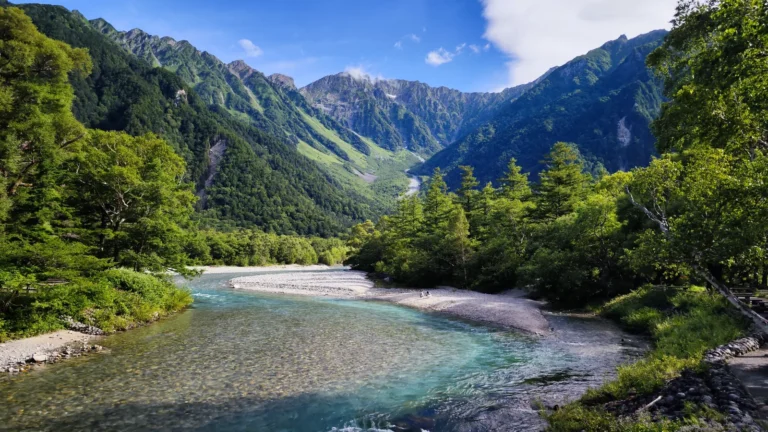
The first buses reach Kamikochi Bus Terminal around 7:30 AM. By 8:00, Kappa Bridge has its first crowd. But between 5:00 and 7:00, the valley belongs to the people who slept there. I’m Nobutoshi from Hidden Japan Gems — I stayed at Gosenjaku Hotel, next to Kappa Bridge, and walked upstream toward Myojin at dawn. The Azusa River was invisible under mist. The Hotaka peaks appeared and disappeared behind clouds. The standing dead trees along the riverbank looked like something from another century. This is what Kamikochi looks like before the world wakes up.
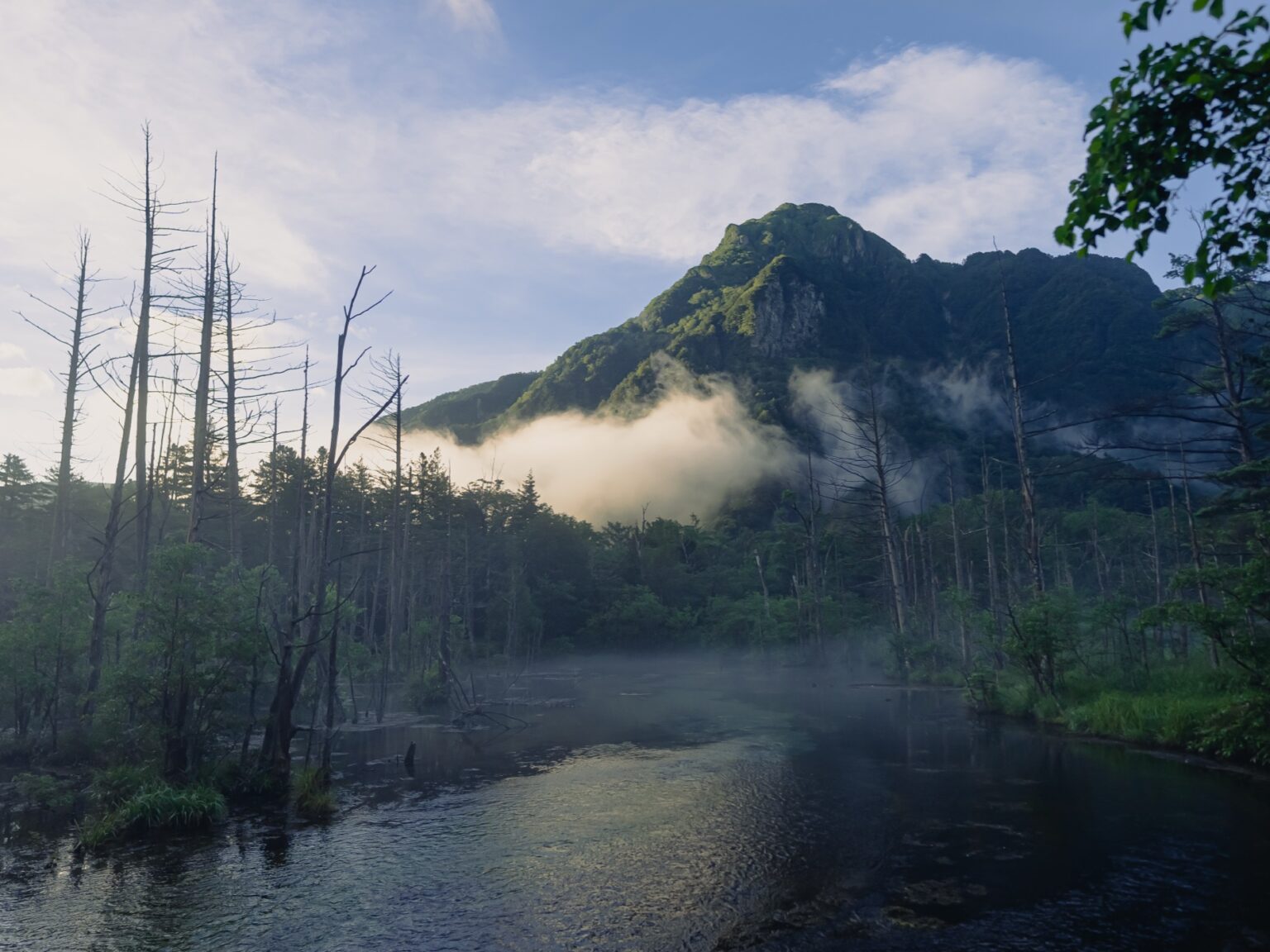
Table of Contents
Part of my full Things to Do in Kamikochi valley guide.
Quick Facts
| Detail | Info |
| Best morning window | 5:00 – 7:30 AM |
| What you see | Morning mist on Azusa River, clouds wrapping Hotaka peaks, dead tree silhouettes |
| Only possible if you | Stay overnight in Kamikochi |
| Nearest hotels | Gosenjaku Hotel, Kamikochi Imperial Hotel, Kamikochi Lemeiesta |
| Temperature at dawn | 8–15°C in summer, near freezing in spring/autumn |
| Photo gear needed | Any camera works; tripod helps for low light |
| Season | April 27 – November 15 (2026) |
The Walk: Kappa Bridge → Upstream at Dawn
I left the hotel at 5:10 AM. The temperature was around 10°C and the air smelled like wet stone and cold water. No one else on the path. The wooden planks on the trail were dark with dew, and my footsteps were the loudest thing in the valley besides the river.
The trail upstream of Kappa Bridge follows the right bank of the Azusa River toward Myojin Bridge. It’s flat, easy walking — gravel paths and boardwalks through mixed forest. In daylight, this section takes about 50 minutes. In the half-dark of early morning, I walked slower and stopped constantly.
The mist sat directly on the water surface, a layer maybe two meters thick. The river itself was almost invisible — I could hear it but couldn’t see it. The trees on the far bank were shapes without detail, gray outlines dissolving into white. Birdsong started around 5:20, scattered at first, then filling in. No human voices. No engines. Just water and birds and the occasional crack of a branch somewhere in the forest.
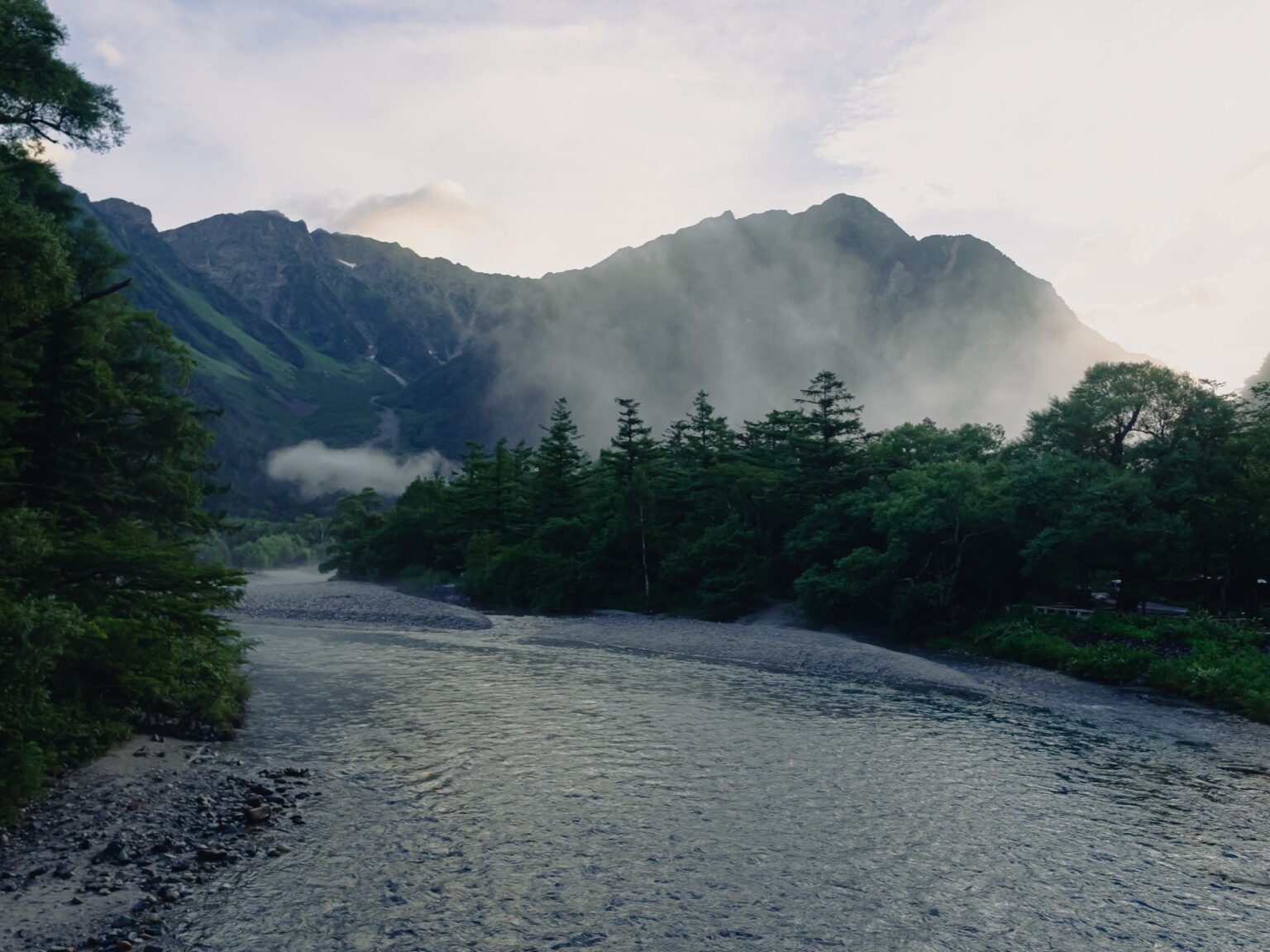
About 15 minutes upstream from Kappa Bridge, the trail passes through a marshy stretch where the river widens and the banks become soft ground thick with ferns. This is where the dead trees stand — remnants of forest that the river has slowly killed over decades, leaving bare trunks rising from the marsh and the riverbank. In the mist, they look monumental. The pre-dawn light turns everything blue-gray, and the trees become vertical lines against horizontal fog.
I stood there for twenty minutes. The mist shifted. The mountains behind appeared for a few seconds — just the ridgeline, sharp against a brightening sky — then vanished again. I took photos. Some caught the moment, most didn’t. That’s how dawn works here.
What Happens to the Mist
The morning mist at Kamikochi forms because the Azusa River’s water temperature is warmer than the surrounding air in the hours before dawn. The river releases moisture into the cold air, and it condenses into a visible layer that hugs the surface. It’s the same principle as steam rising from a hot bath on a cold day — just spread across a 15-kilometer valley.
The mist sits heaviest between 5:00 and 6:30 AM. During this window, visibility drops to 50 meters in places. The river disappears. The far bank disappears. The mountains above the cloud line look like islands floating on white.
By 7:00, the sun clears the eastern ridgeline and starts hitting the valley floor. The mist begins to lift — not evenly, but in patches. Some pockets linger in the marshy bends of the river while the wider sections clear first. By 7:30, the mist is thinning fast. By 8:00, most of it is gone.
The timing matters. Arrive at 9:00 and you see a completely different valley — clear air, sharp reflections, the full mountain panorama. Beautiful, but ordinary. The mist gives Kamikochi a quality that photographs can only partly capture: the feeling that the landscape isn’t fully revealed, that it’s showing you only what it wants you to see.
The Dead Trees
The standing dead trees along the riverbank upstream of Kappa Bridge are one of Kamikochi’s most distinctive sights, and they’re disappearing. These aren’t ancient relics from a volcanic eruption — they’re trees that died over recent decades as the Azusa River shifted course, waterlogged their roots, and turned living forest into marshy ground. The bare trunks remain standing, stripped of bark, bleached by sun and weather.
In daylight, they’re interesting. At dawn, in mist, they’re something else entirely. The pre-sunrise light strips away color and leaves only shape — vertical lines of pale wood against horizontal bands of white fog and dark water. The effect is stark and slightly unsettling, like walking through a landscape that’s been paused between one state and another.
Each year, a few more fall. Wind, rot, and the river’s current take them down one at a time. The ones standing now lean at various angles. Some have lost their upper branches and stand as bare poles. Others still hold their branch structure, like winter trees that never got their leaves back. In five or ten years, this scene will look different. In twenty, some of these trees will be gone entirely.
The Mountains Through Clouds
When the mist is heavy, the Hotaka peaks play a game with you. One moment the summit appears above the cloud line — sharp, sunlit, close enough that you can see individual rock faces. The next moment clouds roll across and it’s gone, replaced by a flat gray wall. Then a gap opens somewhere else and a different peak appears, just for a few seconds.
The photographs from this morning show clouds wrapping around the lower ridges while the peak catches early sunlight above. Oku-Hotaka at 3,190 meters floated above the cloud layer like it was detached from the earth beneath it. This lasted about four minutes before the clouds closed back in.
This is not something you can schedule. It happens when air temperature, humidity, wind speed, and the angle of the sun all align. Some mornings the valley stays clear and you get sharp mountain views from the start. Some mornings the clouds never lift. The morning I walked, conditions produced that in-between state — partial reveals, shifting layers, the mountains half-present — and it was the best possible outcome for photographs.
The Ferns and Wetland
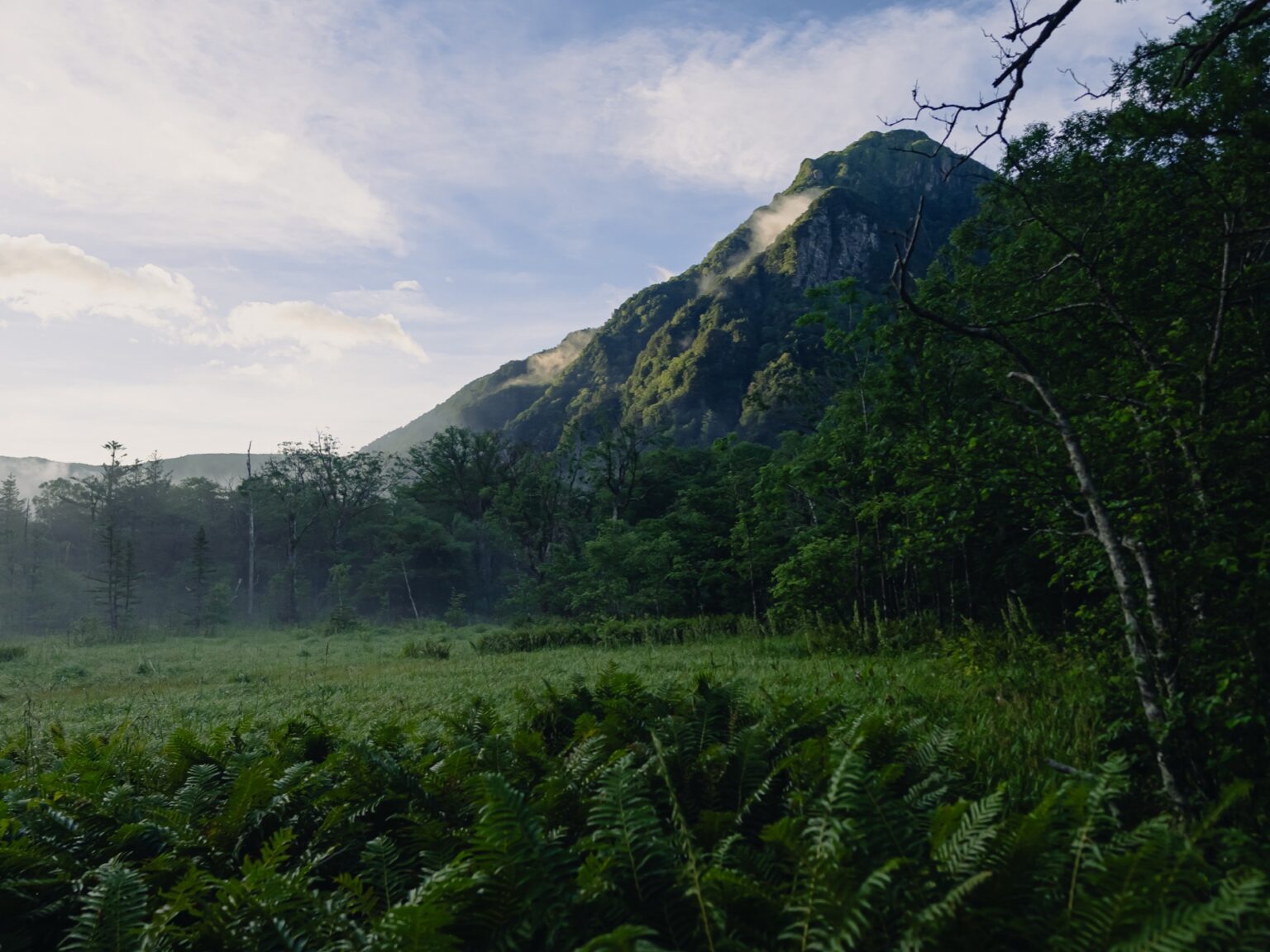
The marshy areas near the river upstream of Kappa Bridge are thick with ferns in summer. Waist-high in places, they carpet the ground between the dead trees and the trail. In the early morning, dew sits on every frond — heavy, visible drops that catch whatever light filters through the mist.
The color is hard to describe accurately. The mist diffuses the early sunlight into something between green and gold. The ferns glow. The wet bark on the standing trees goes dark. The mountain behind, when it appears, is lit from above in warm tones while everything at ground level stays cool and blue-green. This two-tone effect — warm peaks above cold valley — lasts from about 6:00 to 7:00 AM, and it’s gone by mid-morning when the sun reaches the valley floor and flattens everything into even daylight.
Why You Need to Stay Overnight
No bus reaches Kamikochi early enough for the morning mist. The first bus from Sawando parking area arrives at the bus terminal around 7:30 AM. By then the mist is already lifting. The first direct bus from Matsumoto departs at 5:30 AM and arrives around 8:00. By 8:00 the mist is mostly gone.
The only way to see the valley at 5:00 AM is to sleep in it. That means booking a hotel or pitching a tent the night before.
Hotels to consider:
Gosenjaku Hotel — right next to Kappa Bridge, the most convenient location for an early morning walk. Rooms from approximately ¥25,000 per person with two meals. You can be on the trail within 60 seconds of stepping outside.
Kamikochi Imperial Hotel — the classic choice, about 15 minutes’ walk from Kappa Bridge toward Taisho Pond. Built in 1933, it carries history in its timber frame. Rooms from approximately ¥35,000 per person.
Kamikochi Lemeiesta Hotel — near the bus terminal, a solid mid-range option with mountain views from some rooms.
Konashidaira Campsite — at ¥800 per night, the cheapest way to sleep in the valley. Located between Kappa Bridge and Myojin, directly on the trail I walked at dawn. You wake up already where you need to be.
Book early for summer weekends and autumn foliage season — Kamikochi hotels fill up weeks in advance.
Ad · We earn a commission on qualifying bookings made through this link.
Where to stay in Kamikochi
Compare hotels and ryokan in Kamikochi on Booking.com. Check the location on the map and the cancellation terms for your exact dates before you book.
Photography Tips for Dawn at Kamikochi
Wake up 30 minutes before sunrise. In summer, sunrise in Kamikochi is around 4:40–5:00 AM, but the sun doesn’t clear the eastern ridge until closer to 5:30. The blue hour — that period before direct sunlight hits — produces the most dramatic mist photographs. Cool tones, high contrast between mist and dark trees, no harsh shadows.
After sunrise, the light changes fast. When the sun clears the ridge and hits the mountain peaks above the mist, you get warm golden light on snow and rock above a layer of cool blue-white fog. This two-tone effect lasts roughly 15–20 minutes. It’s the most photogenic window of the entire morning.
Tripod recommended but not essential. Modern cameras handle low light well enough for handheld shooting at ISO 1600–3200. A tripod lets you shoot at lower ISO for cleaner images, and opens up long exposures that blur the mist into smooth sheets. If you’re carrying one, it’s worth setting up.
The dead trees make strong foreground subjects. Mist alone is hard to photograph — it needs structure in the frame. The standing dead trees give vertical lines against horizontal fog. Position yourself so a tree trunk breaks the foreground while the mountain peak sits above the mist in the background.
Shoot from the trail, not the riverbank. Kamikochi is a national park with strict rules about staying on marked paths. The marshy ground near the river is ecologically sensitive. The trail provides plenty of good vantage points without stepping off it.
Bring a lens cloth. The mist condenses on everything, including your lens. I wiped mine every few minutes. A microfiber cloth in your pocket is more important than any filter.
Ad · We earn a commission on qualifying bookings made through this link.
Book your Kamikochi stay
If this trip includes a night in Kamikochi, the Booking.com search below opens on Kamikochi — add your dates to see what is free.
Frequently Asked Questions
What time should I wake up for Kamikochi morning mist?
Set your alarm for 4:30 AM in summer. The thickest mist forms between 5:00 and 6:30 AM. You want to be on the trail upstream of Kappa Bridge by 5:00 to catch the peak conditions. By 7:30, the mist is already thinning significantly.
Can I see the morning mist without staying overnight?
Practically, no. The earliest bus from Sawando arrives around 7:30 AM, and the first bus from Matsumoto arrives around 8:00 AM. By that time, the mist is already lifting or gone. The only way to experience the 5:00–6:30 AM window is to stay at a hotel or campsite inside the valley.
Where exactly is the best spot for morning mist photos?
The stretch of trail 10–20 minutes upstream (northeast) from Kappa Bridge, where the river widens through marshy ground with standing dead trees. This area combines the mist on the water, the dead tree silhouettes, and the Hotaka peaks in the background. Kappa Bridge itself also offers views, but the dead tree area is more dramatic.
What month has the best morning mist in Kamikochi?
Morning mist occurs throughout the season (late April to November) whenever the air temperature drops below the river water temperature overnight. It’s most reliable in early summer (June–July) and autumn (late September–October), when the temperature difference between day and night is greatest. Mid-summer can also produce mist, but warm overnight temperatures sometimes reduce it.
Is it safe to walk alone at dawn in Kamikochi?
The trail between Kappa Bridge and Myojin is well-maintained, flat, and clearly marked. Walking it at dawn is generally safe. However, Kamikochi is bear habitat — Japanese black bears live in the surrounding forests. Make noise as you walk (talking, clapping, or carrying a bear bell). Bears are typically active at dawn and dusk. I didn’t see any that morning, but signs at every trailhead remind you they’re there.
What should I wear for an early morning walk?
Even in summer, Kamikochi sits at 1,500 meters and dawn temperatures drop to 8–15°C. Bring a fleece or light down jacket, long pants, and waterproof shoes or boots — the trail and boardwalks are slippery with dew. In spring and autumn, temperatures at dawn can approach freezing, so layer accordingly. A hat and gloves aren’t overkill in late September or October.
Does morning mist happen every day at Kamikochi?
No. Mist forms when the overnight air temperature drops well below the river water temperature. On warm nights with little temperature differential, the mist may be thin or absent. Clear, calm nights with cold air tend to produce the thickest mist. There’s no guarantee on any given morning — but staying two nights improves your odds significantly.
The valley at dawn is a different place. The same Azusa River that flows wide and clear under midday sun becomes invisible under a white sheet of mist. The same Hotaka peaks that stand crisp against blue sky in the afternoon hide behind shifting clouds at 5:30 AM, revealing themselves in fragments. The same trail that carries hundreds of daytrippers between 10:00 and 15:00 is completely empty at dawn — just you, the river, and the birds.
It costs a night in a mountain hotel and a 4:30 AM alarm. It’s worth every minute of lost sleep.
Related Articles
- Kamikochi Walking Guide 2026
- How to Get to Kamikochi 2026
- Best Time to See Mt. Fuji
- Emerald Route: Alpine Journey Through Japan’s Green Heart
Sources checked: Kamikochi Official Visitor Guide (kamikochi.org), Alpico Bus Timetables, Gosenjaku Hotel, Kamikochi Imperial Hotel, Chubu Sangaku National Park official site. All prices and schedules confirmed for the 2026 season.
Join travelers discovering Japan's hidden side
Weekly dispatches from off-the-beaten-path Japan — spots and stories you won't find in guidebooks.
No spam. Unsubscribe anytime.
Welcome aboard!
You're in. See you in your inbox soon.