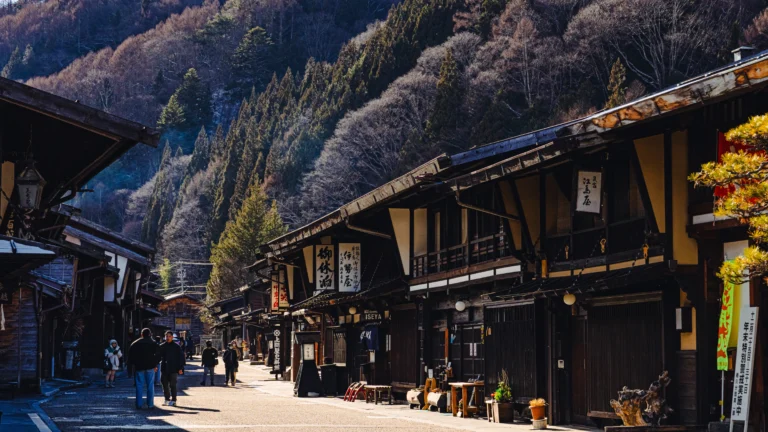
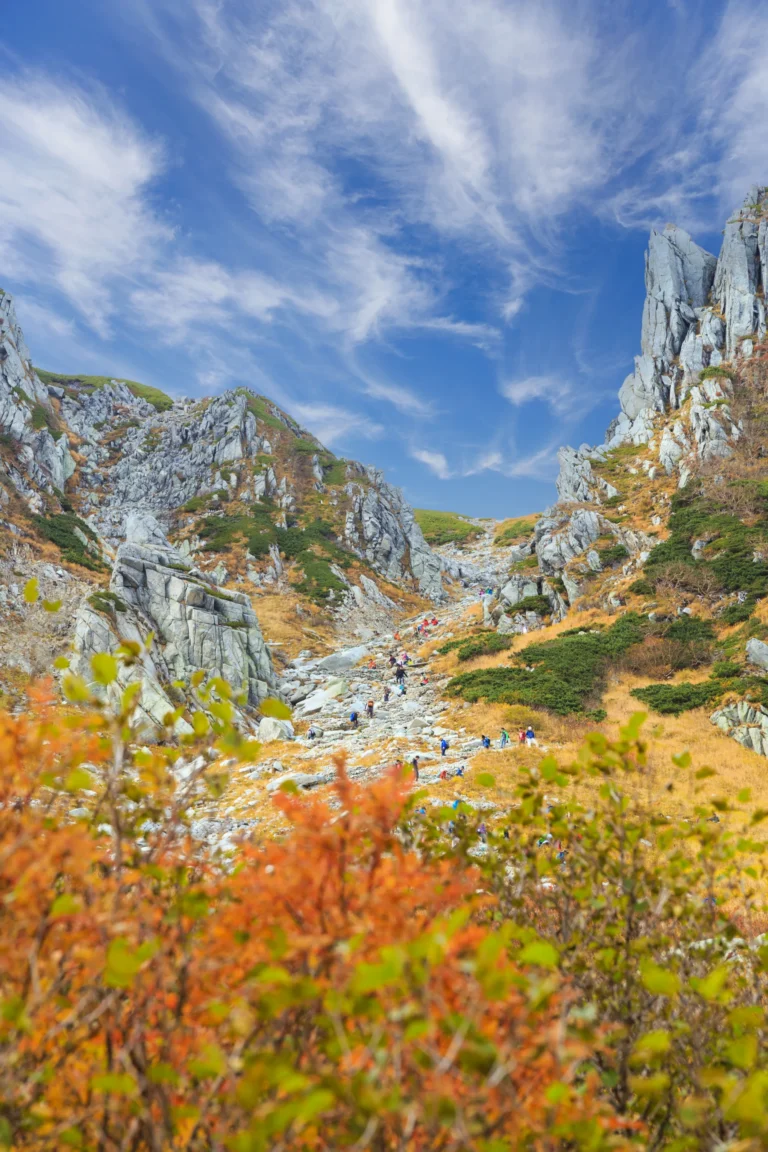
Nagano · Hakuba Valley · Access
Hakuba sits 4.5 hours north of Tokyo through the Japanese Alps, on a single-track line in a valley most international travelers have never heard of. The journey is part of why it still feels remote — and getting it right matters more than you’d expect, because Hakuba Station is small, the connecting buses are infrequent, and the winter timetable looks nothing like the summer one.
I’ve taken every route into this valley at one point or another. This is the practical version: what each one actually costs, how long it really takes, and which one to pick depending on what you’re carrying and what time of year you’re arriving.
The Four Routes Into Hakuba
There is no Shinkansen to Hakuba itself. Every route eventually drops you onto either a connecting express bus from Nagano, a local train along the JR Oito Line, or a long highway bus straight from Shinjuku. The decision is usually about luggage, budget, and what season you’re traveling in.
Route A · Fastest
Hokuriku Shinkansen → Express Bus
Tokyo to Nagano on the Hokuriku Shinkansen (1h 20m, ¥8,420 unreserved), then the Alpico Express Bus from Nagano Station East Exit to Hakuba (~70 min, ¥2,900 on Alpico’s timetable valid to 30 November 2026; check the winter fare before you travel). The most reliable option year-round. Reservations for the bus are recommended on ski-season weekends.
Route B · Most Scenic
JR Chuo Azusa → Oito Line
Limited Express Azusa from Shinjuku to Matsumoto (~2h 40m, ¥6,620), then the local JR Oito Line north to Hakuba (~1h 20m, ¥1,170). Slower but the train hugs the Northern Alps for the last hour. Best in late spring, summer, and early autumn — the Oito Line gets weather delays in winter.
Route C · Cheapest
Highway Bus from Shinjuku
Alpico Kotsu and Keio Bus both run direct services from Shinjuku Highway Bus Terminal to Hakuba Station. Daytime and overnight options. The cheapest way in — and during ski season, often the easiest if you’re carrying boards or skis. Book a few days ahead in peak weeks; New Year and February weekends sell out. To choose which resort to ride when you arrive, see snowboarding in Hakuba.
Route D · Drive
Rental Car or Self-Drive
Joshinetsu Expressway via Nagano, exit at Nagano IC then Route 19 / 148 north. Useful only if you’re staying multiple nights and want flexibility for nearby trips (Shirouma, Kamikochi, Togakushi). In winter you’ll need snow tires or chains — confirm with the rental company.
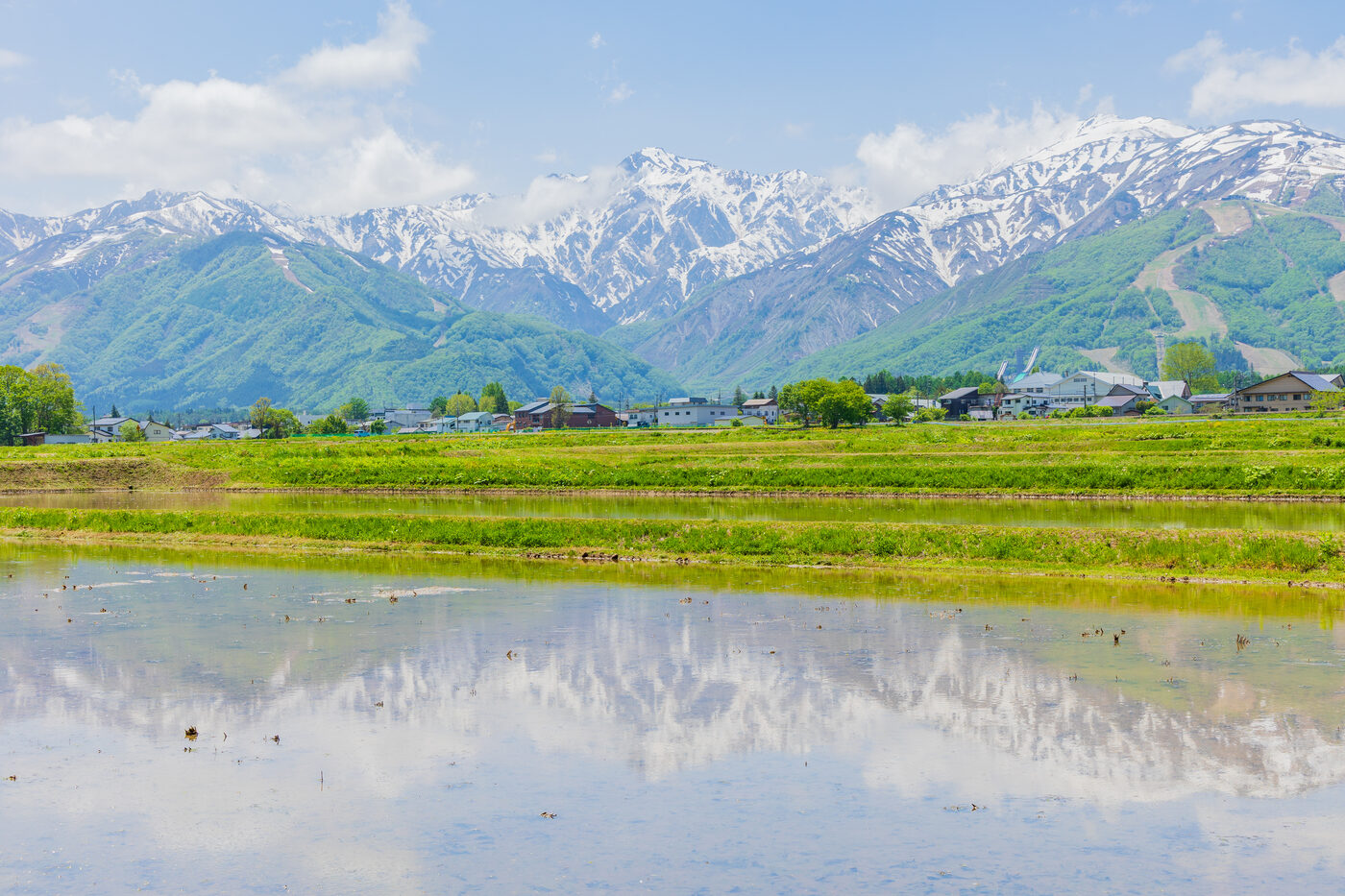
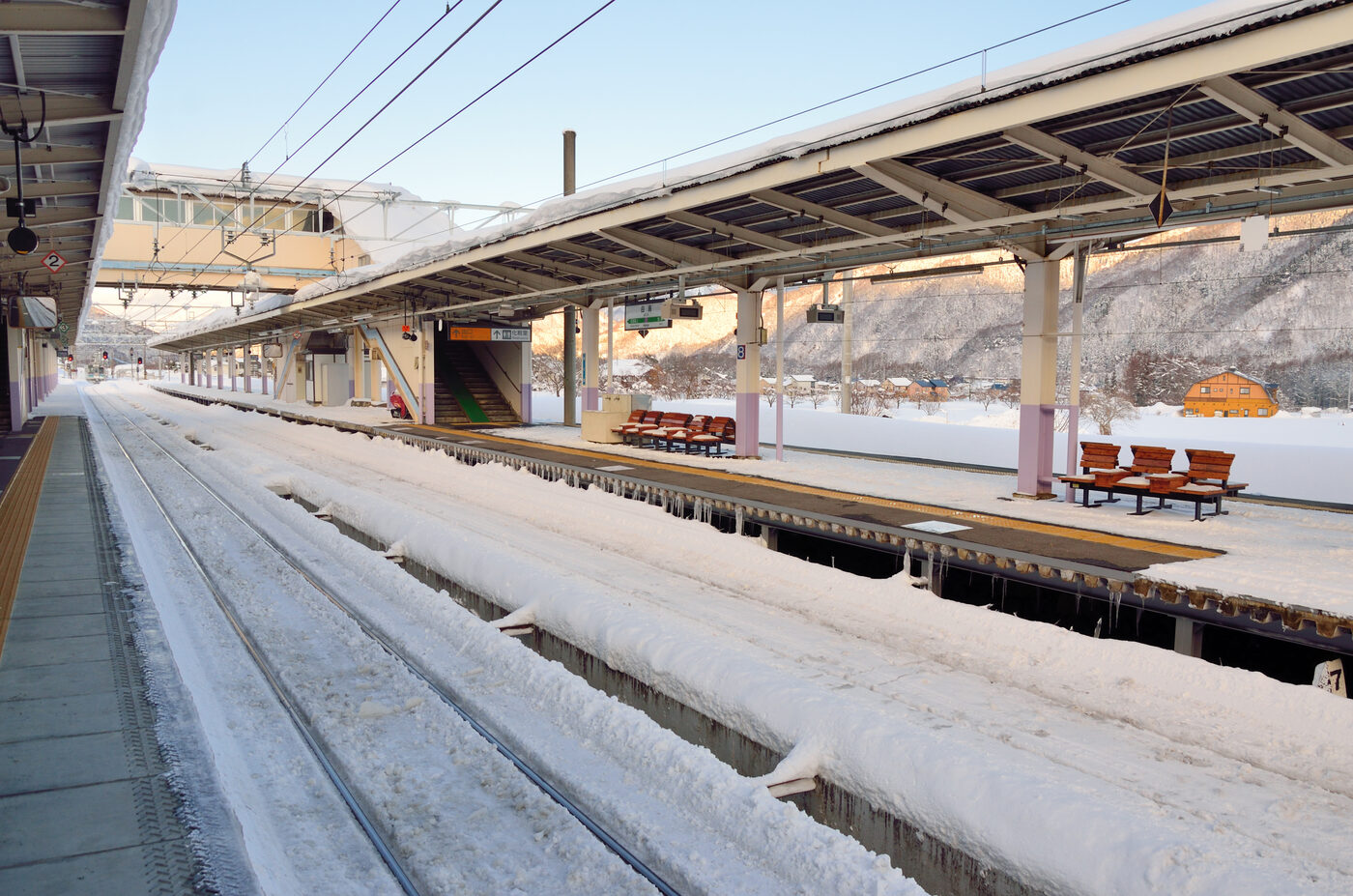
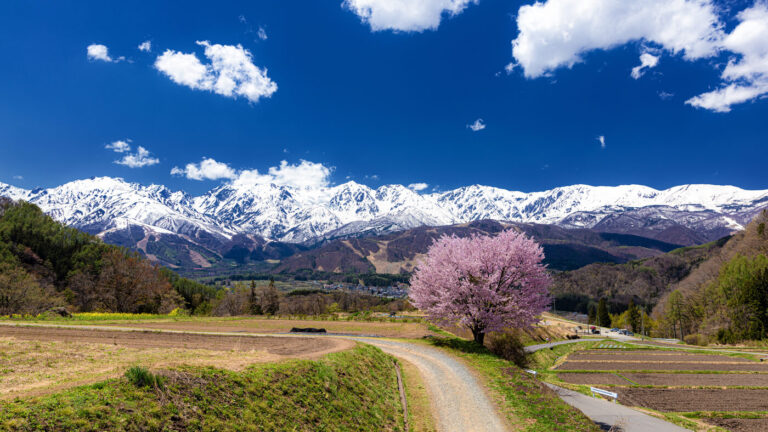
Left: the rice-paddy stretch you’ll see from the Oito Line in late May. Right: the same valley in February — and why winter trains run on a different schedule.
10 Destinations from Hakuba Station — Time, Cost, and Line
Most travelers arrive at Hakuba and then need to figure out connections — either onward to Tokyo, or sideways to other Japanese Alps destinations (Kamikochi, Matsumoto, Kanazawa). The table below covers both, ordered roughly by distance.
| Destination | Best Line | Time | One-Way Fare | Note |
|---|---|---|---|---|
| Nagano | Alpico Express Bus | 70 min | ¥2,900 (to 30 Nov 2026) | The main connection point. Buses run roughly hourly during the day. |
| Matsumoto | JR Oito Line (Local) | 1h 20m | ¥1,170 | Direct, no transfer. Castle and Daio Wasabi Farm both within reach. |
| Tokyo (Shinjuku) | Bus + Hokuriku Shinkansen | 2h 50m | ~¥10,500 | Fastest route. Reserve the Nagano connecting bus on weekends. |
| Tokyo (cheapest) | Alpico Highway Bus (direct) | 4h 30m | ¥5,200+ | Daytime and overnight services from Shinjuku Highway Bus Terminal. |
| Nagoya | Bus + Limited Express Shinano | 3h 34m | ~¥8,500 | Bus to Matsumoto, then Shinano direct to Nagoya. |
| Osaka | Multiple transfers (Azusa + Shinano + Tokaido) | 4h 47m | ~¥14,000 | The longest direct option without flying. Three trains, one direction. |
| Kanazawa | Oito Line + Hokuriku Shinkansen | 2h 42m | ~¥7,500 | Backdoor route via Itoigawa. Beautiful sea-of-Japan stretch on the Oito Line. |
| Kamikochi (summer only) | Train to Matsumoto + bus | 3h 30m | ~¥4,500 | Closed mid-November to mid-April. Worth the detour in summer. |
| Togakushi Shrine | Bus to Nagano + local bus | 2h 30m | ~¥3,500 | The 2,000-year-old cedar avenue near Nagano. Pairs well as a half-day side trip. |
| Narita / Haneda Airport | Bus + Shinkansen + airport train | 5–6 hours | ~¥13,500 | Plan the full day. Direct Hakuba-to-Narita buses exist in peak ski season. |
If you only remember one thing: the Nagano → Hakuba bus is the bottleneck. Once a route’s last bus has left for the night, you’re either staying in Nagano or paying for a taxi.
Inside Hakuba Station
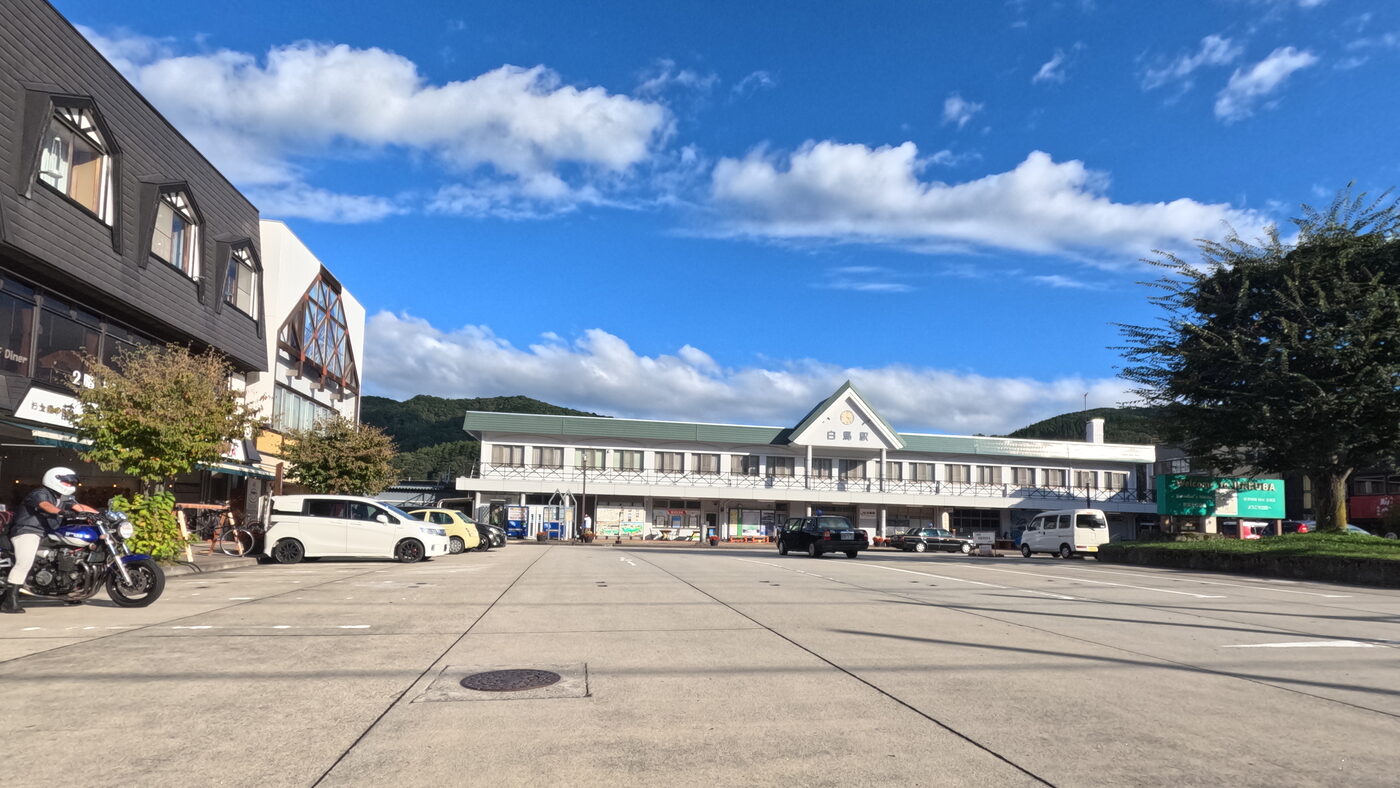
The station itself is a single-platform local stop on the JR Oito Line. There’s a small staffed ticket office, a few rows of coin lockers, a tourist information desk that’s open daytime hours, and a couple of vending machines. That’s the entire footprint.
The Alpico Express Bus to and from Nagano stops at the curb directly outside the main exit. Taxis queue here too. Most of the ski-resort shuttles (Happo, Iwatake, Tsugaike) pick up either at the station forecourt or at the nearby Hakuba Happo Bus Terminal, which is a five-minute walk north.
If you arrive with a JR Pass, you’ll exchange your voucher at the staffed ticket office. The window is open most of the daytime but closes early in the evening — confirm hours before relying on it for an early departure.
Hakuba Station vs. Hakuba Happo Bus Terminal — Which Are You Going To?
This is the single biggest source of confusion for first-time visitors. Hakuba Village has two main transport hubs, and your hotel or rental company will quote one or the other.
Hakuba Station (白馬駅) is the JR train station — small, north end of the main village strip. All the train routes terminate here.
Hakuba Happo Bus Terminal (白馬八方バスターミナル) is about 5 minutes north on foot. Most ski-season highway buses and resort shuttles use this terminal, not the train station. If your booking says “Hakuba Happo” — go to the bus terminal, not the train station.
When in doubt, the two are walkable from each other, but with skis and luggage in the snow, that 5 minutes feels like 20. Confirm with your operator before you book.
From Hakuba Station to Your Accommodation
The village is spread out. Walking from Hakuba Station to the lifts at Happo-One takes 25–30 minutes (uphill), and most of the ski lodges sit closer to the slopes than to the train station. Three practical options:
Free Resort Shuttles (Winter)
From mid-December through late March, most ski resorts and many lodges run free shuttles between the station, the bus terminal, and their facilities. Check your hotel’s website before arriving — they almost always publish the timetable.
Local Bus (Year-Round)
Alpico Kotsu runs a village bus that connects the station to Happo, Iwatake, Tsugaike, and Hakuba Goryu. Single fare is around ¥300–500 depending on distance. Convenient but slow, and the timetable thins out after 6 PM.
Taxi
A taxi rank sits just outside the station. From the station to Happo lifts is roughly ¥1,500–2,000. Worth it with luggage or in heavy snow.
The Season Question: When You Arrive Changes Everything
December – March (ski season): Highway bus from Shinjuku is most flexible because the buses queue trucks ahead of snow. Trains can be delayed by drift snow on the Oito Line. Allow extra time on Sundays — every skier in Tokyo heads home that day.
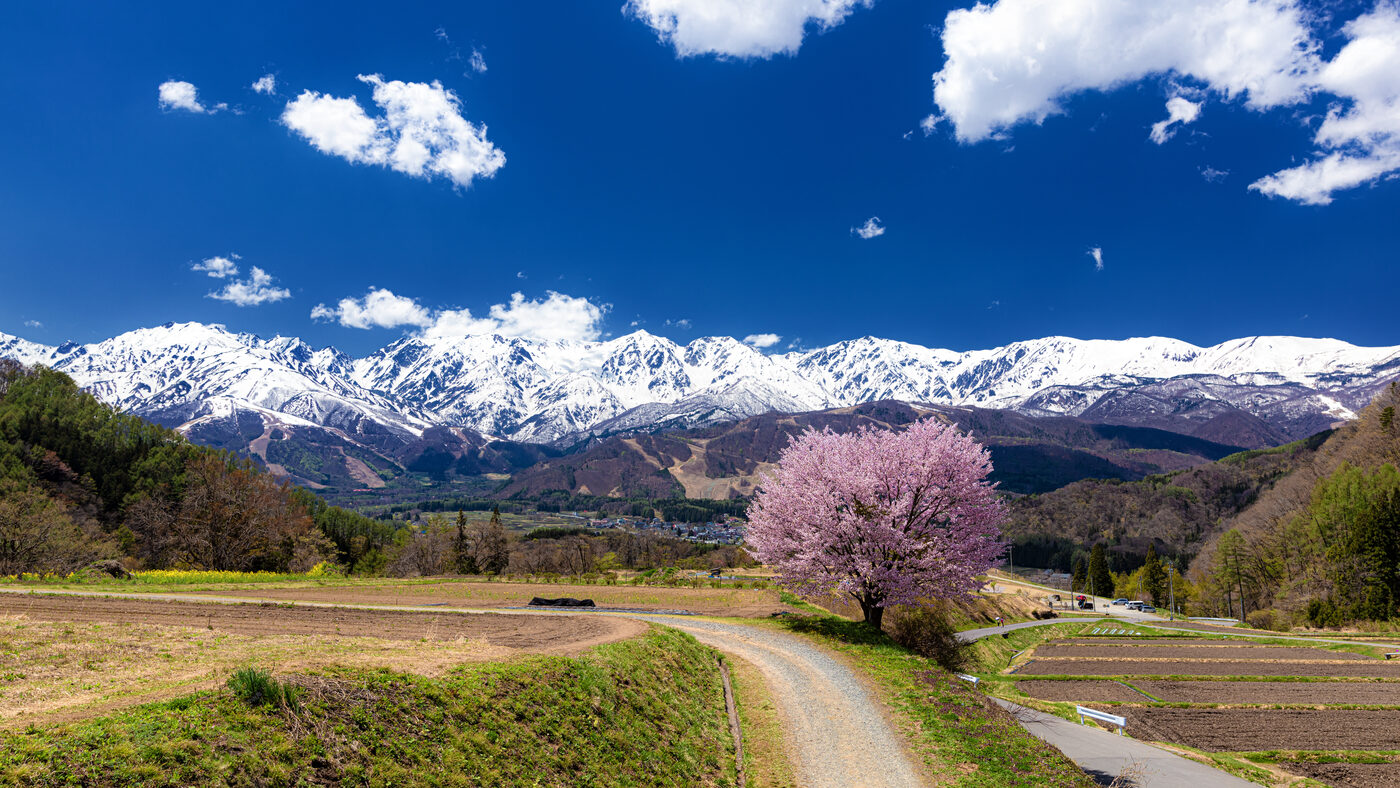
April – May (shoulder / spring): Best window for the Azusa scenic route. The Oito Line opens up after winter restrictions, and the trains carry far fewer passengers than during ski season. Sakura blooms in the village around April 25 – May 5.
June – August (green / hiking): Hokuriku Shinkansen + bus is the path of least resistance. The Happo-One ropeway up to Happo-ike alpine pond opens around mid-June and the rest of the high-mountain trails follow by late July.
September – November (autumn): Foliage starts in the high mountains around late September and reaches the village in mid-October. Bus and train schedules are stable, but the highway bus thins out after October.
Does a JR Pass Pay Off for Hakuba?
The 7-day Japan Rail Pass (¥50,000 ordinary) covers everything except the Alpico bus, the highway bus, and any non-JR transfer in the valley itself.
- Worth it if you’re doing Tokyo → Hakuba → Kanazawa → Kyoto in one week. The Hokuriku Shinkansen plus a Kyoto round trip clears the math easily.
- Worth it if you’re combining Hakuba with Tohoku or Kyushu in the same week.
- Not worth it if you’re only doing Tokyo ↔ Hakuba once or twice. The single round trip is ~¥21,000 — well below the Pass price.
- The connecting bus from Nagano (¥2,900 on the timetable valid to 30 November 2026) is not covered. Pay separately.
For a Hakuba-only trip from Tokyo, individual tickets almost always come out cheaper than the Pass. If you do decide on a Pass, book the voucher before you arrive.
Where to Stay Near Hakuba Station
The village splits roughly into three zones: Happo (the busiest, closest to the main ski runs and bars), Wadano (forested, quieter, walking distance to Happo), and Echoland (more pension-style lodges, slightly removed). Staying near the station itself is rare — most lodges sit closer to the lifts.
For first-time visitors aiming to balance access and quiet, the side streets between Hakuba Station and Hakuba Happo Bus Terminal have a small cluster of family-run pensions and ryokan that aren’t on the standard ski-package brochures.
Search hotels near Hakuba Station on Booking, or browse traditional ryokan and onsen lodges on Rakuten Travel — Rakuten has the deeper inventory for the smaller machiya and onsen-style stays.
The Village Itself: What You’re Actually Coming For
The station is just the entry. The valley behind it — Northern Alps on one side, rice paddies and old farmhouses on the other — is what people come for. If you have time before checking in to your accommodation, the 5-minute walk east from the station drops you into open farmland with the Hakuba range filling the entire western horizon. It’s the view every advertising photo of Hakuba is taken from.
For a full season-by-season guide to what to do once you arrive, see our Hakuba Village Year-Round Guide. The two signature viewpoints in central Hakuba — Hakuba Ohashi (a 100-meter bridge over the Matsugawa, one of Japan’s Top 100 Roads) and Hakuba Ōide Park (the wooden suspension bridge framing the Hakuba Sanzan peaks) — are both 5–15 minutes from the station and form the canonical Hakuba photo morning.
Frequently Asked Questions
Do I need a reserved seat on the Hokuriku Shinkansen?
Not for Tokyo–Nagano on weekdays. There are three unreserved cars and trains run roughly every 20 minutes. On ski-season Saturdays and during Golden Week, reserve in advance — unreserved cars fill before Omiya.
Does my IC card (Suica, Pasmo, ICOCA) work on the Oito Line to Hakuba?
Yes, up to Matsumoto. The local section from Matsumoto north to Hakuba is a JR East rural line — IC cards work for the trains but not always at the smaller stations’ gates. Carry some cash for backup.
Can I store luggage at Hakuba Station?
Yes. Coin lockers sit on the platform-side wall, ¥400–700 per locker per day. They fill up on peak ski-season Saturdays — if you need a large locker for ski bags, arrive early or use the staffed left-luggage at the Hakuba Happo Bus Terminal.
Is the Alpico Express Bus from Nagano covered by a JR Pass?
No. The Alpico bus is private — pay separately at the kiosk inside Nagano Station East Exit or via the Alpico app. Reservations open about a month ahead and are advised on ski-season weekends.
Is there an overnight bus from Tokyo?
Yes. Alpico and Keio both run overnight services from Shinjuku Highway Bus Terminal, arriving in Hakuba around 5–6 AM. Useful for getting on the first lift, but uncomfortable for sleeping — bring an eye mask and earplugs.
Can I rent a car in Hakuba?
Limited. There’s one small rental office in the village. Most travelers who want a car pick one up at Nagano Station before the bus connection, or at Matsumoto Station. Reserve in advance during ski season.
One More Thing
The first time I arrived at Hakuba Station was on the Azusa-and-Oito-Line route, in late April, with snow still on the platform. Stepping off the train, the valley opens up immediately — and the Hakuba range, which you’ve been seeing in glimpses from the train for an hour, finally fills the sky. That moment, more than anything, is why this is worth the four-hour journey instead of one of Japan’s easier ski destinations. Get the route right and the rest of the trip takes care of itself.
Book a Hakuba lodge or pension
Hotels and lodges across Happo, Wadano, and Echoland — free cancellation on most.
Search hotelsTraditional ryokan & onsen stays
For onsen ryokan and machiya-style stays Booking doesn’t carry — Rakuten has deeper inventory.
Browse on RakutenGet the JR Pass before you fly
If you’re doing Tokyo + Hakuba + Kyoto or further, lock in the Pass voucher before arriving in Japan.
Buy JR PassKeep reading on Hidden Japan Gems
Michi-no-Eki Hakuba
Once you’re here: the roadside station for purple rice and souvenirs.
Join travelers discovering Japan's hidden side
Weekly dispatches from off-the-beaten-path Japan — spots and stories you won't find in guidebooks.
No spam. Unsubscribe anytime.
Welcome aboard!
You're in. See you in your inbox soon.