Yokohama · Kanagawa · 2027
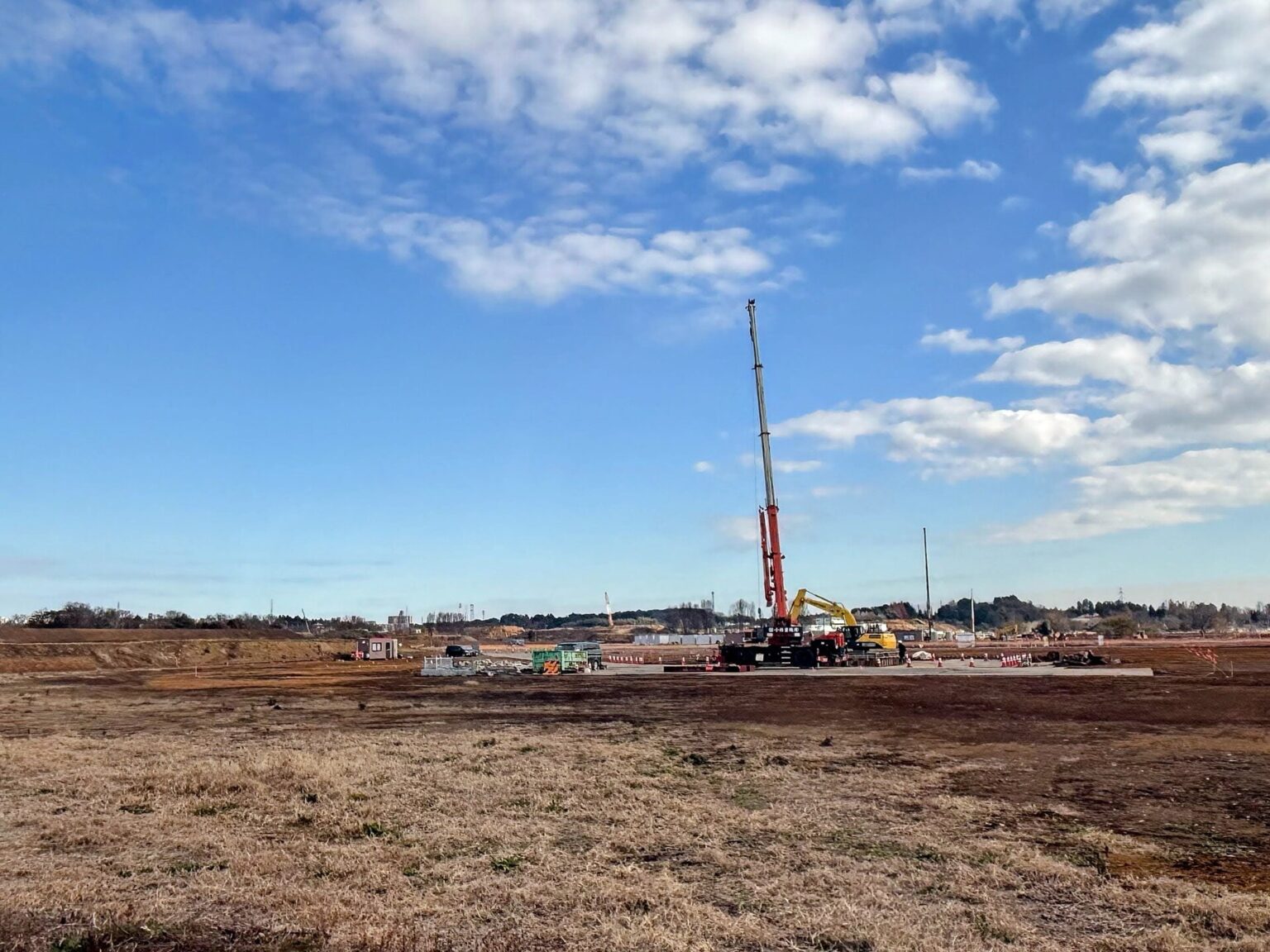
GREEN×EXPO 2027 is not a Yokohama attraction you can wander into. There is no station at the venue, getting to the gate needs its own reservation on top of the ticket — a shuttle seat if you come by train (the alternative is a walk of about 30 minutes from Seya Station), a parking space if you drive — and the expo does not open until 19 March 2027. So the honest question is not “what is it” but “does it earn a fixed date in your trip” — and for a lot of visitors the answer is no.
| What it is | The International Horticultural Expo 2027, Yokohama — official short name GREEN×EXPO 2027. An A1-class horticultural expo, approved by AIPH and recognised by the BIE |
|---|---|
| When | 19 March – 26 September 2027, 192 days |
| Hours | 09:30–21:30. Last entry planned for 21:00 |
| Where | The former Kamiseya Communications Facility, Seya and Asahi Wards, Yokohama, Kanagawa. Expo zone about 100 ha, of which the venue is 80 ha |
| Station at the venue | None. Shuttle buses run from four stations: Seya, Mitsukyo, Minami-machida Grandberry Park and Tokaichiba |
| Cheapest full-day adult ticket | ¥4,900 advance one-day, on sale now until 18 March 2027. It becomes ¥5,500 once the expo opens. An evening ticket is ¥3,500 |
| Shuttle fare | ¥200 adult, ¥100 child — and a reservation is required |
| Parking | ¥5,000 weekday, ¥7,000 weekends, public holidays and peak dates, per car, advance reservation required |
| 18 September 2026 | Convenience-store ticket sales began, and visit-time, shuttle and car-park reservations opened. Group-bus parking opened earlier, on 3 August 2026 |
| Theme | 幸せを創る明日の風景 — “Scenery of the Future for Happiness” |
| Last one in Japan | Osaka, 1990. This is Japan’s second A1-class horticultural expo, and its first in 37 years |
On this page
Is GREEN×EXPO 2027 on now?
No. It runs from Friday 19 March 2027 to Sunday 26 September 2027, 192 days. As I write this on 2 September 2026, the site is a fenced construction zone and nobody is going in.
The confusion is fair enough. Tickets went on sale in March 2026, a year before opening, and Japanese outlets have been running expo stories all year. If you have seen a headline about GREEN×EXPO tickets and assumed the gates were open, they are not.
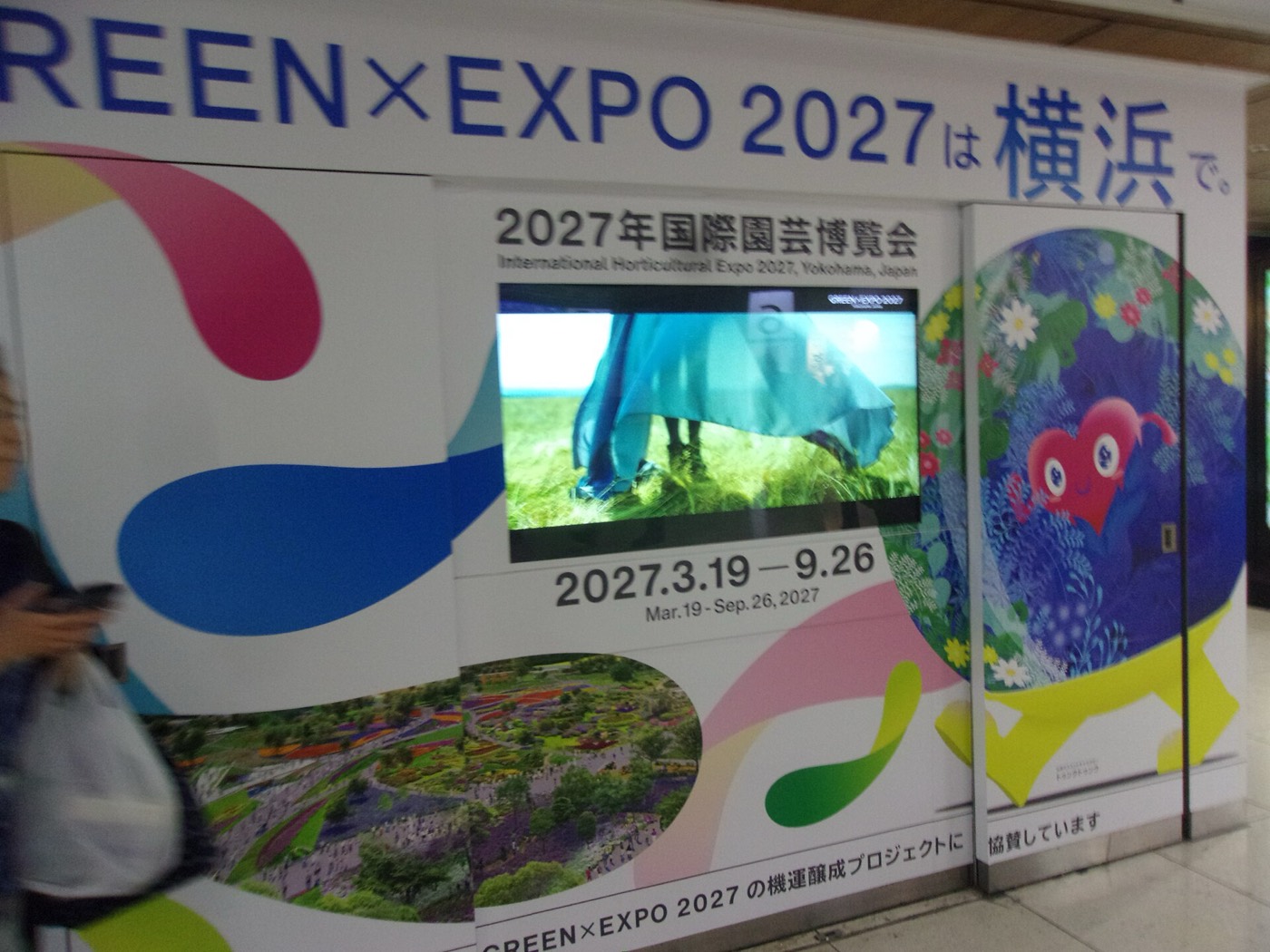
Is there a station at GREEN×EXPO 2027? And which stations have shuttles?
As of 2 September 2026 there is no station at the GREEN×EXPO 2027 venue. The four announced shuttle origins are Seya and Mitsukyo on the Sotetsu Main Line, Minami-machida Grandberry Park on the Tokyu Den-en-toshi Line, and Tokaichiba on the JR Yokohama Line. Visitors arriving by public transport need a shuttle reservation; visitors arriving by car need a parking reservation. Both reservation systems opened on 18 September 2026.
| Shuttle station | Railway line | From Yokohama Stn (IC) | Reservation |
|---|---|---|---|
| Seya 瀬谷 | Sotetsu Main Line | ¥272 | Required |
| Mitsukyo 三ツ境 | Sotetsu Main Line | ¥241 | Required |
| Minami-machida Grandberry Park 南町田グランベリーパーク | Tokyu Den-en-toshi Line | — | Required |
| Tokaichiba 十日市場 | JR Yokohama Line | — | Required |
The station list comes from the organiser’s press release of 17 July 2026; the fares are from Sotetsu’s published passenger fare table. Minami-machida Grandberry Park and Tokaichiba sit on other operators’ networks, so what you pay there depends entirely on where you start — see the times and fares below. Minami-machida Grandberry Park is on the Shibuya side of the site, with a large outlet mall attached to the station. Tokaichiba is the JR option. The organiser’s transport FAQ now names Seya as the nearest station and gives planned bus times of about 10 minutes from Seya, 15 from Mitsukyo, 20 from Minami-machida Grandberry Park and 25 from Tokaichiba, adding that traffic can make them longer.
How long does it take to reach the shuttle stations?
The organiser publishes no journey times, so these come from the railway operators’ own timetables and fare tables. They are single scheduled services rather than averages — treat them as a realistic sample, not a promise. Where a fare crosses two operators, I have left it out rather than print a total I cannot source.
| From | To | Time | How |
|---|---|---|---|
| Shinjuku | Seya | 60 min | Through train, no change. Weekday example, JR East timetable: 06:58 → 07:58 (a Saturday/holiday train runs 10:35 → 11:34) |
| Meguro | Seya | 50 min | Through train, no change (07:39 → 08:29), via the Tokyu Meguro Line |
| Yokohama | Seya | — | Sotetsu Main Line, ¥272 IC. No journey time published |
| Shibuya | Minami-machida Grandberry Park | 35 min | Tokyu Den-en-toshi express, 29.2 km, ¥347 IC |
| Yokohama | Tokaichiba | 24 min | JR Yokohama Line (09:30 → 09:54) |
| Shin-Yokohama | Tokaichiba | 12 min | JR Yokohama Line |
| Haneda T3 | Yokohama | — | Keikyu; check its fare on the day. The onward Yokohama–Seya leg is the ¥272 above |
The useful surprise there is Shinjuku. Since the Sotetsu–JR link opened, some trains run from Shinjuku through to Seya without a change at all, in about an hour — which makes this a more manageable day from Tokyo than the “suburban Yokohama” framing suggests. From Narita, JR East’s Narita Express runs through to Yokohama without a change, and you pick up the Sotetsu there.
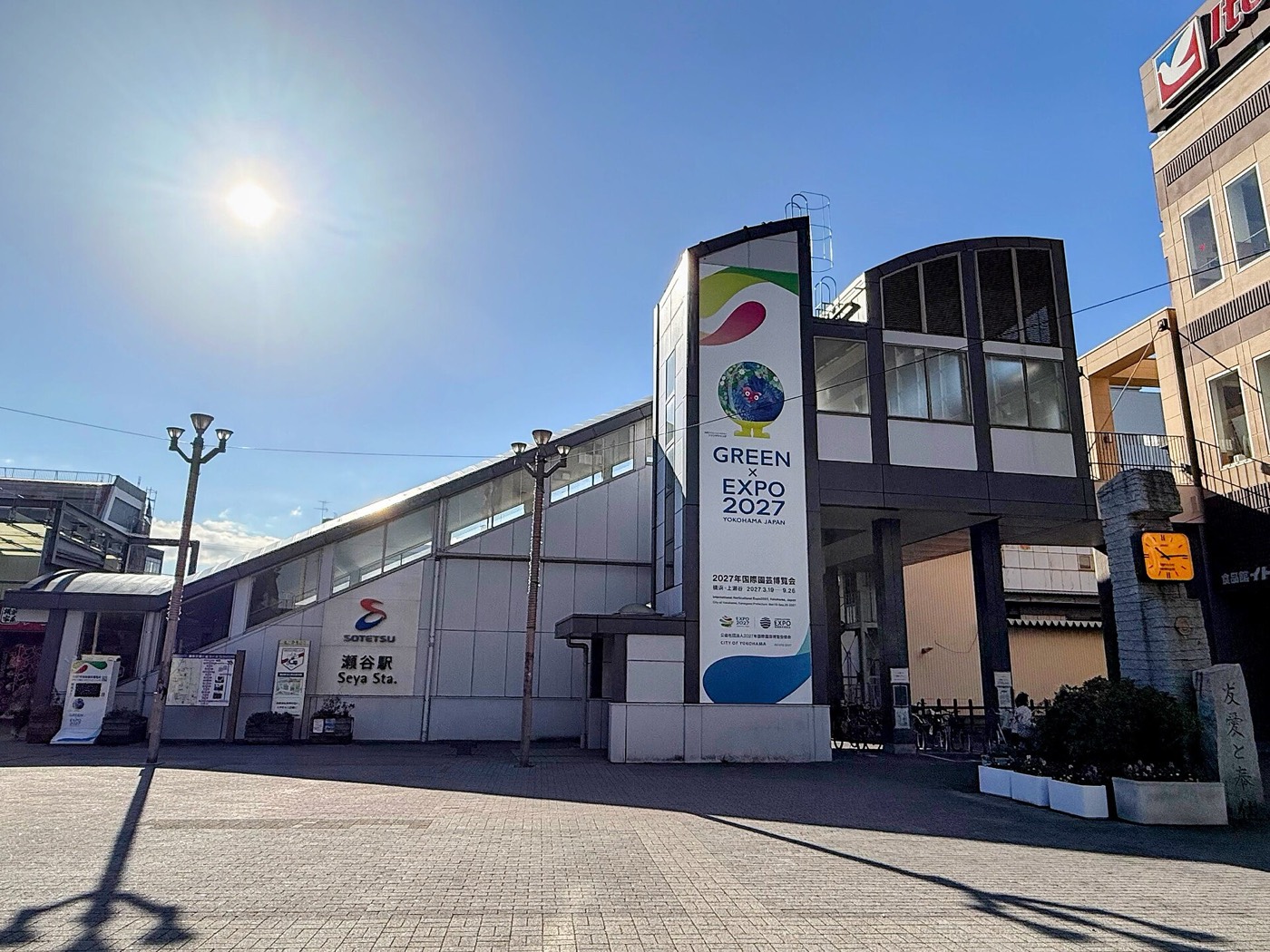
Shuttle fares are ¥200 for an adult and ¥100 for a child, halved to ¥100 and ¥50 for holders of a disability certificate. The bus and the ticket office define “child” differently, which is worth untangling before you budget:
- On the shuttle, the child fare covers ages one to eleven. On top of that, each passenger may take up to two pre-school children free — that means ages one to five, plus six-year-olds who have not yet started school — and under-ones always ride free. So a couple with two toddlers pays two adult fares and nothing else.
- On an admission ticket, “child” means four to eleven, “youth” means twelve to seventeen, and three and under is free.
One gap: the organiser publishes the ¥200 as a flat fare without saying whether it covers one journey or the round trip. Budget for each direction until it says otherwise.
The ticket and the journey are two separate bookings. The organiser’s wording is that visitors arriving by public transport or by private car need either a shuttle bus reservation or a parking reservation. Buying admission — even a convenience-store ticket with the time slot already printed on it — does not get you to the gate. Check admission availability and shuttle or parking availability together, because either one being full can force you to move the other.
One more thing worth knowing before you plan your arrival time: the organiser’s FAQ says a single entrance gate is planned for the whole site. How many lanes it will have, and how fast it will process people, has not been announced. One gate, four shuttle routes and timed entry is a reason to leave yourself margin on the day rather than evidence that it will jam.
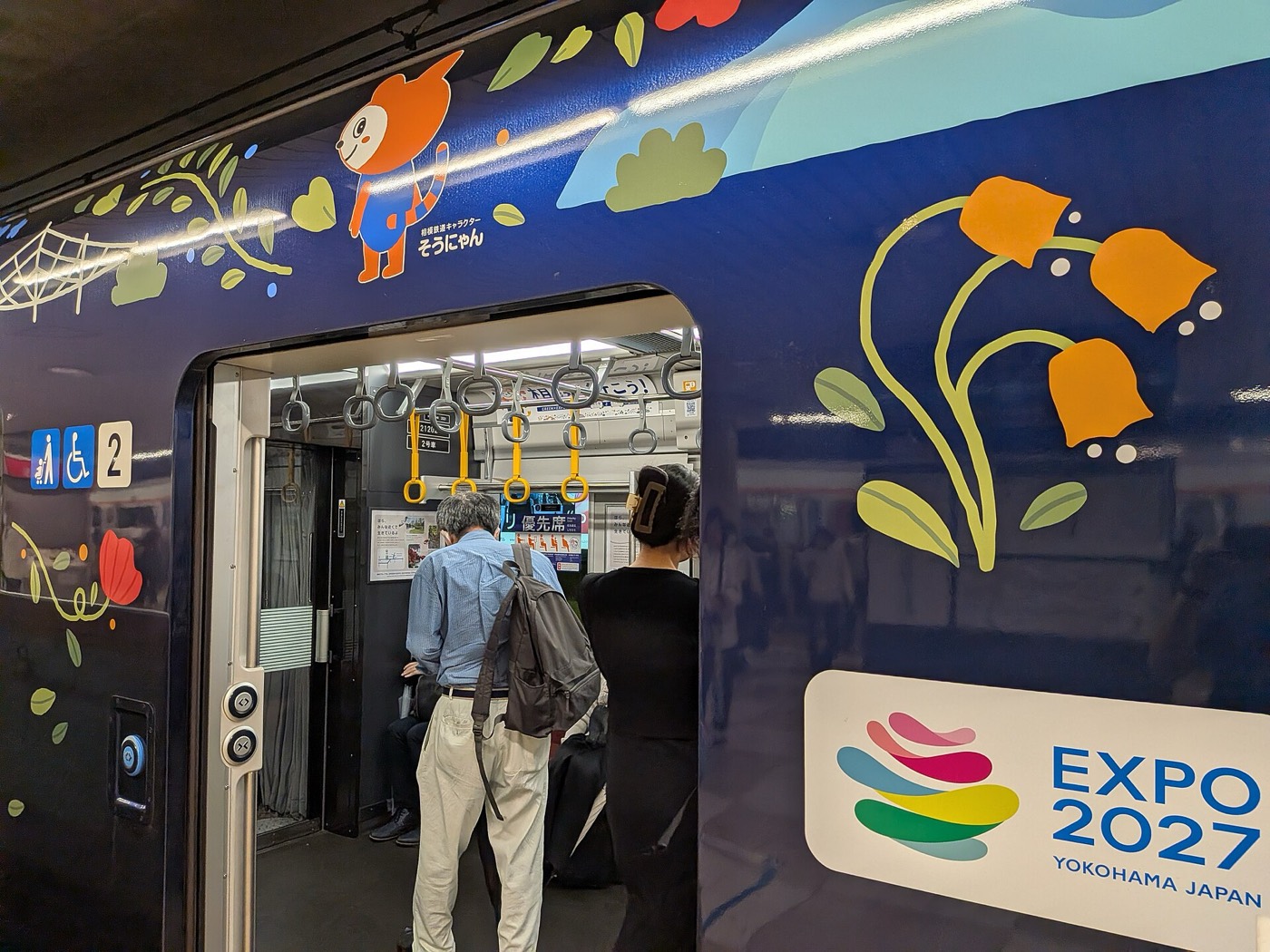
One warning about researching this yourself. On 2 September 2026 the four station names appeared nowhere in the text of the organiser’s access page — only inside an image on that page, and in the 17 July PDF. The shuttle, direct-bus and park-and-ride tabs on the access page were still empty. That is why so little English coverage names them. By 20 October 2026 the access page and the transport FAQ listed all four stations in plain text.
Should you go, wait, or skip it?
If you decide it earns a date
If you are unsure, wait. Nobody outside the construction hoarding has seen this place, including me, and the money at stake is small: the advance ticket saves an adult ¥600 against the on-the-day price. That is not quite the whole penalty, though. The official ticket page warns that tickets may sell out without notice, reservations are taken first come first served, and the organiser says each entry slot will have a capacity cap. So waiting can cost you ¥600, your pick of slots, or on a popular date the visit itself. For most people that is still a fair trade for letting somebody else go first and report back.
Go — reservations are open now
- You garden, or plants are a reason you travel. This is an A1-class horticultural expo, the top grade there is, and Japan has held only one before.
- Something specific in the announced programme already appeals — the Japanese garden, Edo horticultural culture, bonsai, ikebana.
- You are already spending time in Yokohama or southern Tokyo.
- You are travelling with children. A Kids Village is announced, though nothing has been published yet about how it will work in practice.
- You enjoyed Osaka’s 2025 expo and want that kind of day again.
Wait or skip
- It is your first trip to Japan and you have a week. Kyoto, Hakone and Nikko will serve you better.
- Your interest starts and ends at the word “expo”. The subject here is horticulture.
- You want a spontaneous outing. Admission is timed, transport is reserved, and some exhibits will need a further same-day booking — though the outdoor gardens need no further booking once you are inside.
- You dislike crowds. The organiser is planning for more than ten million paying visitors across the run, and says every entry slot will carry a capacity cap.
- You cannot commit to a fixed date, a time slot and a transport booking months ahead.
- You assumed “Yokohama” meant somewhere central. The venue is out in the city’s western wards, and has no station of its own.
- You want evidence rather than announcements — in which case wait until it opens, and accept the ¥600.
Budget the day honestly if you do go. From central Tokyo it is around an hour on the train before you reach a shuttle stop, then the bus, then the same again coming home, on top of however long you spend inside. It is a full day out, not an afternoon.
What opened on 18 September 2026
Three separate things opened on the same Friday. It was an opening date, not a deadline — the only hard cutoff announced is 18 March 2027, when the advance ticket price ends.
Tickets go on sale in convenience stores. From 18 September, 7-Eleven, FamilyMart and Lawson stores nationwide sell admission tickets with the visit date and time already attached. The organiser announced this on 2 September 2026. The machine prints a paper ticket that needs no exchange and no separate online step to book the slot — you walk in with it. The types on sale are one-day tickets at advance and regular price, special discount tickets and evening tickets — but which of those you can actually buy on a given day follows the ordinary sales calendar, so the regular one-day and evening tickets do not appear until the expo opens on 19 March 2027. A handling fee may apply, and changing the date later means registering the ticket ID on the official site.
For a visitor who does not read Japanese, this is the least fiddly route to an admission ticket: no account, no confirmation email, no reservation screen. It does not cover the shuttle.
Visit-time reservations open. Every ticket needs a date and an entry time, taken first come first served, and the organiser says each slot will carry a capacity cap. The slots are 9:30, 10:30, 11:30, 12:30, 13:30, 14:30 and 17:00; the 17:00 slot is the only one evening tickets can use.
The time slot is a floor, not a window. The organiser’s wording is that you may enter at any time from your reserved time onward — so a 10:30 booking does not oblige you to be standing at the gate at 10:30, and it does not expire at 11:00. That single sentence removes most of the anxiety people carry over from timed-entry museums.
You can change the date and time up to three times, and if you miss your slot entirely you can still move to a later date. Changing the time within the same day does not count against the three. That rule excludes the season and summer passes, which work on their own booking system, and it covers admission only. A shuttle booking works differently: you can move to another time slot on the same day and from the same station up to five minutes before the assembly time, but a change of date, station or party size means cancelling and booking again.
Shuttle bus and car park reservations opened. The layer that actually gets you there. Outward and return shuttle trips are booked and paid for separately; cancelling a shuttle seat is free until 17:00 the day before. Group-bus parking opened earlier, on 3 August 2026.
There is a fourth booking layer to know about, announced on 27 August 2026, though it is not something you arrange in advance. Some exhibits will use a same-day viewing reservation: one per ticket per day, booked on the official ticket site on the day itself, with slots released in three waves — 8:00 opens the 10:00–12:00 window, 11:30 opens 12:00–17:00, and 16:30 opens 17:00 to each venue’s last slot. The organiser is explicit that the outdoor gardens and flower beds need no reservation at all. Which exhibits will use the system is still being decided.
The English pages are behind — and one of them flatly contradicts the announcement. That one is the FAQ: checked on 2 September 2026, hours after the announcement, it still answered “Are there any plans to sell admission tickets at convenience stores?” with “There are currently no such plans.” The English ticket guide is a milder case, vague rather than wrong, putting visit-time reservations at “this autumn” where the Japanese page has said 18 September since July. None of it is dishonest — the English side simply lags — but if you are planning from outside Japan, do not treat the English pages as current.
How much are tickets, and which one should I buy?
Buy the advance one-day ticket if you know roughly when you are going. It is ¥4,900 against ¥5,500 on the day, and it stops being sold on 18 March 2027, the day before opening.
| Ticket | Adult 18+ | Youth 12–17 | Child 4–11 | Notes |
|---|---|---|---|---|
| One-day, advance | ¥4,900 | ¥3,000 | ¥1,400 | On sale now; ends 18 Mar 2027 |
| One-day, regular | ¥5,500 | ¥3,300 | ¥1,500 | From 19 Mar 2027 |
| Evening | ¥3,500 | ¥1,900 | ¥900 | Entry from 17:00; from 19 Mar 2027 |
| Special discount | ¥2,800 | ¥1,700 | ¥800 | Disability certificate holder plus one companion |
| Summer pass | ¥12,000 | ¥7,000 | ¥3,000 | Unlimited entry 1 Jul – 31 Aug |
| Season pass | ¥28,000 | ¥16,000 | ¥6,500 | Unlimited entry, whole run |
Children of three and under go free and need no ticket. Ages are counted as of 1 April 2027, except for entry during March, which uses the age as of 1 April 2026.
The special discount ticket is more usable by overseas visitors than it looks. It covers holders of a Japanese disability certificate and one companion, but the organiser states that visitors from outside Japan may present equivalent documentation from their own country, and that it does not need translating into Japanese.
The evening ticket is the one people will overlook. The site stays open until 21:30 and the evening ticket admits you from 17:00 for ¥3,500 — ¥1,400 less than the advance day ticket, for four and a half hours. In July and August, when Yokohama is hot and humid and afternoons can push into the mid-30s, a five o’clock start is not much of a compromise. It only goes on sale on 19 March 2027, so it is not something you can lock in now, and the organiser has published nothing about how busy evenings will be.
The passes are priced for people who live nearby: the season pass pays off from about the sixth visit, the summer pass from the third. Neither will suit a single-visit tourist, though a long summer stay in Yokohama is the one case where the summer pass is worth the arithmetic.
Buying online, the official ticket site takes Visa, Mastercard, JCB, AMEX and Diners Club. Convenience-store payment is offered too, but only inside Japan. You need an account first, and the English registration form asks for a name, a preferred language and a country of residence, so overseas buyers are provided for.
Tickets are generally non-refundable. The organiser’s position is that it does not refund tickets as a rule, unused ones included, other than where it cancels the event or expressly decides a refund is warranted. If you are buying six months out for a trip that is not yet booked, that is the risk you are taking — and the reason the ¥600 advance saving is not automatically worth grabbing.
Groups of fifteen or more have their own per-person rates — ¥5,200 adult, ¥3,100 youth, ¥1,400 child — with school groups paying ¥1,700 per high-school student and ¥900 per student below that. Read the adult number carefully: ¥5,200 is ¥300 more than the ¥4,900 advance individual ticket on sale right now, and ¥300 less than the ¥5,500 one it becomes after opening. So the group rate never beats the advance price; it only beats the regular one. While advance tickets are still available, an all-adult group is better off buying fifteen of those. Mixed-age and school groups need to run their own comparison. Group tickets also require everyone to enter together, and go through authorised agents rather than the ticket site.
Can I drive to GREEN×EXPO 2027?
You can, with a reservation, but the pricing is designed to talk you out of it. Parking at the venue is ¥5,000 on a weekday and ¥7,000 at weekends, on public holidays and on peak dates, per car. The shuttle bus is ¥200 for an adult and ¥100 for a child.
| Where you park | Vehicle | Charge | Notes |
|---|---|---|---|
| Venue car park | Car, weekday | ¥5,000 | North and West car parks; advance reservation required |
| Venue car park | Car, weekend, holiday or peak | ¥7,000 | The organiser defines peak only as weekends and public holidays in Golden Week, September “and similar” — the exact dates are not published |
| Venue car park | Motorcycle | ¥2,000 | North car park only |
| Venue car park | Group bus | ¥10,000 | Reservations opened 3 August 2026 |
| Park & Ride | Car, peak only | ¥3,000 | Yamato, about 4 km out; Sagamiono, about 8 km out |
Reduced rates — ¥2,500 on a weekday and ¥3,500 at weekends for a car, ¥5,000 for a group bus — apply to vehicles carrying someone eligible for a special discount ticket, or a wheelchair user. Accessible, priority and motorcycle spaces are all in the North car park only, which matters if you are approaching from the south: the West car park has none of them, and that is where the organiser sends southern arrivals by default.
Compare it properly for your own group. Two adults starting at Yokohama Station pay ¥1,088 in return train fares; add ¥800 for the shuttle, since outward and return trips are booked and paid for separately. That is ¥1,888 between the two of them. Children add to the total rather than reduce it, though at reduced fares on both legs — and a pre-school child covered by the free-shuttle rule adds no bus fare at all. The parking space alone is ¥5,000 to ¥7,000, before fuel or tolls. On that comparison the train wins comfortably — but it is one example from one starting point, so run your own numbers if you are coming from further out, travelling in a larger group, or need the accessible parking.
One more thing for anyone planning a taxi or a hotel car: the organiser asks visitors not to be dropped off or picked up on the roads around the venue.
What is announced for the site?
Five themed “Villages”, three pavilion complexes, and planting designed to change across the six months. All of it is announced rather than built, so treat the list as a programme, not a description.
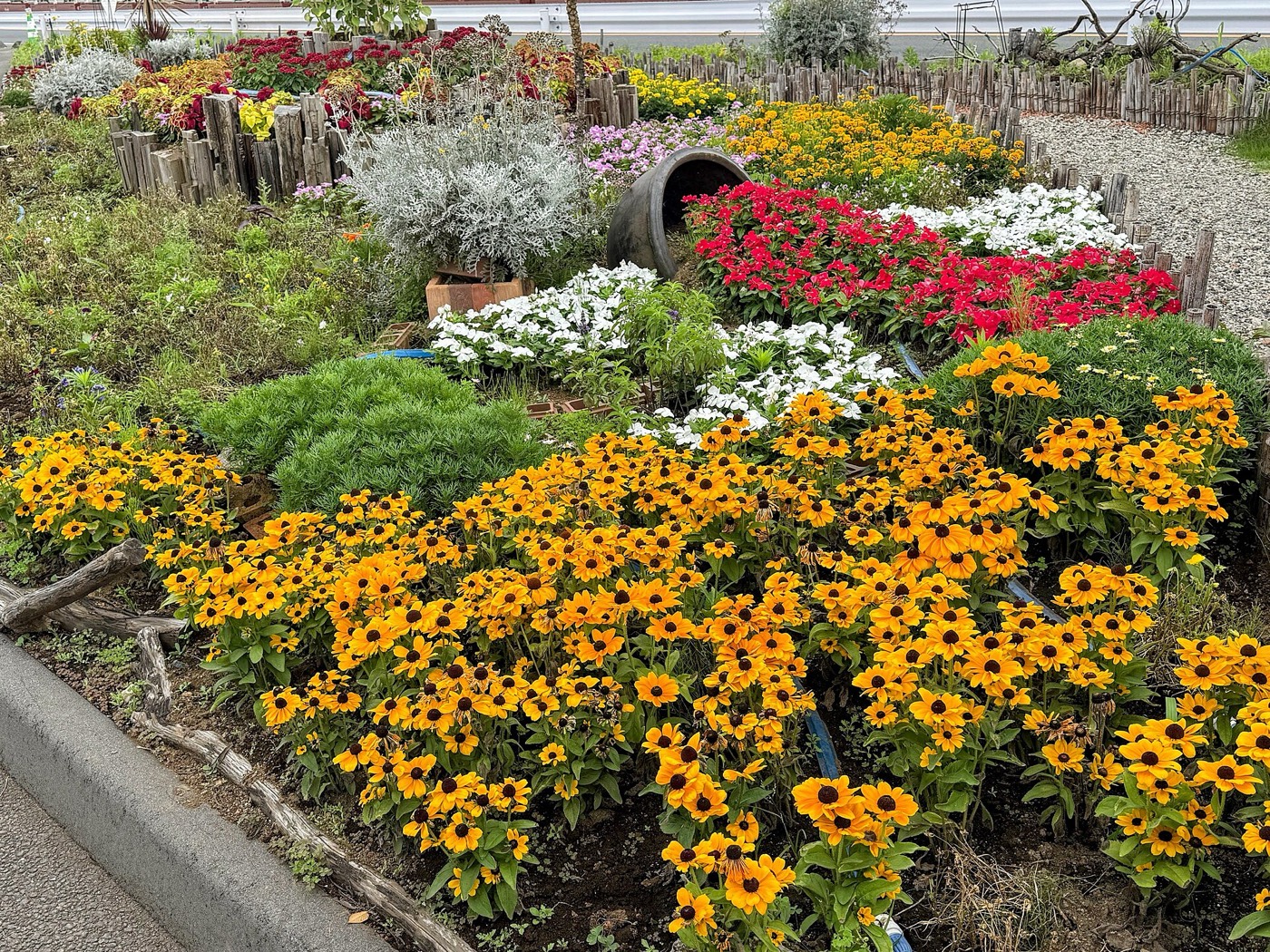
The Villages are Urban GX Village (green technology), Craft Village, Farm & Food Village, Kids Village and SATOYAMA Village. Alongside them sit a Themed Pavilion built around plant science, a Horticultural Pavilion covering Japanese horticultural culture from the Edo period onward — bonsai, wisteria, Noto Kirishima azaleas — and a Japan Pavilion and Garden of up to 2.5 hectares, with a Reiwa-era Japanese garden, ikebana, and bonsai from the Imperial Household Agency’s collection. As of 1 July 2026 the organiser counted 390 flower-and-greenery exhibitors, a figure that includes provisionally selected entrants, with all 47 prefectures and every government-designated city listed.
Opening on 19 March puts the first fortnight in cherry blossom season, and the organiser says roughly 600 cherry trees of about 40 varieties will be in bloom across the site at the start. That is a claim about a garden nobody has seen yet, made a year in advance, and blossom does not keep to a schedule — take it as an intention rather than a booking reason.
For scale, the only other A1 horticultural expo Japan has held, at Osaka in 1990, drew 23.1 million visitors across six months.
Where to stay for GREEN×EXPO 2027
Stay in central Yokohama rather than near the site. Seya and Mitsukyo are residential suburbs with very little visitor accommodation. Yokohama Station is the one to aim for: the Sotetsu Main Line starts there, and Seya is ¥272 away with an IC card. Minato Mirai is the nicer place to sleep, but it sits on the Minatomirai Line, so budget the hop back to Yokohama Station on top.
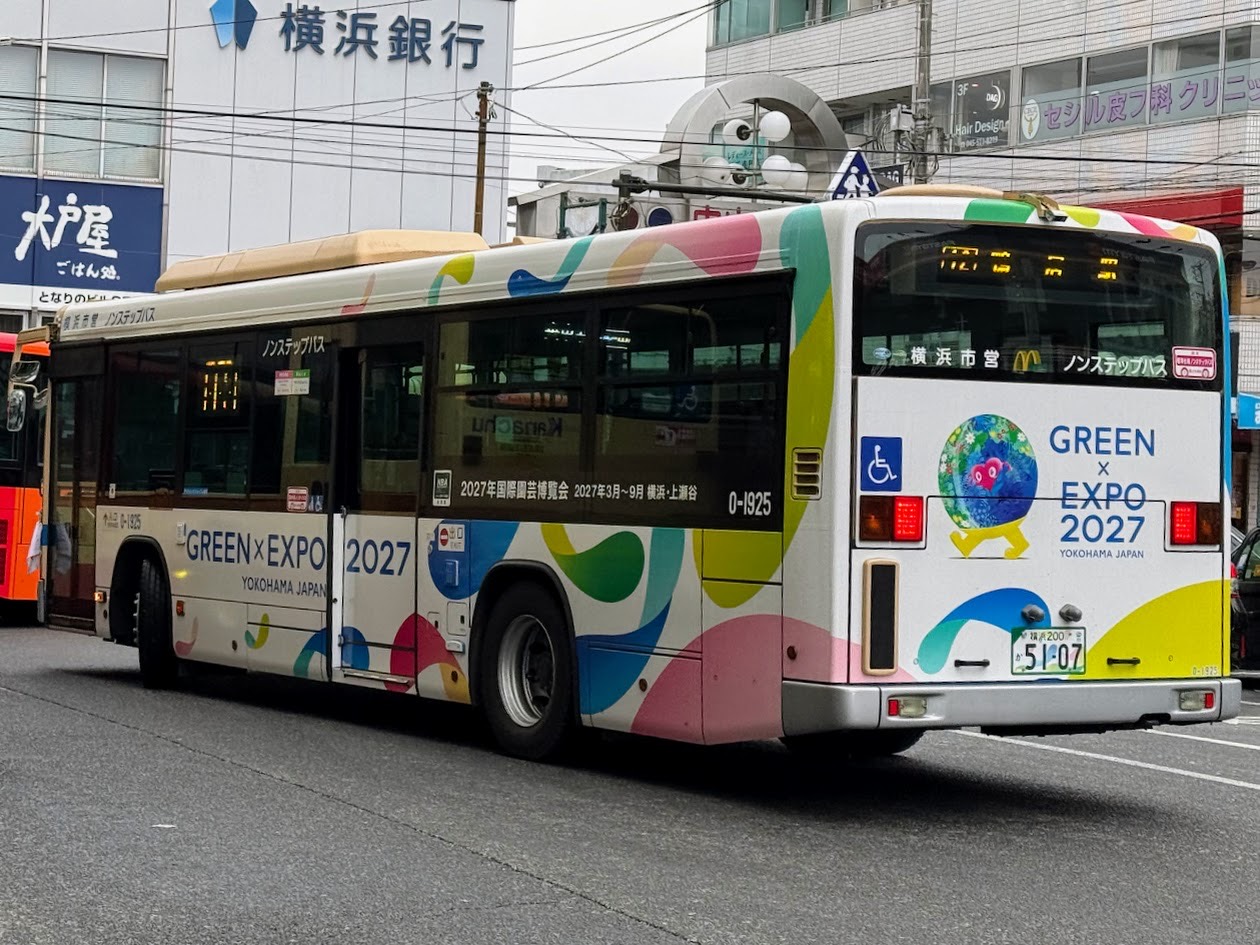
Tokyo works too if you are based there anyway — Shibuya gives you the Den-en-toshi Line to Minami-machida Grandberry Park, and Sotetsu now runs through services toward Shibuya and Meguro. A longer day, but it saves moving hotels.
If you have decided to go
Book a base first, then a date, then the shuttle. Central Yokohama keeps the journey to one line and one change.
Find Yokohama hotels on Booking Compare on AgodaOne practical thing to sort before you travel. Unless you bought a paper ticket, your admission is a QR code, and the organiser itself recommends saving a screenshot of it or printing it out beforehand rather than relying on a signal at the gate. Same-day viewing reservations, though, do need a working connection on the day. Roaming or a pocket Wi-Fi will do the job; a Japan eSIM is the other option, and worth comparing on price and data allowance against whatever your own carrier charges. If you are making a Yokohama day of it, the city’s tours and attraction tickets are the easy other half of the itinerary.
What you cannot take in
Two rules in the organiser’s prohibited-items regulation are worth knowing before you pack, because neither is obvious and both catch travellers out.
Drinks: glass bottles and cans are not allowed in, with an exception for people with food allergies or dietary restrictions. PET bottles are fine, and the organiser actively recommends bringing a reusable water bottle — sensible on an 80-hectare site in July. Alcohol is banned outright, opened or sealed.
Cameras: tripods, monopods and selfie sticks are banned, other than hand-sized ones that fit in your palm. If you were planning to photograph 600 cherry trees on a tripod, plan again.
Luggage: suitcases, hard cases, trolley cases and carts are all on the prohibited list, so none of them comes through the gate with you. The organiser has not said whether it will provide storage. If you were planning to stop here between two hotels or on the way to the airport, sort out a locker somewhere else first and do not assume there will be one on site.
Pets cannot come in either, and there is no holding facility at the gate; guide, hearing and service dogs are the exception.
What I could not confirm
Open questions as of 2 September 2026
- Door-to-door time. The rail times above come from the operators’ timetables, not the organiser, which publishes none. The organiser now gives planned bus times of about 10 to 25 minutes depending on the station, but no departure timetable — add that bus leg, plus traffic, to every figure in that table.
- A shuttle timetable. Only planning figures are published: buses from 8:30 to 22:30, at peak every 1.5–3 minutes from Seya, 2–6 minutes from Mitsukyo and 1–3 minutes from the other two stations, with the last bus leaving the venue at 22:30. No departure-by-departure timetable exists yet.
- Which station is quickest door to door. The organiser names Seya as the nearest and its bus ride as the shortest, at about 10 minutes, but which station suits you best still depends on where you start.
- Walking. The access page lists walking from Seya Station at about 30 minutes, but publishes no distance.
- A new line to the venue. Yokohama City is taking a “new transit” scheme through planning — a roughly 2.7 km dedicated busway from Seya Station, with articulated buses under consideration. Nothing confirms a new railway station serving the site by March 2027, so plan around the shuttle.
- Rest days. I found no published closing days within the 192-day run, and no explicit statement that it opens every day either.
- Re-entry. Asked directly whether re-entry is possible, the organiser’s group-booking site answers that it is undecided and will be announced later. So do not build a day around leaving at lunchtime and coming back. Food and shop payments on site are planned to be cashless in principle, according to the organiser’s FAQ; which payment methods it will accept has not been listed.
- Same-day tickets at the gate. The organiser’s FAQ says it plans to sell them at the venue but that the details are still being worked out, and recommends buying ahead and reserving a slot instead. Paper tickets, incidentally, come only from authorised agents and convenience stores — never from the official website.
I rechecked the transport details on 20 October 2026, after the reservation system went live, and will update this page again once the expo actually opens and there is something to review rather than announce.
GREEN×EXPO 2027 FAQ
When is GREEN×EXPO 2027?
19 March to 26 September 2027, 192 days, open 09:30 to 21:30, with last entry planned for 21:00. It is held at the former Kamiseya Communications Facility in Seya and Asahi Wards, Yokohama.
Is there a station at GREEN×EXPO 2027?
No. Shuttle buses run from four stations: Seya and Mitsukyo on the Sotetsu Main Line, Minami-machida Grandberry Park on the Tokyu Den-en-toshi Line, and Tokaichiba on the JR Yokohama Line. The organiser names Seya as the nearest, with a planned bus ride of about 10 minutes.
Do I need to reserve the shuttle bus?
Yes. The organiser states that visitors arriving by public transport or private car need either a shuttle bus reservation or a parking reservation. Shuttle and parking reservations opened on 18 September 2026. The fare is ¥200 for an adult and ¥100 for a child, and outward and return trips are booked and paid for separately. The access page also lists walking from Seya Station, about 30 minutes.
How much is a ticket to GREEN×EXPO 2027?
An advance one-day adult ticket is ¥4,900, on sale until 18 March 2027; after the expo opens the same ticket is ¥5,500. Youth 12–17 pay ¥3,000 advance, children 4–11 pay ¥1,400, and children of three and under enter free without a ticket. An evening ticket for entry from 17:00 is ¥3,500.
Can I buy GREEN×EXPO 2027 tickets from outside Japan?
Yes. The official ticket site has an English flow and accepts Visa, Mastercard, JCB, AMEX and Diners Club; convenience-store payment is available only inside Japan. You register an account first, giving a name, a preferred language and a country of residence. Travel agencies and authorised agents also sell tickets.
Can I buy tickets at a Japanese convenience store?
From 18 September 2026, yes. 7-Eleven, FamilyMart and Lawson stores nationwide sell paper tickets with the visit date and time already attached, so no separate online booking step is needed for admission. A handling fee may apply. It does not cover the shuttle bus or parking, which are reserved separately.
How much does parking cost at GREEN×EXPO 2027?
¥5,000 per car on a weekday and ¥7,000 at weekends and in peak periods, booked in advance. Motorcycles are ¥2,000 and group buses ¥10,000. A Park & Ride car park at Yamato or Sagamiono is ¥3,000 but operates in peak periods only. Given the shuttle bus is ¥200 for an adult and ¥100 for a child, driving rarely makes sense.
Can I change my visit date after booking?
Yes, up to three times, for every ticket except the season and summer passes, which have their own booking system. If you miss your reserved slot you can still move to a later date, and changing the time within the same day does not count toward the three. That rule covers admission. A shuttle seat can be moved to another time slot on the same day and from the same station up to five minutes before the assembly time; any other change means cancelling and booking again.
Will the cherry blossoms be out when GREEN×EXPO 2027 opens?
The organiser says roughly 600 cherry trees of about 40 varieties will be in bloom across the site at the start of the run, which begins on 19 March 2027. That is an advance claim about a garden not yet open, and blossom timing shifts from year to year, so it is not something to book a flight around.
Can I bring a suitcase to GREEN×EXPO 2027?
No. Suitcases, hard cases, trolley cases and carts are all on the organiser’s prohibited-items list, and it has not said whether storage will be available, so arrange a locker elsewhere before you come. Glass bottles and cans are also banned — except where the organiser’s food-allergy and dietary exception applies — as is alcohol, opened or sealed. PET bottles are allowed and a reusable bottle is encouraged. Tripods, monopods and selfie sticks are out unless they fit in your palm.
Can I take a dog to GREEN×EXPO 2027?
No. The organiser does not allow pets into the venue and provides no temporary holding facility, so it asks visitors not to bring them. Guide dogs, hearing dogs and service dogs are excepted.
Can I get a refund on a GREEN×EXPO 2027 ticket?
As a rule, no — the organiser says it does not refund tickets, including unused ones, other than where it cancels the event or otherwise decides a refund is appropriate. Worth weighing before buying an advance ticket for a trip you have not booked.
Do I have to arrive exactly at my reserved time?
No. The organiser says you can enter at any time from your reserved time onward. Entry slots are 9:30, 10:30, 11:30, 12:30, 13:30, 14:30 and 17:00, with a capacity cap on each, and evening tickets can only use the 17:00 slot.
Is GREEN×EXPO 2027 the same as a World Expo?
No. It is an A1-class international horticultural exposition — the top grade for a horticultural expo, approved by AIPH and recognised by the BIE — rather than a World Expo like Osaka 2025. Japan has held one before, at Osaka in 1990.
The two dates to hold
18 September 2026 — admission, shuttle and parking reservations opened. Do the ticket and the journey in one sitting. 18 March 2027 — the ¥4,900 advance price stops. That is the only hard cutoff announced.
Yokohama hotels Things to do in YokohamaSources checked 2 September 2026; transport rechecked 20 October 2026 against the organiser’s access page, transport FAQ, content FAQ and 18 September 2026 notice. Dates, ticket types and prices, opening hours and purchase steps: the organiser’s ticket information, purchase guide and ticket FAQ pages, and its admission ticket system document. Convenience-store sales: the organiser’s press release of 2 September 2026. Entry time slots, the enter-any-time-after rule and same-day viewing reservations: the organiser’s press release of 27 August 2026. Refunds, gate sales, the single entrance gate and accepted cards: the organiser’s ticket FAQ, Japanese and English. Drinks, alcohol, luggage, cameras and pets: the organiser’s regulation on prohibited items and conduct. Re-entry: the organiser’s group-booking site. Group rates: the admission ticket system document. Journey times: the published timetables of JR East, Tokyu and Keikyu; the Yokohama busway scheme: Yokohama City. Shuttle stations, shuttle fares, parking charges and reservation opening dates: the organiser’s press release of 17 July 2026. Venue, theme, scale, class, exhibit counts and the cherry planting: the organiser’s event overview and English site. Osaka 1990 attendance: the Commemorative Foundation for the International Garden and Greenery Exposition. Rail fares: Sotetsu’s published passenger fare table, revised 18 March 2023. Photographs: Wikimedia Commons files released under CC0. Prices, dates and reservation rules change — check the organiser before you buy.
Join travelers discovering Japan's hidden side
Weekly dispatches from off-the-beaten-path Japan — spots and stories you won't find in guidebooks.
No spam. Unsubscribe anytime.
Welcome aboard!
You're in. See you in your inbox soon.