Okinawa · Yanbaru · Kunigami
ASMUI is an audio-guided walk through weathered karst pinnacles and sacred subtropical forest at the far northern tip of Okinawa’s main island. You may know it by its old name, Daisekirinzan — it was rebranded at the end of 2024, and a lot of the fees and details floating around in English are now out of date. It sits deep in Yanbaru, the quieter, forested north that many resort-based visitors skip.
What ASMUI is (formerly Daisekirinzan)
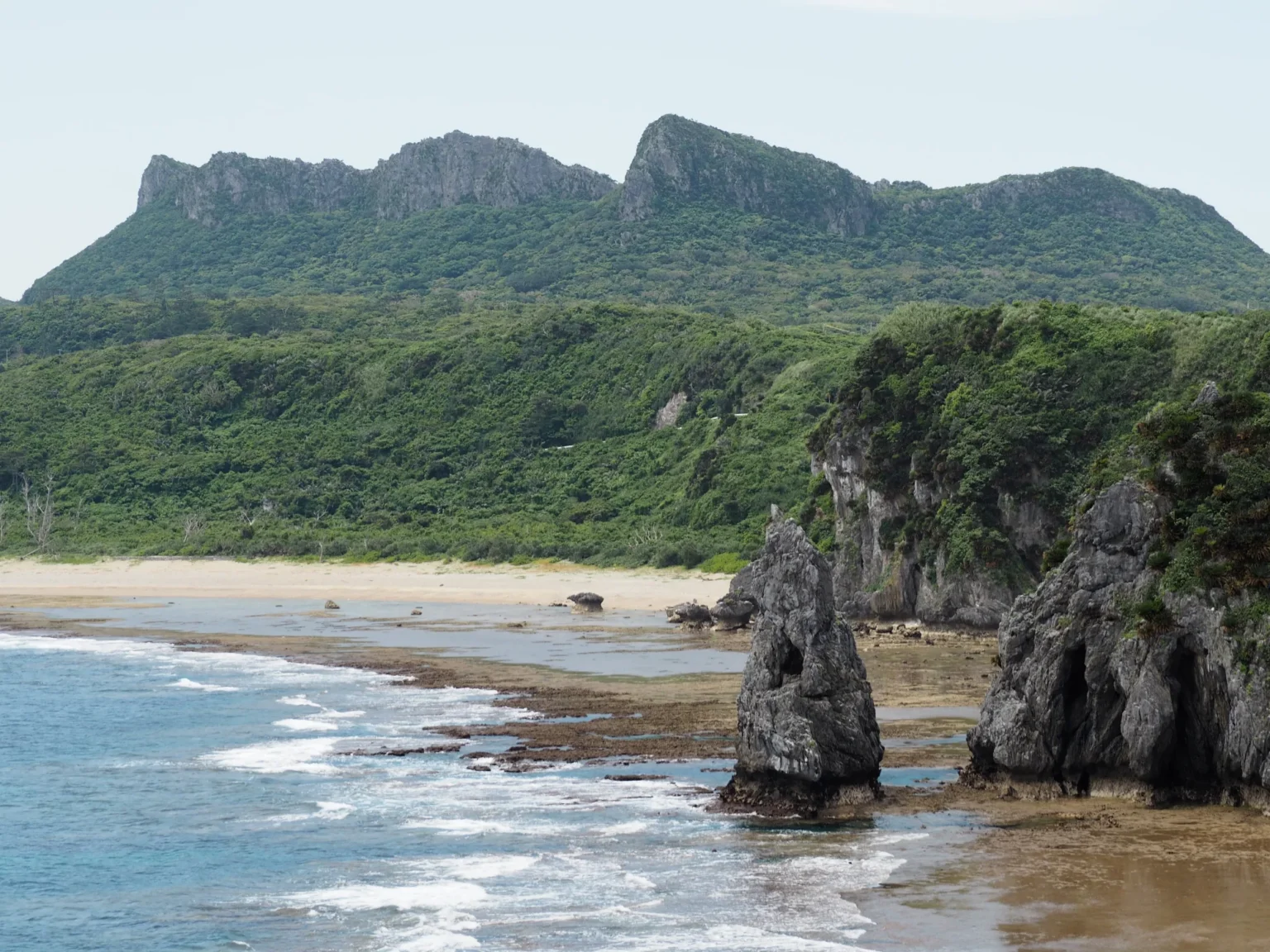
The rock here is the oldest exposed stone in Okinawa, worn by rain over millions of years into a field of grey limestone pinnacles, arches and boulders — an unusual karst landscape for an island better known for its beaches. In Ryukyuan belief the mountain is Ashimui, a sacred place, and the walk threads past prayer sites and an ancient banyan forest as well as the rock formations. There is also an Okinawa Museum of Stone Culture on site. At the end of 2024 the attraction was relaunched under the name ASMUI, so older guides that call it Daisekirinzan — and quote the old, lower entry fee — are describing the same place with stale details.
Visiting: courses, the audio guide and fees
Admission is ¥2,500 for adults (15 and up) and ¥1,000 for children aged 6–14, tax included, and that ticket bundles in the shuttle bus up to the trailhead, the audio guide and use of the lounge. There are a few walking options: a regular course of about 60 minutes (the one most people do), a short course of around 30 minutes, and a roughly 30-minute walk out to the “spirit forest” and back. It is a walk rather than a hike, but it is on natural stone, so proper shoes help. With the shuttle, the Stone Culture museum and the sacred-forest section, plan on roughly 90 minutes to a couple of hours on site rather than just the trail time. The far north is hot and exposed in summer and can be hit by typhoons from summer into autumn, so bring sun protection and check the forecast.
The guiding is done through an audio-guide app (Pocket Curator) rather than a paper map or a live guide, and the official advice is to download it before you arrive, because the mobile signal on the course is weak. Opening hours are 9:30 to 17:30 with last entry at 16:00, year-round, and parking is free. Give yourself a buffer — you catch a shuttle from the car park to the start, so arrive a good ten minutes before you want to set off.
Getting there: you need a car
This is the honest catch. ASMUI is at the very top of the island, and there is no easy way to reach it without a car. From Naha or the airport it is roughly two to two and a half hours, most of it on the Okinawa Expressway and then National Route 58 up the west coast. Public transport this far north is sparse and slow, so nearly everyone drives, and a rental picked up at the airport is the standard way to do the whole northern part of the island; a few bus tours from Naha do reach the far north, but the timings are tight. Factor the drive into the day: with the round trip and the visit it is close to a full day out, which is why it works best combined with the rest of the north.
Combine it with Cape Hedo and Yanbaru
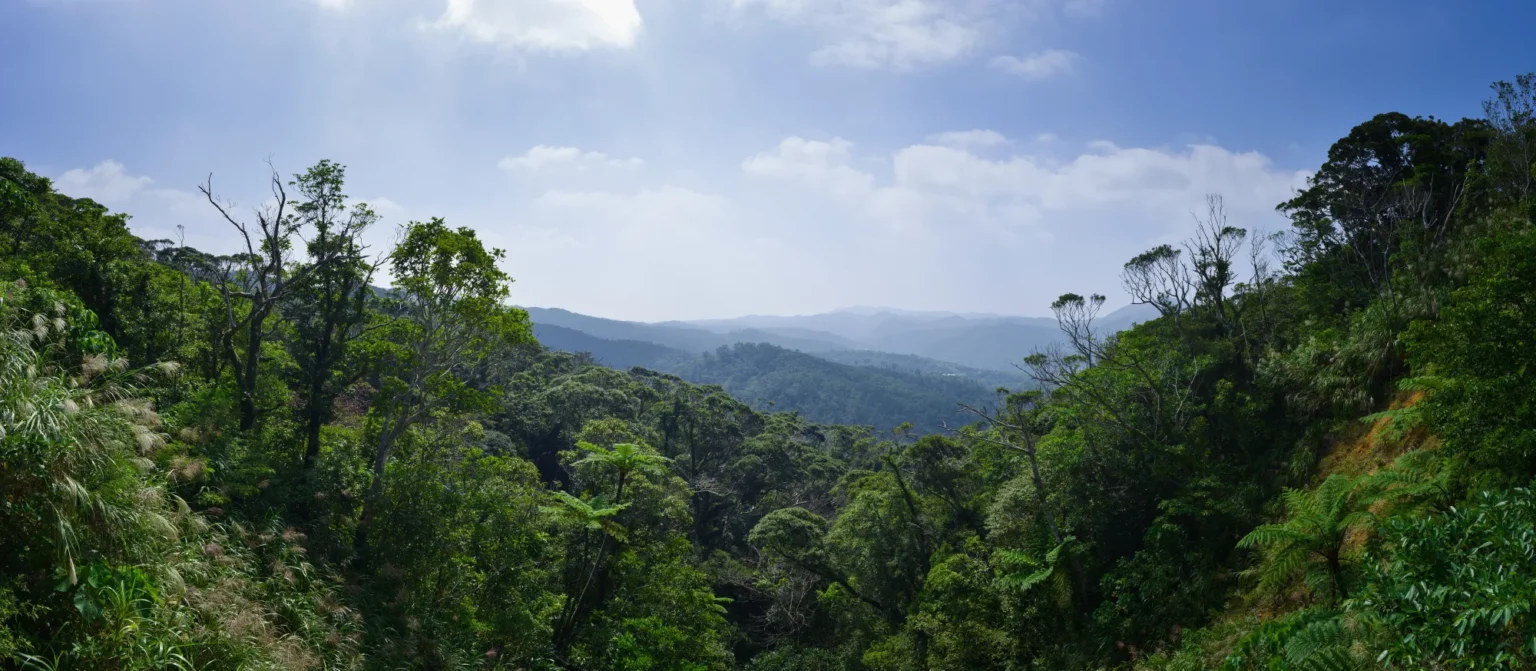
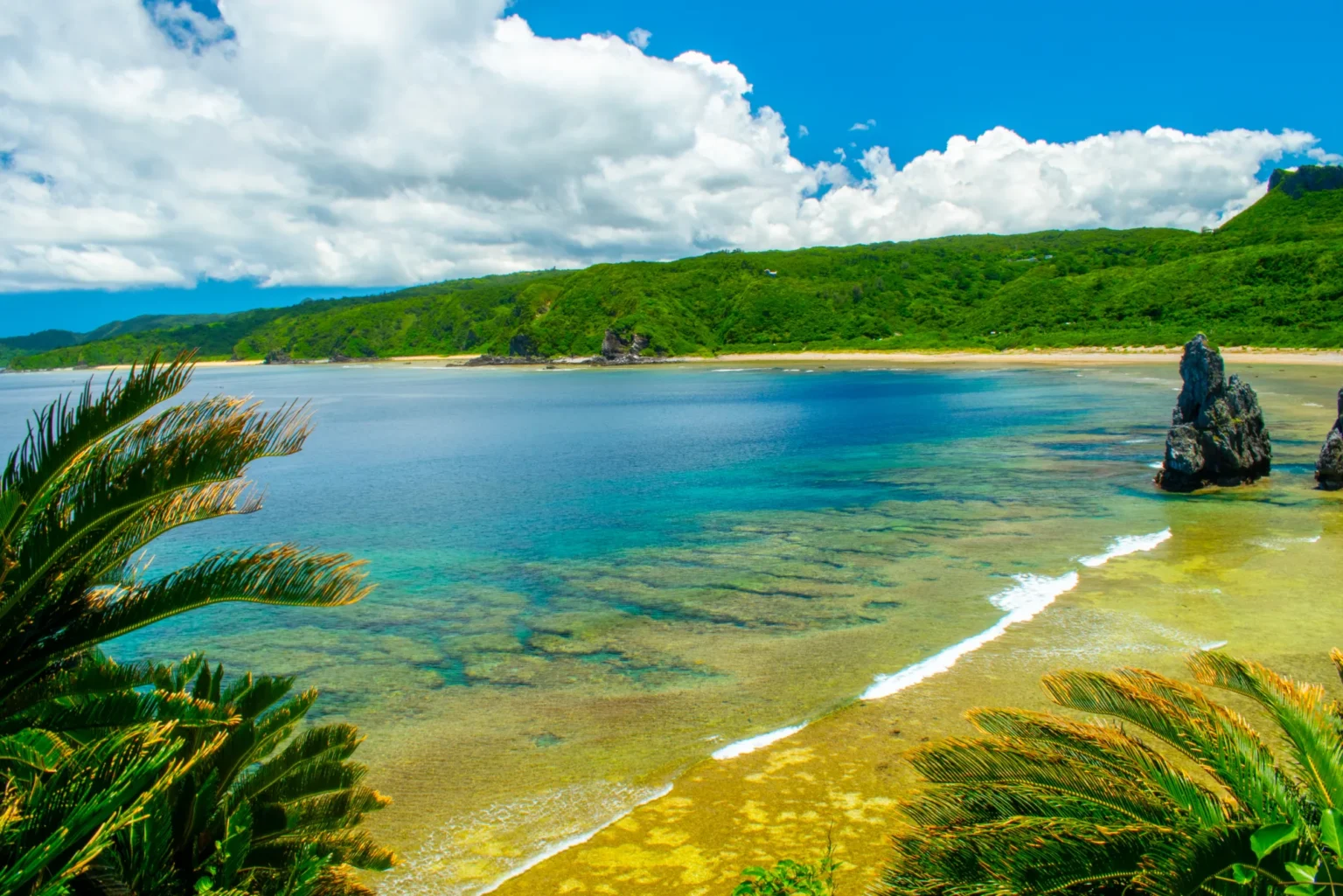
The saving grace of the long drive is what else is up here. Cape Hedo (Hedo-misaki), the northernmost point of the main island, is only about five to ten minutes by car from ASMUI — a headland of raised coral cliffs with the East China Sea on one side and the Pacific on the other. The wider region is Yanbaru National Park, listed as a UNESCO World Natural Heritage site in 2021 for its subtropical forest and rare wildlife, including the flightless Okinawa rail. Make a day or an overnight of it and the drive stops feeling like a stretch: ASMUI, Cape Hedo, a forest viewpoint and a northern beach add up to a side of Okinawa most visitors miss.
Where to stay in northern Okinawa
To do the north without a punishing round-trip from Naha in a day, base yourself up here — the Nago and Motobu area has the widest choice, and there are smaller stays closer to Kunigami and Yanbaru. Booking and Agoda cover the resorts and hotels; Rakuten Travel is worth a look for smaller Japanese-run places and pensions in the north.
Set up the trip: rent a car (essential for the north; TOCOO compares Okinawa pickups — coupon IJMEMZ takes ¥1,000 off a base rental of ¥10,000 or more, options excluded; check it shows before payment) · northern-Okinawa tours on Klook · smaller stays on Rakuten Travel · and a Japan eSIM so you can download the audio-guide app and maps before you lose signal in the hills.
Good to know
Is ASMUI worth the drive?
If you like unusual landscapes and want to see the wild north of Okinawa rather than only the resort coast, yes — but treat it as one stop on a wider northern day or overnight, not a destination you drive two hours each way for on its own. Pair it with Cape Hedo and the Yanbaru forest and it makes sense.
How much is it and what is included?
¥2,500 for adults (15 and up) and ¥1,000 for children aged 6–14, tax included. The ticket covers admission, the shuttle bus to the trailhead, the audio guide and the lounge. Hours are 9:30–17:30 with last entry at 16:00, year-round, and parking is free. Download the audio-guide app before you go, as signal on the course is weak.
Isn’t this called Daisekirinzan?
It was. The site was rebranded as ASMUI at the end of 2024, taking the name of the sacred mountain, Ashimui. Older English pages still call it Daisekirinzan and often quote a lower entry fee — those details are out of date, so check the current information before you go.
Do I need a car?
Effectively, yes. ASMUI is at the northern tip of the island, about two to two and a half hours from Naha, and public transport this far north is limited. Almost everyone drives; a rental car from the airport is the normal way to explore northern Okinawa.
What else is nearby?
Cape Hedo, the northernmost point of the main island, is only about five to ten minutes away by car, and the whole area is Yanbaru National Park, a UNESCO World Natural Heritage site since 2021. Between them they make the north worth a full day or an overnight.
Getting Around Japan (2026)
When a rental car beats the trains — essential for northern Okinawa.
Skip the Crowds
More places, like Yanbaru, that the tour buses miss.
Beyond the Golden Route
Where a northern-Okinawa detour fits into a wider trip.
Cash vs Card in Japan
Handy for a rural region where small places still prefer cash.
Join travelers discovering Japan's hidden side
Weekly dispatches from off-the-beaten-path Japan — spots and stories you won't find in guidebooks.
No spam. Unsubscribe anytime.
Welcome aboard!
You're in. See you in your inbox soon.