Tokyo · Kichijoji · Taiwanese teahouse
My photograph of the doorway is timestamped 15:02, which turned out to be the deciding detail of the visit. At Yue He Cha, a Taiwanese teahouse on the second floor of a building on a back street in Kichijoji, the set-meal menu stops at 3:00 p.m. and the à la carte menu starts. Same kitchen, a different list of food.
| What it is | 台湾茶藝館 月和茶 (Yue He Cha) — a Taiwanese teahouse serving Taiwanese food, on the 2nd floor |
|---|---|
| Open | Mon, Fri, Sat, Sun 11:00–17:00 (last order 16:30) |
| Closed | Tuesday, Wednesday, Thursday — it runs a four-day week |
| Set meals (定食) | 11:00–15:00 only, ¥1,100–¥1,480 |
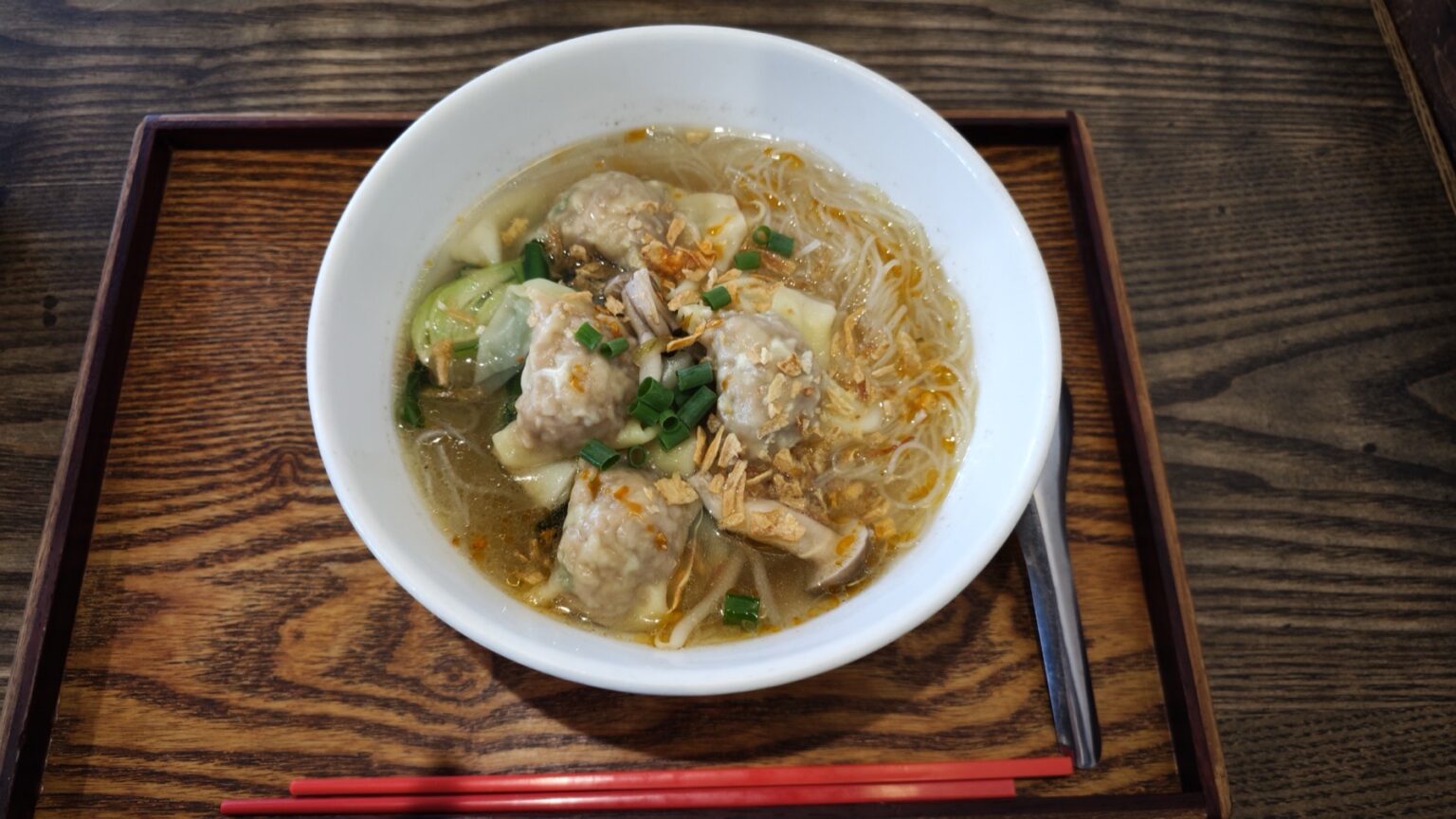
| À la carte (単品) | From 15:00. The bowl above was ¥1,320 |
| Tea | More than 20 Taiwanese teas from ¥930. Each tea is served for one person, and the menu asks guests not to share it |
| Reservations | Not accepted — walk in. If a line has formed, it waits single-file on the stairs |
| Address | 2-14-28 Kichijoji Honcho, Musashino, Tokyo — Osumi Building 2F |
| Nearest station | Kichijoji (JR Chuo, Keio Inokashira) — about 700 m in a straight line; allow roughly 10 minutes on foot |
| Before you travel | The shop posts a calendar for each month at its door and asks customers to check its social accounts at the start of the month for weekend and public-holiday changes |
| Payment | Not published by the shop. Listing sites say cards and e-money are not accepted, QR payment is — carry cash |
| English menu | Not confirmed. The menu is in Japanese, with photographs on the cards and the boards downstairs |
On this page
What changes at 3:00 p.m.
If the 3pm switch decides your afternoon
Two menus, one switchover. The official site says set meals are served 11:00–15:00; the menu on my table on 11 May 2026 said à la carte dishes start at 15:00. If you have travelled across Tokyo for a particular bowl, the time you walk in decides which list you can order from.
11:00–15:00
Set meals (台湾定食)
- 楊家魯肉飯 — braised pork over rice, ¥1,100
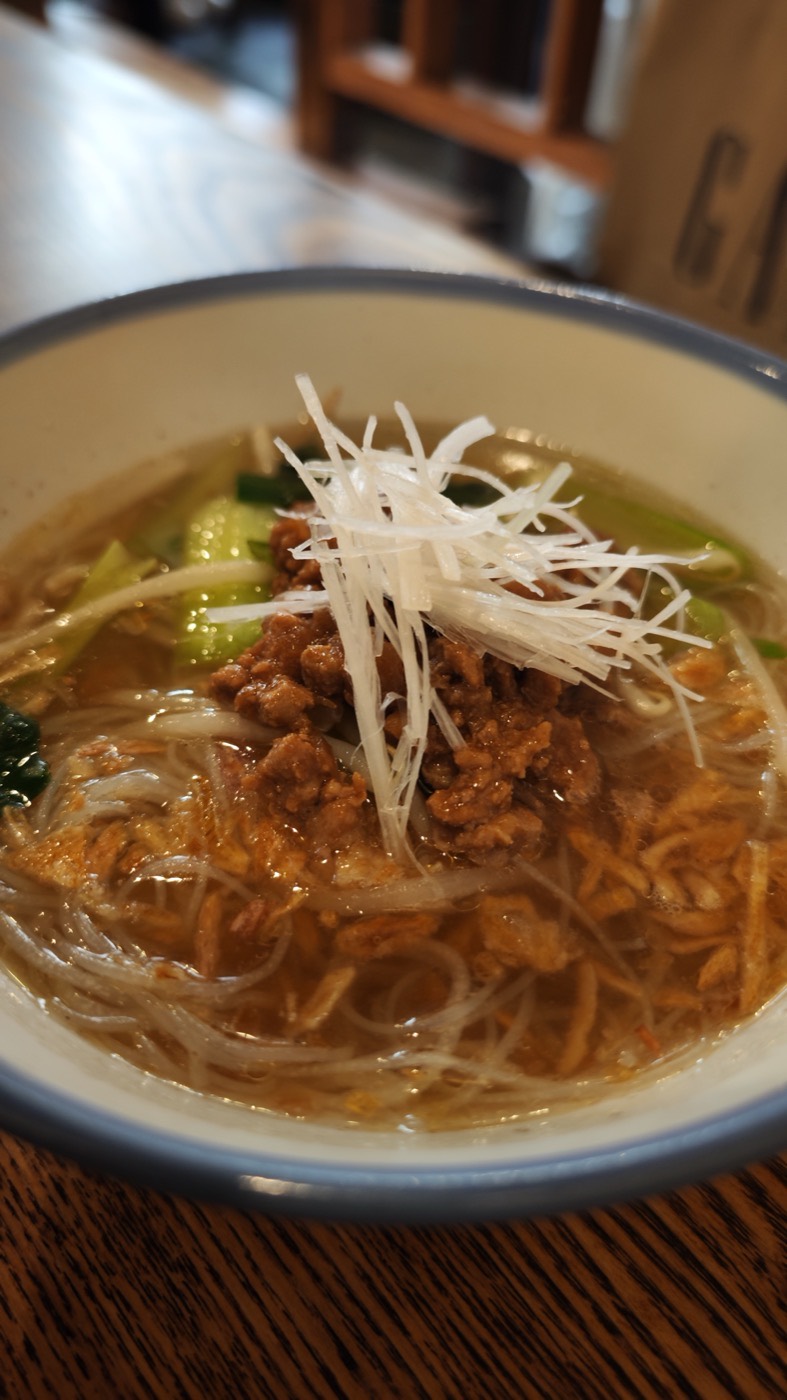
- 肉醤米粉湯 — rice-vermicelli soup with meat sauce, ¥1,250
- 海鮮米粉湯 — seafood rice vermicelli soup, ¥1,300
- 鶏肉飯と点心 — chicken rice with dim sum, ¥1,480
- 紅焼牛肉 — braised beef, ¥1,480
From 15:00
À la carte (単品)
- 楊家魯肉飯 ¥1,050 (small bowl ¥700)
- 月和茶鶏肉飯 ¥930
- 肉醤青菜米粉湯 ¥1,130 (small ¥750)
- 海鮮米粉湯 ¥1,250 (small ¥780)
- A wonton and rice-vermicelli soup ¥1,320 (the card’s name began 餛飩; the rest sat behind the next card)
- 蝦仁抄手麺 — prawn wontons with noodles, ¥1,320 (spice adjustable)
- 吉祥豆花 — douhua, ¥880
The set-meal list and its prices come from the shop’s official site, checked on 1 September 2026. The à la carte column is from the menu photographed during my visit on 11 May 2026, which carries the line 「単品 15:00からの提供になります」 — à la carte from 15:00. I have not re-confirmed that the à la carte list still runs as it did in May, so treat that column as a snapshot of the day rather than a current price list.
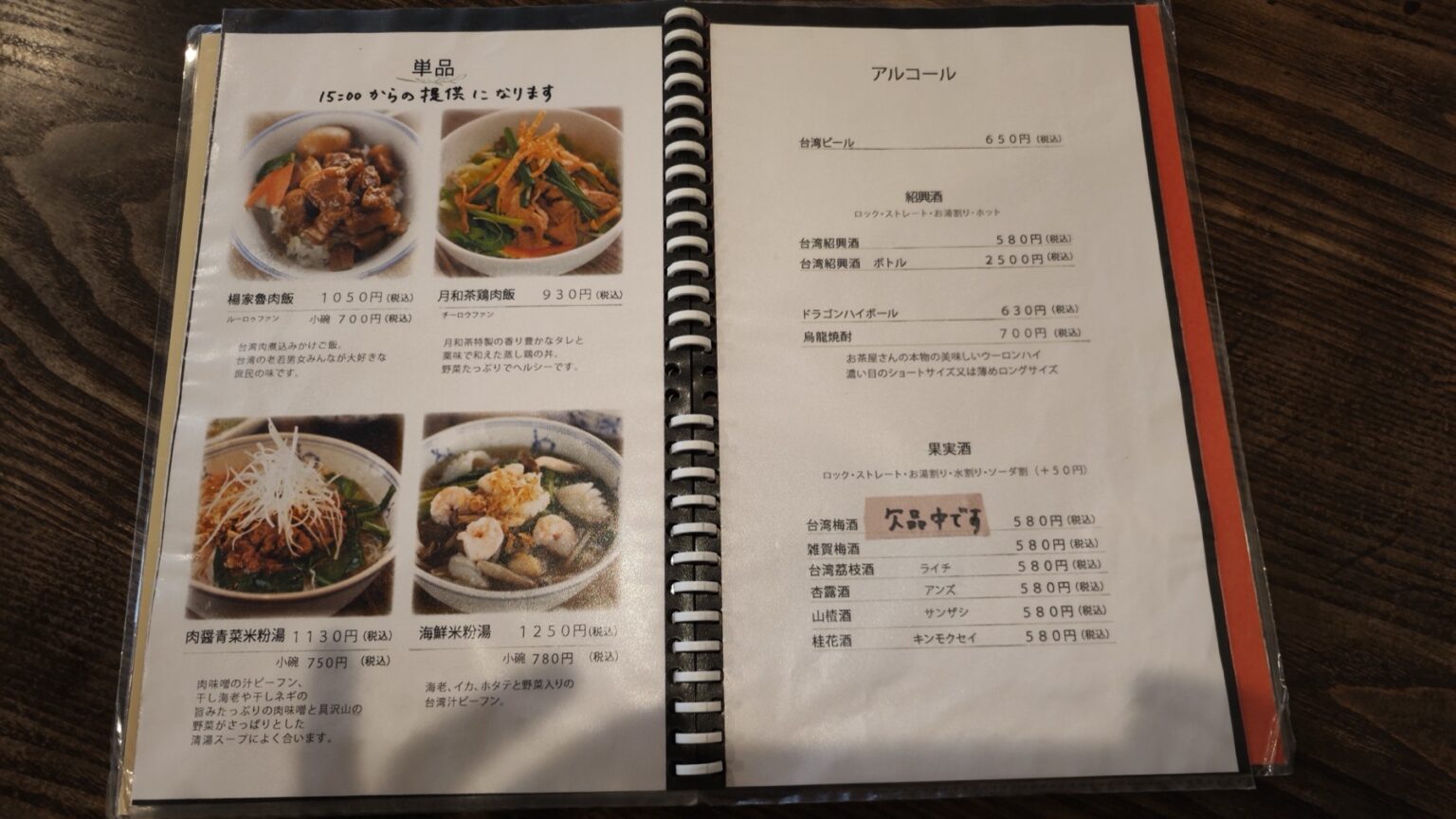
One practical consequence: arriving at 2:45 p.m. and arriving at 3:15 p.m. put two different lists in front of you. Neither is better — but the small bowls (¥700–¥780) appear only on the à la carte side, which is useful if you want tea and something light rather than a full meal.
What I ordered
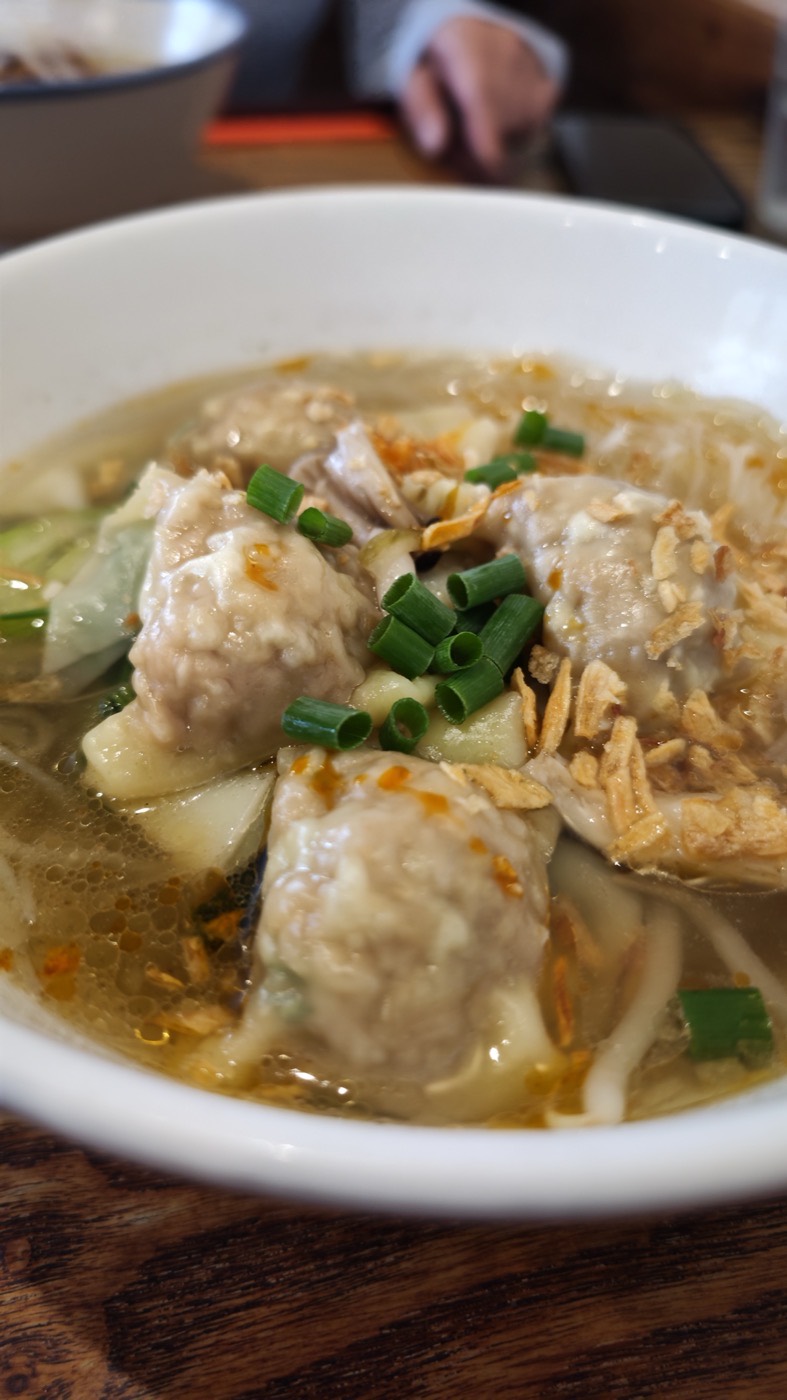
A bowl of wontons and rice vermicelli in a clear broth, ¥1,320. On the card it was listed under a name beginning with 餛飩 (wonton); the noodles are 米粉, rice vermicelli, not the glass noodles they resemble in the bowl.
What arrives: big wontons, a nest of thin rice noodles, greens, bean sprouts, mushrooms, spring onion and a scatter of fried shallots in a clear broth. It is a soup you eat with a spoon and chopsticks together, and the fried shallots keep drifting to the edge of the bowl.
If you are coming to it from Japanese ramen, it is a different thing entirely — clean and light rather than rich, and the broth stays clear to the bottom of the bowl. I finished it without the heaviness a bowl of ramen leaves behind.
If you avoid wheat, read this properly. The noodles here are 米粉 — rice vermicelli, not wheat. The wontons are not: they are wrapped in wheat dough. So the bowl I ordered is not a wheat-free dish, even though its noodles are. I did not check ingredients, seasonings or kitchen practice with the shop, so if you have coeliac disease or a wheat allergy, ask at the counter rather than relying on this page.
Tea prices, and the no-sharing rule
The menu says it in writing: 「※お茶はお一人様用となっております。お茶のシェアはご遠慮いただいております」 — each tea is intended for one guest, and the shop asks that it not be shared. Worth knowing before two of you sit down planning to split one.
The list runs past twenty teas from ¥930 — oolongs including 凍頂烏龍茶, 白毫烏龍茶, 木柵鉄観音, 文山包種 and 梨山高山; green and flower teas including 龍井茶, 桂花茶 and 洛神花茶; and a herbal group (八宝茶, 双味茶, 普菊茶, 五味枸杞茶, 枇杷甘桔茶) that was ¥1,050 on the printed card that day.
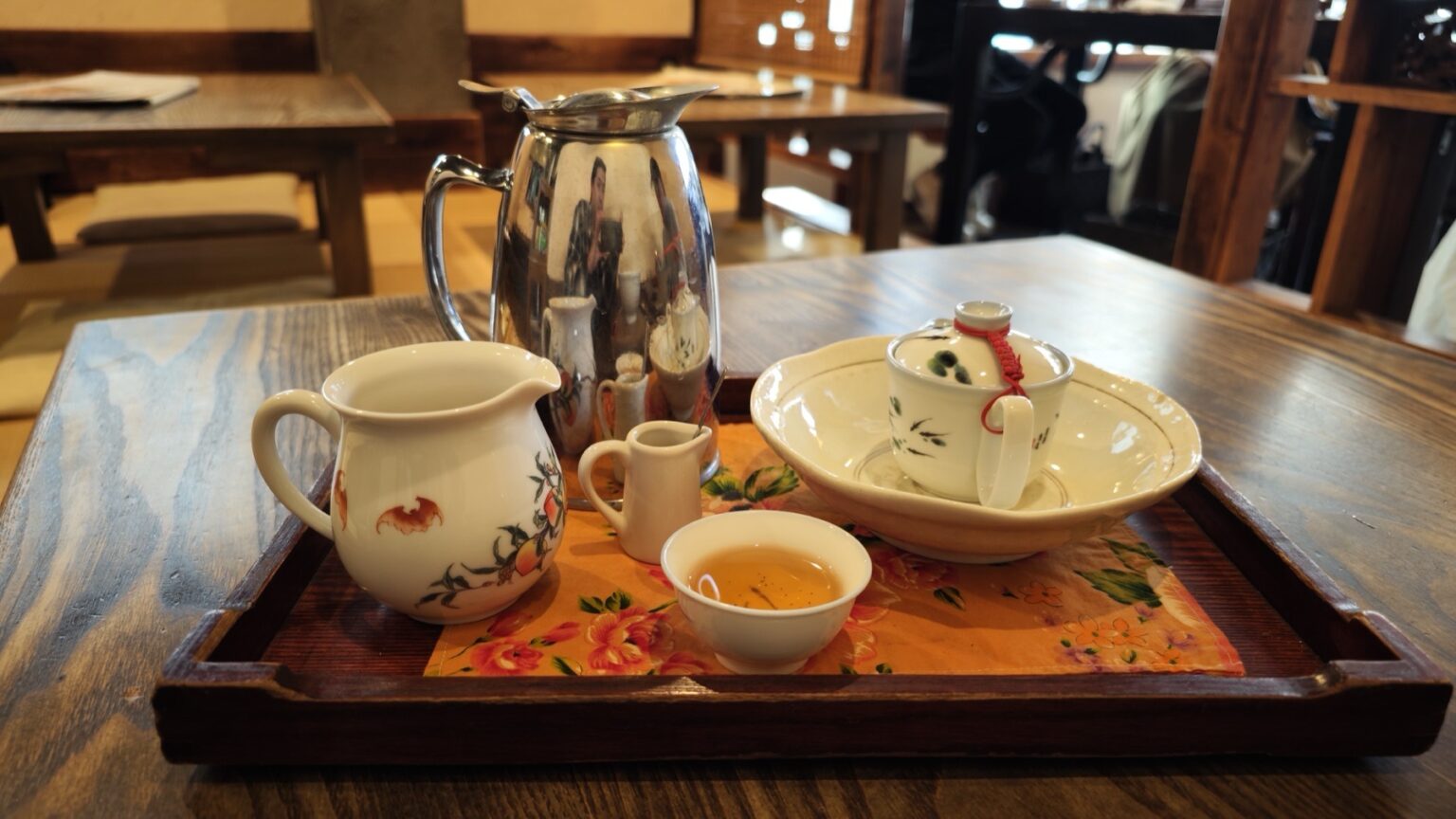
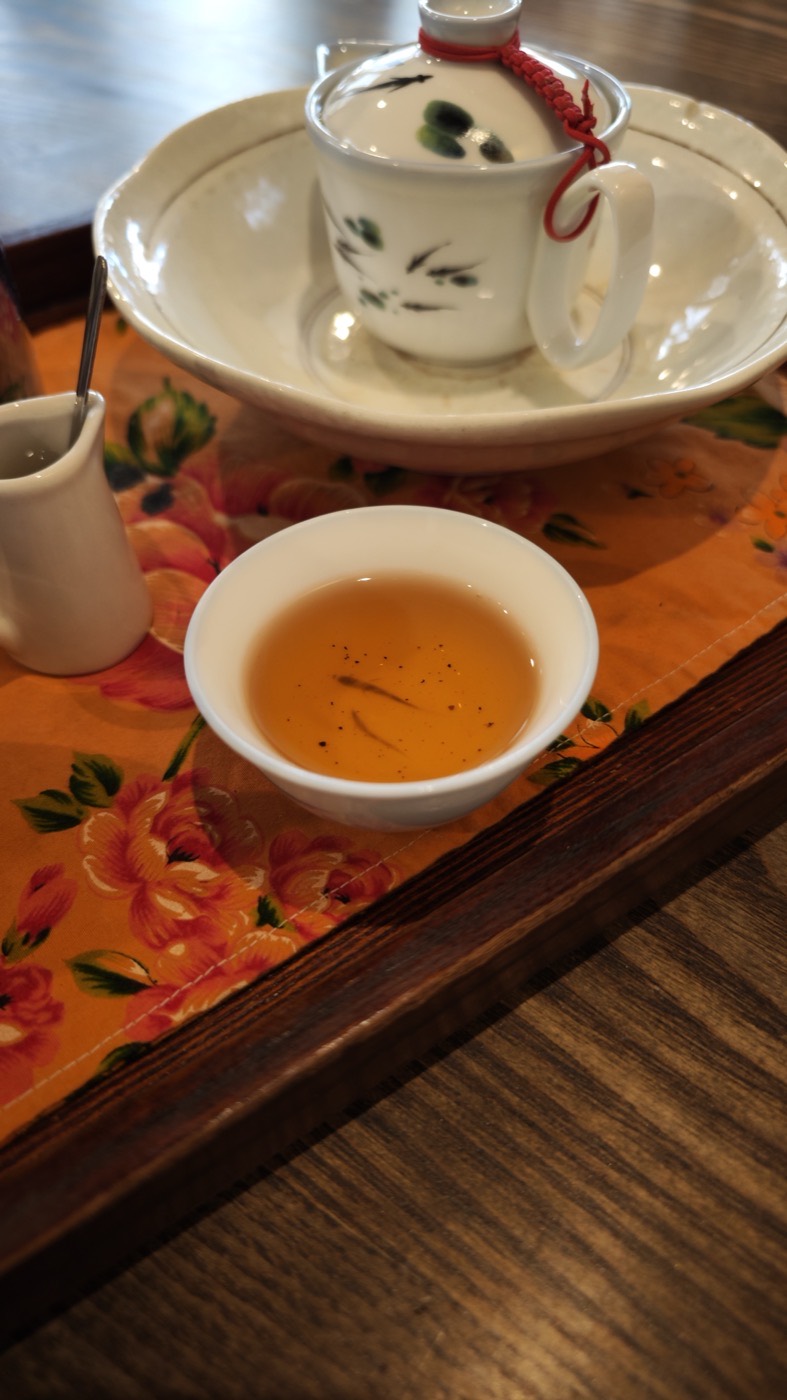
One order is not one cup. It arrives as a set — a lidded cup, a pitcher to decant into, a tasting cup and a pot of hot water — which is a different proposition from ordering a drink in a café, and it is the reason the per-person rule exists.
It was my first time drinking tea this way, refilling the same leaves from the pot rather than being brought a fresh cup. One serving gave me two or three cups at full strength, and then kept going: the later infusions came out lighter but still worth drinking, and I got through about five cups before I stopped. That is the part worth budgeting time for — ¥930 buys an hour, not a drink.
Do I need a reservation?
No — and you cannot make one. The official site states 「ご予約は賜っておりません」, reservations are not accepted, and asks you to come directly. The blackboard at street level explains how that works in practice: customers are seated in order, you wait in a single line down the stairs, and the order can shift depending on party size.
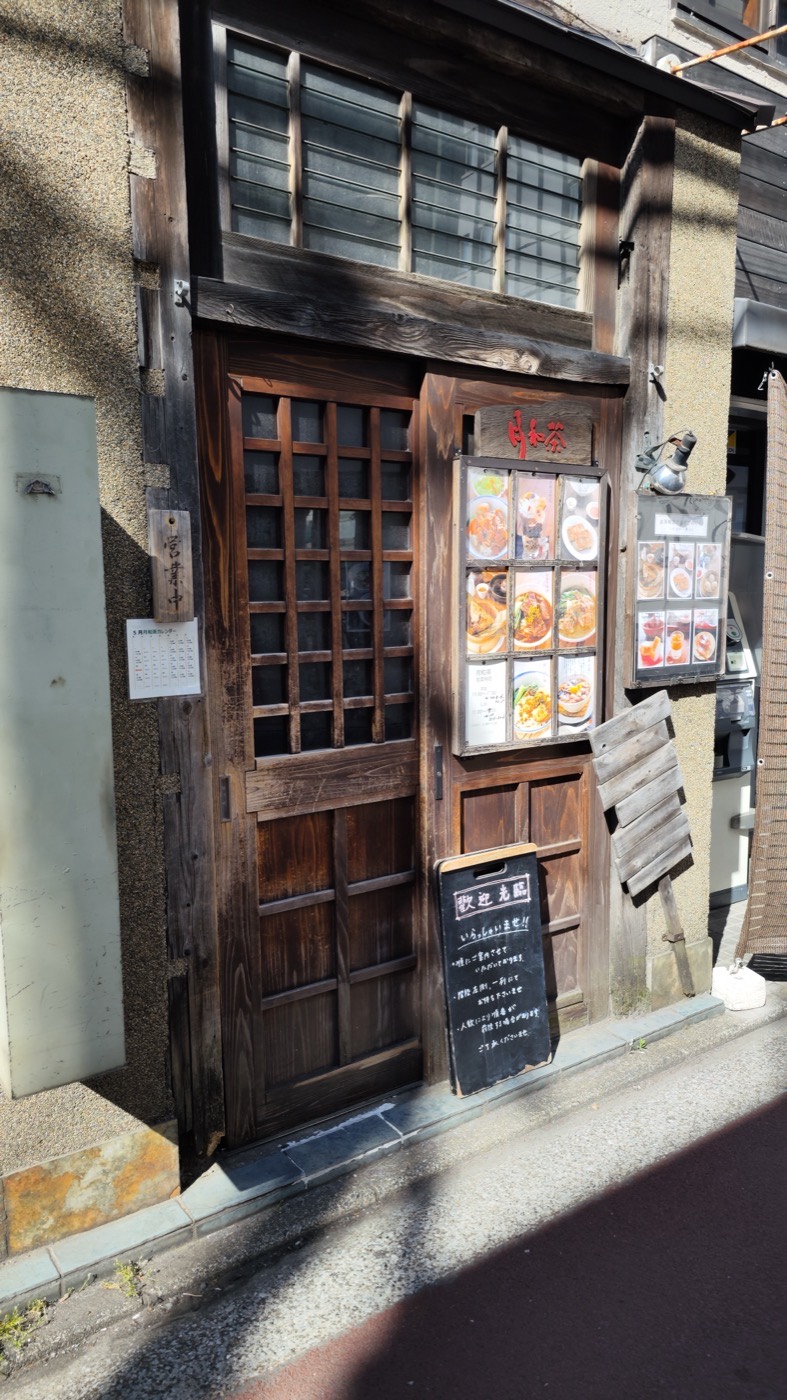
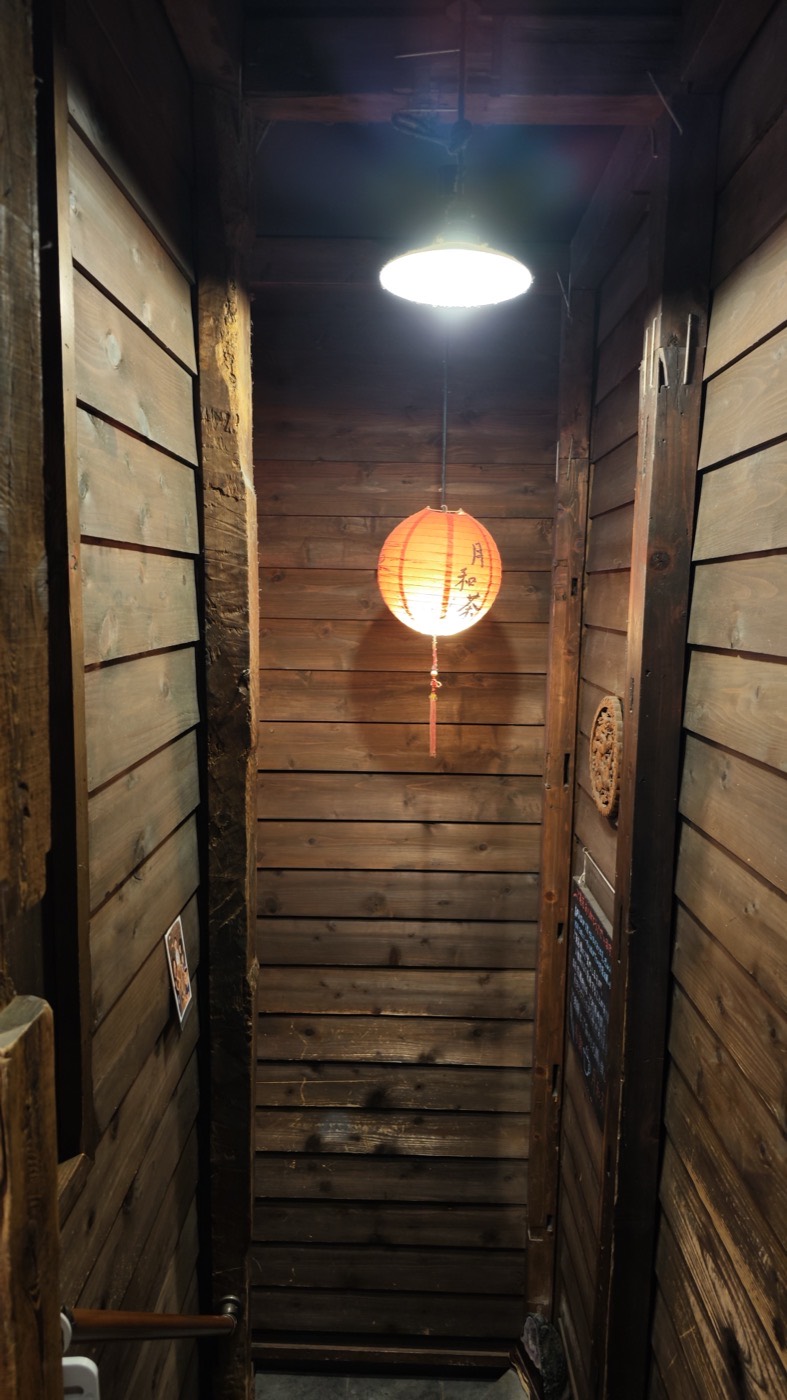
The other thing taped by the door is a calendar for the month — the shop publishes which days it opens, and its official site asks customers to check its social accounts at the start of each month for changes to weekend and public-holiday hours. For a shop that closes three days a week, that is the check worth making before you travel — and worth being able to make from the street, which is an argument for sorting a Japan eSIM before you land rather than hunting for café Wi-Fi in Kichijoji.
How do I get to Yue He Cha from Kichijoji Station?
About 700 m north-west of Kichijoji Station in a straight line. Allow roughly ten minutes on foot; some listing sites say five.
- From Shinjuku, take the JR Chuo Line rapid to Kichijoji — about 16 minutes, ¥260. From Shibuya, the Keio Inokashira Line express takes about 16 minutes, ¥230.
- Leave by the north exit and walk north-west through the shopping streets, past the Tokyu department store.
- Keep going to a quieter back street about 700 m from the station. Look for a dark wooden frontage with photo menu boards — the sign reads 月和茶.
- The restaurant is up the stairs on the second floor.
Staying nearby
Kichijoji works as a base if you want Tokyo without Shinjuku’s density: Inokashira Park is a few minutes from the station, and the Chuo Line rapid puts you in Shinjuku in about 16 minutes.
Before you go
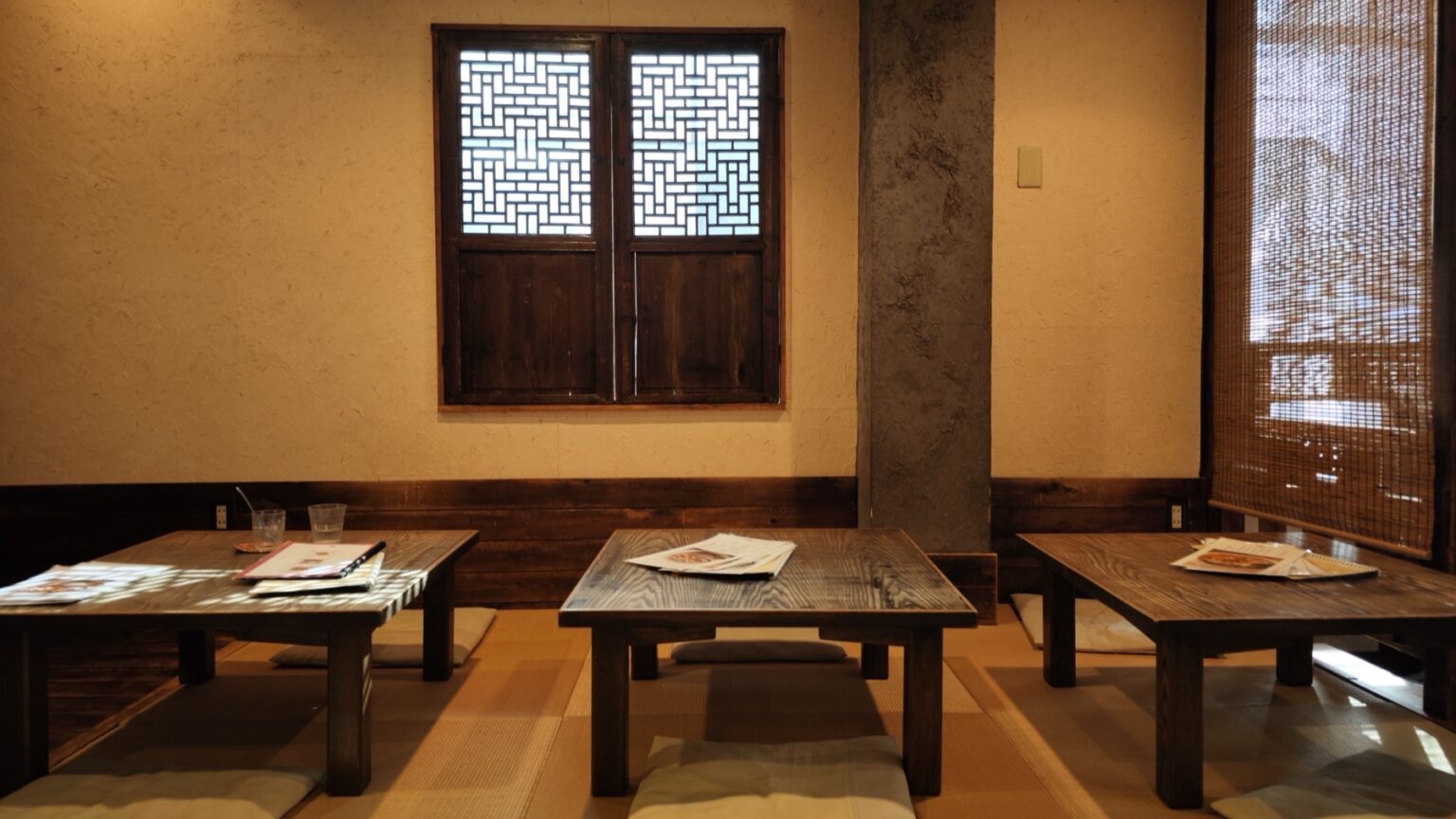
Five things worth knowing.
1. It is closed Tuesday, Wednesday and Thursday. Three closed days in a row is the easiest way to arrive at a locked door.
2. Last orders are at 16:30, half an hour before closing.
3. Carry cash. The shop’s own site does not publish its payment methods. Restaurant listing sites state that cards and e-money are not accepted and that QR-code payment is — third-party information, so cash remains the safe assumption.
4. It is on the second floor, up a narrow staircase.
5. Each tea is served for one person, and the menu asks that it not be shared.
The English dish descriptions here are my own translations of Japanese menu names, not ingredient lists. I did not confirm allergen or dietary information with the shop.
The shop opened in 1999 in Kyodo, in Setagaya, and later moved to Kichijoji. Its owner is named on the official site as 楊明龍. Both facts come from the shop itself.
Yue He Cha Kichijoji: FAQ
What time does the menu change at Yue He Cha?
At 3:00 p.m. Set meals are served 11:00–15:00, and the à la carte menu begins at 15:00. The printed menu on 11 May 2026 stated this directly: 単品 15:00からの提供になります.
Is Yue He Cha open every day?
No. It opens Monday, Friday, Saturday and Sunday, 11:00–17:00, with last order at 16:30, and closes Tuesday, Wednesday and Thursday. The shop also posts a calendar for each month by its door and asks customers to check its social accounts at the beginning of the month for changes to weekend and holiday hours.
Can I book a table?
No. The official site says reservations are not accepted and asks you to come directly. Customers are seated in order and queue in a single line on the staircase; the order can shift depending on the size of each party.
Can two people share one pot of tea?
No. The menu states that each tea is intended for one guest and asks that it not be shared. What arrived with one order was a set of vessels on a tray — a lidded cup on a wide bowl, a serving pitcher, a small jug, a tasting cup and a metal pot — and one serving of leaves gave me around five cups, refilled from the pot as I went.
How much does a meal cost?
Set meals are ¥1,100–¥1,480 on the official site. On the à la carte menu photographed on 11 May 2026, rice bowls ran ¥930–¥1,050 and noodle soups ¥1,130–¥1,320; a small bowl of the braised-pork rice was ¥700, and small rice-vermicelli soups were ¥750–¥780. Tea starts at ¥930.
Where exactly is Yue He Cha in Kichijoji?
2-14-28 Kichijoji Honcho, Musashino, Tokyo, on the second floor of the Osumi Building. It is about 700 m north-west of Kichijoji Station, roughly a ten-minute walk, on a back street past the Tokyu department store.
Are the noodles gluten-free?
The noodles are rice vermicelli (米粉), so the noodles themselves are not made from wheat — but the wontons in my bowl were wrapped in wheat dough, and I did not confirm seasonings or kitchen practice with the shop. Treat this page as a description of what I ate, not as allergen information: ask at the counter if you have coeliac disease or a wheat allergy.
Is there an English menu?
I could not confirm one. The menu I used was in Japanese, with dish names in Chinese characters and descriptions in Japanese. Photographs on the boards at street level and on the menu cards make ordering possible without reading Japanese.
Sources: the shop’s official site (yue-he-cha.com) for opening hours, the reservation policy, set-meal names and prices, the tea list and the shop’s history, checked 1 September 2026; the shop’s printed menu and the notices at its entrance, photographed on 11 May 2026, for à la carte prices, the 15:00 changeover, the per-person tea rule and the queueing instructions. Photographs by Nobu. Prices include tax as printed. Menus and hours change — check the shop’s own accounts before you travel.
Join travelers discovering Japan's hidden side
Weekly dispatches from off-the-beaten-path Japan — spots and stories you won't find in guidebooks.
No spam. Unsubscribe anytime.
Welcome aboard!
You're in. See you in your inbox soon.