
Iwate · Tono · Folklore
Tono is one of Japan’s best-known places for folklore. This quiet mountain basin in Iwate is the setting of the Tales of Tono, the 1910 collection of local legends — kappa water-imps, house spirits, mountain gods — that helped found the study of Japanese folklore. You can still walk through that world at two spots close together: Denshoen, a preserved farm village of thatched houses, and Kappa-buchi, the shaded stream where the water-imp is said to live.
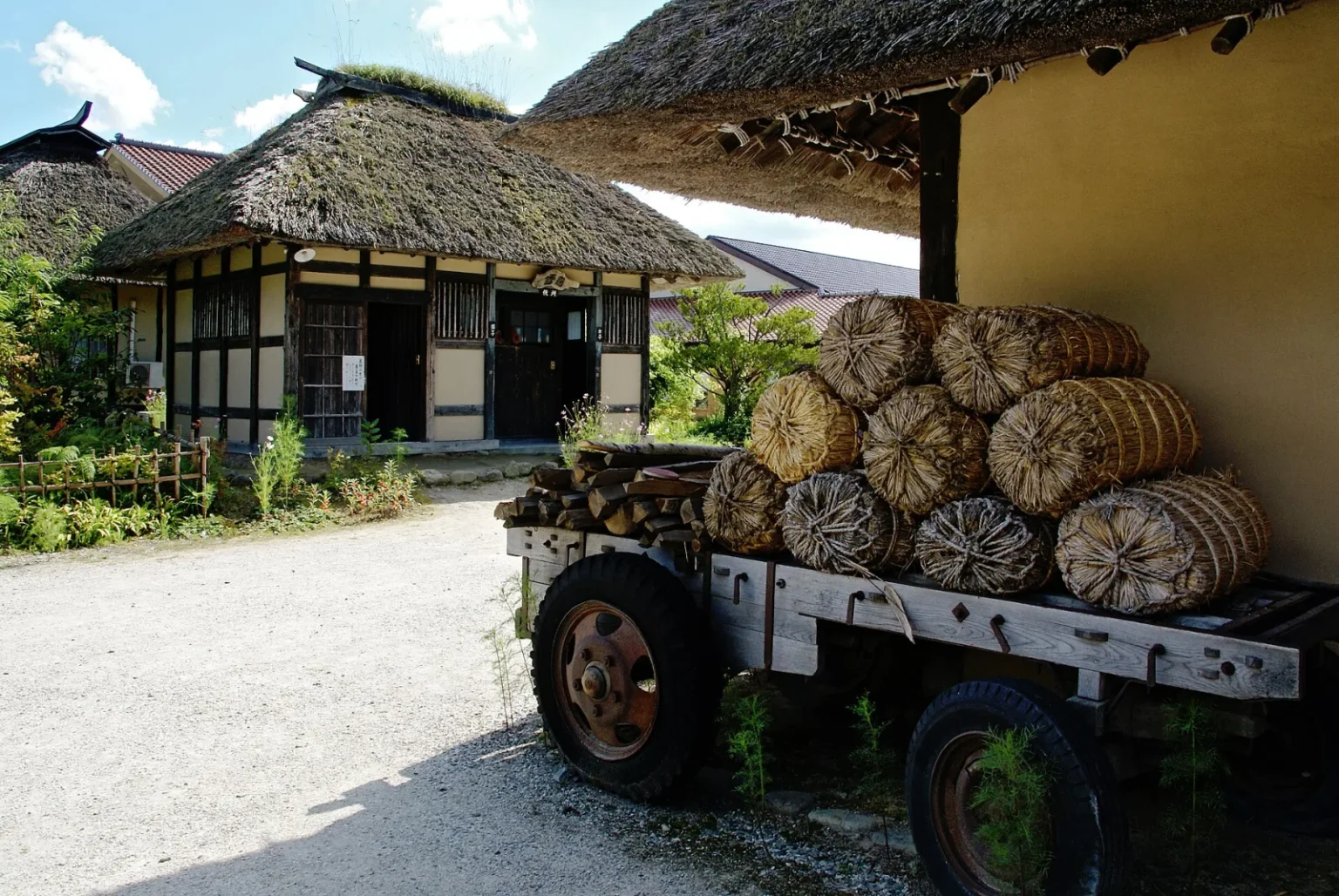
Tono, the home of Japanese folklore
In 1910 the scholar Yanagita Kunio published The Tales of Tono, more than a hundred short legends he had collected from a local man, Sasaki Kizen, who grew up hearing them. The book — kappa in the rivers, zashiki-warashi child-spirits in the old houses, gods of the mountains — is regarded as the start of folklore studies in Japan, and it made Tono one of the places most closely associated with Japanese folklore. The basin is still farmland ringed by mountains, and the folklore is not hidden in a museum so much as attached to actual places you can go and stand in.
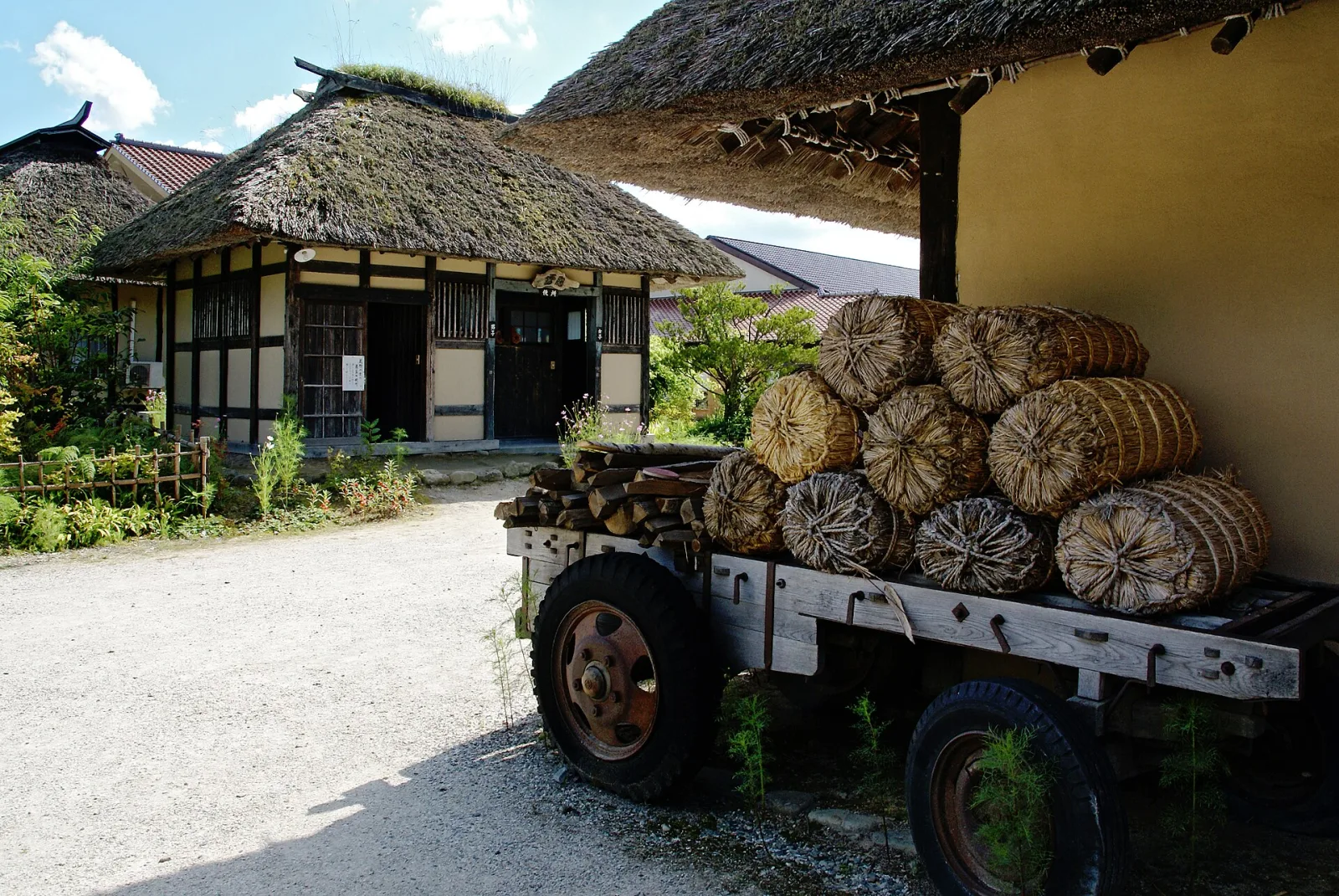
Denshoen: the old Tono farm village
Denshoen is the best single place to see that older Tono. It gathers the buildings and daily life of the valley’s farms into one site, centred on a magariya — the L-shaped Nanbu farmhouse where the family and their horses lived under one roof, here the Kikuchi family’s house, a nationally designated Important Cultural Property. There is a hall, the Oshira-do, holding around a thousand Oshirasama, the silk-farming household deities of the region, and a small museum about Sasaki Kizen, the man whose stories became the Tales.
Admission is ¥450 for adults and ¥350 for high-school students and under, with preschool children free. It is open 9:00 to 17:00 from March to November (last entry 16:30) and 9:00 to 16:00 in winter (last entry 15:30), closed over New Year and on Tuesdays in January and February. Parking is free. There is a restaurant on site serving local country food. Give it an hour or so.
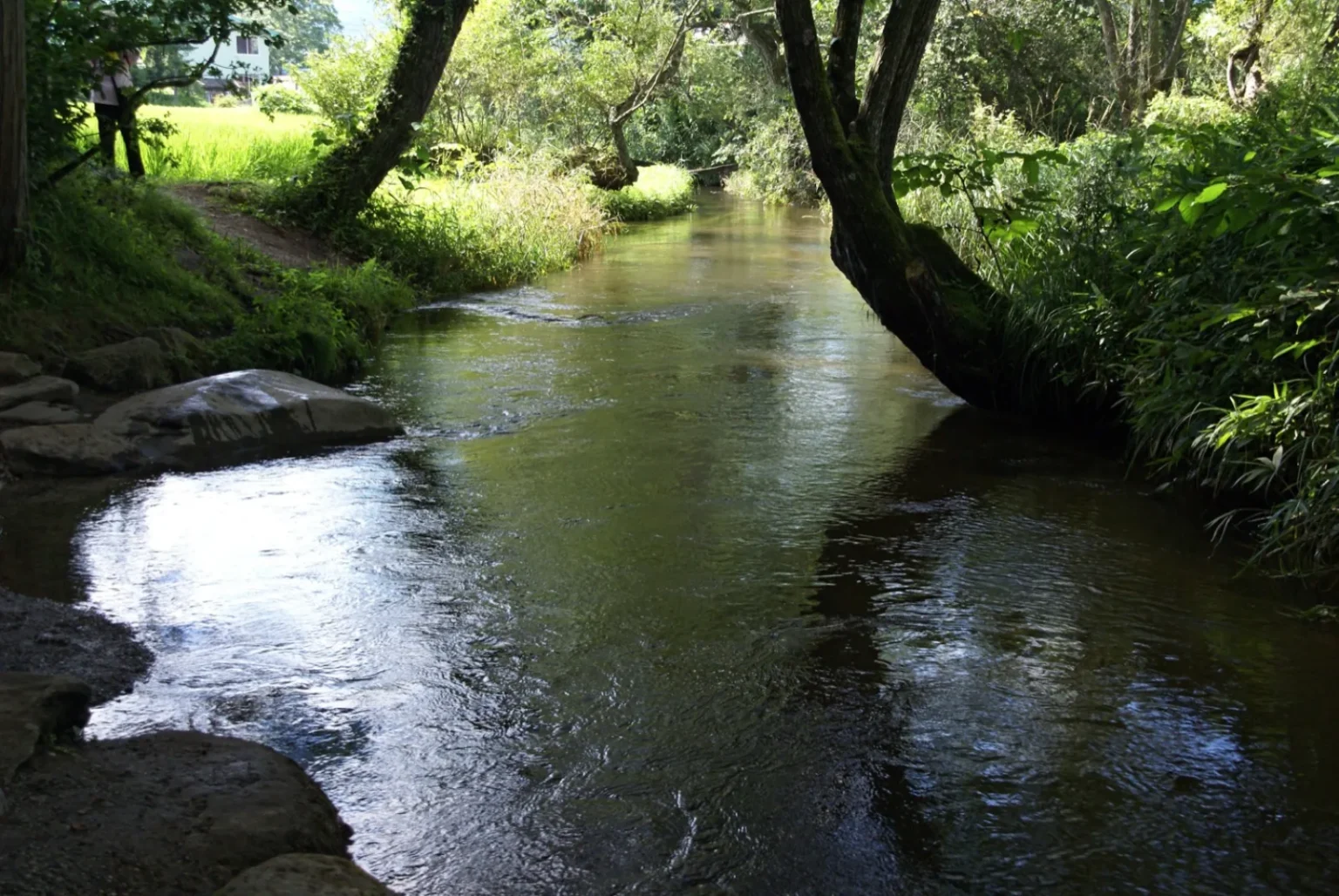
Kappa-buchi: the water-imp’s pool
A few minutes’ walk from Denshoen, behind the temple of Jokenji, a small stream runs under the trees. This is Kappa-buchi, and in Tono’s stories it is home to kappa — the green, river-dwelling imps of Japanese folklore, mischievous and fond of cucumbers. It is free to visit and takes only a few minutes; official and visitor information describe it as a small, shaded stream setting. As a bit of fun you can buy a “kappa-catching licence” in town, and the temple itself keeps a pair of kappa-komainu — guardian statues in the shape of kappa rather than the usual lion-dogs. Taken lightly it is a fun stop, and the stream is worth the short walk either way.
The magariya farmhouse
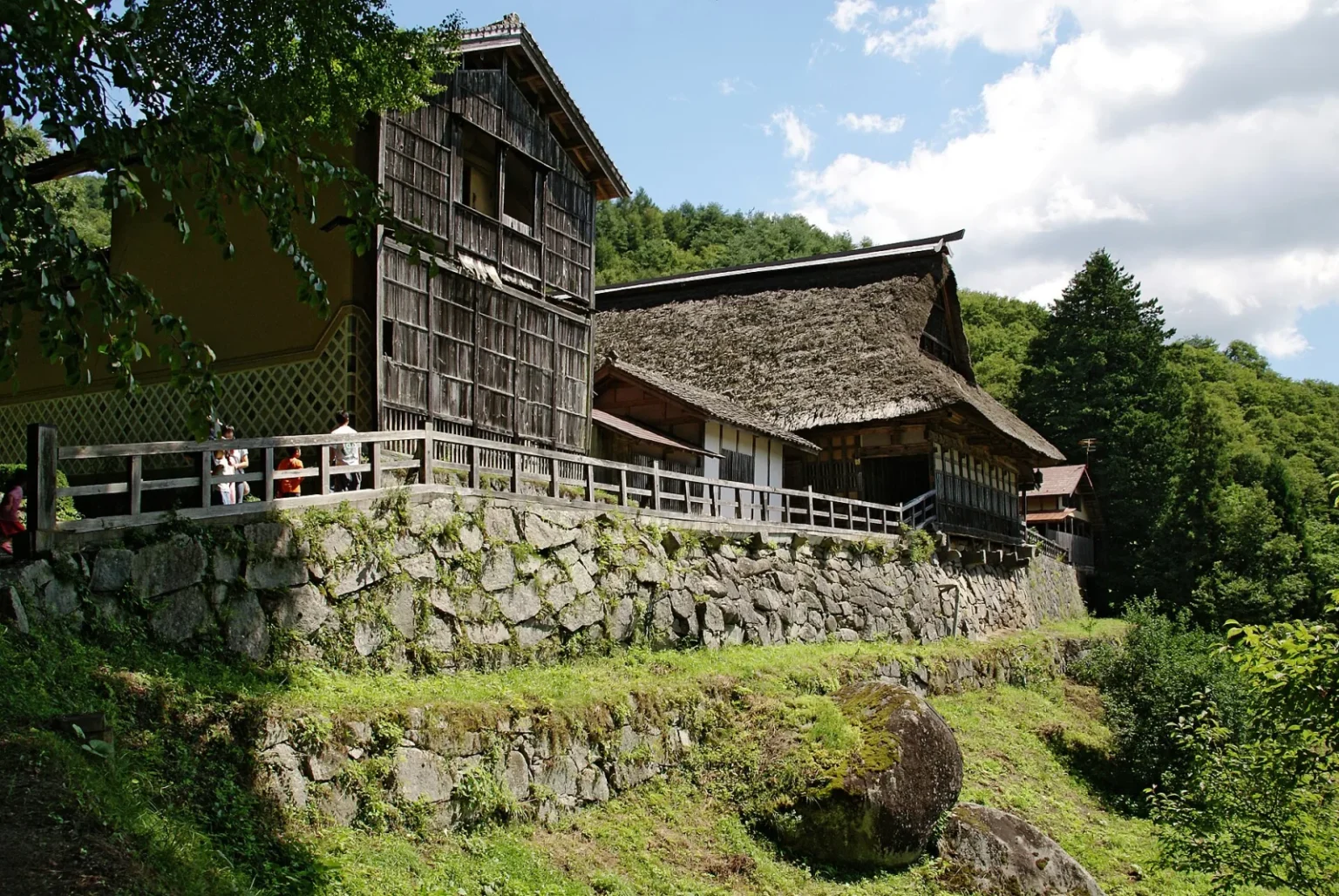
If one building sums up old Tono it is the magariya. In this cold, horse-raising country, farmhouses were built in an L-shape so that the stables joined the living quarters at a right angle, keeping the valuable horses close and warm through the winter. Denshoen has one, and the largest surviving example, the Chiba family residence — a large hillside magariya, also an Important Cultural Property — sits elsewhere in the valley, though it has been under long-term conservation work and may not be fully open, so check the official Tono pages before planning around it. Between them they explain a lot about how people actually lived here.
Getting there and around
Tono sits on the JR Kamaishi Line, and Tono Station is the hub. The catch is that the sights are spread across a wide rural basin — Denshoen and Kappa-buchi are about five kilometres from the station — so you need a way to cover the distance. There are local buses, but they are infrequent; a lot of visitors either rent a bicycle in town (Tono is known for it, and the basin is largely flat and popular for cycling) or drive; Tono Station has rental bikes, and Denshoen is about five kilometres out, roughly a 30–40 minute ride. If you are coming from further afield, Shin-Hanamaki on the Tohoku Shinkansen is the nearest fast-rail point, with a connection across to the Kamaishi Line; from Tokyo, allow around four hours in all. However you come, treat Tono as a slow half-day or day in the countryside rather than a quick stop.
Where to stay: Tono, Hanamaki, Morioka
Tono has a handful of inns and minshuku that suit its slow pace; for more choice, the hot-spring town of Hanamaki or the city of Morioka are both an easy hop by rail. Booking and Agoda list the hotels and business inns; Rakuten Travel is worth a look for the smaller Japanese-run places and farm stays around the valley.
Set up the trip: compare stays on Agoda · rent a car to cover the spread-out valley · and a Japan eSIM for maps and the sparse rural bus times.
Good to know
Is Tono worth visiting?
If you are interested in folklore, rural Japan or old farmhouses — and you are already travelling in Tohoku — yes. It is a quiet countryside experience built around stories and thatched houses rather than big sights, so give it a relaxed half-day or day and don’t rush it.
How much is Denshoen and when is it open?
¥450 for adults and ¥350 for high-school students and under; preschool children are free. It opens 9:00–17:00 from March to November (last entry 16:30) and 9:00–16:00 in winter (last entry 15:30), and is closed over New Year and on Tuesdays in January and February. Parking is free.
Is Kappa-buchi free?
Yes. Kappa-buchi is an open spot behind Jokenji temple, a few minutes’ walk from Denshoen, and costs nothing to visit. It is small — a shaded stream tied to the kappa legend — so pair it with Denshoen rather than making a trip for it alone.
What is a magariya?
A magariya is the traditional L-shaped farmhouse of this region, built so that the horse stables adjoined the living quarters at a right angle — people and horses under one roof against the cold. Denshoen has one, and the Chiba family residence elsewhere in the valley is the grandest surviving example, both nationally designated Important Cultural Properties.
How do I get around Tono?
Tono Station is on the JR Kamaishi Line, but the sights are spread across the basin about five kilometres out, and buses are infrequent. Most visitors rent a bicycle in town or drive. From the Tohoku Shinkansen, Shin-Hanamaki is the nearest fast-rail point with a connection to the Kamaishi Line.
Ouchi-juku
A thatched Edo post town in the Tohoku mountains, further south.
Skip the Crowds
More quiet places, like Tono, that the tour buses miss.
Beyond the Golden Route
Where a Tohoku detour fits into a wider trip.
Getting Around Japan (2026)
Trains, buses and when to rent — useful for spread-out Tono.
Join travelers discovering Japan's hidden side
Weekly dispatches from off-the-beaten-path Japan — spots and stories you won't find in guidebooks.
No spam. Unsubscribe anytime.
Welcome aboard!
You're in. See you in your inbox soon.