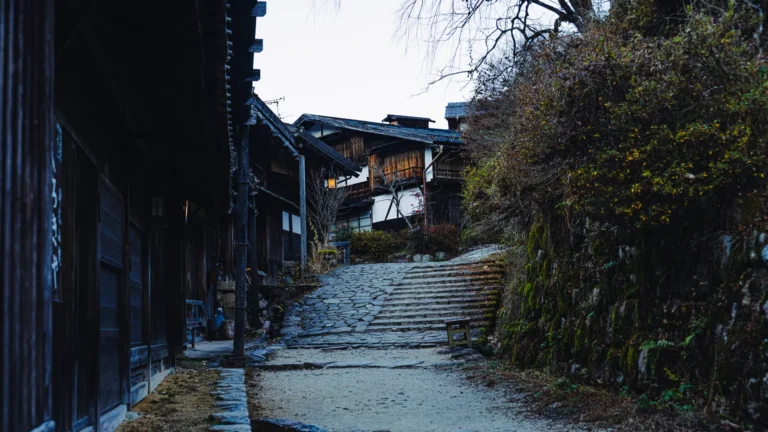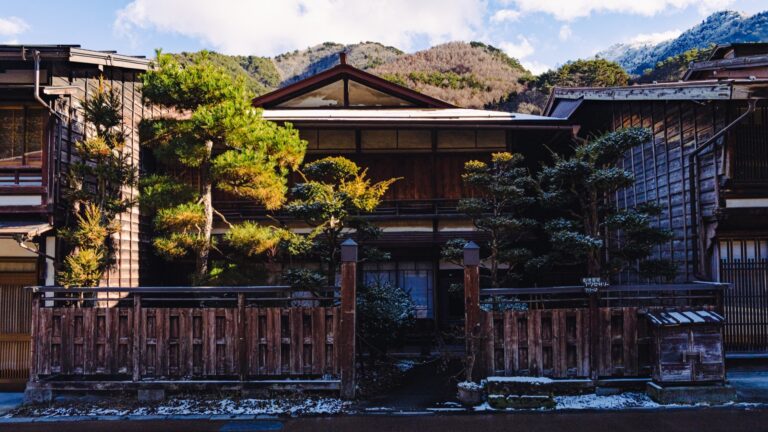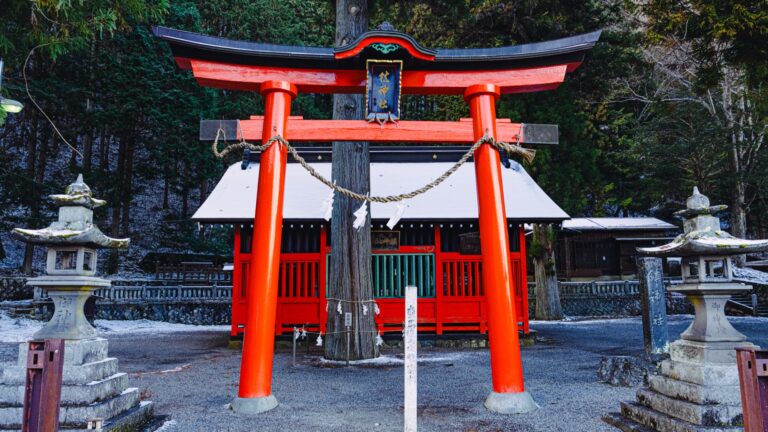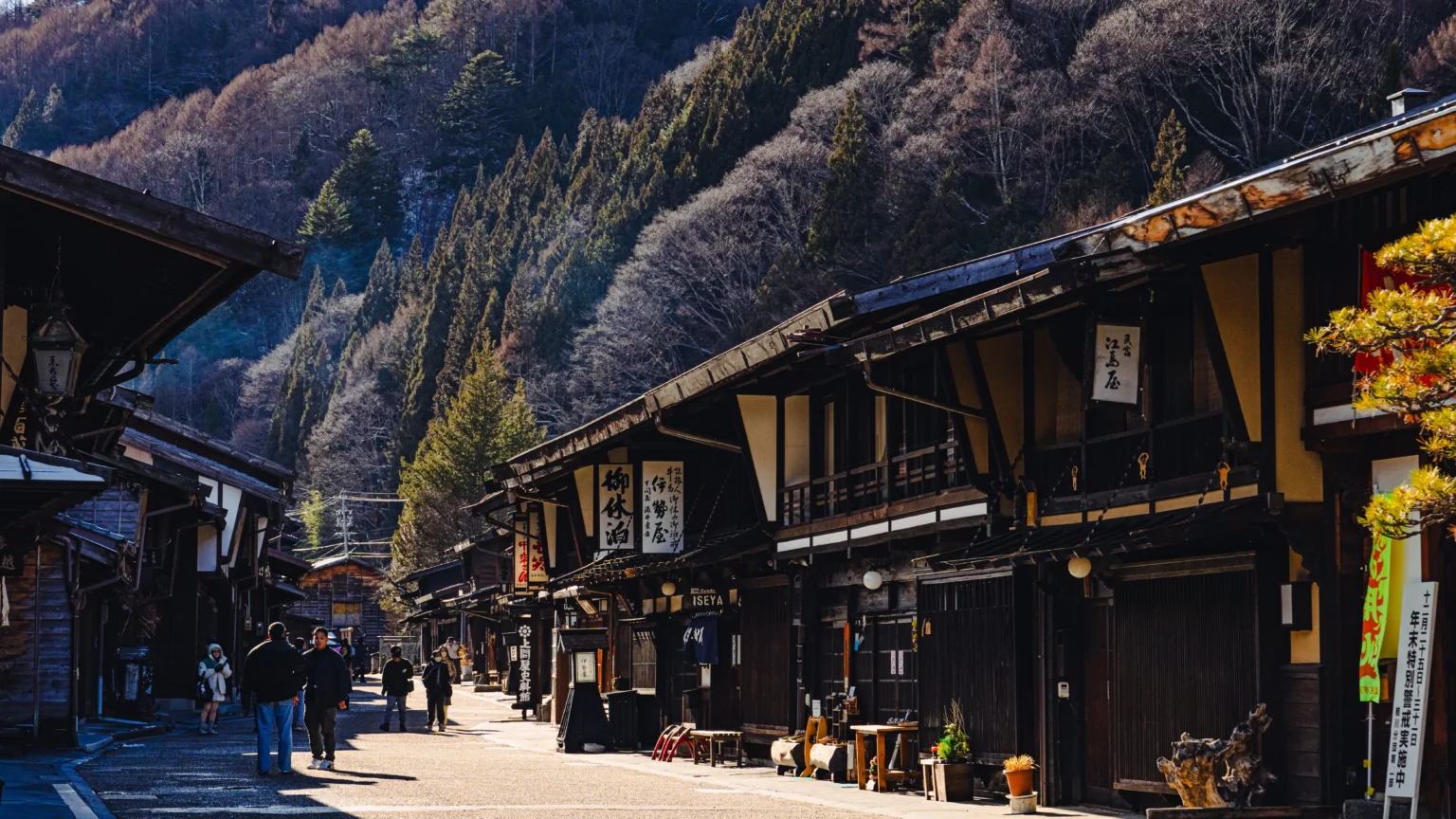

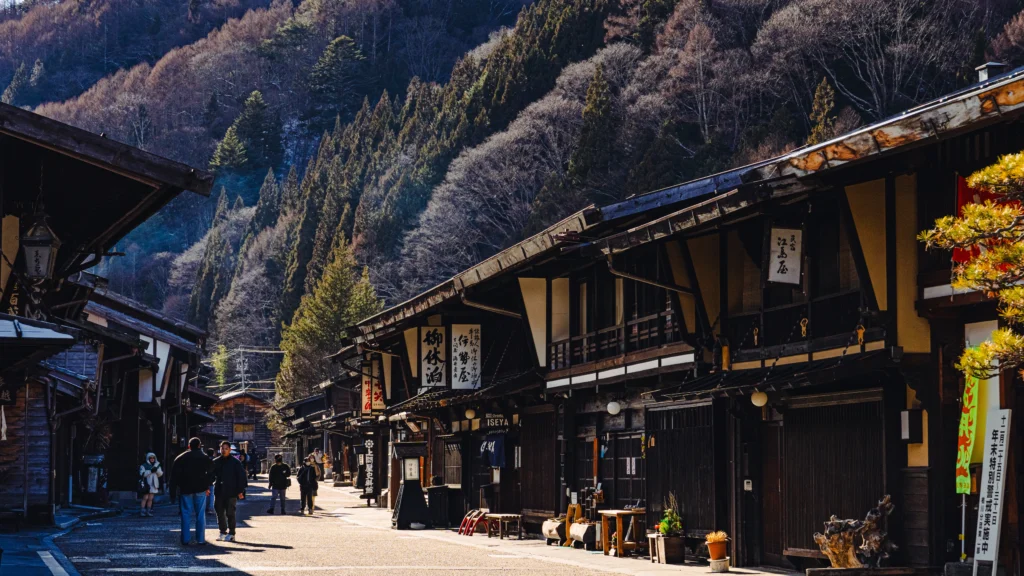
Narai-juku in Nagano’s Kiso Valley is the longest preserved Edo post town in Japan — about 1 km of continuous wooden buildings, designated a National Important Preservation District for Groups of Traditional Buildings on May 31, 1978. It was the 34th of 67 post towns on the Nakasendo, the inland samurai road between Edo and Kyoto, and rested travellers before the difficult Torii Pass crossing. At its peak in 1843 it had 409 houses and 2,155 residents — earning the nickname “Narai Senken” (奈良井千軒 — “Narai of a thousand houses”). This is the 2026 visit guide: how to get there, where to stop, what to eat, and how to plan around the festival calendar.
Last updated: 2026-05-29 · Author: Nobutoshi · Designated 1978-05-31 · 34th Nakasendo post town
Quick facts
- Formal name
- 奈良井宿 (Narai-juku)
- Nakasendo position
- 34th of 67 post towns
- Kiso-ji order
- Largest of the 11 Kiso-ji post towns
- Preserved length
- ~1 km — Japan’s longest
- Preservation status
- National Important District, 1978-05-31
- Edo peak (1843)
- 409 houses, 2,155 residents
- Nickname
- 奈良井千軒 (Narai Senken)
- Admission
- Free to walk the street
- Nearest station
- JR Narai (奈良井駅) — Chuo Main Line
- Address
- 〒399-6303 長野県塩尻市奈良井
- Tourist info
- 奈良井宿観光案内所 0264-34-3160
- Best season
- Spring fresh-leaf or late October koyo
Why I’d visit Narai-juku in 2026
Narai-juku is the rare preserved post town where the scale matches the photography — at about 1 km it’s roughly 3× the length of better-known Tsumago-juku, which means you can walk the entire street slowly, eat at three or four shops, visit the two main preserved houses, and not feel rushed. Late May fresh-leaf and mid-October koyo are the two annual sweet spots.
Most foreign visitors do the Kiso Valley as Tsumago-Magome only — see the Narai-juku walking guide for the Magome alternative — but Narai-juku at the northern end of the Kiso route is a genuinely different experience: more lacquerware shops, fewer tour buses, and an immediate JR station instead of a 30-minute bus connection. It pairs cleanly with Togakushi Shrine as a two-day Nagano Edo-and-shrine route.
What’s on the 1 km — landmarks in walking order
South to north — JR station to Torii Pass trailhead
Full street walk at a normal pace, no stops: ~15 minutes. With shop browsing and one preserved-house visit: 90 minutes. With soba lunch + both preserved houses + the wells + a Torii Pass viewpoint walk: a full 4-hour day.
The two preserved houses you should enter
Former inn for Edo-period travellers. Preserved irori hearth, dark-timber interior, original staircase. Now operates as a soba restaurant on the ground floor — eat zaru-soba (¥1,000-ish) facing the hearth. Photography of the interior is generally welcomed during quiet hours.
Former comb merchant residence — comb-making was one of Narai’s Edo-era specialty trades. Small entry fee. Two storeys preserved with merchant living quarters, shop counter, and storage rooms. Quietest visit window is right after lunch on weekdays.
Narai is part of the Kiso-shikki tradition — lacquered cypress trays, bowls, chopsticks, and small boxes. The 57th annual Kiso Lacquerware Festival + Narai-juku Festival (木曽漆器祭・奈良井宿場祭) is held over a weekend in early June 2026; the festival turns the street into an open-air craft market.
Stone-lined public water troughs distributed along the 1 km. The water still flows and is drinkable. Each well has a name and historical neighborhood association. Lift the wooden cover, dip the ladle — it’s been done this way for 400 years.
Train + drive access — verified for 2026
Where to base a Kiso Valley visit
Narai-juku — the 1 km street runs roughly south (JR Narai station) to north (Shizume Shrine + Torii Pass).
By train
| From | Route | Time | Cost |
|---|---|---|---|
| Tokyo (Shinjuku) | JR Chuo Line Limited Express Azusa → Shiojiri → JR Chuo Line local → Narai | ~3 h 0 min | ~¥8,200 |
| Nagoya | JR Chuo Line Limited Express Shinano → Kiso-Fukushima → JR Chuo local → Narai | ~1 h 50 min | ~¥4,800 |
| Matsumoto | JR Chuo Line direct or via Shiojiri | ~45 min | ~¥1,200 |
| Nagano | JR Shinonoi/Chuo Line via Matsumoto or Shiojiri | ~2 h 15 min | ~¥3,500 |
By car
| From | Route | Time |
|---|---|---|
| Tokyo (via Chuo Expressway) | Chuo Expressway → Ina IC → Route 361 | ~3 h 30 min |
| Tokyo (via Nagano Expressway) | Nagano Expressway → Shiojiri IC → Route 19 | ~3 h 0 min + 35 min on R19 |
| Nagoya | Chuo Expressway → Nakatsugawa IC → Route 19 | ~2 h 0 min + 90 min on R19 |
Parking — five options, three free
Vehicle access inside the post town
Cars cannot drive on the 1 km old street. All vehicles park at the edges. Walk in from the lot of your choice — distances below.
| Lot | Capacity | Cost | Walk to street |
|---|---|---|---|
| Kiso-no-Ohashi East (木曽の大橋 東) | 12 cars + 3 accessible + 3 large vehicles | Free | 2 min |
| Kiso-no-Ohashi West (木曽の大橋 西) | 51 cars + 1 accessible | Free | 5 min |
| Narai-juku Bridge (奈良井宿橋) | 28 cars + 2 accessible + 15 large + 2 medium + EV charger | Free | 3 min |
| Narai Station-mae (奈良井駅前) | 15 cars | ¥500 (free 16:00 – 9:00) · ⚠ closed Aug 12 | 1 min |
| Narai Gonbei (奈良井権兵衛) | 83 cars / 8 large / 1 microbus | ¥510 car · ¥2,050 large bus | 5 min |
If you arrive before 9:00, the small Narai Station-mae lot is free and closest to the south entrance. After 9:00 on weekends, the Kiso-no-Ohashi East lot fills first; West is your fallback. The Gonbei lot is the most reliable for buses and oversized vehicles.
When to visit — seasonal table
| Month | What’s happening | Crowd | Verdict |
|---|---|---|---|
| Jan – Feb | Cold, snow likely, some shops shorter hours | Light | Quiet but limited shop access — see the winter guide |
| Mar – Apr | Plum then cherry blossoms; thaw season | Light – moderate | Underrated for spring |
| Mid May – Jun | Fresh leaf, Kiso Lacquerware Festival early June | Heavy on festival weekend | Best — fresh green + crafts week |
| Jul – Aug | Cooler than Tokyo at 940 m elevation | Heavy on Obon (Aug 13-15) | Good heat escape |
| Mid Oct – early Nov | Koyo — beech, maple, larch turn at the surrounding peaks | Heavy | Second-best — weekday only |
| Nov – Dec | Late koyo, first snow late November, holiday lights | Moderate | Atmospheric; warm clothing essential |
Etiquette & photography rules
Six things to know before walking the street
- It is a living village. Roughly 500 people still live in the preserved buildings. Don’t photograph windows or open doorways without permission.
- Stick to the street paving. Side-streets behind shops are private homes. Public access is the main thoroughfare only.
- Tripods discouraged on weekends. Weekdays before 10:00 or after 16:00 are tripod-friendly windows.
- The wells are for drinking + ladle dipping. Not for washing hands or rinsing equipment.
- No drone flying within the preservation district. Drones over the village are explicitly prohibited.
- Festival weekend (early June) blocks vehicles entirely. Park at Gonbei or Kiso-no-Ohashi West and walk in.
Tips for visitors from Singapore, Bangkok, KL & Jakarta
Practical notes for SEA travellers
Narai-juku fits cleanly into a Tokyo → Matsumoto → Kiso → Nagoya rail loop. Direct flights to NRT or HND from SEA + JR Pass make this a 5-7 day Japan itinerary natural inclusion.
- From SIN/KUL/BKK/CGK: NRT or HND direct via Scoot, AirAsia X, Jetstar Asia, ANA, JAL, SQ. NRT → Shinjuku 60 min → Azusa to Shiojiri 2h 30m → Narai 25 min. Plan ~5h total airport to Narai-juku.
- Halal & vegetarian: Narai is famous for soba (buckwheat noodles, naturally vegan when ordered “zaru” with separately-served tsuyu sauce — but most tsuyu contains bonito). Gohei-mochi (skewered rice with miso glaze) is vegetarian. Lacquerware shops have no food restrictions.
- Climate vs SEA: Narai is at 940 m elevation in a mountain valley. Late May 14-22°C, mid-October 8-16°C. Always cooler than Tokyo. Pack a light jacket year-round.
- Cash: Many small shops are cash-only. ATMs are rare in the village. Withdraw cash at Matsumoto or Shiojiri stations before arriving.
- Prayer / wudu: No specific facilities. Matsumoto Station has prayer rooms. Bring a portable mat.
- JR Pass: The Azusa to Shiojiri and local to Narai sections are both fully covered by the standard JR Pass.
FAQ
How long should I spend at Narai-juku?
For most visitors, 90 minutes to 4 hours. A quick photo-walk takes 15-20 minutes one way. Adding soba lunch + both preserved houses + the wells gives 2-3 hours. A full day with Torii Pass trail walk adds 2 hours. Most tourists overestimate how rushed Narai-juku is — at 1 km, the street is the longest preserved in Japan and the experience is meant to be slow.
Is Narai-juku free to enter?
Yes — walking the street is free. Individual preserved houses (Nakamura House, Tokuriya for the dining experience) have small fees: usually ¥300-500 for the museum-style houses, ¥1,000-1,500 for a soba meal at Tokuriya. Photography on the street is free; some interiors restrict flash.
How do I get to Narai-juku from Tokyo?
JR Chuo Line Limited Express Azusa from Shinjuku to Shiojiri (~2h 30m), then JR Chuo Line local one stop south to Narai (~25 min). Total ~3 hours, ~¥8,200. Covered by JR Pass. Trains from Shinjuku are roughly hourly during the day; check timing before you leave.
Where do I park if I’m driving?
Five lots circle the village. The three free lots (Kiso-no-Ohashi East, West, and Narai-juku Bridge) hold 90+ cars combined and are 2-5 minutes’ walk from the street. Two paid lots (Narai Station-mae at ¥500 and Gonbei at ¥510) are closer and reliable. Cars cannot drive on the 1 km old street itself.
When is the Narai Lacquerware Festival in 2026?
The 57th Kiso Lacquerware Festival + Narai-juku Festival (木曽漆器祭・奈良井宿場祭) is held over a weekend in early June 2026. The whole street becomes an open-air craft market. Hotels and lots fill weeks in advance — book early. Festival weekend is also the only time vehicles are completely banned from the surrounding streets.
Can I walk the old Nakasendo trail from Narai-juku?
Yes — the Torii Pass (鳥居峠) trail starts at the north end of the village past Shizume Shrine. It crosses the original Nakasendo to Yabuhara Station on the other side — roughly 2 hours of moderate uphill, then descent. Most day-trippers walk just the first 30 minutes to the viewpoint and turn back. For a one-day Kiso route, see the one-day Naraijuku → Tsumago itinerary.
What should I eat at Narai-juku?
Two things. Soba — Narai sits in one of Japan’s named soba regions; multiple shops along the street serve it cold (zaru) or hot. Gohei-mochi — skewered rice patties glazed with sweet miso, grilled over charcoal, sold at street stalls. Both can be eaten standing or seated; both are inexpensive (¥600-1,200 each).
Should I visit Narai-juku or Tsumago-juku?
Both if you have a full day. Narai-juku is the largest at ~1 km and the most authentic-feeling village experience; Tsumago-juku is shorter but tightly preserved and pairs with Magome via the popular Tsumago-Magome walking trail. Many travellers do Narai-juku for an overnight or extended visit and Tsumago-juku as a day-trip on the way south.
Sources used for this article
- Narai-juku Tourism Association — naraijuku.com (tourism office contact, festival announcements, shop directory)
- Shiojiri City Tourism Association — tokimeguri.jp (“about 1 km — Japan’s longest post town” quote)
- Shiojiri City official — city.shiojiri.lg.jp (parking lot details + capacity)
- Go Nagano (Nagano Pref. tourism) — go-nagano.net (Nakasendo context, model routes)
- Wikipedia (jp) 奈良井宿 — 1978-05-31 designation, 1843 census, 34th post-town number
- Companion HJG guides — Walking Narai-juku, Naraijuku in Winter, One Day in the Kiso Valley
Plan a Narai-juku trip — three paths
Most visitors do Narai as a day trip from Matsumoto, but a Kiso Valley overnight is the better way to see the village quiet. Three booking paths:
Join travelers discovering Japan's hidden side
Weekly dispatches from off-the-beaten-path Japan — spots and stories you won't find in guidebooks.
No spam. Unsubscribe anytime.
Welcome aboard!
You're in. See you in your inbox soon.