Shimane · Okuizumo · Craft
Okuizumo, in the mountains of eastern Shimane, is one of Japan’s historic sources of sword steel. This is the historic heart of tatara — the traditional iron-making that turns local iron sand into tamahagane, the steel a katana is forged from. At the Okuizumo Tatara and Sword Museum you can learn how that worked and, on set demonstration days, watch a swordsmith actually hammer hot steel. It is a long way into the hills, so it takes some planning.
Tatara: where Japanese steel comes from
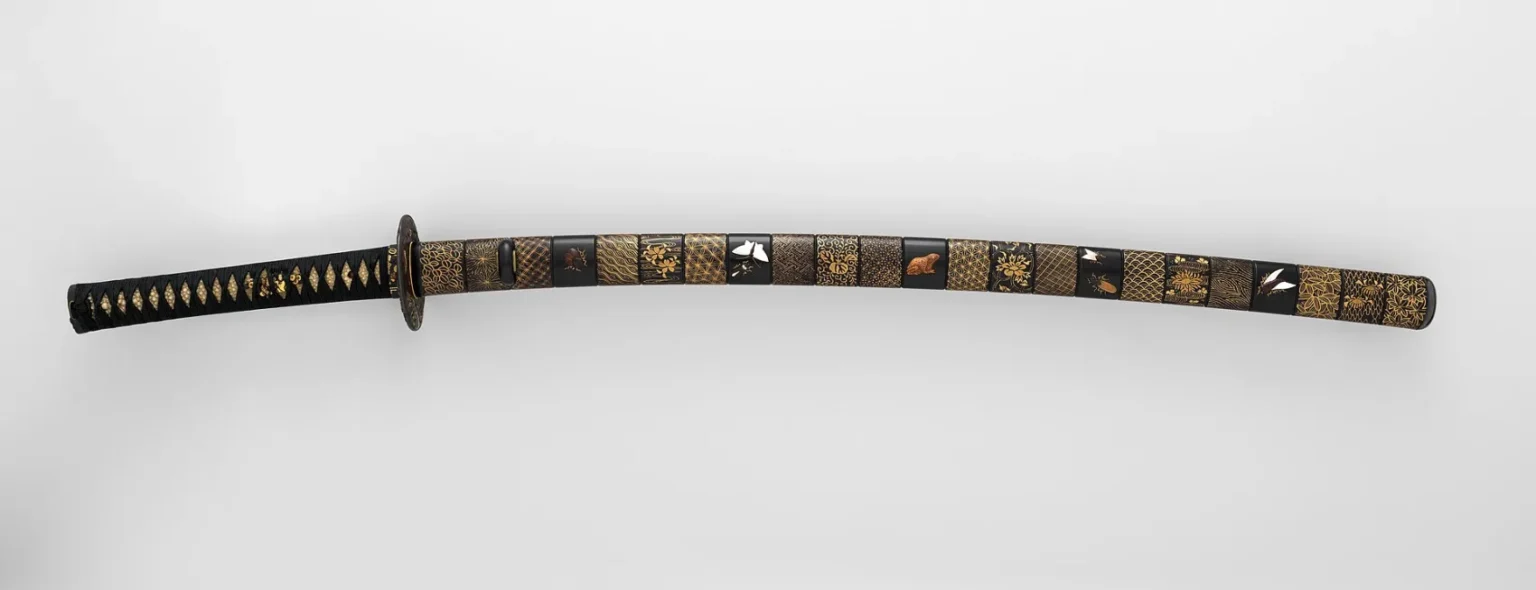
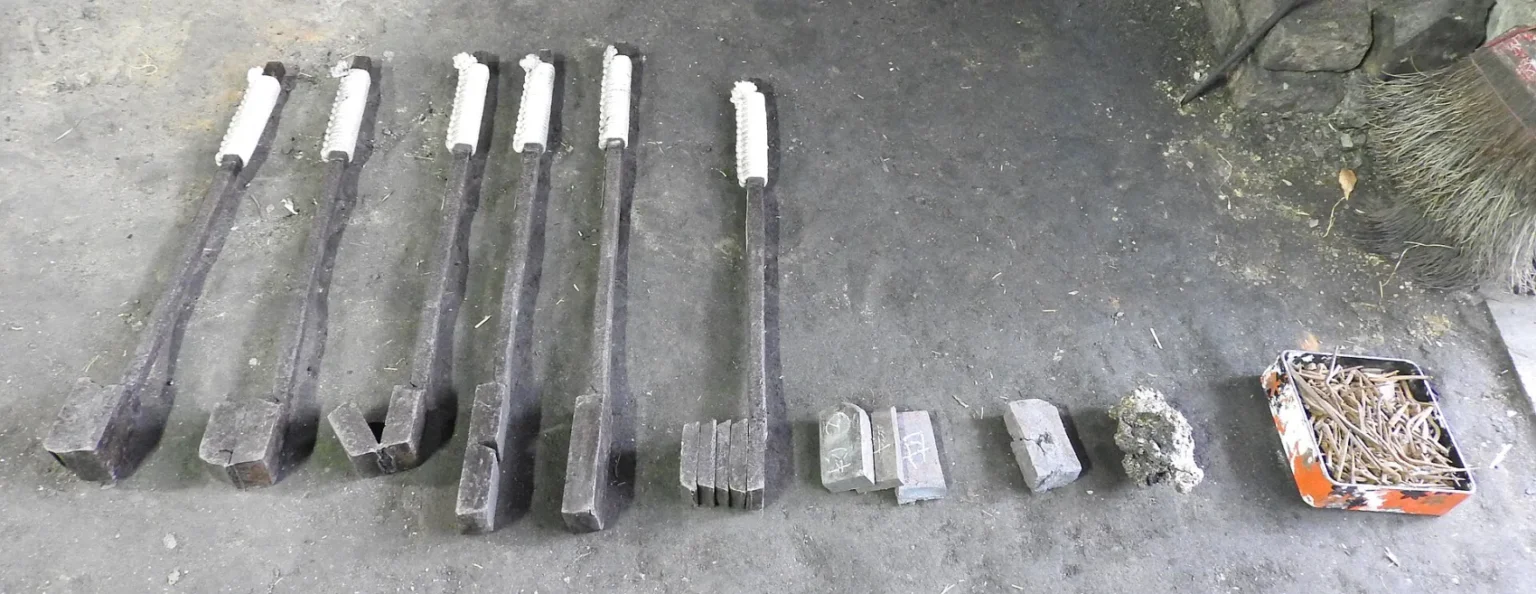
Before modern furnaces, Japan made its iron with tatara: a clay furnace fed with local iron sand and charcoal, worked for days by teams pumping air with foot-bellows. The output is tamahagane, a high-carbon steel prized above all for sword-making. Okuizumo sat on rich iron-sand deposits and became the country’s great tatara centre, and the craft never entirely died out here: a tatara furnace is still fired in winter to supply tamahagane to Japan’s swordsmiths. If you have wondered where a katana’s steel comes from, much of it traces back to hills like these.
The museum and the sword-forging demonstration
The Okuizumo Tatara and Sword Museum (Tatara to Kenkan) tells that whole story — the iron sand, the furnace, the smelting, and the swordsmith’s work that follows — and displays blades and tools. The reason to time your visit, though, is the sword-forging demonstration: on the second Sunday and fourth Saturday of each month, at 10:00 and 13:00, a swordsmith works hot steel in front of you. To be clear, this is a demonstration to watch, not a make-your-own-sword workshop, and for many visitors the live forging is the main reason to time a trip for those dates.
Admission is ¥530 for adults and ¥260 for school students on a normal day; on demonstration days it rises to ¥1,270 for adults and ¥630 for students, since the forging is included. The museum is open 9:30 to 16:30 and closed on Tuesdays (or the next day if a Tuesday is a public holiday) and over New Year. The regular public demonstrations do not need a reservation, and the museum may run separate arranged experiences, so check ahead; allow about an hour on a normal visit and longer on a demonstration day. Demonstrations can also be suspended, so if that is why you are going, confirm the schedule before you travel.
The iron-sand landscape
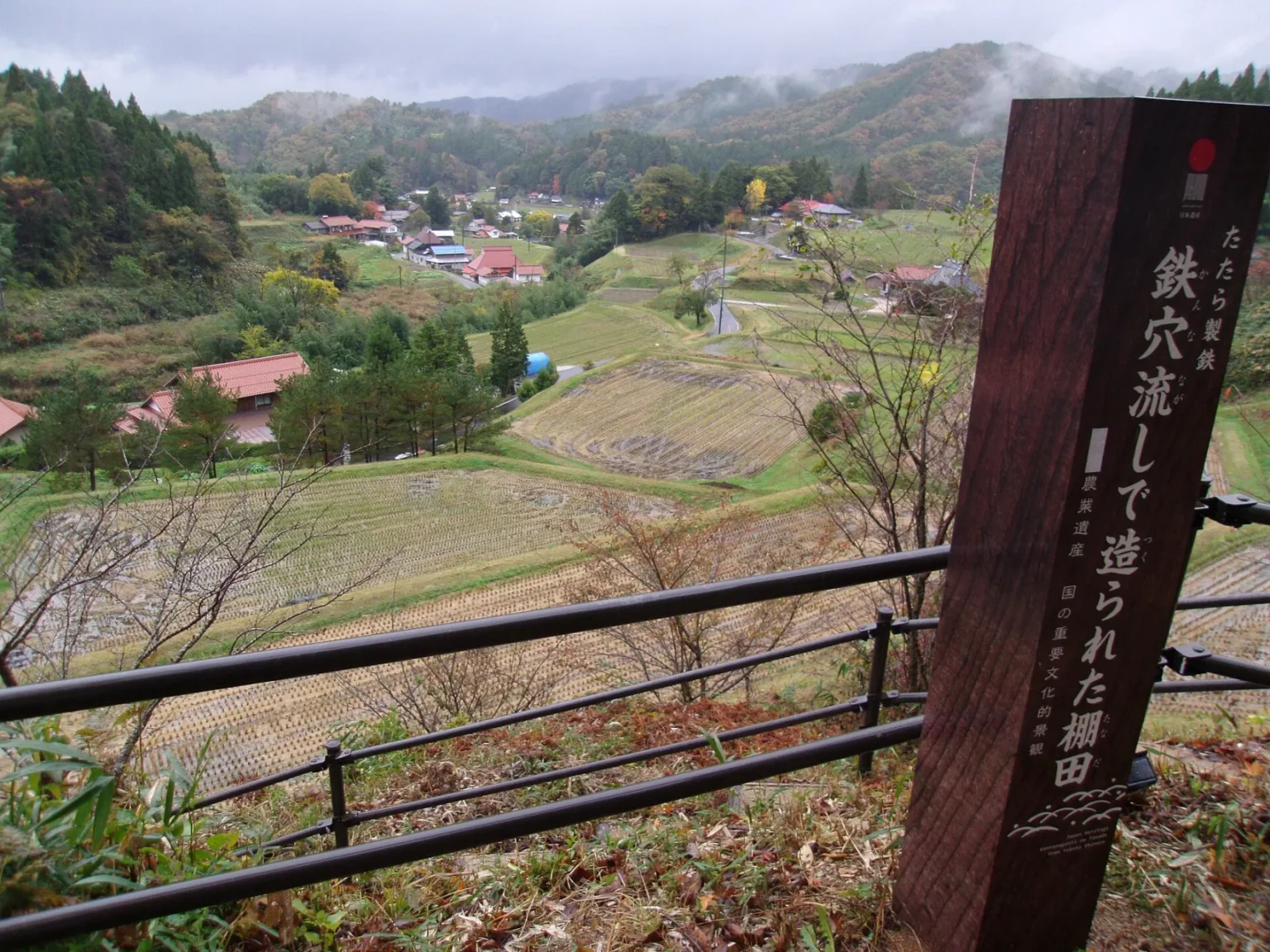
Tatara shaped more than steel here; it shaped the land. To get the iron sand, workers used kanna-nagashi — sluicing away whole hillsides with water to separate out the heavy ore. When the mining stopped, the levelled ground was turned into terraced rice fields, and the result is the Oku-Izumo cultural landscape: paddies, villages and iron-working sites that were literally built by the iron trade, now a nationally recognised Important Cultural Landscape. It is an industry you can still read in the shape of the valley.
Getting there
The museum is in Yokota, in Okuizumo town, and it is well into the mountains. By rail it is near Izumo-Yokota Station on the JR Kisuki Line — a walk of roughly ten to fifteen minutes, or a short taxi — the slow rural line that climbs inland from Matsue and Izumo — a scenic ride, but an infrequent one, so check the timetable carefully in both directions. By car it is roughly 45 minutes from the Takano interchange or an hour from the Tojo or Shobara side. Either way it is a trip into the interior of Shimane rather than a quick add-on, so it pairs well with Izumo Taisha, Matsue, or a slower loop through the San’in region.
Where to stay: Matsue, Izumo, Okuizumo
Most people base themselves in Matsue or Izumo and make Okuizumo a day out, though there are a few inns in the town itself for a slower visit. Booking and Agoda cover the city hotels; Rakuten Travel is the one to check for the Japanese-run inns and hot-spring ryokan around the San’in coast and the Okuizumo hills.
Set up the trip: compare stays on Agoda · rent a car for the mountain interior (or compare Shimane pickups on TOCOO — coupon IJMEMZ, ¥1,000 off a base rental of ¥10,000 or more, options excluded; check it shows before payment) · and a Japan eSIM for maps and the sparse Kisuki Line times.
Good to know
Is the Okuizumo sword museum worth the trip?
For anyone interested in Japanese swords, crafts or industrial history, yes — especially on a demonstration day, when you can watch a swordsmith at the forge. It is deep in the Shimane mountains, so treat it as part of a wider San’in trip (with Izumo Taisha or Matsue) rather than a destination on its own.
How much is it, and when are the demonstrations?
¥530 for adults and ¥260 for students on a normal day. Sword-forging demonstrations run on the second Sunday and fourth Saturday of each month at 10:00 and 13:00; on those days admission is ¥1,270 for adults and ¥630 for students. Demonstrations can be cancelled, so confirm the schedule before you go. The museum is open 9:30–16:30 and closed on Tuesdays.
Can I make my own sword there?
No — the forging is a demonstration by a professional swordsmith that you watch, not a hands-on workshop. What you get is a close-up view of tamahagane being heated and hammered.
What is tamahagane?
Tamahagane is the high-carbon steel produced by the traditional tatara furnace from iron sand and charcoal. It is the raw material Japanese swordsmiths prize for making blades, and Okuizumo is its historic heartland.
How do I get to Okuizumo?
The museum is a short walk or taxi from Izumo-Yokota Station on the JR Kisuki Line, which runs inland from Matsue and Izumo but is infrequent, so plan the return. By car it is roughly 45–60 minutes from the nearest expressway interchanges. It is well inland, so combine it with the rest of the San’in region.
Skip the Crowds
More off-the-track places, like Okuizumo, that the tour buses miss.
Beyond the Golden Route
Where a San’in detour fits into a wider trip.
Getting Around Japan (2026)
Trains, buses and when to rent — useful for rural Shimane.
Cash vs Card in Japan
Handy for a rural region where small places still prefer cash.
Join travelers discovering Japan's hidden side
Weekly dispatches from off-the-beaten-path Japan — spots and stories you won't find in guidebooks.
No spam. Unsubscribe anytime.
Welcome aboard!
You're in. See you in your inbox soon.