
Miyagi · Osaki · Naruko Gorge · Naruko Onsen · autumn 2026
Naruko Gorge is a 100 m-deep ravine on the Oya River in Osaki, Miyagi. Osaki City gives mid-October to mid-November as the usual colour season; on 18 October 2026 the Onsen-kyo tourism association reported the leaves had begun to show a little colour. Two short trail sections and a 2.2 km loop are open in 2026, and no trains cross the gorge this autumn. Ride the Rikuu East Line from Furukawa to Naruko-Onsen, then the Koyogo bus (26 October–8 November 2026) or a taxi.
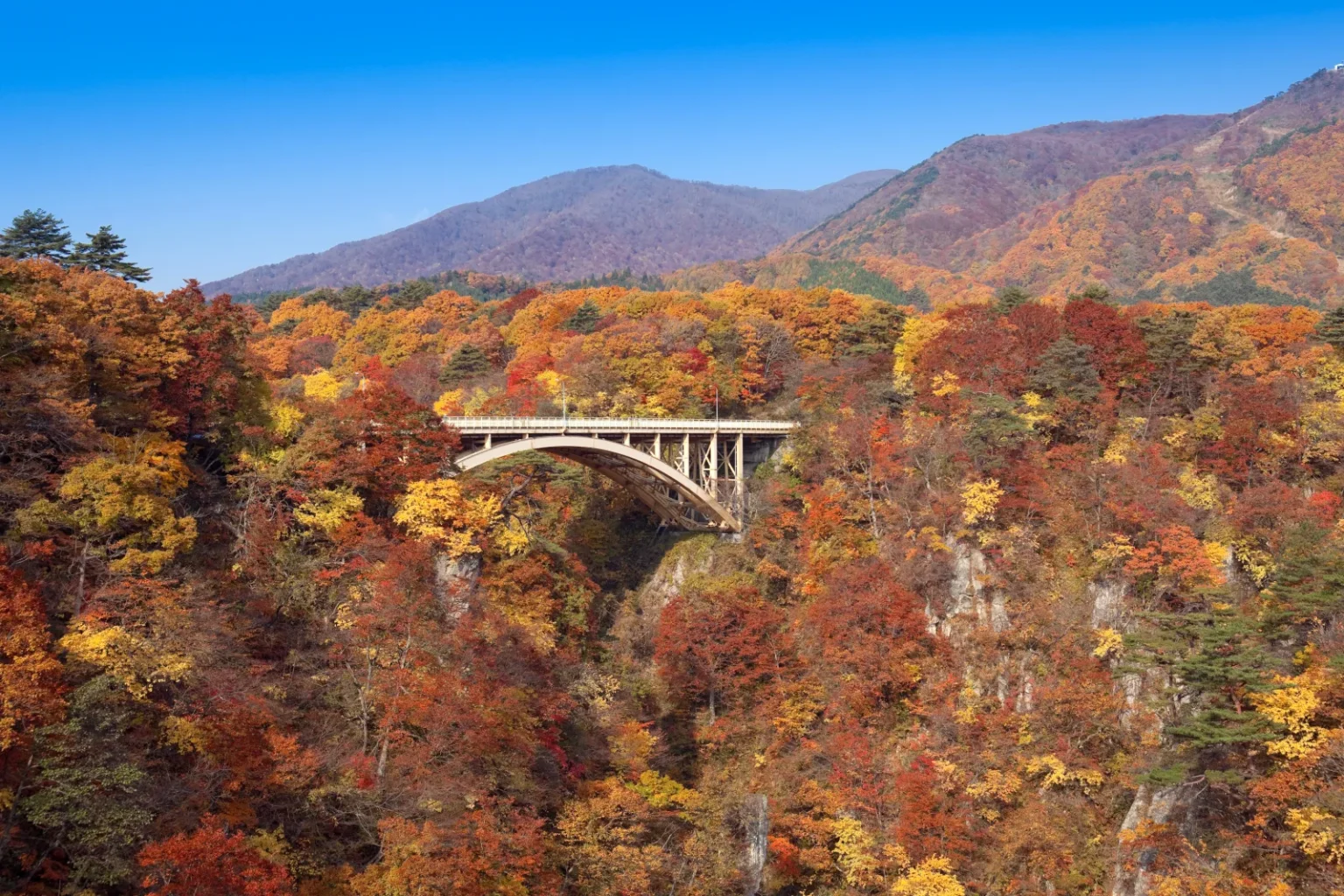
Unless another source is named, trail rules and parking come from Osaki City’s Naruko Gorge page (updated 1 October 2026) and the 2026 gorge map, bus times from the 2026 Koyogo timetable, and train times from JR East’s October 2026 online timetable. Two tourism associations are cited: the Naruko Onsen-kyo Tourism Association (naruko.gr.jp, all five onsen areas) and the Naruko Onsen Tourism Association (welcome-naruko.jp).
What is open at Naruko Gorge in 2026
The gorge trail has an entrance at each end but is not open end to end. Two short out-and-back sections, one from each entrance, and the Ofukazawa loop from the rest house opened on Tuesday 28 April 2026 and stay open until late November 2026. Any of them may close without notice in bad weather.
| Section (2026) | Length and hours |
|---|---|
| Nakayamadaira entrance (rest house) to Kaiko Bridge | About 350 m one way, out and back; 9:00–16:00; about 30 min round trip |
| Naruko entrance (Oya Bridge, below the Kokeshi Museum) | About 230 m one way to a turning point; 9:00–16:00 |
| Ofukazawa loop from the rest house | 2.2 km, about 50 min; open all day |
| Between Kaiko Bridge and the 230 m point | Not open; no reopening date on the city page (checked 16 Oct 2026) |
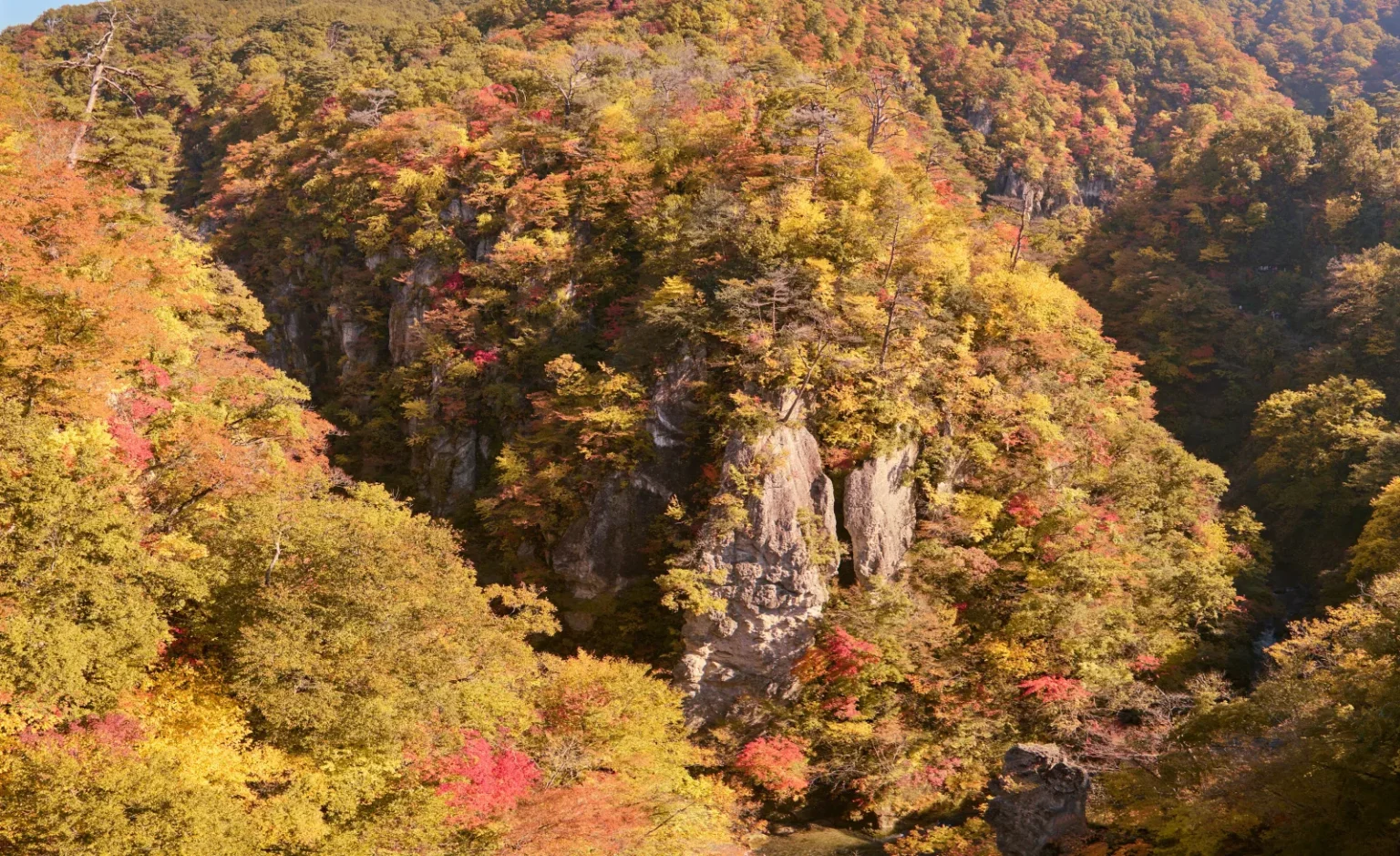
The viewpoints and trails, one by one
Rest house observation deck
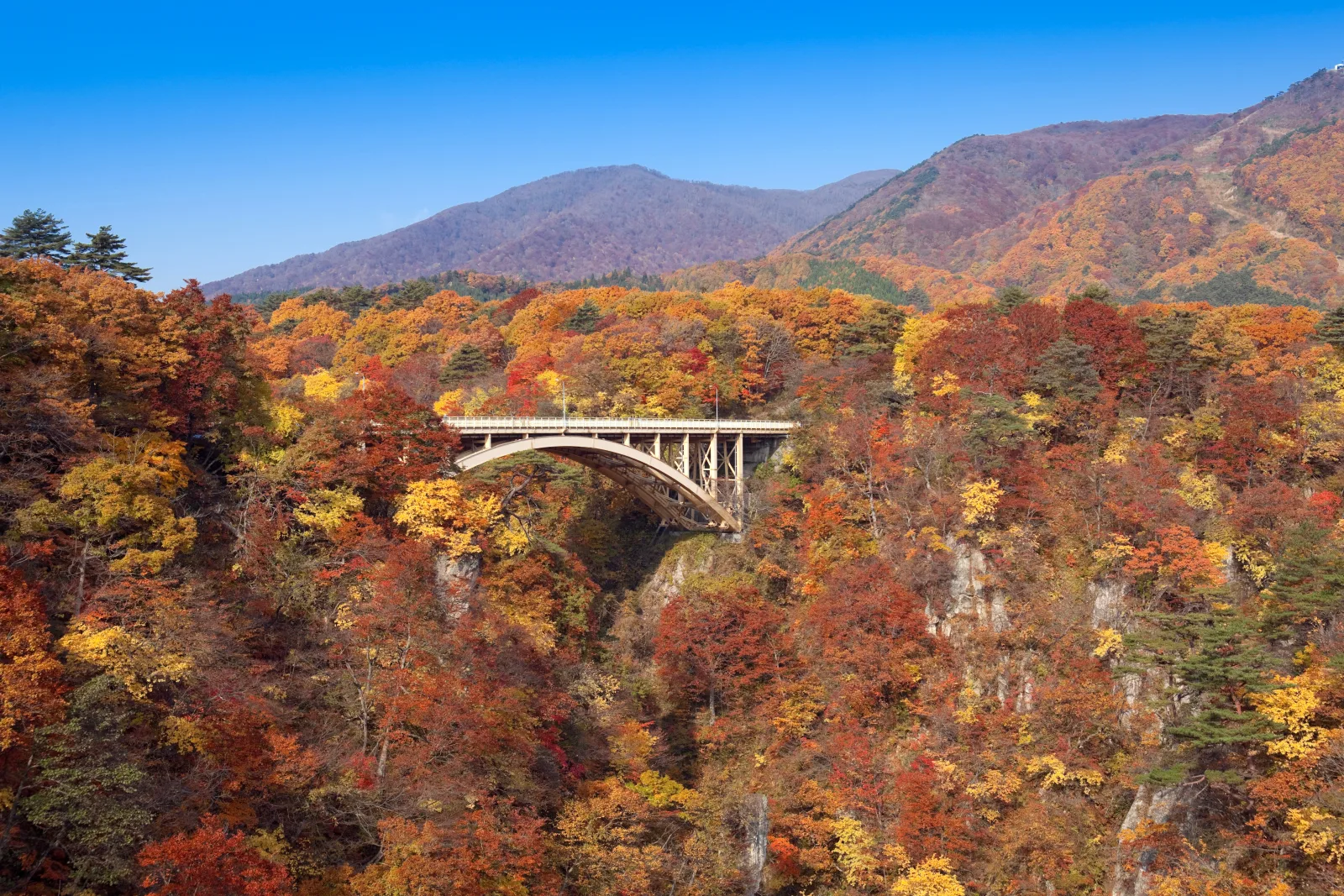
The view across the gorge to the arch of Ofukazawa Bridge. Usual colour late Oct – early Nov (Onsen-kyo association). Bus stop: Naruko-kyo Nakayamadaira-guchi.
Kaiko Bridge trail
Switchback path on a cliff with a 100 m drop, about 350 m to Kaiko Bridge. Starts at the deck; 9:00–16:00.
Ofukazawa loop
2.2 km up the Ofukazawa valley and back, about 50 min, with a rest hut. Starts at the rest house.
Naruko entrance
230 m into the gorge from Oya Bridge, then back; 9:00–16:00. Bus stops: Naruko-kyo Naruko-guchi or Kokeshi-kan-mae.
Naruko Gorge Rest House and the observation deck
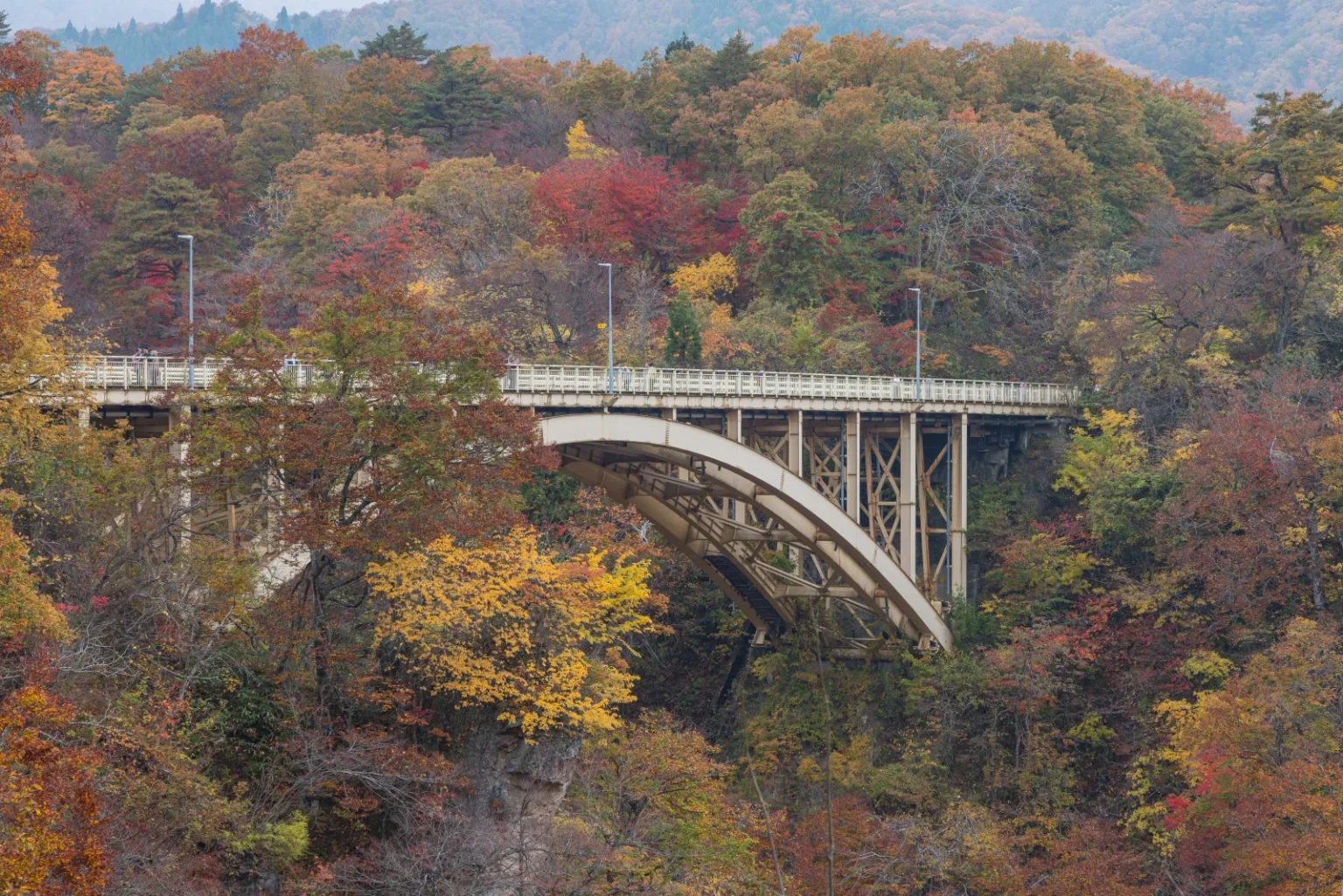
The rest house stands on Route 47 at the Nakayamadaira end, with a restaurant, a souvenir corner and toilets; in the colour season it opens 8:00 to 17:00. The deck beside it looks across to Ofukazawa Bridge, the arch that carries Route 47 over the Ofukazawa valley. On the Koyogo bus (26 October to 8 November 2026), get off at Naruko-kyo Nakayamadaira-guchi for the rest house, the deck, the Ofukazawa loop and the bridge.
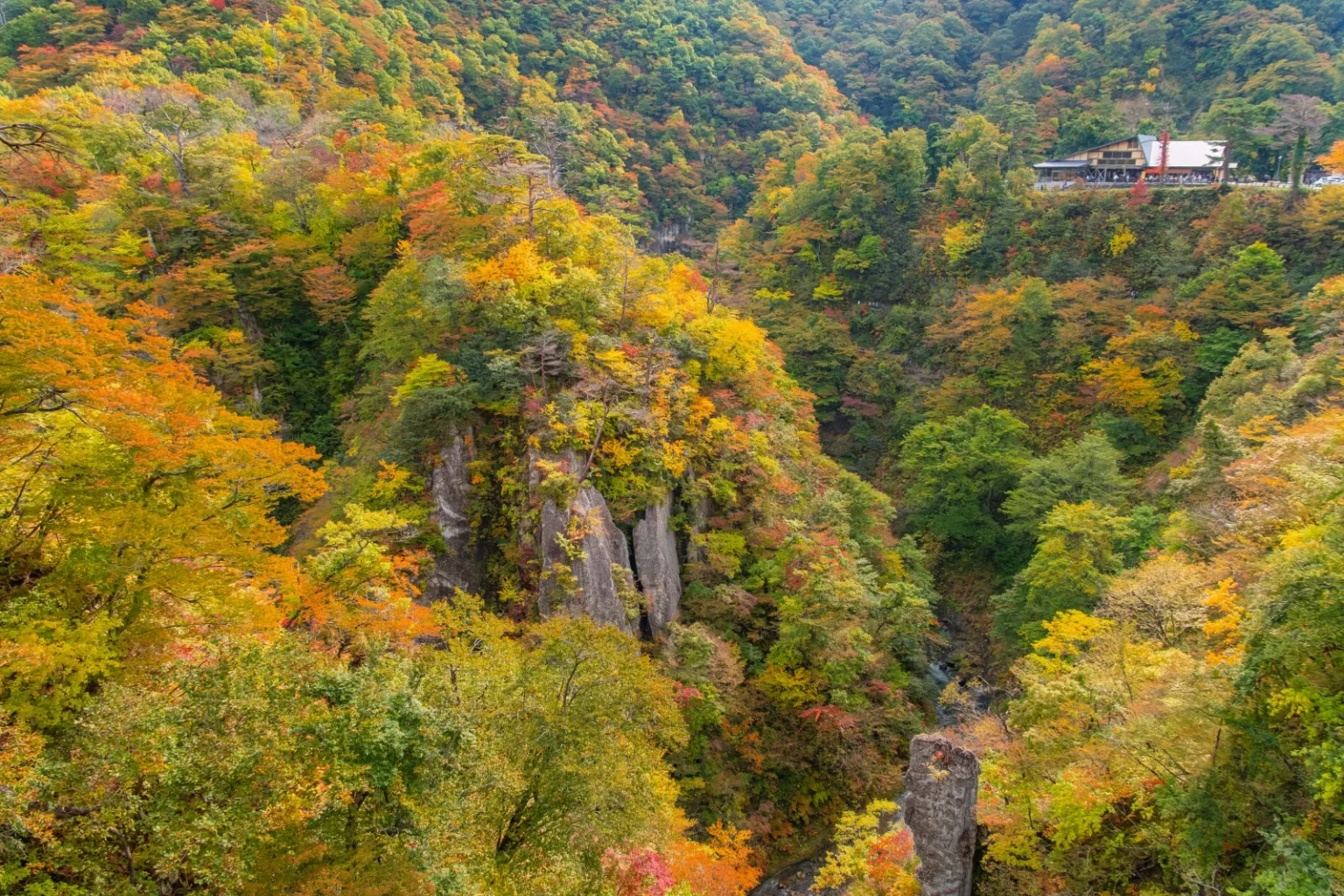
Down to Kaiko Bridge
From the rest-house end, this is the only path down into the gorge: a switchback built on a cliff with a 100 m drop, about 350 m each way and roughly 30 minutes there and back, open 9:00 to 16:00. Beyond the bridge the river path is not open, so you climb back the way you came.
The Ofukazawa loop
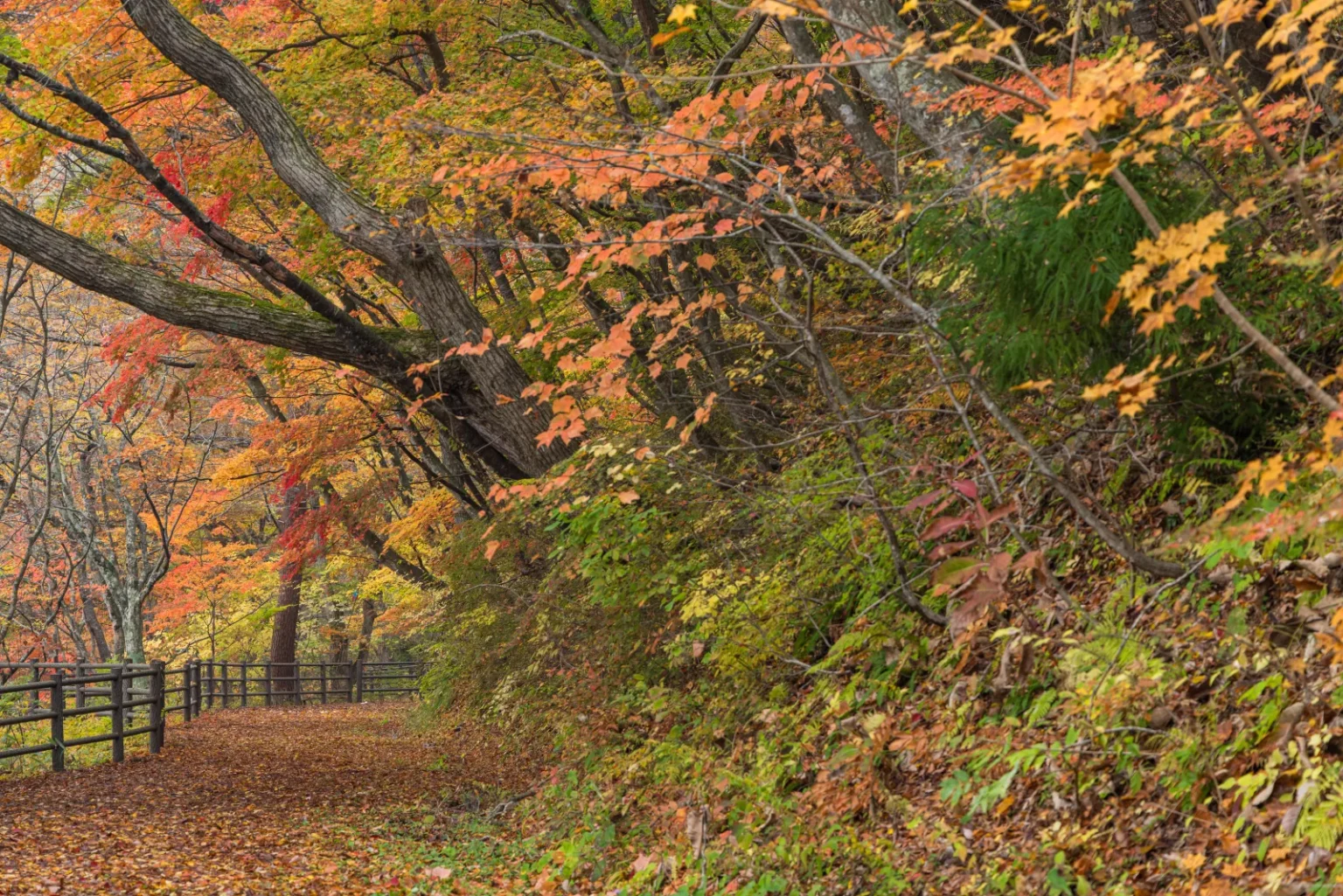
The loop leaves the rest house, runs up the Ofukazawa valley and comes back: 2.2 km, about 50 minutes, with an azumaya rest hut at the far end. It is the only trail here open all day, though bad weather can still close it. Take care where the loop crosses the road, and stay off the slopes beside the path (Osaki City’s 2020 map).
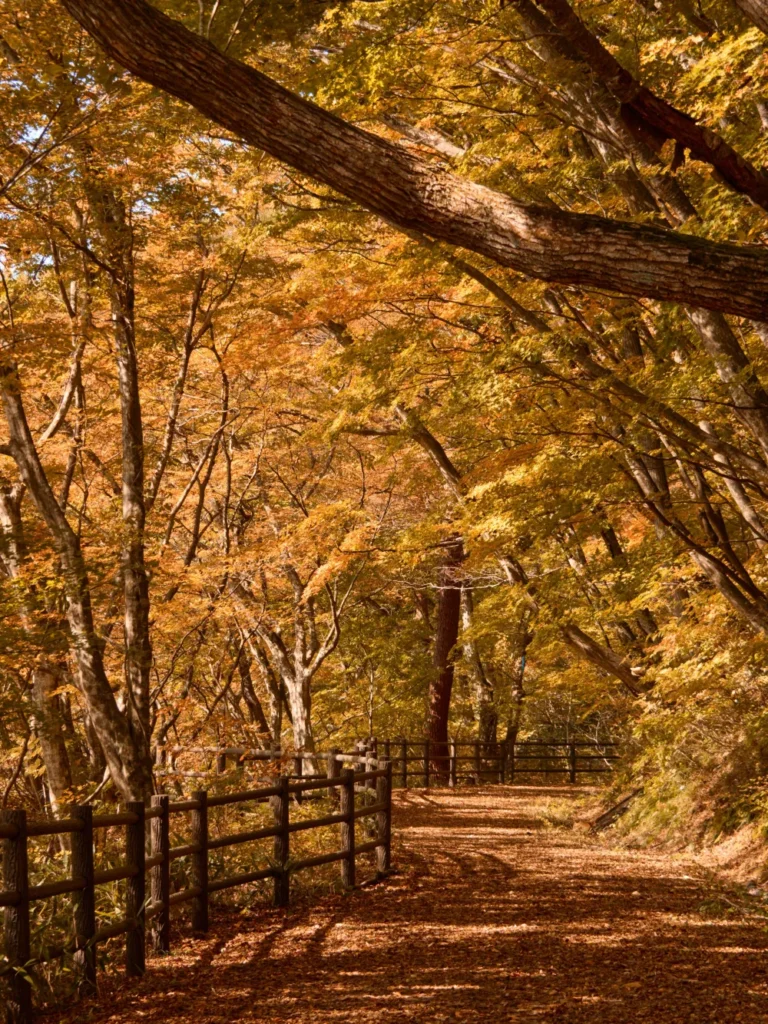
The Naruko entrance, below the Kokeshi Museum
At the downstream end the path starts at Oya Bridge, below the Japan Kokeshi Museum, and stops 230 m in, where you turn back; it opens 9:00 to 16:00. There are toilets and a car park by the entrance, and Naruko Park, next to the museum, has a viewpoint. From 26 October to 8 November 2026, Koyogo buses stop at Naruko-kyo Naruko-guchi by the entrance and at Kokeshi-kan-mae, two minutes apart.
The train over the gorge: not this autumn
Between Naruko-Onsen and Nakayamadaira-Onsen the Rikuu East Line passes through the gorge, and the Naruko Onsen-kyo Tourism Association lists the view from trains on that stretch as a popular colour-season sight. JR East’s service status page, checked on 16 October 2026, says the line has been suspended between Naruko-Onsen and Shinjo in both directions since the July 2024 heavy rain, with replacement buses on that section. Its October 2026 timetable shows no trains from Naruko-Onsen towards Shinjo.
The Onsen-kyo association adds that trains terminate at Naruko-Onsen this autumn, that Nakayamadaira-Onsen Station cannot be reached by train, and that the view from the train on that stretch is not possible this autumn. The Naruko Onsen Tourism Association says that neither the view from the train nor the sight of trains running through the gorge can be seen.
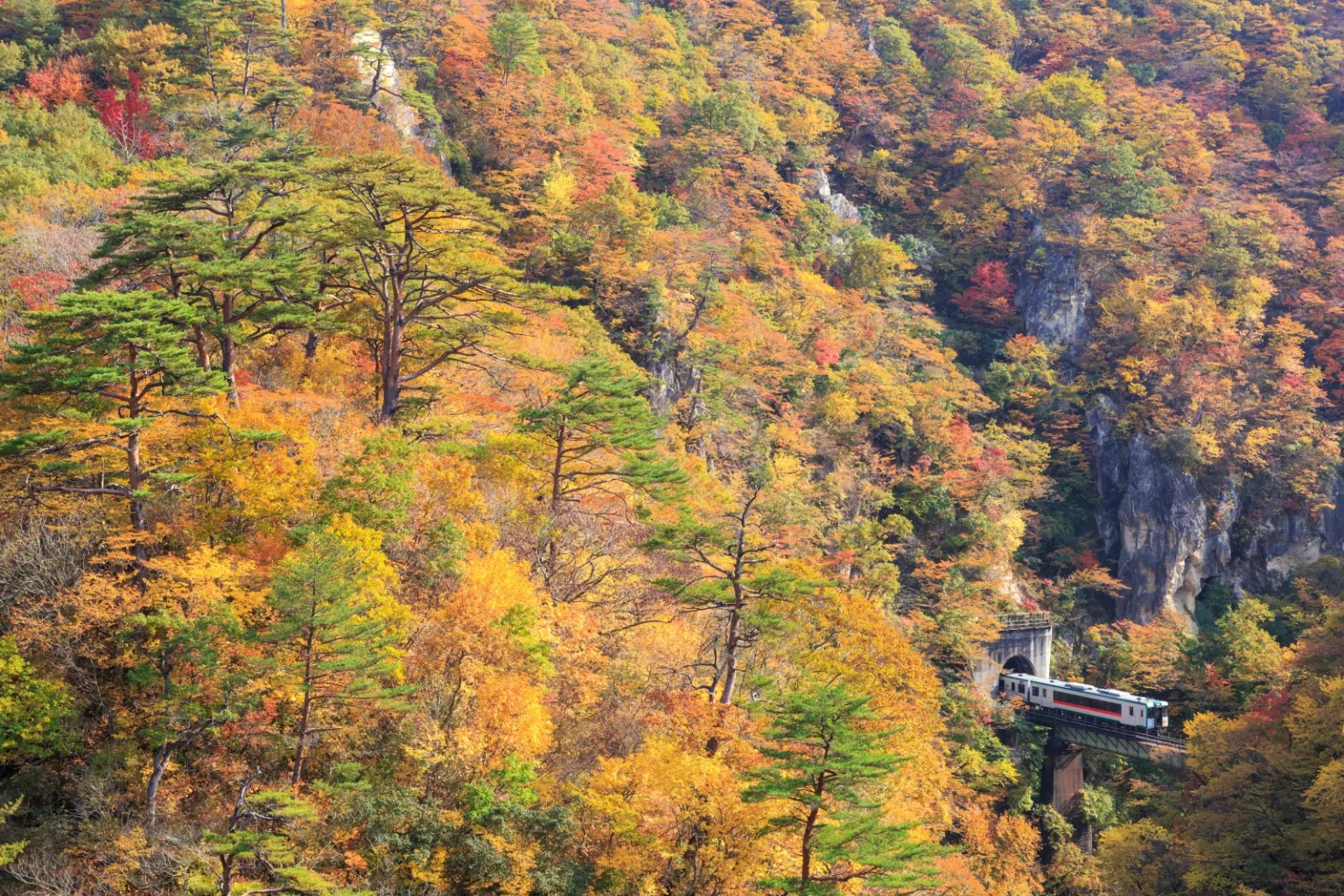
When the trains may return. On 8 July 2026 JR East’s Yamagata regional headquarters said it now expects the repairs between Naruko-Onsen and Shinjo to be finished in fiscal 2028, a year later than its first estimate of fiscal 2027, the Kahoku Shimpo reported. Japan’s fiscal 2028 runs from April 2028 to March 2029. JR East’s service page gave no reopening date when checked on 16 October 2026.
When are the leaves at their best?
Osaki City and the two tourism associations each give a different usual window. For other places turning at the same time, see our Japan koyo tracker.
| Source | What it says |
|---|---|
| Osaki City (page of 1 Oct 2026) | Usually mid-October to mid-November |
| Naruko Onsen Tourism Association (7 Oct 2026) | Mid-October to early November |
| Naruko Onsen-kyo Tourism Association, sights page | Best late October to early November |
| Onsen-kyo colour report, 18 Oct 2026 | Begun to show a little colour |
| Weathernews spot page, checked 18 Oct 2026 | Best viewing is forecast to begin around 28 Oct; leaves are forecast to start falling around 11 Nov. Forecasts change |
The usual windows all include late October to early November; Weathernews forecasts best viewing to begin around 28 October. The Japan Weather Association also publishes a forecast on tenki.jp.
| Week (2026) | What the sources say for it |
|---|---|
| 19–25 Oct | Inside Osaki City’s and the Naruko Onsen association’s windows; before the best-viewing period Weathernews forecasts to begin around 28 Oct. No Koyogo bus yet. Omoide Yukemuri train Sat 24, Sun 25 |
| 26 Oct – 1 Nov | Koyogo bus daily from Mon 26 Oct; Weathernews forecasts best viewing to begin around 28 Oct; Omoide Yukemuri daily from Sat 31 Oct |
| 2–8 Nov | Inside all three official windows; bus runs to Sun 8 Nov; Tue 3 Nov is a holiday; Omoide Yukemuri daily to Tue 3, then Sat 7, Sun 8 |
| 9–15 Nov | Koyogo bus period over; Weathernews forecasts leaves to start falling around 11 Nov; city window runs to mid-Nov |
| Late Nov | Trails close for winter in late November; paid parking to 30 Nov |
For a visit by bus inside the published colour windows, aim for Wednesday 28 October to Sunday 8 November 2026: the range begins on 28 October, around when Weathernews expects the best-viewing period to start (a forecast that can change), and ends on the Koyogo bus’s last day.
Those dates suit a night in town before the first bus: see Naruko Onsen stays on Booking.com, then read the Naruko Onsen section below for the baths.
JMA’s Kawatabi AMeDAS station (170 m), in the Naruko Onsen area, has published normals. Averages for 1991–2020:
| Kawatabi, JMA normals | October / November |
|---|---|
| Daily high | 18.3°C / 12.0°C |
| Daily low | 8.0°C / 2.1°C |
| Precipitation | 143.6 mm / 105.8 mm |
| Snowfall (total) | 0 cm / 7 cm |
Getting to Naruko Gorge
Take the Tohoku Shinkansen to Furukawa and change to the Rikuu East Line, whose trains terminate at Naruko-Onsen this autumn. JR East’s October 2026 timetable has 14 locals a day each way between Furukawa and Naruko-Onsen, the same at weekends, and the ride takes about 45 minutes.
| From (every day unless noted) | To Naruko-Onsen |
|---|---|
| Tokyo 7:16, Hayabusa 101 (all seats reserved) to Furukawa 9:03; local 9:19 | 10:06 |
| Tokyo 8:45, Yamabiko 53 to Furukawa 11:03; local 11:15 | 12:01 |
| Sendai 7:06, Yamabiko 97 to Furukawa 7:20; local 7:27 | 8:13 |
| Sendai 9:37, Omoide Yukemuri rapid (dates below) | 11:30 |
The rapid Omoide Yukemuri, normally all seats reserved, runs from Sendai to Naruko-Onsen without a change, calling at Furukawa (10:36). JR East lists it daily from 31 October to 3 November 2026 and on Saturdays, Sundays and holidays from 17 October to 29 November 2026; from 31 October to 3 November some cars are unreserved. It returns from Naruko-Onsen at 16:03 and reaches Sendai at 17:40.
Between noon and 17:30, locals back from Naruko-Onsen leave only at 12:10, 14:10, 15:40 and 17:15, so check the JR train times and the Koyogo bus timetable before you head to the gorge, and confirm your return connection there; rechecking at the gorge needs mobile data.
See eSIM optionsFrom Naruko-Onsen Station to the gorge
The Koyogo shuttle runs every day from Monday 26 October to Sunday 8 November 2026. Fares are cash only; have coins ready (on board, only ¥1,000 notes can be changed). From the station it costs ¥300 to Kokeshi-kan-mae, ¥450 to Naruko-kyo Nakayamadaira-guchi (the rest house) and ¥550 to Nakayamadaira-Onsen Station. Buses can run late in traffic, so leave a margin before your train.
| Naruko-Onsen Station | Nakayamadaira-guchi (rest house) |
|---|---|
| 8:30 | 8:43 |
| 10:15 | 10:28 |
| 11:10 | 11:23 |
| 12:10 | 12:23 |
| 13:30 | 13:43 |
| 14:20 | 14:33 |
| 15:50 | 16:03 |
| Nakayamadaira-guchi | Naruko-Onsen Station |
|---|---|
| 9:04 | 9:18 |
| 10:44 | 10:58 |
| 11:39 | 11:53 |
| 12:44 | 12:58 |
| 13:32 | 13:46 |
| 14:59 | 15:13 |
| 16:34 (last) | 16:48 |
Each bus calls at Kokeshi-kan-mae four minutes before Nakayamadaira-guchi on the way out and four minutes after it on the way back. From Tokyo the earliest arrival is 10:06, so catching the 8:30 bus on bus days, at the rest house at 8:43 before the trail sections open at 9:00, takes a night in Naruko or the 7:06 from Sendai.
An inn in Naruko puts you a short walk from the station, where the first Koyogo bus leaves at 8:30 (26 October to 8 November 2026) and reaches the rest house 13 minutes later.
Naruko Onsen stays on Booking.comOutside the bus dates, the official options are:
| From Naruko-Onsen Station | To the rest house |
|---|---|
| Taxi | About 10–15 min, about ¥2,200; longer in colour-season traffic |
| On foot | About 60–70 min, 4.0–4.3 km |
| JR replacement bus to Nakayamadaira-Onsen, then walk | Bus 11 min, then about 30 min on foot (2.0–2.2 km) |
Naruko Chuo Taxi is on 0229-82-2244. On foot, note that Naruko Tunnel on Route 47 has no pavement; the city’s 2020 map marks a detour. The JR replacement bus (timetable from 1 April 2026, until further notice) leaves Naruko-Onsen at 9:05, 13:15, 16:10 and 17:40, plus 10:20 on Saturdays, Sundays and holidays, and reaches Nakayamadaira-Onsen 11 minutes later. Back from Nakayamadaira-Onsen it leaves at 8:09, 11:11, 15:04 and 16:44. It can run late in traffic and may be cancelled because of road conditions.
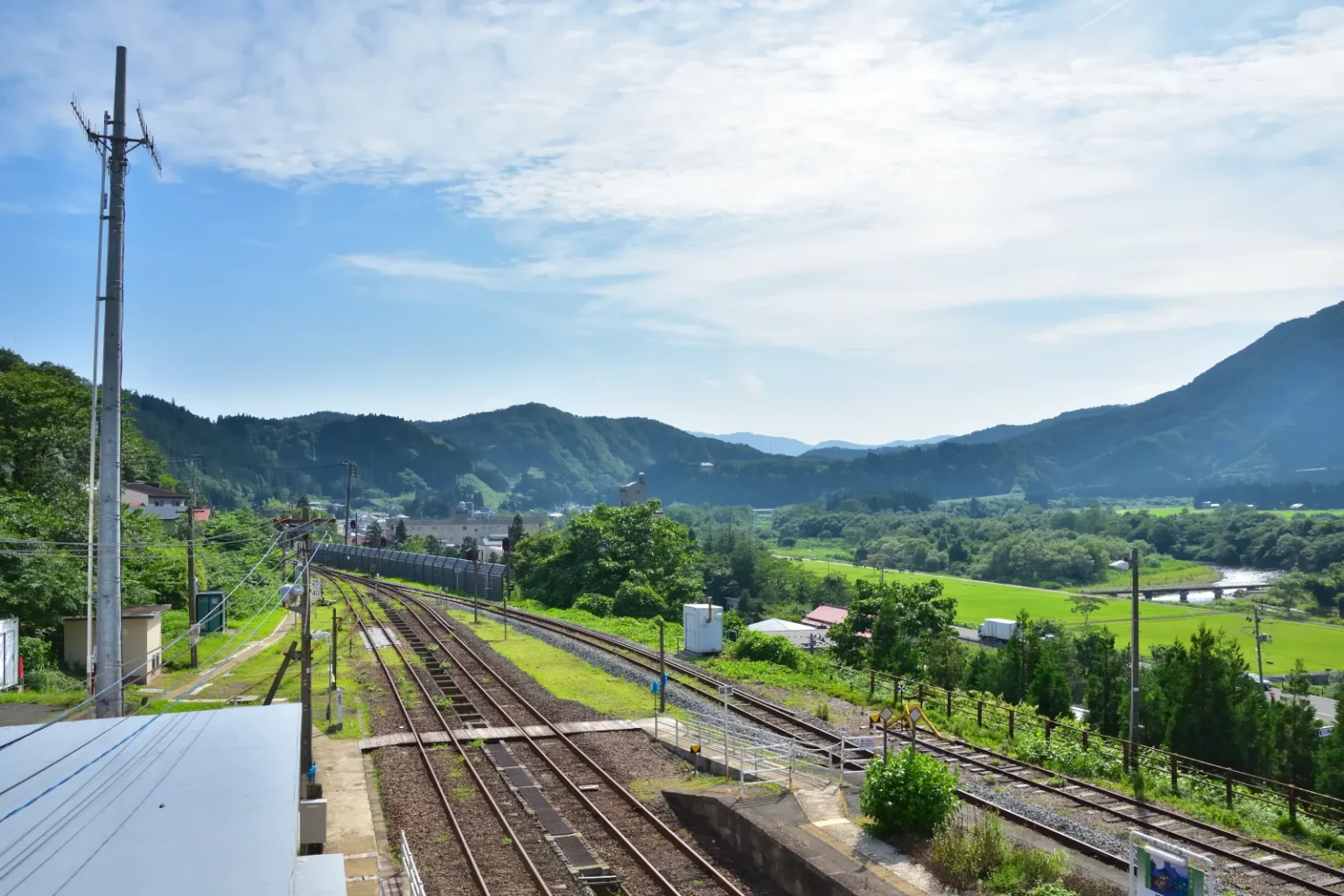
Driving and parking
From the Furukawa interchange on the Tohoku Expressway it is about an hour along Route 47, and about 10 minutes from the onsen town; Route 47 is congested in the colour season. The rest-house car park is open mid-April to late November and charges from Saturday 10 October to Monday 30 November 2026; the dates may change.
| Vehicle | Fee, 10 Oct – 30 Nov 2026 |
|---|---|
| Car (including kei cars) | ¥500 |
| Motorbike or moped | ¥200 |
| Mid-size vehicle (11–29 seats) | ¥1,000 |
| Large vehicle (30+ seats) | ¥1,500 |
The city counts 253 car spaces and 12 bus spaces; the 2026 map gives 250. The Naruko Onsen Tourism Association mentions free car parks a little further away.
A day trip from Tokyo via Naruko-Onsen Station
This plan works on any Koyogo bus day (26 October to 8 November 2026). Its four trains run every day on JR East’s October 2026 timetable.
| Time | Place and how you move |
|---|---|
| 7:16 | Tokyo, Hayabusa 101 (Sendai 8:49) |
| 9:03 / 9:19 | Furukawa; change to the Rikuu East Line |
| 10:06 | Naruko-Onsen Station |
| 10:15 | Koyogo bus from the station (¥450 to Nakayamadaira-guchi) |
| 10:28 | Naruko-kyo Nakayamadaira-guchi |
| 10:30–12:40 | Observation deck, Kaiko Bridge trail, Ofukazawa loop, lunch at the rest house |
| 12:44 | Koyogo bus to Kokeshi-kan-mae (12:48) |
| 12:50–15:00 | Japan Kokeshi Museum; Naruko-entrance trail |
| 15:03 | Koyogo bus to Naruko-Onsen Station (15:13) |
| 15:20–17:00 | Takinoyu bath, onsen town |
| 17:15 | Naruko-Onsen, Rikuu East Line |
| 18:01 / 18:08 | Furukawa (7-minute change); Hayabusa 110 to Tokyo (19:56) |
If a bus runs late: the next one from Nakayamadaira-guchi is 13:32 (Kokeshi-kan-mae 13:36), and the last is 16:34, at the station at 16:48, still before the 17:15 train. If you miss the 17:15, the 18:25 reaches Furukawa at 19:13, in time for the 19:45 Yamabiko 68 (Tokyo 22:00), which keeps those times every day. On a day without the bus, take a taxi for each leg (station to rest house, rest house to museum, museum to station) and keep the same train times.
Naruko Onsen as your base
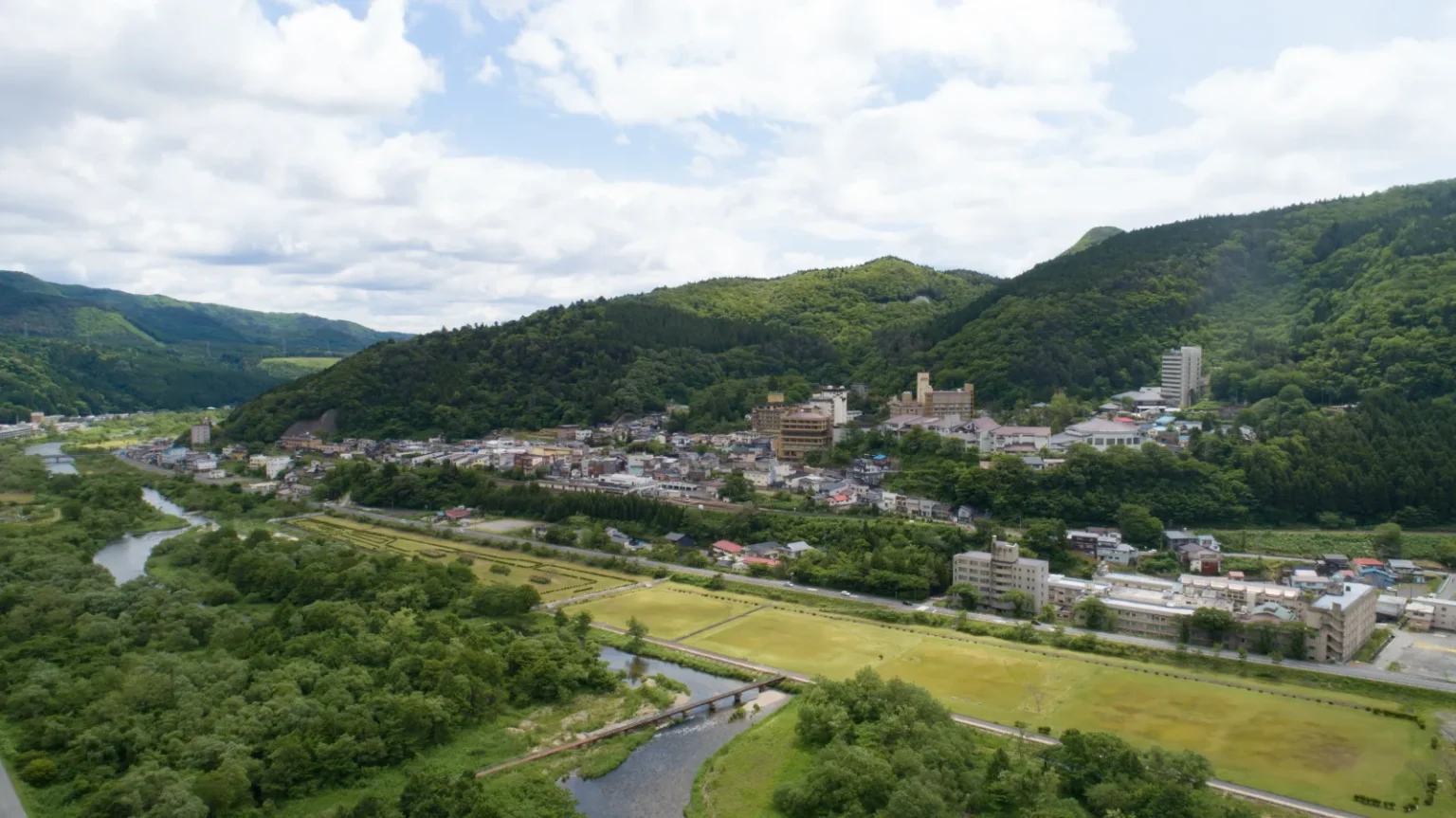
Naruko Onsen-kyo is five hot-spring areas on the upper Eai River in northern Miyagi: Naruko, Higashi-Naruko, Kawatabi, Nakayamadaira and Onikobe. Naruko, the largest, is the town around the station and has long been counted among the three famous hot springs of Oshu. Of the ten spring types used on Japanese bath signs, all but three (carbon dioxide, iodine and radioactive) occur somewhere in the area.
The town’s Onsen Shrine was built to calm the hot water that burst out in a great eruption in 837. At Higashi-Naruko the Date lords of Sendai kept a private bath, the Goten-yu, in the Edo period. By the Naruko end of the gorge, the site of the Shitomae checkpoint, a Date-domain border post, has a statue of Basho and a stone with his haiku. The Onsen-kyo association notes that Basho followed this road on The Narrow Road to the Deep North and wrote the poem at a border guard’s house while crossing the mountains beyond the checkpoint: “fleas and lice, a horse pissing by my pillow” (my translation).
Why Naruko has a culture of long hot-spring stays, and what is known about its kokeshi
Osaki City says the Naruko area has been known since early times for its many kinds of hot spring, with water coming up at point after point along the Arao River, and that a culture of toji, long therapeutic stays, grew up there. Its account of the surrounding farmland puts it plainly: in the farming off-season, people stayed at the hot springs to soothe the strain of hard work in the fields. Today the city counts five onsen areas, about 370 sources and seven of the ten categories in Japan’s newer spring-quality classification.
Kokeshi have their own local history. Miyagi Prefecture says traditional kokeshi are said to have been born in Tohoku hot-spring towns around the end of the Edo period, as souvenirs for children, and Naruko is one of the five kokeshi lineages in the prefecture. Osaki City says kokeshi are thought to have begun when woodturners who made bowls and trays also made toys for children, and that a record from 1862 already uses the word, written こふけし and read kōkeshi. When kokeshi-making started in Naruko itself is not clear, the city says, and on the evidence of documents and tradition it is put at the late Edo period.
As for the gorge, Miyagi Prefecture’s listing for Naruko Gorge says the Oya River cut it out of a plateau of quartz-trachyte tuff breccia, making a gorge 4 km long.
Takinoyu
Hiba-wood communal bath, the sacred bath of Onsen Shrine. 7:30–21:00 (last entry 20:30), every day, ¥300 (page updated 29 Sep 2025). Two tubs, 44–46°C and 39–41°C.
Japan Kokeshi Museum
About 5,000 kokeshi; lathe demonstrations to 29 Nov 2026. 9:00–16:00 (last entry 15:30), daily 1 Apr – 31 Dec. Adults ¥500.
Shintoro-no-yu
Nakayamadaira’s alkaline bath, pH 9.3. 9:00–20:30, ¥500. Koyogo bus stop of the same name.
Waseda Sajiki-yu
Dug by seven Waseda students in summer 1948. Closed for the time being for spring-source maintenance (notice of 1 Sep 2026, updated 30 Sep).
Takinoyu has no showers or taps and no amenities, free or for sale. There are no coin lockers and bags are not kept at the counter, but there is a safety box big enough for a wallet; borrow its key at the counter. Photography inside is banned, and when it is crowded, entry is limited and you are given a numbered ticket. Buy the bath ticket from the machine. Parking is not allowed in front of the bath or on the roads around it. The bath’s page lists the JR Naruko-Onsen station-front car park (about 300 m, 7 minutes on foot; first 30 minutes free, then ¥120 per 30 minutes) and the free Yumeguri car park (about 450 m, 9 minutes).
Kokeshi. Naruko kokeshi are said to have begun about 200 years ago, in the Bunka and Bunsei eras, as toys that woodturners in the mountains made for their children. Naruko is one of five Miyagi kokeshi lineages designated together in 1981 as a national traditional craft, “Miyagi traditional kokeshi”. The head is pressed into the body on the lathe, which is why a Naruko kokeshi squeaks when you turn its head. At the museum, craftsmen take turns at the lathe from Saturday 18 July to Sunday 29 November 2026.

If you use a public bath for the first time, our onsen etiquette guide covers the washing routine and tattoo rules.
From a hotel by Sendai Station, the 7:06 Yamabiko 97 and the 7:27 local from Furukawa reach Naruko-Onsen at 8:13, before the 8:30 Koyogo bus (26 October to 8 November 2026).
Sendai hotels on AgodaPractical notes
- Clothes: at Kawatabi the average November low is 2.1°C and the high 12.0°C (JMA, 1991–2020), with 7 cm of snowfall in an average November. Bring a warm layer and shoes with grip for the Kaiko Bridge switchbacks.
- Cash: the Koyogo bus takes cash only; have coins ready. Takinoyu sells tickets from a machine.
- Bears: Osaki City’s report on 2025 says bear damage cut colour-season visitors and that the city added guards and patrols at the gorge. Check the city’s Naruko Gorge page for notices on the day you go.
Who this is for, and when to skip it
Go for
The deck above a gorge about 100 m deep and the 350 m switchback down to Kaiko Bridge. From 26 October to 8 November 2026 the Koyogo bus makes it a car-free day, with Takinoyu (¥300) back in town.
Skip it this year
If you are coming for the train crossing the gorge (no trains past Naruko-Onsen this autumn) or for a long riverside hike (only two short sections and the 2.2 km loop are open).
Other gorges and temples for autumn in the north: Oirase Gorge in Aomori and Yamadera in Yamagata; further west, the Kurobe Gorge Railway.
Questions travellers ask
When is the best time to see autumn leaves at Naruko Gorge?
Osaki City gives mid-October to mid-November as usual; the two tourism associations give mid or late October to early November. Weathernews’s spot page, checked on 18 October 2026, forecast the best-viewing period to begin around 28 October 2026. On 18 October 2026 the Naruko Onsen-kyo Tourism Association reported the leaves had begun to show a little colour.
Can you walk the Naruko Gorge trail in 2026?
Only in parts. From 28 April to late November 2026, about 350 m from the rest house down to Kaiko Bridge and about 230 m from the Naruko end are open, both out and back from 9:00 to 16:00, plus the 2.2 km Ofukazawa loop, open all day. The section between them was not open when checked on 16 October 2026. Any of them may close without notice in bad weather.
How do I get to Naruko Gorge from Tokyo or Sendai?
Tohoku Shinkansen to Furukawa (for example Tokyo 7:16, Furukawa 9:03), then the Rikuu East Line (9:19, Naruko-Onsen 10:06), then the Koyogo bus (26 October to 8 November 2026, ¥450 to the rest house) or a taxi of about ¥2,200. From Sendai, the Omoide Yukemuri rapid runs to Naruko-Onsen without a change, 9:37 to 11:30, daily from 31 October to 3 November 2026 and on Saturdays, Sundays and holidays from 17 October to 29 November 2026.
Where is the train-over-the-gorge view, and when do trains pass?
It is the stretch of line between Naruko-Onsen and Nakayamadaira-Onsen stations, which the Naruko Onsen-kyo Tourism Association lists as a popular colour-season view. No trains pass this autumn: the Rikuu East Line has been suspended between Naruko-Onsen and Shinjo since July 2024. Both associations say the view from the train is not possible this autumn, and the Naruko Onsen Tourism Association says the sight of trains running through the gorge cannot be seen either. JR East expects the repairs to be finished in fiscal 2028 (April 2028 to March 2029), the Kahoku Shimpo reported on 8 July 2026.
Is there parking, and how much is it?
Osaki City counts 253 car spaces and 12 bus spaces at the rest-house car park; the 2026 map gives 250. From 10 October to 30 November 2026 a car pays ¥500 and a motorbike ¥200; the dates may change. The Naruko Onsen Tourism Association mentions free car parks a little further away.
Can I do it as a day trip?
On Koyogo bus days (26 October to 8 November 2026), the route above leaves Tokyo at 7:16 and is back at 19:56, with the gorge, the Kokeshi Museum and Takinoyu; its trains run every day on the October 2026 timetable. On other days, take a taxi between the station, the gorge and the museum.
Where should I stay, and which onsen should I try?
Naruko Onsen, by the station, is where the 8:30 Koyogo bus starts (26 October to 8 November 2026). For a public bath, Takinoyu, about 300 m from the station-front car park, is ¥300 and open 7:30 to 21:00 (page updated 29 September 2025); Shintoro-no-yu at Nakayamadaira is ¥500 and has its own Koyogo stop. Waseda Sajiki-yu is closed for the time being (notice updated 30 September 2026).
Japan Koyo Tracker
Usual timing for 11 regions and 144 spots in 46 prefectures, Naruko Gorge among them.
Tohoku 5-Day Itinerary
Sendai, Matsushima, Yamadera, Ginzan Onsen and Hirosaki in five days from Tokyo.
Ginzan Onsen: Where to Stay
All 13 inns of the Yamagata onsen town compared on their official sites.
Onsen Etiquette in Japan
How to use a public bath, tattoo rules and private baths.
Zao Snow Monsters
Ropeway, light-up dates and access for the 2026–27 winter.
Sources
- Checked 16 October 2026 — Osaki City: Naruko Gorge (trails, season, parking; updated 1 October 2026), gorge map from 24 April 2020, 2025 Naruko branch report (bears)
- Checked 16 October 2026 — Naruko Onsen-kyo Tourism Association (naruko.gr.jp): autumn 2026 page with the 2026 gorge map (English), Koyogo bus timetable 2026 (English) and JR replacement bus timetable from 1 April 2026; onsen areas and spring types; sights; public baths; kokeshi; access; hand and foot bath notice of 10 September 2026. Its fc2 site: Rikuu East Line notice; facility status (yumeguri tickets)
- Checked 18 October 2026 — Naruko Onsen-kyo Tourism Association, fc2 site: colour report of 18 October 2026
- Checked 16 October 2026 — Naruko Onsen Tourism Association (welcome-naruko.jp): Naruko Gorge map and bus times 2026 (7 October 2026); Waseda Sajiki-yu closure notice (1 September, updated 30 September 2026)
- Checked 16 October 2026 — baths and museum: Takinoyu (Takinoyu preservation society with the Onsen-kyo association; updated 29 September 2025); Waseda Sajiki-yu; Japan Kokeshi Museum and its admission page
- Checked 24 October 2026 — why Naruko: Osaki City, landscape plan (PDF), Osaki Kodo farmland (PDF), Naruko Onsen-kyo and Naruko kokeshi; Miyagi Prefecture, traditional kokeshi and Naruko Gorge (scenic site) (all Japanese)
- Checked 16 October 2026 — JR East: service status, Tohoku area; online timetable (October 2026): Furukawa, Rikuu East Line, Naruko-Onsen, Furukawa, Tohoku Shinkansen and the train pages for each train named (for example the 17:15 from Naruko-Onsen and the Omoide Yukemuri 1)
- Kahoku Shimpo, Rikuu East Line Naruko-Onsen–Shinjo repairs now expected in fiscal 2028, 8 July 2026
- Checked 18 October 2026 — Weathernews, Naruko Gorge spot page. Checked 16 October 2026 — JMA, Kawatabi normals
Join travelers discovering Japan's hidden side
Weekly dispatches from off-the-beaten-path Japan — spots and stories you won't find in guidebooks.
No spam. Unsubscribe anytime.
Welcome aboard!
You're in. See you in your inbox soon.