
Japan · Monthly Calendar
July is when Japan’s summer truly starts: the rainy season usually lifts over Kanto around July 19–20, the heat lands hard, and the calendar fills up. Mt Fuji opens to climbers on July 1, Kyoto’s Gion Matsuri runs all month with grand parades on July 17 and 24, the great river fireworks begin, and the one weekend to plan around is Marine Day, July 18–20. Here is the month, day by day.
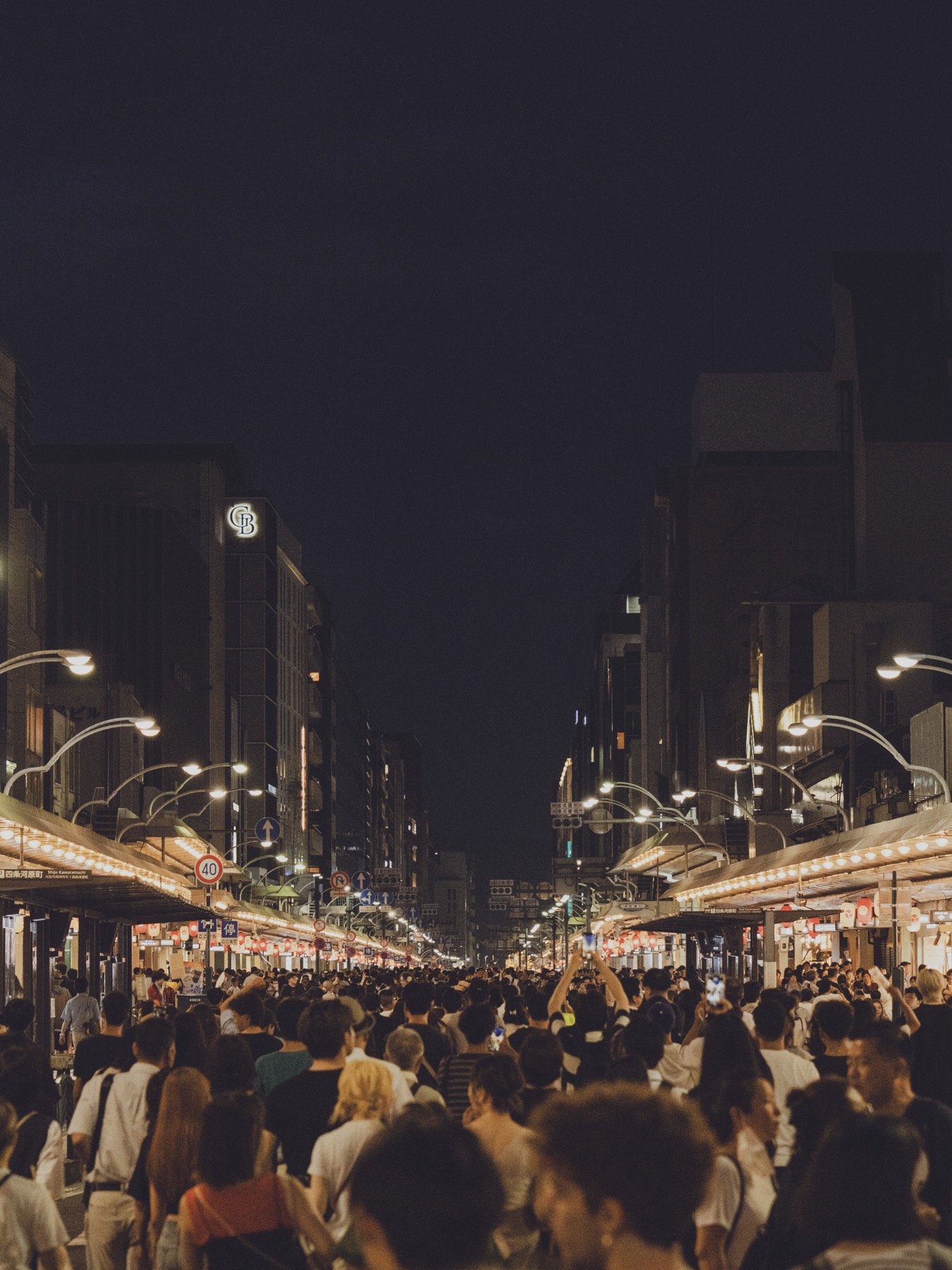
The July 2026 calendar at a glance
| Date | What’s on |
|---|---|
| Jul 1 | Mt Fuji Yoshida & Subashiri trails open; Hakata Gion Yamakasa begins (Fukuoka); most mainland beaches open |
| Jul 7 | Tanabata (Star Festival), nationwide |
| Jul 10 | Mt Fuji Fujinomiya & Gotemba trails open |
| Jul 14–16 | Gion Matsuri Saki Yoiyama eve-nights (Kyoto) |
| Jul 15 | Hakata Gion Yamakasa finale — the 4:59 a.m. Oiyama race |
| Jul 17 (Fri) | Gion Matsuri grand float parade (Saki Junko, 23 floats) |
| ~Jul 19–20 | Rainy season usually ends over Kanto — peak heat begins |
| Jul 18–20 | Marine Day long weekend (Mon Jul 20) — one of summer’s busiest travel windows |
| Jul 21–23 | Gion Matsuri Ato Yoiyama eve-nights |
| Jul 24 (Fri) | Gion Ato float parade (11 floats); Tenjin Matsuri eve (Osaka) |
| Jul 25 (Sat) | Tenjin Matsuri main day + boat procession & fireworks (Osaka); Sumida River Fireworks (Tokyo, ~20,000 shells) |
| Jul 26 | Doyo no Ushi no Hi — midsummer “eel day” |
| Jul 28 | Katsushika Noryo Fireworks (Tokyo) |
Holiday and festival dates confirmed for 2026; rainy-season end is the JMA long-term average (the actual date is declared through the season). Fireworks dates can change — check the organiser before you travel.
The month in five weeks
Week 1 (Jul 1–7): Still rainy-season weather, but the season turns — Mt Fuji opens, Hakata’s float-running festival starts in Fukuoka, the beaches open, and Tanabata bamboo and paper wishes go up on the 7th. Cheaper and quieter than what follows.
Week 2 (Jul 8–14): The rains start to break. Kyoto warms up for Gion Matsuri; by the 14th the Yoiyama eve-nights begin and the city centre turns into a lantern-lit street party.
Week 3 (Jul 15–21): The big one. Hakata’s dawn race on the 15th, Gion’s grand parade on the 17th, then the rainy season typically lifts around the 19th–20th and the real heat arrives — right on the Marine Day long weekend, the busiest travel window of the month.
Week 4 (Jul 22–28): Festival and fireworks peak: Gion’s second parade on the 24th, Osaka’s Tenjin Matsuri and Tokyo’s Sumida River Fireworks both on the 25th, eel day on the 26th. Hot, loud, brilliant.
Week 5 (Jul 29–31): Full summer. Time to climb out of the heat — to the mountains, the lakes, or Hokkaido’s lavender.
Festivals & fireworks worth flying in for
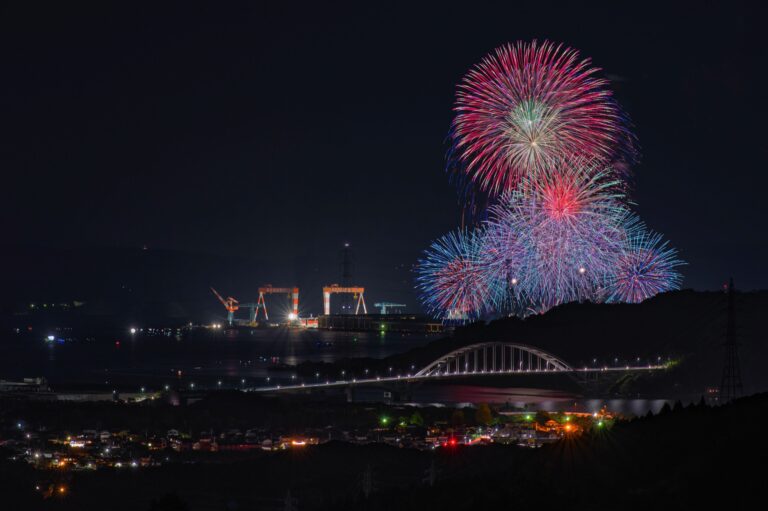
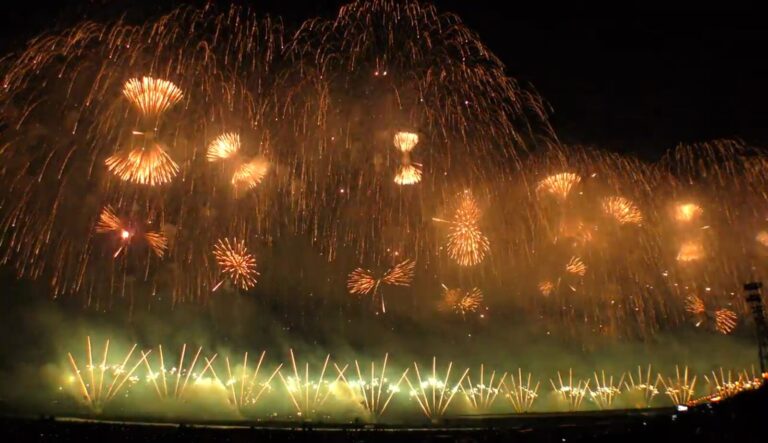
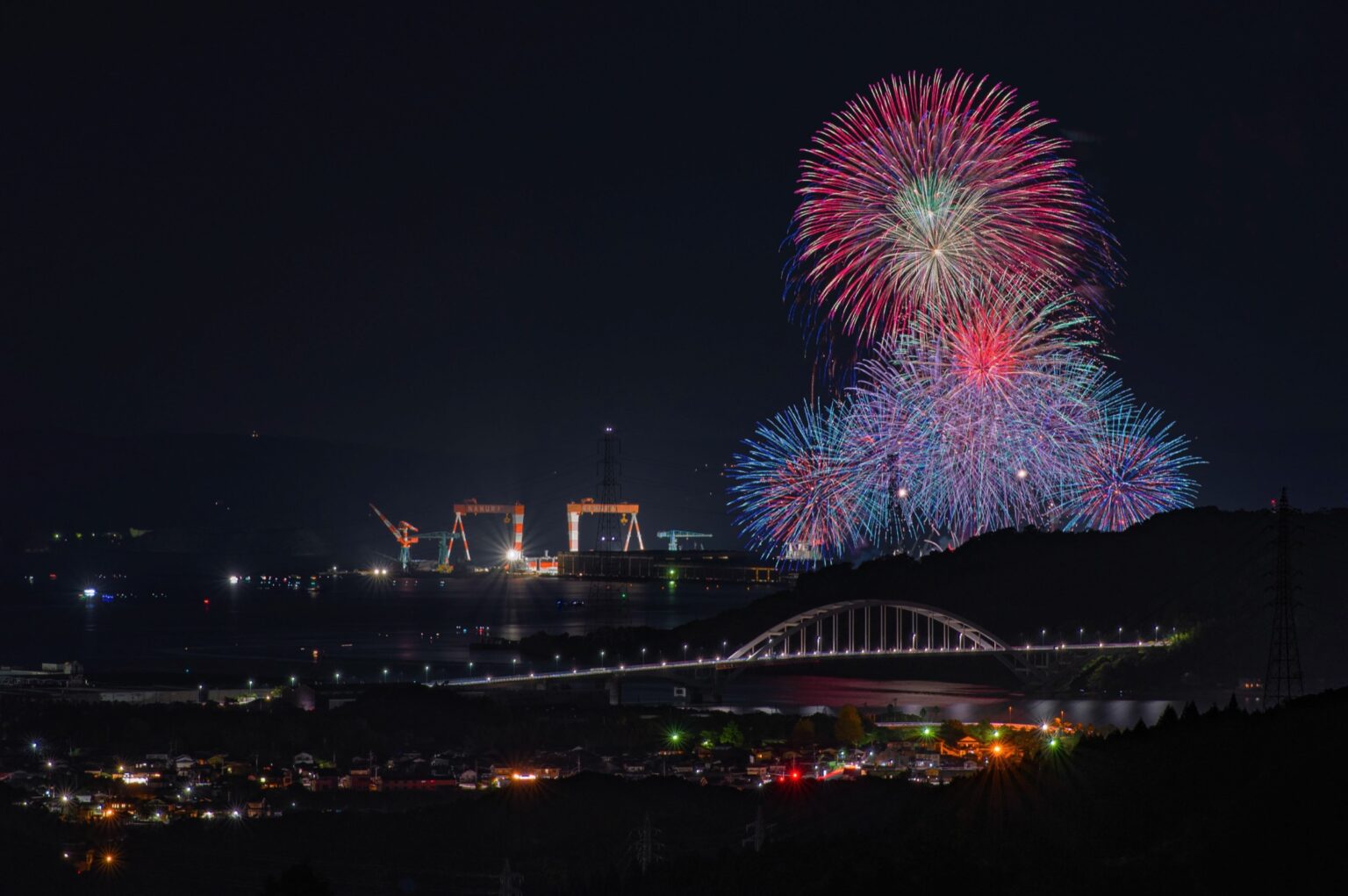
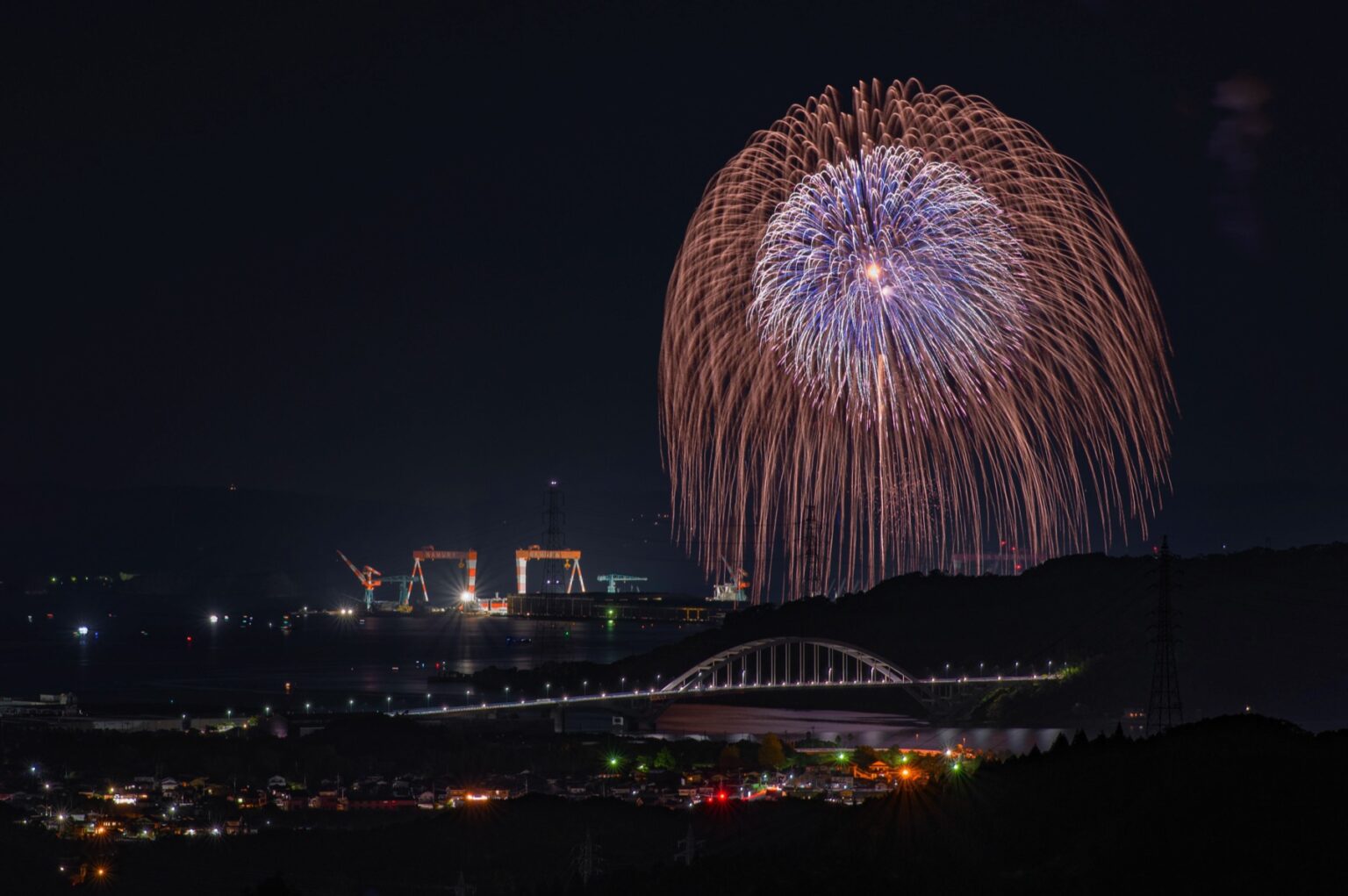
July is the heart of festival season. Kyoto’s Gion Matsuri is the headliner — a thousand-year-old festival that fills the whole month, with the towering yamaboko floats paraded on July 17 and again on July 24. In Fukuoka, the Hakata Gion Yamakasa ends with teams racing one-tonne floats through the streets at 4:59 a.m. on July 15. Osaka’s Tenjin Matsuri (July 24–25) pairs a river boat procession with fireworks, and Tokyo’s Sumida River Fireworks on Saturday July 25 fire around 20,000 shells over the old downtown. For the full year of festivals, see the festival calendar; for the wider season, the Summer in Japan guide.
The mountains open — and where to cool off
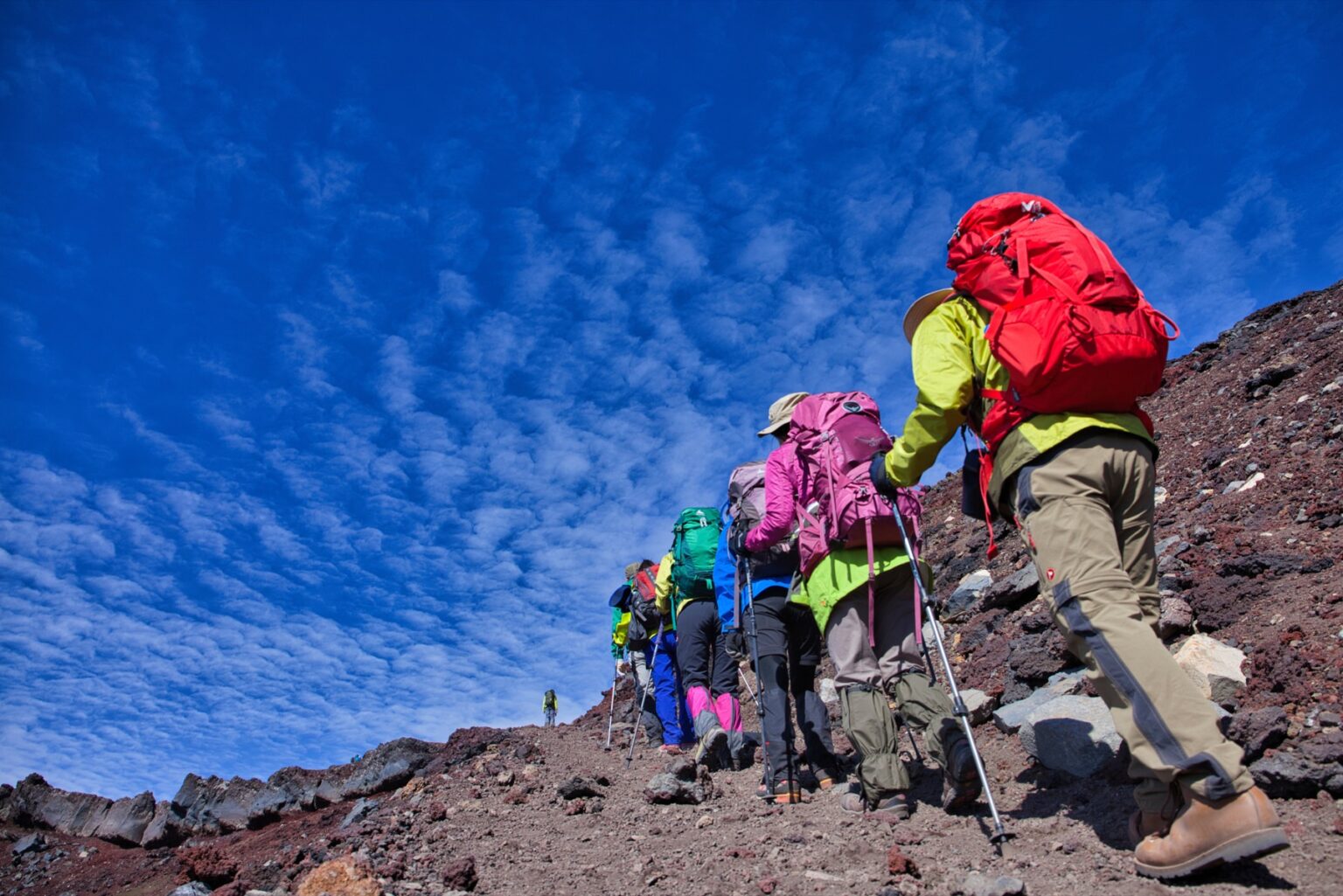
July is the month Mt Fuji opens. The Yoshida and Subashiri trails start on July 1, Fujinomiya and Gotemba on July 10, all closing September 10, with a ¥4,000 per-person fee and a 4,000-climber daily cap on the busy Yoshida route. Read the 2026 climbing guide, the mountain huts, and how to time the goraiko sunrise before you go.
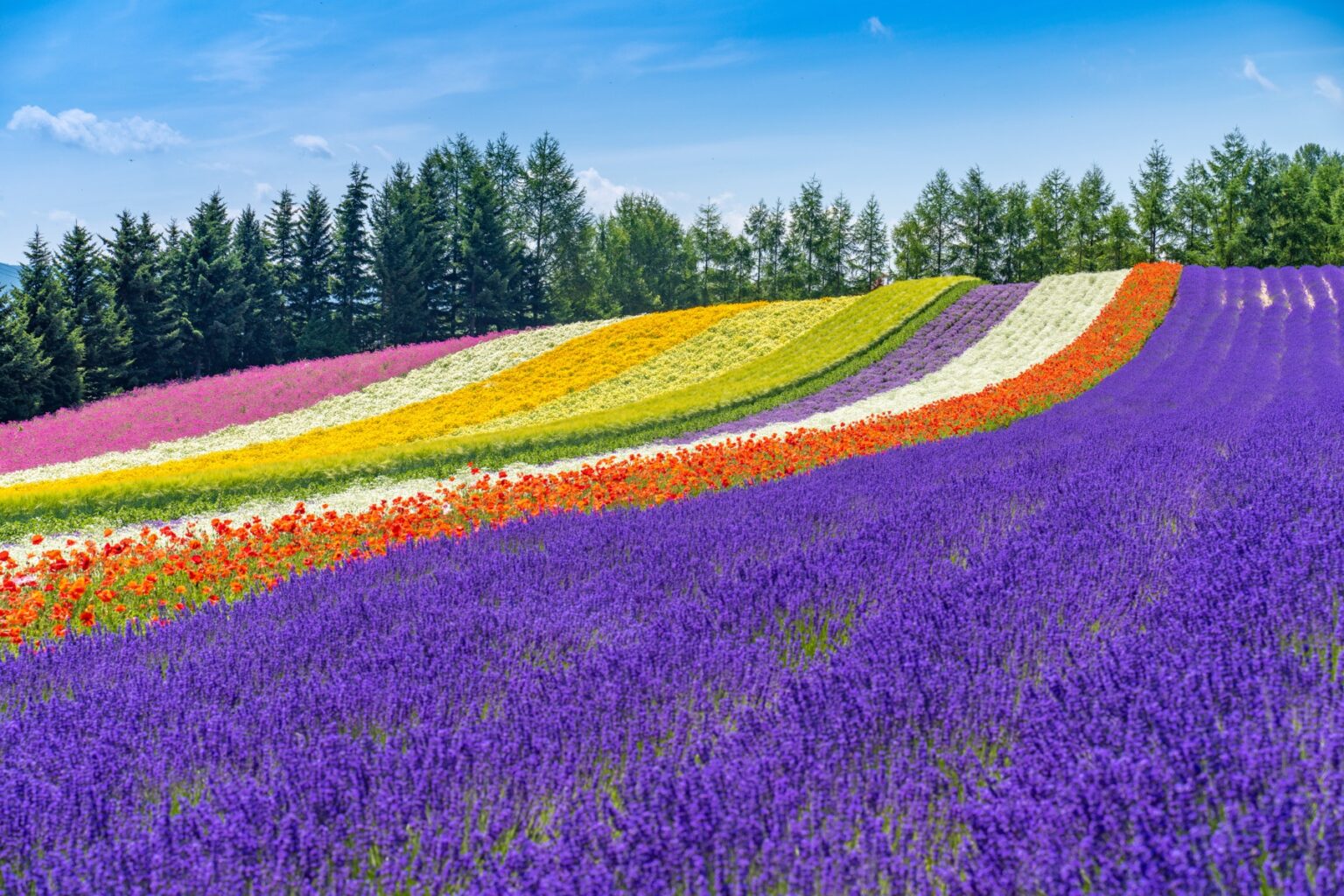
If you’d rather escape the heat than climb into it, July rewards altitude. (See the 2026 coolcation search data for where the interest is heading.) The cold rivers of Kamikochi (here’s how to get there), the green cedars of Ashiu Forest, and Hokkaido’s lavender fields at Furano — peaking mid-July to early August — are all summer at its best. If the heat just makes you want to slow down, that’s a calmcation.
Beyond the festivals: July in bloom
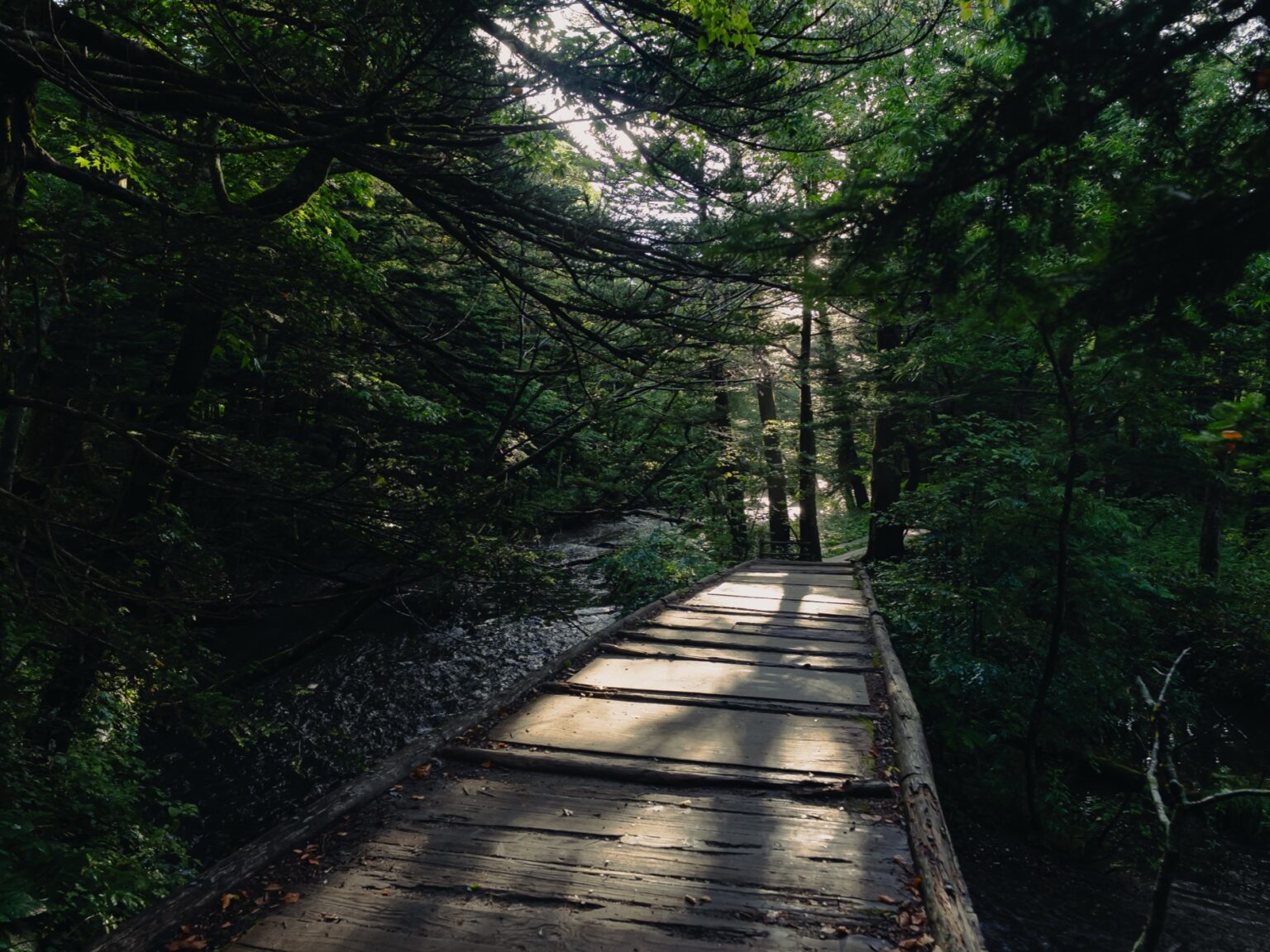
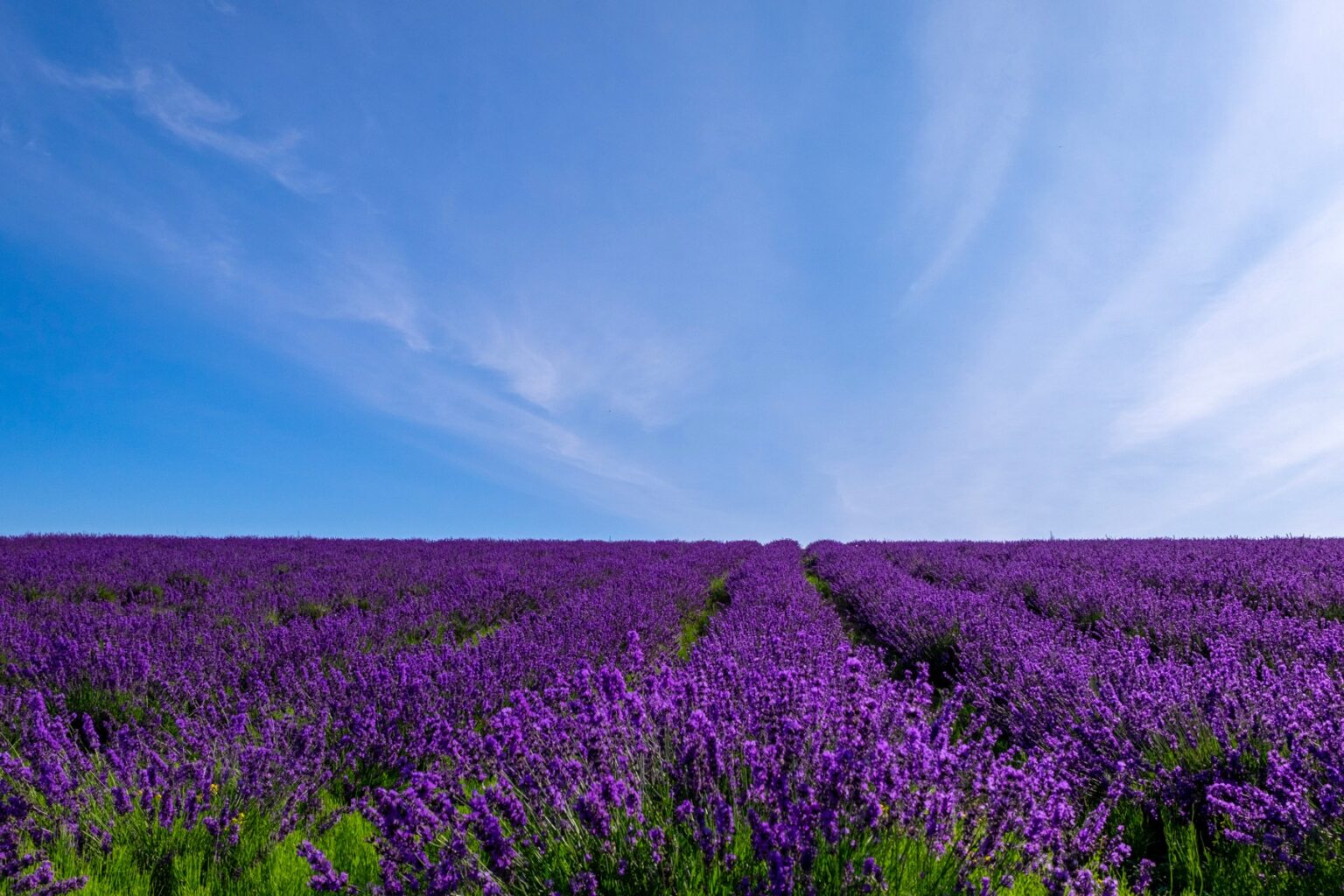
July isn’t only matsuri and fireworks. In Hokkaido the lavender fields at Furano and Biei hit their purple peak from mid-July into early August. Across the main islands, lotus ponds open at dawn and close by midday from mid-July — Tokyo’s Shinobazu Pond in Ueno is the easy city version, best before 10 a.m. Sunflower fields start their run in the second half of the month, and the fireflies of June make their last appearances in cooler, northern spots through mid-July. Two dates for the food and the folklore: July 7 is Tanabata, when people tie paper wishes to bamboo, and July 26 is Doyo no Ushi no Hi — the midsummer “eel day,” when grilled unagi is eaten for stamina and every restaurant and supermarket pushes it hard.
Where to be, region by region
Kyoto & Kansai
Gion Matsuri all month; Osaka’s Tenjin Matsuri on the 24th–25th. Brutally humid — pace yourself.
Tokyo & Kanto
The great river fireworks (Sumida on the 25th), beer gardens, and the rainy season lifting mid-month.
Mt Fuji & Nagano
Fuji’s climbing season opens; the Alps and Kamikochi are the cool-air escape.
Hokkaido
The summer star — Furano lavender at its peak, and 5°C cooler than Tokyo.
Kyushu
Hakata Gion Yamakasa’s dawn float race in Fukuoka on the 15th.
Okinawa & islands
Past its rainy season and fully into beach weather — but watch the first typhoons.
Book July early — especially the Marine Day weekend
July 18–20 (Marine Day) and the Gion/fireworks weekends fill up fast. Booking has the widest hotel spread; Rakuten Travel is stronger for highland ryokan and onsen inns if you’re escaping to the mountains.
When to go — and the weekend to plan around
The first half of July, while the rains are still around, is the cheaper, quieter window — fewer crowds, lower fares, and the festivals just beginning. The Marine Day long weekend (July 18–20) is the opposite: it’s one of summer’s biggest domestic travel crushes, with packed trains and resorts. If you can, travel mid-week and book the headline festival nights months ahead. The heat itself is the real planning factor — once the rainy season lifts around the 20th, temperatures jump several degrees overnight.
Good to know
What’s the weather like in Japan in July?
Hot and humid. Tokyo averages around a 30°C daytime high with ~76% humidity. The rainy season usually clears Kanto around July 19–20, after which the heat intensifies sharply. Okinawa and Kyushu are already past their rains; Tohoku and Hokkaido are milder.
Is July a good time to visit Japan?
Yes, if you like festivals and don’t mind heat. It’s peak festival and fireworks season and Mt Fuji is open. The trade-offs are humidity and the crowded Marine Day weekend (July 18–20). Early July, during the rainy season, is cheaper and quieter.
When does Mt Fuji open in 2026?
The Yoshida and Subashiri trails open July 1, 2026; Fujinomiya and Gotemba open July 10; all close September 10. There’s a ¥4,000 per-person fee, and the Yoshida trail has a 4,000-climber daily cap and a 14:00–03:00 gate closure for anyone without a mountain-hut booking.
What are the big July festivals?
Kyoto’s Gion Matsuri (grand parades July 17 and 24), Fukuoka’s Hakata Gion Yamakasa (dawn race July 15), Osaka’s Tenjin Matsuri (July 24–25), and Tokyo’s Sumida River Fireworks (Saturday July 25, 2026).
Is Marine Day a holiday in 2026?
Yes — Marine Day (Umi no Hi) falls on Monday, July 20, 2026, making July 18–20 a three-day weekend. It’s the only national holiday in July and a very busy travel window, so book transport and hotels early.
How do I escape the July heat?
Go up or go north. The Nagano highlands and Kamikochi run several degrees cooler with mid-teens nights, and Hokkaido — where the lavender peaks in July — is milder still. Mornings (for lotus and markets) and the mountains are your friends.
Japan in June
The rainy season, hydrangeas and the cheapest week — the month before.
Summer in Japan 2026
The whole season: weather, where to escape the heat, and the festival map.
Climbing Mt Fuji 2026
Trails, the ¥4,000 fee, the cap and how to book the season that opens this month.
Japan in August
Tohoku’s great festivals, the biggest fireworks and the Obon week — the month after.
Festival Calendar 2026
Every month’s festivals, laid out by date.
Best Time to Visit Japan
All 12 months compared — weather, crowds and prices side by side.
Plan a July Trip
Three doors into a Japanese July. Book the bed and the rail first.
Join travelers discovering Japan's hidden side
Weekly dispatches from off-the-beaten-path Japan — spots and stories you won't find in guidebooks.
No spam. Unsubscribe anytime.
Welcome aboard!
You're in. See you in your inbox soon.