Tokyo · Chōfu · Sentō
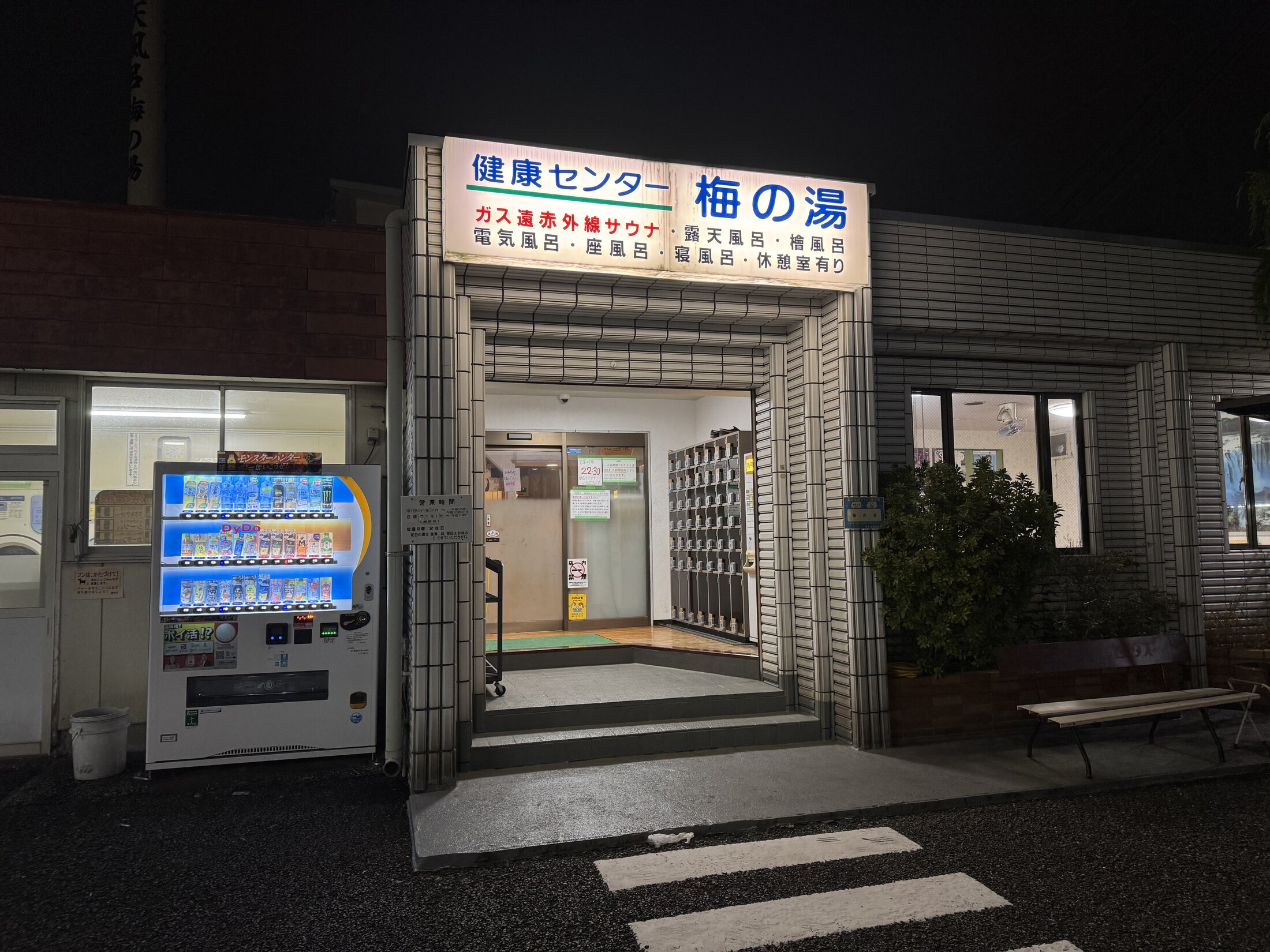
Ume-no-Yu is a wood-fired neighbourhood sentō in the Jindaiji area of Chōfu, on Tokyo’s leafy western edge near the Jindai Botanical Gardens. For Tokyo’s standard flat ¥600 sentō fare you get a whole spread of baths — an open-air bath, a herbal bath that changes daily, jet, reclining and electric tubs, even a pebble-floored walking bath — with a cypress sauna for ¥250 more. It has been going since 1967, the water still heated by firewood, and it’s closed on Mondays.
A wood-fired neighbourhood bath
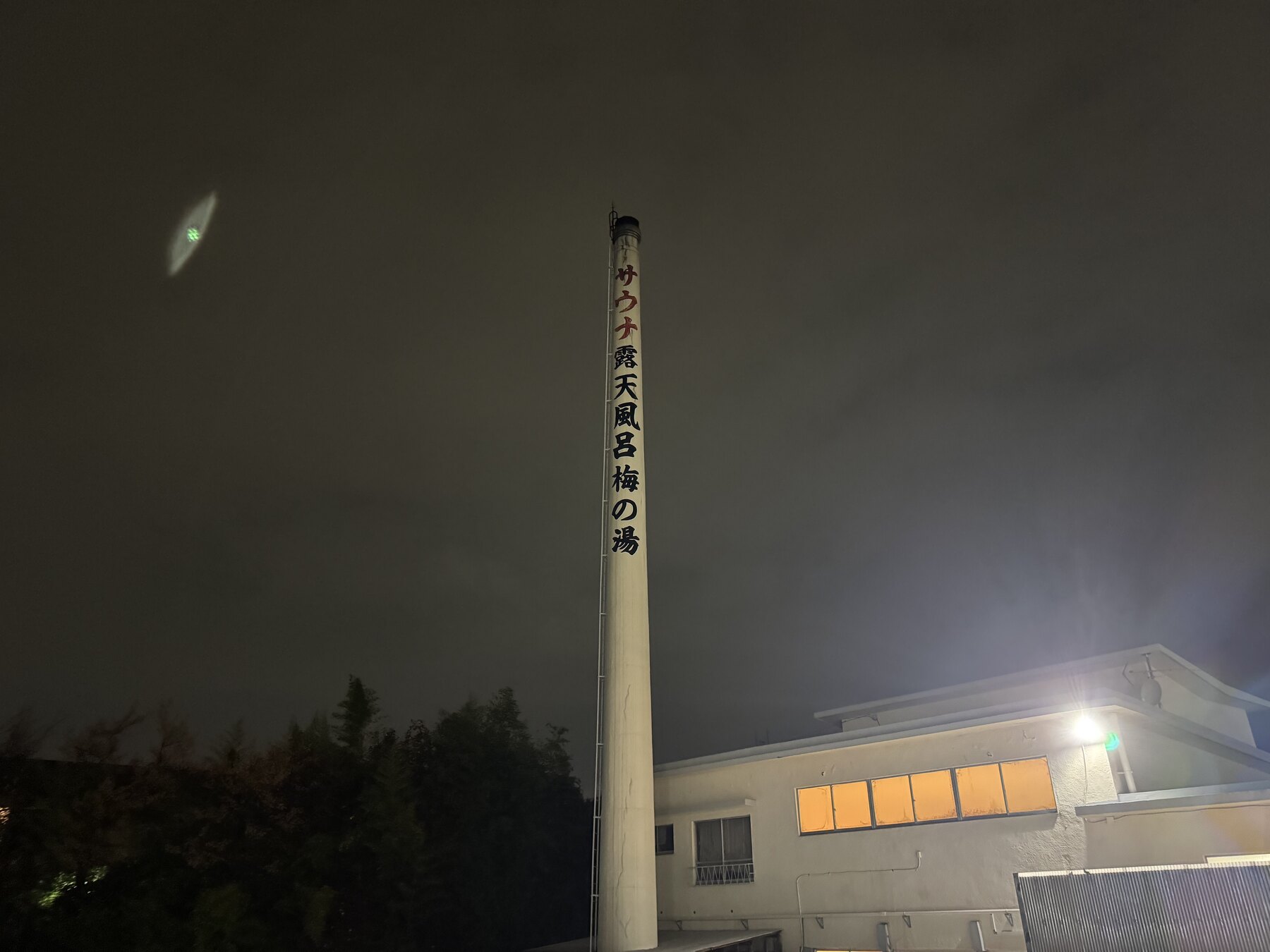
Ume-no-Yu is the real, everyday kind of sentō — not a polished spa, but a working local bath that has warmed this corner of Chōfu since 1967. Its water is still heated the old way, with firewood, and a tall chimney over the rooftops carries the bath’s name. That name has a nice backstory: it comes from the white-plum (shiraga-ume) trees the founder’s grandfather planted on the land, and it later spread to the little local shopping street out front — the “Ume-no-Yu shōtengai” — which is a rare thing for a Tokyo bathhouse to lend its name to.
The baths and the sauna
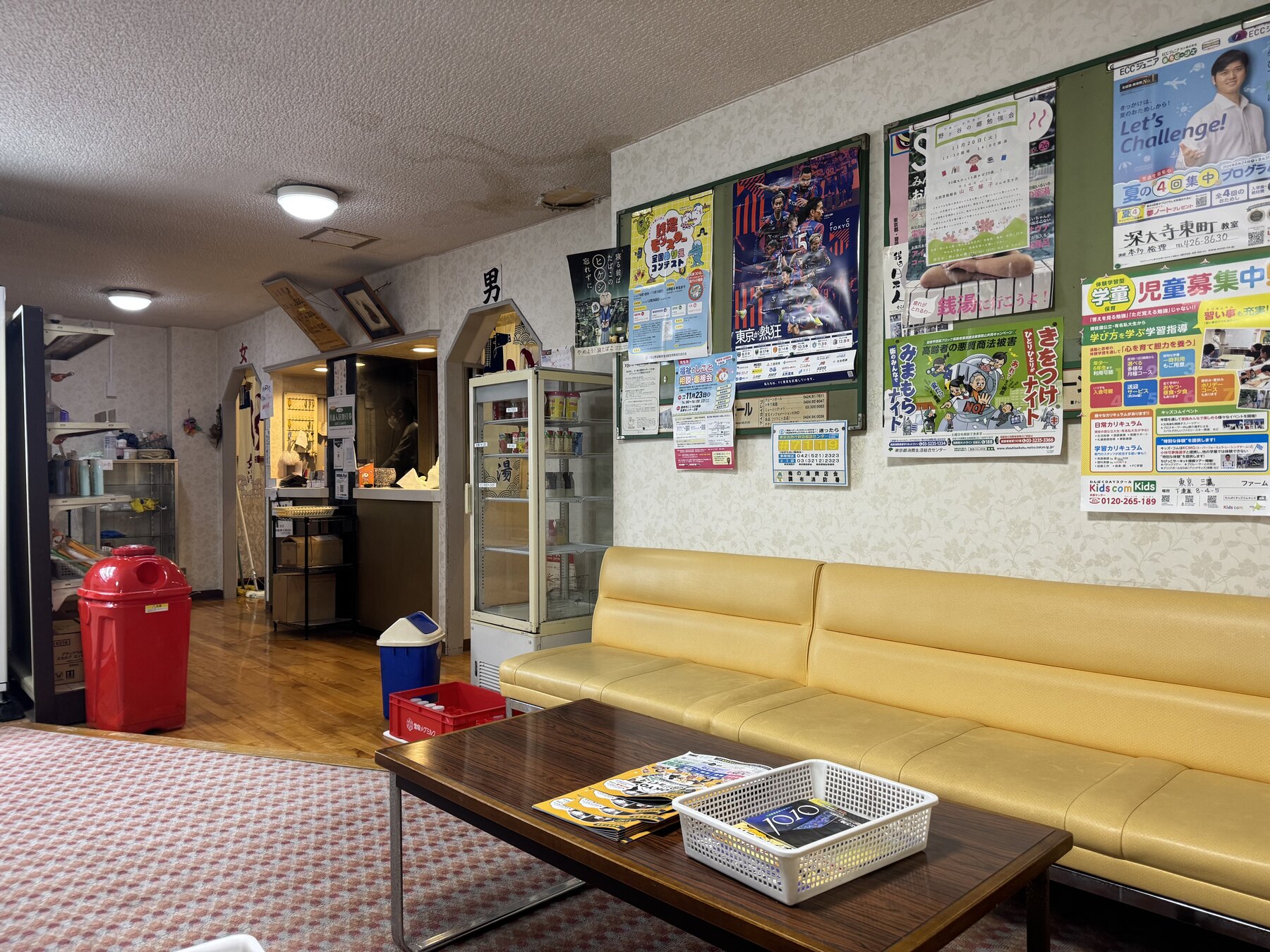
For a neighbourhood bath there’s a lot to work through. Alongside the main hot bath you’ll find an electric bath (denki-buro), jet and reclining baths, a cold-water bath, a medicinal/herbal bath that changes daily, and an open-air bath out back. There’s even a pebble-floored “walking bath” for working your feet. The sauna is a paid add-on of ¥250 and comes with its own hinoki (cypress) bath.
What it costs
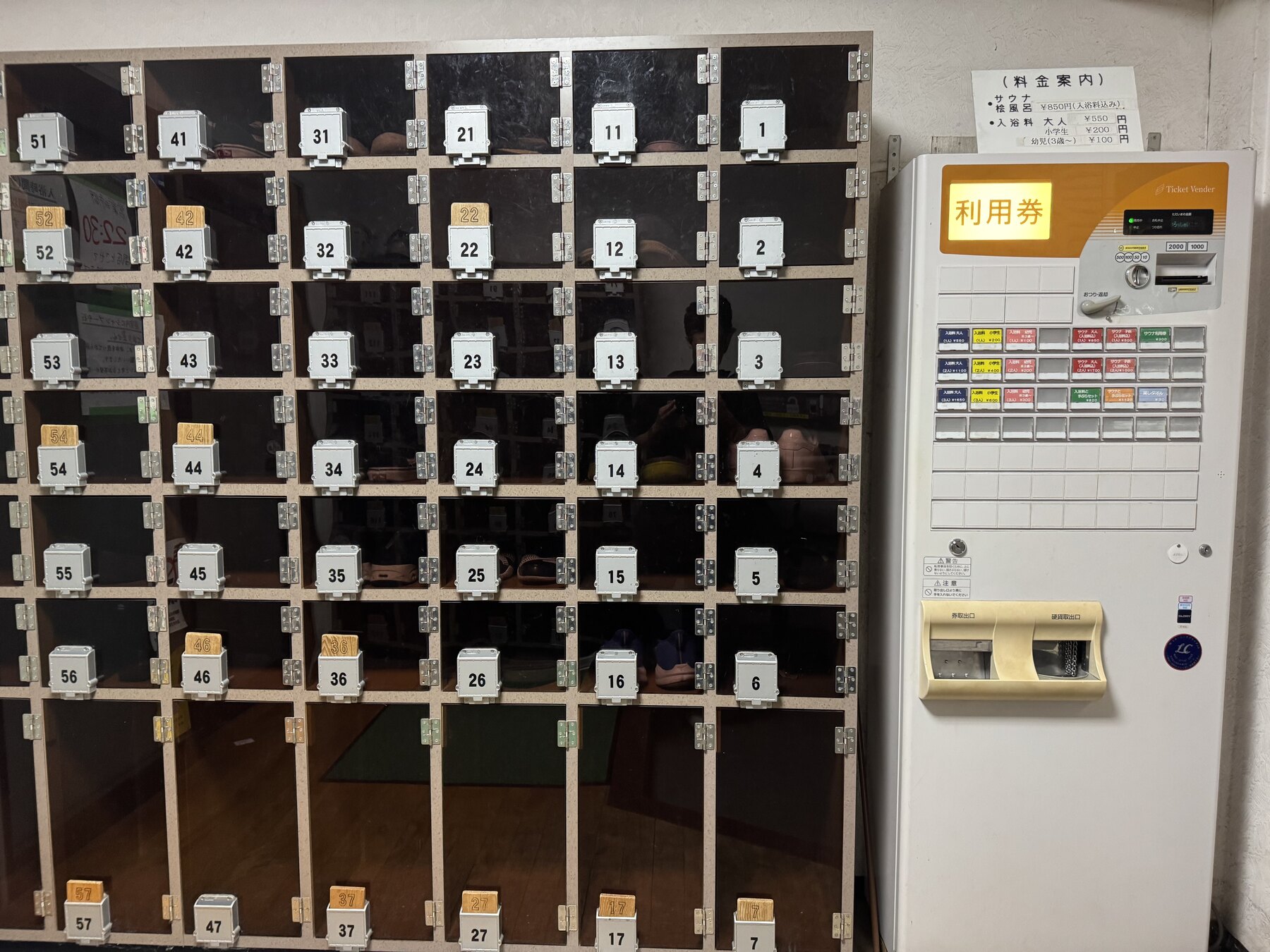
| Entry | Price |
|---|---|
| Adult (12+) | ¥600 |
| Child (6–11) | ¥200 |
| Under 6 | ¥100 |
| Sauna (add-on) | +¥250 |
| Parking | Free (40 spaces) |
The ¥600 adult fee is Tokyo’s standard regulated sentō rate, revised August 1, 2026. Bring cash, and a towel (or rent one).
How do I get to Ume-no-Yu?
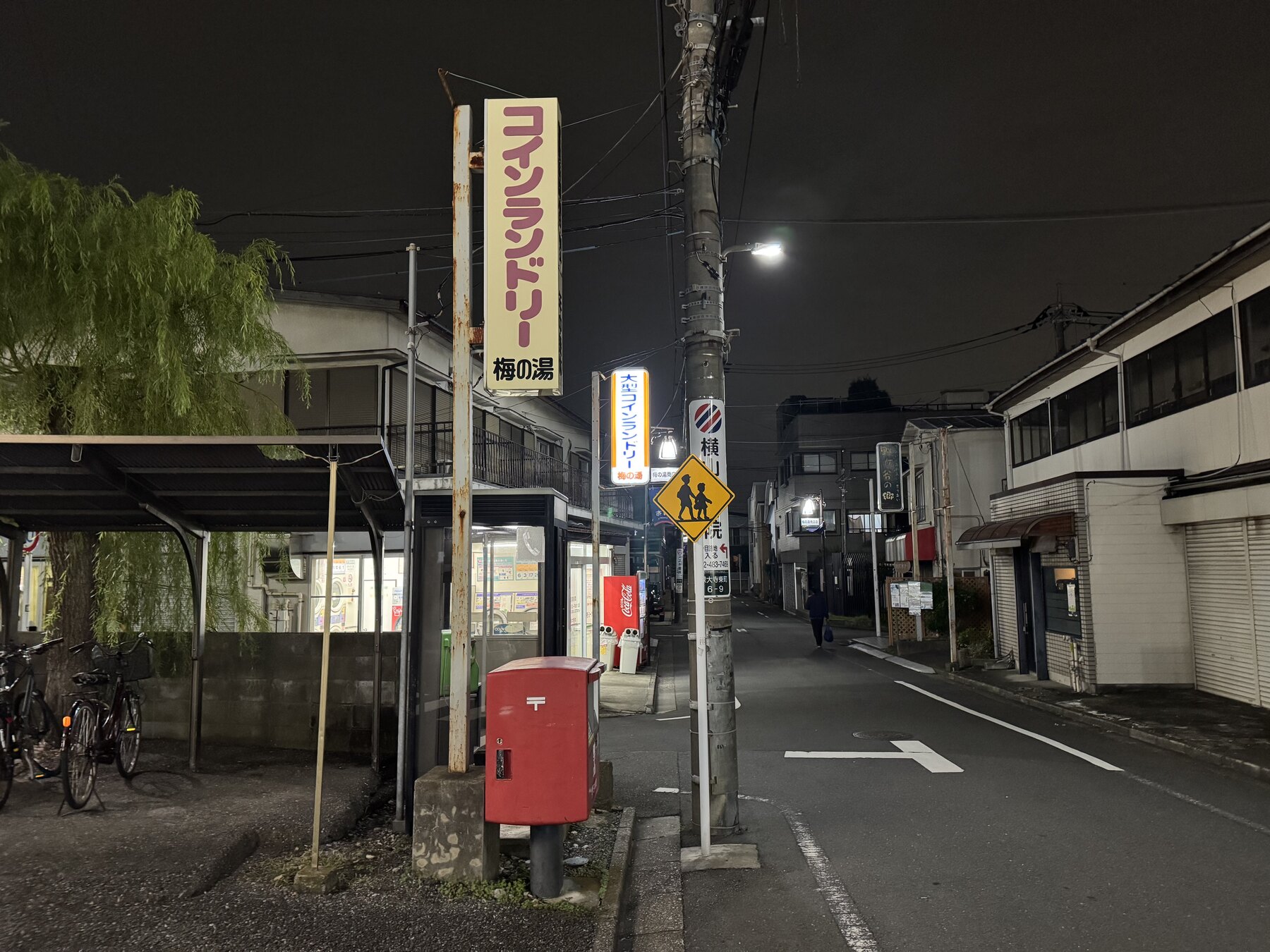
It’s not a walk from the station — you’ll want the bus. From Keiō Line Chōfu Station, take a bus and get off at the Suwa Shrine (諏訪神社) stop, then walk about 5 minutes. The bath sits roughly midway between Keiō Chōfu and JR Mitaka stations, in Jindaiji-higashimachi, close to the Jindai Botanical Gardens. If you’re driving, there’s free parking for about 40 cars.
Make it a Jindaiji day
Ume-no-Yu is a perfect end to a day in the Jindaiji area — soak after a walk through the gardens and temple. Some natural pairings:
Tamanoya
100% buckwheat soba in Jindaiji’s temple town — the area’s signature meal.
Suzume no Oyado
A soba restaurant tucked into the bamboo by the temple approach.
Jindaiji Daruma Market
Tokyo’s biggest daruma-doll fair, each spring at Jindaiji Temple.
Staying near Chōfu
Chōfu makes a calm, well-connected base on Tokyo’s west side, a quick Keiō hop from Shinjuku. Booking has the local hotels; Rakuten Travel is good for Japanese-run stays.
Good to know
What is Ume-no-Yu?
A wood-fired neighbourhood public bathhouse (sentō) in the Jindaiji area of Chōfu, Tokyo, going since 1967. It has a range of baths — open-air, herbal, jet, reclining, electric, cold and a pebble walking bath — plus a cypress sauna.
How much does it cost?
¥600 for adults (¥200 ages 6–11, ¥100 under 6), Tokyo’s standard sentō rate, with the sauna a ¥250 add-on. Cash only; parking is free (about 40 spaces).
What are the hours and closing day?
Weekdays 15:00–22:30 and Sundays 13:00–22:30, closed Mondays (or the following day if Monday is a public holiday).
How do I get there?
It’s bus-access, not a station walk: from Keiō Line Chōfu Station take a bus to the Suwa Shrine (諏訪神社) stop and walk about 5 minutes. It sits roughly between Keiō Chōfu and JR Mitaka, near the Jindai Botanical Gardens.
Does it have a sauna and an open-air bath?
Yes — a sauna with a cypress (hinoki) bath for an extra ¥250, and an open-air bath, along with electric, jet, reclining, cold and a daily-changing herbal bath.
Are tattoos allowed?
The bath doesn’t publish a tattoo policy, so check directly before you go (042-482-4526). If you’d rather be certain, our sentō guide lists Tokyo baths confirmed to welcome tattoos.
Imahana, a Showa-era diner
Eat first: a time-capsule teishoku diner a short hop away in Kita-Karasuyama.
Japanese Sentō Guide
Etiquette, prices, tattoos and the best baths — how it all works.
Tamanoya Soba
Jindaiji’s 100% buckwheat soba, a short hop away.
Jindaiji Daruma Market
The spring daruma fair at nearby Jindaiji Temple.
Harmonica Yokocho
Tiny bars and stalls in nearby Kichijōji.
Join travelers discovering Japan's hidden side
Weekly dispatches from off-the-beaten-path Japan — spots and stories you won't find in guidebooks.
No spam. Unsubscribe anytime.
Welcome aboard!
You're in. See you in your inbox soon.