Toyama · Sea of Japan
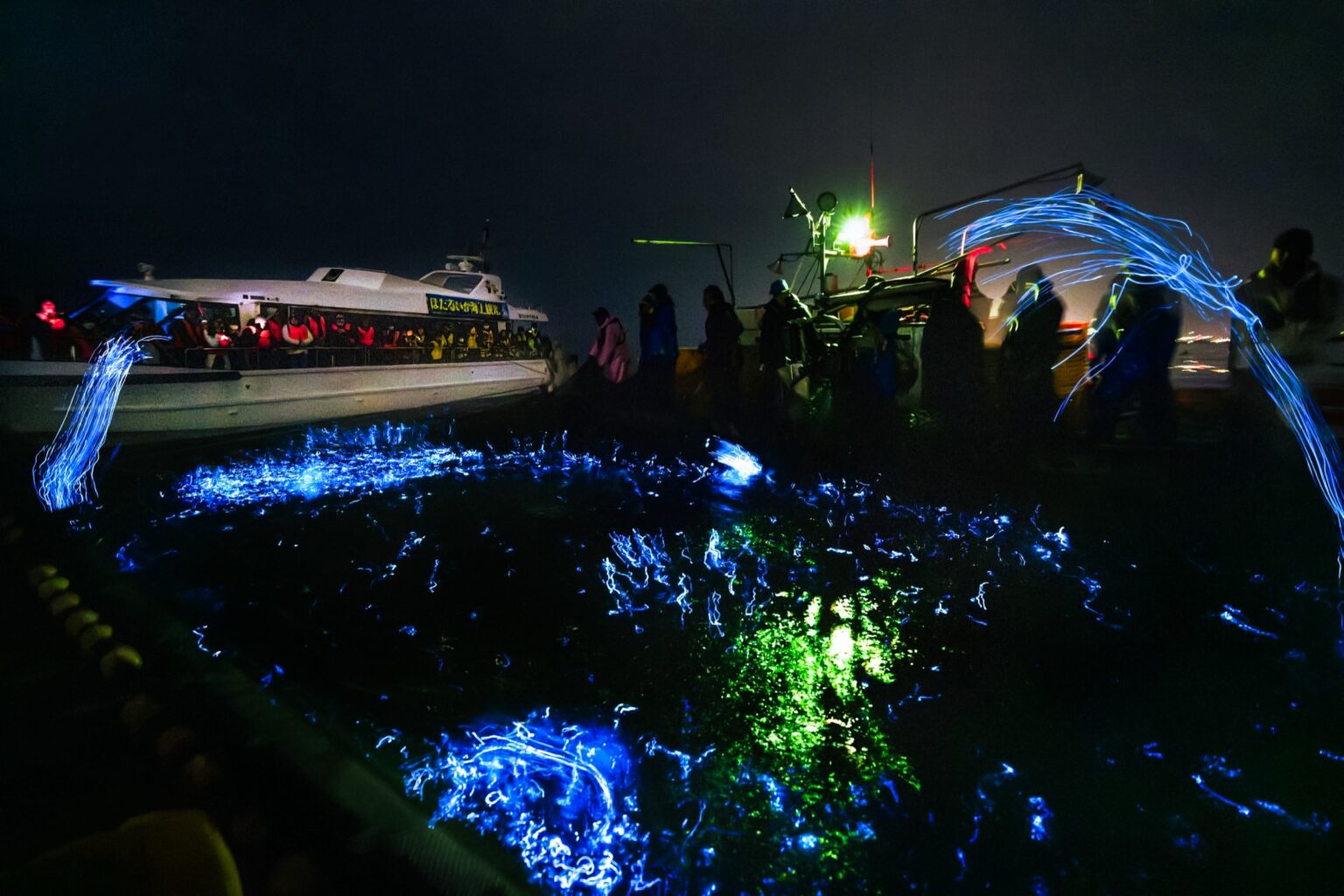
Firefly squid — hotaru-ika, Watasenia scintillans — is a 7 cm squid that glows deep blue from light organs around its eyes and on its arm tips, and every spring it rises by the million into Toyama Bay on the Sea of Japan; you can see it from late March to May at the Hotaruika Museum’s live show in Namerikawa, on a pre-dawn boat tour that runs April 1 to May 6, or, on the rarest nights, washing ashore in a glowing blue “mi-nage” stranding. Japan has two famous glowing seas. One is sea sparkle, the summer plankton on the Pacific coast. The other is this — an actual little squid, on the opposite coast, in spring. It is the one I tell people to plan a trip around, because unlike sea sparkle, you can book a near-guaranteed look at it.
What is the firefly squid?
The firefly squid is a small deep-sea squid, only about 7 cm long, covered in light-producing organs called photophores. The arrangement is precise: five light organs ring each eye, three sit at the tip of the arms, and finer organs are scattered across the skin, together throwing a deep blue light. The squid uses it to lure prey, to confuse predators, and to find a mate.
For most of the year it lives roughly 360 metres down. But Toyama Bay has an unusual shape — a steep V-shaped submarine canyon — and in spring the current funnels the squid up toward the surface in vast numbers to spawn. That quirk of the seafloor is the whole reason Namerikawa, and nowhere else, built its spring around a glowing squid.
Three ways to see it glow
You have three options, and they trade off certainty against spectacle. The museum show is the sure thing; the boat tour is the real thing; the mi-nage stranding is the wild card.
| How | When | Cost | What you get |
|---|---|---|---|
| Pre-dawn boat tour | Apr 1–May 6, meet 2:30 am | ¥8,000 adult | Glowing squid hauled up in the fixed nets, then sunrise over the Tateyama range |
| Museum live show | Mar 20–May 31, daytime | ¥770 adult | A guaranteed look at live glowing squid, indoors, several times an hour |
| Mi-nage stranding | Spring nights, unpredictable | Free | Masses of squid glowing along the Namerikawa shore — rare, and unforgettable |
The pre-dawn boat tour
This is the real experience, and it asks something of you: a very early start. The fishing-boat tour runs April 1 to May 6, departing at 2:30 am with reception from 2:00 am, and you gather at the Hotaruika Museum. Boats take you out to the fixed nets where the night’s catch is hauled up still glowing, the dark water lighting blue as the squid spill across the net. The tour ends with sunrise breaking over the Tateyama mountains across the bay.
Where to stay for the 2:30 am start
There is no hotel district at the pier, so most visitors base in Namerikawa or nearby Toyama City and arrive before 2 am. Booking has the widest run of business hotels around Toyama Station; Rakuten Travel has the better inventory for smaller local inns and onsen stays on the Toyama Bay coast.
The Hotaruika Museum (the sure thing)
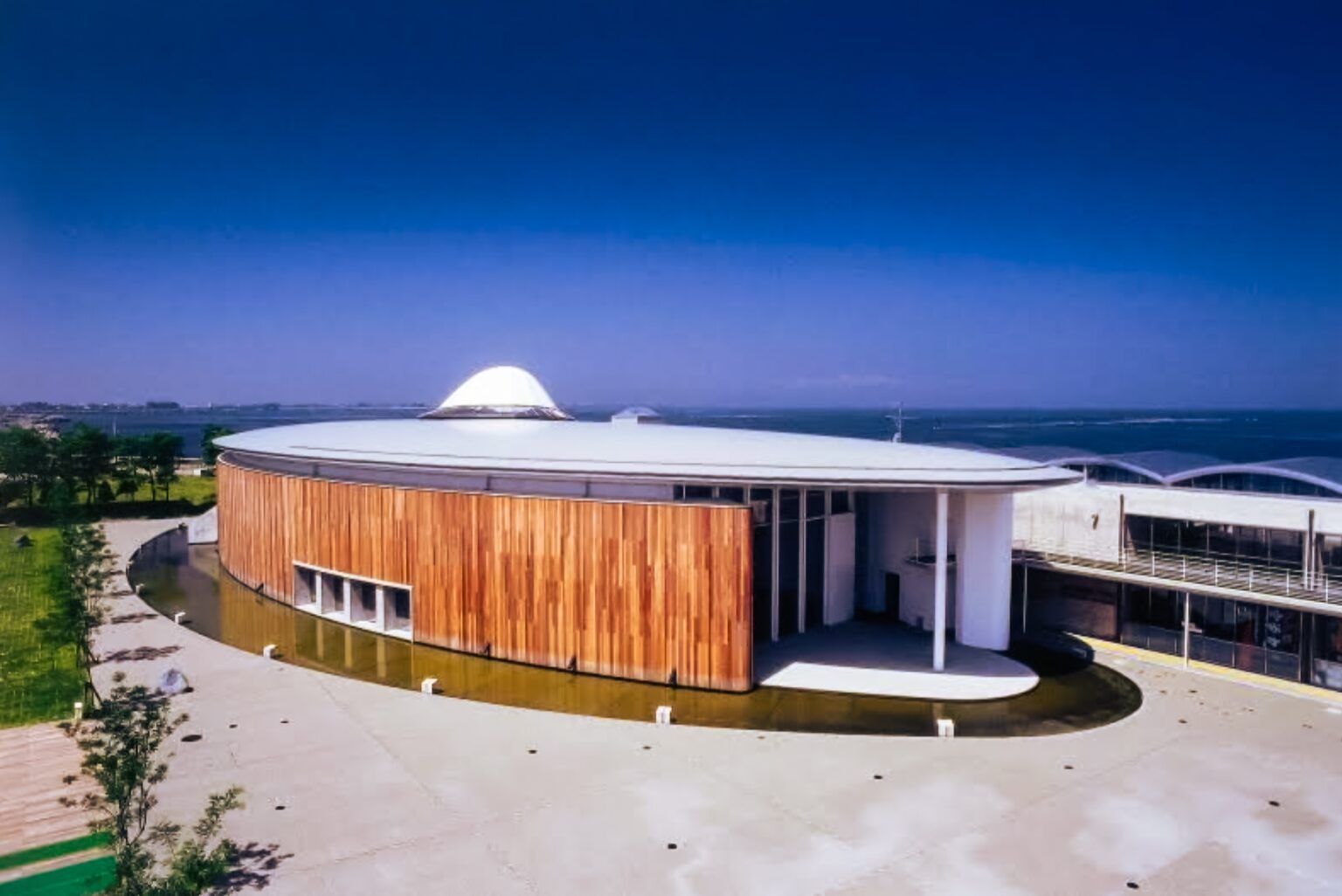
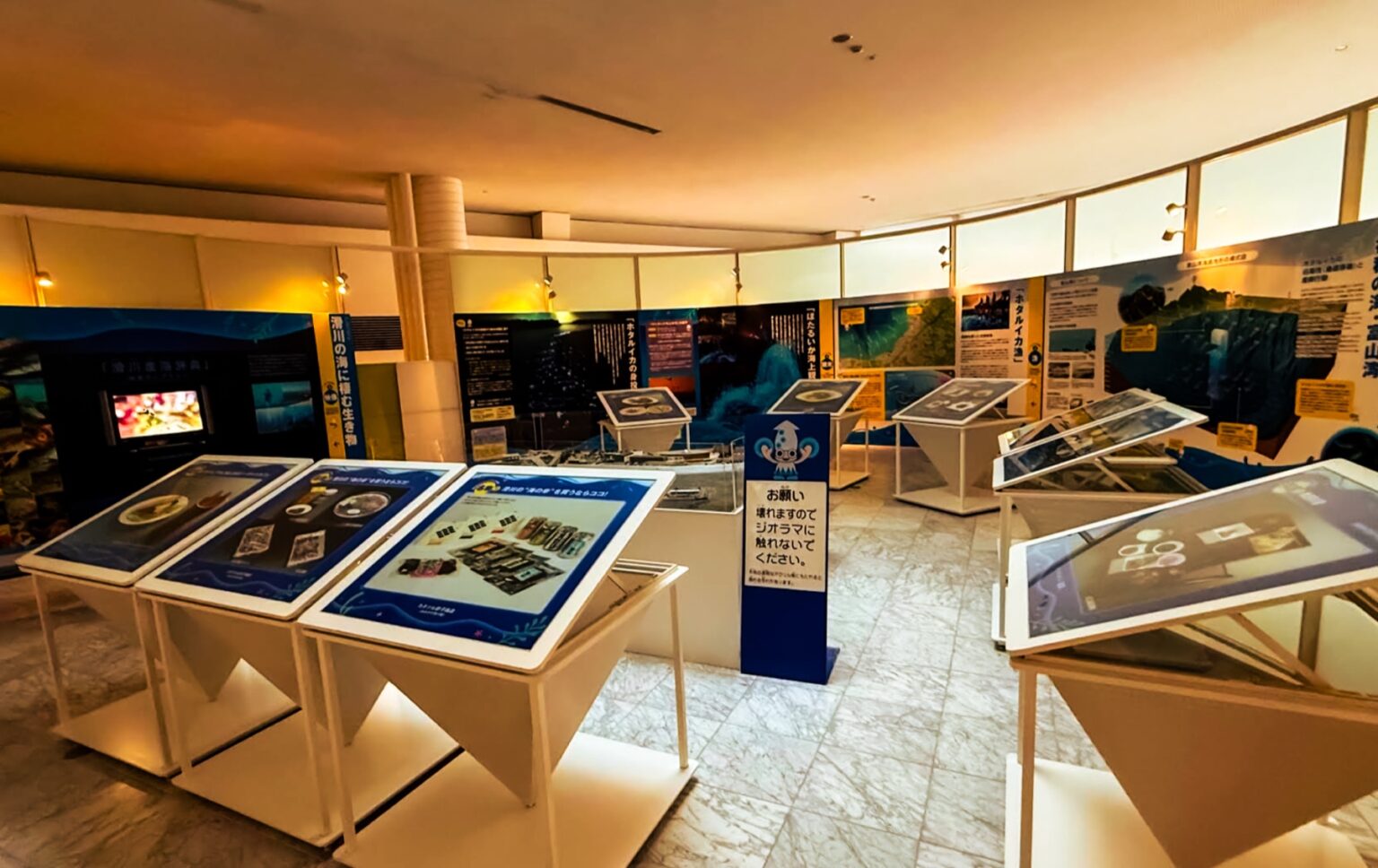
If you cannot do a 2:30 am boat — or you are visiting outside the tour dates — the Hotaruika Museum at Wave Park Namerikawa is the reliable option. From March 20 to May 31 it runs a live firefly-squid luminescence show one to two times every hour, in a darkened room where you watch real squid flash blue in cupped hands. It is the only place you can count on seeing the glow in daylight hours.
The mi-nage: when the bay washes ashore glowing
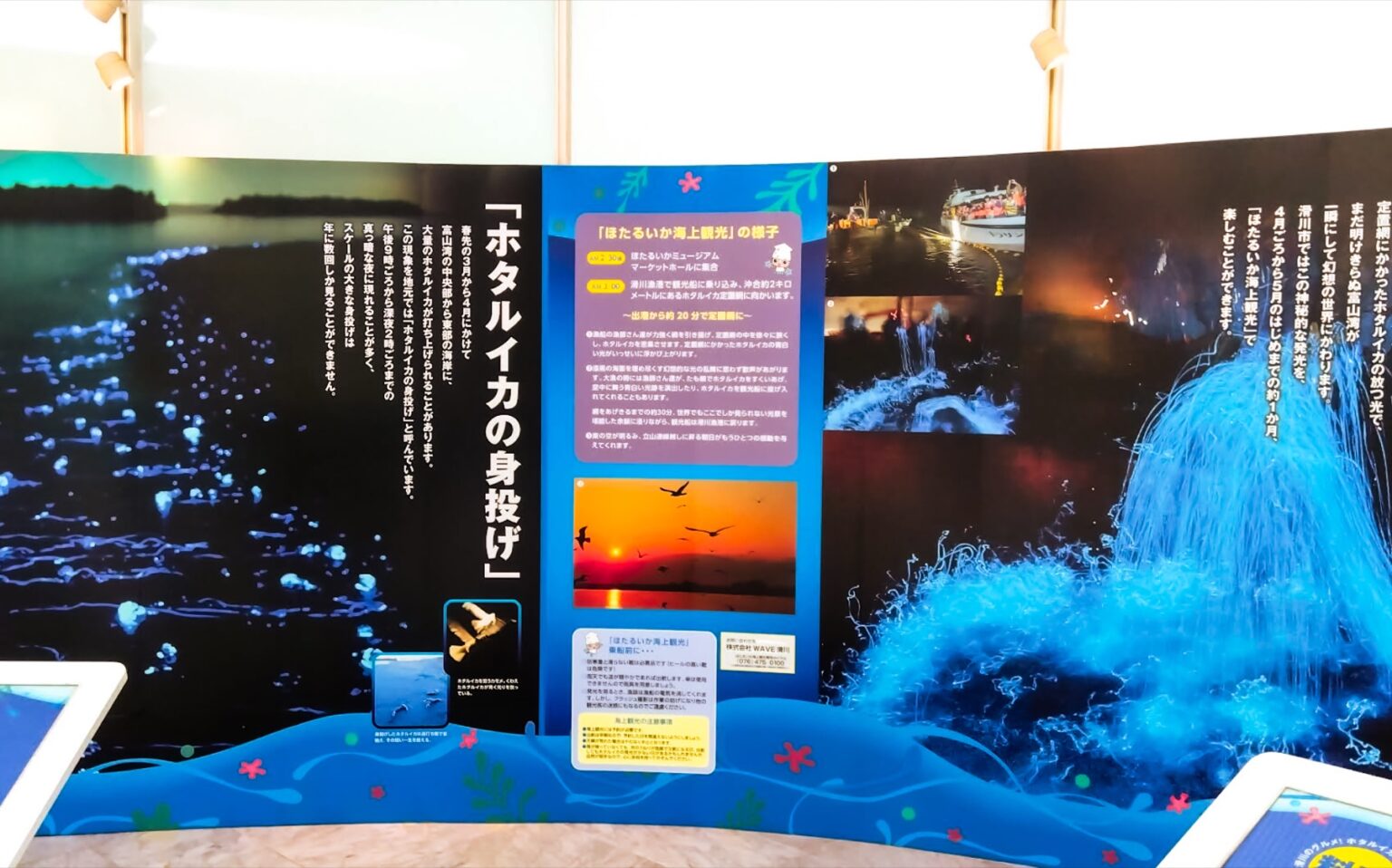
The rarest sight has a name: mi-nage, literally “throwing themselves.” On certain spring nights, when conditions line up, exhausted spawning squid wash up along the Namerikawa shore in such numbers that the wet sand itself glows blue. It cannot be scheduled or booked — it is luck, weather, and timing — but it is the image that made this bay famous, and the museum keeps a whole exhibit devoted to it.
Eating hotaru-ika
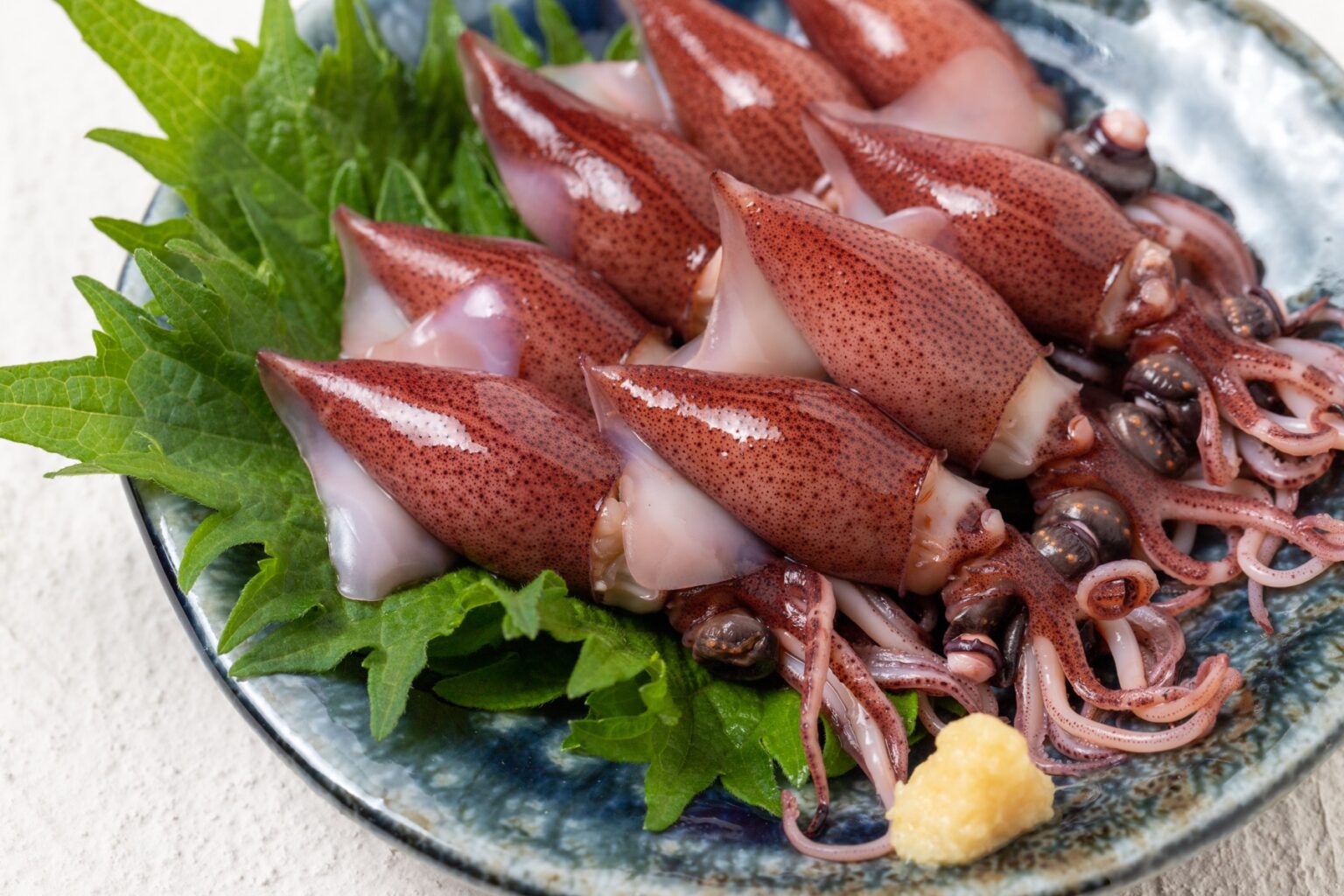
Toyama does not just watch the firefly squid — it eats it, and spring is the season. You will find it boiled and dressed in sumiso (a sweet vinegar-miso), as translucent sashimi, deep-fried as tempura, or marinated as okizuke. The boiled version, plump and faintly sweet, is the one most visitors meet first. If you make the trip for the glow, build a meal around it too.
Ad · We earn a commission on qualifying bookings made through this link.
Where to stay in Namerikawa
Compare hotels and ryokan in Namerikawa on Booking.com. Check the location on the map and the cancellation terms for your exact dates before you book.
How to get to Namerikawa
Namerikawa sits on the Toyama Bay coast, a short hop east of Toyama City. From Tokyo, take the Hokuriku Shinkansen to Toyama (about 2 hours), then the Ainokaze Toyama Railway to Namerikawa Station (about 12 minutes); the museum is a short walk from the station. From Kansai, route via Kanazawa. The address is Namerikawa, Nakagawara 410.
Firefly squid vs sea sparkle: which “glowing sea”?
People mix these up constantly, so to be clear: they are different creatures on different coasts in different seasons. The firefly squid is an actual squid in Toyama Bay (Sea of Japan) in spring, with a museum, a boat tour, and a price tag. Sea sparkle is free-floating plankton on the Pacific coast in summer, free to see from any dark beach but never guaranteed. If you want certainty, come to Toyama in spring; if you want spontaneity, chase the plankton in summer. For the plankton side, start with what sea sparkle is and why the ocean glows blue, then check where it is glowing right now, and if you want to photograph either, see how to shoot bioluminescent water.
What is the firefly squid (hotaru-ika)?
The firefly squid, Watasenia scintillans, is a small deep-sea squid about 7 cm long covered in light organs (photophores) that glow deep blue — five around each eye, three on the arm tips, and finer organs across the skin. It lives deep most of the year and rises into Toyama Bay to spawn in spring.
When can you see firefly squid in Toyama Bay?
In spring, during the spawning season from March to May. The museum’s live show runs March 20 to May 31, and the pre-dawn boat tour runs April 1 to May 6.
How much is the firefly squid boat tour and when does it leave?
The boat tour runs April 1 to May 6, with a 2:30 am departure (reception from 2:00 am) gathering at the Hotaruika Museum. It costs ¥8,000 for adults and ¥4,000 for elementary and junior-high students, reservations required; younger children cannot board.
Can you see the firefly squid at the museum instead?
Yes. The Hotaruika Museum runs a live luminescence show one to two times every hour from March 20 to May 31, open 9:00–17:00 (last entry 16:30). In-season admission is ¥770 for adults and ¥360 for children. A poor catch can cancel a show, so check ahead.
What is the mi-nage?
Mi-nage is the rare spring-night phenomenon when masses of spawning firefly squid wash up on the Namerikawa shore, making the wet sand glow blue. It cannot be scheduled — it depends on weather, tide, and luck.
Can you eat firefly squid?
Yes — it is a Toyama spring delicacy, served boiled with sumiso, as sashimi, as tempura, or marinated as okizuke. Spring is the season to try it.
Is firefly squid the same as sea sparkle?
No. Firefly squid is an actual squid in Toyama Bay on the Sea of Japan side in spring. Sea sparkle is free-floating plankton on the Pacific coast in summer. Different creature, coast, and season.
Ad · We earn a commission on qualifying bookings made through this link.
Book your Namerikawa stay
If this trip includes a night in Namerikawa, the Booking.com search below opens on Namerikawa — add your dates to see what is free.
Join travelers discovering Japan's hidden side
Weekly dispatches from off-the-beaten-path Japan — spots and stories you won't find in guidebooks.
No spam. Unsubscribe anytime.
Welcome aboard!
You're in. See you in your inbox soon.