
Yes — at many open neighbourhood and temple bon odori, visitors can step into the circle and dance, not just watch. You don’t need a reservation, a costume, or any experience: you learn by copying the people around you. The catch is that a few big-name festivals are performances rather than open dances, so the rule is always to follow the organiser’s signs and staff on the night.
Bon odori is a summer dance you may come across across Japan, especially in July and August. The familiar version is a ring of dancers moving around a wooden yagura tower to drums and folk songs. As a resident, my honest advice is not to hang back on the edge feeling shy. At open community dances the steps repeat, and beginners are expected to learn by following along. Here’s how to do it without a misstep, what to wear, and which festivals are worth planning a trip around.
Bon odori at a glance
What is bon odori?
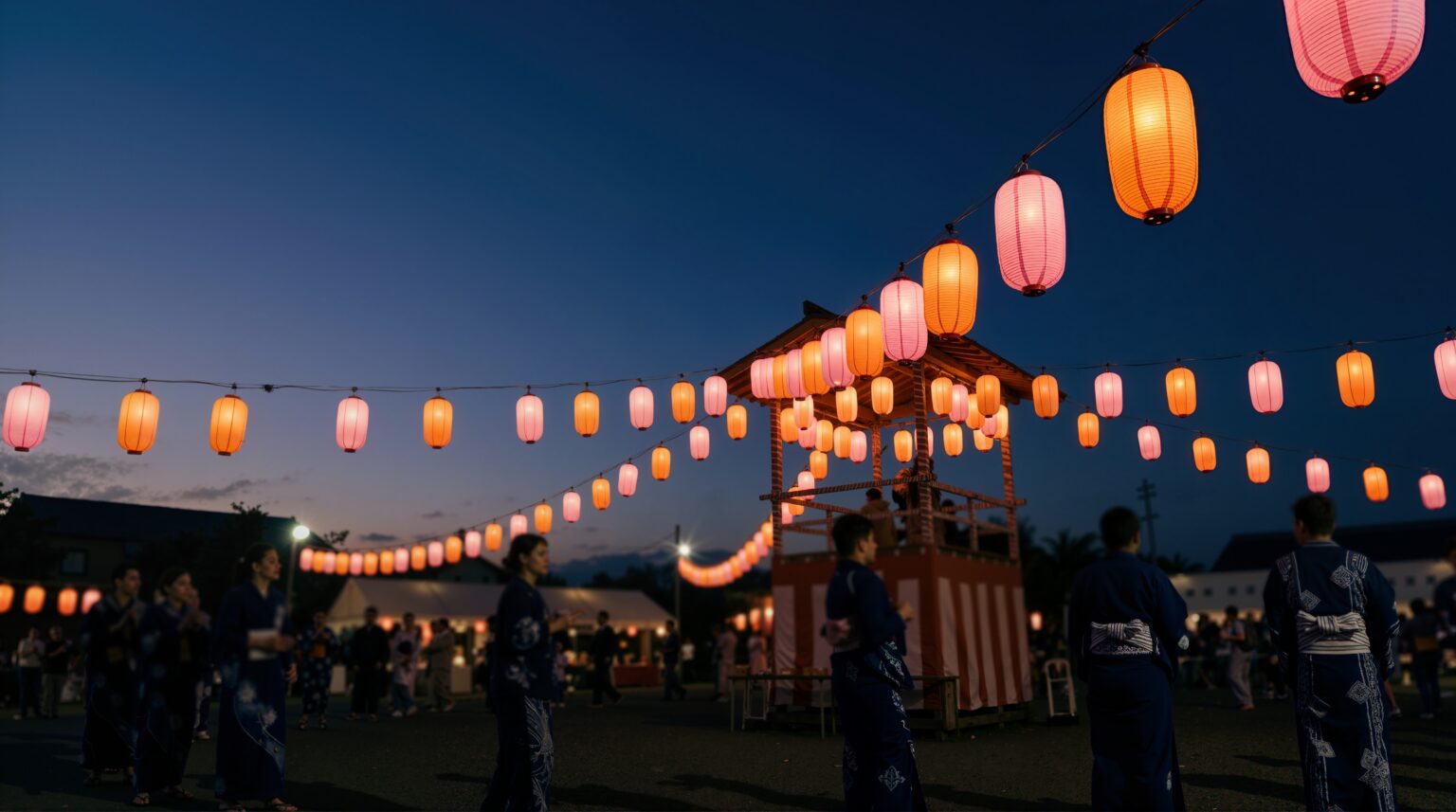
Bon odori is a folk dance performed during Obon, the summer observance for honouring and welcoming back the spirits of ancestors. It is two things at once: a community night out, and a custom rooted in honouring ancestral spirits, welcoming them home and seeing them off. The most common form is a ring of dancers moving around a raised wooden platform, the yagura, where the drummers and singers perform. That circle-and-tower shape is typical, but not a rule — some famous dances take a completely different, processional form (more on that below).
The soundtrack is taiko drumming from the yagura and folk songs, usually in the repetitive ondo style that makes the steps easy to pick up. The style, the songs and even the timing shift from region to region, which is part of the charm.
Can you actually join in?
At many open neighbourhood or temple bon odori, spectators, foreign visitors included, are welcome to join the dancing rather than just line the edges. For these open dances you usually don’t need a reservation, prior experience or a special outfit; check the organiser’s notice for any venue-specific entry rules. You pick it up by following the people around you, since the same short sequence loops again and again.
It isn’t universal, though. Some events are performances or competitions where casual walk-in dancing isn’t the idea. The clearest example is Awa Odori in Tokushima: to dance in the main event you normally have to be part of a registered troupe (a ren), though visitors can join a drop-in “Niwaka Ren” without a costume or registration. So treat “you can join” as the default for community dances, and check the specific event for the famous ones.
How to step into the circle
The safest way is simple:
- Watch one loop. Stand where you can see the dancers’ hands and feet, and let the sequence come round once.
- Step in where there’s space. Slot into the ring at a gap rather than pushing through.
- Copy the person in front. Mirror their arms and steps; the moves repeat, so you’ll be roughly in time within a song.
- Don’t worry about getting it perfect. Everyone around you was a beginner once, and a rough version is completely welcome.
You dance as an individual in the group — there’s no partner and no set-up. When you’ve had enough, just drift out of the ring between songs.
What to wear
A yukata (a light cotton summer kimono) is a common sight, and plenty of dancers and onlookers wear one; the light cotton works well in summer heat. But it is entirely optional. Open community events have no dress code, and you’re perfectly fine in ordinary summer clothes; jeans, a T-shirt and trainers are welcome at Gujo Odori, for instance. Comfortable shoes you can move in matter more than the outfit, and bring a little cash for food stalls, since many are cash-only.
If you want a yukata of your own, our summer buys guide covers where to find an inexpensive one; in tourist towns you can also rent one for the evening rather than buying.
The songs you’ll hear
A handful of tunes come round again and again. The most widespread is probably Tankō Bushi, the “coal miners’ song,” a folk song from the coal-mining country of Kyushu. Despite the name it’s an ondo, and its dance mimes the work: you scoop and shovel coal, hoist a sack over your shoulder, shade your eyes from the sun, and push a cart, finishing with a bow. If you learn one dance before you go, make it this one; it is one of the most widely used bon odori songs.
You’ll also hear Tokyo Ondo, named for the capital, and regional songs like Kawachi Ondo around Osaka. Others are strictly local: Sōran Bushi, for example, is a Hokkaido fishing song about hauling nets, not a mining tune — a reminder that the same songs aren’t danced everywhere.
| Song | Where it’s from | What the dance mimes |
|---|---|---|
| Tankō Bushi | Kyushu coal country | Digging, shovelling, pushing a coal cart |
| Tokyo Ondo | Tokyo | A simple, widely shared circle sequence |
| Kawachi Ondo | Osaka area | Regional style with its own step |
| Sōran Bushi | Hokkaido fishing coast | Hauling in nets |
When is bon odori held?
Most bon odori fall in mid-August, clustered around Obon on 13–16 August — but that’s the common window, not a fixed national date. Timing varies a lot by region:
| Region | Usual timing |
|---|---|
| Most of Japan | Mid-August, around Obon (13–16 August) |
| Parts of Tokyo and nearby | July — Obon kept around 15 July (“Shichigatsu Bon”) |
| Okinawa and Ryukyu communities | Follows the lunar calendar; can land later, sometimes September |
The split comes from the old lunar calendar. The date, the 15th of the seventh month, falls in July if you read it on the modern solar calendar, but the older lunar timing it comes from actually lands in August, which is why many regions shifted to a “month-late” August Obon. For any specific festival, check the current year on its official page, or see our Japan festival calendar and our guide to Japan in August for dates.
Famous bon odori worth planning around
You can find a bon odori almost anywhere in summer, so the easiest one is whichever is near you. A few are destinations in their own right — and pair naturally with the other big summer-night spectacle, fireworks (in Kansai, see the Yodogawa fireworks guide):
Gujō Odori — Gifu
Join. The most welcoming of the big ones: thirty-plus nights from mid-July into early September, with all-night tetsuya odori during Obon. No experience or special dress needed — confirm current-year dates on the official Gujō Hachiman site.
Awa Odori — Tokushima
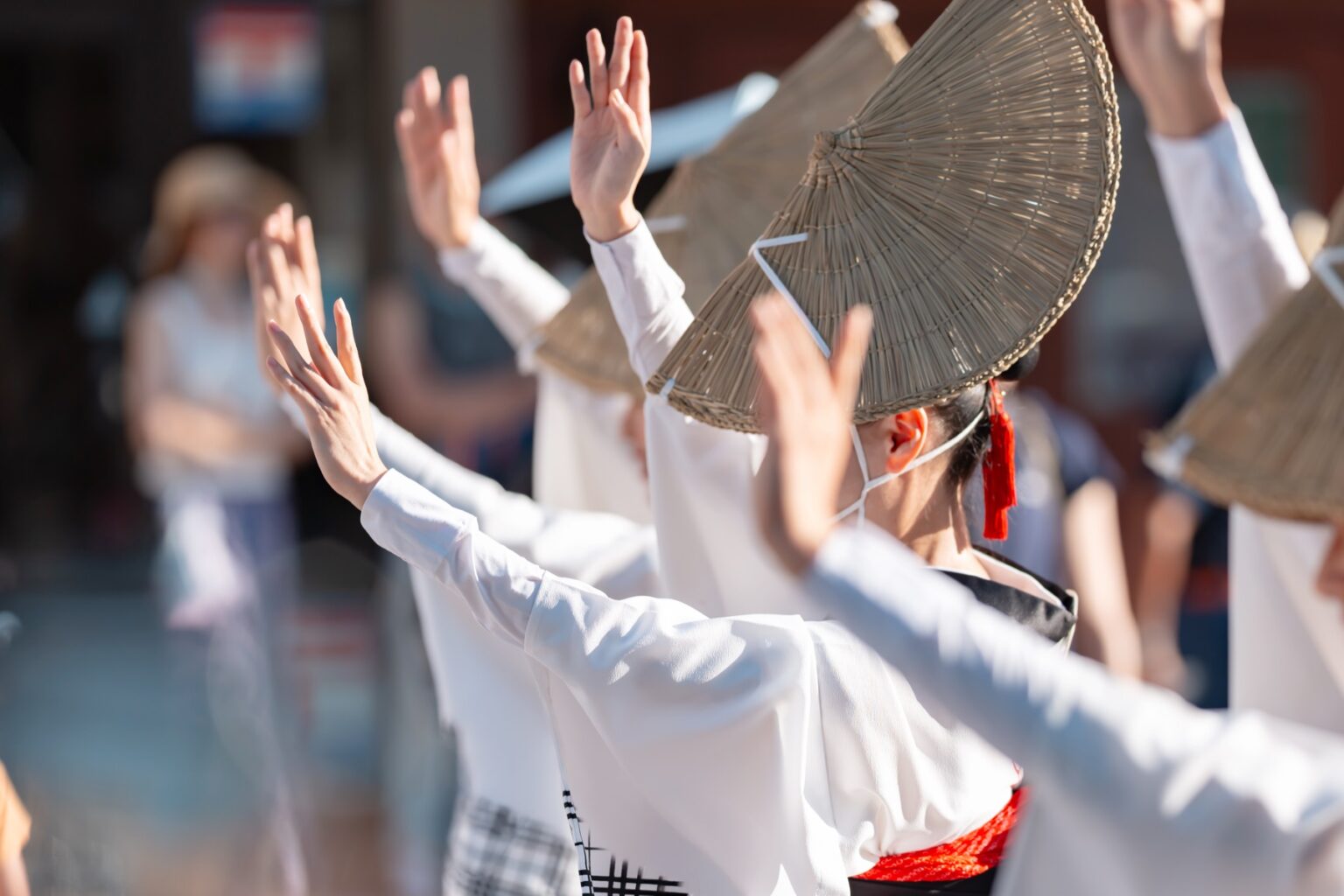
Watch (with one way in). The great exception, held 12–15 August: the main streets belong to registered ren troupes and most people watch from stands — but the drop-in Niwaka Ren lets visitors dance without costume or registration.
Nishimonai Bon Odori — Akita
Watch. 16–18 August in Ugo Town; one of Japan’s three great bon odori, with about 700 years of history. The dancers are the draw — faces hidden under woven amigasa hats or black hoods, in indigo and patchwork hanui kimono.
Tsukiji Hongwanji — Tokyo
Watch, free. A big, easy city option: this central Tokyo temple holds a large public bon odori over four evenings in late July or early August, with food stalls and taiko. Check the temple site for this year’s dates.
“The dancing fool and the watching fool are both fools — so why not dance?”
Around Mt. Fuji, local summer festivals include bon-odori evenings too. As a Fujiyoshida resident I’d check the town’s festival listing for the current dates and whether the dancing is open to join — see where to stay near Mt. Fuji if you’re building an evening around one.
Festival nights fill nearby hotels fast, so it pays to book early: compare places to stay near whichever festival you pick, or lodging around Lake Kawaguchiko for the Fuji-area dances. If you would like the evening guided, a small-group Tokyo night tour can fold a summer festival into a food-and-culture walk. These are affiliate links; if you book through them we may earn a small commission, at no extra cost to you.
A few etiquette notes
Bon odori is relaxed, and the main thing is to read the room. A few sensible habits:
- Ease in, don’t barge in. Join at a gap in the ring and match the flow rather than cutting across it.
- Mind your bags. A big backpack or suitcase gets in the way; many venues have their own rules on mats, chairs and saving spots, so look for posted signs.
- Photos: wide, not in faces. Wide shots of the circle and the lantern-lit yagura are usually less intrusive; close-ups of individual dancers deserve a bit of discretion.
- Check the weather call. Rain policies differ by event, so look at the official page on the day if the sky looks uncertain.
Where it comes from, briefly
Bon odori grew out of Obon, the midsummer observance for honouring ancestral spirits — welcoming them home and seeing them off again. The dancing became one community expression of that observance. Over centuries it turned into as much a neighbourhood social occasion as a religious one, which is why today it feels warm and open rather than solemn. Styles, songs and costumes developed locally, so no two regions dance quite the same way.
Festival grounds are often temple or shrine grounds; if the customs there are new to you, our omikuji guide walks through another easy one to try the same evening.
Frequently asked questions
Can tourists join a bon odori?
At open community and temple events, yes — visitors are welcome to join the circle. Some big festivals such as Awa Odori are performances by registered troupes, so always follow the organiser’s guidance for a specific event.
Do I need to know the dance?
No. Watch one loop, step into the ring where there’s space, and copy the dancer in front of you. The steps repeat, so you’ll pick them up quickly.
Do I need a yukata?
No. A yukata is common and welcome, but ordinary summer clothes are fine at open events. Comfortable shoes matter more.
Is bon odori the same as Awa Odori?
Not quite. Awa Odori is danced during Obon and is often linked to bon odori, but it’s a street procession by organised troupes rather than the open circle dance most bon odori use.
When is bon odori held?
Most events are around mid-August Obon (13–16 August), but timing varies by region; parts of Tokyo and Kanto hold it in July, and Okinawa follows the lunar calendar.
Can I take photos?
Wide shots of the circle are usually fine. Avoid close-ups of individual dancers without a nod, and follow any posted photography rules.
What if it rains?
Rain and bad-weather policies vary by venue, so check the official event page on the day.
Sources & last verified. Written from the Japan National Tourism Organization and Nippon.com guides to bon odori and Obon; japan-guide on regional Obon timing; the official Gujō Hachiman tourism site; the Tohoku/Ugo tourism boards for Nishimonai; Tsukiji Hongwanji’s own announcement; and JNTO’s Awa Odori page. The circle-and-yagura form, participation, attire and song details follow these; dates and per-event participation vary and are shown as typical patterns. Festival dates change yearly, so confirm the current year on each event’s official site before you travel. Last verified: August 2026.
Join travelers discovering Japan's hidden side
Weekly dispatches from off-the-beaten-path Japan — spots and stories you won't find in guidebooks.
No spam. Unsubscribe anytime.
Welcome aboard!
You're in. See you in your inbox soon.