Asuka · Nara
Update, 26 July 2026: the archaeological sites around this village — the Ancient Capitals of Asuka and Fujiwara — were inscribed as Japan’s 27th World Heritage site on 26 July. The lanes below sit in the middle of it all — my full guide to the 19 sites covers how to plan around them.
Asuka-mura is a quiet farming village in Nara where, in the late 6th and 7th centuries, Japan’s first centralised state took shape — and almost the whole village is held under a special national law that keeps its rice terraces, low tiled-roof houses and ancient stone tombs looking much as they have for generations.
Most people pass through Asuka chasing one famous tomb and miss the quieter thing it does best: the landscape itself. Development is tightly controlled, so it stays low-rise and visually quiet: old houses with white plaster and wooden lattice along narrow lanes, paddies that mirror the sky in early summer, and 1,400-year-old monuments sitting in the middle of working fields. I’m Nobu, and the slow way to feel old Japan here isn’t to tick off sights — it’s to walk or cycle the lanes of districts like Oka, where the village simply looks the way the law has kept it.
What Asuka actually is
For about a century — from the late 500s to the late 600s — the seat of power in Japan sat here, in this small basin south of Nara. It was during this Asuka period that Buddhism took root, the imperial court matured and the country’s first centralised, law-based (ritsuryō) state began to form. After the political centre moved on, Asuka stayed rural and saw far less modern development than Japan’s big cities, and today the landscape law protects what remains.
What keeps it that way today isn’t a museum fence but a law. The whole village falls under Japan’s Ancient Capitals Preservation Law (1966) and a unique 1980 measure usually called the “Asuka Law,” which together designate the village as a historic-landscape preservation district and tightly restrict new building and development. The point isn’t to freeze a single street — it’s to protect the entire scene: the natural hills, the terraced paddies, the village settlements and their old townscape, all as one living whole.
A note on what Asuka is not. Unlike merchant towns such as Imai-chō or post towns like Magome, Asuka isn’t a designated “preservation district for buildings” — there’s no single showcase street. Its protection is of the whole rural landscape, so the pleasure is cumulative: a lane of old houses here, a tomb in a field there, a temple among the rice.
The old townscape
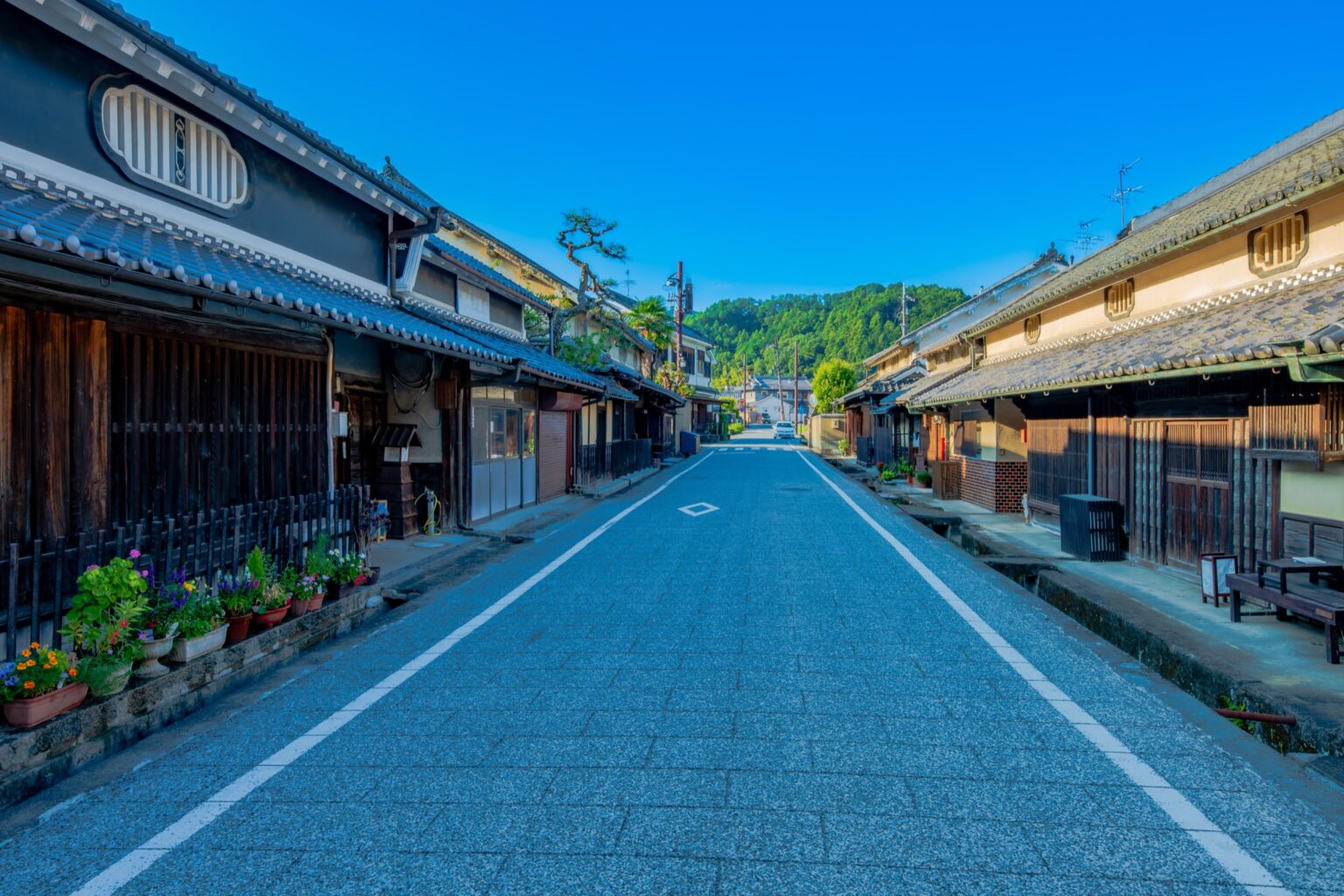
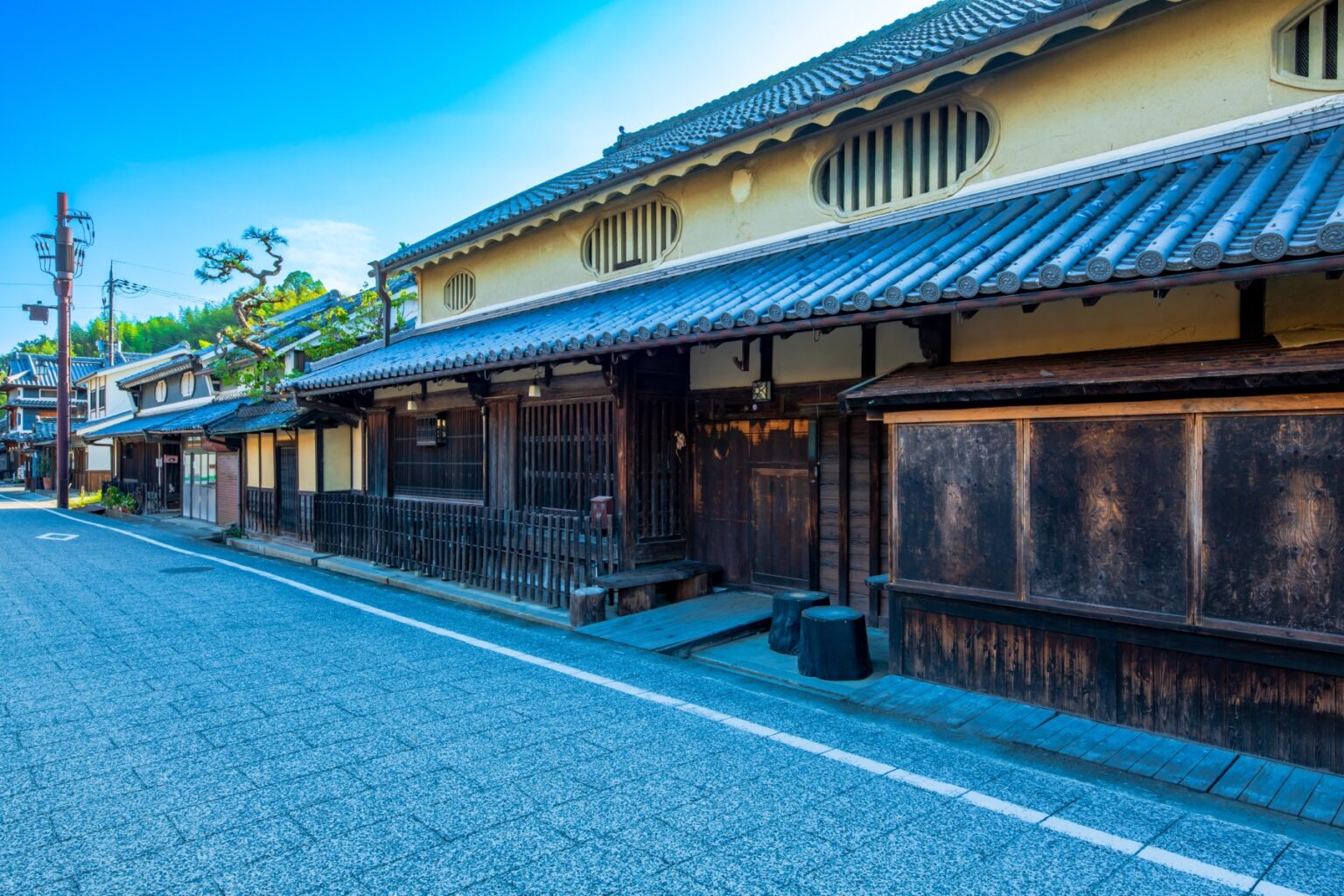
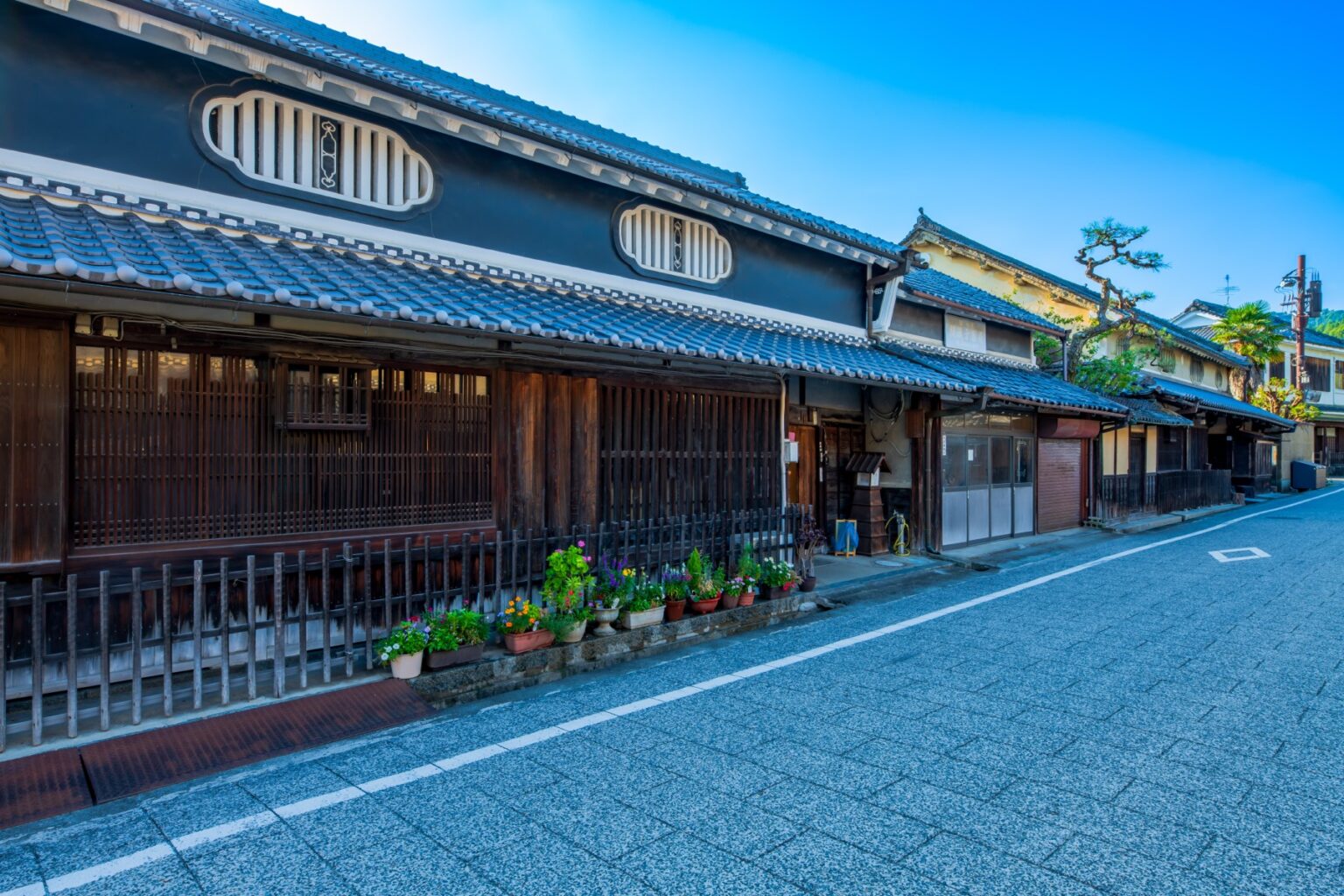
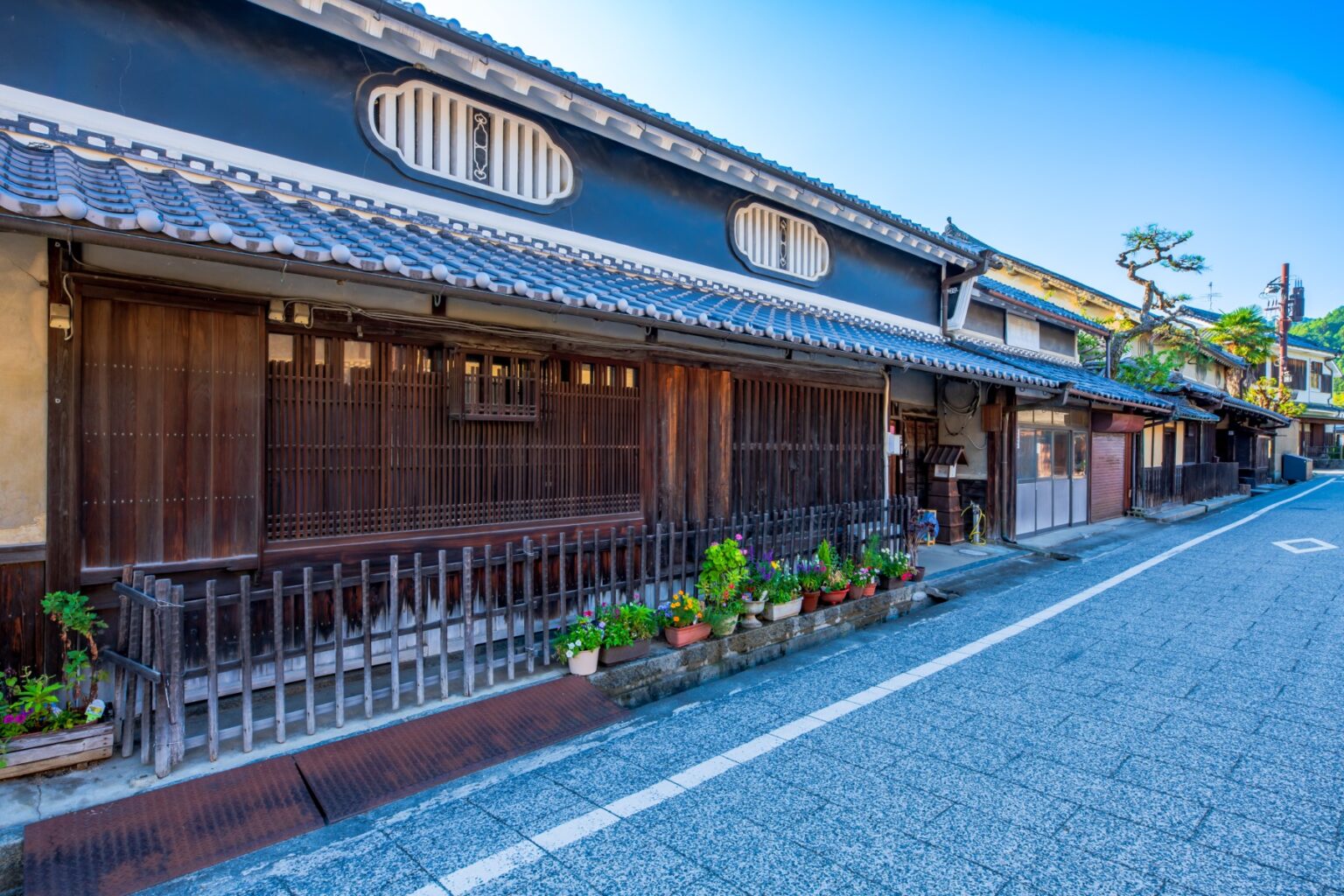
The houses you see in districts like Oka — near Oka-dera, on the eastern side of the village — are the everyday face of that protected landscape: tiled roofs, white or cream plaster above dark wooden lattice, low eaves, and almost nothing modern in the frame. They aren’t grand merchant mansions; they’re the ordinary, well-kept houses of a village that simply hasn’t been allowed to sprawl or modernise its streetfronts. Walk the lanes slowly and the details add up.
White plaster & lattice
Pale shirakabe plaster above, dark wooden kōshi lattice at street level, and grey tiled roofs — the standard vocabulary of an old Nara village kept intact.
Lattice windows
Look up for the small barred upper windows and the rows of potted plants along the lattice — the lived-in details that make the lanes feel like a home, not a film set.
No clutter
The thing you’ll notice most is what isn’t there: development is tightly controlled, so the lanes stay visually quiet. That restraint is the landscape law doing its work.
People live here. Asuka’s lanes are working neighbourhoods, not an open-air museum. Keep to the public roads, don’t photograph into homes or gardens, and ride or walk gently — that everyday-life quality is the whole point.
What to see among the fields
The townscape is the backdrop; scattered through it are some of the oldest monuments in Japan. A few highlights, all within an easy cycle of each other:
Ishibutai Kofun
A giant exposed megalithic tomb chamber — its huge capstones weigh dozens of tonnes — strongly thought to be the grave of the 6th-century power-broker Soga no Umako. A National Special Historic Site. Admission is ¥500 for adults and university students, ¥200 from elementary through high school, raised from ¥300 and ¥100 on 1 April 2026. Open 9:00–17:00, last entry 16:45, every day of the year.
Asuka-dera
Founded at the end of the 500s and completed in 596, it’s counted among Japan’s first true Buddhist temples. Its seated bronze Buddha — the Asuka Daibutsu, finished in 609 — is a nationally important early Buddhist sculpture.
The stone monuments
Mysterious carved stones dot the fields — the turtle-shaped Kameishi, the Saruishi “monkey stones,” the grooved Sakafuneishi — relics no one can fully explain.
Takamatsuzuka & Kitora
Two small tombs famous for their painted murals (Takamatsuzuka’s are National Treasures); both have mural museums in the National Asuka Historical Park.
Amakashi-no-oka
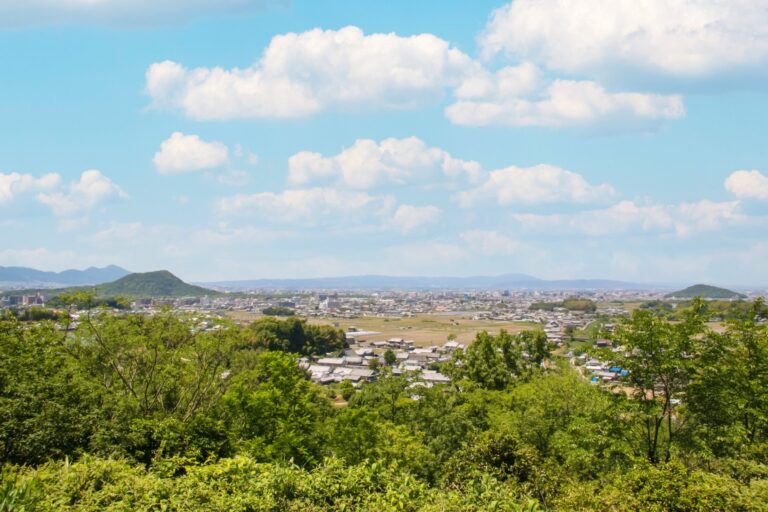
A low hill with an observation deck — the best wide view over the whole Asuka basin and its patchwork of fields.
Oka-dera
The hillside temple right by the Oka townscape, famous for its hydrangeas and as one of Japan’s first “bad-luck-warding” sites — covered in its own guide.
Autumn 2026: do not plan to drive here. After the July World Heritage inscription the village moved to ease traffic. The national park’s free car park at Ishibutai is closed to cars from 19 September to 15 November 2026, keeping two-wheelers and accessible spaces; the paid car park beside it takes ordinary cars by online reservation only on weekends and holidays in the same window. The Takamatsuzuka district car park closed on 1 September 2026 and is not expected back until around 2030. Come in on the Kintetsu line and hire a bicycle at the station, which was always the better way to see this valley.
Southeast Asia traveler tip: Asuka is rural and spread out, with little English signage and few cafés between sights, so don’t treat it as a single “spot.” Rent a bicycle at the station (the whole village is built around cycling), carry water and a snack — Nara’s basin is hot and humid in summer — and give yourself at least half a day to let the landscape unfold.
Getting around Asuka
By train
Take the Kintetsu line to Asuka Station (Kashiharajingū-mae is the nearby junction). Asuka tourism describes the village as about an hour from Kyoto, Osaka and Nara; confirm current times for your route.
Rent a bicycle
For many visitors this is the most flexible way to link the spread-out sights, and Asuka’s rental-cycle shops by the station are set up for exactly that. Often easier than waiting for buses.
Or the loop bus
The local “Kame” loop bus links the main sights if you’d rather not cycle, though it runs to its own timetable — check before you rely on it.
When to go
Asuka is a landscape that changes hard with the season. Late May to June, when the paddies are flooded for planting, the fields turn into mirrors that double the hills and sky — my favourite time. High summer is deep green but hot and humid. Late September brings higanbana, the red spider lilies, blazing along the field edges before harvest, and autumn turns the satoyama gold. Whenever you come, mornings are softest and best for photographs.
Where to stay
Most travellers see Asuka on a day trip from Nara or Osaka, or stay near Yamato-Yagi, the Kintetsu junction one stop up the line. A night nearby lets you reach the fields at first light, when the village is at its quietest and most photogenic.
Nara & Yamato-Yagi stays on Booking
Hotels near the Kintetsu line, well placed for Asuka and Nara’s temples.
Compare on Agoda
A second price check across the same Nara / Osaka area.
Nara day tours via Klook
Guided Asuka and Nara day trips if you’d rather not piece the trains together.
Some links above are affiliate links — they cost you nothing extra and help keep this site going.
Is there an entry fee to see Asuka village?
No — the village, its lanes and its old townscape are free to wander. You only pay to enter specific sites such as Ishibutai Kofun (¥500 adults, ¥200 school age, raised on 1 April 2026), the mural museums or Oka-dera. Rates were revised in 2026, so treat older figures you find elsewhere with suspicion.
What is the “Oka townscape”?
Oka is a district on the eastern side of Asuka village, near Oka-dera, where old tile-roofed, plaster-and-lattice houses line the lanes. It’s a good place to feel the protected village streetscape, but it’s a living neighbourhood, not a ticketed attraction.
How should I get around?
Rent a bicycle at Kintetsu Asuka Station. The sights are spread across fields and lanes, and cycling is by far the most enjoyable and flexible way to see them. A local loop bus also runs if you prefer.
How long do I need?
At least half a day; a full day if you want to add Ishibutai, Asuka-dera, the mural museums and Oka-dera. Asuka rewards a slow pace rather than a tight checklist.
Why does Asuka look so unspoiled?
Because almost the whole village is protected under the Ancient Capitals Preservation Law and the special 1980 “Asuka Law,” which restrict new building and development to preserve the historic rural landscape as a whole.
When is the best time to visit?
Late May–June for the mirror-like flooded paddies, late September for the red higanbana along the fields, and autumn for golden satoyama. Summer is green but hot and humid; mornings are best year-round.
Oka-dera
The hydrangea temple right beside the Oka townscape — the natural pairing.
Tōdai-ji & the Nara deer
The other side of a Nara trip — the Great Buddha and Nara Park.
Magome-juku
If you like preserved old streets, this stone-paved Kiso post town is a different kind of survivor.
Join travelers discovering Japan's hidden side
Weekly dispatches from off-the-beaten-path Japan — spots and stories you won't find in guidebooks.
No spam. Unsubscribe anytime.
Welcome aboard!
You're in. See you in your inbox soon.